Quick Answer: Travel size medicine means small, trip ready doses of prescription or over the counter drugs packed in TSA compliant containers. Pills have no quantity limit in carry on bags, while liquid medicine is exempt from the standard 3.4 ounce rule as long as you declare it at the checkpoint. Always keep medication in your carry on, not checked luggage.
Packing medicine for a trip sounds simple until the night before departure, when the questions pile up fast. Will security stop you for that bottle of liquid cough syrup? Do pills need their original labels? What happens if a flight gets delayed and your supply runs short? For anyone managing a chronic condition, a child’s fever, or just a stocked travel first aid kit, these worries can overshadow the excitement of the trip itself.
This guide walks through everything U.S. travelers need to know about travel size medicine, from TSA screening rules to smart packing containers, international customs concerns, and mistakes that trip people up at the airport. The goal is simple: pack once, pack right, and get through security without a second thought so the only thing left to plan is the vacation itself.
If it’s a carry-on of daily prescriptions, a diabetic’s insulin kit, or a parent’s bag of children’s medicine, the right prep makes airport security faster and travel far less stressful.
Quick Facts: Traveling With Medicine at a Glance
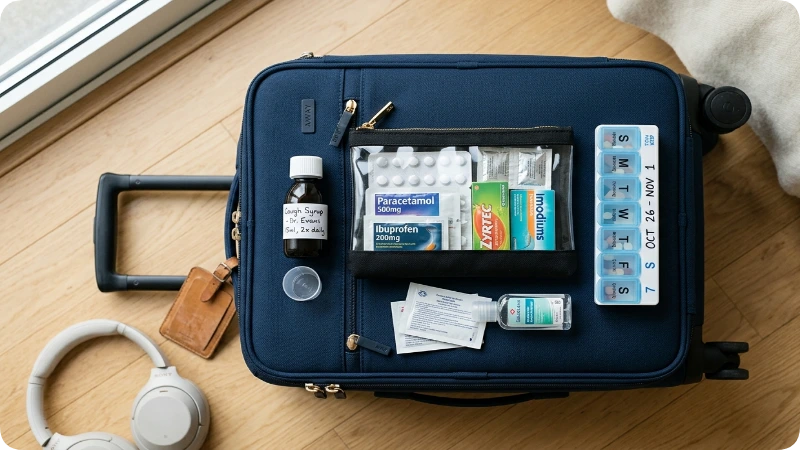
Most travelers only need to remember three things: pills are unlimited, liquids over 3.4 ounces are allowed with medical necessity, and essential medication is best kept in your carry-on. The table below breaks down the details so nothing gets left to guesswork.
| Medicine Type | TSA Carry On Limit | Declare at Checkpoint? | Original Label Required? |
| Pills, tablets, capsules | No limit | No, but helpful to mention | Recommended, not required |
| Liquid medication (syrups, insulin) | No 3.4 oz limit if medically necessary | Yes | Recommended for faster screening |
| Gel caps | No limit (treated as solid) | No | Recommended |
| Injectable medication & supplies | Allowed, including sharps | Yes | Recommended |
| Frozen medical items (ice packs) | Allowed to keep meds cool | Yes | Not applicable |
What Is Considered Travel Size Medicine?
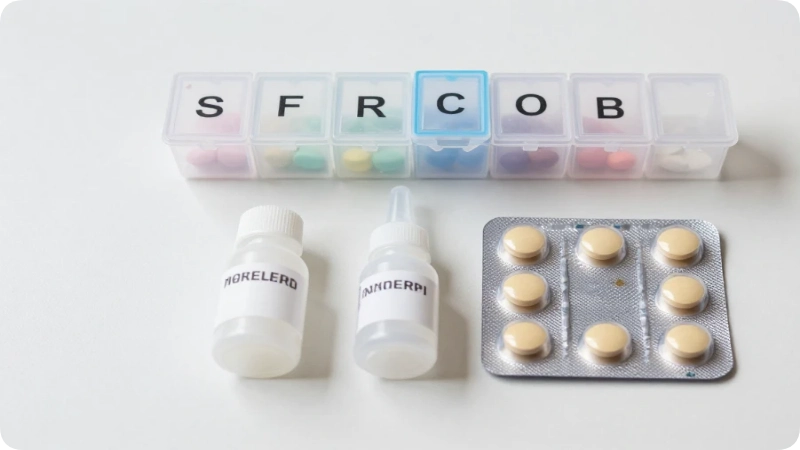
Travel size medicine isn’t a formal TSA category. It simply refers to medication packed in a convenient amount or container for a trip. That can mean a week’s worth of prescription tablets, a small bottle of children’s fever medicine, motion sickness tablets, allergy medication, or a larger medically necessary liquid.
Unlike toiletries, medication does not have to fit the usual 3.4-ounce container limit simply because you’re traveling. TSA allows medically necessary medications in carry-on bags, including liquid medication that exceeds 3.4 ounces when properly screened.
For everyday trips, pack enough medicine for the full journey plus extra doses for unexpected delays. Keep prescription medication identifiable with its pharmacy label whenever possible, and avoid relying only on a pill organizer for an international trip.
The important distinction is this: “travel size” describes convenience, not a special TSA quantity limit. Medication rules depend on the type of medicine and whether it is medically necessary.
TSA Rules for Traveling With Prescription and Over-the-Counter Medicine
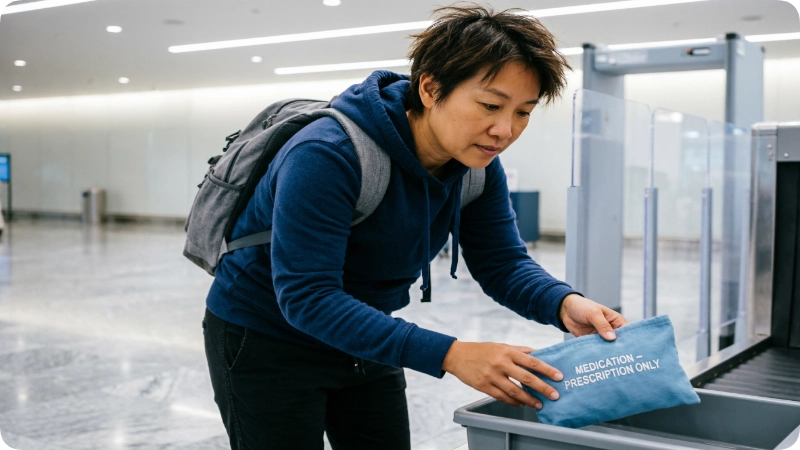
TSA allows prescription and over-the-counter medications in both carry-on and checked baggage, but travelers should keep essential medicine in their carry-on. That way, medication remains accessible if checked luggage is delayed, lost, or separated from you during a connection.
Solid medication, including tablets, capsules, and pills, does not have to follow the 3.4-ounce liquid restriction. Travelers can also bring medically necessary liquid medication in quantities greater than 3.4 ounces. Tell the TSA officer about larger liquid medication before screening so it can receive the appropriate inspection.
You do not generally need to place medically necessary liquid medication inside the quart-size bag used for ordinary carry-on liquids. However, keeping it in a separate, easy-to-reach pouch can make screening simpler.
TSA screening rules are separate from destination-country laws. A medication that is permitted through a U.S. security checkpoint may still be restricted when you enter another country.
For that reason, check both TSA guidance and the destination’s medication-import rules before an international trip.
Can You Bring Travel Size Medicine Through TSA?
Yes. Travelers can bring travel size prescription and over-the-counter medicine through TSA security. Pills, tablets, and capsules do not have to follow the 3.4-ounce liquid restriction.
Medically necessary liquid medication can also exceed 3.4 ounces. Tell the TSA officer that you are carrying medically necessary liquids before screening, and be prepared for the medication to receive additional inspection.
For the smoothest experience, keep medication together in an accessible pouch rather than burying it under clothing or electronics. Original pharmacy labels can also make identification easier, especially when you carry several prescriptions.
Remember that TSA approval only covers the security checkpoint. If you’re traveling internationally, the destination country may impose separate restrictions on prescription drugs, controlled substances, or common over-the-counter medications.
Can Liquid Medicine Be Over 3.4 Ounces?
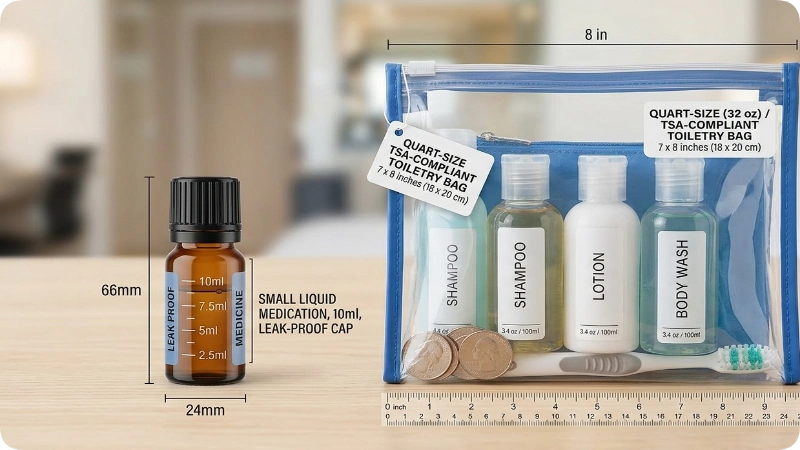
Yes. Medically necessary liquid medication can exceed the standard 3.4-ounce limit for carry-on liquids. This can include liquid prescriptions, certain over-the-counter medications, and other medically necessary liquids.
Before screening, tell the TSA officer that you are carrying medically necessary liquid medication. The officer may inspect the container separately from your ordinary toiletries.
You do not need to transfer medication into a smaller bottle simply to meet the standard liquid limit. In fact, transferring prescription medication into an unlabeled container can create unnecessary confusion, particularly when traveling internationally.
For convenience, place larger liquid medications in a leak-resistant pouch so spills do not damage clothing or electronics. Keep the medicine accessible rather than packed deep inside your suitcase.
Do Medications Need to Be in Their Original Bottles When Traveling?
TSA does not generally require prescription medication to remain in its original pharmacy bottle for domestic air travel. However, keeping medication in its original labeled container is often the simplest option, especially when you carry prescription drugs.
The label can identify the medication, dosage, prescribing information, and patient name. That information can make questions at security or customs easier to resolve.
A pill organizer can still be useful for daily doses, but consider carrying the original labeled containers separately when traveling internationally or when taking controlled medications.
For longer trips, keep a copy of your prescription information and make a note of each medication’s generic name. Brand names can differ between countries, so knowing the active ingredient can be especially useful abroad.
How Much Medicine Should You Pack for a Trip?
Pack enough medication for the entire trip and include extra doses in case a flight is delayed, luggage is lost, or your return date changes.
For essential daily prescriptions, many travelers prefer to carry several additional days’ supply rather than packing the exact number of doses required by the itinerary. The right amount depends on the medication and your prescription, so confirm any early refill or extended-supply questions with your pharmacist before departure.
Divide medication thoughtfully if you are traveling with multiple bags. Keep your primary supply in your personal item or carry-on, where you can reach it during the journey. If you use temperature-sensitive medication, pack it according to the manufacturer’s storage instructions rather than assuming an ordinary cooler will keep it at the correct temperature.
Never reduce or skip prescribed doses simply to make a medication supply last through a trip. If you expect to be away longer than your current supply allows, arrange the refill before leaving.
How to Pack Temperature-Sensitive Medicine for Travel
Temperature-sensitive medications require more planning than ordinary pills. Insulin and certain other medicines may need controlled storage, so check the manufacturer’s instructions before deciding how to transport them.
Use an insulated medical pouch or appropriate medication cooler when necessary, and follow the medicine’s specific temperature requirements. Do not place medication directly against frozen ice packs unless the manufacturer or pharmacist confirms that freezing is safe.
Keep temperature-sensitive medicine in your carry-on whenever possible. Extreme temperatures in baggage handling areas or delays can expose medication to conditions outside its recommended storage range.
For flights, keep the medicine and cooling supplies together in an accessible medical pouch. If you use gel packs or other cooling materials, tell the TSA officer that they are being used to keep medication at the required temperature.
Do You Need a Prescription Label or Doctor’s Note?
Medications do not need to be in their original prescription bottles to comply with TSA regulations, though original labeled containers are strongly recommended. A visible label showing the traveler’s name, medication name, and prescribing doctor helps officers quickly confirm the medicine is legitimate and speeds up screening.
A doctor’s note isn’t required for domestic TSA screening, but it becomes far more important for international trips, injectable medications, or controlled substances. Carrying a printed prescription or a letter from a physician is a smart backup, especially for medications that could otherwise look unusual on a scanner, like syringes or oddly shaped devices.
Best Travel Size Containers for Medicine
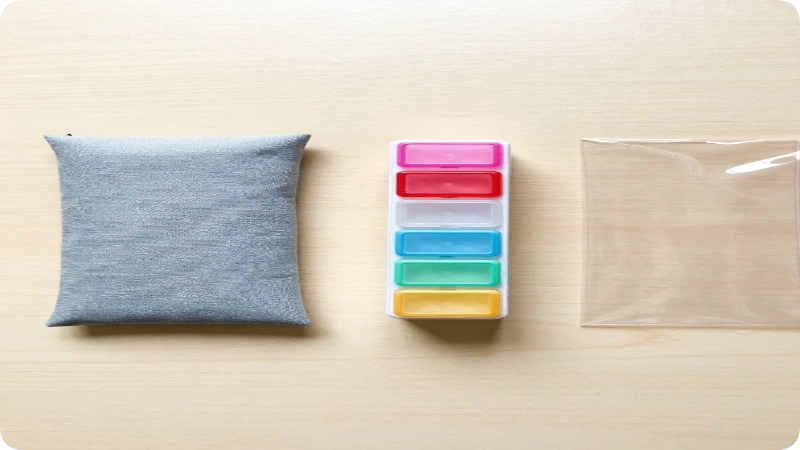
The right container keeps medicine organized, protected, and easy to present at security. A few practical formats work well for most travelers:
- Weekly pill organizers with labeled compartments for daily doses
- Small leak proof bottles for liquid medicine, ideally under 4 ounces for convenience even though larger is allowed
- Insulated pouches for temperature sensitive medication like insulin
- Clear zip pouches to separate medicine from cosmetics and toiletries
- Original pharmacy bottles, kept as backup even if daily doses are moved to an organizer
Choosing containers that are clearly labeled avoids confusion at security and at the destination, particularly when a trip spans multiple time zones and dosing schedules need to shift.
How to Pack Medication in Your Carry On
Packing medicine correctly starts with keeping it separate from the rest of the carry on so it’s easy to remove if a screener asks for a closer look. A dedicated pouch near the top of the bag, rather than mixed in with clothing, saves time at the checkpoint.
- Group all medication together in one clear or labeled pouch.
- Keep liquid medicine accessible for separate screening, even outside the quart size toiletry bag.
- Pack a printed copy of prescriptions or a doctor’s letter alongside the medicine.
- Store backup doses in a second bag or personal item in case one bag is delayed.
- Keep temperature sensitive medicine, like insulin, in an insulated pouch with a reusable ice pack, which TSA also permits through screening.
Packing Medicine in Checked Luggage: Why It’s Risky
Medication is technically allowed in checked bags, but most travel experts recommend against it. Checked luggage can be delayed, lost, or exposed to extreme temperature swings in the cargo hold, all of which put essential medicine at risk right when it’s needed most.
Keeping medication in the carry on means it stays with the traveler through connections, delays, or an unexpected overnight stay. This single habit prevents the majority of medication related travel emergencies reported by frequent flyers.
Traveling With Medication for Kids and Infants
Parents get extra flexibility when it comes to liquid limits. Formula, breast milk, toddler drinks, and baby or toddler food may exceed the standard 3.4 ounce carry on limit and do not need to fit inside the quart size liquids bag, similar to the exemption for medical liquids.
Children’s liquid medicine, such as fever reducers or allergy syrup, falls under the same medically necessary liquid exemption as adult medication. Packing a slightly larger supply than expected is wise for kids, since travel schedules, time zone changes, and unexpected illness can all affect dosing needs.
Traveling Internationally With Prescription Medicine
International medication rules can be much stricter than TSA security rules. Passing through a U.S. airport checkpoint does not automatically mean a medication is legal to import into your destination.
Before an international trip, check the destination country’s official government, embassy, or health-authority guidance for each medication you plan to carry. Pay particular attention to controlled substances, stimulants, sedatives, strong pain medicines, and medications that contain ingredients restricted in that country.
Before departure:
- Check both the brand and generic name of every medication.
- Confirm whether the destination requires an import permit.
- Check quantity limits and documentation requirements.
- Keep prescription information available.
- Carry medication in its original labeled packaging when practical.
- Save copies of prescriptions and supporting medical documentation.
- Check transit-country rules if you have an international connection.
Do this before booking or several weeks before departure when possible. Some destinations require advance approval, and processing times can vary.
TSA controls airport security in the United States. Foreign customs authorities control what medication you can legally bring across their borders. Treat those as two separate checks.
Traveling With Controlled Prescription Medications
Controlled prescription medications deserve extra planning because their travel rules can differ from ordinary prescriptions.
For domestic U.S. flights, keep the medication identifiable and carry prescription information with you. Do not assume that TSA approval answers every legal question surrounding a controlled medication.
International travel requires even more care. Some countries restrict medicines that are commonly prescribed in the United States, including certain stimulants, sedatives, and strong pain medications. A destination may limit the quantity, require documentation, or require advance authorization.
Check the destination country’s official rules before departure and carry only the amount permitted under those rules. If you’re unsure whether a medication is restricted, ask the destination’s embassy or appropriate government authority before traveling.
Common Mistakes Travelers Make With Medication
Small oversights cause most medicine related delays at security, and nearly all of them are avoidable with a bit of planning.
- Packing medicine in checked luggage instead of a carry on, risking loss or spoilage.
- Skipping the declaration of large liquid medicine at the checkpoint, which can slow down screening.
- Leaving prescriptions unlabeled, making it harder for officers to verify ownership quickly.
- Forgetting destination country rules, especially for controlled substances that are legal in the U.S. but restricted abroad.
- Underpacking supply, without accounting for flight delays or extended layovers.
How to Get Through TSA With Medicine More Easily
The easiest way to reduce airport stress is to make your medication easy to identify and access.
Keep essential medicine in your personal item or carry-on rather than checked luggage. Place liquid medication in a separate pouch near the top of the bag so you can present it if a TSA officer requests additional screening.
Keep pharmacy labels attached whenever possible, and carry prescription information for medications that may require clarification. If you use cooling packs for temperature-sensitive medicine, keep those supplies together with the medication.
Arrive with enough time for additional screening. Medical liquids and specialized equipment may require extra inspection, and allowing a few additional minutes is better than rushing to the gate.
Most importantly, don’t hide medically necessary liquids inside your regular toiletries. Tell the TSA officer what you’re carrying and follow the officer’s screening instructions.
Safety Tips for Traveling With Medicine
Safety starts with documentation. A photo of every prescription label and a digital backup stored in the cloud can resolve confusion quickly if a bottle is lost or questioned at customs.
It’s also worth confirming pharmacy refill policies before departure, in case a prescription needs to be filled at the destination. Travel insurance that covers prescription replacement can offer real peace of mind for longer trips, particularly for medications that are expensive or difficult to replace quickly. As with any changing policy, verify current TSA and destination country rules directly through official sources before flying, since requirements are updated periodically.
Traveling With Children’s Liquid Medicine
Children’s liquid medications can travel in carry-on baggage, including medically necessary liquids that exceed the standard 3.4-ounce limit. Tell the TSA officer about the medication before screening so it can receive the appropriate inspection.
Pack children’s medicine where you can reach it during the journey. A delay can turn a routine flight into several extra hours, so keeping fever reducers, allergy medicine, or other regularly used medication accessible is more practical than storing it in checked luggage.
Keep the original label when possible, especially if several children or medications are involved. Double-check the dosage instructions before departure and avoid transferring medicine into an unlabeled container.
Formula, breast milk, and toddler beverages have their own TSA provisions, so don’t assume every baby-related liquid follows exactly the same rules as medication.
Sample Packing Checklist for a Week Long Trip
A simple checklist keeps medicine organized regardless of destination or trip length.
| Item | Notes |
| Daily prescriptions | Pack 2–3 extra days’ worth in case of delays |
| Pain relievers / allergy medicine | Travel size or original bottle |
| Liquid medicine (if needed) | Leak proof container, declared at screening |
| Prescription copies or doctor’s note | Printed and saved digitally |
| Insulated pouch | For temperature sensitive medicine |
| First aid basics | Band aids, antiseptic wipes, motion sickness tablets |
What to Do If You Run Out of Medicine While Traveling
Running out of medication during a trip can be difficult, especially when the medicine requires a prescription. Start by contacting your prescribing clinician or pharmacy to ask about available options.
Within the United States, your pharmacy may be able to help arrange a refill or transfer depending on the medication, state rules, insurance plan, and pharmacy network. Controlled medications can have additional restrictions.
Internationally, do not assume that a foreign pharmacy can dispense the same medication or dosage. The medication may have a different brand name, require a local prescription, or be unavailable altogether.
If you’re traveling with an essential prescription, contact your healthcare provider before departure about what to do if the supply is lost or delayed. Keep prescription details and the medication’s generic name available so a clinician can identify it more easily if replacement becomes necessary.
FAQs
Is there a limit on how much medicine you can bring on a plane?
TSA does not impose a standard quantity limit on prescription or over-the-counter medication in carry-on bags. Solid medications such as pills and capsules are not subject to the 3.4-ounce liquid rule.
Medically necessary liquid medication can also exceed 3.4 ounces, but travelers should declare it to the TSA officer before screening. Airline and destination-country rules can impose additional requirements, so check those separately for international trips.
Does medicine need to be in its original bottle for TSA?
TSA does not generally require prescription medicine to remain in its original pharmacy bottle for domestic travel. However, keeping the original label is recommended because it makes the medication easier to identify during screening and can be especially useful when traveling internationally.
For controlled medications or international trips, carrying the original labeled container and prescription information is a safer approach.
Can you bring liquid medicine over 3.4 ounces in a carry on?
Yes. Medically necessary liquid medication can exceed the standard 3.4-ounce carry-on liquid limit. Tell the TSA officer about the medication before screening so it can receive additional inspection if necessary.
You do not need to transfer medically necessary medication into a smaller container simply to meet the ordinary liquid limit.
Should medicine go in a carry on or checked bag?
Medicine should always travel in the carry on, not checked luggage. Checked bags can be delayed, lost, or exposed to temperature extremes, all of which put essential medication at risk.
Can I Bring a Pill Organizer on a Plane?
Yes. You can bring a pill organizer in your carry-on. TSA does not require pills to remain in an original bottle for domestic security screening.
However, keeping prescription labels or original containers available can make identification easier, particularly when traveling internationally or carrying several prescription medications.
Do you need a doctor’s note to fly with medication?
A doctor’s note isn’t required for standard domestic TSA screening but is recommended for controlled substances, injectables, or international travel. It helps confirm the medicine’s legitimacy quickly if questions come up at security or customs.
Can kids’ liquid medicine exceed the standard liquid limit?
Yes, children’s liquid medicine qualifies under the same medically necessary liquid exemption as adult medication. Formula, breast milk, and toddler food also get separate exemptions from the standard carry on liquid limit.
What should you do if a foreign country restricts your medication?
Research the destination country’s rules before departure and contact its embassy or consulate for current regulations. Some countries require import permits or proof of prescription, and certain U.S. legal medications may be banned outright.
Final Takeaways
Packing travel size medicine doesn’t have to be complicated once the basics are clear: TSA does not impose a standard quantity limit on pills, liquid medicine gets an exemption from the standard 3.4 ounce rule, and everything essential belongs in the carry on rather than checked luggage. A little labeling and a printed prescription go a long way toward a smooth checkpoint experience.
International trips add one more layer worth double checking destination country customs rules can differ sharply from TSA policy, so a quick check with the embassy or consulate before departure avoids unpleasant surprises. With medicine packed smart and documentation ready, the checkpoint becomes a formality rather than a source of stress, leaving more energy for the trip itself.
Because airline, TSA, and international regulations can change, confirm current details on tsa.gov and the destination country’s official travel advisory before departure.