A personalized travel bag is a bag backpack, duffel, tote, or carry on customized to fit your specific travel style, body type, trip length, and gear needs. Unlike generic luggage, a personalized bag accounts for what you actually carry, how you move through airports, and what keeps you comfortable on the road. Choosing the right one can cut packing stress, prevent TSA delays, and protect your belongings across thousands of miles.
There is nothing worse than wrestling a too heavy bag through a crowded airport terminal, only to realize half of what’s inside doesn’t belong there. Most travelers pack for a version of themselves that doesn’t exist, the one who needs six outfit options for a four day trip. A truly personalized travel bag fixes that problem before the trip even starts.
This guide covers everything: how to pick the right bag style for your travel type, how to customize your pack for any destination, what TSA regulations to know, insider packing techniques seasoned travelers swear by, and the biggest mistakes first timers make. If heading to a national park, a European city, or a domestic business trip, this guide gives you a practical, honest framework for building a bag that actually works for you.
What Makes a Travel Bag “Personalized”?
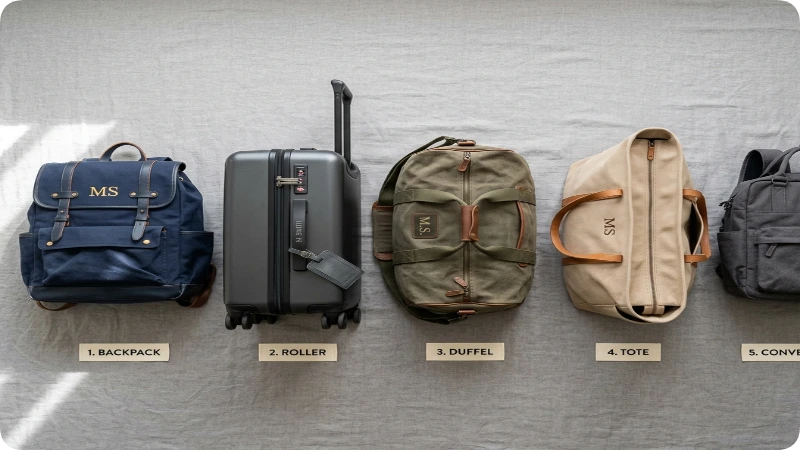
A personalized travel bag goes beyond adding a monogram or luggage tag. True personalization means matching the bag’s size, structure, access points, and organization to your specific travel habits. A solo female traveler hopping between hostels needs something different from a family of four loading into an SUV bound for the Grand Canyon.
Personalization covers five key factors:
- Trip length weekend getaway vs. 3 week international trip
- Travel style backpacker, business traveler, adventure seeker, luxury tourist
- Body fit torso length, shoulder width, and carry preference (back, shoulder, hand)
- Gear requirements tech equipment, camera gear, hiking poles, medical devices
- Airline compliance carry on size limits, checked baggage weight limits
Getting even two of these wrong means the bag fights you on every leg of the journey.
Best Travel Bag Styles and Who Each One Suits
The right bag style depends on your destination type, trip length, and how much you move between locations. Here’s a breakdown of the most common travel bag styles and which traveler each one serves best.
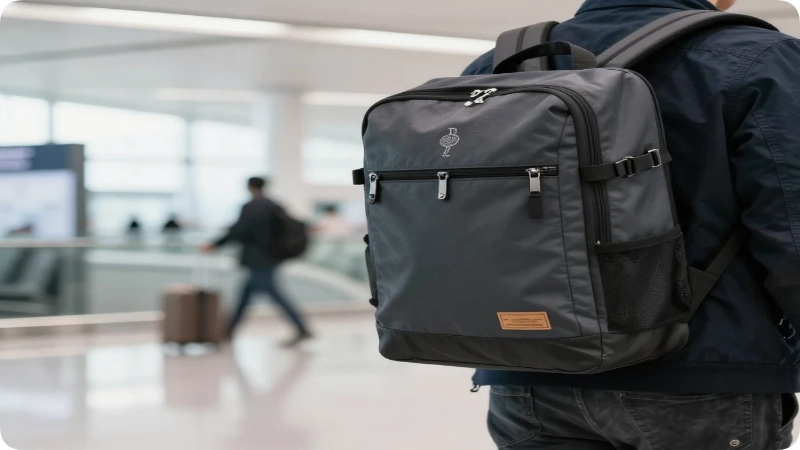
Carry On Backpacks (18–40L)
Carry on backpacks sit in the sweet spot for travelers who want to avoid checked baggage fees and move fast. Most airlines allow a personal item up to 22 x 14 x 9 inches, though size limits vary, always check your specific carrier through their official website before flying. Backpacks in the 26–35L range work well for trips of 3–7 days when packing light.
Best for: Solo travelers, weekend warriors, budget airline flyers, city hoppers
Insider tip: Look for a clamshell opening (like a suitcase) rather than a top loading design. You’ll spend far less time digging for items buried at the bottom.
Rolling Duffel Bags
Rolling duffels combine the flexibility of a soft bag with the convenience of wheels. They compress better than hard sided luggage, which means you can stuff them into overhead bins more easily. Many travel nurses and long haul road trippers swear by this format.
Best for: Road trips, checked baggage travelers, people with back or shoulder pain
Hard Side Carry On Luggage
Hard side spinners offer structure and protection for fragile items, cameras, electronics, gifts and stand up to rough handling on connecting flights. The tradeoff is zero flexibility in size: if the bag doesn’t fit the overhead bin, it gets gate checked.
Best for: Business travelers, shoppers, anyone carrying breakables
Packable Daypack
A packable daypack compresses into its own pocket and weighs under a pound. It’s not your main bag it’s the bag inside your bag. Toss it in your carry on and deploy it for day trips, hikes, or beach runs.
Best for: Every traveler as a secondary bag
Convertible Backpack to Tote
These hybrid bags zip between a shoulder carry and a backpack carry. They tend to top out around 20–25L, making them ideal for business trips, weekend getaways, and travelers who want one bag from gate to meeting room.
Best for: Business travelers, urban explorers, minimalist packers
How to Personalize Your Travel Bag by Trip Type
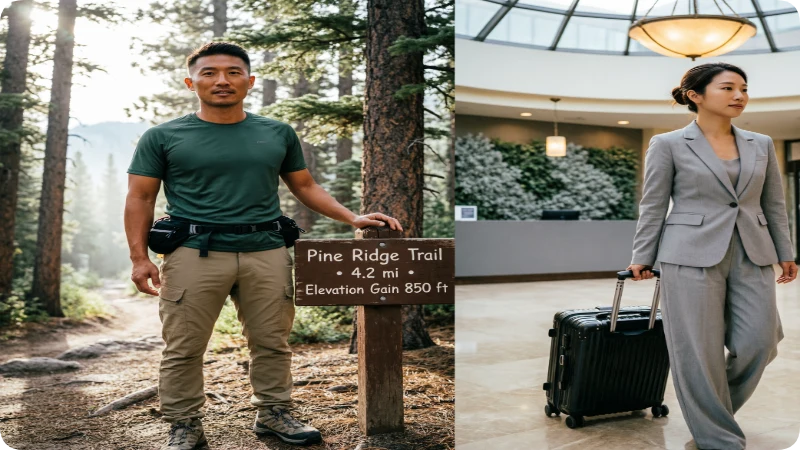
Matching your bag setup to your specific trip type is the fastest way to eliminate packing frustration. The same bag packed differently can work for a national park trek or a city break but only if you start with intention.
National Park and Outdoor Adventure Trips
For trips to places like Yellowstone, Zion, or the Great Smoky Mountains, prioritize a pack with a hip belt to redistribute weight, weather resistant materials (at minimum water resistant, ideally waterproof), and an external attachment system for trekking poles or a sleeping pad. A 40–60L internal frame backpack handles multi day backcountry camping; a 20–30L daypack handles day hikes from a base camp.
The National Park Service recommends carrying a minimum of 2 liters of water per person per day in arid environments like Arches or Joshua Tree. Your bag needs to fit that.
✈️ Domestic Business Travel
Business travelers benefit most from a bag with a dedicated laptop sleeve (confirm it fits your exact laptop dimensions), a separate shoe compartment, and quick access pockets for boarding passes and ID. Aim to stay carry on only whenever possible it saves 20–30 minutes at baggage claim on every trip.
International Long Haul Trips
International trips, especially those covering multiple countries, call for a bag that locks (TSA approved locks accepted by U.S. Customs and Border Protection), has RFID blocking pockets for passport and credit card protection, and compresses enough to meet low cost European or Asian carrier size restrictions. Regulations change, so always verify current international carry on rules through your specific airline’s official booking page before departure.
Beach and Resort Vacations
For beach destinations, prioritize lightweight, sand resistant, and quick dry materials. A mesh or tote style bag works for the beach itself; your main bag should be a mid size roller or duffel that handles sundresses, swimwear, and one or two nicer outfits without adding unnecessary weight.
Personalized Travel Bag Organization: The System That Actually Works
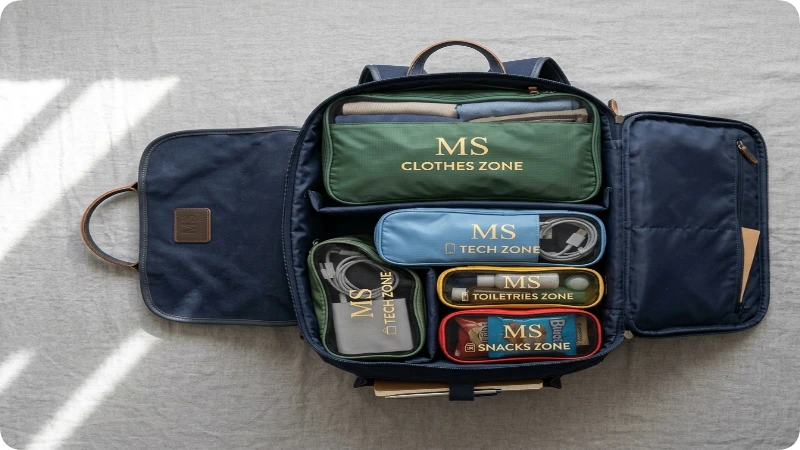
The most effective way to organize a travel bag is the zone system dividing the bag into functional areas for sleep, wear, wash, and access. Packing cubes make this easy and are worth every cent of the $15–$40 most quality sets cost.
Here’s a proven zone layout:
| Zone | What Goes Here | Recommended Container |
| Clothes | Shirts, pants, underwear, socks | Compression packing cube |
| Shoes | 1–2 pairs max | Shoe bag or cube |
| Toiletries | 3 1 1 liquids, skincare, meds | TSA approved quart bag + pouch |
| Tech | Laptop, cables, chargers, adapters | Tech organizer pouch |
| Snacks & docs | Passport, itinerary, snacks | Top access pocket |
| Day bag | Packable daypack | External pocket or inside main |
Compression packing cubes reduce clothing volume by 20–30% in independent tests by travel gear reviewers. That margin often determines If a bag qualifies as carry on or tips into checked territory.
TSA Rules Every Traveler Needs to Know Before Packing
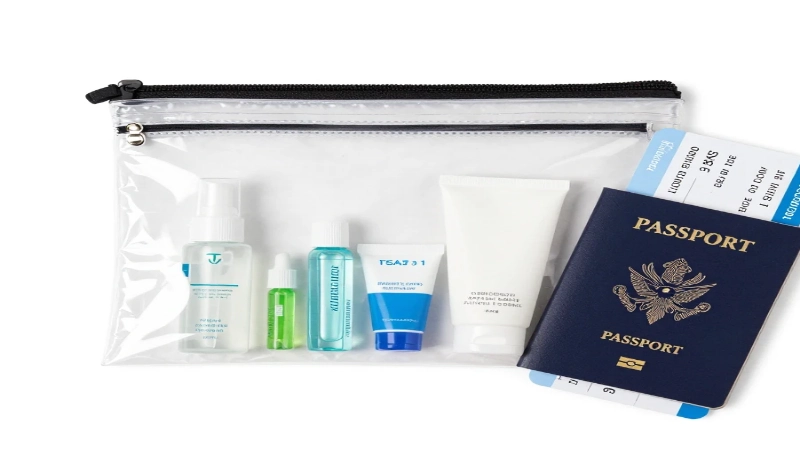
TSA regulates what goes in your bag, and misunderstanding the rules is one of the top reasons travelers experience delays at security checkpoints across U.S. airports. All current TSA guidelines are published at tsa.gov, always verify before each trip, as policies update.
Key rules as of 2025:
- 3 1 1 liquids rule: Liquids, gels, and aerosols must be in containers of 3.4 oz (100ml) or less, all fitting in a single quart sized, clear plastic bag, one bag per passenger
- Laptop and large electronics: Remove from bag and place in a separate bin at the checkpoint unless enrolled in TSA PreCheck
- Medications: Prescription medications, including liquids over 3.4 oz, are permitted with proper labeling TSA recommends keeping them in original packaging
- Power banks: Lithium batteries over 100Wh must be in carry on, not checked bags
- TSA PreCheck: Members keep shoes, laptops, and liquids in their bags, cutting security time significantly. Enrollment is available through the TSA website
How to Pick the Right Size Travel Bag for Your Trip Length
A simple guideline: plan for 7–10 liters of bag capacity per day of travel for most leisure trips, and reduce that number every time you become a more experienced packer. The table below provides a practical starting point.
| Trip Length | Recommended Bag Size | Packing Style |
| 1–2 days | 15–20L | Ultra light / personal item only |
| 3–5 days | 25–35L | Carry on backpack or tote |
| 5–7 days | 35–45L | Carry on roller or large backpack |
| 7–14 days | 45–60L | Carry on + checked or large checked |
| 14+ days | 60L+ or checked | Checked duffel or spinner |
Experienced frequent flyers consistently report that most travelers overpack by at least 30%. Going one bag size smaller than you think you need and committing to laundry mid trip is almost always the smarter call.
5 Insider Tips for Personalizing Your Travel Bag Setup
These are the details most travel guides skip practical refinements that seasoned travelers discover only after years of trial and error.
1. Match your bag color to your travel risk profile. Bright colors like red or orange make bags easier to spot on carousels and deter opportunistic thieves who prefer blending in. Muted neutrals photograph better for travel content but disappear in a sea of black luggage.
2. Customize your carry with removable pouches, not fixed pockets. Bags with detachable pouches let you pull out your tech organizer for the flight and leave everything else in the overhead bin. Fixed pockets lock your system in place.
3. Test your full packed bag before leaving for the airport. Walk around your home with the loaded bag for 10 minutes. If you notice shoulder strain, lower back pressure, or awkward weight distribution after 10 minutes, you’ll feel it much worse after 3 hours in transit.
4. Add a luggage tag with a QR code linking to your contact info, not a physical address. Free QR code generators let you link to an email or phone number. If your bag is lost, whoever finds it can reach you without knowing your home address.
5. Create a “top pocket quick access kit” for the items you need every time you move through an airport: phone charger, snack, lip balm, ear plugs, and a pen (for customs forms on international trips). Never dig to the bottom of your bag at the security checkpoint again.
Common Packing Mistakes and How to Fix Them
Even experienced travelers fall into these traps. Knowing the mistake in advance is half the solution.
Mistake 1: Packing for “what if” scenarios instead of what’s likely. The fix: Before packing any item, ask If you’ll actually use it on at least 3 of the trip’s days. If not, leave it. Most destinations have stores.
Mistake 2: Ignoring the weight distribution of the bag. Heavy items (shoes, toiletries, full water bottles) packed at the top of a backpack shift your center of gravity forward and strain your neck. Pack heavy items closest to your back and at the middle of the pack’s height. For rollers, heavy items go at the bottom, near the wheels.
Mistake 3: Treating a personalized bag as a one size fits all solution. A 40L backpack that works perfectly for a hiking trip to Rocky Mountain National Park may be awkward and impractical for a 3 day business trip to Chicago. Experienced travelers keep two or three core bags for different trip types rather than trying to make one bag do everything.
Hidden Gems: Underrated Add Ons That Transform Any Travel Bag
These three additions rarely make the headline lists, but frequent travelers consistently rank them among their most used travel gear.
1. Compression straps with carabiner loops Many bags include external compression straps that most travelers never use. Compress the bag before flying and you’ll get a noticeably better fit in tight overhead bins. The carabiner loops double as attachment points for a packable rain jacket or sandals.
2. A slim profile RFID blocking passport sleeve that attaches inside your bag’s main compartment Not the wallet kind that lives in your pocket, but a fixed sleeve that stays in the bag. Your passport stays organized, protected, and always in the same place.
3. A reusable silicone bag set for TSA liquids Most travelers use plastic zip lock bags that split, spill, and need constant replacement. Silicone sets from outdoor and travel retailers are sturdier, leak resistant, and reusable across hundreds of trips.
Budget Breakdown: What to Spend on a Personalized Travel Bag
Quality travel bags range from under $40 to over $500, and the right price point depends on how often you travel and what features you genuinely need. Here’s an honest breakdown.
| Budget Range | What You Get | Best For |
| Under $50 | Basic structure, limited organization, shorter lifespan | Occasional travelers, first trips |
| $50–$120 | Solid durability, basic pockets, decent materials | Regular weekend travelers |
| $120–$250 | Quality zippers, smart organization, lifetime warranties common | Frequent flyers, long trips |
| $250–$500 | Premium materials, ergonomic carry systems, full customization | Road warriors, adventure travelers |
| $500+ | Bespoke or luxury bags, custom built gear | Specialty use, collectors, luxury travel |
Money saving tip: Several reputable travel bag brands including those popular among the travel hacking community offer direct to consumer pricing that’s 20–30% below comparable retail. Sign up for brand newsletters before making a purchase; first order discounts are common.
Responsible and Sustainable Packing Choices
Personalizing your travel bag gives you a natural opportunity to make more sustainable choices. Packing lighter reduces your checked baggage, which directly lowers the fuel load on commercial flights, a genuine environmental benefit, not just a convenience.
Practical sustainable choices:
- Choose bags made from recycled materials or certified sustainable fabrics
- Pack a reusable water bottle and filter straw (many water stations exist in U.S. airports post security, reducing single use plastic purchases)
- Pack a tote bag for shopping at destinations to avoid single use plastic bags
- Avoid overpacking toiletries travel size solid shampoo bars and conditioner bars eliminate liquid waste and TSA hassle simultaneously
FAQs
What is the best size for a personalized travel bag as a carry on?
For most U.S. airlines, a carry on bag must fit within 22 x 14 x 9 inches, though this varies by carrier. A bag in the 35–45L range typically fits within those dimensions. Always measure your packed bag and confirm your airline’s specific limit at their official website before traveling. TSA does not regulate carry on size the airline does.
Can you actually travel for a week with just a carry on?
Yes, and most experienced travelers recommend it. The key is packing fabrics that resist wrinkles and odor, limiting shoes to two pairs maximum, and planning one laundry day mid trip. A 35–40L bag with packing cubes handles 5–7 days of clothing for most climates and trip types without issue.
What features make a travel bag “personalized” versus just a regular bag?
A personalized travel bag matches your specific trip type, body fit, packing habits, and gear needs. This could mean a bag with a dedicated camera compartment, a hip belt fit to your torso, RFID blocking pockets, or dimensions precisely chosen for your most used airline’s carry on policy. Personalization is about function and fit, not just aesthetics.
Are personalized or monogrammed travel bags worth the extra cost?
Monogramming adds identification value and a unique visual marker makes your bag instantly recognizable on a carousel. For functional personalization (organizational systems, custom fit), the value is in improved packing efficiency and reduced travel stress. Both are worth it for travelers who take more than a few trips per year.
What should always go in your personal item versus your carry on?
Your personal item (the smaller of your two allowed bags) should hold everything you need during the flight: medications, valuables, electronics, travel documents, snacks, and anything you can’t afford to lose if your overhead bin bag is gate checked. Think of your personal item as your in flight survival kit.
How do you prevent a travel bag from being lost or stolen?
Use a TSA approved lock on zippers, add an AirTag or similar Bluetooth tracker inside the bag, attach a luggage tag with your contact information, and photograph your packed bag before departing. If checking the bag, use a brightly colored luggage strap to distinguish it on the carousel. For anti theft, look for bags with slash resistant material and lockable zippers.
Is travel insurance worth it when carrying expensive personalized gear?
Travel insurance that covers baggage loss, delay, and theft is worth serious consideration when your bag contains high value items such as camera gear, laptops, custom or personalized accessories. Standard airline compensation for lost checked bags is limited by federal DOT regulations, often far below the actual replacement value of your belongings. Verify current coverage options through licensed travel insurance providers before purchasing.
Final Takeaways
Three things to remember before your next trip:
- Personalization is about function first. The best travel bag is the one built around your actual travel habits, not a generic recommendation, a trendy brand, or the biggest bag that fits in the overhead bin.
- Start smaller than you think you need. Every experienced traveler’s most consistent advice is to pack less. A bag that forces you to edit your packing list is doing its job.
- The right bag eliminates friction. When your bag works when everything is where you expect it, the weight sits right, and security is fast travel gets measurably better.
Build your personalized travel bag system once, refine it over a few trips, and you will spend less mental energy on logistics and more on the experience itself. That’s the whole point.