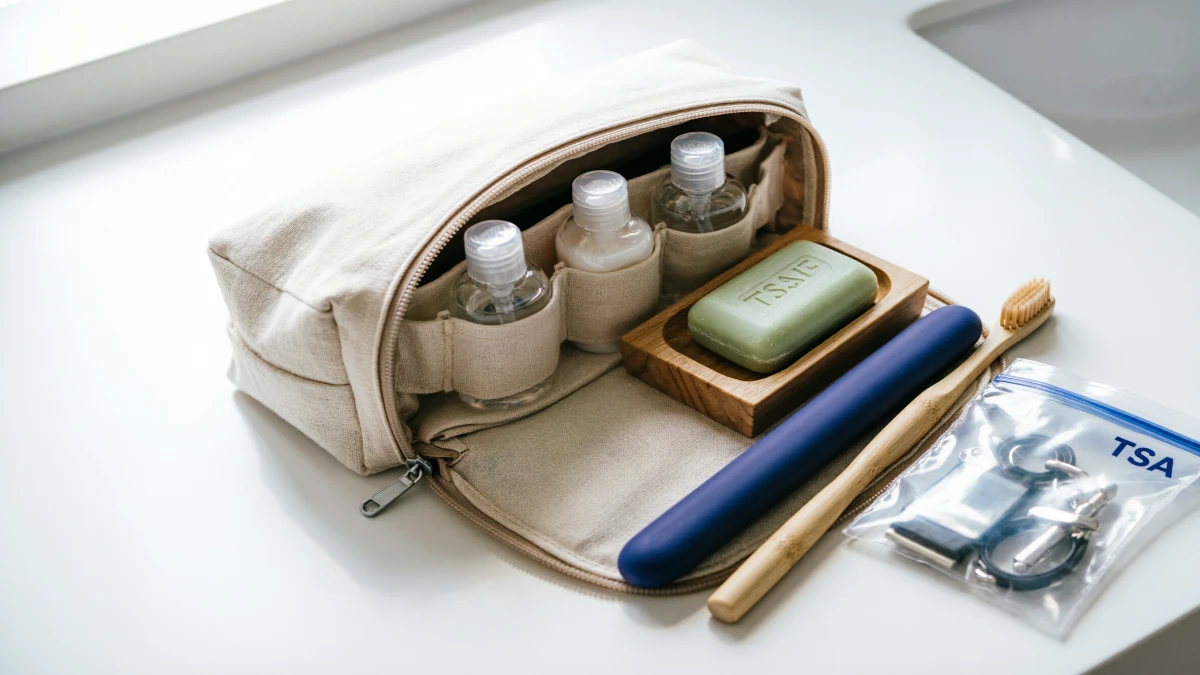
A travel toiletry kit is a compact, organized collection of personal care essentials shampoo, conditioner, toothpaste, deodorant, skincare, and more packed in a TSA compliant bag for use during travel. The best kits balance size, weight, and coverage. For carry on travel, all liquids must fit in a single quart sized clear bag, with each container holding 3.4 oz (100ml) or less, per TSA rules.
Picture this: you’ve just landed in Denver after a red eye flight. Your checked bag is circling baggage claim somewhere, your hotel check in is three hours away, and you desperately need a toothbrush. This exact scenario plays out thousands of times every day across American airports and it almost always traces back to one avoidable mistake: a poorly planned travel toiletry kit.
Getting your toiletry kit right is one of the most underrated parts of travel prep. It affects your comfort, your carry on approval rate at security, and even your budget. If you’re hopping a weekend flight from Chicago to Miami or spending three weeks road tripping through national parks, the right kit keeps you fresh and stress free from departure to return. This guide covers everything TSA rules, smart packing strategy, product picks by trip type, and the mistakes even seasoned travelers still make.
What TSA Actually Allows in Your Travel Toiletry Kit
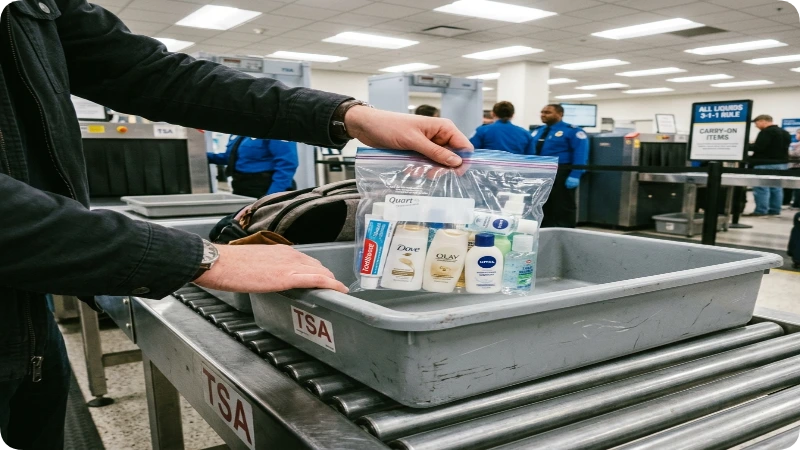
TSA’s 3 1 1 liquids rule governs every carry on toiletry kit in the United States. Each liquid, gel, cream, or paste must be in a container of 3.4 oz (100ml) or less. All containers must fit inside one quart sized, clear, resealable plastic bag, and each traveler is allowed only one such bag. Solid toiletries bar soap, shampoo bars, solid deodorant, and toothpaste tablets are exempt from this rule entirely.
The TSA enforces this rule at every U.S. airport security checkpoint. According to the TSA’s official website, oversized liquids will be confiscated at the checkpoint no exceptions, no matter how expensive the bottle. A few items do get special treatment: medically necessary liquids, baby formula, and breast milk may exceed 3.4 oz but must be declared separately.
Insider tip: Many travelers don’t realize that gel based items including lip gloss, mascara, and even peanut butter count as liquids under TSA rules. When in doubt, pack it in your quart bag or check it.
TSA Approved vs. Checked Bag Toiletries
| Item | Carry On Allowed | Notes |
| Toothpaste (≤3.4 oz) | Yes | Must be in quart bag |
| Full size shampoo | No | Check it or use solid bars |
| Solid shampoo bar | Yes | No liquid rules apply |
| Razor (cartridge) | Yes | Safe blade only |
| Safety razor (loose blade) | No | Blade must be checked |
| Aerosol dry shampoo | Yes | ≤3.4 oz only |
| Perfume/cologne | Yes | ≤3.4 oz, in quart bag |
| Prescription liquid meds | Yes | Declare separately |
How to Build the Perfect Travel Toiletry Kit From Scratch
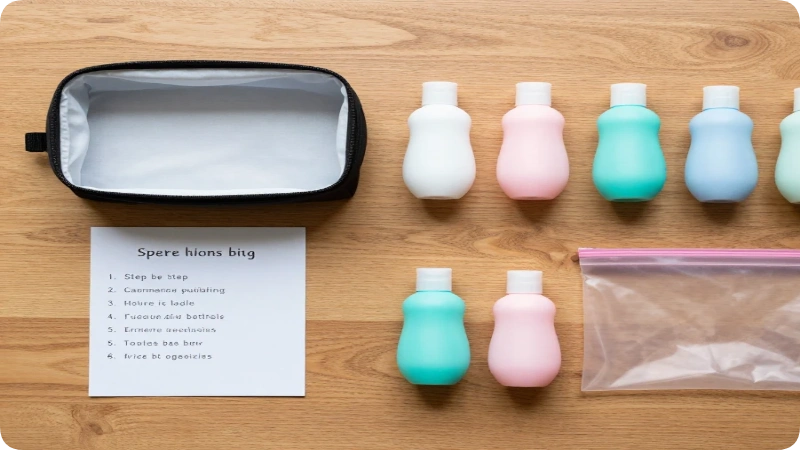
Building an effective travel toiletry kit takes about 20–30 minutes the first time, but once assembled, it saves hours of future packing stress. Start with a good bag, then layer in essentials by category hygiene, skincare, hair care, and health using travel size or decanted versions of your regular products.
Follow this sequence to build your kit right:
- Choose your bag first. Pick a hanging toiletry bag, a flat zip pouch, or a clear quart bag depending on your trip length and storage needs.
- Audit your full size products at home. List everything you use in a typical morning and evening routine.
- Identify what comes in travel sizes. Check your pharmacy for travel size versions before buying empty bottles.
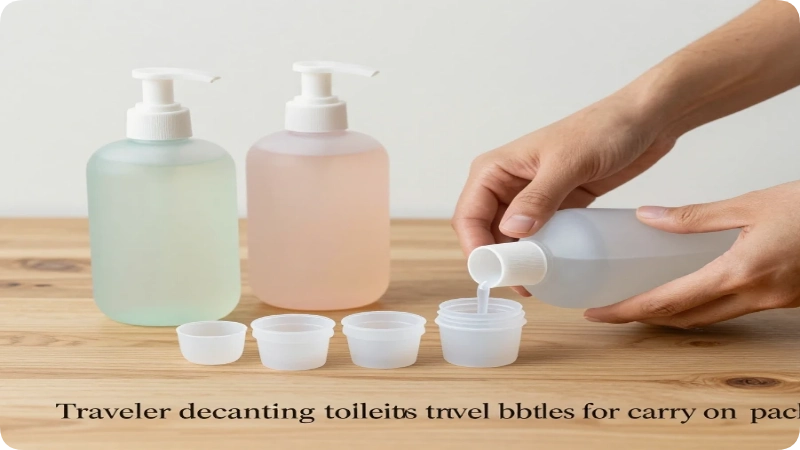
- Decant what you can’t find small. Use leak proof silicone travel bottles (widely available at Target, REI, and Amazon) to fill from full size containers.
- Add a clear TSA quart bag for liquids. Even if your main bag is TSA friendly, having a dedicated quart bag speeds up security.
- Do a trial pack 48 hours before departure. This reveals what you forgot and what you’re over packing.
Best Toiletry Bag Styles by Trip Type
| Trip Type | Best Bag Style | Why |
| Weekend getaway | Flat zip pouch | Lightweight, easy to toss in a daypack |
| 1–2 week trip | Hanging toiletry bag | Maximizes space, hooks on hotel towel bar |
| Road trip | Large roll up organizer | Fits full size products, easy access |
| Backpacking | Ultralight dry bag | Waterproof, minimal weight |
| Business travel | Slim dopp kit | Sleek, fits under airplane seat |
Essential Items Every Travel Toiletry Kit Needs
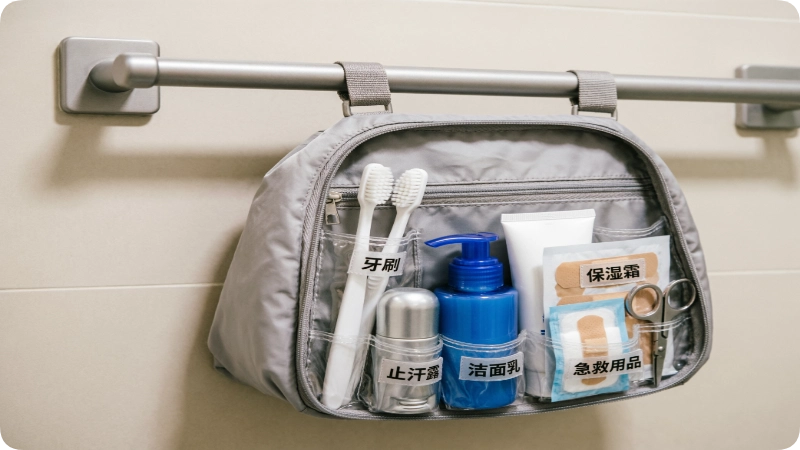
A complete travel toiletry kit covers five core categories: dental care, skin care, hair care, body hygiene, and health/first aid. For most trips of 3–7 days, everything should fit in a quart sized or slightly larger bag when using travel size products.
Don’t let any list overwhelm you, start with the non negotiables and build from there.
Dental Care
- Travel toothbrush (foldable or with cover)
- Travel size toothpaste (≤3.4 oz for carry on)
- Floss picks or a small floss roll
- Travel mouthwash (optional but useful for long flights)
Skin Care
- Moisturizer with SPF one product doing double duty saves precious bag space
- Lip balm with SPF
- Face wash in a small squeeze bottle
- Travel size sunscreen (SPF 30+ recommended by the American Academy of Dermatology)
- Makeup remover wipes (great for planes and long bus rides)
Hair Care
- Travel shampoo and conditioner, or a solid shampoo bar
- Wide tooth comb or a travel brush
- Hair ties and bobby pins (always pack extras)
- Dry shampoo spray or powder for multi day trips
Body Hygiene
- Travel size deodorant or solid deodorant stick
- Body wash in a small squeeze bottle or a bar of soap in a travel soap case
- A small microfiber towel (doubles as gym towel and beach layer)
- Feminine hygiene products as needed
Health Essentials
- Pain reliever (ibuprofen or acetaminophen)
- Antacids
- Any prescription medications (keep in original labeled containers)
- Adhesive bandages (a small handful)
- Hand sanitizer (≤3.4 oz for carry on)
- Any allergy medications
Choosing the Right Travel Toiletry Bag
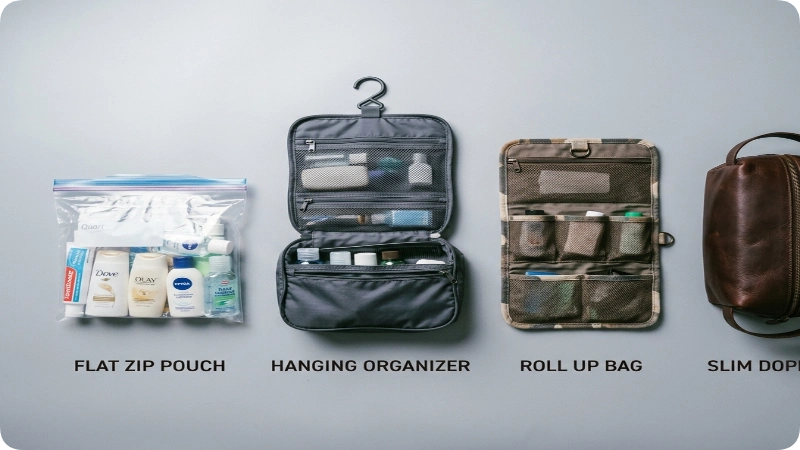
The right toiletry bag depends on your travel style, trip length, and If you’re carrying on or checking luggage. Hanging bags with multiple compartments work best for most travelers because they unpack instantly in any hotel bathroom. Budget friendly options start around $10–15, while premium organizers run $40–80.
When shopping for a travel toiletry bag, these features matter most:
- Water resistant lining because leaks happen, no matter how well you seal bottles
- Hanging hook essential if hotel bathroom counter space is limited (it often is)
- Clear or mesh pockets so you can find items without unpacking everything
- Size compatibility a bag that fits your packing style without forcing a Tetris challenge
Popular categories include dopp kits (classic zippered pouches common among men), hanging organizers, roll up bags for longer trips, and ultralight pouches for minimalist packers.
Insider tip: Look for a toiletry bag with a removable inner clear pouch. You can pull it out at TSA security in seconds rather than digging through your carry on.
Travel Toiletry Kit Packing Strategy: Less Is Always More
Most travelers overpack toiletries. Research shows that the average person uses only 60–70% of the toiletries they bring on a trip. Strategic packing cuts weight, avoids TSA issues, and leaves room for souvenirs on the return trip.
Here’s how to pack smarter:
The “Use It or Leave It” Test
Before packing anything, ask: Did I use this in the last 48 hours? If the answer is no, it probably doesn’t need a spot in your travel kit. Travelers often pack “just in case” items face masks, multiple hair serums, a full makeup bag that never leave the toiletry pouch.
Solid Toiletries Are a Game Changer
Solid shampoo bars, conditioner bars, solid deodorants, and toothpaste tablets take up zero liquid space and typically last longer than liquid equivalents. Brands like Lush, HiBar, and Ethique offer solid options that many frequent flyers swear by. A single shampoo bar can replace a full bottle of liquid shampoo.
Decanting vs. Buying Travel Sizes
Buying travel size products is convenient but expensive over time. A travel size shampoo costs roughly $1.50–3.00 per ounce, while decanting from a full size bottle into a reusable silicone container costs a fraction of that. If you travel more than three or four times per year, reusable bottles pay for themselves fast.
The 3 Night Rule
For trips of three nights or fewer, challenge yourself to fit everything including liquids into a single quart sized TSA bag. It forces ruthless editing. Most seasoned travelers are surprised at how comfortable this is once they try it.
Travel Toiletry Kits by Trip Type
Different trips call for different kits. A beach vacation in Florida requires different products than a winter ski trip to Colorado or a business conference in New York City. Matching your kit to your destination saves both space and stress.
Weekend Domestic Trip (2–3 Nights)
Keep it ruthlessly minimal. A flat zip pouch with a toothbrush, toothpaste, deodorant, face wash, moisturizer, and any medications covers most people for a short trip. Skip the hair dryer hotels provide them. Skip the full makeup kit bring only your everyday staples.
Beach or Tropical Vacation
Your kit needs to be sun focused. Sunscreen takes priority pack SPF 30 or higher for face and body, plus a reef safe formula if you’re visiting protected waters like Hawaii or the Florida Keys. After sun lotion or aloe vera gel is worth the bag space. Waterproof mascara and a waterproof lip balm round out the beach specific add ons.
Winter/Ski Trip
Cold, dry air is brutal on skin. Pack a richer moisturizer, lip balm with SPF (UV rays are stronger at altitude), and a gentle but effective hand cream. Chapped lips and dry, cracked hands are the most common comfort complaints on ski trips. Add eye drops if you wear contacts, since heated lodge air causes dryness.
International Trip (1–3 Weeks)
For longer international travel, you have two options: pack more products for the full trip, or pack a smaller starter kit and plan to buy refills at your destination. Many experienced international travelers buy shampoo, conditioner, and body wash locally it saves weight and is fun to discover local brands. The CDC recommends checking destination specific health prep well in advance for international trips, which may include prescription medications that need to be packed securely.
Road Trip
Road trips are the one scenario where full size products make sense your car is the luggage. A large roll up organizer or a standard size toiletry bag works perfectly. Keep a separate small pouch in your car’s center console with lip balm, hand sanitizer, sunscreen, and pain reliever for easy road access.
Hotel Toiletries: What to Skip Packing and What to Always Bring
Most U.S. hotels provide soap, shampoo, conditioner, and lotion. You can safely leave these four items out of your kit when staying at major hotel chains. However, hotels rarely provide dental floss, shaving cream, specific skincare products, or feminine hygiene items.
Here’s a quick reference:
| Usually Provided | Rarely Provided |
| Bar soap or body wash | Dental floss |
| Shampoo & conditioner | Feminine hygiene products |
| Lotion | Specific skincare/medications |
| Blow dryer | Shaving cream |
| Basic toiletry kit items (some luxury hotels) | Deodorant |
Note: As of recent years, many large hotel chains including Marriott, Hilton, and IHG properties have phased out single use plastic toiletry bottles in favor of in shower dispensers, per state and corporate sustainability initiatives. If you rely on hotel provided liquids, verify availability before your trip.
5 Toiletry Packing Mistakes (And How to Fix Them)
Even experienced travelers repeat the same packing errors with toiletries. These five mistakes are the most common and the most fixable.
Mistake 1: Packing Full Size Products in Carry On
The fix: Decant into travel size containers or buy travel sizes. TSA confiscates full size liquids at security, no exceptions. You lose both the product and the money.
Mistake 2: Skipping the Leak Test
Always squeeze air out of liquid bottles before sealing, then flip the container upside down over a sink for 30 seconds. If it leaks at home, it will leak in your bag at altitude. The fix: Use silicone squeeze bottles with screw top lids, or store liquid bottles inside a ziplock bag inside your toiletry pouch.
Mistake 3: Forgetting to Account for Humidity and Heat
Solid cosmetics melt in hot checked bags during summer travel. Lip balm, solid perfume, and beeswax based products can turn into a mess. The fix: Pack heat sensitive solids in your carry on, where cabin temperature stays regulated.
Mistake 4: Overpacking “Just In Case”
Travelers commonly pack three types of face wash, two sunscreens, and an entire makeup collection then use half of it. The fix: Do a 48 hour home test. Track exactly what you use on a regular day, and pack only that.
Mistake 5: Ignoring Weight Distribution
A heavy toiletry bag throws off your luggage balance and adds up fast on weight limited checked bags. The fix: Put your toiletry bag near the center of your suitcase, not on top. For carry ons, store it upright in the overhead bin.
How to Organize Your Travel Toiletry Kit for Easy Access
Organization is the difference between a travel toiletry kit that frustrates you and one that feels effortless. Group items by routine morning, evening, and as needed and keep your most used items in the most accessible pockets.
Use a simple three zone system inside your bag:
- Zone 1 (front/top pocket): What you reach for every day toothbrush, toothpaste, deodorant, face wash
- Zone 2 (main compartment): Secondary daily items moisturizer, sunscreen, hair products, shampoo
- Zone 3 (inner pocket): Health items and medications pain reliever, bandages, prescriptions
Color coded silicone bottle sets are an inexpensive way to know instantly which bottle is which without reading labels at 6 a.m. Many frequent travelers label the cap of each bottle with a small piece of washi tape marked with a letter: S for shampoo, C for conditioner, FW for face wash.
Insider tip: Store your razor with the blade facing down or capped, and keep it in a separate small pocket from soft items like cotton pads blades snag and ruin them faster than you’d expect.
Travel Toiletry Kits for Specific Travelers
For Families Traveling With Kids
Families need two or three kits: one for adults, one (or two) for kids. Children’s products are kid friendly toothpaste, gentle shampoo, diaper cream, baby wash should stay in a dedicated pouch to avoid mix ups. The TSA allows medically necessary baby formula and breast milk to exceed 3.4 oz; declare these at the checkpoint. Pack a small first aid kit separately from toiletries including children’s pain reliever, fever reducer, and any prescription medications with doctor’s documentation.
For Solo Travelers and Minimalists
Solo travel is the ideal scenario for a true minimalist kit. A single quart sized bag can realistically cover a week long trip for most solo travelers when you commit to solid toiletries and multi use products. A tinted moisturizer with SPF replaces both sunscreen and foundation. A 2 in 1 shampoo and conditioner bar cuts two bottles to zero. The savings in bag weight and airport security speed alone are worth the adjustment period.
For Business Travelers
Consistency matters more for frequent business travelers than for vacation travelers. Many business road warriors keep a duplicate toiletry kit, a permanent travel set that stays packed between trips. This eliminates the repacking step entirely. Focus on professional must have: a quality razor, reliable deodorant, wrinkle release spray (technically a laundry item but fits in a toiletry bag), a small cologne or perfume, and quick dry skincare products.
Eco Friendly and Sustainable Toiletry Kit Options
Sustainable travel toiletry kits reduce plastic waste and are increasingly easy to assemble. Solid shampoo bars, bamboo toothbrushes, reef safe sunscreen, and refillable containers are all mainstream options available at most pharmacies and outdoor retailers like REI.
The environmental case for sustainable kits is straightforward: the travel industry generates billions of single use plastic toiletry bottles annually. When travelers switch to solid alternatives and refillable bottles, the cumulative impact is significant. Hawaii, Palau, and the U.S. Virgin Islands have introduced legislation restricting certain chemical sunscreen ingredients to protect coral reef ecosystems check your destination’s rules before packing.
Practical sustainable swaps:
- Bamboo toothbrush instead of plastic (same function, zero waste at end of life)
- Shampoo and conditioner bars instead of liquid bottles
- Toothpaste tablets instead of paste tubes
- Package free deodorant in cardboard or glass packaging
- Reusable silicone squeeze bottles instead of single use travel containers
Budget Breakdown: What a Travel Toiletry Kit Actually Costs
A functional travel toiletry kit can cost anywhere from $15 to $150+, depending on the bag quality and If you buy dedicated travel products or decant from what you already own. For most travelers, a solid, complete kit for under $40 is entirely achievable.
| Kit Type | Estimated Cost | What’s Included |
| Budget starter kit | $15–25 | Basic travel bag + travel size essentials from pharmacy |
| Mid range complete kit | $35–60 | Quality hanging bag + reusable bottles + multi use products |
| Premium organized kit | $75–150 | High end bag + curated product set + skincare upgrades |
| Minimalist solid kit | $20–45 | Solid bars + bamboo toothbrush + compact pouch |
Money saving tip: Dollar stores and pharmacy chains like CVS and Walgreens stock a solid range of travel size toiletries for $1–3 each. For one off trips, this is often more economical than buying decanting equipment. For regular travelers, the reusable bottle investment pays back within two or three trips.
Insider Tips From Frequent Travelers
After talking to frequent flyers, road trippers, and travel bloggers across the U.S., these five tips came up again and again:
- Pre pack your kit and never fully unpack it. After every trip, restock what you used. Your kit is always ready for the next departure.
- Use hotel shampoo for laundry in a pinch. Most hotel shampoos work fine for a quick hand wash of delicate clothing items in the sink.
- Pack dry shampoo even if you wash your hair daily. Red eye flights, camping mornings, and back to back meeting days all test your hair washing schedule. Dry shampoo buys you a day.
- Freeze a small tube of aloe vera gel before a beach trip. It fits in your quart bag and doubles as sunburn relief and a cooling pack on the flight.
- Buy a second set of everyday products specifically for travel. Keeping a travel dedicated set means your regular routine is never disrupted before departure.
FAQs
What should be in a travel toiletry kit?
A travel toiletry kit should include dental care (toothbrush, toothpaste, floss), skincare (moisturizer with SPF, face wash), hair care (shampoo, conditioner or bars), body hygiene (deodorant, soap or body wash), and basic health items (pain reliever, bandages, hand sanitizer, any prescriptions). For carry on travel, all liquids must be 3.4 oz or less and fit in a single quart sized clear bag per TSA rules.
Can I bring a full toiletry bag on a plane?
Yes, but only if liquids comply with TSA’s 3 1 1 rule: each liquid or gel must be in a container of 3.4 oz (100ml) or less, and all liquid containers must fit in one quart sized clear resealable bag. Solid toiletries, bar soap, shampoo bars, solid deodorant, toothpaste tablets don’t count as liquids and can travel in any quantity in your carry on.
How do I pack a toiletry bag to prevent leaks?
Squeeze excess air out of all liquid bottles before sealing. Turn each bottle upside down for 30 seconds to test for leaks before packing. Place all liquids in a resealable zip bag inside your toiletry pouch. Travel at altitude changes cabin pressure, which can push liquid out of loosely sealed bottles and always use screw top containers rather than flip top caps.
What size toiletry bag is best for carry on travel?
For carry on travel under TSA guidelines, a quart sized clear bag is the minimum. A compact toiletry bag of about 6″ x 8″ x 3″ fits comfortably in most carry ons while holding enough for a 1–2 week trip using travel size or solid products. Hanging toiletry bags around this size work well for most travelers who prefer organization over pure minimalism.
Are there toiletry kits made specifically for flying?
Yes several brands sell TSA approved toiletry kits that include a built in clear quart bag, travel size containers, and compact organization. Many outdoor retailers (REI, L.L.Bean) and travel specialty stores carry these. That said, you don’t need a branded “TSA kit” any quart sized clear zip bag from a grocery or dollar store satisfies the TSA requirement.
What toiletries can I buy at the airport if I forget something?
Major U.S. airports have pharmacies or general stores in terminal shopping areas where you can buy travel size versions of most toiletry basics: toothpaste, toothbrushes, deodorant, face wash, razors, and pain relievers. Expect to pay a premium airport retail prices typically run 20–40% higher than grocery store prices. Better to pack your own kit but reassuring to know backup options exist.
How do I make my toiletry kit more eco friendly?
Swap liquid bottles for solid alternatives shampoo bars, conditioner bars, solid deodorant, and toothpaste tablets eliminate most of the liquid volume. Use a bamboo toothbrush instead of plastic. Invest in a set of reusable silicone travel bottles rather than single use travel size containers. Choose reef safe, biodegradable formulas for sunscreen and soap, especially if traveling to coastal or protected natural areas.
Final Thoughts: Your Travel Toiletry Kit Is a One Time Investment
Getting your travel toiletry kit dialed in takes a few trips and a little trial and error but once it’s right, it genuinely transforms how you pack. Three things to walk away with: TSA rules are non negotiable, so build your carry on kit around them from the start. Solid toiletries are the single biggest upgrade most travelers haven’t made yet. And an always ready, pre packed kit removes one of the most common sources of pre trip stress.
Your kit doesn’t need to be expensive or Instagram perfect. It needs to be complete, organized, and ready to go when you are. Pack it smart, pre test for leaks, and adjust after every trip until it feels effortless. That’s how experienced travelers do it.
Safe travels and may your quart bag always pass security on the first try. ✈️

Gordon Ramsay is a travel writer and destination researcher who helps U.S. travelers plan smarter trips, covering destinations, seasonal trends, budgets, and logistics to help readers decide where—and when—to go.
Rather than simply listing popular places, Gordon Ramsay focuses on what travelers actually need: comparing weather against crowds, weighing costs and accessibility, and researching current conditions alongside official tourism guidance—delivering honest, practical advice without the hype.











2 thoughts on “The Best Travel Toiletry Kit Guide for Carry-On and Checked Bags”