Quick Answer:
Insulated freezer bags for travel use thermal lining to keep frozen or chilled items cold for several hours. You can carry them in checked or carry-on bags when TSA allows their contents, and frozen gel packs, dry ice, or a pre-chilled liner can extend cooling time beyond four hours.
Nothing ruins a trip faster than opening a cooler bag to find your breast milk, seafood, medication, or grandma’s frozen tamales sitting in a puddle. Anyone who has traveled with perishables knows the panic of watching a security line stretch out while a bag of ice packs slowly turns to slush. The good news is that with the right insulated freezer bag and a little planning, keeping food and medicine cold from your kitchen to your final destination is completely manageable.
This guide covers everything a USA traveler needs to know about insulated freezer bags for travel, how they work, how long they actually keep items cold, what TSA allows through security, and which packing mistakes cause the most spoiled food and stressful checkpoint delays. If it’s a cooler bag for a road trip, a breast milk bag for a nursing parent, or a soft sided freezer tote for shipping fish home from a fishing trip, the details below are built from real TSA guidance and practical field tested advice.
What Are Insulated Freezer Bags for Travel?
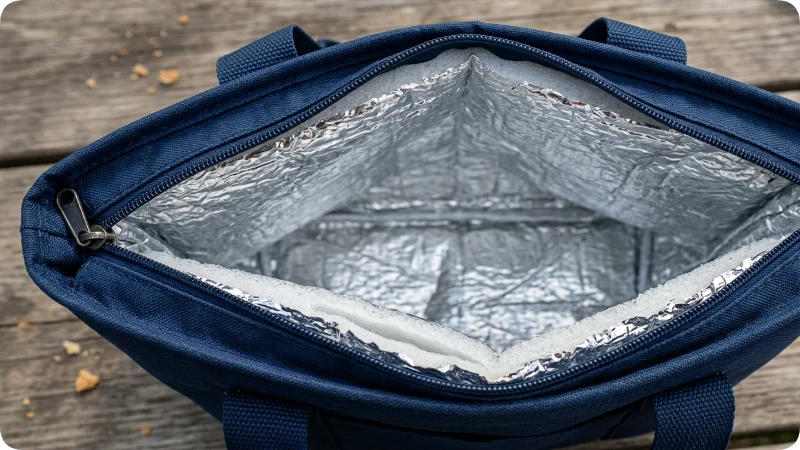
Insulated freezer bags are soft, flexible containers lined with foam, foil, or thermal reflective material that slow down temperature change. Unlike a hard shell cooler, they fold flat when empty, fit inside a suitcase or backpack, and are designed specifically to survive the temperature swings of airports, cars, and long layovers.
Most travel grade insulated bags use a combination of closed cell foam insulation and a radiant foil or Mylar style lining, then sealed with a zipper or roll top closure. The better the seal, the longer the cold air stays trapped inside. Some are built with leak proof linings specifically for raw meat, seafood, or breast milk, while others are simple lunch bag style totes meant for a few hours of use.
How Long Will an Insulated Freezer Bag Keep Food Frozen?
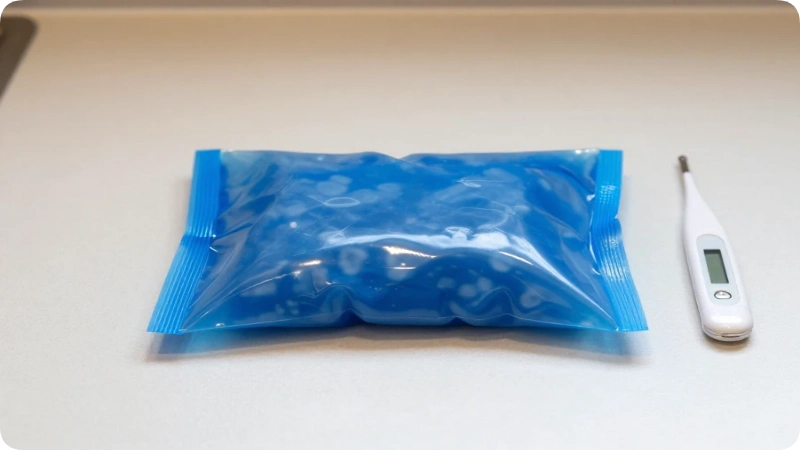
An insulated freezer bag can keep food cold for several hours, but keeping food frozen is much harder than simply keeping it chilled. A well-insulated bag packed tightly with fully frozen food and multiple frozen gel packs may maintain freezing conditions for part of a travel day, while a thin lunch-style bag may only keep contents cold for a few hours.
For longer trips, start with food that is completely frozen rather than partially thawed. Pre-chill the inside of the bag, use enough frozen packs to surround the food, and minimize the number of times you open the bag.
Temperature outside the bag also matters. A freezer bag sitting in a hot car can warm much faster than one kept in an air-conditioned cabin. Direct sunlight, an empty bag with lots of air space, and frequent opening can all shorten the effective cooling time.
For overnight or multi-day travel, don’t rely on a soft insulated bag alone. Consider a higher-insulation cooler, properly packaged dry ice where permitted, or shipping temperature-sensitive items using a service designed for perishables.
Important: “Still cold” does not automatically mean “still safe.” For meat, seafood, dairy, and other perishables, use an appropriate food thermometer when temperature safety matters.
How to Choose an Insulated Freezer Bag for Air Travel
Choosing an insulated freezer bag for a flight starts with what you’re carrying and how long it needs to remain cold.
If you’re in a short domestic flight, a compact soft-sided bag with thick insulation and one or two fully frozen gel packs may be enough. For breast milk or formula, choose a bag designed around bottles or storage bags so the contents stay organized and the cooling packs make good contact.
For frozen food or seafood, prioritize a leak-resistant or leakproof interior, strong zipper construction, and enough insulation to surround the contents with cold packs. A bag that looks large isn’t necessarily better if it leaves large pockets of warm air inside.
Before heading to the airport, check three separate requirements:
- TSA rules for the food, ice packs, breast milk, formula, or other contents.
- The airline’s baggage-size rules if the insulated bag will be used as a carry-on or personal item.
- Any special rules for dry ice if you plan to use it.
The bag itself does not guarantee that the contents will be accepted. Airport screening decisions are based on the items inside the bag and applicable security rules.
TSA Rules for Insulated Freezer Bags and Frozen Items
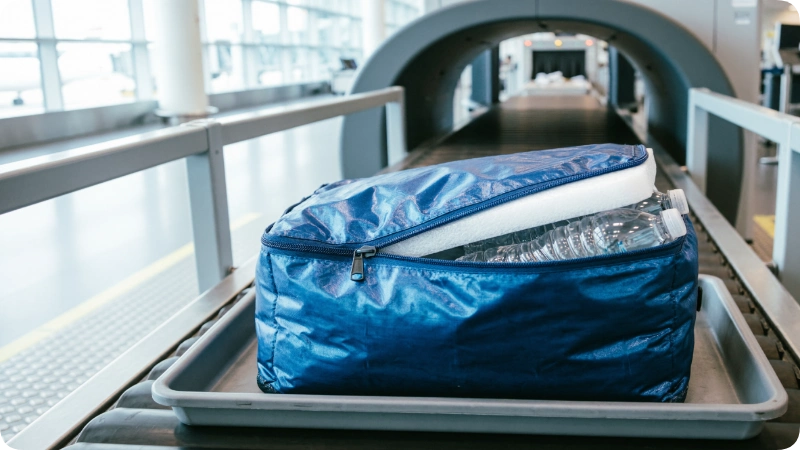
TSA allows frozen food, ice packs, and insulated cooler bags in both carry on and checked luggage, but the ice or gel packs must be completely frozen solid at the security checkpoint. If ice packs are packed with food in a cooler, they must be completely frozen when brought through screening, and if they’re partially melted with any liquid at the bottom, they’re treated differently.
Once a gel pack has started to melt, go slushy, or pool liquid at the bottom of the container, it falls under the standard 3 1 1 liquids rule meaning it would need to be under 3.4 ounces and fit in a quart bag, which defeats the purpose of a full size freezer bag. The one major exception is medical necessity: gel packs needed for medical reasons, including with breast milk, are allowed in any state frozen, melted, or slushy as long as they’re declared to the TSA officer for inspection.
Travelers using dry ice instead of gel packs have more flexibility, but it comes with its own rulebook. Dry ice is allowed in carry on and checked bags, though it’s capped at roughly 5.5 pounds per passenger, must be in a package that vents carbon dioxide gas, and airlines typically require advance notice before boarding.
Quick TSA Reference Table
| Item | Carry On | Checked Bag | Key Condition |
| Frozen solid food | ✅ Allowed | ✅ Allowed | Must be solid, not slushy |
| Gel ice packs | ✅ Allowed | ✅ Allowed | Must be frozen solid |
| Partially melted gel packs | ⚠️ Limited | ✅ Allowed | Subject to 3.4 oz liquid rule |
| Medical gel packs | ✅ Allowed | ✅ Allowed | Any state; declare at checkpoint |
| Dry ice | ✅ Allowed | ✅ Allowed | 5.5 lb limit, vented packaging, notify airline |
TSA rules can change, and individual officers have discretion at the checkpoint, so it’s worth checking the current guidance on tsa.gov the week of a flight, especially around holidays when perishable food travel spikes.
Choosing the Right Insulated Freezer Bag for Your Trip
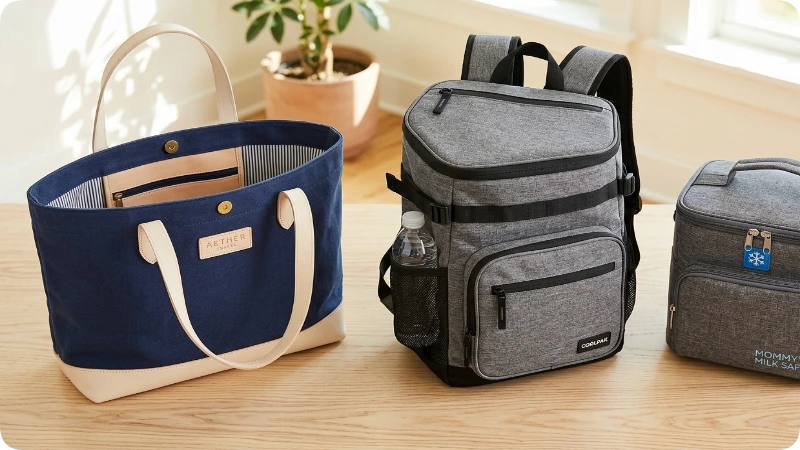
The right bag depends less on brand and more on trip length, what’s being carried, and how it needs to be packed. A parent flying with three days of pumped breast milk needs different features than someone driving home from a fishing trip with a cooler of salmon.
Soft Sided Cooler Totes
These are the most popular choices for road trips and family travel. They usually have a wide zippered opening, a wipeable leak resistant lining, and enough room for several gel packs plus food. Look for double stitched seams and a lining rated for raw meat or fish if that’s the primary use.
Breast Milk and Baby Food Bags
These are smaller, structured bags designed to fit 3 to 6 storage bottles or bags alongside a slim gel pack. Insulated brands built specifically for this purpose tend to have a rigid frame so bottles don’t tip, plus a wipeable interior for spills.
Collapsible Backpack Coolers
Built for hikers, campers, and travelers who need to walk with their cold items rather than roll a cooler through an airport. These sacrifice some insulation power for portability and usually pack flat into a daypack when empty.
Heavy Duty Freezer Shipping Bags
Designed for transporting fish, game meat, or large frozen hauls home after a trip. These are thicker, often foil lined on all sides, and built to be combined with dry ice for multi day transport.
Best Way to Pack an Insulated Freezer Bag for Travel
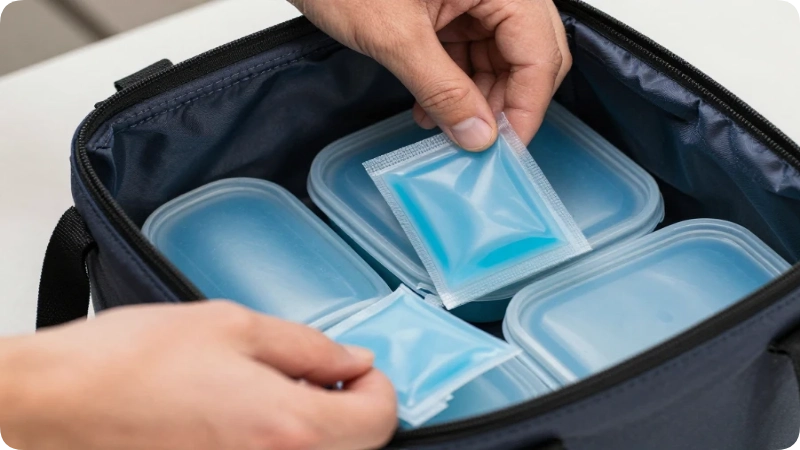
Packing technique can make a surprisingly large difference in how long your food stays cold.
Start by freezing the food completely and chilling the insulated bag before packing. Place the coldest items toward the center and surround them with frozen gel packs. Use smaller packs to fill gaps instead of leaving large pockets of air.
A practical packing order is:
- Put a frozen gel pack on the bottom.
- Add the frozen food in tightly packed containers.
- Place additional gel packs around the sides.
- Add another frozen pack on top.
- Close the bag completely and keep it closed during transit.
Use leakproof containers for anything that could spill as it thaws. For raw meat or seafood, double-bagging provides an extra barrier against leaks.
If you’re flying, keep the cooling packs and food easy to access for inspection. This can make a checkpoint inspection much less disruptive than burying everything underneath layers of clothing or other luggage.
- Pre chill the empty bag in a refrigerator or freezer for at least an hour before packing.
- Freeze gel packs completely solid ideally 24 hours in a home freezer, not just a few hours.
- Pack items tightly, using extra gel packs or frozen washcloths to fill empty gaps.
- Place gel packs on top and around the sides, since cold air sinks and this traps it inside.
- Seal the bag fully and avoid opening it until arrival to preserve internal temperature.
- Wrap the whole bag in a light colored towel if it will sit in direct sun or a hot trunk.
How to Keep Food Frozen Longer While Traveling
If your goal is to keep food frozen rather than merely chilled, preparation matters more than buying the largest bag.
Freeze everything completely before departure. Partially frozen food has much less thermal reserve than food that has been frozen solid for many hours.
Pre-chill the bag. Put the empty bag in a refrigerator or cool environment before packing when its construction allows it.
Use multiple frozen packs. Surround the food rather than placing one large pack on top.
Reduce empty space. A tightly packed bag generally retains cold better than one filled with warm air.
Keep the bag closed. Opening it repeatedly during a road trip or airport layover allows warm air to replace the cold air inside.
Protect it from heat. Don’t leave the bag in direct sunlight or inside a hot vehicle. On road trips, the air-conditioned passenger area is generally preferable to a hot trunk.
For trips extending beyond a single day, consider whether a soft freezer bag is actually the right tool. A high-quality hard cooler, appropriate dry ice setup, or professional perishable-food shipping service may provide better temperature control.
Insulated Freezer Bag vs. Hard Cooler: Which Is Better?
An insulated freezer bag is usually the better choice when portability and low weight matter most. It folds down when empty and is easy to carry through an airport or use as part of a road-trip packing system.
A hard cooler generally offers better insulation and physical protection but takes up more space and can be awkward when you’re moving between airports, hotels, and rental cars.
| Feature | Insulated Freezer Bag | Hard Cooler |
| Portability | Excellent | Moderate |
| Empty storage | Folds down | Bulky |
| Insulation | Good to very good | Usually better |
| Best for flights | Shorter trips | Longer trips, depending on airline |
| Best for road trips | Short to medium trips | Long trips |
| Leak protection | Depends on model | Usually strong |
| Weight | Lightweight | Heavier |
For a same-day flight, an insulated freezer bag is often the more convenient option. For a long road trip where maintaining a low temperature is the priority, a quality hard cooler may be worth the extra bulk.
Food Safety: When Should You Throw Food Away?
Keeping food inside an insulated bag doesn’t automatically make it safe indefinitely. Perishable foods such as meat, seafood, dairy, and prepared meals need to remain at safe temperatures during transportation.
If food has become noticeably warm and you don’t know how long it has been outside safe temperature conditions, don’t rely on smell or appearance alone to decide whether it is safe. Bacteria that cause foodborne illness may not change the food’s smell, color, or texture.
For long-distance travel, a small food thermometer can help you determine whether chilled food has remained within an appropriate temperature range.
When traveling with frozen food, another useful distinction is whether the food is still frozen solid, still contains ice crystals, or has completely thawed. If you’re unsure about a perishable item after a long journey, consult current USDA food-safety guidance rather than assuming the insulated bag protected it sufficiently.
Traveling With Breast Milk, Formula, and Baby Food
Parents traveling with breast milk, formula, or baby food should plan differently from travelers carrying ordinary food.
These items may receive special consideration at airport security, and cooling packs used to maintain them can also be treated differently from ordinary ice packs. Keep breast milk, formula, and cooling supplies together and tell the TSA officer that you are carrying medically or nutritionally necessary items for an infant.
An insulated breast milk bag can make airport travel easier because bottles or storage bags stay organized and cooling packs remain close to the milk. Labeling containers and carrying enough cooling capacity for the entire journey can also reduce stress during delays.
Because screening procedures and airline policies can change, check current TSA guidance before departure and allow extra time at the checkpoint.
Traveling With Medication in an Insulated Freezer Bag
Some medications require refrigeration or temperature-controlled storage, but not every medication should be frozen or stored in the same way.
Before traveling, check the medication’s storage instructions or ask a pharmacist whether it should remain refrigerated, protected from freezing, or maintained within a specific temperature range.
An insulated bag can slow temperature changes, but it does not actively control temperature. For medication that must remain within a narrow range, use an appropriate medical-grade cooling solution rather than assuming a standard freezer bag is sufficient.
Keep medication in its original packaging when practical and carry any documentation that may help explain the medical necessity of temperature-control supplies during airport screening.
Common Mistakes Travelers Make With Freezer Bags
Mistake 1: Packing partially thawed items. Many travelers assume “cold” is good enough, but TSA and food safety guidance both require items to be fully frozen at the point of packing, not just chilled.
Mistake 2: Overpacking a cheap bag. A budget bag without real insulation lining will lose its cold within an hour regardless of how many gel packs go inside it; the lining matters more than the pack count.
Mistake 3: Checking bags with dry ice unlabeled. Airlines require dry ice to be declared and properly labeled; failing to notify the airline can result in the bag being pulled from the flight entirely.
Alternatives to Insulated Freezer Bags
Insulated bags aren’t the only option, and for some trips, they’re not the best one.
- Hard shell rolling coolers hold temperature longer but are bulky and count as an extra checked item on flights.
- Vacuum insulated bottles work well for a single meal or a few servings but not for bulk food.
- Airline or hotel freezer service some hotels and a few airlines will store small frozen items on request, though this isn’t guaranteed and should be confirmed ahead of time.
- Shipping perishables via overnight courier with dry ice is often more reliable than carrying them for trips involving multiple flights or long layovers.
Who Insulated Freezer Bags Are Best For
These bags are genuinely useful for a specific set of travelers: breastfeeding parents transporting milk across flights, home cooks bringing frozen meals to a vacation rental, anglers and hunters shipping their catch home, and anyone carrying temperature sensitive medication like insulin. Travelers who only need to keep a drink cold for an hour, on the other hand, are usually better off with a simple insulated tumbler; a full freezer bag is overkill for that use case.
Is It Worth Buying a Dedicated Insulated Freezer Bag?
For frequent travelers carrying perishables more than a couple of times a year, yes a dedicated bag pays for itself in avoiding spoiled food and TSA delays. For a single one time trip, a rented cooler or a repurposed insulated grocery bag with fresh gel packs can work just as well.
FAQs
Can I take an insulated freezer bag through TSA?
Yes. The insulated bag itself is generally not the issue at airport security. TSA screening rules apply to the food, liquids, ice packs, breast milk, formula, medication, or other items inside it. Cooling materials may have different requirements depending on whether they are frozen, partially melted, or medically necessary.
Can I bring frozen food on a plane?
Generally, yes. Frozen food can be carried through airport security, but how it is packed and whether it remains frozen can affect screening. Pack frozen food securely and check current TSA guidance before traveling, particularly if you’re carrying ice, gel packs, or large quantities of liquids.
How do I keep food frozen for 24 hours while traveling?
For a 24-hour journey, a standard insulated freezer bag may not be sufficient by itself. Start with completely frozen food, use substantial frozen cooling packs, minimize empty space and openings, and keep the bag away from heat. For longer trips, a high-insulation cooler or an appropriate dry-ice setup may be more reliable.
Can I bring gel ice packs through TSA?
Yes, frozen gel packs are generally permitted, but their condition at screening matters. Ordinary cooling packs that have partially melted may be subject to different screening rules. Cooling packs used for breast milk, formula, or medically necessary items can qualify for special consideration.
Can I use dry ice in an insulated freezer bag on a plane?
Dry ice can be permitted for air travel, but it has specific packaging, quantity, ventilation, and airline-notification requirements. Because airline procedures can differ, confirm the current rules with both TSA and your airline before packing dry ice.
Can I bring breast milk in an insulated freezer bag?
Yes. Breast milk can be transported through airport security, and cooling accessories used to keep it cold may receive special consideration. Tell the TSA officer that you are traveling with breast milk and allow additional time for screening.
Can I bring frozen meat or seafood in a carry-on freezer bag?
Generally, frozen meat and seafood can be transported in carry-on baggage. The main concern is how the items and cooling materials are packaged and whether they comply with security requirements. Use leakproof packaging and keep the food properly chilled or frozen throughout the journey.
Does an insulated freezer bag count as a personal item?
It can, depending on its size and how your airline defines a personal item. TSA security rules and airline baggage rules are separate. Before your flight, check the carrier’s current personal-item dimensions and determine whether your freezer bag will need to fit under the seat.
Are insulated freezer bags good for road trips?
Yes. They’re especially useful for short and medium road trips because they’re lightweight, easy to carry, and simpler to store than a hard cooler. For multi-day trips, however, a high-quality hard cooler may provide better temperature retention.
Can an insulated freezer bag keep medication cold?
It depends on the medication. An insulated bag slows temperature changes but doesn’t actively regulate temperature. Check the medication’s storage requirements before traveling and use a temperature-control solution appropriate for that medication.
What’s the best way to pack an insulated freezer bag?
Freeze the food completely, pre-chill the bag, use several frozen cooling packs, eliminate unnecessary empty space, and keep the bag closed as much as possible. For raw meat or seafood, use leakproof containers or double packaging to prevent spills.
How long does food stay safe in an insulated freezer bag?
There isn’t one universal time limit because insulation, starting temperature, cooling packs, ambient temperature, and opening frequency all affect performance. When food safety is important, use a food thermometer rather than relying only on how cold the bag feels.
Final Takeaways: Choosing the Right Freezer Bag for Travel
An insulated freezer bag is a practical solution for keeping food, breast milk, and other temperature-sensitive items cold during travel, but the bag is only one part of the system. Start with fully frozen or properly chilled contents, use enough cooling packs, minimize openings, and protect the bag from heat.
For a short flight or day trip, a quality soft-sided freezer bag is usually convenient and easy to pack. For a long road trip or overnight journey, stronger insulation or a hard cooler may be a better choice. If you’re carrying medication, follow its specific storage requirements rather than assuming any insulated bag is sufficient.
Before flying, check current TSA guidance for your specific contents and review your airline’s baggage and dry-ice policies. A few minutes of preparation can prevent a spoiled meal, a melted ice pack at security, or a last-minute problem at the gate.
Instagram Caption Ideas
- “Cold food, warm memories. ❄️🧳”
- “Packed smart, stayed frozen. ✈️”
- “TSA approved and still ice cold.”
- “Road trip snacks that actually stay cold.”
- “Frozen solid, mission accomplished.”