Quick Answer:
A travel sharps container is a small, puncture proof case used to store used needles, lancets, and syringes while away from home. TSA allows them to carry bags in unlimited amounts, and most pharmacies, hotels, and hospitals across the USA accept full containers for safe disposal.
Traveling with diabetes, a GLP 1 prescription, allergy shots, or any other injectable medication brings a question most guidebooks skip: what do you actually do with the used needle? Tossing it in a hotel trash can feels wrong, and it often is many states treat loose sharps as medical waste, and housekeeping staff can be injured by needles left in bags or bins. A travel sharps container solves that problem quietly and legally, letting you focus on the trip instead of worrying about a puncture injury or a fine.
This guide walks through TSA rules, the best types of containers, how to pack one for a flight or road trip, and exactly where to drop off a full container once you reach your destination so every leg of the journey, from Planning to Departure, stays simple.
What Is a Travel Sharps Container?
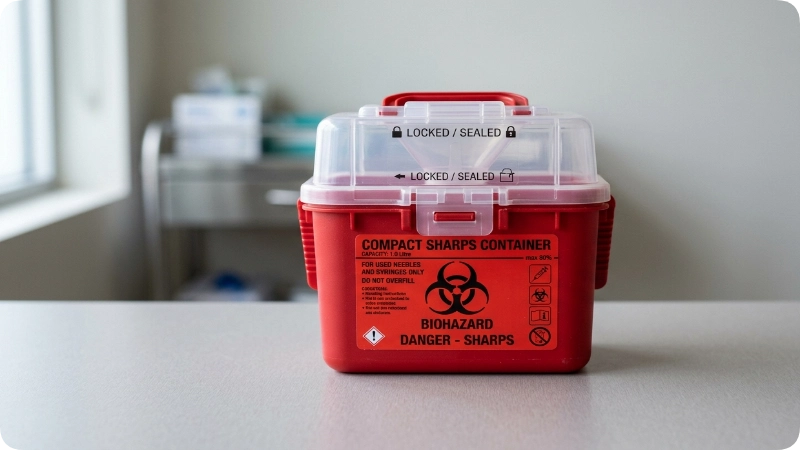
A travel sharps container is a rigid, puncture resistant case, usually made of hard plastic, designed to hold used needles, syringes, lancets, or insulin pen tips until they can be disposed of properly. Unlike the large plastic jugs used at home, travel versions are compact, often 2 to 6 ounces with a locking or screw top lid that seals in sharp points. They’re built to survive being tossed in a suitcase, purse, or backpack without leaking or opening.
Who Needs a Travel Sharps Container?
A travel sharps container isn’t only for people with diabetes. Anyone who uses injectable medications or medical devices that produce used needles or lancets should carry one whenever they travel. Having a dedicated container helps prevent accidental needle-stick injuries, keeps you compliant with local disposal rules, and makes airport security easier.
Common travelers who benefit include:
- People using insulin
- Travelers taking GLP-1 medications (Ozempic®, Wegovy®, Mounjaro®, Zepbound®)
- Individuals receiving allergy injections
- People using fertility medications
- Patients taking biologic medications
- Anyone using injectable migraine medications
- Travelers who perform finger-stick blood glucose testing
Choosing the correct container before your trip is much easier than trying to find one after you’ve already arrived at your destination.
Quick Facts Table
| Detail | Information |
| Allowed to carry on? | Yes, unlimited quantity per TSA |
| Allowed in checked bags? | Yes, though carry on is recommended |
| Need declaration? | Yes, at the TSA checkpoint |
| Typical size | 2–8 oz, pocket to hard case models |
| Average cost | Budget option: DIY from a detergent bottle; retail models typically run a modest amount at pharmacies |
| Where to dispose | Pharmacies, hospitals, clinics, some fire/police stations |
| Regulated by | FDA, TSA, state health departments |
Note: Prices, hours, and drop off locations change often and always confirm details directly with the pharmacy, airline, or facility before you travel.
Why You Need One When You Travel
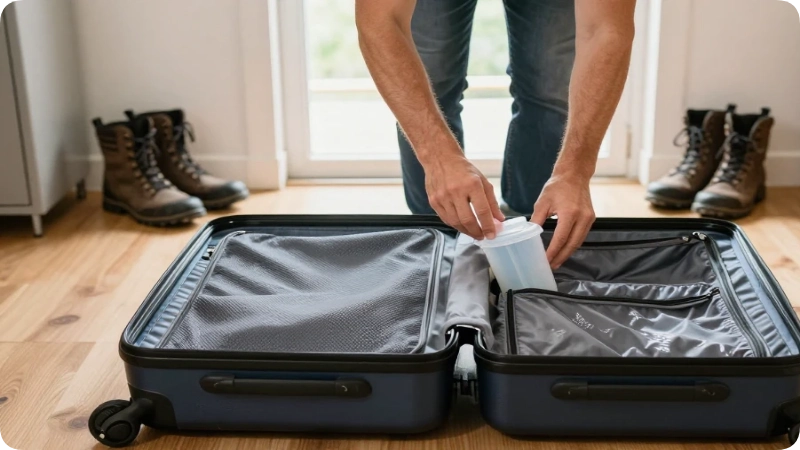
Skipping a sharps container isn’t just inconvenient, it’s a real safety and legal risk. Loose needles in a bag can injure baggage handlers, hotel staff, or even you while digging through a suitcase in the dark. Laws around medical waste disposal vary widely from one place to another, and tossing used needles in a hotel trash bin can result in fines. Carrying a dedicated container keeps you compliant almost everywhere you go.
It also saves time. A puncture resistant sharps container or a secure travel disposal container protects both travelers and airline staff from accidental needle injuries. Airport screeners recognize these containers immediately, which usually means fewer follow up questions and a faster walk through security.
TSA Rules for Traveling with Sharps Containers
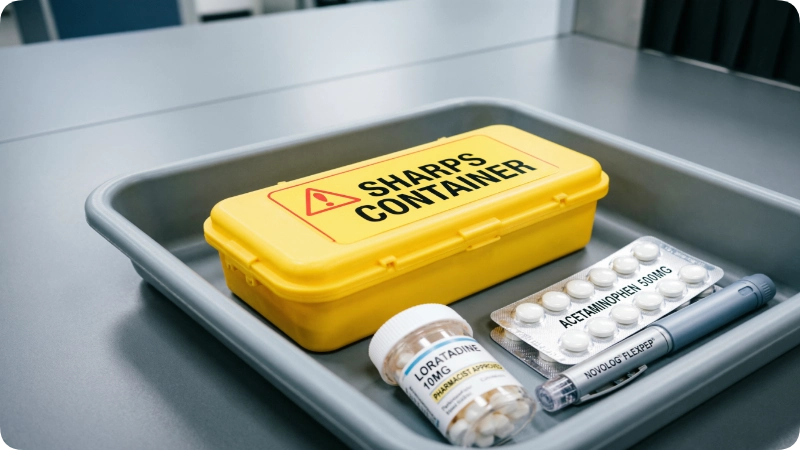
TSA has clear, traveler friendly rules for sharps, but they do require a little preparation. Travelers may bring an unlimited number of used syringes when they are transported in a sharps disposal container or other similar hard surface container. At the checkpoint, simply placing the container visibly in a bin is typically enough to serve as a declaration no formal paperwork is required.
A few practical rules to remember:
- Used needles must go in a rigid container. They’re permitted only if stored in an FDA approved sharps disposal container or a similarly hard surfaced, puncture proof container.
- Loose sharps are not allowed. Used syringes must be transported in a proper sharps container, never loose in a bag or wrapped in tissue.
- Never use airplane trash for disposal. Cabin crews and cleaning staff can be injured by hidden sharps; always pack them back into your own container.
- Bring documentation if you have it. A prescription label or a short note from your doctor isn’t mandatory for domestic flights, but it can speed up screening, especially internationally.
Since TSA policies can be updated, check the current guidance directly on tsa.gov before you fly.
Types of Travel Sharps Containers
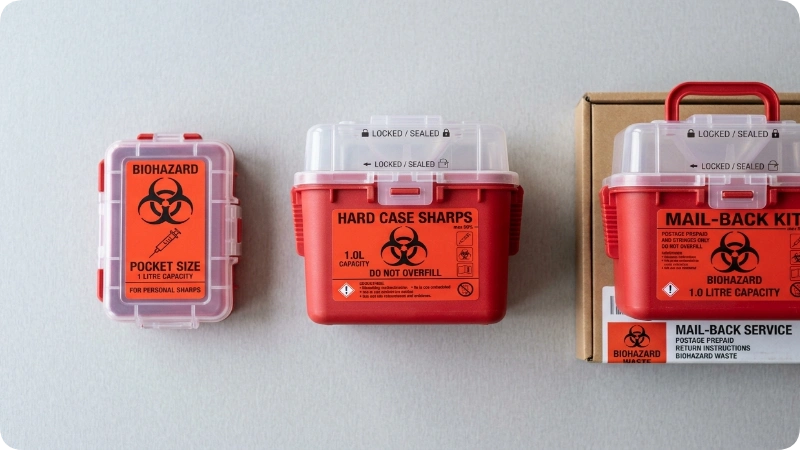
Pocket Sized Containers
These hold a handful of needles or lancets and slide easily into a purse, fanny pack, or daypack. They’re ideal for day trips, short flights, or anyone managing just one or two injections a day.
Hard Case Travel Containers
Slightly larger and sturdier, these are built for longer trips or multiple daily injections, such as GLP 1 medications or insulin therapy. Many have a locking mechanism that prevents accidental spills inside luggage.
Mail Back Sharps Systems
Some brands offer containers that can be sealed and mailed to a certified disposal facility once fully useful for travelers who won’t pass a pharmacy or clinic before their container fills up.
DIY Containers
If a store bought option isn’t available, a hard plastic container with a screw on lid, like a laundry detergent bottle, can work in a pinch. Clean it thoroughly, label it clearly as “Sharps” or “Biohazard,” and tape the lid securely before packing it.
How to Choose the Best Travel Sharps Container
Match the container to your trip length and injection frequency. A weekend trip with one daily insulin shot needs only a pocket container, while a two week international trip with multiple daily injections calls for a hard case or mail back system. Look for a snap lock or screw top lid, a clear “full line” indicator, and a size that fits inside your medication travel case without adding bulk.
How Big Should a Travel Sharps Container Be?
Choosing the right size depends on how often you’ll use injectable medication during your trip. A container that’s too small can fill before your vacation ends, while an oversized one adds unnecessary bulk to your luggage.
As a general guide:
| Trip Length | Recommended Container |
| Weekend trip | Pocket-size container |
| 4–7 days | Small travel container |
| 1–2 weeks | Medium hard-case container |
| Long international trips | Large travel container or two smaller containers |
When in doubt, choose slightly more capacity than you think you’ll need. Overfilled sharps containers increase the risk of accidental needle exposure and should never be forced closed.
How to Pack Your Sharps Container for Air Travel
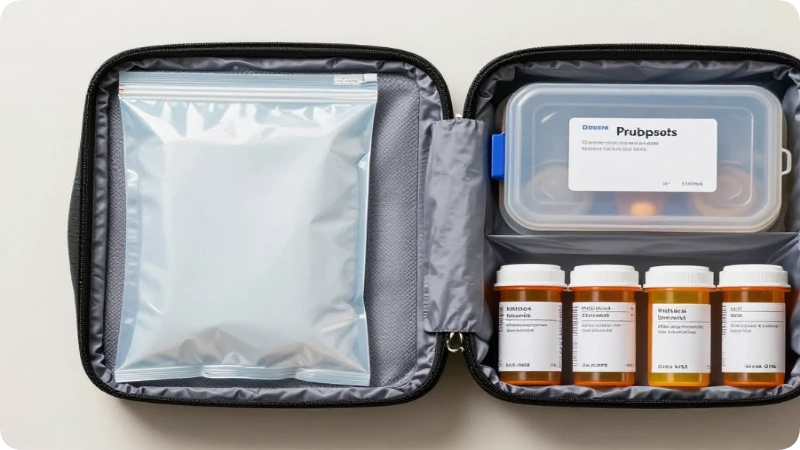
Packing smart keeps your container secure and easy to find at security. Place it in an outer pocket of your carry-on where it’s easy to reach but still protected, so you’re not rummaging through your belongings at the checkpoint.
- Keep it in your carry on, not checked luggage, so it’s never out of reach if you need it.
- Store it beside your medication, since TSA officers often want to see both together.
- Label it clearly with “Sharps” or “Biohazard” if it isn’t a commercial container.
- Pack a spare zip top bag in case the lid needs extra sealing for a connecting flight.
- Separate it from liquids so your medically exempt items don’t get mixed into the standard 3 1 1 liquids bag.
Best Practices for Storing Injectable Medication Alongside Your Sharps Container
Although your medication and sharps container belong in the same carry-on bag, they shouldn’t all be placed in one pocket. Separating clean supplies from used sharps reduces contamination and makes finding what you need much easier during injections.
A simple organization system works well:
- Medication in an insulated pouch if temperature-sensitive.
- Unused needles in their original packaging.
- Used needles directly into the sharps container.
- Alcohol wipes in a separate zippered pocket.
- Prescriptions and doctor’s letters stored with travel documents.
Good organization also speeds up airport security because officers can easily identify your medical supplies.
Airport Security Tips for Diabetic and Medical Travelers
Security moves faster when your medical supplies are organized and visible. People with diabetes may carry insulin and other necessary liquids or gels through TSA checkpoints even in containers larger than the standard 3.4 ounce limit, as long as they’re declared. Tell the officer you’re carrying diabetic or injectable medical supplies before screening begins, and request a private screening area if you’d prefer more privacy for insulin pumps or continuous glucose monitors.
Insider tip: Arrive at least 15–20 extra minutes early on your first trip with medical supplies. Most screenings add only a few minutes, but a cushion prevents stress if an officer needs a second look.
What to Do If Airport Security Has Questions
Most travelers pass through security without any issues, but occasionally a TSA officer may ask additional questions about injectable medications or medical equipment. Remaining calm and keeping supplies organized usually makes the process quick.
If you’re asked about your supplies:
- Tell the officer you’re traveling with medically necessary injectable medication.
- Present prescription labels if requested.
- Keep medication in its original packaging whenever possible.
- Request a private screening if you prefer additional privacy.
- Allow a few extra minutes during busy holiday travel periods.
Most security officers regularly screen travelers carrying insulin, biologic medications, and other injectable treatments, making the process routine.
Where to Dispose of a Full Sharps Container While Traveling
Once your container is full, proper disposal is a legal requirement in most states, not just a courtesy. Sharps disposal guidelines vary depending on where you are, so check with local trash removal services or a health department to see which disposal methods are available in the area. Common options include drop off at doctors’ offices, hospitals, pharmacies, health departments, medical waste facilities, and some police or fire stations.
Before your trip, it’s worth calling ahead to a pharmacy near your destination. Chains like CVS or Walgreens often accept sharps containers at the pharmacy counter, though policies vary by state and by store.
What Happens If Your Sharps Container Fills Up Early?
Sometimes trips last longer than expected, or travelers use more injections than originally planned. If your sharps container reaches its fill line before the end of your trip, avoid trying to squeeze additional needles inside.
Instead:
- Locate a nearby pharmacy or clinic that accepts sharps disposal.
- Replace the container with a new one if available.
- Ask your hotel or cruise medical staff for nearby disposal locations.
- Carry a spare travel container during extended trips.
Planning for one backup container is often easier than searching for emergency disposal options in an unfamiliar city.
Hotel and Airbnb Sharps Disposal Etiquette
Never leave a full or partially full sharps container in a hotel trash can, even one that’s sealed. Housekeeping staff empty bins by hand, and a puncture injury is a real risk. Instead, ask the front desk if the hotel has a medical waste policy, or hold onto the container until you find a pharmacy or clinic. For Airbnb stays, pack the container out with you; short term rental hosts rarely have medical waste arrangements in place.
Road Trip Tips for Sharps Disposal
Driving gives you more flexibility, but it also means planning your own stops. Keep your sharps container in the front seat or console, not the trunk, so it’s easy to reach and doesn’t get jostled loose. Many hospitals and larger pharmacies along interstate routes accept sharps for disposal, so building a quick stop into your route, say, near a rest area with a pharmacy nearby keeps the container from overfilling on longer drives.
Traveling With Children Who Need Injectable Medication
Families traveling with children who use insulin, growth hormone injections, allergy medications, or other injectable treatments should keep all medical supplies together in one organized pouch. This makes security screening easier and reduces the chance of forgetting essential equipment during busy travel days.
Helpful tips include:
- Carry extra needles and medication.
- Pack a backup sharps container.
- Keep prescriptions easily accessible.
- Store temperature-sensitive medications properly.
- Teach older children never to place used needles in regular trash bins.
Planning ahead allows parents to spend less time worrying about medical supplies and more time enjoying the trip.
Cruise Ship Rules for Sharps Containers
Most major cruise lines allow sharps containers in carry-on bags and encourage passengers to bring their own, since onboard medical centers may have limited disposal capacity for large volumes. Contact your cruise line’s accessibility or medical desk before departure to confirm its specific sharps policy, since rules can differ between lines and itineraries.
International Travel Considerations
Sharps and medication rules can tighten once you leave the USA. A layover in a stricter jurisdiction, such as certain Middle Eastern or Asian hubs, can mean stricter inspections or even temporary confiscation if documentation isn’t in order, even when a direct flight would have been simple. Carry a prescription copy or doctor’s letter for any international itinerary, and research the destination country’s own sharps and medication import rules a few weeks before departure, since embassy or consulate websites usually list current guidance.
Common Mistakes Travelers Make
- Packing sharps loose in a bag. This risks injury and almost always leads to extra screening delays and always uses a rigid container.
- Checking the container instead of carrying it on. Checked bags can be delayed or lost, leaving you without a safe disposal option mid trip.
- Assuming every hotel or Airbnb has a disposal system. Most don’t; plan your own drop off point in advance.
Alternatives to Sharps Containers
If a dedicated container truly isn’t available, a firm plastic bottle with a screw on cap like an empty detergent or vitamin bottle can serve as a temporary substitute when clearly labeled. Some travelers also use mail back sharps kits, which let you seal and post a full container to a certified disposal service rather than finding a local drop off point. Neither should replace a proper container long term, but both are reasonable backups in an emergency.
Packing Checklist for Diabetic and Medical Travelers
- Travel sharps container (sized for trip length)
- Original prescription labels or a doctor’s note
- Backup insulin, pens, or medication in a separate bag
- Insulated case for temperature sensitive medication
- Medical ID bracelet or card
- Spare zip top bags for extra sealing
Budget Friendly Sharps Container Options
Pharmacy brand travel containers are typically inexpensive and available at most drugstore counters. For an even lower cost option, a cleaned and clearly labeled plastic bottle works for short trips, though it should be replaced with a proper container for regular or long term travel. Many local health departments also give away basic sharps containers for free a quick call before your trip can save you a purchase entirely.
Can You Reuse a Travel Sharps Container?
Most disposable travel sharps containers are designed for one-time use and should be replaced once they reach the indicated fill line. Attempting to empty and reuse them can increase the risk of accidental needle-stick injuries and may violate local disposal recommendations.
Some reusable systems are available, but they generally use removable certified disposal cartridges rather than requiring travelers to empty the container themselves.
To maximize safety:
- Never overfill the container.
- Replace it once it reaches the fill line.
- Keep the lid locked after final use.
- Dispose of it according to local regulations.
Safety Tips for Handling Sharps On the Go
Always recap or engage the safety mechanism on a needle immediately after use, before placing it in the container. Keep the container upright when possible to avoid pressure on the lid, and never try to force extra needles into an already full container carry a spare instead. If a needle is ever exposed outside the container, use a hard surface (not your fingers) to nudge it safely inside.
Sample Packing Itinerary
Planning: Order or pick up a travel sharps container a week before departure. Packing: Place it in an outer, easy access pocket of your carry on, next to your medication. Arrival: Locate the nearest pharmacy or clinic for disposal once you check in. Mid trip: Empty or swap containers if your trip runs longer than the container’s capacity. Departure: Dispose of or securely reseal the container before heading home.
FAQs
Can I bring a sharps container on a plane?
Yes.TSA allows an unlimited number of used syringes when they’re transported in a sharps disposal container or a similar hard surface container, and it’s permitted in carry-on bags.
Do I need to declare my sharps container at the TSA?
Yes.Placing the container visibly in a bin at the checkpoint is typically enough to serve as a declaration, without needing formal paperwork.
Can I throw a used needle in a hotel trash can?
No. Loose needles risk injuring housekeeping staff and may violate state medical waste laws. Always use a sealed sharps container and dispose of it at a pharmacy, clinic, or hospital.
What if I don’t have a sharps container while traveling?
A hard plastic container with a screw on lid, cleaned and clearly labeled as “Sharps” or “Biohazard,” can work as a temporary substitute.
Can I use a water bottle as a temporary sharps container?
Only as a short-term emergency solution. A thick plastic bottle with a secure screw-on lid is safer than a soft drink bottle, but an FDA-cleared sharps container or another puncture-resistant container is always the preferred option whenever available.
Can hotels provide sharps containers?
Some hotels, particularly those near hospitals or serving extended-stay guests, may provide sharps containers upon request. However, most standard hotels do not, so it’s best to bring your own rather than relying on availability.
Do pharmacies charge to dispose of sharps containers?
Policies vary. Some pharmacies accept household sharps containers at no charge, while others may charge a small disposal fee or only participate in community collection programs. Calling ahead can save time before making a special trip.
Can I travel internationally with insulin needles?
Yes. Most countries allow travelers to bring insulin needles for personal medical use, but many require medications to be properly labeled. Carry prescriptions and check your destination’s import requirements before departure, especially if you have connecting flights through multiple countries.
Are travel sharps containers smell-proof or leak-proof?
Quality travel sharps containers are designed to resist leaks and prevent accidental openings when used correctly. While they help contain medical waste safely, they should always remain tightly closed and replaced once they reach the recommended fill level.
Where can I dispose of a full sharps container on a trip?
Common drop off points include doctors’ offices, hospitals, pharmacies, health departments, and some medical waste facilities, police, or fire stations, though availability varies by location.
Are sharps container rules different for international flights?
Yes, in some cases. Layovers in stricter jurisdictions can mean additional inspection, so carrying a prescription copy or doctor’s note is recommended for international itineraries.
Can I pack a sharps container in checked luggage instead of carry on?
It’s allowed, but carry-on is strongly recommended so you always have access to safe disposal and can avoid delays if checked baggage is lost or delayed.
Final Takeaways
Traveling with injectable medication doesn’t have to be stressful once a travel sharps container is part of your packing list. Keep it visible and accessible through airport security, plan ahead for disposal at your destination, and never rely on hotel trash cans or airplane bins for used needles. With a little preparation, the container becomes just another routine item in your bag right alongside your passport and phone charger so the trip stays about the destination, not the logistics.
Before you go, double check current TSA and airline guidance, since sharps and medication rules can be updated. A few minutes of research now means a smoother security line and total peace of mind on the road ahead.

Gordon Ramsay is a travel writer and destination researcher who helps U.S. travelers plan smarter trips, covering destinations, seasonal trends, budgets, and logistics to help readers decide where—and when—to go.
Rather than simply listing popular places, Gordon Ramsay focuses on what travelers actually need: comparing weather against crowds, weighing costs and accessibility, and researching current conditions alongside official tourism guidance—delivering honest, practical advice without the hype.