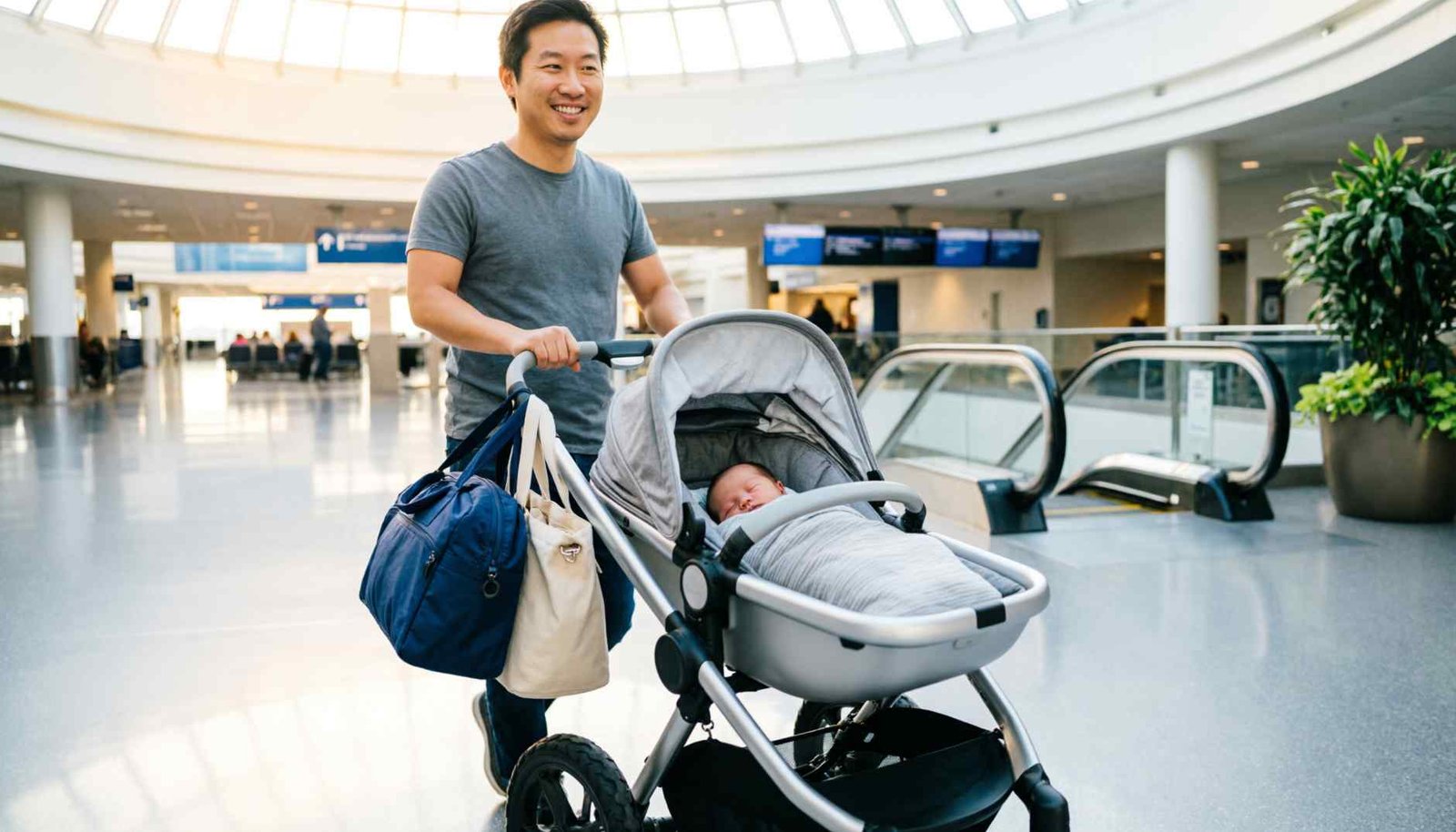
A travel system stroller combines an infant car seat and a stroller frame into one seamless, click and go unit. The best travel system stroller lets you transfer a sleeping baby from car to sidewalk without unbuckling, saving time, reducing fuss, and keeping your hands free. Top rated options weigh between 16 and 28 pounds, fold compactly, and fit most airline overhead policies.
Every parent who has wrestled a screaming newborn out of a car seat in a parking lot knows the pain. You unbuckle, lift, wake the baby, and start the clock on a very short nap window. A quality travel system stroller solves that problem entirely and for traveling families across the USA, it does even more.
If you’re navigating the cobblestone streets of Charleston, SC, rolling through Denver International Airport, or exploring Disney World with a six month old, the best travel system stroller acts as your mobile base camp. It replaces multiple gear purchases with one unified solution: infant car seat, toddler stroller, and travel companion all in a single system.
This guide breaks down everything you need to know to choose the right travel system for your family’s adventures. From weight limits and airline compatibility to real terrain performance and budget comparisons, this article covers what most product pages leave out. By the end, you’ll know exactly which stroller fits your travel style and which ones aren’t worth the price tag.
What Is a Travel System Stroller and Why Does It Matter for Families?
A travel system stroller is a two part (or three part) gear setup: an infant car seat that snaps directly onto a compatible stroller frame. Most systems are sold as bundles, though many brands also sell compatible components separately. The car seat clicks in and out in seconds, no adapters, no fumbling.
For traveling families, this matters because it eliminates the need to carry both a car seat and a stroller as separate items. According to the American Academy of Pediatrics (AAP), infants must ride rear facing in an approved car seat until they outgrow its height or weight limit making a quality infant seat non negotiable for any road trip or rideshare journey. Combining that requirement with your stroller purchase is simply smart logistics.
Key Components of a Travel System
- Infant car seat rear facing, fits newborns up to 22–35 lbs depending on brand
- Stroller frame the wheeled chassis that accepts the car seat and later a toddler seat
- Base (optional) a stable base that stays installed in the car for faster transfers
Quick Comparison: Top Travel System Strollers at a Glance
| Stroller System | Weight | Folded Size | Car Seat Capacity | Best For | Approx. Price Range |
| UPPAbaby Vista V2 + Mesa | 26.1 lbs | Compact | 35 lbs | Urban + travel | $1,100–$1,300 |
| Graco Modes Pramette | 28.4 lbs | Standard | 35 lbs | Budget families | $300–$400 |
| Chicco Bravo Trio | 19.4 lbs | Compact | 30 lbs | Lightweight travel | $350–$450 |
| Nuna MIXX Next + PIPA | 22 lbs | Very compact | 32 lbs | Luxury minimalists | $900–$1,100 |
| Baby Jogger City Select 2 | 28.1 lbs | Compact | 35 lbs | Growing families | $700–$900 |
| Bugaboo Fox 5 + Turtle Air | 22 lbs | Compact | 35 lbs | All terrain + style | $1,400–$1,700 |
| Graco Fastaction Fold | 19.8 lbs | Compact | 30 lbs | One handed parents | $200–$280 |
Prices are approximate and subject to change. Always verify current pricing and safety recalls through the CPSC (Consumer Product Safety Commission) at cpsc.gov before purchasing.
How to Choose the Best Travel System Stroller for Your Family
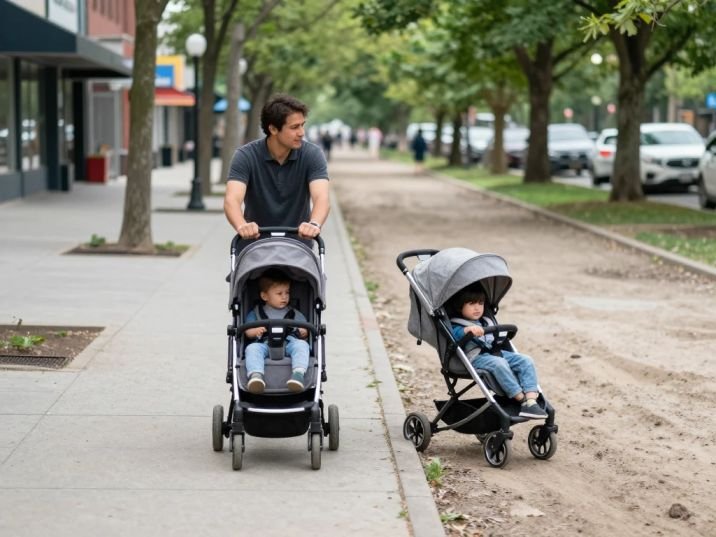
The right travel system depends on four key factors: your travel style, your terrain, your budget, and your car. A family flying frequently between New York and Los Angeles needs a different stroller than one doing weekend road trips through the Smoky Mountains.
Consider Your Primary Travel Terrain
Smooth airport terminals, city sidewalks, and resort paths call for lightweight strollers with smaller wheels and compact folds. Rugged terrain think hiking trails near national parks, beach boardwalks, or gravel campgrounds demands larger air filled tires and a robust suspension system.
- Urban/airport use: Chicco Bravo, Graco Fastaction, Nuna MIXX
- All terrain use: Bugaboo Fox 5, BOB Gear Revolution Flex, Thule Spring
- Versatile hybrid: UPPAbaby Vista V2, Baby Jogger City Select 2
Check Airline Carry On and Gate Check Policies
Most airlines allow strollers to be gate checked for free, meaning you roll it to the jet bridge and pick it up on arrival. However, policies vary. Southwest Airlines, Delta, and American Airlines all allow gate checked strollers at no charge, but size and weight restrictions for overhead storage differ significantly. Always check your airline’s current policy directly before travel.
Insider tip: Lightweight systems under 20 lbs like the Graco Fastaction (19.8 lbs) are far easier to hoist into overhead bins and fold in narrow airplane aisles if needed.
Best Travel System Strollers for Air Travel
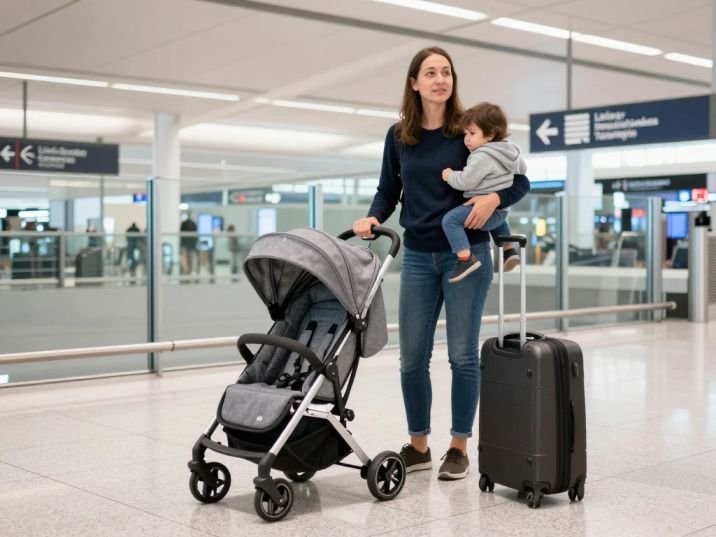
Air travel with a baby is its own adventure. The best travel system strollers for flying combine a one hand fold, compact storage footprint, and durable gate check durability. TSA does not require you to remove a child from a stroller at security checkpoints. Children can be carried through the metal detector while the stroller goes through the X ray belt.
Top Picks for Flying Families
Chicco Bravo Trio Travel System is a consistent favorite for air travelers. At just 19.4 lbs for the full system (stroller only: ~17 lbs), it folds in seconds and fits most overhead bins when the seat is removed. The KeyFit 30 infant car seat included in the Trio bundle consistently earns top safety ratings from the Insurance Institute for Highway Safety (IIHS).
Graco Fastaction Fold earns praise for its one second fold mechanism. Parents with one hand perpetually occupied by a baby understand why this matters. It pairs with the SnugRide Click Connect 35 car seat, which covers infants from 4–35 lbs.
Nuna MIXX Next + PIPA lite is the luxury pick for air travel. The PIPA lite is one of the lightest infant car seats on the market at just 5.3 lbs (without base), and the MIXX Next folds flat with a magnetic buckle that keeps it closed. The trade off is price expect to spend $900–$1,100 for the bundle.
Best Travel System Strollers for Road Trips Across the USA
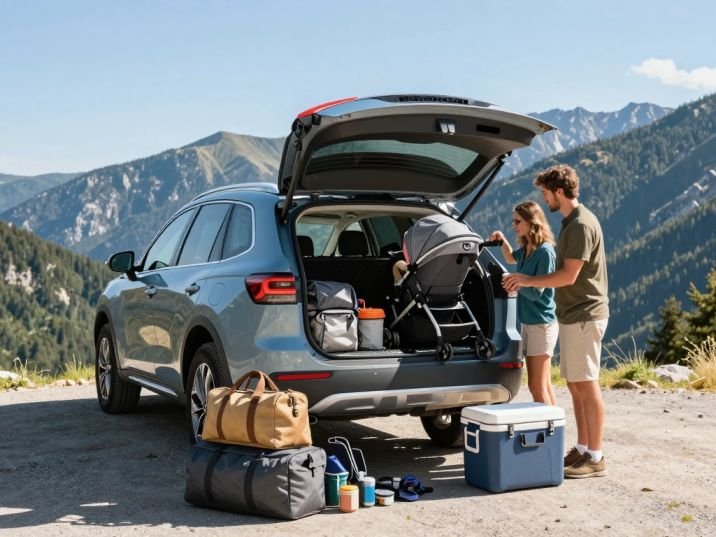
Road tripping with a baby requires a stroller that handles a variety: parking lots, state park visitor center paths, Main Street USA shopping districts, and campground gravel. Durability and all terrain capability matter more here than ultra light weight.
Top Picks for Road Trip Families
UPPAbaby Vista V2 + Mesa is arguably the gold standard for family road trips. The Vista V2 accepts up to three children with the right attachments (Rumble Seat + Piggyback board), making it a long term investment as your family grows. The Mesa infant car seat features a load leg that reduces crash forces by up to 25%, according to UPPAbaby’s published testing data.
Baby Jogger City Select 2 is the modular powerhouse road trippers love. Its independent suspension on all four wheels handles uneven terrain far better than most budget strollers. It also converts to a double stroller without purchasing an entirely new system, a major advantage for families planning a second child.
BOB Gear Revolution Flex 3.0 + B Safe Gen2 bridges the gap between jogging stroller and travel system. It’s heavier (~25 lbs stroller only) but rolls confidently on gravel, grass, and mild trail surfaces. Parents who plan to visit national parks like Great Smoky Mountains, Zion, or Acadia will appreciate the knobby tires and hand brake.
Best Budget Travel System Strollers That Don’t Cut Corners on Safety
A high price tag doesn’t automatically mean a safer stroller. The CPSC and NHTSA regulate infant car seat safety standards independently of price. Several budget friendly travel systems consistently pass rigorous third party testing.
Budget Picks Under $400
Graco Modes Pramette Travel System ($300–$400) is the most full featured budget option. It offers 3 in 1 flexibility infant pram, infant car seat carrier, and toddler stroller with a parent facing option that most budget strollers skip entirely. The SnugRide 35 car seat included in the bundle covers newborns through 35 lbs.
Evenflo Pivot Xpand Modular Travel System (~$350) adds a clever expandable seat that converts from single to double, future proofing your purchase. It’s heavier than competitors, but the modular flexibility at this price point is genuinely rare.
Safety tip: Regardless of budget, always register your car seat with the manufacturer upon purchase. This ensures you receive recall notices promptly, something the NHTSA strongly recommends at nhtsa.gov.
Travel System Stroller Weight Limits: What Parents Often Miss
One of the most common mistakes families make is buying a travel system based on infant seat capacity alone then being surprised when the toddler seat weight limit is completely different.
Typical Weight Ranges by Component
| Component | Typical Weight Range |
| Infant car seat (rear facing) | 4–35 lbs (newborn to ~12 months) |
| Toddler stroller seat (forward facing) | Up to 50–55 lbs (up to 4–5 years) |
| Stroller frame max capacity | Varies: 40–75 lbs depending on brand |
Most infant car seats reach their limits between 9 and 12 months. After that, your child moves to a convertible car seat (stays in the car) while continuing to use the stroller frame with its own toddler seat. Choosing a system with a high stroller seat weight limit (50+ lbs) extends your investment significantly.
How Travel System Strollers Perform at Major US Airports
The USA’s busiest airports including Hartsfield Jackson Atlanta (ATL), Los Angeles International (LAX), Chicago O’Hare (ORD), and Dallas/Fort Worth (DFW) all have long terminal walks, tight elevator access, and crowded security lanes. Your stroller choice directly affects how smoothly you move through these spaces.
Airport Performance Tips
- Compact fold wins: A stroller that folds in under 5 seconds with one hand makes security infinitely easier.
- 4 wheel swivel is essential: Fixed wheel strollers (designed for jogging) are genuinely difficult to maneuver in crowds.
- Use a gate check bag: Protecting your stroller frame from luggage conveyor damage costs $15–$30 and saves hundreds in repairs.
- Check airport rental options: Many major airports and resorts including Orlando International (MCO) near Walt Disney World offer stroller rental kiosks if you prefer to travel light.
Insider tip: At busy airports, ask a gate agent about early boarding for families with children under two; most US airlines offer this courtesy regardless of fare class, though policies vary.
Travel System Stroller Safety Standards in the USA
Every infant car seat sold legally in the USA must meet Federal Motor Vehicle Safety Standard (FMVSS) 213, regulated by the National Highway Traffic Safety Administration (NHTSA). Stroller frames must meet ASTM International standard F833, which covers stability, restraint systems, and folding mechanisms.
What These Standards Cover
FMVSS 213 requires crash testing, flammability resistance, and labeling accuracy for all child restraint systems. ASTM F833 addresses stroller specific hazards: finger entrapment in folding joints, braking performance on slopes, and restraint buckle strength.
Beyond minimum standards, independent organizations like Consumer Reports and the IIHS conduct additional comparative testing. The IIHS Best Bet Car Seats list updated annually is a reliable free resource for finding top rated infant car seats regardless of brand.
Always check for recalls before purchasing secondhand equipment. The CPSC recall database (cpsc.gov/recalls) and NHTSA’s tool at nhtsa.gov/vehicle safety/child safety seats let you search by brand and model in seconds.
Top 3 Mistakes Families Make When Buying a Travel System Stroller
Even experienced parents make avoidable mistakes when selecting a travel system. Here are three common ones and how to fix them.
Mistake 1: Buying Based on Weight Alone
Lightweight strollers are appealing, but a 17 lb stroller with tiny wheels and no suspension will feel miserable on anything other than smooth pavement. Fix: Decide your primary terrain first, then filter by weight within that category.
Mistake 2: Ignoring Car Seat Compatibility
Not all car seats fit all stroller frames even from the same brand. Some systems require adapters sold separately. Fix: Always verify compatibility on the manufacturer’s website before purchasing individual components. Brands like Nuna, Bugaboo, and UPPAbaby publish compatibility charts.
Mistake 3: Overlooking the Canopy Coverage
A small canopy seems fine in a showroom but fails quickly on sunny beach boardwalks or during afternoon stadium outings. The American Academy of Dermatology recommends keeping infants under 6 months out of direct sunlight entirely. Fix: Look for UPF 50+ canopies with extendable sun visors. The UPPAbaby Vista and Nuna MIXX both offer excellent coverage.
Travel System Strollers vs. Umbrella Strollers: Which Is Better for Trips?
Both have their place, but they serve very different travelers.
| Feature | Travel System Stroller | Umbrella Stroller |
| Newborn use | Yes (with infant seat) | Usually no (6+ months) |
| Car seat compatibility | Click in system | Rarely |
| Fold size | Moderate | Very compact |
| Weight | 18–30 lbs | 8–15 lbs |
| Terrain versatility | Moderate to high | Low |
| Price | $200–$1,700 | $30–$300 |
| Best for | Infants to toddlers | Older toddlers, short trips |
For families with infants under 12 months, a travel system is almost always the better investment. Once your child can sit unassisted (typically around 6 months), an umbrella stroller becomes a viable lightweight complement not a replacement for longer destinations.
Packing and Traveling with a Stroller: Practical Tips for US Families
Getting your stroller from home to destination requires more planning than most first time traveling parents expect.
Before You Leave Home
- Check your stroller dimensions against your airline’s gate check bag size requirements
- Photograph your stroller before handing it to airline staff this protects you if damage occurs
- Remove any accessories (cup holders, snack trays) that could snap off in cargo or on the jet bridge
- Bring a small repair kit: a few zip ties and a roll of packing tape handle most on the road frame issues
At Your Destination
- Resort stroller rentals are available at Disney World, Universal Studios, and many national park lodges compare rental rates to shipping costs if you plan to check your stroller as luggage
- Uber and Lyft both allow car seats in rides, but drivers are not required to provide them; NHTSA advises families to bring their own for safety
- Amtrak allows strollers onboard with no gate check required on most routes; check Amtrak.com for specific train policies
Insider Tips: What Stroller Review Sites Don’t Tell You
These five insights come from real family travel experience not spec sheets.
- Test the fold in a store with your non dominant hand; you’ll almost always be holding a baby in your stronger arm.
- The cup holder placement matters more than it sounds. A cup holder that tips when the stroller moves is useless on the road; check the angle before purchasing.
- Rear wheel brakes are easier to engage with flip flops than pedal style toe brakes a detail that matters at every beach destination from Miami to Santa Monica.
- Mesh seat backs run cooler in hot climates like Phoenix, Houston, and Miami. Padded seats with minimal airflow can make summer outings uncomfortable for babies.
- Check the basket depth and access when the seat is reclined. Some strollers have beautiful storage baskets that become inaccessible the moment a sleeping baby reclines the seat backward.
FAQs
What is the best travel system stroller for air travel in the USA?
The Chicco Bravo Trio and Graco Fastaction Fold are consistently top picks for air travel. Both weigh under 20 lbs, fold quickly with one hand, and pair with IIHS rated infant car seats. The Nuna MIXX Next + PIPA lite is the premium option for parents who want the lightest possible system without sacrificing quality or safety standards.
Can you gate check a travel system stroller for free?
Most major US airlines including Delta, American, United, and Southwest allow one stroller per child to be gate checked at no additional charge. The stroller is typically returned at the jet bridge upon arrival. Always confirm the current policy with your specific airline before travel, as rules can change.
At what age can a baby use the stroller seat without the infant car seat?
Most travel system stroller seats support babies from approximately 3–6 months, once they can hold their head upright without support. The exact age and weight threshold varies by brand. Always check the minimum weight and developmental requirements in your stroller’s manual before transitioning out of the infant seat.
Are travel system strollers TSA approved?
TSA does not have a specific approval list for strollers. Strollers are allowed through security and are typically gate checked. Children can be carried through the metal detector while the stroller is folded and sent through the X ray belt. TSA PreCheck lanes typically have more room to maneuver strollers. Always verify current security procedures at tsa.gov.
What is the lightest travel system stroller available?
The Nuna MIXX Next paired with the PIPA lite car seat is among the lightest full travel systems, with the car seat weighing just 5.3 lbs without base. The Chicco Bravo system comes in around 19–20 lbs total. Truly ultralight systems (under 15 lbs) typically require purchasing a lightweight stroller frame separately from the car seat.
How long does a travel system stroller last?
Most quality travel system strollers serve families for 3–5 years. The infant car seat component typically reaches its expiration date (marked on the seat) within 6–10 years of manufacture, but most families outgrow it by 12–18 months. The stroller frame continues in use well into toddlerhood, often to age 3–5 depending on the weight limit.
Is it worth buying a travel system stroller versus buying components separately?
For most families, a bundled travel system offers better value than buying separately. Bundles guarantee compatibility, often include a base, and typically cost $50–$150 less than purchasing the same components individually. The exception is if you have a strong preference for a specific car seat and a different stroller brand in that case, verify cross brand adapter compatibility first.
Conclusion: Finding Your Perfect Travel System Stroller
Three things will steer you toward the right choice: know your terrain, prioritize safety credentials, and match the system to your actual travel habits, not an idealized version of them. A family flying monthly between cities needs a different stroller than one taking a single annual road trip to a beach town.
The best travel system stroller isn’t necessarily the most expensive or the lightest, it’s the one that fits your car, your lifestyle, and your baby’s needs across the first year and beyond. Budget options like the Graco Fastaction and Chicco Bravo deliver genuine safety and convenience without a luxury price tag. Premium systems like the UPPAbaby Vista and Nuna MIXX earn their higher costs through superior build quality, extended use, and adaptability as your family grows.
Start with your non negotiable airline compatibility, terrain type, car compatibility and let those filters narrow your shortlist. Then get hands on in a store before committing. A stroller you’ll actually use every day is worth every minute of research.
Safe and happy travels, wherever the road takes your family.












4 thoughts on “Best Travel System Stroller for Air Travel & Road Trips”