Millions of Americans rely on CPAP therapy every night but packing a CPAP machine with a humidifier for a trip can feel overwhelming. What do TSA rules actually say? Can you use distilled water on a cruise ship? Will your humidifier work in a foreign country?
This guide answers every question, covers every scenario, and gives you a step by step plan to travel confidently with your CPAP if you’re flying across the country or road tripping through national parks.
What You Need to Know Before You Pack Your CPAP with Humidifier
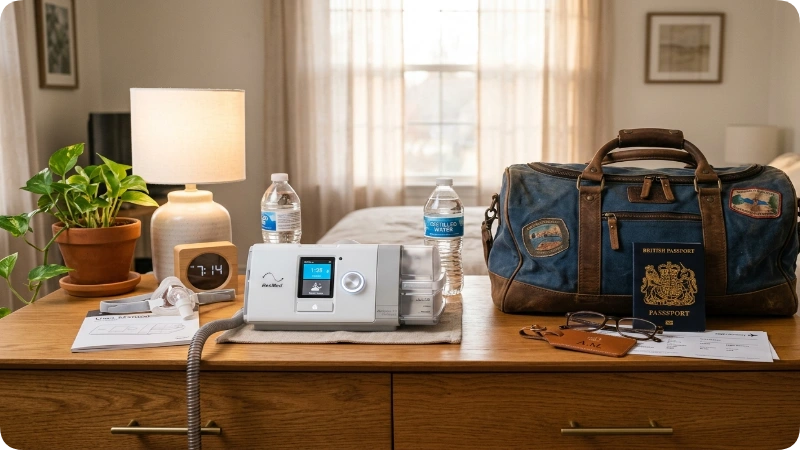
Traveling with a CPAP humidifier is completely manageable with the right preparation. The TSA classifies CPAP machines as medical devices, which means they do not count toward your carry on bag limit. Most modern travel CPAP machines support dual voltage (100–240V), making them compatible with outlets in the US and abroad. The humidifier chamber, however, requires special attention; it must be empty and dry before going through airport security.
How the TSA Handles CPAP Machines and Humidifiers
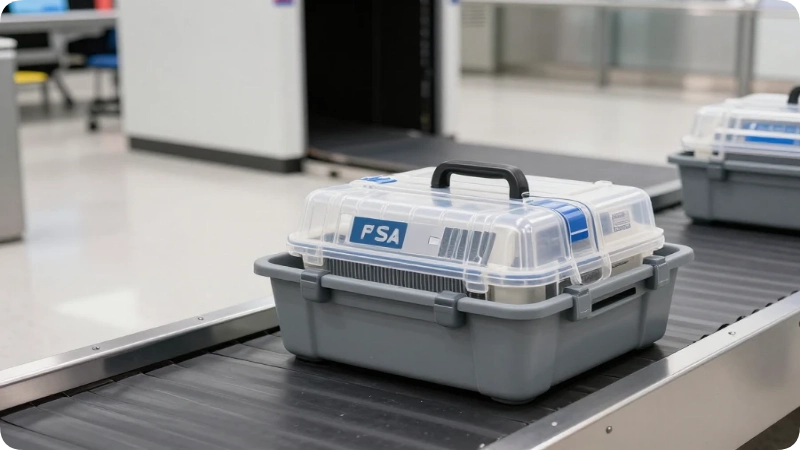
The TSA requires you to remove your CPAP machine from its bag and place it in a separate bin during X ray screening. This applies to the humidifier unit as well. The agency classifies CPAP, BiPAP, and APAP devices as medical equipment, so they receive no cost screening and do not count toward your carry on allowance.
Here are the key TSA rules to know:
- Remove the device from the bag and place it in its own bin similar to a laptop.
- Empty the humidifier water chamber completely before arriving at the airport. TSA follows the 3 1 1 liquids rule, and water in the humidifier counts as liquid.
- Bring distilled water in a sealed bottle of 3.4 oz or less in your quart sized liquids bag, or check the bottle in your luggage.
- You can request a hand inspection instead of X ray screening if you prefer TSA agents are required to accommodate this for medical devices.
- Keep your physician’s letter or prescription handy, though it is not technically required. It can speed things up if an agent has questions.
Always verify current TSA guidelines at TSA.gov before your trip, as policies can change without notice.
Choosing the Right Travel CPAP Machine with Humidifier
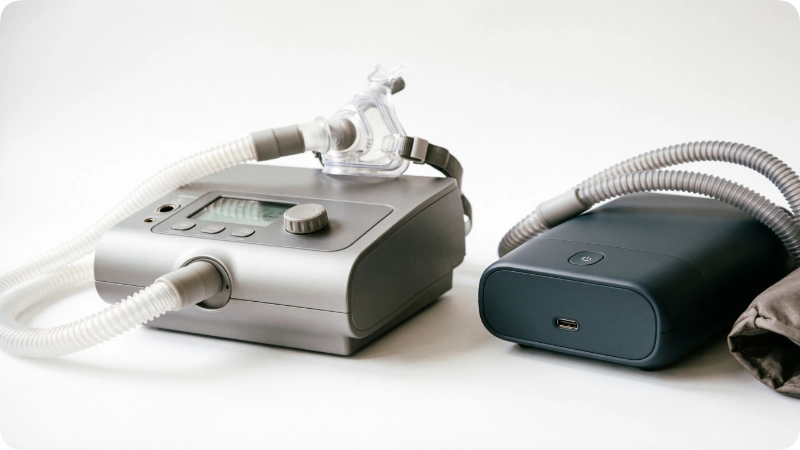
The best travel CPAP machine for most people is a compact, dual voltage unit with an integrated or detachable humidifier. These machines weigh between 0.66 and 2 lbs far lighter than standard home units and fit easily into a carry on bag or personal item.
Top Features to Look For
| Feature | Why It Matters |
| Dual voltage (100–240V) | Works in any country without a converter |
| Integrated heated humidifier | Fewer parts to lose or forget |
| Waterless/HME humidification option | Useful when distilled water is unavailable |
| Auto adjusting altitude setting | Essential for mountain destinations |
| FAA compliant battery | Lets you use the device on planes or off grid |
| Compact size (under 1 lb preferred) | Fits inside a personal item bag |
Popular travel friendly CPAP options include the ResMed AirMini, the Transcend Micro CPAP, and the Philips DreamStation Go. Always confirm with your doctor before switching machines, even temporarily, as pressure settings and therapy delivery can vary by device.
HME (Heat Moisture Exchanger) vs. Heated Humidifier
If finding distilled water on the road feels like a hassle, a Heat Moisture Exchanger (HME) offers a waterless alternative. It attaches to the CPAP mask and recycles exhaled moisture to humidify incoming air no water chamber needed. However, HMEs typically deliver less humidification than a heated unit. Discuss the tradeoff with your sleep specialist before relying on one long term.
Can You Travel Without a CPAP Humidifier?
Many CPAP users assume the humidifier is required every night, but for many people, it is optional during short trips. Whether you can safely leave it behind depends on your comfort level, climate, and your sleep specialist’s recommendations.
A heated humidifier helps reduce dry mouth, nasal irritation, and congestion by adding moisture to the airflow. If you normally experience these symptoms, traveling without it may make therapy less comfortable—especially on long flights or in dry hotel rooms.
However, many travelers choose to leave the humidifier at home to save luggage space and reduce weight. Compact travel CPAP machines are often designed to work well without a traditional water chamber, especially when paired with a Heat Moisture Exchanger (HME). HMEs recycle moisture from your own breath, providing passive humidification without requiring distilled water or electricity.
You may be able to skip the humidifier if:
- You’re traveling for only a few nights.
- You’re visiting a humid climate.
- Your doctor approves using an HME.
- You rarely wake up with a dry mouth or nose.
You should continue using your heated humidifier if:
- You have chronic nasal congestion.
- You experience significant dryness without humidification.
- You’re traveling to high-altitude or very dry destinations.
- Your sleep specialist recommends continuous humidification.
If you’re unsure, try sleeping without the humidifier for several nights at home before traveling. This gives you time to see how your body responds without disrupting your vacation.
How to Clean Your CPAP While Traveling
Keeping your CPAP clean while traveling helps maintain effective therapy and reduces the risk of bacteria, mold, and unpleasant odors. Fortunately, cleaning doesn’t have to be complicated when you’re away from home.
Each morning, empty any remaining distilled water from the humidifier chamber and allow it to air dry completely. Wipe your mask cushion with CPAP-safe wipes or a clean damp cloth to remove facial oils that can affect the mask seal.
Every few days, wash the mask, tubing, and humidifier chamber using warm water and a mild, fragrance-free soap. Avoid antibacterial soaps, bleach, alcohol, or harsh household cleaners, as these may damage CPAP components.
When drying your equipment, place it on a clean towel in a well-ventilated area. Never pack damp equipment into a sealed travel case because trapped moisture encourages mold growth.
If you’re staying in multiple hotels or camping, carrying a small microfiber towel and travel-sized CPAP cleaning wipes makes daily maintenance much easier.
Distilled Water for Your CPAP Humidifier While Traveling
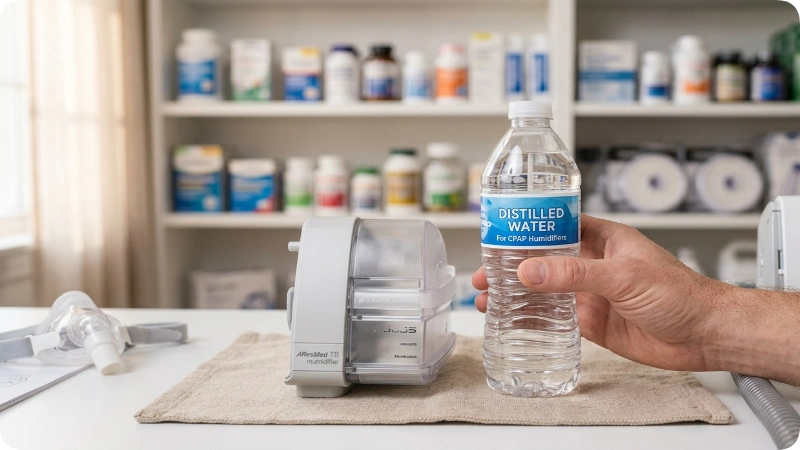
You should always use distilled water in your CPAP humidifier never tap water, filtered water, or bottled spring water. Tap water contains minerals that build up in the chamber and can harbor bacteria. Distilled water is the standard recommended by CPAP manufacturers and the American Academy of Sleep Medicine (AASM).
Where to Find Distilled Water on the Road
Finding distilled water while traveling is easier than most people expect:
- Pharmacies: CVS, Walgreens, and Rite Aid typically stock distilled water in 1 gallon jugs.
- Grocery stores: Walmart, Target, Kroger, and most supermarkets carry it.
- Hotel front desks: Many hotels will provide distilled water if you explain it is for medical use. Always call ahead to confirm.
- Cruise ships: Most cruise lines stock distilled water for CPAP users. Request it from guest services before your first night.
- International travel: Distilled water can be harder to find abroad. Bring a sealed 3.4 oz bottle in your TSA liquids bag for the flight, and source larger quantities at pharmacies or large supermarkets at your destination.
Insider tip: Many CPAP travelers buy a small, collapsible silicone bottle and refill it with distilled water from a jug purchased locally. This saves money and keeps packing minimal.
What If Distilled Water Isn’t Available?
Distilled water is always the preferred option because it prevents mineral buildup inside the humidifier chamber. However, travelers occasionally find themselves in locations where distilled water simply isn’t available.
For a short period, many manufacturers indicate that using clean bottled water or potable tap water may be preferable to skipping therapy entirely, provided you thoroughly clean the humidifier chamber afterward and return to distilled water as soon as possible. Mineral deposits can accumulate if this becomes a regular habit, so it should only be considered a temporary solution.
Never use untreated lake water, river water, or any non-potable water source in your humidifier.
Flying with a CPAP Humidifier: Airline Rules and In Flight Use
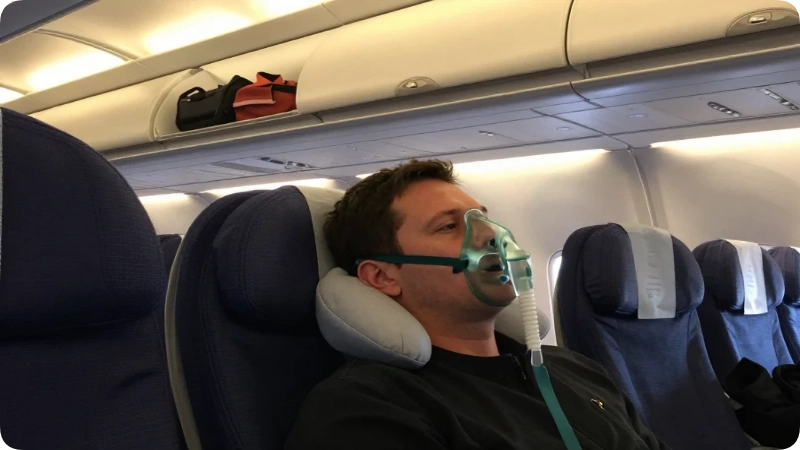
Most major U.S. airlines allow CPAP machines for in flight use, but you must notify the airline in advance typically 48 hours before departure. The FAA permits approved CPAP devices during flight, but not all airlines provide in seat power outlets.
Key Airline Policies to Know
- American Airlines, Delta, United, Southwest: All permit CPAP use on board. Policies on power outlets vary by aircraft type.
- Battery packs: If your flight lacks an outlet, bring a FAA approved lithium battery. Most travel CPAPs have compatible battery options. The battery must be carried on, not checked.
- International flights: Rules vary by country and carrier. Check with your airline and the destination country’s civil aviation authority.
- Humidifier use in flight: Many sleep therapists recommend using your CPAP without the humidifier during flights to avoid condensation issues. Use the HME attachment instead.
Before every flight, check your airline’s website for current medical device policies, as aircraft configurations and policies change regularly.
Can You Sleep with a CPAP During an Overnight Flight?
Not every traveler needs CPAP therapy during a flight, but for overnight or long-haul journeys, using your device may help reduce fatigue and maintain your normal sleep routine.
Before flying, verify that your airline allows in-flight CPAP use and determine whether your seat has an available power outlet. Many travelers choose an FAA-approved battery instead of relying on aircraft power because outlet availability varies by aircraft.
If you plan to sleep during the flight, use a window seat whenever possible to minimize disruptions from other passengers and cabin crew.
Road Trips with a CPAP Humidifier: What You Need
Road tripping with a CPAP machine is straightforward, but power management is the main concern. Most home CPAP units run on standard 110V AC power, which you can access at campgrounds, RV parks, hotels, and motels.
Power Solutions for Road Trips
- Car inverter (12V DC to 110V AC): Plugs into your car’s 12V outlet and powers most CPAP machines directly. Confirm your machine’s wattage requirements before buying one.
- DC power cable: Some CPAPs accept a direct 12V DC connection without an inverter check your machine’s accessory list.
- Portable power station: Brands like Jackery and Goal Zero offer rechargeable power stations that can run a CPAP for one or more nights. Ideal for tent camping.
- CPAP battery packs: Purpose built battery packs (like the Medistrom Pilot 24 Lite) are compact and designed specifically for CPAP devices.
Insider tip: Disable the heated humidifier when running on battery power. Humidification draws significant wattage and can cut battery life in half. Use an HME instead.
How to Store Your CPAP Safely in a Hot Car
Never leave your CPAP machine inside a parked vehicle for extended periods during hot weather.
High temperatures can damage electronic components, warp plastic humidifier chambers, shorten battery life, and degrade rubber seals.
Whenever possible:
- Bring the machine inside hotels.
- Store it in a padded travel case.
- Keep it out of direct sunlight.
- Never leave distilled water inside the chamber.
Should You Empty the Humidifier Every Morning?
Yes. Emptying the humidifier chamber each morning is one of the simplest ways to keep your CPAP clean while traveling.
Leaving water sitting in the chamber throughout the day encourages bacterial growth and increases the chance of mineral deposits if non-distilled water was used. After emptying the chamber, rinse it if necessary and allow it to air dry before refilling it that evening.
This routine also prevents accidental spills inside your luggage if you’re changing hotels frequently.
Camping and Off Grid Travel with a CPAP Humidifier
You can absolutely camp with a CPAP machine; it just requires extra planning around power and water. National Park campgrounds with electrical hookups exist at many sites, including popular destinations like Yellowstone (Fishing Bridge RV Park), Grand Canyon South Rim (Trailer Village), and Acadia National Park (Blackwoods Campground).
Off Grid CPAP Tips
- Choose a solar compatible battery pack if you plan on backcountry camping for multiple nights.
- Carry a sealed gallon of distilled water in your cooler it stays fresh for the duration of most trips.
- Use a padded, waterproof CPAP case to protect the machine and humidifier chamber on rough terrain.
- If water runs out, the HME waterless option keeps therapy going without humidification.
- Check the NPS website (nps.gov) for electrical hookup availability at specific campgrounds before booking.
Travel CPAP vs Home CPAP
| Feature | Home CPAP | Travel CPAP |
| Weight | 4–6 lbs | Under 2 lbs |
| Humidifier | Larger | Compact |
| Noise | Very quiet | Slightly louder |
| Battery Options | Limited | Designed for travel |
| Airline Friendly | Yes | Easier |
| Packing | Bulky | Compact |
International Travel with a CPAP Humidifier: What Changes
Traveling internationally with a CPAP humidifier requires attention to voltage, outlet adapters, and documentation. Most travel grade CPAP machines support dual voltage (100–240V, 50–60Hz), meaning they work worldwide with just a plug adapter and no separate voltage converter needed.
International Checklist
- Verify voltage compatibility on your device’s power label before packing.
- Buy the correct plug adapter for your destination country not a voltage converter.
- Carry a copy of your CPAP prescription translated if possible. Some countries require documentation for medical devices at customs.
- Research distilled water availability before arrival. In Europe, “distilled water” translates to eau distillée (French), destilliertes Wasser (German), or agua destilada (Spanish).
- Declare your CPAP at customs if asked if it is a medical device, not a consumer electronic.
Always check the U.S. Department of State’s travel advisories (travel.state.gov) and the CDC’s destination health pages before international travel.
International CPAP Travel Tips
- Learn the local name for distilled water.
- Carry plug adapters in your personal item.
- Pack medications separately from CPAP supplies.
- Check customs requirements before departure.
- Save the nearest CPAP supplier at your destination.
- Bring extra filters because they may be difficult to find overseas.
Cruise Travel with a CPAP Humidifier
Cruise ships are generally CPAP friendly, but you need to request accommodations before you sail. Most major cruise lines including Carnival, Royal Caribbean, Norwegian, and Princess Cruises offer distilled water and extension cords for CPAP users, but policies and fees vary.
Before You Board
- Contact the cruise line’s accessibility department at least 4–6 weeks before departure.
- Request a distilled water delivery to your cabin many lines provide it at no charge for medical use.
- Ask about in cabin power outlet types and locations some cabins have limited outlet access near the bed.
- Confirm If an extension cord will be provided or if you should bring your own (typically a grounded 3 prong extension cord).
- Pack a travel power strip without a surge protector, as most cruise lines prohibit surge protectors.
Hotel Stays with a CPAP Humidifier: Getting What You Need
Most hotels can accommodate CPAP users, but you must ask in advance. Chain hotels particularly Marriott, Hilton, IHG, and Hyatt properties often have policies for medical device accommodation.
Hotel CPAP Checklist
- Call ahead and ask for distilled water, an extension cord, and a bedside outlet.
- Request a bedside table with an outlet nearby this sounds simple, but it matters.
- Bring a short extension cord or power strip as backup, since outlet placement in hotel rooms is often inconvenient.
- Ask the front desk about distilled water sources nearby if the hotel cannot provide it.
- Use the “Do Not Disturb” sign to prevent housekeeping from disturbing or accidentally mishandling your CPAP setup.
Insider tip: Many CPAP travelers leave a polite note for housekeeping explaining that the machine is medical equipment and should not be moved or unplugged.
Packing Your CPAP Humidifier: A Step by Step Pre Travel Checklist
Getting your CPAP setup ready for travel takes about 20–30 minutes the day before departure. Follow this checklist to avoid the most common packing mistakes.
The Night Before
- Clean the humidifier chamber thoroughly and let it air dry completely.
- Wipe down the tubing and mask with CPAP safe wipes.
- Pack distilled water in a sealed 3.4 oz bottle for your TSA liquids bag.
- Confirm your machine’s voltage, check the label on the power supply.
- Pack the plug adapter if traveling internationally.
Morning of Departure
- Remove the humidifier water chamber and pack it dry.
- Place the CPAP in its travel case with the power cord and mask.
- Put the travel case in an easily accessible spot in your carry on you will need to remove it at security.
- Keep your prescription or doctor’s letter in your personal item, not buried in luggage.
Quick Packing Table
| Item | Pack In | Notes |
| CPAP machine | Carry on | Counts as medical device, not carry on limit |
| Humidifier chamber (empty & dry) | Carry on | Must be empty at security |
| Power cord | Carry on | Keep accessible |
| Distilled water (3.4 oz) | TSA liquids bag | Carry on only |
| Larger distilled water jug | Checked bag | Or buy at destination |
| Plug adapter | Carry on | International travel only |
| Doctor’s letter / prescription | Personal item | Speeds up security if needed |
| HME attachment | Carry on | Backup for in flight use |
| Extra mask / tubing | Carry on or checked | Protects against loss |
What to Do If Your CPAP Is Lost, Stolen, or Damaged During a Trip
A damaged or missing CPAP machine can quickly become a medical concern, especially during longer trips. Having a backup plan before you travel can save significant stress.
If your CPAP is lost by an airline, report it immediately before leaving baggage claim. Because CPAP machines are medical devices, airlines may prioritize assistance, but replacement policies vary.
If the machine becomes damaged, contact the manufacturer or your durable medical equipment (DME) provider. Many manufacturers can help locate nearby service centers or replacement equipment.
Keep digital copies of your prescription, machine model number, and serial number stored on your phone or in cloud storage. These documents make it much easier to obtain replacement equipment if necessary.
Travel insurance that includes medical equipment coverage may also reimburse repair or replacement costs.
Common CPAP Travel Mistakes (and How to Fix Them)
Even experienced CPAP travelers make these errors. Knowing them in advance saves real headaches.
Mistake 1: Forgetting to empty the humidifier water chamber TSA agents will flag liquid in the humidifier chamber. Empty and dry the chamber the night before. Carry any distilled water in the TSA liquids bag in 3.4 oz containers.
Mistake 2: Assuming your hotel room has a convenient outlet near the bed Outlet placement in hotel rooms is notoriously inconvenient. A short 6 foot extension cord weighs almost nothing and solves this problem completely.
Mistake 3: Packing the CPAP in checked luggage Airlines lose and damage checked bags. A CPAP machine is a prescription medical device that’s expensive and irreplaceable mid trip. Always carry it on.
Mistake 4:Forgetting spare filters
Mistake 5:Packing extension cord in checked bag
Mistake 6:Forgetting plug adapter overseas
Mistake 7:Packing distilled water inside humidifier
Mistake 8:Forgetting backup mask cushions
Quick Facts: Travel CPAP with Humidifier at a Glance
| Topic | Key Fact |
| TSA classification | Medical device does not count toward carry on limit |
| Water type required | Distilled only (not tap, filtered, or spring) |
| Voltage compatibility | Most travel CPAPs: 100–240V dual voltage |
| Airlines requiring advance notice | Most major carriers check 48 hours before |
| Battery recommended | FAA approved lithium packs for flights and off grid use |
| Humidifier alternative | HME (Heat Moisture Exchanger) waterless option |
| Cruise ship accommodations | Request distilled water and extension cord in advance |
| Prescription required by TSA | Not required, but strongly recommended to carry |
FAQs
Can I bring my CPAP humidifier on a plane?
Yes. The TSA classifies CPAP machines as medical devices, so they are permitted to carry on bags without counting against your bag limit. The humidifier chamber must be empty and dry when you go through screening. Place the entire device in a separate bin for X ray, or request a hand inspection. Always check TSA.gov for the latest guidelines before you fly.
Can I use my CPAP on an airplane during the flight?
Yes, the FAA permits CPAP use on commercial flights. Most major US airlines allow it, but you typically need to notify them 48 hours in advance. Not all aircraft have in seat power outlets, so bring an FAA approved CPAP battery as a backup. Many therapists recommend skipping the humidifier during flight and using an HME attachment instead, to avoid condensation in the tubing.
Do I need a doctor’s letter to travel with my CPAP?
TSA does not legally require a prescription or doctor’s letter to travel with a CPAP machine. However, carrying one is strongly recommended. It can resolve questions from security agents faster and is sometimes required for customs in international destinations. Ask your sleep specialist to provide a brief letter on letterhead confirming your diagnosis and prescription.
How do I power my CPAP at a campground or off grid location?
You have several options depending on your setup. Many national park campgrounds offer electrical hookups check nps.gov before booking. For off grid use, a portable power station (like Jackery or Goal Zero) or a CPAP specific battery pack (like Medistrom) can run the machine for one or more nights. Disable the heated humidifier when on battery power and use an HME instead to extend battery life significantly.
Will my CPAP humidifier work in other countries?
Most travel CPAP machines support dual voltage (100–240V), meaning they work worldwide with just a plug adapter. Verify this on your device’s power label before packing. You do not need a voltage converter only the correct plug adapter for the destination. Research distilled water availability at your destination in advance, since it may be labeled differently in other languages.
What is the best alternative to a humidifier when traveling with a CPAP?
A Heat Moisture Exchanger (HME) is the best waterless alternative. It attaches to the CPAP mask and recycles moisture from your exhaled breath to humidify incoming air. It is compact, requires no water, and works anywhere. HMEs do not deliver as much humidification as a heated chamber, so they work best for short trips or situations where distilled water is unavailable. Consult your sleep therapist before switching.
Can I use bottled water in my CPAP humidifier for one night?
If distilled water isn’t available, many manufacturers indicate that using clean bottled water temporarily may be preferable to skipping therapy altogether. However, it should only be used as a short-term solution. Clean the humidifier chamber thoroughly afterward and return to distilled water as soon as possible to minimize mineral buildup.
Does a CPAP battery count as a carry-on item?
FAA-approved lithium CPAP batteries must generally be packed in your carry-on baggage rather than checked luggage because of airline safety regulations. While the battery itself doesn’t change your CPAP’s status as a medical device, always review your airline’s current battery size and quantity limits before traveling.
Can hotel distilled water be trusted?
Yes. Distilled water provided directly by reputable hotels or supplied in sealed containers is generally appropriate for CPAP use. If you’re unsure of the source, ask the front desk whether it is commercially distilled rather than filtered or purified water.
Can altitude affect my CPAP therapy?
Many modern CPAP machines automatically adjust for altitude, making them suitable for mountain destinations. If your machine doesn’t have automatic altitude compensation, consult your equipment manual or sleep specialist before traveling to higher elevations.
Should I pack extra CPAP filters?
Yes. Filters are lightweight, inexpensive, and easy to misplace while traveling. Bringing at least one or two spare filters is recommended, especially for trips longer than a week or for destinations where replacement supplies may be difficult to find.
The Bottom Line on Traveling with a CPAP Humidifier
Traveling with a CPAP humidifier is not complicated, it just requires a little advance planning. Three things make the biggest difference: always carry the machine on the plane, never skip distilled water, and contact hotels, airlines, and cruise lines in advance to arrange accommodations.
Your sleep therapy is not optional, and it should not take a vacation just because you are. With the right compact CPAP, a proper packing routine, and a backup HME attachment, you can sleep well anywhere from a beachside hotel in Florida to a national park campground in Utah to a hotel in Paris.
Pack smart, sleep well, and explore everything.