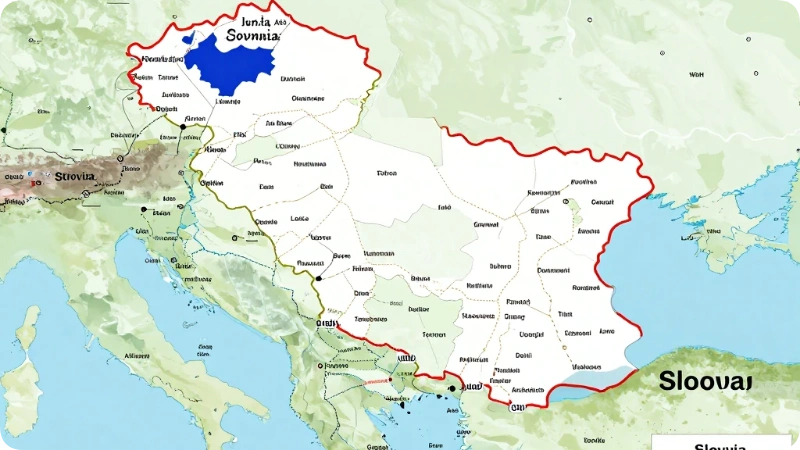
Slovenia is a small Central European country bordered by Austria, Italy, Croatia, and Hungary. It covers roughly 7,800 square miles about the size of New Jersey yet packs in the Julian Alps, the Adriatic coast, karst caves, and medieval cities. Most US travelers can visit visa free for up to 90 days under the Schengen Agreement, and the country is reachable via Ljubljana’s Jože Pučnik Airport or overland from neighboring countries.
Planning a trip to Slovenia and not sure where to start? Most American travelers discover this country almost by accident: a layover in Vienna, a friend’s Instagram photo, a mention in a “hidden gems of Europe” listicle and then find themselves completely hooked. Slovenia delivers the best of Austria and Italy at roughly half the price, with almost none of the crowds that plague Paris or Prague. Lake Bled looks impossibly beautiful in photos; it looks exactly that beautiful in person.
This guide covers everything a US traveler genuinely needs: when to go, how to get there, where to stay, what to eat, how much to budget, and the honest drawbacks nobody talks about. If you have five days or three weeks, Slovenia rewards every kind of traveler willing to show up.
Quick Facts About Slovenia
| Detail | Info |
| Capital | Ljubljana |
| Language | Slovenian (English widely spoken in tourist areas) |
| Currency | Euro (€) |
| Time Zone | CET/CEST (UTC+1/+2) 6–9 hours ahead of US time zones |
| Visa | Visa free for US citizens up to 90 days (Schengen) |
| Plug Type | Type F (bring a European adapter) |
| Calling Code | +386 |
| Driving Side | Right |
| Country Size | ~7,827 sq miles (roughly the size of New Jersey) |
| Population | ~2.1 million |
When Is the Best Time to Visit Slovenia?
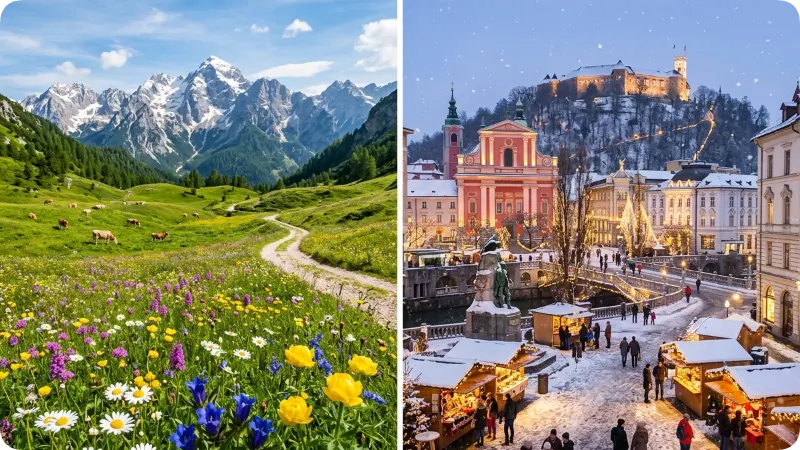
The best time to visit Slovenia is May through June or September through October. Spring and early fall bring mild temperatures (60–75°F), fewer crowds than summer, and stunning landscapes: wildflowers in Alpine meadows in May, golden forests in October. Summer (July–August) is the peak season with the best weather, but Lake Bled and Ljubljana fill up fast. Winter suits skiers but limits some outdoor activities.
Seasonal Comparison
| Season | Months | Avg Temp | Crowds | Best For |
| Spring | Apr–Jun | 55–75°F | Low–Moderate | Hiking, cycling, waterfalls |
| Summer | Jul–Aug | 75–85°F | High | Beaches, festivals, all activities |
| Fall | Sep–Oct | 50–70°F | Moderate | Foliage, wine harvest, fewer tourists |
| Winter | Nov–Mar | 28–45°F | Low | Skiing (Kranjska Gora), Christmas markets |
Insider tip: Visit Lake Bled on a weekday morning in May or September. Weekends in July see tour buses arriving before 8 a.m. An early weekday visit before 9 a.m. means you might have the lake almost to yourself.
How to Get to Slovenia from the USA
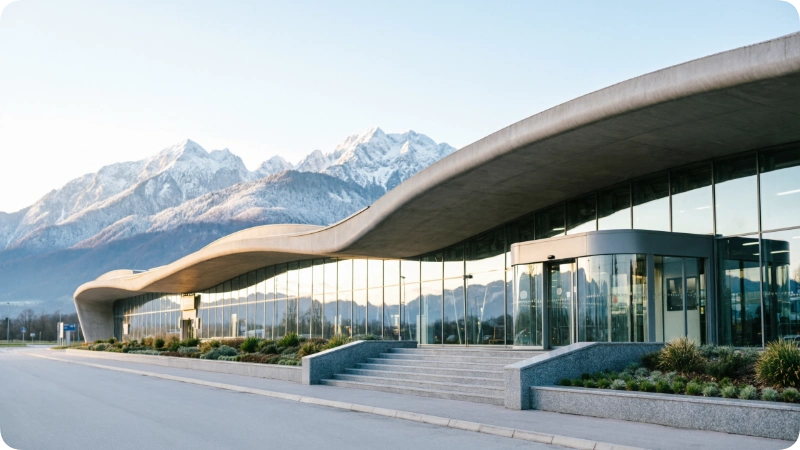
There are no direct nonstop flights from the US to Ljubljana. Most American travelers connect through major European hubs Frankfurt, Vienna, Amsterdam, or Zurich with a short 1–2 hour onward flight. Total travel time from the East Coast typically runs 12–16 hours; from the West Coast, add 2–3 hours. Alternatively, many travelers fly into Venice, Vienna, or Zagreb and drive or take a bus into Slovenia.
Main Entry Options
- Fly into Ljubljana (LJU) – Jože Pučnik Airport: Best for those focused on Central and Northern Slovenia. Located 16 miles north of the city. Ljubljana Aerodrom (airport authority: lju airport.si) operates shuttle buses and taxis into the city.
- Fly into Venice (VCE), Italy: A popular option, especially for travelers combining Italy and Slovenia. Venice to Ljubljana is about 2.5 hours by car or 3–4 hours by bus via FlixBus or GoOpti.
- Fly into Vienna (VIE), Austria: About 4 hours by car or bus. Vienna’s rail connections to Ljubljana are also solid via Eurocity trains.
- Fly into Zagreb (ZAG), Croatia: About 2 hours from Ljubljana, good if combining with a Croatia trip.
Money saving tip: Compare flights into all four gateway cities. Flying into Venice and taking a shuttle to Ljubljana often beats a Ljubljana connection by $200–$400 round trip.
Getting Around Slovenia
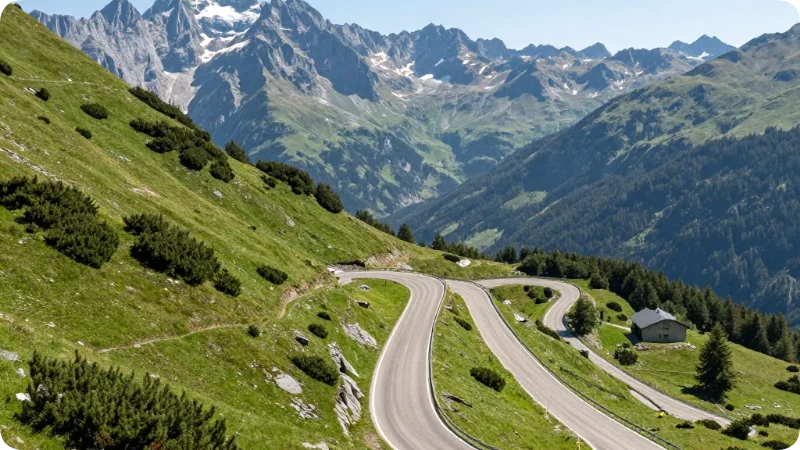
Slovenia is small enough that a rental car gives you the most freedom, especially for day trips to Triglav National Park, the Soča Valley, and the Karst region. The country’s motorway (avtocesta) network is efficient, and toll passes (vignettes) are required; a weekly vignette costs around €16 and is available at border crossings, gas stations, and online. Verify current pricing at the DARS website (dars.si) before you go.
Transport Options at a Glance
- Rental car: Most flexible; essential for reaching Soča Valley and Triglav backcountry
- Bus (Arriva Slovenia): Reliable, affordable, connects most towns including Piran and Postojna
- Train (SŽ – Slovenian Railways): Scenic but slower; useful Ljubljana–Maribor and Ljubljana–Koper routes
- GoOpti shuttle: Popular private shuttle service between Ljubljana, airports, and Italian/Austrian cities
- Organized day tours: Widely available from Ljubljana for Bled, Postojna Cave, and Piran; ideal for travelers without a car
Driving note: US driver’s licenses are valid in Slovenia. An International Driving Permit (IDP) is technically recommended by AAA and may be required by some rental companies get one before departure if you plan to drive.
Where to Stay in Slovenia
Ljubljana makes the smartest base for most first time visitors. The capital puts you within 30–90 minutes of Lake Bled, Postojna Cave, and the Soča Valley. Lake Bled itself is worth a night or two if you want to catch the lake at dawn and dusk without rushing. The coastal town of Piran is ideal if you want an Adriatic mix.
Accommodation Options by Budget
Budget (under €60/night): Hostel Tresor and Hostel Celica (Ljubljana) are well reviewed, design forward options. Celica is a converted prison, a genuinely unique stay worth booking months ahead.
Mid Range (€60–€150/night): Hotel Park Bled sits directly on the lake and offers solid value. In Ljubljana, Vander Urbani Resort and Hotel Cubo consistently earn strong reviews from American travelers.
Splurge (€150+/night): Vila Bled Tito’s former summer residence sits on the lake with jaw dropping views. Book 3–6 months ahead for summer availability.
Practical note: Always book Lake Bled accommodation at least 2–3 months in advance for June through August. The village has limited rooms and demand far exceeds supply in peak season.
Budget Breakdown for Slovenia
Slovenia sits in the sweet spot between Western and Eastern European prices cheaper than Italy or Austria, slightly pricier than Croatia or Hungary.
| Expense | Budget Traveler | Mid Range | Splurge |
| Accommodation (per night) | €25–€55 | €70–€130 | €150–€300+ |
| Meals (per day) | €15–€25 | €30–€50 | €60–€100+ |
| Local transport | €5–€15 | €15–€30 (car rental) | €30–€60 |
| Attractions | €10–€25 | €25–€50 | €50–€100+ |
| Daily total estimate | €55–€120 | €140–€260 | €300–€500+ |
All prices are estimates and subject to change verify current admission fees directly with venues before visiting.
Top Attractions in Slovenia
Lake Bled
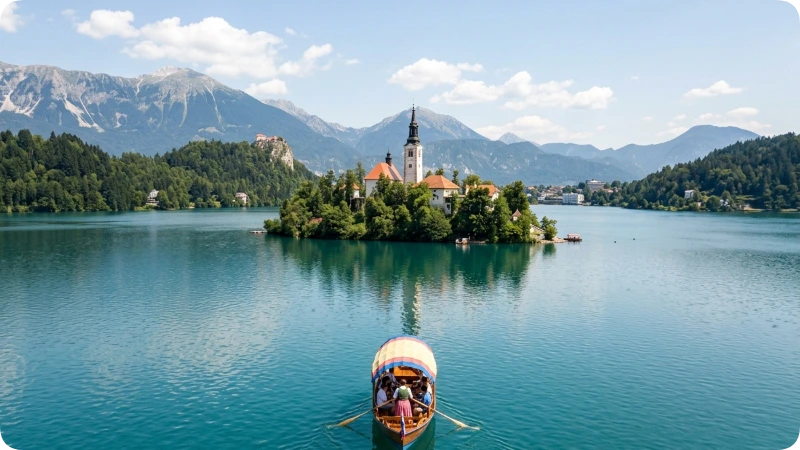
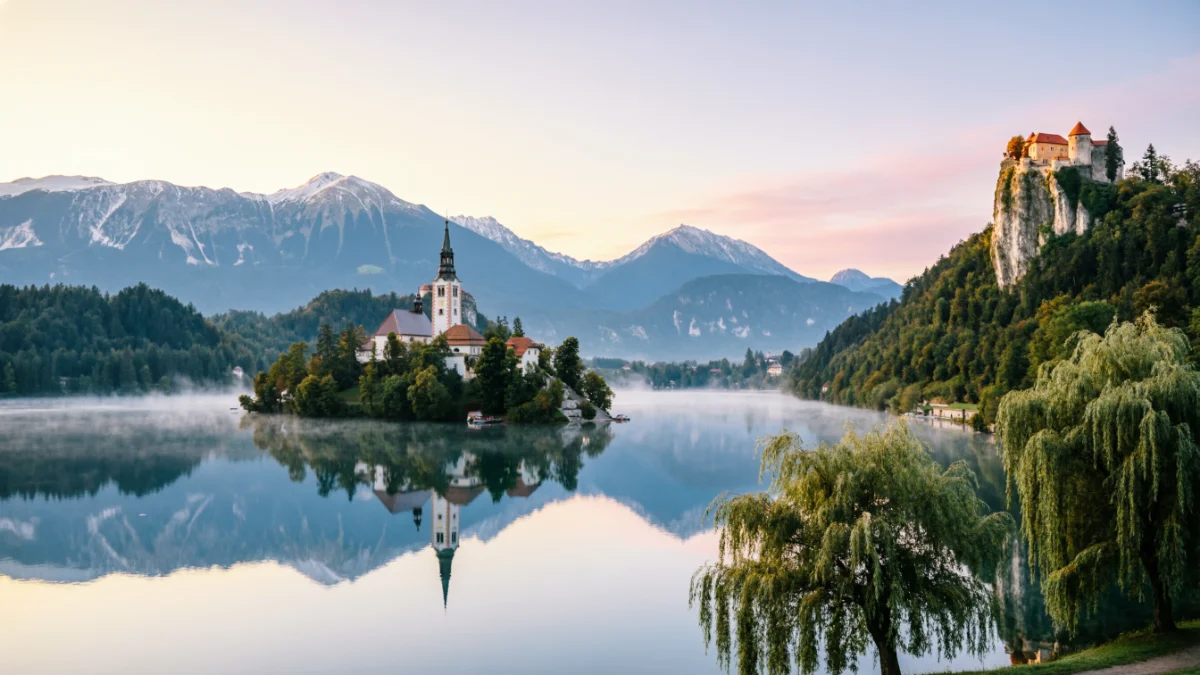
Lake Bled is Slovenia’s most iconic sight a glacial lake ringed by the Julian Alps, with a tiny island church and a clifftop medieval castle above. The Pilgrimage Church of the Assumption of Mary sits on the only natural lake island in Slovenia, reached by traditional wooden rowboats called pletnas. Bled Castle (Blejski grad) dates to the 11th century and offers some of the most photographed panoramic views in Europe.
Best photo spot: Ojstrica viewpoint a steep 15 minute climb above the lake’s south shore gives you the classic postcard angle. Arrive at sunrise for golden light and zero crowds. The second viewpoint, Mala Osojnica, sits slightly higher and looks northwest toward the island.
Entry fees: Bled Castle admission is currently around €15 for adults (verify at blejski grad.si). Pletna boat rides to the island run approximately €18 per person for a round trip, operated by licensed boatmen from the Association of Pletna Boatmen of Bled.
Ljubljana
Slovenia’s capital punches well above its weight for a city of around 280,000 people. The pedestrian friendly Old Town, Ljubljana Castle above the city, and the Triple Bridge (Tromostovje) designed by architect Jože Plečnik make the city remarkably walkable. The Central Market runs along the Ljubljanica River every morning except Sunday and showcases local produce, cheeses, and honey Slovenia is one of Europe’s top bee keeping nations.
Don’t miss: The Dragon Bridge (Zmajski most), Ljubljana’s 1901 Art Nouveau landmark, and the National Museum of Slovenia for context on the country’s history. The Metelkova autonomous social center, a former military barracks turned alternative arts district shows a rawer, less touristed side of the city.
Postojna Cave
Postojna Cave is one of the largest and most visited cave systems in Europe, with nearly 15 miles of passageways carved by the Pivka River over millions of years. A narrow gauge electric train carries visitors 2.5 miles into the cave, one of the most unusual tourist rides in the world before guided walking tours continue through cathedral sized chambers filled with stalactites and stalagmites. The cave is home to the olm (Proteus anguinus), a blind cave salamander called the “human fish” for its pale, flesh colored skin.
Practical tip: Book timed entry tickets online at postojnska jama.eu well in advance. Summer queues without pre booked tickets can stretch over 2 hours. The cave stays a constant 46°F (8°C) year round and brings a light jacket regardless of outside temperature.
Vintgar Gorge
Vintgar Gorge sits just 2.5 miles northwest of Bled and runs for about a mile along wooden boardwalks suspended above the Radovna River. The gorge ends at the 52 foot Šum waterfall, the widest in Slovenia. Most Lake Bled visitors skip it entirely; that’s their loss. The morning light through the gorge between 8 and 10 a.m. turns the water an extraordinary turquoise.
Soča Valley
The Soča River is one of Europe’s most beautiful rivers, an iridescent emerald color caused by the unique mineral composition of the limestone bedrock. The valley was the site of brutal World War I fighting (immortalized by Ernest Hemingway in A Farewell to Arms), and the Kobarid Museum tells that story powerfully. Today the valley draws white water kayakers, fly fishers, hikers, and anyone who simply wants to stare at a river this color.
Triglav National Park: The Julian Alps and the Soča Valley fall within Triglav National Park, Slovenia’s only national park, covering roughly 3% of the country’s total area. The Alpe Adria Trail and Soča Trail are both well marked and accessible to day hikers.
Piran and the Slovenian Coast
Slovenia has only 29 miles of Adriatic coastline, but it’s worth seeing. Piran is the jewel of a perfectly preserved Venetian coastal town with a medieval campanile, marble piazzas, and seafood restaurants overlooking the sea. It looks like an Italian coastal city and functions like one, thanks to centuries of Venetian rule.
Hidden Gems in Slovenia
The Škocjan Caves (UNESCO World Heritage Site)
Most visitors head straight to Postojna, but Škocjan Caves, a UNESCO World Heritage Site, may be the more impressive experience. The caves feature a colossal underground canyon with a roaring underground river and a suspension bridge crossing 160 feet above the water. Unlike Postojna, no train takes you if you walk the whole route, which creates a far more immersive and dramatic experience. Groups are capped at 70 people, so it never feels crowded. Book at park skocjanske jame.si.
Logarska Dolina (Logar Valley)
Logarska Dolina is a glacially carved valley in the Kamnik Savinja Alps in northeastern Slovenia, less than 20 miles from the Austrian border. A horseshoe of peaks rises above a valley floor dotted with farmhouses, waterfalls, and hiking trails. Rinka Waterfall Slovenia’s highest at about 230 feet sits at the head of the valley. Almost no international tourists make it here, which means genuine peace and authentic alpine landscape.
Predjama Castle
Built into the mouth of a cave halfway up a 400 foot cliff, Predjama Castle is one of the most dramatic castle settings in Europe. The structure dates to the 13th century, and the cave behind it extends more than 5 miles into the rock used for centuries as a natural fortress and escape route. It sits only 5.5 miles from Postojna Cave, making the two a natural pairing for a day trip.
Food and Dining in Slovenia
Slovenian cuisine blends Central European heartiness with Mediterranean freshness, shifting in character depending on which region you’re in. The Alpine north leans toward dumplings, smoked meats, and hearty soups. The coast serves fresh fish, risotto, and olive oil. The Karst region is famous for pršut dry cured ham and Teran red wine.
Must Try Slovenian Foods
- Potica: A rolled nut cake that is Slovenia’s unofficial national pastry, traditionally walnut but also available with tarragon, poppy seed, or hazelnut filling. Non negotiable.
- Žlikrofi: Dumplings from the Idrija region, stuffed with potato and herbs, served with lamb or bacon sauce Slovenia’s contribution to the pasta world.
- Štruklji: Rolled dumplings that can be savory (tarragon, cottage cheese) or sweet (walnut, apple).
- Kraški pršut: Protected designation of origin dry cured ham from the Karst region, similar to Italian prosciutto.
- Blejska kremna rezina (Bled cream cake): A multilayered custard and cream pastry specific to Lake Bled, served at the Park Hotel cafe since 1953.
Dining Budget Tips
A sit down lunch at a local gostilna (inn) typically runs €10–€18 for a full meal. Dinner at a mid range restaurant averages €20–€35 per person without wine. Ljubljana’s Central Market is the best spot for budget friendly local snacks burek (flaky savory pastry), fresh fruit, and local cheeses. Slovenia produces excellent wine, particularly from the Brda region (Goriška Brda) comparable to Italian Friuli wines and priced well below similar quality Italian bottles.
Safety Tips for US Travelers in Slovenia
Slovenia is consistently ranked among the safest countries in Europe. The US Department of State assigns Slovenia a Level 1 travel advisory “Exercise Normal Precautions” the lowest risk category. The country has a low crime rate, high political stability, and reliable healthcare infrastructure.
Practical Safety Notes
- Hiking safety: Mountain weather in the Julian Alps changes fast. Always carry a layer, check conditions with the Slovenian Environment Agency (met.si), and register your route if going into backcountry. The Mountain Rescue Service (GRZS) responds to Alpine emergencies.
- Driving: Mountain roads near Vršič Pass can be narrow with tight switchbacks 24 unbanked hairpins on the north face alone. Drive slowly and yield to uphill traffic. The pass is typically closed to large vehicles during winter.
- Water: Tap water throughout Slovenia is clean and drinkable. Many Alpine springs and streams are also one of the country’s underrated pleasures.
- Travel insurance: Strongly recommended for any international trip. Medical care in Slovenia is high quality but can generate significant out of pocket costs for US travelers without coverage. Verify your policy covers emergency evacuation.
- Emergency number: 112 (EU standard) for police, fire, and medical.
Common Tourist Mistakes in Slovenia (and How to Fix Them)
Mistake 1: Spending All Your Time at Lake Bled
Lake Bled is stunning. It is also, in peak summer, genuinely crowded and overpriced relative to the rest of Slovenia. Travelers who base themselves only at Bled miss the extraordinary Soča Valley, the coast, Ljubljana’s vibrant food scene, and the Škocjan Caves. Fix: Use Ljubljana as your primary base. Day trip to Bled, spend one night maximum, and save the rest of your time for less visited corners.
Mistake 2: Skipping Škocjan for Postojna
Postojna Cave is more famous, easier to book, and heavily marketed which is exactly why it draws over a million visitors a year while Škocjan sees a fraction of that traffic. Both are extraordinary, but Škocjan’s underground canyon and suspension bridge are arguably more dramatic. Fix: Book Škocjan first (it sells out faster due to small group caps), then add Postojna if time allows.
Mistake 3: Not Renting a Car
Bus connections between Slovenia’s main towns are workable. But the Soča Valley, Logarska Dolina, Predjama Castle, and dozens of small villages are essentially unreachable without a car. Public transport works fine for Ljubljana–Bled–Ljubljana, but it severely limits the rest of the country. Fix: Renting a car for at least part of your trip even 2–3 days in a rental unlocks a completely different Slovenia.
Culture and Etiquette Tips for US Visitors
Slovenians are friendly but somewhat reserved with strangers, warmer and more effusive once you know them. English proficiency is very high, especially among anyone under 40, so language barriers are minimal in tourist areas. A few cultural notes worth knowing:
- Greet with a handshake in formal settings; friends often kiss cheeks twice.
- Tipping is appreciated but not the obligatory 18–20% expected in the US 10% is generous and well received.
- Slovenia takes recycling seriously, sorting waste according to the color coded bins in towns and apartments.
- Punctuality matters in business contexts; it’s more relaxed socially.
- The country has strong national pride around beekeeping, hiking, and natural landscapes showing genuine interest in these topics opens conversations quickly.
Packing Advice for Slovenia
Slovenia’s diverse geography means you can be swimming in the Adriatic and hiking in snow capped Alps in the same trip. Pack accordingly.
Year round essentials:
- Layers temperatures change sharply with elevation
- Comfortable waterproof walking shoes (Ljubljana’s Old Town has cobblestones; Alpine trails need grip)
- Day pack for hiking and cave visits
- European power adapter (Type F, two round pins)
Summer additions:
- Light rain jacket (afternoon thunderstorms common in the Alps July–August)
- Sun protection for high altitude hikes
- Swimwear for the coast and river swimming
Winter additions:
- Warm waterproof boots for snow
- Ski gear (or rent locally at resorts like Kranjska Gora and Vogel)
Don’t forget: A light sweater or jacket for Postojna Cave the interior holds at 46°F year round, and many people underestimate the chill.
Sample 7 Day Slovenia Itinerary
This itinerary balances the major highlights with enough breathing room to actually enjoy each place.
Days 1–2: Ljubljana Arrive, settle in, and spend Day 1 exploring Old Town on foot, Ljubljana Castle, Triple Bridge, Dragon Bridge, and the Central Market. Day 2: visit Metelkova, take a free walking tour (Ljubljana tourism board organizes these), and enjoy a long dinner in the Krakovo neighborhood, one of the oldest parts of the city.
Day 3: Lake Bled + Vintgar Gorge Drive or take the direct bus from Ljubljana (1.5 hours). Hike to the Ojstrica viewpoint first thing in the morning, then ride a pletna to the island. Afternoon: walk to Vintgar Gorge before returning to Bled for the famous cream cake at the Park Hotel cafe.
Day 4: Postojna Cave + Predjama Castle Drive south from Bled (or Ljubljana). Book a timed entry for Postojna Cave in the morning. Spending the afternoon at Predjama Castle 5.5 miles away the combination makes a natural full day.
Day 5: Soča Valley This is the day that tends to stop people in their tracks. Drive the scenic route through the Vršič Pass (if open typically May through October) into the Soča Valley. Stop at the Kobarid Museum, walk along the Soča Trail, and have lunch in Kobarid or Bovec.
Day 6: Piran + Slovenian Coast Drive west to Slovenia’s Adriatic coast. Explore Piran’s medieval center, climb the town walls, and eat fresh seafood. Consider stopping in Lipica, home of the famous Lipizzaner horses on the way back.
Day 7: Škocjan Caves + Departure Book the morning Škocjan cave tour (arrive early the 10 a.m. tour often sells out in summer). Drive back to Ljubljana for a late afternoon flight, or continue into Croatia or Italy if extending the trip.
Visa and Entry Requirements for US Citizens
US citizens do not need a visa to visit Slovenia. Slovenia is a Schengen Area member, so American passport holders can enter and stay visa free for up to 90 days within any 180 day period across all Schengen countries combined. Your passport should be valid for at least 3 months beyond your planned departure date.
The European Travel Information and Authorization System (ETIAS) , a pre travel authorization similar to Canada’s eTA, was introduced for visa exempt travelers to Schengen countries. Verify current ETIAS requirements at travel.state.gov or ec.europa.eu before your trip, as implementation details and requirements may have changed.
Entry requirements can change. Always verify current entry rules through the US Department of State (travel.state.gov) and the Slovenian Embassy in Washington, D.C. before booking.
Responsible Travel in Slovenia
Slovenia takes environmental stewardship seriously; it was one of the first countries to adopt a national green tourism development strategy. The Slovenia Tourism Board (slovenia.info) actively promotes sustainable travel practices, and the country holds a Green Destination Gold certification for the Ljubljana region.
Practical responsible travel tips:
- Stay on marked trails in Triglav National Park off trail hiking causes significant Alpine erosion
- Choose local gostilne over international chain restaurants to support family run businesses
- Use reusable water bottles tap water is excellent throughout the country
- Respect cave rules at Postojna and Škocjan touching formations is strictly prohibited and causes permanent damage
- Book licensed pletna boatmen at Bled unlicensed operators undermine a tradition dating to 1590
FAQs
Is Slovenia expensive for US travelers?
Slovenia sits in the mid range for European travel costs. Compared to Western Europe, it’s noticeably more affordable expect to spend roughly 30–40% less than in Italy or Austria for similar experiences. Compared to Croatia or Hungary, it’s slightly pricier. A comfortable daily budget of $150–$200 covers accommodation, meals, and attractions for most travelers. Budget travelers managing costs carefully can get by on $80–$100 per day.
How many days do you need in Slovenia?
Most travelers find 5–7 days long enough to cover Ljubljana, Lake Bled, Postojna or Škocjan, and one additional region like the Soča Valley or the coast. Ten to fourteen days lets you explore more thoroughly without rushing, including the Karst region, northeastern wine country, and the Kamnik Savinja Alps. Two to three days is enough for a taste, but Slovenia rewards a longer stay.
Is Slovenia safe for solo female travelers?
Slovenia is considered one of the safer destinations in Europe for solo female travelers. The country’s low crime rate, high walkability in Ljubljana, and English proficiency in tourist areas make navigation straightforward. Standard solo travel precautions apply stay aware of surroundings at night, use licensed taxis or rideshares, and let someone know your plans before backcountry hikes.
Do I need a car to visit Slovenia?
A car is not strictly necessary but significantly expands what you can see. Ljubljana, Lake Bled, and Postojna Cave are all reachable by public bus from Ljubljana. However, the Soča Valley, Logarska Dolina, Predjama Castle, and many rural areas require a car or expensive private transfers. Renting a car for 2–4 days mid trip offers the best balance of flexibility and cost.
What language is spoken in Slovenia, and will English work?
Slovenian is the official language. However, English proficiency in Slovenia is excellent among the highest in non English speaking Europe. Most hotel staff, restaurant workers, tourism professionals, and younger Slovenians speak fluent English. Rural areas and older generations may have less English, but this rarely causes practical problems for travelers.
What currency does Slovenia use, and can I use credit cards?
Slovenia uses the Euro (€). Credit cards (Visa and Mastercard) are widely accepted in Ljubljana, tourist areas, hotels, and most restaurants. Smaller gostilne, rural markets, and some small towns may be cash only. Carry €50–€100 in cash as a backup. ATMs (bankomati) are available in most towns and dispense Euros use your bank’s network to minimize fees.
Is Lake Bled worth the hype?
Honestly, yes with one important caveat. Lake Bled is as beautiful as every photo suggests. The castle, the island, the Julian Alps backdrop it genuinely lives up to the images. What the photos don’t show is the summer crowd. In July and August, the main lakeside path can feel uncomfortably packed by midday. Visit in shoulder season (May, June, September) or arrive at dawn in summer, and Bled delivers everything promised.
Conclusion
Slovenia earns every bit of the enthusiasm it’s started generating among American travelers. It offers Alpine beauty, medieval cities, extraordinary caves, an Adriatic coastline, and one of Europe’s most livable capitals all within a country you can drive across in three hours. The price to experience ratio beats most of Western Europe, the infrastructure is reliable, and locals genuinely welcome visitors.
Three things to remember before you go: book Lake Bled accommodation early, don’t skip Škocjan Caves, and rent a car for at least a few days. Slovenia’s best moments often happen on small roads between places, not just at the famous spots.
The country has been quietly getting better at tourism, more infrastructure, more English speaking guides, more booking systems without yet losing the authenticity that makes it worth the trip. Go before the secret becomes universally known.