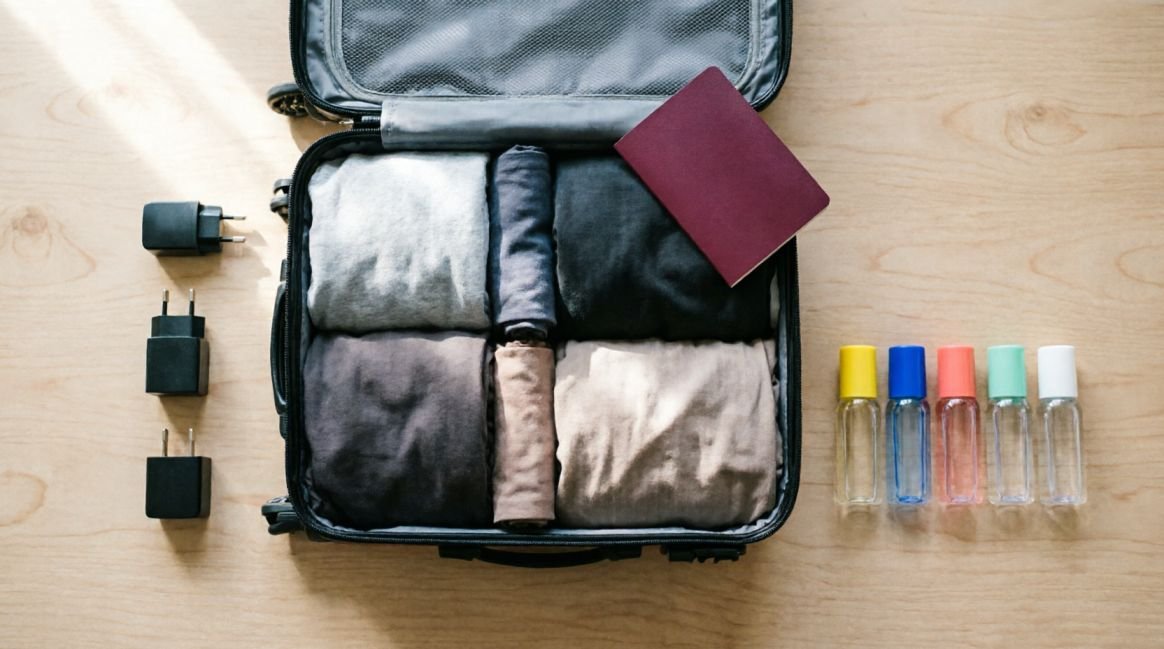
A smart travel packing list includes clothing suited to your destination’s weather, toiletries and medications, travel documents, electronics and chargers, money and payment cards, and a compact first aid kit.
Experienced travelers pack in layers, choose versatile pieces, and always leave 20% of bag space empty for the return trip. The right list saves time, reduces stress, and prevents costly airport purchases.
Why Most Packing Lists Fail Travelers
Picture this: you’re standing at your destination’s baggage carousel, watching your overstuffed suitcase limp around the belt, or worse, you’re digging through your carry on at 6 a.m. because you forgot your phone charger back home. Both scenarios are avoidable. Most packing lists found online are either generic to the point of being useless or so exhaustive they turn packing into a part time job.
This guide takes a different approach. Instead of listing every possible item a human being might theoretically need, it gives you a realistic, flexible framework that works If you’re road tripping through national parks, flying across the country for a business meeting, or heading to a beach town for a long weekend. Every section below is organized around how real travelers pack by category, by trip type, and by what actually fits in a bag you can carry comfortably.
The Golden Rules of Smart Packing
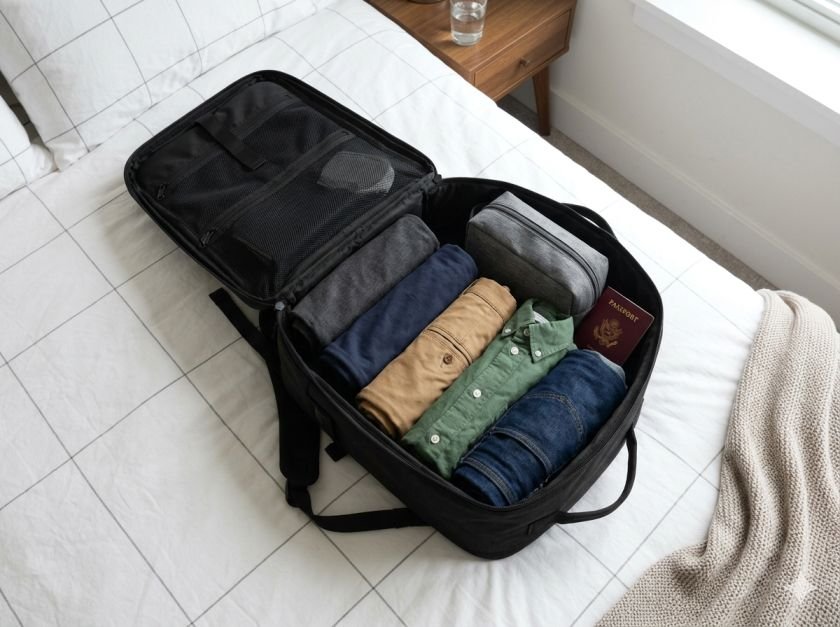
The best travel packing checklist follows three rules: pack for the trip you’re actually taking, not the trip you might take; choose multi use items over single purpose ones; and always test your bag before leaving home.
These rules sound simple, but most travelers break all three. They pack a formal outfit “just in case,” bring a separate rain jacket when a waterproof layer would do both jobs, and never lift their bag until they’re rushing out the door. The result is overpacking, which adds stress, costs money in checked bag fees, and slows you down at airports and train stations.
Here are five insider principles that separate experienced travelers from first timers:
- Roll, don’t fold. Rolling clothes saves up to 30% more space and reduces wrinkles on soft fabrics.
- One bag, one trip. Challenging yourself to carry on only, even for a week long trip, is possible with the right list.
- Wear your heaviest items. Boots, thick jackets, and bulky jeans go on your body on travel days, not in your bag.
- Pack by outfit, not by item. Lay out complete outfits before packing. Anything left over usually stays home.
- The 1 2 3 4 5 6 rule. For a week: 1 pair of shoes, 2 pants, 3 shirts, 4 pairs of socks, 5 pairs of underwear, 6 accessories (including belts, hats, and scarves).
Travel Documents and Essentials
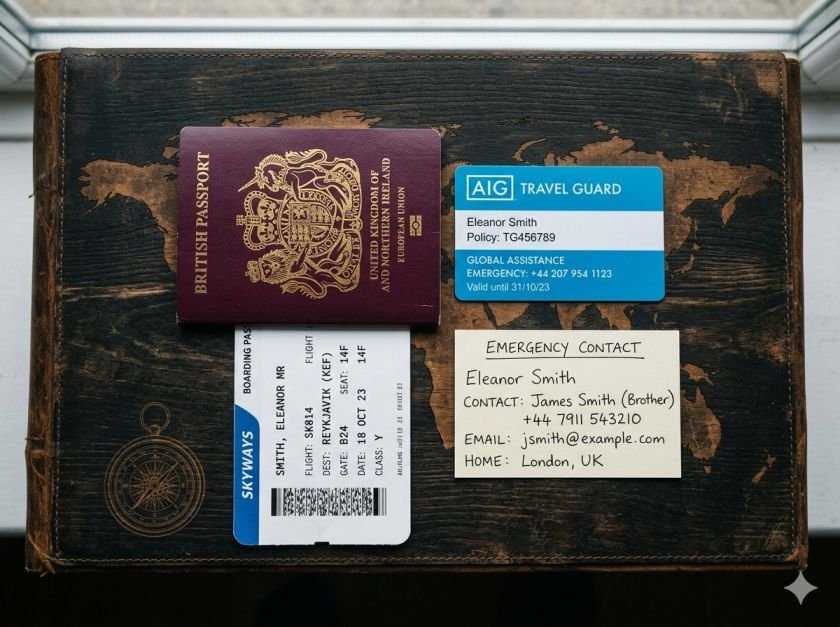
Travel documents belong at the top of every packing checklist because they’re the one category where forgetting something genuinely stops your trip.
Before anything else goes into your bag, gather and check these:
- Government issued photo ID (driver’s license for domestic flights, passport for international)
- Passport (check the expiration date many countries require at least 6 months of validity beyond your travel dates)
- Boarding passes (printed backup recommended alongside digital)
- Travel insurance documents (policy number and emergency contact saved offline)
- Hotel and rental car confirmations
- Emergency contact list written on paper
- Health insurance card
- TSA PreCheck or Global Entry card if applicable
The TSA recommends arriving at U.S. airports at least two hours before domestic flights and three hours before international departures. Always verify current ID requirements at tsa.gov, as REAL ID enforcement rules affect which IDs are accepted at domestic checkpoints.
Insider tip: Photograph every document and email them to yourself. If your wallet gets stolen abroad, those photos become your lifeline with consulates and banks.
Clothing: The Capsule Wardrobe Approach
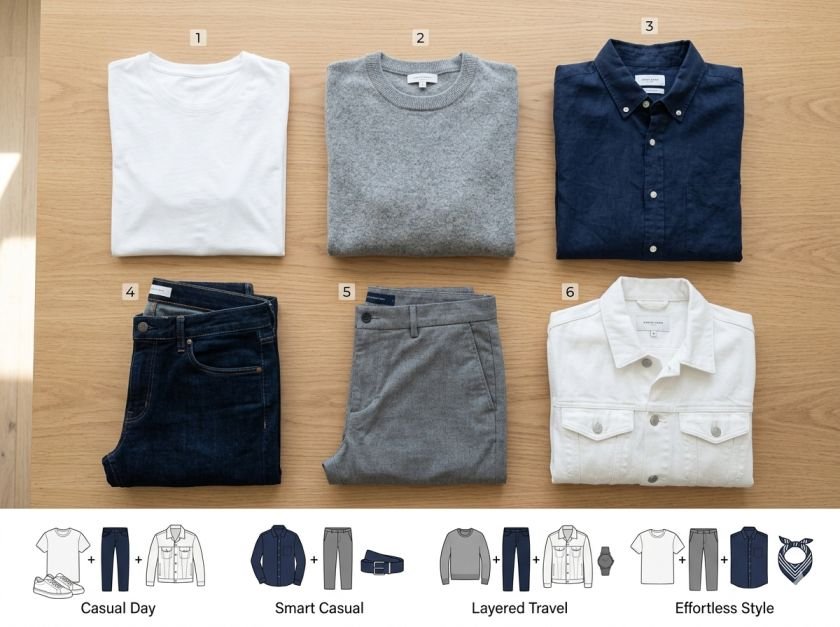
The right clothing packing list depends entirely on your destination, weather, and trip length but a capsule wardrobe approach works for nearly every trip type.
A capsule wardrobe means packing neutral colored, mix and match pieces that create multiple outfits from fewer items. Think navy, gray, black, and white as your base, with one or two accent colors. A navy blazer, for example, works over a t shirt for sightseeing and over a button down for dinner.
For a 5–7 day trip, most travelers need:
| Category | Quantity | Notes |
| T shirts or tops | 3–4 | Neutral colors, wrinkle resistant |
| Pants or jeans | 2 | One casual, one slightly dressier |
| Shorts or skirts | 1–2 | Climate dependent |
| Underwear | 5–7 | Pack one per day minimum |
| Socks | 5–7 | Merino wool resists odor and dries fast |
| Light jacket or layer | 1 | Fleece or packable down |
| Waterproof outer layer | 1 | Doubles as rain and wind protection |
| Sleepwear | 1 set | Lightweight |
| Swimsuit | 1–2 | Even for non beach trips (hotels have pools) |
| Dress shoes or nicer sandals | 1 pair | Optional, trip dependent |
| Comfortable walking shoes | 1 pair | Already on your feet |
Common mistake: Packing multiple pairs of shoes. Shoes are heavy and take disproportionate bag space. Wear your bulkiest pair, pack one versatile backup, and call it done.
Toiletries: The TSA Friendly Kit
A complete travel toiletries bag fits the TSA 3 1 1 liquid rule for carry on travel: all liquids, gels, and aerosols must be in containers of 3.4 ounces (100ml) or less, all fitting in one quart sized clear bag.
Most hotels and Airbnb hosts provide basic toiletries like shampoo, conditioner, and body wash. Bringing your own is about preference and skin sensitivities, not necessity.
Core toiletries list:
- Travel size shampoo and conditioner (or shampoo bar)
- Body wash or soap bar
- Face wash and moisturizer
- Deodorant
- Toothbrush and toothpaste
- Dental floss
- Razor and shaving cream
- Sunscreen (SPF 30 minimum the American Academy of Dermatology recommends daily use)
- Lip balm with SPF
- Feminine hygiene products if needed
- Contact lenses and solution
- Prescription glasses
Insider tip: Solid toiletries (shampoo bars, solid sunscreen, deodorant bars) bypass the TSA liquid rule entirely and last longer than their liquid equivalents. Brands like Ethique and Lush have made solid travel toiletries mainstream.
Medications and First Aid
Every traveler’s packing list needs a small but thoughtful medical kit. Prescription medications are the non negotiable starting point always pack more than you need, and carry them in your carry on, never in checked luggage.
Essential medication and first aid items:
- All prescription medications (in original labeled bottles)
- Pain reliever (acetaminophen or ibuprofen)
- Antacid or digestive relief
- Antihistamine (for allergies and bug bites)
- Anti diarrheal medication
- Motion sickness medication if needed
- Rehydration packets (especially for hot climates)
- Adhesive bandages in multiple sizes
- Antiseptic wipes or small bottle of antiseptic
- Medical tape and gauze
- Tweezers
The CDC recommends consulting a travel health provider at least four to six weeks before international trips to discuss destination specific health risks and vaccines. For domestic travel, the most important prep is simply having your routine medications covered and knowing the nearest urgent care to your destination.
Electronics and Chargers
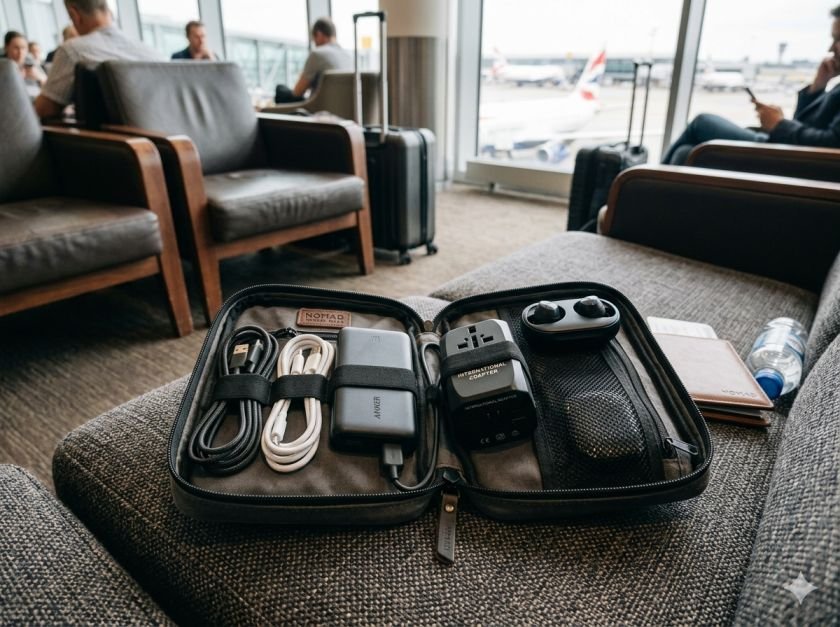
Electronics are where packing lists get complicated fast. Most travelers bring too many devices and forget their most important cables.
The essential electronics packing list:
- Smartphone with offline maps downloaded (Google Maps, Maps.me)
- Laptop or tablet (trip dependent)
- Charging cables for every device you bring
- Portable battery bank (10,000–20,000 mAh covers most travelers for a full day)
- Universal travel adapter (essential for international trips; the U.S. uses Type A plugs)
- Earbuds or headphones (noise canceling recommended for flights)
- E reader (optional but worth it for long trips)
- Camera if you prefer it over a smartphone
Hidden gem tip: A small multi port USB charger (like the Anker 65W) means one outlet charges your phone, earbuds, and laptop simultaneously. It’s lighter than three separate chargers and works in any country with an adapter.
Common mistake: Bringing a laptop out of habit when a tablet or smartphone would cover your actual needs. Think honestly about what you’ll use.
Money and Payment Essentials
Cash, cards, and payment prep deserve their own section on your packing checklist because payment problems abroad (or even in certain parts of the U.S.) are a genuine trip disruptor.
What to bring:
- Primary credit card (notify your bank of travel dates before leaving)
- Backup credit card from a different network (Visa and Mastercard coverage varies)
- Debit card for ATM withdrawals
- Small amount of local cash for tips, markets, and vendors who don’t accept cards
- Money belt or RFID blocking wallet for crowded areas
For domestic U.S. travel, most places accept cards, but cash still matters in rural areas, at farmers markets, some national park concessionaires, and for tipping service workers. The standard tip for hotel housekeeping is $1–5 per night, left daily rather than at checkout.
Insider tip: Charles Schwab’s debit card refunds all ATM fees worldwide, making it one of the best travel cards for international trips.
Bags and Luggage: What to Actually Bring
Your luggage choice shapes your entire packing list. The right bag depends on your trip length, transportation method, and travel style.
| Bag Type | Best For | Capacity |
| Personal item (under seat bag) | Weekend trips, minimalists | 15–25L |
| Carry on suitcase or backpack | 1–2 week trips | 40–50L |
| Checked suitcase | Longer trips, families, gear heavy travel | 60–90L |
| Packable day bag | Daily excursions | 15–20L |
Most U.S. domestic airlines follow similar carry on size guidelines (typically around 22 x 14 x 9 inches), but always verify with your specific airline before travel. Budget carriers like Spirit and Frontier charge for overhead bin bags and sometimes for carry ons, so checking current fee policies before booking saves real money.
A packable day bag is one of the most underrated travel items. It folds into a pouch, weighs almost nothing, and gives you a bag for sightseeing, beach days, and grocery runs without taking real estate in your main luggage.
Comfort and Sleep Essentials
Long haul flights and overnight travel are far more tolerable with a small comfort kit.
- Travel neck pillow (inflatable versions pack flat)
- Sleep mask
- Earplugs
- Compression socks (reduces swelling on flights over three hours)
- Reusable water bottle (empty it before TSA, refill after)
- Snacks for the journey
The American Academy of Sleep Medicine notes that jet lag affects most travelers crossing two or more time zones. Staying hydrated, avoiding alcohol on flights, and adjusting your sleep schedule before departure all help. Compression socks, meanwhile, support circulation on long haul flights and are recommended by most travel medicine physicians.
Trip Specific Additions to Your Packing List
No packing list is one size fits all. Here’s what to add based on your specific trip type.
Beach and Resort Trips
- Reef safe sunscreen (required in Hawaii and some other destinations by local law)
- Rash guard
- Beach bag or dry bag
- Flip flops or water sandals
- After sun lotion or aloe vera gel
- Insect repellent for tropical destinations
Hiking and Outdoor Adventures
- Moisture wicking base layers
- Hiking boots already broken in
- Trekking poles if needed
- Headlamp with extra batteries
- Emergency whistle
- Trail map (downloaded offline or paper copy from the park’s visitor center)
- Bear canister if visiting bear country national parks (required in some NPS backcountry areas)
The National Park Service provides gear guidance for specific parks at nps.gov, including information on what’s required versus recommended for different trail difficulty levels.
Business Travel
- Wrinkle resistant dress shirts or blouses
- Portable garment steamer (mini versions weigh under a pound)
- Business cards
- Laptop and presentation backup on a USB drive
- Smart casual crossbody for meetings
Winter Travel
- Thermal base layers (merino wool is worth the investment)
- Insulated gloves with touchscreen compatible fingertips
- Wool or fleece hat
- Hand warmers
- Boot traction cleats for icy conditions
What to Leave Home: The Overpackers’ List
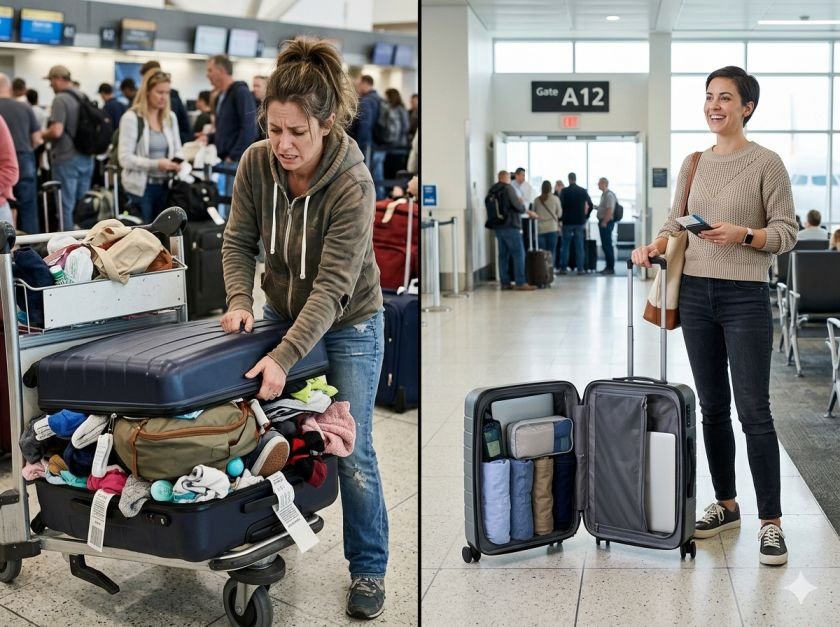
Knowing what not to pack is just as important as knowing what to bring. These are the most common items travelers regret packing.
- Multiple books. One book or an e reader handles this. Most destinations have English language bookshops.
- Hairdryer. Almost every hotel provides one. Verify before packing.
- Full size toiletries. Travel sizes or solid alternatives do the same job in a fraction of the space.
- “Just in case” outfits. If you’re not certain you’ll wear it, leave it. You can shop at your destination.
- Excessive jewelry. Valuables in unfamiliar places create anxiety. Pack one or two pieces you love.
- Towels. Hotels, hostels, and most vacation rentals provide them.
- Excessive cash. ATMs exist almost everywhere. Carrying large amounts of cash creates unnecessary risk.
Packing Tips for Specific Traveler Types
Families Traveling with Children
Children’s packing lists need extra planning around medication, snacks, entertainment, and the reality that kids need outfit changes more often than adults. Bring one more outfit per child than you think you need. Pack a small, dedicated bag of in flight or road trip entertainment coloring books, tablets preloaded with downloaded shows, and small tactile toys. Always carry children’s acetaminophen, a digital thermometer, and any allergy medications in your personal item.
Solo Travelers
Solo travelers benefit from packing lighter since there’s no one to help carry bags between transit connections. A carry on only approach is especially practical. Prioritize a secure crossbody bag for daily use, an anti theft backpack for day hikes, and always have a door stop alarm or portable door lock for accommodation security.
Older Travelers and Those with Mobility Needs
TSA Cares (reachable at 1 855 787 2227) assists travelers with disabilities and medical conditions at airport security. Call at least 72 hours before your flight. The DOT also provides guidance on air travel rights for passengers with disabilities at transportation.gov. Packing wise, prioritize comfortable, slip on footwear for security lines, a lightweight foldable cane or travel walker if needed, and any medical device documentation in an accessible pocket.
Three Tourist Mistakes (And How to Fix Them)
Mistake 1: Packing for every possible scenario.
The fix: Think about the specific activities on your itinerary, not vague “what ifs.” If a formal dinner isn’t actually on your schedule, leave the blazer home.
Mistake 2: Ignoring the weight of their empty bag.
The fix: A heavy suitcase or backpack before you pack a single item eats into your weight allowance fast. Weigh your empty bag before shopping or packing.
Mistake 3: Waiting until the night before.
The fix: Start a packing list two weeks out. Let it evolve. Pack three days before travel so you can test carrying your bag and identify forgotten items without stress.
Quick Reference: Universal Travel Packing Checklist
Documents ✓ Photo ID and passport ✓ Boarding passes ✓ Travel insurance info ✓ Confirmations (hotel, car, tours) ✓ Emergency contacts (written)
Money ✓ Primary and backup credit cards ✓ Debit card ✓ Small amount of cash
Clothing (7 day trip) ✓ 3–4 tops ✓ 2 bottoms ✓ 5–7 underwear and socks ✓ 1 warm layer ✓ 1 waterproof layer ✓ 1 pair backup shoes
Toiletries ✓ TSA compliant liquids bag ✓ Shampoo, conditioner, body wash ✓ Skincare basics ✓ Deodorant, toothbrush, toothpaste ✓ Sunscreen
Health ✓ Prescription medications ✓ OTC pain reliever, antacid, antihistamine ✓ Basic first aid supplies
Electronics ✓ Phone and charger ✓ Portable battery bank ✓ Universal adapter ✓ Earbuds or headphones
Comfort ✓ Neck pillow and sleep mask ✓ Reusable water bottle ✓ Compression socks ✓ Snacks
FAQ: Travel Packing List Questions Answered
What Are the Most Important Travel Essentials?
The most important travel essentials are your identification, travel documents, payment methods, medications, phone, charger, and weather-appropriate clothing. These items support every stage of your trip and can be difficult or expensive to replace while traveling.
What Should I Always Keep in My Carry-On?
Always keep medications, travel documents, electronics, a phone charger, a change of clothes, and any irreplaceable valuables in your carry-on bag. If checked luggage is delayed or lost—which the U.S. Department of Transportation reports happens to thousands of bags each year—your carry-on ensures your trip can continue without major disruptions.
How Many Outfits Do I Need for a 7-Day Trip?
Plan for five to six outfits and expect to wear at least one or two items more than once. A neutral color palette allows tops and bottoms to mix easily, creating multiple outfit combinations. Packing seven completely different outfits often leads to unnecessary overpacking.
What Liquids Can I Bring Through TSA Security?
The TSA’s 3-1-1 rule allows liquids in containers of 3.4 ounces (100 ml) or less. All containers must fit inside one clear, quart-sized bag. Medications, baby formula, and breast milk are exempt from standard liquid limits but may require additional screening. Always verify current regulations on TSA.gov before your trip.
Are Packing Cubes Worth the Investment?
For most travelers, packing cubes are a worthwhile investment. They help organize clothing by category, maximize suitcase space, and make unpacking faster upon arrival. They are especially useful for longer trips or multi-city itineraries.
How Do I Pack Fragile Items Safely?
Wrap fragile items in soft clothing before placing them in your luggage. Socks work well for smaller breakable objects, while sweaters provide cushioning for larger items. Place fragile belongings in the center of your suitcase and surround them with soft items for extra protection.
What’s the Best Way to Pack for Both Warm and Cold Destinations?
Layering is the most effective strategy. A lightweight merino wool base layer works well in cooler weather while remaining comfortable in mild temperatures. Pair it with a packable jacket and versatile clothing that can adapt to changing conditions throughout your trip.
Do I Need Travel Insurance?
Travel insurance can provide valuable protection against trip cancellations, medical emergencies, and lost luggage. Purchase coverage before departure and keep your policy details accessible on both your phone and a printed copy. International travelers should also verify whether their health insurance provides coverage outside the United States.
Conclusion
A well built travel packing list does three things: it prevents the stress of forgetting essentials, saves money on airport convenience purchases and checked bag fees, and lets you focus on actually enjoying your trip once you arrive. Start with the universal checklist framework above, customize it for your destination and trip type, and resist the urge to pack for every possible scenario.
The travelers who pack best aren’t the ones with the biggest bags, they’re the ones who’ve learned exactly what they need and left everything else behind. Your best trip starts with your lightest bag.
Start your list two weeks out, lay out your outfits three days before departure, and walk out the door confident that everything you need is already with you.

Gordon Ramsay is a travel writer and destination researcher who helps U.S. travelers plan smarter trips, covering destinations, seasonal trends, budgets, and logistics to help readers decide where—and when—to go.
Rather than simply listing popular places, Gordon Ramsay focuses on what travelers actually need: comparing weather against crowds, weighing costs and accessibility, and researching current conditions alongside official tourism guidance—delivering honest, practical advice without the hype.










1 thought on “Travel Packing List: The Complete Checklist for exciting Adventures ”