
Travel insurance for Spain typically costs between 4% and 10% of your total trip cost for US travelers. A standard policy covers emergency medical care, trip cancellation, lost luggage, and travel delays. Spain requires no specific insurance for US citizens with a tourist visa, but policies that include at least €30,000 in emergency medical coverage are strongly recommended and required if you plan to apply for a Spanish visa.
Why Every American Needs Travel Insurance for Spain
Spain sits among the top five international destinations for US travelers every year and for good reason. The food, the history, the coastlines, and the sheer variety of experiences make it endlessly rewarding. But between transatlantic flights, multi city itineraries, and adventures that might include hiking in the Pyrenees or riding mopeds through Mallorca, a lot can go wrong.
Here’s the painful truth most travelers learn too late: your US health insurance almost certainly does not cover you abroad. Medicare and most Medicaid plans offer zero international coverage. Even many private plans either exclude foreign care or require you to pay out of pocket and file for reimbursement, a slow, uncertain process that won’t help you in a Spanish emergency room at 2 a.m.
This guide covers everything a US traveler needs to know about travel insurance for Spain from choosing the right policy and understanding what’s covered, to insider tips that can save you hundreds of dollars and real headaches. If you’re planning a two week vacation through Andalusia or a month long solo journey, read this before you book.
Quick Facts: Travel Insurance for Spain
| Category | Details |
| Currency | Euro (€) |
| US Passport Required? | Yes |
| Visa for US tourists | Not required for stays up to 90 days |
| Schengen Zone? | Yes Spain is part of the Schengen Area |
| Insurance legally required? | No, for US tourists under 90 days |
| Recommended medical coverage | Minimum €30,000 (€60,000+ preferred) |
| EHIC valid for US citizens? | No EHIC is for EU/UK residents only |
| Average trip cost (2 weeks) | $3,000–$7,000+ per person |
| Average insurance cost | 4%–10% of total trip cost |
| Emergency number in Spain | 112 |
| US Embassy Madrid | +34 91 587 2200 |
What Does Travel Insurance for Spain Actually Cover?
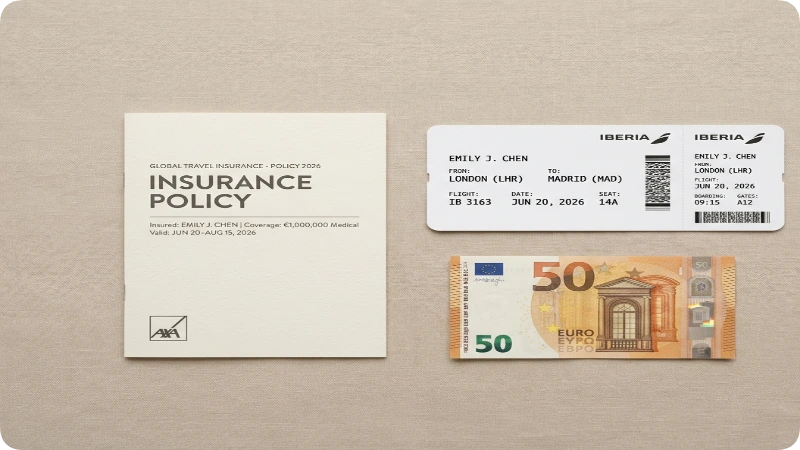
A strong travel insurance policy for Spain covers six core categories, though the specifics vary significantly by provider and plan tier.
Emergency Medical Coverage is the most critical component for Spain travel. Spanish public hospitals will treat you in an emergency, but they may seek payment or documentation upfront, and private hospitals which are often faster and more comfortable definitely will. Medical evacuation back to the US can cost $50,000 to $100,000 or more without coverage.
Trip Cancellation and Interruption reimburses your prepaid, non refundable trip costs if you have to cancel or cut your trip short due to a covered reason illness, family emergency, jury duty, or natural disaster. This matters especially for Spain, where flights from the US can run $800 to $1,500 or more round trip.
Baggage and Personal Belongings covers loss, theft, or damage to your luggage and personal items. Barcelona, in particular, is well known for pickpocketing on the metro and at tourist sites, a reality that a good policy accounts for.
Travel Delay Coverage kicks in when your flight is delayed beyond a set threshold (usually 6–12 hours), reimbursing meals, accommodation, and incidentals.
Cancel for Any Reason (CFAR) is an optional upgrade that reimburses 50%–75% of your trip cost if you cancel for any reason not covered by standard policies. It typically needs to be purchased within 14–21 days of your initial trip deposit.
24/7 Emergency Assistance is a service not just coverage that connects you with coordinators who can locate English speaking doctors, arrange medical transport, and liaise with your family or embassy. This is worth its weight in gold in a real emergency.
How Much Does Travel Insurance for Spain Cost?
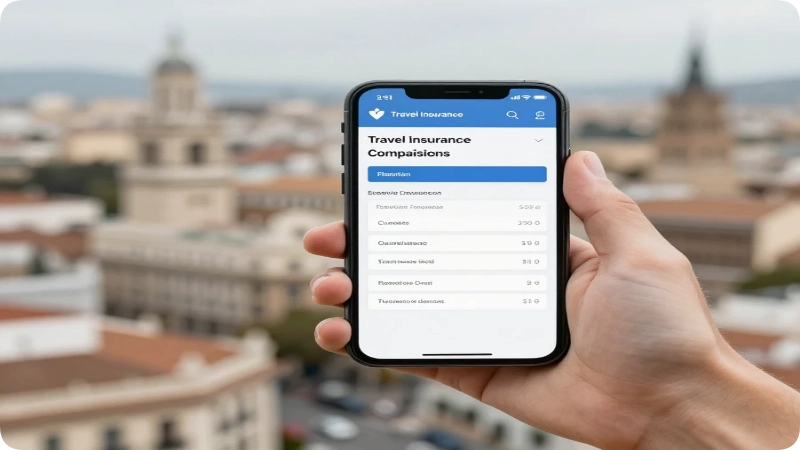
For a US traveler, the cost of travel insurance for Spain generally runs 4%–10% of your insured trip value. Several factors push that number up or down.
Key Factors That Affect Your Premium
Age is the biggest variable. A 30 year old traveler might pay $80–$150 for a two week Spain trip. A 65 year old for the same trip might pay $300–$600. Insurers price age risk aggressively, especially for medical coverage.
Trip cost matters because most trip cancellation benefits are tied to the total insured trip value. The more you insure, the more you pay but also the more you’re protected.
Coverage level and add ons like CFAR, adventure sports riders, or rental car coverage raise the premium. A basic plan costs less than a comprehensive one, though the gap in protection is enormous.
Pre existing conditions can affect your eligibility or cost. Many providers offer a pre existing condition waiver if you purchase within 14–21 days of your first trip deposit don’t miss that window.
Sample Cost Comparison (Two Week Spain Trip, $5,000 Trip Cost)
| Traveler Profile | Basic Plan | Comprehensive Plan | With CFAR |
| Age 28 | ~$90 | ~$180 | ~$260 |
| Age 45 | ~$150 | ~$280 | ~$380 |
| Age 62 | ~$280 | ~$480 | ~$620 |
| Age 70+ | ~$400+ | ~$700+ | ~$900+ |
Note: These are illustrative estimates. Always compare quotes directly from providers. Prices vary significantly.
Best Travel Insurance Plans for Spain: What to Look For

Dozens of travel insurance providers compete for your business, and marketing language makes it hard to compare apples to apples. Here’s what to prioritize when evaluating any plan for Spain.
Medical Coverage Minimums
Look for at least $100,000 in emergency medical coverage and $250,000–$500,000 in medical evacuation coverage. Medical evacuation from Spain to the US is not cheap, and lower limits leave you dangerously exposed. Many experienced international travelers recommend $500,000+ in evacuation coverage for transatlantic trips.
Primary vs. Secondary Medical Coverage
This distinction matters enormously. Primary coverage pays your medical bills directly without requiring you to first file with your US health insurer. Secondary coverage only kicks in after your primary insurance has paid, which creates paperwork, delays, and potential gaps. For Spain, primary medical coverage is the better choice.
Pre Existing Condition Waivers
If you have any medical history, heart disease, diabetes, asthma, a recent surgery check If a plan includes a pre existing condition waiver. Most plans exclude claims related to pre existing conditions unless you purchase the waiver, typically within 14–21 days of your initial deposit.
Adventure Sports Coverage
Planning to surf in Basque Country, ski in the Sierra Nevada, or hike the Camino de Santiago with rough terrain? Standard policies often exclude injuries from “adventure” or “extreme” activities. Look for a plan that explicitly covers your planned activities, or purchase a rider.
Do You Need Travel Insurance for Spain? Visa Rules Explained
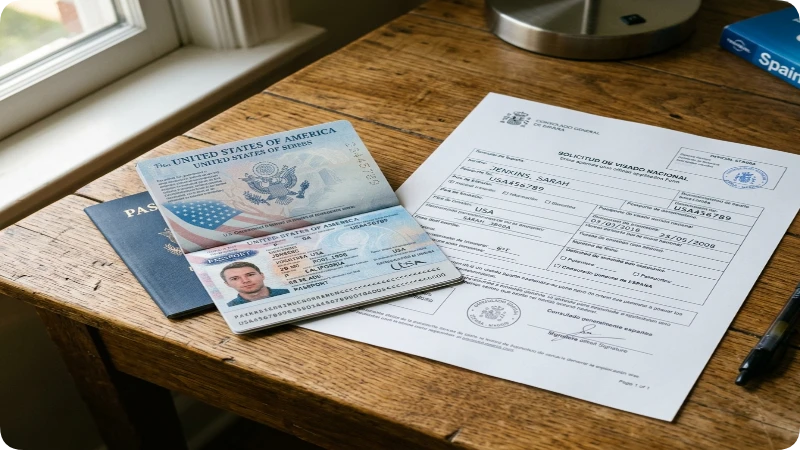
US citizens traveling to Spain as tourists for 90 days or fewer do not need a visa and therefore face no legal insurance requirement. Spain is part of the Schengen Area, and the US participates in the Schengen visa free agreement.
However, there are two important exceptions.
Spain Digital Nomad Visa and Long Stay Visas
If you plan to stay longer than 90 days or to work remotely under Spain’s Digital Nomad Visa you will need to apply through the Spanish consulate. Both long stay visas and the Digital Nomad Visa require proof of health insurance with coverage valid in Spain for the duration of your stay. The minimum coverage requirement for these visas is typically €30,000, though €60,000 or more is safer and often recommended by immigration attorneys. Always verify current requirements directly with the Spanish Consulate or official government resources before applying, as requirements change.
Is EHIC Useful for American Travelers?
No. The European Health Insurance Card (EHIC) which gives EU and UK residents access to public healthcare across EU member states is not available to US citizens. Americans have no reciprocal healthcare agreement with Spain. This makes a robust travel insurance policy even more important.
What Travel Insurance for Spain Does NOT Cover
Understanding exclusions is just as important as understanding coverage. Most standard travel insurance policies exclude the following:
Alcohol and drug related incidents. If you’re injured while intoxicated, most insurers will deny the claim. This is common and worth knowing if your Spain trip involves a flamenco festival or San Fermín celebration.
Pre existing conditions without a waiver. If you have a documented medical condition and didn’t purchase a pre existing condition waiver, any related claims will likely be denied.
High risk activities without a rider. Skydiving, motorbike riding, skiing, and certain water sports are frequently excluded from standard plans.
Unattended belongings. If your bag is stolen while you left it on a beach chair or café table without keeping watch, many baggage claims will be denied. Keep belongings attended or locked away.
Civil unrest and known events. Travel insurance doesn’t cover situations that were already known and reported before you purchased your policy. If a strike or protest was already announced, buying insurance after the fact won’t help.
Fear of travel. Changing your mind, disliking the destination, or being nervous about flying are not covered reasons for cancellation unless you purchased CFAR coverage.
How to Buy Travel Insurance for Spain: Step by Step
Buying travel insurance is simpler than many people expect. Follow these steps to avoid common pitfalls.
- Book your trip first. You need a confirmed trip cost to get accurate quotes and to start the clock on pre existing condition waiver windows.
- Compare quotes immediately after booking. Use comparison platforms that aggregate multiple insurers; this lets you evaluate coverage side by side rather than reading fine print across a dozen websites.
- Buy within 14–21 days of your first deposit. This window unlocks pre existing condition waivers and CFAR eligibility on most plans, two of the most valuable add ons available.
- Ensure your total non refundable trip cost. Don’t under insure to save on premiums. If you’re canceling a $5,000 trip, a policy that only covers $3,000 is a painful lesson.
- Read the Certificate of Insurance (not just the summary). The summary highlights the benefits. The certificate documents the exclusions. Both matter.
- Save digital and physical copies. Keep your policy number, emergency contact line, and insurer’s claim portal easily accessible ideally in your phone notes app and in a printed backup with your passport.
- Verify your coverage includes Spain specifically. Most global plans do, but double check that the policy is valid in Schengen countries.
Travel Insurance for Spain: Special Scenarios
Spain with Pre Existing Conditions
Travelers with chronic conditions diabetes, hypertension, COPD, recent heart surgery need to be especially strategic. Look for insurers that offer “look back period” waivers. A shorter look back period (60–90 days vs. 180 days) is generally better, as it reduces the amount of medical history that can be scrutinized during a claim.
Also consider insurers that specialize in coverage for travelers with complex medical histories. Some providers, like Battleface or Tin Leg, are better suited to these situations than mass market plans.
Senior Travelers to Spain
Many standard policies cap coverage for travelers over 70 or 80, or charge sharply higher premiums. Seniors should look specifically at plans from providers like Allianz, GeoBlue, or Trawick International that offer robust senior options. Pay close attention to medical evacuation limits at higher ages, the likelihood of needing medical repatriation increases significantly.
Long Term and Backpacker Travel in Spain
Staying in Spain for 30–90 days? A standard single trip policy covers you. Going longer, or traveling across multiple countries? Consider an annual multi trip plan or a long stay travel insurance policy. These often work out cheaper and more convenient than buying separate policies for each leg of a long journey.
Family Travel Insurance for Spain
Many insurers offer family plans that cover two adults and dependent children under one premium often at a significant discount compared to buying individual policies. Check If children are included free (common up to age 17 or 21) and If the plan covers school year exclusions or sports activities relevant to your kids’ plans.
Insider Tips: Getting the Most from Your Spain Travel Insurance
These are the details most travelers miss often until it’s too late.
Tip 1: File a police report (denuncia) for any theft. Spanish police reports are required documentation for virtually every theft or loss claim. Without a denuncia filed within 24 hours, most insurers will deny your baggage or personal property claim. Head to the nearest Policía Nacional station immediately after any theft.
Tip 2: Keep all medical receipts every single one. Spanish pharmacies are excellent and inexpensive compared to US standards. Still, save every receipt for prescriptions, doctor visits, and treatments. Most insurers require original itemized receipts for reimbursement.
Tip 3: Call your insurer before seeking non emergency treatment. Many policies require pre authorization for non emergency medical procedures. Skipping this call can result in a reduced payout or a denied claim.
Tip 4: Document your pre trip valuables. Before you leave, photograph your electronics, camera gear, and jewelry with serial numbers visible. If a claim arises, this documentation proves ownership and value.
Tip 5: Your credit card may already include some coverage. Many premium travel credit cards (Chase Sapphire Reserve, Amex Platinum, Capital One Venture X) include trip cancellation, delay, and baggage protection. Review your card benefits before purchasing overlapping coverage but don’t rely on credit card coverage alone for medical and evacuation protection, which is rarely included at adequate levels.
Common Tourist Mistakes and How to Avoid Them
Mistake 1: Buying Insurance at the Last Minute
Purchasing travel insurance the week before departure is one of the most expensive mistakes American travelers make. You miss the pre existing condition waiver window, CFAR eligibility, and sometimes even standard time sensitive benefits. Buy within two to three weeks of booking, not two to three days before flying.
Mistake 2: Assuming Credit Card Coverage Is Enough
Credit card travel protections are valuable supplemental coverage, but they’re not designed to replace a standalone policy. Most credit card policies exclude or severely limit medical coverage and evacuate the most expensive risks you face abroad. Use card benefits as a layer, not a foundation.
Mistake 3: Underinsuring the Trip
Some travelers insure only their flights to save on the premium. But if your Spain hotels, tours, and experiences are non refundable, those costs are at risk too. Insure the full non refundable trip cost not just the parts you remember most easily.
Hidden Gems: Three Underrated Travel Insurance Considerations for Spain
1. Rental Car Coverage in Spain
Many US travelers rent cars to explore Andalusia, the wine country of La Rioja, or rural Catalonia. Spanish rental companies push collision damage waiver (CDW) coverage aggressively at the counter. A travel insurance policy with a rental car add on or a credit card that includes primary rental car coverage can save you $15–$30 per day in unnecessary fees.
2. Strike Coverage for Spanish Airports
Spain has a history of transport strikes, particularly in summer. AENA (the national airport authority) and Spanish rail operator Renfe both experience periodic labor actions. A policy that includes travel delay and trip interruption coverage for documented strikes can reimburse meals, accommodation, and rebooking fees that can easily hit $300–$500 per day.
3. Coverage for the Camino de Santiago
The Camino de Santiago is a physically demanding pilgrimage route across northern Spain and an increasingly popular bucket list journey for US travelers. Standard policies often exclude injuries from hiking or terrain related falls as “adventure activities.” If the Camino is on your itinerary, specifically verify your policy covers trekking and confirm If the Camino qualifies under the adventure sports definitions in your Certificate of Insurance.
Best Time to Visit Spain and What It Means for Insurance
Spain’s climate and travel patterns create meaningful differences in risk and planning depending on when you visit.
Seasonal Overview
| Season | Months | Conditions | Insurance Notes |
| Spring | March–May | Warm, festive, fewer crowds | Ideal; lower delay risk |
| Summer | June–August | Hot, very crowded, peak prices | Higher theft risk; crowded ERs |
| Shoulder Fall | Sept–Oct | Warm, manageable crowds | Best overall balance |
| Winter | Nov–Feb | Cool to cold; skiing in north | Lower tourist theft; ski riders needed |
Summer is peak season for pickpocketing and petty theft especially in Barcelona, Madrid, and coastal resort areas. Purchasing a policy with higher personal belongings limits makes more sense for a July trip than a November one. Winter travelers heading to the Sierra Nevada or Pyrenees for skiing should confirm their policy includes ski/snowboard coverage, which is often excluded by default.
FAQs
Do I legally need travel insurance to visit Spain from the US?
No. US citizens visiting Spain as tourists for up to 90 days do not need travel insurance as a legal requirement. However, if you’re applying for a long stay visa or the Digital Nomad Visa, health insurance with coverage in Spain becomes a mandatory application requirement. Always verify current visa rules directly with the Spanish Consulate before your trip.
Does my US health insurance cover me in Spain?
Almost certainly not adequately. Most US health insurance plans including employer sponsored plans provide very limited or no coverage for care received abroad. Medicare covers virtually nothing internationally. Even plans that offer some international coverage often require you to pay upfront and seek reimbursement, which is slow and uncertain. Travel insurance with robust medical coverage fills this gap.
What is the minimum medical coverage recommended for Spain?
Most travel insurance experts recommend a minimum of $100,000 in emergency medical coverage and $250,000–$500,000 in medical evacuation coverage for trips to Europe. If you’re applying for a Spanish long stay visa, the minimum is €30,000 in health coverage, though higher amounts are advisable.
Can I buy travel insurance for Spain after I’ve already departed?
Some providers sell post departure policies, but they typically exclude any events that have already occurred or are already known and many restrict or eliminate trip cancellation coverage entirely. It’s always best to purchase before your trip begins, ideally within two to three weeks of your first deposit.
What happens if I get sick in Spain without travel insurance?
Spanish public hospitals (hospitales públicos) will provide emergency care regardless of your insurance status, but you will receive a bill. For serious conditions requiring hospitalization, surgery, or medical evacuation, the costs can reach tens of thousands of dollars. Without insurance, you’re responsible for the entire amount out of pocket. The US Embassy in Madrid (+34 91 587 2200) can provide a list of English speaking physicians and assist in emergencies, but they cannot pay medical bills on your behalf.
Does travel insurance cover trip cancellation due to a natural disaster in Spain?
Yes, most comprehensive policies cover trip cancellation or interruption due to natural disasters but only if the disaster occurs after you purchased the policy. A wildfire or flood already in progress when you buy a policy is typically considered a “known event” and excluded. Buy early for maximum protection.
Is Cancel for Any Reason (CFAR) worth it for a Spain trip?
CFAR is worth considering if your trip involves significant non refundable costs, your travel plans are uncertain, or you’re traveling during a period of geopolitical or health uncertainty. It typically reimburses 50%–75% of your insured trip cost and must be purchased within 14–21 days of your initial deposit. For travelers with fully flexible, refundable bookings, CFAR adds less value.
Conclusion
Three things every US traveler should remember about travel insurance for Spain:
First, your US health insurance won’t protect you the way you think it will travel. Medical coverage is not optional, it’s essential. Second, timing is everything buy your policy within two to three weeks of booking to unlock the most valuable protections. Third, read the exclusions as carefully as you read the benefits. The fine print is where most travelers get caught off guard.
Spain rewards travelers who prepare. The country is safe, welcoming, and medically capable but none of that eliminates the financial risk of a hospitalization, an emergency flight home, or a stolen bag. A solid travel insurance policy lets you walk through the Alhambra, eat pintxos in San Sebastián, and watch flamenco in Seville knowing that if anything goes wrong, you’re covered.
Compare quotes, buy smart, and enjoy every moment of your Spain adventure.












1 thought on “Best Travel Insurance for Spain: USA Traveler’s 2026 Handbook”