
Travel sandals are open toe or strappy footwear designed to handle the varied demands of travel from cobblestone streets to beach walks to light hiking trails. The best pairs combine durability, comfort, packability, and style. For most travelers, one or two pairs of well chosen sandals can replace three or four specialty shoes, saving luggage space and reducing carry on weight.
Why the Right Travel Sandals Can Make or Break Your Trip
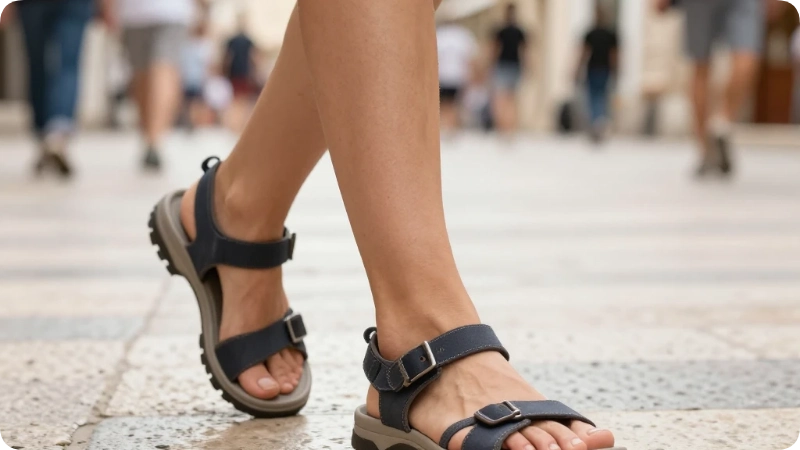
Every experienced traveler has learned this lesson the hard way: the wrong footwear turns a dream trip into a blister nightmare. Feet take a beating on travel days, airport terminals, uneven terrain, cobblestone alleys, and hours of exploring all add up fast. The right travel sandals protect your feet, keep you mobile, and reduce the number of shoes you need to pack.
Most travelers underestimate how much walking they’ll actually do. According to the American Podiatric Medical Association (APMA), the average tourist walks 8–10 miles per day in a new city. That distance demands footwear with real arch support, a secure fit, and materials that breathe without rubbing. Sandals built for travel rather than for the backyard or the pool meet all three requirements.
This guide covers everything you need to know: how to pick the right style for your trip type, which features actually matter, how to break them in before you go, what mistakes travelers make, and which pairs work across the widest range of destinations. If you’re planning a week in Rome, a beach escape to Hawaii, or a multi week backpacking trip through Southeast Asia, there’s a travel sandal built for your journey.
Quick Facts: Travel Sandals at a Glance
| Feature | What to Look For |
| Sole thickness | 5–10mm for city walking; 10–20mm for trail/adventure |
| Strap material | Webbing, leather, or neoprene (avoid thin foam) |
| Weight per pair | Under 400g (14 oz) is ideal for packing |
| Break in time | Most quality sandals need 3–5 days of wear |
| TSA considerations | Easy slip on/off speeds up security screening |
| Water resistance | Look for quick dry materials for beach/river use |
| Closure type | Adjustable buckle or hook and loop (Velcro) preferred |
| APMA seal | American Podiatric Medical Association approval is a trustworthy quality signal |
Types of Travel Sandals and Who They’re Best For
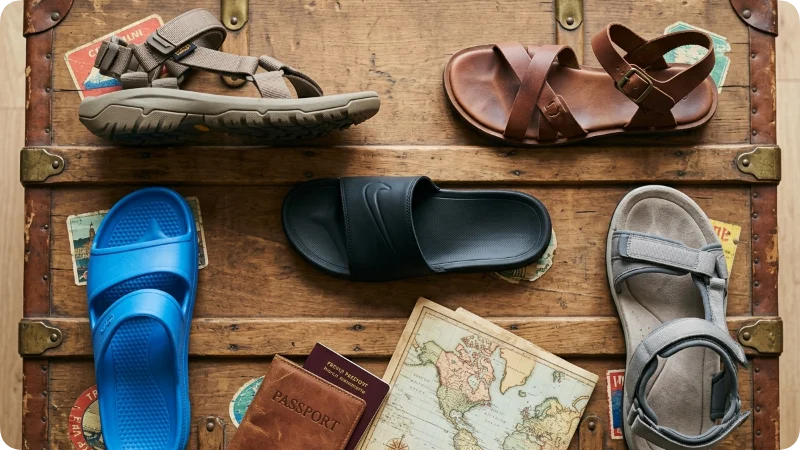
The right travel sandal depends entirely on where you’re going and what you’ll be doing. There are five main categories, and choosing the wrong one is the #1 mistake travelers make.
Sport and Adventure Sandals
Sport sandals feature rugged soles, multiple adjustment straps, and toe protection. Brands like Teva, Chaco, and Keen dominate this category. They handle everything from river crossings to light hiking to sightseeing in hot climates. The Chaco Z/Cloud, for example, has a polyester webbing strap that’s virtually indestructible and a FootShape toe box that reduces pressure on the big toe. Best for: Adventure travelers, outdoor itineraries, national park visits, tropical destinations.
Walking and City Sandals
City oriented walking sandals blend support with a cleaner profile that works in restaurants and casual settings. Look for contoured footbeds (cork or EVA foam), smooth or lightly textured uppers, and a low profile sole. Birkenstock’s Arizona style is the icon here the cork latex footbed molds to your foot over time, distributing weight evenly. Best for: European city trips, cultural destinations, warmer U.S. cities like New Orleans or Charleston.
Slide Sandals
Slide single strap backless sandals are the lightest and most packable option. They work brilliantly as secondary sandals: hotel slippers, beach shoes, or post hike recovery footwear. They should never be the only footwear you pack. Best for: Beach trips, resort travel, pairing with a primary hiking or walking shoe.
Leather Dress Sandals
Leather sandals bridge the gap between casual and smart casual. They look presentable enough for a nice dinner but still handle a full day of walking. Italian made leather sandals are the gold standard towns like Capri and Positano are famous for handcrafted versions. Best for: Mediterranean cruises, wine country, city trips where evening dining is part of the plan.
Waterproof and Quick Dry Sandals
Specifically engineered for water environments, these sandals use synthetic webbing, drainage channels, and non slip rubber outsoles. The KEEN Newport H2 is one of the most popular, featuring a closed toe design that protects against rocks in rivers and rocky beaches. Best for: Beach vacations, waterfall hikes, boat tours, kayaking excursions.
The 7 Features That Actually Matter in a Travel Sandal
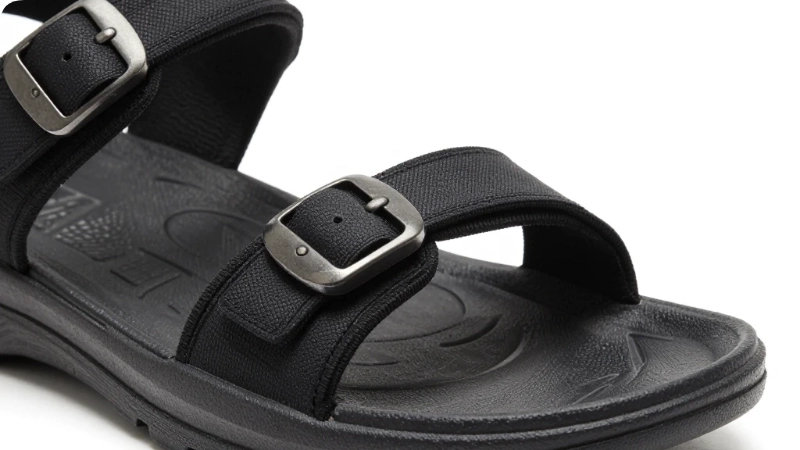
Knowing what separates a genuinely good travel sandal from a pretty but painful one saves money and prevents suffering. Here are the seven features worth examining before any purchase.
1. Footbed Support and Cushioning
A flat sandal with no arch support causes plantar fasciitis symptoms in as little as one to two days of heavy walking. Look for a contoured footbed with visible arch support the higher the arch profile, the more redistributed pressure across the foot. EVA foam is lightweight and affordable; cork latex (as used in Birkenstock) molds to the individual foot over weeks of wear. Memory foam footbeds feel soft initially but compress quickly under heavy use.
2. Strap Security and Adjustability
A sandal that slips, shifts, or twists causes blisters faster than almost anything else. Adjustable buckles or hook and loop closures let you fine tune fit throughout the day as feet naturally swell (which they do, especially in heat). Fixed size straps are a gamble fine if you land in exactly the right size, dangerous if you don’t.
3. Outsole Grip
Wet cobblestones, polished marble floors, and boat decks all become hazards with inadequate traction. Vibram soles and multi directional lug patterns provide the most reliable grip across surfaces. Simple flat rubber outsoles are fine for dry pavement but become slippery in rain. Always check the outsole pattern before purchasing sandals for mixed terrain travel.
4. Weight and Packability
A heavy sandal is a liability in a carry on. The best travel sandals weigh under 400 grams (about 14 oz) per pair and compress flat. Thin soled sport sandals and slides pack most efficiently. Thicker soled walking sandals take more space but offer significantly better support for high mileage days.
5. Break In Period
Most quality sandals, especially leather and cork footbed styles require 3–5 days of casual wear before they’re comfortable for full travel days. Breaking them in before departure is non negotiable. Wearing new sandals for the first time on arrival day is one of the most common travel mistakes.
6. Material Breathability and Odor Resistance
Travel means hot conditions, increased activity, and limited access to laundry. Sandal materials that trap moisture also trap bacteria, leading to persistent odor. Look for antimicrobial treated footbeds (many Merrell and Keen styles include this), natural leather uppers that breathe, or synthetic webbing that dries quickly after washing.
7. Versatility Across Contexts
The fewer shoes packed, the better. A truly versatile travel sandal looks presentable enough for a casual restaurant, handles 6–8 hours of walking, and doesn’t stand out in local culture. Avoid overly sporty appearances in conservative destinations and overly dressy sandals in outdoor or coastal settings.
Best Time to Travel and When Travel Sandals Make Sense
Travel sandals are most practical from late spring through early fall in most U.S. destinations, and year round in tropical climates. Understanding the seasonal context helps travelers decide when sandals are the primary footwear versus a supplement.
Seasonal Sandal Travel Guide
| Season | Best Sandal Destinations | Notes |
| Spring (Mar–May) | Charleston SC, Sedona AZ, Savannah GA | Mild temps; waterproof sandals useful for spring rain |
| Summer (Jun–Aug) | Hawaii, Florida Keys, San Diego, Outer Banks | Peak sandal season; prioritize water resistance and UV rated materials |
| Fall (Sep–Nov) | Napa Valley, New England coast, Smoky Mountains | Evenings cool quickly; closed toe sandals or backup shoes recommended |
| Winter (Dec–Feb) | Key West FL, Puerto Rico, Arizona desert | Sandals work in southern U.S. and tropics; layer with wool socks in desert evenings |
How to Pack Travel Sandals Without Wasting Space
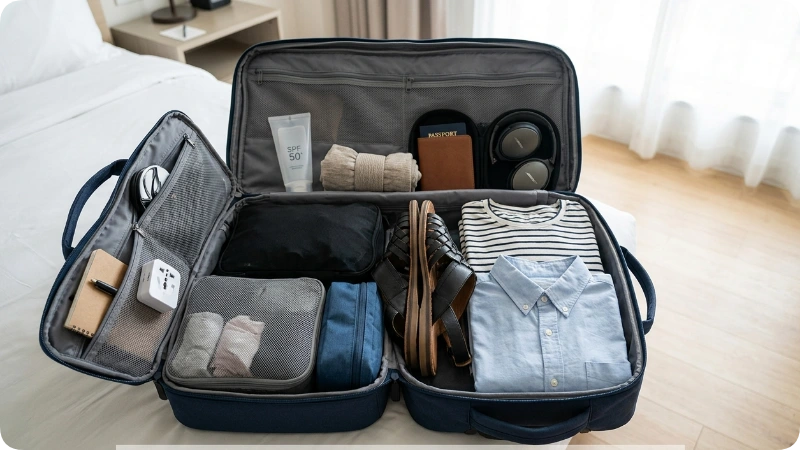
Packing sandals efficiently saves significant carry on space the average pair takes up 15–25% of a 40 liter bag. Smart packing strategies reduce that footprint dramatically.
- Nest sandals sole to sole: Pair them face to face so the soles interlock and the combined shape fits more naturally against other items.
- Pack them first: Place sandals at the bottom of the bag (near the wheels if rolling), where irregular shapes cause fewer problems.
- Use sandals as organizers: Stuff socks or small accessories into the toe box to reclaim dead space.
- Slide sandals into the shoe slots: Many travel bags include dedicated shoe pouches slides fit perfectly; bulkier sport sandals often don’t.
- Bring a shoe bag: A lightweight mesh bag prevents sole dirt from touching clean clothing.
For TSA screening, slip on sandals (no laces, easy buckles) dramatically speed up the security process. The TSA’s 3 1 1 liquids rule doesn’t affect sandals, but footwear must be removed at standard checkpoint lanes unless you have TSA PreCheck. Confirm current TSA screening procedures at tsa.gov before departure.
Destination by Destination Sandal Guide
Best Travel Sandals for Europe
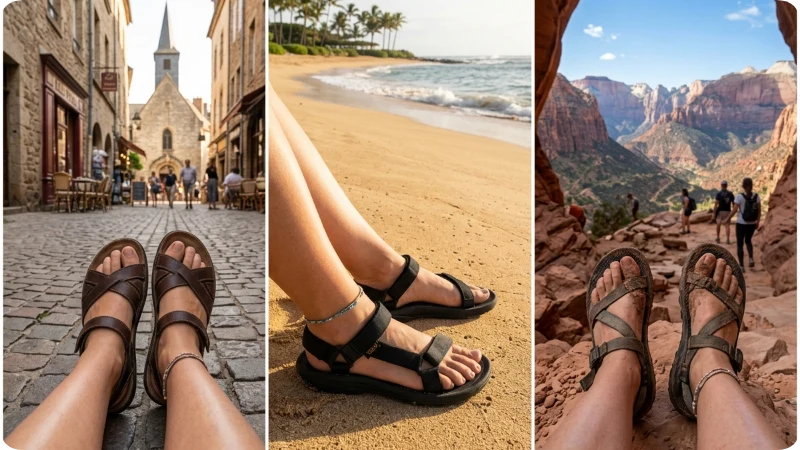
European cities combine beautiful aesthetics with brutal walking conditions. Cobblestones in Rome, Prague, and Lisbon are notoriously hard on flat soled sandals the uneven surface causes foot fatigue and increases ankle roll risk. Prioritize a sandal with a cushioned midsole and a grippy outsole. A leather walking sandal with adjustable straps performs well in this context, looking presentable in trattorias while handling full days of sightseeing. Birkenstocks and ECCO sandals are both popular choices among experienced European travelers.
Best Travel Sandals for Beach Destinations
Beach travel in Florida, Hawaii, or the Caribbean demands quick dry materials, salt resistant hardware, and non slip outsoles for wet pool decks and boat ramps. Flip flops are fine for short beach walks but provide no support for longer activities. A waterproof sport sandal (Teva Hurricane XLT2, KEEN Newport) handles the transition from beach to boardwalk to casual restaurant far more effectively. Avoid metal buckles in saltwater environments they corrode quickly.
Best Travel Sandals for National Parks
National park visits often involve more varied terrain than travelers expect loose gravel, wet rocks, root crossed trails, and unexpected elevation changes. Sandals for national park travel should have closed or protected toes, deep lug outsoles, and maximum adjustability. The Chaco Z/Cloud and Teva Terra Float Universal are consistently recommended by park visitors. Always check NPS trail guidance at nps.gov some trails explicitly recommend or require closed toe footwear.
Best Travel Sandals for Southeast Asia
Southeast Asia is a sandals first environment temples require shoe removal, humidity makes closed shoes uncomfortable, and budget guesthouses often have communal floors. A sandal with a washable footbed, quick dry webbing, and an anti slip sole works across all these situations. The convertibility of sport sandals (wearing them through temple courtyards, then into the river, then back to the guesthouse) makes them the dominant choice for backpackers in Thailand, Vietnam, Cambodia, and Indonesia.
5 Insider Tips for Choosing and Using Travel Sandals
These are the insights most travel guides skip collected from experienced long term travelers.
- Buy half a size up for heat destinations. Feet swell by up to half a shoe size in hot climates and during long travel days. A sandal that fits perfectly in a cool store may become uncomfortably tight in Cancun or Bangkok. Sizing up and using adjustable straps to compensate gives you flexibility.
- Test the footbed by standing, not just sitting. When trying on travel sandals, stand for at least two minutes on a hard floor (not carpet). The footbed’s support profile becomes apparent under body weight not when you’re seated with the sandal loosely dangling.
- Check the hardware material. Plastic buckles are lighter, more salt resistant, and don’t set off metal detectors. Metal buckles are more durable but corrode in saltwater and can trigger security screening. For beach or island travel, plastic hardware wins.
- Bring a blister kit for the first three days. Even well fitting sandals can cause hot spots during the adjustment period, especially where straps meet the top of the foot. A small supply of moleskin or blister bandages in your day bag costs almost nothing and prevents a miserable first half of the trip.
- Match the sandal age to the trip intensity. New sandals belong on low key trips where days are short and forgiving. Reserve brand new pairs for week long beach vacations; use well broken in pairs for ambitious itineraries with 10+ daily miles.
Hidden Gems: Sandal Brands Most Travelers Haven’t Discovered
Beyond the major names, three brands consistently earn praise from experienced travelers but rarely appear in mainstream guides.
Shamma Sandals (California made) are ultralight, minimalist sandals built for barefoot style travel. At under 100 grams per sandal, they pack into the palm of your hand. They work best for travelers who already prefer minimal footwear and want a packable backup pair. The company uses recycled tire material for outsoles and ships direct from California. Not ideal for those who need arch support.
Bedrock Sandals (Vermont made) thread the needle between minimalist and supportive. The Cairn 3D Pro model features a Vibram outsole and a three point strap system that keeps the sandal locked in place on technical terrain. These are the go to among hikers and adventure travelers who want one sandal to handle everything.
Xero Shoes offer a wide toe box design that many podiatrists recommend for travelers with bunions, hammer toes, or forefoot issues. Their Z Trek model is completely machine washable, a genuine advantage on extended trips.
3 Tourist Mistakes with Travel Sandals (and How to Fix Them)
Mistake #1: Bringing brand new sandals on a demanding itinerary New sandals, regardless of brand or price, need breaking in. The fix: wear them around the house and on short errands for at least a week before departure. Pay attention to any rubbing spots and address them with a small piece of moleskin before they become blisters.
Mistake #2: Relying on sandals for everything Even the best travel sandals have limits. Rainy days, cold evenings, and formal occasions all call for closed shoes. Packing one pair of versatile closed shoes alongside two pairs of sandals covers nearly any scenario without overloading luggage.
Mistake #3: Choosing style over function for high mileage days Flat fashion sandals look great in Instagram photos but cause real foot pain after mile four. Travelers who prioritize appearance over support consistently report foot pain by day three of sightseeing. The right move: choose a supportive sandal with good design, rather than sacrificing one for the other. Many contemporary travel sandals (including styles by ECCO, Vionic, and Merrell) manage both.
Budget Breakdown: What to Expect at Every Price Point
Understanding what each price tier delivers helps travelers make smarter decisions without overspending.
| Price Range | What You Get | Best For |
| Under $30 | Basic synthetic sandals, minimal support, short lifespan | Casual beach backup; domestic weekend trips |
| $30–$70 | Decent cushioning, adjustable straps, 1–2 seasons of wear | Occasional travelers; shorter trips |
| $70–$130 | Quality footbeds, reliable grip, brand warranty, multi season use | Most travelers; 1–3 week trips |
| $130–$200+ | Premium leather or Vibram, orthotic grade support, long lifespan | Frequent travelers; long itineraries; foot health priorities |
Note: Prices are general market ranges and vary by retailer. Verify current pricing directly with brands or retailers before purchasing.
Sandals and Foot Health: What Podiatrists Recommend
The American Podiatric Medical Association (APMA) awards its Seal of Acceptance to footwear that promotes good foot health. Sandals earning this seal have demonstrated adequate arch support, appropriate cushioning, and non irritating materials. Travelers with plantar fasciitis, flat feet, or a history of foot problems should prioritize APMA approved options and consider adding aftermarket orthotics to their preferred sandal if it doesn’t have built in support.
Podiatrists generally recommend avoiding completely flat sandals for any trip involving more than two hours of daily walking. The absence of arch support in flat flip flops causes the plantar fascia to work harder with every step which translates to heel pain, arch pain, and general foot fatigue that compounds over multi day trips.
If you have orthotic inserts, look for sandals with removable footbeds. Many sport sandals (including several Keen models) are designed to accept aftermarket orthotics. Always verify compatibility before purchase.
How to Clean and Care for Travel Sandals on the Road
Travel sandals collect dirt, sweat, and bacteria faster than almost any other travel item. Regular cleaning extends lifespan and prevents odor.
- Synthetic/webbing sandals: Rinse under running water daily in heavy use conditions. Occasional hand wash with mild soap. Air dry never machine dry, as heat degrades adhesives.
- Leather sandals: Wipe with a damp cloth after wet days. Apply leather conditioner every two weeks on long trips to prevent cracking. Avoid full submersion.
- Cork footbed sandals: The cork will naturally darken with use. Wipe with a damp cloth do not soak, as cork can crack if it dries too quickly after deep water exposure.
- Odor control: A light sprinkle of baking soda inside the footbed overnight absorbs moisture and neutralizes odor. Several travel sandal brands also offer antimicrobial treated footbeds that resist odor buildup from the start.
Packing Advice: The Perfect Travel Sandal Kit
For most trips, the ideal sandal kit consists of two pairs with different functions rather than three or four pairs of the same type.
The versatile base pair handles 80% of your days walking through cities, light trails, casual dining, daily sightseeing. A supportive walking sandal or sport sandal with adjustable straps fills this role. This is the pair worth spending $70–$130 on.
The lightweight secondary pair handles beaches, hotel rooms, and pool areas. A simple slide sandal weighing under 200 grams is enough. This pair costs $20–$40 and takes almost no packing space.
This two pair system covers nearly every situation without packing redundancy. Add a pair of compact closed shoes (trail runners or low profile sneakers) for rain, evenings, or formal occasions, and you have a complete travel footwear system in minimal luggage space.
Sample 3 Day Sandal First Packing Itinerary
Here’s how a sandal focused packing list plays out in practice, using a week in coastal Portugal as the example:
Day 1–2 (Lisbon): Sport sandal with adjustable straps and cushioned footbed for cobblestone streets, miradouros (viewpoints), and tram rides. Paired with lightweight linen trousers or travel shorts.
Day 3–4 (Sintra/Cascais day trips): Same sport sandal for the Sintra palace trails and the Cascais beach walk. Slide sandal for the beach itself.
Day 5–6 (Algarve coast): Waterproof sandal for cliff walks, boat tours, and beach access. Evening: leather walking sandal or a cleaner sport sandal for seafood restaurants in Lagos or Albufeira.
Day 7 (Travel day home): Slip on slide sandal for easy airport security; sport sandal in the bag for immediate wear after landing.
Is It Worth Spending More on Premium Travel Sandals?
Yes, with an important caveat. Premium travel sandals ($100–$200) deliver meaningfully better foot support, more durable materials, and longer lifespan than budget options. For travelers who walk 6–10 miles daily and take multiple trips per year, the per trip cost of a $150 sandal worn over five seasons is lower than replacing a $40 pair every season.
However, the most expensive sandal isn’t always the right sandal. A $40 waterproof slide that fits your foot perfectly and meets your trip’s needs outperforms a $150 sandal that rubs in the wrong place. Fit and function matter more than price tag. If possible, try sandals in person before purchasing for a major trip.
The sandals that are most overrated: basic fashion slides marketed as “travel” sandals. Thin foam bases, fixed straps, and no arch support make them a poor choice for anything beyond pool lounging. The sandals that are most underrated: workhorse sport sandals from Teva and Chaco, which many travelers dismiss as too sporty but which consistently outperform more stylish alternatives on demanding itineraries.
Responsible Travel and Sandal Purchasing
Supporting ethical footwear brands aligns with responsible travel values. Several sandal brands prioritize sustainability in materials and manufacturing:
- Teva uses recycled plastic bottles in many of its webbing straps.
- Patagonia Footwear (including sandal styles) uses recycled and responsibly sourced materials with a robust repair and reuse program.
- Birkenstock uses natural cork sourced from renewable cork oak forests in Portugal and Spain, a genuinely sustainable material.
- Vivobarefoot publishes detailed sustainability reports and uses natural rubber and recycled materials.
Buying one high quality pair that lasts five or more years produces less waste than replacing cheap sandals every season, an easy win for eco conscious travelers.
FAQs
What are the best travel sandals for walking on cobblestones?
Sandals with a thick, cushioned midsole and a grippy rubber outsole handle cobblestones best. Look for at least 10mm of midsole cushioning and a multi directional tread pattern. Brands like ECCO and Birkenstock produce walking sandals specifically tested for European urban environments. Completely flat sandals with thin soles are the worst choice for cobblestone streets the surface irregularity translates directly into foot fatigue and ankle strain.
Can you wear travel sandals on airplanes?
Yes, and they’re often ideal for long flights. Feet swell significantly during air travel due to reduced circulation and cabin pressure. Sandals with adjustable straps accommodate foot swelling far better than closed shoes. For overnight flights, bring a pair of thick socks cabin temperatures drop significantly mid flight. Slip on sandals also make TSA security faster, which matters on early departures.
How many pairs of sandals should I pack for a two week trip?
Two pairs is the ideal number for most two week trips: one primary walking sandal for city and activity days, and one lightweight slide for beach and hotel use. Three pairs only makes sense if the itinerary covers dramatically different environments (city + beach + adventure hiking). Packing four or more pairs of sandals almost always means carrying unnecessary weight.
Are Birkenstock sandals good for travel?
Birkenstock sandals are excellent for low to moderate mileage travel days, city sightseeing, casual walking, and cultural destinations. The cork latex footbed provides exceptional arch support that molds to the individual foot over time. Their limitations include a break in period of one to two weeks, minimal water resistance (the cork footbed absorbs moisture), and a bulkier profile that takes more luggage space than sport sandals. For adventure travel or beach destinations, sport sandals outperform Birkenstocks.
What travel sandals work for people with flat feet?
Travelers with flat feet should prioritize maximum arch support and stability. Vionic sandals are specifically designed with podiatrist developed orthotic footbeds and carry APMA approval. Chaco sandals also offer strong arch support due to the tension between the interlocking webbing strap system. Avoid fashion sandals and basic flip flops entirely. If your flat feet require custom orthotics, look for sandals with removable footbeds that accept aftermarket insoles.
Are sandals allowed through TSA security?
Yes. Sandals can go through TSA security with footwear still on only in specific circumstances generally with TSA PreCheck or via dedicated PreCheck lanes where footwear removal is not required. At standard security lanes, all footwear including sandals must be removed and placed in a bin. Slip on sandals without laces or complex buckles speed up the removal and replacement process considerably. Confirm current TSA screening procedures at tsa.gov, as policies can change.
What travel sandals are best for hot weather?
Breathable, open construction sandals with moisture wicking footbeds and ventilated straps perform best in hot weather. Synthetic webbing dries faster than leather and resists sweat damage better. Lighter colored soles reflect heat from hot pavement. A footbed with antimicrobial treatment prevents the rapid odor buildup that happens in sustained heat. Teva, Keen, and Reef all produce hot weather optimized sandals with strong ventilation.
The Bottom Line on Travel Sandals
Three things separate a good travel sandal purchase from a regrettable one. First, match the sandal to the specific demands of your trip: cobblestones need cushioning, beaches need quick dry materials, trails need grip and toe protection. Second, break in any new sandals before departure. Three to five days of casual wear at home is the minimum. Third, bring two complementary pairs rather than trying to solve every situation with one.
The travelers who suffer through blisters, foot pain, and soaking wet shoes are almost always the ones who packed the wrong footwear or bought it too close to departure. Plan ahead, prioritize function alongside style, and your feet will carry you enthusiastically through every mile of every destination.
Ready to start? Check sizing charts directly from the brand, try sandals in person when possible, and verify current APMA approved options at apma.org. Your best trip starts from the ground up.











1 thought on “The Best Travel Sandals for Every Trip: Comfort Meets Adventure”