Quick Answer: Jobs that let you travel fall into five categories: transportation careers (flight attendants, cruise staff, truck drivers), location independent remote work, travel focused creative careers (bloggers, photographers), structured overseas postings (teaching, foreign service), and seasonal or contract work (tour guides, park rangers, au pairs). Most require specific certifications, flexible budgeting, and comfort with an unpredictable schedule.
Staying chained to a cubicle while a passport collects dust in a drawer is its own kind of heartbreak. Many people assume travel careers are reserved for trust fund kids or social media influencers, but the truth is far more practical: jobs that let you travel exist across nursing, aviation, teaching, transportation, and remote friendly office work alike.
This guide breaks down 20 realistic paths, what they actually pay, how to break into each one, and the honest tradeoffs nobody mentions in the highlight reels. If the goal is a few months abroad or a permanently nomadic life, there’s a route here that fits.
What Counts as a “Travel Job”? Quick Facts First
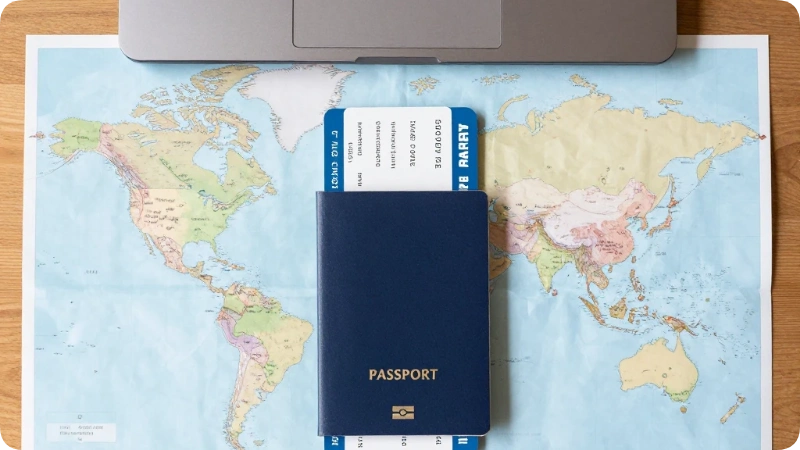
A travel job is any role where mobility is built into the work itself, not bolted on as a side perk. These careers generally split into five buckets: transportation based, remote/location independent, content driven, overseas contract, and seasonal/hospitality. Income, stability, and required training vary enormously between them.
| Category | Example Roles | Typical Schedule | Income Stability |
| Transportation | Flight attendant, cruise crew, truck driver | Rotating shifts, weeks on/off | Moderate High |
| Remote/Location Independent | Software developer, marketer, consultant | Standard hours, flexible location | High |
| Content & Creative | Travel blogger, photographer, journalist | Self managed, project based | Low Moderate (builds over time) |
| Overseas Contract | International teacher, foreign service officer | Fixed contract terms, often 1 2 years | High |
| Seasonal/Hospitality | Tour guide, park ranger, au pair | Seasonal, contract based | Low Moderate |
Pay ranges and visa rules shift frequently, so always confirm current figures with the employer, the U.S. Department of State, or the relevant licensing board before making a decision.
Flight Attendant: Fly First, Get Paid Second
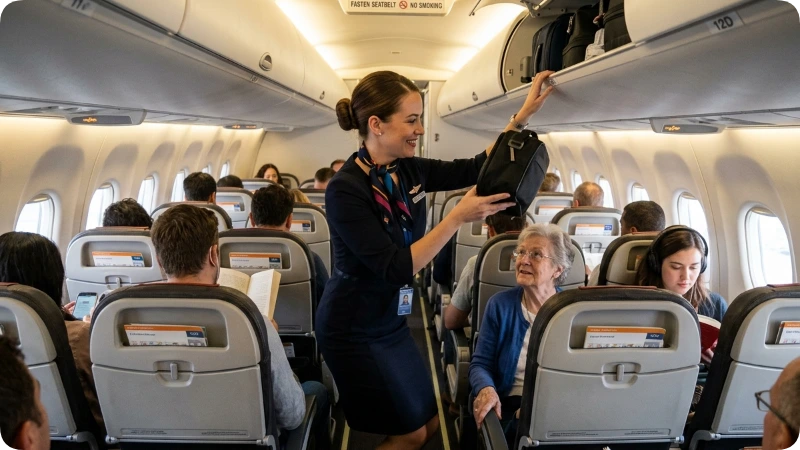
Flight attendants log free or heavily discounted flights as a job benefit, with most U.S. carriers requiring only a high school diploma and a multi week training program before crew members start working scheduled trips. The tradeoff is unpredictable hours, time away from home, and starting pay that’s lower than many travelers expect.
New hires typically start on reserve status, meaning the airline can call with a trip assignment on short notice. Seniority eventually unlocks better routes, holidays off, and international layovers in cities like Tokyo, Rome, or Buenos Aires. Major U.S. carriers such as Delta, United, and American Airlines run their own in house training academies, and most postings appear directly on airline career pages rather than third party job boards.
Who This Suits Best
This role fits people who thrive on routine within chaos folks who don’t mind a constantly shifting schedule in exchange for near constant movement. It’s a poor fit for anyone who needs a predictable 9 to 5 or struggles with jet lag.
Travel Nurse: High Pay, High Mobility

Travel nursing places licensed registered nurses into 8 to 13 week contracts at hospitals facing staffing shortages, often paying significantly more than permanent staff positions plus a housing stipend. It requires an active RN license, at least one to two years of clinical experience, and a willingness to relocate every few months.
Agencies like AMN Healthcare and Aya Healthcare match nurses with hospitals nationwide, handling licensing paperwork through the Nurse Licensure Compact when contracts cross state lines. Popular assignment hubs include California, Texas, and Florida, where seasonal patient surges create recurring demand. The stipend structure means nurses can choose furnished housing or pocket the cash difference by finding cheaper accommodations themselves.
Remote Worker or Digital Nomad

Remote work turns any laptop friendly job software development, marketing, customer support, writing into a travel job, provided the employer allows location flexibility and the destination’s visa rules permit it. Reliable internet, a stable income source, and proper visa documentation are the three non negotiable.
Countries including Portugal, Spain, Costa Rica, and Croatia now offer dedicated digital nomad visas, typically requiring proof of remote income above a set monthly threshold. Within the U.S., this same flexibility lets workers base themselves in lower cost cities like Asheville or Boise while keeping a coastal city salary. Co working spaces and nomad focused communities have grown rapidly in cities such as Lisbon, Chiang Mai, and Medellín, easing the transition for first timers.
Building the Remote Travel Lifestyle
- Confirm in writing that the employer permits international remote work, since tax and labor law can get complicated across borders.
- Research each destination’s digital nomad visa requirements directly through that country’s embassy or consulate website, since terms change often.
- Budget for travel insurance that covers remote work injuries and gaps in domestic health coverage.
Travel Blogger and Content Creator

Travel content creation generates income through brand partnerships, affiliate links, ad revenue, and sponsored stays, but it rarely pays well in the first one to two years and demands consistent, high quality output. Building an audience large enough to attract paying brands typically takes sustained, near daily effort.
The most sustainable creators treat it like a small business from day one tracking analytics, pitching tourism boards directly, and diversifying income across platforms instead of relying on a single algorithm. State tourism boards, including those for destinations like Tennessee and New Mexico, frequently host familiarization trips for creators who can demonstrate genuine audience engagement, not just follower counts.
Tour Guide and Tour Director
Tour guides lead group experiences at a specific destination, while tour directors travel with a group across multiple stops on a multi day itinerary, and both roles reward strong public speaking and crisis management skills over formal credentials. Pay often combines a base wage with tips, so income varies by season and group size.
National Park Service adjacent guiding work, museum led tours, and city walking tours offer accessible entry points for newcomers, while companies like Tauck or G Adventures hire tour directors for international multi week routes. Local guiding certifications exist in cities like New Orleans and Savannah, where licensing is sometimes legally required before leading paid tours.
Cruise Ship Crew Member
Cruise lines hire for hundreds of onboard roles from entertainment and guest services to culinary and housekeeping with contracts typically running four to nine months, room and board included, and most salary banked since there’s little to spend it on at sea. Time off between contracts can run several weeks to a couple of months.
Major lines including Royal Caribbean, Norwegian, and Carnival post openings directly on their careers pages, and most positions don’t require a college degree, just relevant experience in hospitality, food service, or entertainment. The job suits people comfortable with shared crew cabins and limited personal space in exchange for visiting dozens of ports across a single contract.
International Teacher (TEFL/TESOL)
Teaching English abroad through a TEFL or TESOL certification opens paid positions across Asia, the Middle East, and parts of Europe and Latin America, with many contracts covering airfare, housing, or both. A bachelor’s degree is required for most legal work visas, even when the teaching subject itself doesn’t relate to the degree field.
South Korea, Japan, and the United Arab Emirates remain among the highest paying destinations for first time international teachers, while Vietnam and Thailand offer lower pay but a notably lower cost of living. Reputable placement organizations vet schools for visa sponsorship and fair contracts a step worth taking seriously, since teaching scams targeting first timers aren’t uncommon.
Travel Agent and Trip Planner
Modern travel agents specialize in curated, high touch trip planning luxury travel, destination weddings, or complex multi country itineraries earning commission from hotels, cruise lines, and tour operators rather than charging clients directly in most cases. Many agents work independently or under a host agency that provides industry credentials and supplier relationships.
The role rewards deep destination knowledge and strong client relationships over flashy marketing, and many successful agents started as enthusiastic travelers before formalizing the business. Host agencies such as Avoya Travel or Travel Planners International offer training tracks for newcomers entering the field.
Photographer, Videographer, and Travel Journalist
Travel photography and journalism pay through a mix of stock licensing, magazine or outlet commissions, brand campaigns, and increasingly, video content for tourism boards and hospitality brands. Building a strong portfolio before pursuing paid assignments matters more than formal credentials in this field.
Stock platforms and direct outreach to regional tourism boards many U.S. states actively commission destination photography offer realistic entry points. Freelance travel journalists typically pitch story ideas directly to outlet editors months ahead of a trip, since most outlets don’t pay for unsolicited finished pieces.
Overland Transport: Truck Drivers, Train Crew, and Delivery Drivers
Commercial truck driving, particularly long haul routes, lets drivers see most of the continental U.S. while earning a steady wage, and a Commercial Driver’s License (CDL) is the primary barrier to entry rather than a college degree. Amtrak and freight rail companies also hire conductors and crew for multi day route assignments.
CDL training programs run anywhere from three to eight weeks, and many trucking companies, including Schneider and Werner, offer paid training in exchange for a contract commitment afterward. This path suits people who enjoy solitude and the open road over group based travel experiences.
Foreign Service Officer and Government Travel Careers
The U.S. Department of State’s Foreign Service places officers at embassies and consulates worldwide on rotating two to three year assignments, offering one of the most structured and benefit rich travel careers available, though the entrance exam and selection process is famously competitive. Roles span political, economic, consular, management, and public diplomacy tracks.
Beyond the State Department, agencies like USAID, the Peace Corps, and the Department of Defense’s civilian branches all offer overseas postings with full government benefits. These paths trade flexibility for stability assignments are chosen from a list rather than picked freely, but housing, healthcare, and retirement benefits are typically strong.
Seasonal National Park and Outdoor Jobs
National parks and outdoor recreation companies hire seasonal staff for roles ranging from park ranger and trail crew to lodge staff and rafting guide, typically for three to six month stretches during peak visitor seasons. The National Park Service posts openings through USAJobs.gov, while concessionaires inside parks like Yellowstone and Grand Canyon hire separately through their own portals.
This path appeals strongly to outdoor oriented workers who’d rather spend a summer in Glacier National Park than at a desk, and many seasonal staff return to the same park year after year, building toward permanent NPS positions over time.
Au Pair and Nanny Abroad
Au pair programs place young adults, typically ages 18 to 26, with host families abroad in exchange for room, board, a small weekly stipend, and language immersion, making it one of the lowest barrier ways to live abroad long term. Programs are common across Western Europe, with France, Germany, and Spain among the most popular host countries for American applicants.
Vetted agencies handle family matching and visa sponsorship, and most programs run six to twelve months. The stipend is modest by design; this path suits people prioritizing cultural immersion and language learning over income.
How to Land a Job That Lets You Travel
Breaking into any travel career starts with matching realistic skills to realistic timelines, since most paths require either a credential (CDL, RN license, TEFL certificate) or a built portfolio before the first paid gig arrives. Rushing this stage is the single biggest reason people quit travel careers within the first year.
- Audit transferable skills already held nursing licenses, teaching degrees, customer service experience, or a writing portfolio all count toward something.
- Get the required credential first. A CDL, RN license, or TEFL certificate is non negotiable for several roles on this list.
- Save a transition cushion of three to six months of expenses since most travel jobs have a slow or unpaid ramp up period.
- Apply directly through employer career pages for airlines, cruise lines, and government agencies, where most listings live outside general job boards.
- Starting small and local if uncertain, a seasonal national park job or a regional tour guiding gig is a lower risk way to test the lifestyle before committing to something like an overseas teaching contract.
Pros and Cons of Travel Careers
Travel jobs trade conventional stability for mobility, and that tradeoff suits some lifestyles far better than others. Weighing both sides honestly before committing prevents an expensive, demoralizing exit a few months in.
Pros: free or discounted travel, diverse life experience, often strong starting benefits (cruise lines, government postings), career stories that stand out on a resume.
Cons: inconsistent schedules, distance from family and routine healthcare, slower career advancement in some fields, and income that can be unpredictable in the first one to two years.
Who Should Think Twice
Anyone caring for young children, managing a chronic condition requiring consistent specialist care, or needing predictable income for a mortgage or loan payments should weigh these careers carefully against more flexible alternatives, like a remote job with occasional travel built in rather than full relocation.
Budget Breakdown: What These Jobs Actually Pay
Pay varies dramatically by role, experience level, and location, and figures shift with inflation, union contracts, and demand. The table below offers a general starting point comparison; always verify current numbers directly with employers or official salary tracking sources like the U.S. Bureau of Labor Statistics before making decisions.
| Role | Typical Starting Pay Range (Annual, USD) | Travel Frequency |
| Flight Attendant | Lower to moderate, plus flight benefits | Constant, rotating |
| Travel Nurse | Moderate to high, plus housing stipend | Every 8 13 weeks |
| Remote Worker | Varies by field, often comparable to office pay | Fully flexible |
| International Teacher | Low to moderate, often with housing covered | Fixed contract location |
| Cruise Crew | Low base pay, but room/board included | Constant, multi port |
| Tour Director | Low to moderate, tip dependent | Constant, multi stop |
Money saving tip: roles that include housing, meals, or flights as part of compensation (cruise work, teaching abroad, flight attending) often deliver better real world savings than the listed salary suggests.
Common Mistakes First Time Travel Workers Make
The most frequent misstep is underestimating the unpaid ramp up period training weeks, reserve status, or a slow first season before steady income begins. Budgeting as if full pay starts on day one leads to avoidable financial stress.
- Skipping the fine print on contracts, particularly around early termination penalties common in teaching and nursing contracts.
- Underinsuring. Standard U.S. health insurance often doesn’t cover work abroad; a dedicated international or travel work policy fixes this gap.
- Burning out by saying yes to everything in the first few months over committing to extra shifts or assignments before learning at a sustainable pace.
Packing and Gear Essentials for Travel Workers
Travel workers pack differently than vacationers, prioritizing durability and multi climate versatility over fashion, since gear has to survive months of repeated use rather than a single two week trip. A reliable carry on sized bag, weather appropriate base layers, and a dedicated work document folder are universal essentials.
- Uniform compatible footwear that’s broken in well before the first shift, especially for flight attendants and tour guides who stand for hours.
- A portable charging setup with adapters for multiple plug types, critical for cruise crew and international teachers.
- Digital and physical copies of every credential license, certifications, passport stored separately in case one set is lost.
Visa, Work Permit, and Legal Considerations
Nearly every overseas travel job requires a specific work visa tied to the employer, and working on a tourist visa is both illegal in most countries and a fast way to get deported or banned from re entry. Visa rules, processing times, and sponsorship requirements differ by country and change without much warning.
Always confirm current visa requirements directly through the destination country’s embassy or consulate, not through forum posts or outdated blog articles. For domestic travel work, the TSA sets specific rules for crew members carrying tools, medical supplies, or work equipment through security, and those rules are worth checking on tsa.gov before the first work trip. The U.S. Department of State also maintains country specific travel advisories worth reviewing before accepting any overseas contract.
FAQs
What jobs let you travel without a college degree?
Truck driving, cruise ship crew roles, flight attending, and tour guiding generally don’t require a four year degree. They do require specific certifications, a CDL for trucking, FAA approved training for flight attendants completed in weeks rather than years.
Which travel job pays the most?
Travel nursing and remote tech roles tend to pay the highest among travel friendly careers, particularly for nurses with specialized certifications or remote workers in high demand fields like software engineering. Pay varies significantly by experience and location.
Is it hard to get a job that lets you travel?
Entry difficulty varies by field. Seasonal park jobs and entry level tour guiding are relatively accessible, while foreign service and competitive cruise entertainment roles involve lengthy, selective application processes.
Can I travel and still keep a stable career?
Yes, particularly through remote work or travel nursing, both of which offer travel without sacrificing income consistency the way some seasonal or creative paths do.
Do travel jobs provide health insurance?
It depends on the role. Government postings, larger airlines, and cruise lines typically offer benefits, while freelance creative work and au pair programs usually require purchasing separate coverage.
What’s the easiest travel job to start immediately?
Seasonal outdoor and hospitality roles, including national park concessionaire jobs, typically have the fastest hiring timelines and lowest entry barriers, often starting within a few weeks of applying.
Are digital nomad visas a real, legal option for U.S. workers?
Yes. Countries including Portugal, Spain, and Croatia offer official digital nomad visa programs, though each has specific income thresholds and documentation requirements that should be verified directly with that country’s consulate.
Final Takeaways
Three things matter most when chasing a job that lets you travel: pick a path that matches existing skills and risk tolerance, budget for a slower than expected ramp up period, and verify every visa, contract, and pay detail directly with official sources rather than secondhand accounts.
The right fit might be a teaching contract in Seoul, a travel nursing assignment in Texas, or simply a remote job run from a different city every few months.
None of these paths require starting over completely, most build on skills already in hand. The passport doesn’t have to keep collecting dust; it just needs a plan behind it.

Gordon Ramsay is a travel writer and destination researcher who helps U.S. travelers plan smarter trips, covering destinations, seasonal trends, budgets, and logistics to help readers decide where—and when—to go.
Rather than simply listing popular places, Gordon Ramsay focuses on what travelers actually need: comparing weather against crowds, weighing costs and accessibility, and researching current conditions alongside official tourism guidance—delivering honest, practical advice without the hype.