Morocco travel insurance should cover emergency medical care, trip cancellation, evacuation, and lost luggage, since Moroccan public hospitals often expect upfront payment and U.S. health insurance rarely applies overseas. Most policies for a two week trip cost $60–$150, depending on age, trip cost, and coverage level. Always confirm your plan includes medical evacuation, since Morocco’s rural and mountain regions have limited emergency services.
Picture this: you’re haggling for a leather bag in the Marrakech medina, or watching the sunset paint the Sahara dunes gold near Merzouga, when a stomach bug, a twisted ankle on a riad staircase, or a canceled connecting flight suddenly threatens the trip you saved months for. Morocco is one of the most rewarding destinations for American travelers but its healthcare system, road conditions, and unpredictable High Atlas weather mean Morocco travel insurance isn’t optional peace of mind, it’s a practical safety net. This guide breaks down exactly what to buy, what it costs, and how to avoid the mistakes that leave travelers paying out of pocket.
If you’re planning a Sahara desert tour, a Chefchaouen photo trip, or a multi city itinerary from Casablanca to Fez, this guide walks through every stage of the journey planning, booking, packing, arrival, transport, activities, dining, safety, and departure so you land in Morocco fully protected.
Why Travel Insurance Matters for a Trip to Morocco
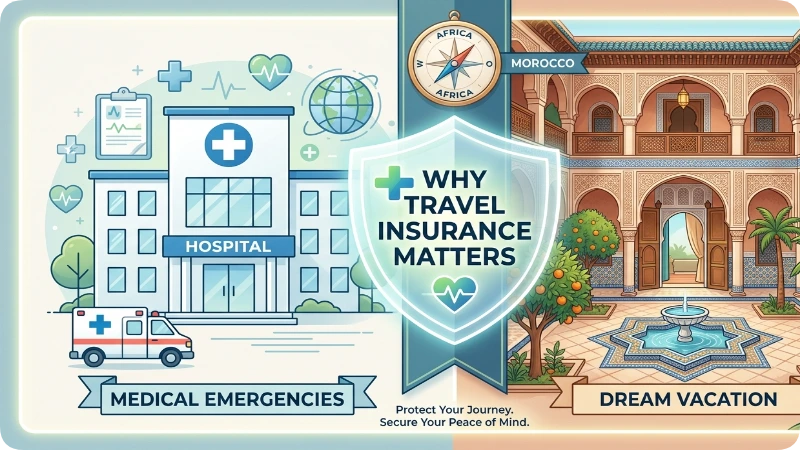
U.S. health insurance, including Medicare, almost never covers care outside the United States, and Morocco requires cash or card payment before treatment in many private clinics. A comprehensive policy covering medical emergencies, evacuation, trip interruption, and baggage loss protects against the highest cost risks travelers actually face in Morocco. Without it, a single hospital visit or medevac flight can cost tens of thousands of dollars.
Morocco’s public hospitals are inexpensive but inconsistent in quality, while private clinics in Marrakech, Rabat, and Casablanca offer better care at higher prices. Travelers who fall ill or get injured outside major cities trekking in the Atlas Mountains or riding camels near Merzouga may need private medical evacuation, which insurance alone typically funds.
Healthcare in Morocco: Public vs. Private Hospitals
Not all medical facilities in Morocco provide the same level of care. Public hospitals are available throughout the country but may have longer wait times, fewer English-speaking staff, and more limited equipment outside major cities.
Private hospitals in Casablanca, Rabat, Marrakech, and Tangier generally offer higher standards of care and are the facilities most international travelers use. Many expect payment before treatment unless your insurer has direct billing arrangements.
| Facility Type | What Travelers Should Expect |
| Public hospitals | Lower cost, variable quality |
| Private hospitals | Faster treatment, higher cost |
| Rural clinics | Basic care, limited specialists |
| Remote desert areas | Evacuation may be required |
This difference is one of the strongest reasons to carry travel insurance with solid medical and evacuation benefits.
Quick Facts: Morocco Travel Insurance at a Glance
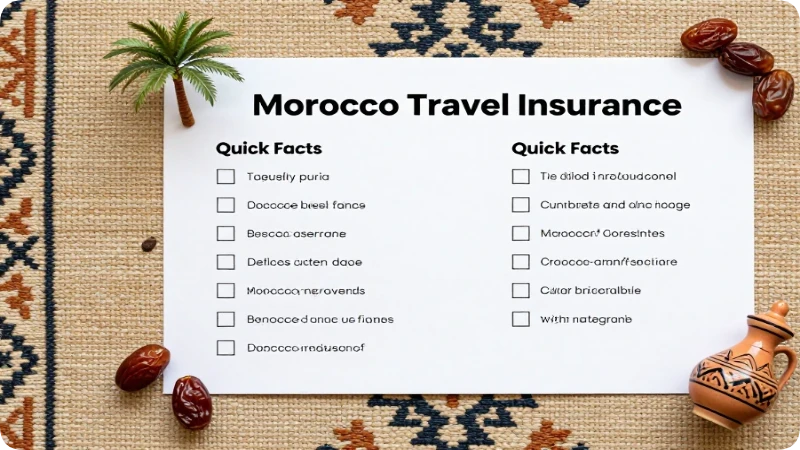
| Feature | Typical Requirement |
| Is it mandatory? | Not legally required for U.S. citizens, but strongly recommended |
| Average cost (2 week trip) | $60–$150 per traveler |
| Minimum recommended medical coverage | $50,000–$100,000 |
| Evacuation coverage | $100,000+ recommended |
| Best time to buy | Within 14–21 days of initial trip deposit (for “cancel for any reason” eligibility) |
| Where to verify entry rules | U.S. Department of State – Morocco |
Prices and policy terms change often always confirm current rates directly with insurers before purchasing.
Do You Legally Need Travel Insurance to Enter Morocco?
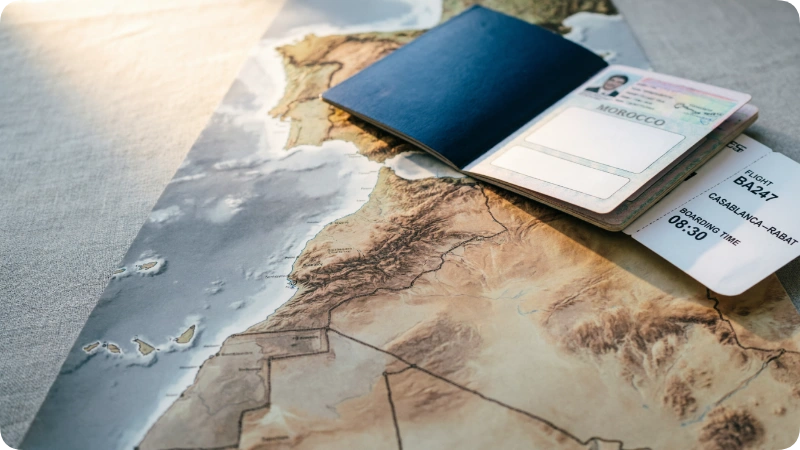
Morocco does not currently require proof of travel insurance for U.S. citizens entering as tourists, unlike some Schengen countries. Even without a legal mandate, most experienced travelers still purchase coverage because emergency care and evacuation costs fall entirely on the traveler otherwise. Entry requirements can shift, so it’s worth a final check before departure.
Because rules can change with little notice, confirm current entry requirements directly through the U.S. Embassy in Morocco or the State Department’s country page before booking flights.
Morocco Entry Requirements, Passport Rules, and Insurance
Before buying travel insurance, make sure you meet Morocco’s entry requirements. U.S. citizens can generally visit Morocco visa-free for tourism for up to 90 days with a passport that’s valid for the duration of their stay, though having at least six months of validity remaining is often recommended to avoid airline or transit issues.
Travel insurance isn’t currently required for entry, but immigration officers may still ask about your travel plans, accommodation, or onward ticket. Keeping your insurance confirmation, hotel reservations, and return flight details together makes arrival smoother.
Before departure, confirm:
- Passport validity
- Visa requirements (if staying longer than 90 days)
- Entry rules for minors traveling alone
- Customs restrictions
- Current travel advisories
What Morocco Travel Insurance Should Cover
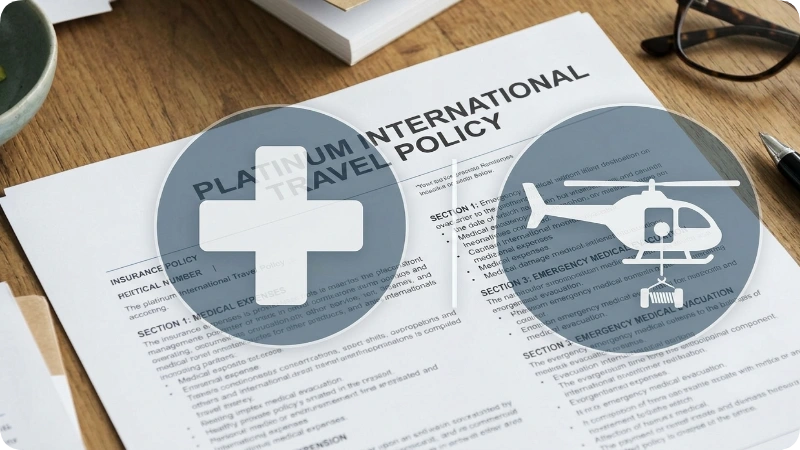
A solid policy for Morocco covers five core areas: emergency medical treatment, medical evacuation, trip cancellation or interruption, baggage and personal item loss, and travel delay reimbursement. Adventure activities like desert quad biking, camel trekking, or Atlas Mountain hiking often need an add on rider, since base plans frequently exclude them.
- Emergency medical care hospital stays, doctor visits, prescriptions
- Emergency evacuation critical for remote desert or mountain regions
- Trip cancellation/interruption reimburses non refundable bookings
- Baggage delay or loss covers essentials if luggage is delayed
- Adventure sports rider required for trekking, quad biking, or sandboarding
How Much Does Morocco Travel Insurance Cost?

Most U.S. travelers pay $60 to $150 for a two week Morocco trip, with costs rising for travelers over 60 or those adding “cancel for any reason” coverage. Price depends primarily on trip cost, traveler age, and coverage limits rather than destination specific risk, since Morocco is priced similarly to other North African and Mediterranean destinations.
| Trip Length | Traveler Age | Estimated Cost |
| 7 days | 25–40 | $30–$55 |
| 14 days | 25–40 | $60–$95 |
| 14 days | 60–70 | $110–$170 |
| 21 days | 40–55 | $120–$180 |
Comparing Basic vs. Comprehensive Morocco Travel Insurance
| Feature | Basic Policy | Comprehensive Policy |
| Emergency medical | ✓ | ✓ Higher limits |
| Medical evacuation | Limited | Higher limits |
| Trip cancellation | Sometimes | Usually included |
| Lost baggage | Basic | Higher reimbursement |
| Travel delay | Limited | More generous |
| Adventure sports | Usually excluded | Optional rider |
| 24/7 assistance | Basic | Comprehensive support |
Although comprehensive plans cost more, they often provide much better protection for trips involving desert tours, trekking, or multiple destinations.
Best Time to Buy Your Policy
Buying travel insurance within two to three weeks of your first trip deposit unlocks optional benefits like “cancel for any reason” and pre existing condition waivers that aren’t available if purchased later. Waiting until closer to departure still provides medical and evacuation coverage, but you lose access to these enhanced options.
Insider tip: Set a reminder the same day you pay your flight or tour deposit this single step often saves travelers hundreds of dollars if a cancellation becomes necessary later.
Choosing the Right Policy: Single Trip vs. Annual
Single trip plans suit travelers visiting Morocco once, while annual multi trip policies save money for those taking two or more international trips within a year. Frequent travelers should compare per trip cost against an annual plan’s price, since the break even point is typically around three trips per year.
| Plan Type | Best For | Typical Cost |
| Single trip | One Morocco vacation | $60–$150 |
| Annual multi trip | 3+ international trips/year | $200–$450 |
| Adventure add on | Trekking, desert sports | +$15–$40 |
Morocco Travel Insurance by Trip Type
Different trips require different levels of protection.
Marrakech City Break
Prioritize:
- Medical coverage
- Trip cancellation
- Theft protection
Adventure coverage usually isn’t necessary unless you’re booking excursions.
Sahara Desert Tour
Look for:
- Medical evacuation
- Adventure activity coverage
- Trip interruption
Medical transport from remote camps can be expensive.
Atlas Mountains Trek
Choose policies covering:
- High-altitude hiking
- Emergency rescue
- Helicopter evacuation
- Medical treatment
Luxury Morocco Vacation
Because luxury riads and guided tours often require significant prepaid deposits, trip cancellation and interruption benefits become especially valuable.
Planning Stage: What to Check Before Booking
Before booking flights or rides, confirm your policy’s coverage limits, exclusions, and pre existing condition rules match your health needs and trip cost. Travelers with chronic conditions should look specifically for a pre existing condition waiver, which typically requires purchase within the early buying window.
Common mistake: Assuming a credit card’s “travel insurance” perk covers medical emergencies. Most card benefits only cover trip delay or baggage not hospital bills or evacuation. Fix: read the card’s guide to benefits document or call the issuer directly to confirm exclusions.
Booking Stage: Matching Coverage to Your Itinerary
Travelers combining city stays with desert camps or mountain treks need policies that explicitly list adventure activities, since standard plans often cap or exclude them. If your itinerary includes a Sahara overnight camp near Merzouga or Zagora, confirm the insurer covers off grid emergency transport, which can be a multi hour 4×4 or helicopter evacuation.
- Underrated coverage add on: rental car excess/collision waiver, useful if self driving between Fez and Chefchaouen
- Overrated add on: flight only delay coverage when your card already provides it check for overlap before paying twice
Packing Stage: Documents and Proof of Coverage
Pack both digital and printed copies of your insurance policy, emergency contact numbers, and your embassy’s local address before departure. Moroccan clinics and hospitals may ask for proof of coverage or ability to pay before treatment, so having documents accessible on your phone and in print avoids delays during a stressful moment.
Packing checklist for insurance related documents:
- Printed policy summary and claims phone number
- Photo of passport and visa page saved to cloud storage
- Embassy contact card (U.S. Embassy Rabat, Consulate Casablanca)
- Emergency medical phrase card in French/Arabic for pharmacies
Documents to Keep With You During Your Trip
Store important documents in multiple locations.
Carry:
- Passport copy
- Insurance policy number
- Emergency assistance phone number
- Flight itinerary
- Hotel confirmations
- Prescription list
- Credit card emergency contacts
Keep digital copies in secure cloud storage and offline on your phone in case internet access is unavailable.
Arrival in Morocco: First 24 Hours
Save your insurer’s 24/7 emergency assistance number in your phone immediately after landing in Casablanca, Marrakech, or Fez, since international calls without the correct number can delay urgent care. Most major insurers offer a dedicated assistance line that coordinates hospital admission and payment directly with providers.
Hidden gem tip: Many private clinics in Marrakech’s Gueliz district and Casablanca’s Maarif neighborhood are accustomed to working directly with international insurers, streamlining direct billing far more smoothly than public hospitals.
Getting Around: Transport Risks Insurance Should Cover
Morocco’s roads range from modern highways between Casablanca and Marrakech to winding, unlit mountain routes through the Atlas the latter carrying higher accident risk for renters and bus travelers alike. Confirm your policy covers ambulance transport and hospital transfer costs, since rural roads can mean longer response times than travelers expect from U.S. norms.
- Train travel (ONCF network) is generally the safest and most insured friendly transport between major cities
- Grand taxis and buses on mountain routes carry higher risk verify your policy doesn’t exclude shared/public transport claims
- Self driving requires confirming your policy or rental agency covers collision and liability separately from medical coverage
Activities and Adventure Sports Coverage
Quad biking in Agafay, camel trekking in Merzouga, sandboarding, and Atlas Mountain hikes above certain altitudes often require an adventure sports rider that standard travel insurance excludes by default. Always check your policy’s activity list before booking desert tours, since claims for excluded activities are commonly denied.
Three underrated alternatives to note:
- Hot air ballooning over Marrakech is usually covered as a “low risk” activity
- Surfing lessons near Taghazout may need a water sports add on
- Multi day trekking above 2,000 meters frequently requires specific high altitude coverage
Morocco Travel Insurance for Families
Families often have different insurance priorities than solo travelers.
Parents should look for policies that include:
- Pediatric emergency care
- Family accommodation benefits during hospitalization
- Trip interruption
- Lost baggage
- 24/7 emergency assistance
If traveling with young children, consider carrying copies of vaccination records, prescription information, and emergency contacts in addition to insurance documents.
Food, Dining, and Health Related Claims
Foodborne illness from street food or tap water is one of the most common travel insurance claims filed by U.S. visitors to Morocco, making medical coverage for gastrointestinal issues especially valuable. Stick to bottled or filtered water, and confirm your policy covers outpatient clinic visits and prescribed medication, not just hospitalization.
Money saving tip: Outpatient pharmacy visits for common travel illnesses are inexpensive out of pocket in Morocco, but keep every receipt even small claims add up and are reimbursable under most comprehensive plans.
Culture, Etiquette, and Avoiding Preventable Incidents
Respecting local customs, modest dress at religious sites, avoiding public displays of affection, and using your right hand for eating reduces the chance of conflicts that could turn into a safety incident. Insurance covers medical and trip issues, but cultural awareness prevents avoidable situations insurance can’t fix.
Safety Tips Beyond Insurance
Morocco is generally safe for U.S. travelers, but petty theft in medinas, scams targeting tourists near major squares, and traffic accidents remain the top reported risks. Register your trip with the U.S. Department of State’s STEP program so the embassy can reach you in an emergency, and keep insurance contact details separate from your main wallet in case of theft.
Three common tourist mistakes and fixes:
- Carrying all cash and cards together split them between bag and body, and photograph card numbers for insurer claims
- Skipping the fine print on evacuation limits always confirm the dollar cap, not just that evacuation is “included”
- Assuming Wi Fi guarantees insurer contact save the assistance number as a physical backup too
Filing a Claim: What U.S. Travelers Should Know
Most insurers require original receipts, a police report for theft, and a medical report for illness or injury claims, so collecting documentation on site is essential. Claims are typically filed online after returning home, and processing takes anywhere from two to six weeks depending on the insurer.
Time saving tip: Photograph every receipt and report the moment you receive it lost paperwork is the single biggest reason legitimate claims get delayed or denied.
Sample 10 Day Morocco Itinerary With Insurance Checkpoints
| Day | Location | Insurance Consideration |
| 1–3 | Marrakech | Confirm clinic list in Gueliz/Hivernage area |
| 4 | Agafay Desert | Verify quad biking/adventure rider |
| 5–6 | Merzouga (Sahara) | Confirm evacuation coverage for remote camps |
| 7 | Fez | Standard coverage sufficient |
| 8 | Chefchaouen | Check mountain road transport coverage |
| 9–10 | Casablanca | Reconfirm return flight delay coverage |
Responsible Travel and Insurance
Choosing insurers that support direct billing with local providers reduces upfront financial strain on Moroccan clinics and speeds up your own care. Responsible travel also means respecting that public healthcare resources in Morocco serve residents first private coverage keeps you from straining a system not designed for tourist volume.
Common Mistakes U.S. Travelers Make With Morocco Insurance
Many travelers buy the cheapest available policy without checking evacuation limits, assume domestic health insurance applies abroad, or forget to declare adventure activities at purchase. Each of these mistakes can result in a denied claim exactly when coverage is needed most.
- Mistake: Assuming Medicare or employer insurance covers Morocco → Fix: Confirm exclusions in writing before departure
- Mistake: Buying minimum coverage to save $20 → Fix: Compare evacuation caps, not just sticker price
- Mistake: Not disclosing planned desert or mountain activities → Fix: List all planned activities during purchase
What Travel Insurance Usually Doesn’t Cover
Even comprehensive policies contain exclusions. Reading these before departure helps avoid denied claims.
Common exclusions include:
- Alcohol or drug-related incidents
- Ignoring government travel advisories
- Unapproved adventure sports
- Pre-existing conditions without a waiver
- Lost belongings left unattended
- Cosmetic or elective medical treatment
Understanding exclusions is just as important as understanding benefits.
Alternatives to Traditional Travel Insurance
Some U.S. travelers use travel medical membership programs or credit card benefits instead of standalone policies, though these typically offer narrower coverage than comprehensive travel insurance. Compare exclusions carefully many alternatives cap medical coverage far below what a serious hospitalization or evacuation actually costs.
Is Morocco Travel Insurance Worth It?
For most U.S. travelers, yes the combination of out of network health coverage, evacuation costs in remote regions, and Morocco’s cash upfront clinic practices make comprehensive insurance one of the highest value purchases in trip planning. The cost, typically under $150, is minor compared to potential five figure medical or evacuation bills.
Who should prioritize it most: desert/mountain trekkers, travelers over 60, those with pre existing conditions, and anyone booking non refundable tours or flights.
Who might need less coverage: short business trips to Casablanca with existing corporate coverage though evacuation coverage is still worth verifying.
Digital Nomads and Long Stay Travelers
Morocco has become increasingly popular among remote workers spending weeks or months in cities like Marrakech, Taghazout, and Essaouira.
Longer stays often require:
- Extended medical coverage
- Higher policy duration limits
- Coverage for laptops and work equipment
- Rental accommodation protection
- Flexible renewal options
Many standard vacation policies only cover trips lasting 30–45 days, so check the maximum trip length before purchasing.
FAQs
Does travel insurance cover delayed baggage in Morocco?
Most comprehensive policies reimburse essential purchases if checked baggage is delayed beyond the policy’s waiting period, often between 6 and 24 hours.
Can I extend my Morocco travel insurance while traveling?
Many insurers allow policy extensions before the original coverage expires, though approval depends on your provider and whether you’ve already filed a claim.
Does travel insurance cover rental cars in Morocco?
Vehicle damage is usually excluded from standard travel insurance. Rental car protection may be available through a separate rider or your credit card benefits.
What happens if I need medical evacuation from the Sahara?
A comprehensive policy with medical evacuation benefits can coordinate transportation by ground vehicle or aircraft to an appropriate medical facility, depending on your condition and location.
Is travel insurance different for organized tours?
Many organized tours already include limited medical assistance or evacuation services, but these benefits are often much narrower than a standalone travel insurance policy. Review exactly what’s included before deciding whether additional coverage is needed.
Does Morocco require travel insurance for U.S. citizens?
No, Morocco does not currently mandate travel insurance for U.S. tourist entry. It’s strongly recommended anyway, since U.S. health insurance typically doesn’t cover care abroad and hospital costs must often be paid upfront.
How much travel insurance coverage do I need for Morocco?
Most experienced travelers recommend at least $50,000–$100,000 in emergency medical coverage and $100,000 or more in evacuation coverage, especially for desert or mountain itineraries where transport to a hospital takes longer.
Does travel insurance cover theft in Marrakech’s medinas?
Most comprehensive policies cover stolen belongings if you file a local police report promptly. Keep receipts or photos of valuable items beforehand, since insurers require proof of ownership and value for reimbursement.
Can I buy Morocco travel insurance after booking my flight?
Yes, insurance can be purchased anytime before departure, but “cancel for any reason” and pre existing condition waivers are usually only available within 14–21 days of your first trip payment.
Does travel insurance cover camel trekking or desert camps?
Only if the policy includes an adventure activities rider or specifically lists these excursions as covered. Always confirm this before booking a Sahara overnight tour.
What’s the difference between travel insurance and travel medical insurance?
Travel medical insurance covers only health related costs like doctor visits and hospitalization. Comprehensive travel insurance adds trip cancellation, interruption, baggage loss, and delay coverage on top of medical protection.
Is COVID 19 or illness related cancellation still covered in 2026?
Coverage varies by insurer and has changed significantly since 2020 some plans cover illness related cancellation under standard terms, others require a “cancel for any reason” upgrade. Confirm current policy wording directly with the provider before purchase.
Final Takeaways
Morocco rewards travelers with unforgettable medinas, mountains, and desert nights but its healthcare system and remote terrain make comprehensive insurance a practical necessity, not an afterthought. Three things to remember: buy early to unlock the best benefits, match coverage to your actual itinerary (especially adventure activities), and keep both digital and printed proof of your policy throughout the trip.
With the right coverage sorted, the only thing left to plan is which riad rooftop you’ll watch the Marrakech sunset from. Compare a few reputable providers, check the fine print on evacuation limits, and book your Morocco adventure with confidence.
Travel insurance prices, coverage terms, and Morocco entry requirements change periodically, always verify current details directly with your insurer and official sources like the U.S. State Department before finalizing your trip.
Instagram Caption Ideas for Morocco
- “Lost in the blue alleys of Chefchaouen 💙”
- “Sahara sunsets hit different when the whole sky turns gold”
- “Marrakech: where every corner is a color palette”
- “Camel steps and desert winds Merzouga, you were unreal”
- “Mint tea, medina maze, and no regrets”