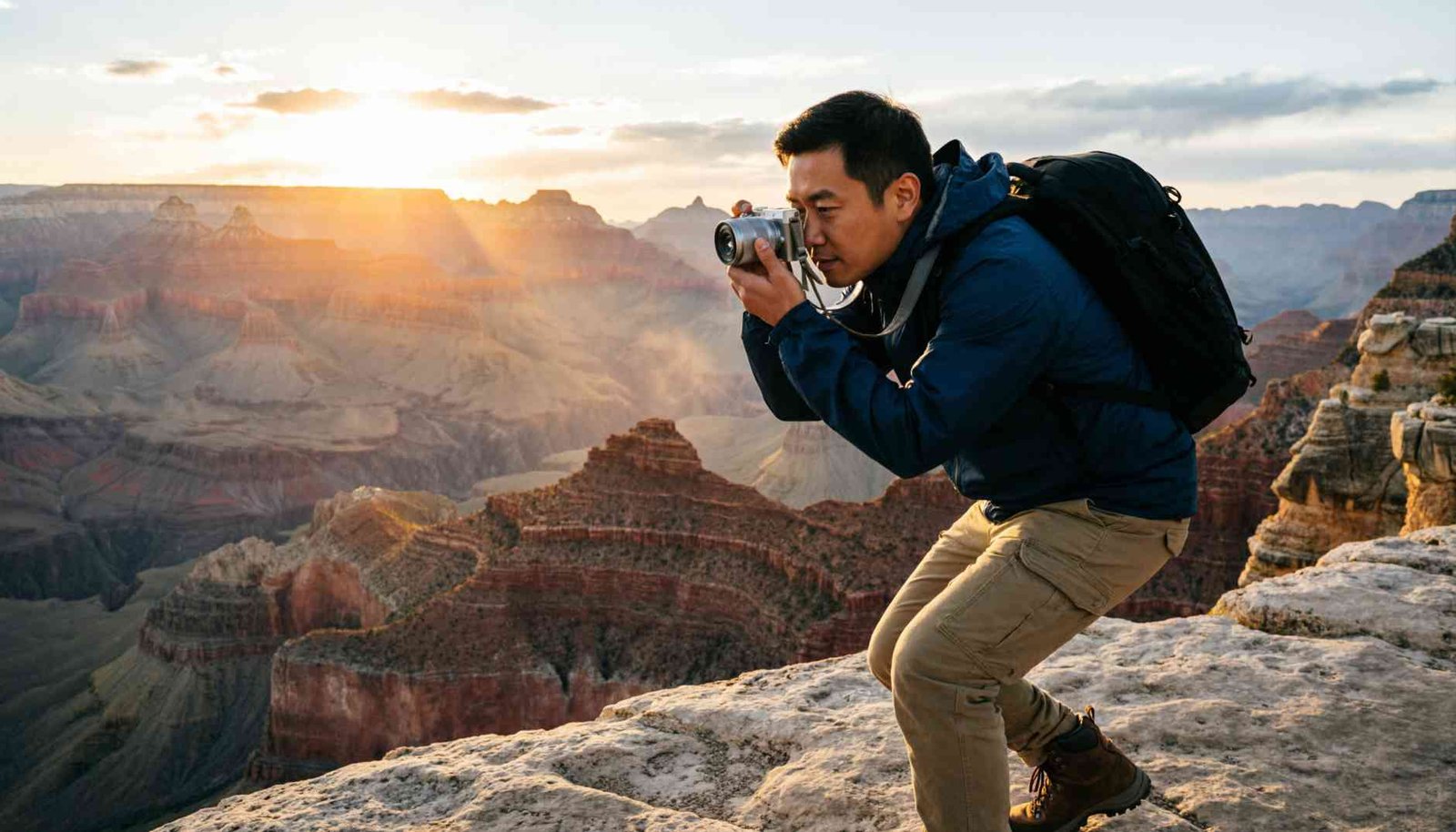
Choosing the best camera for travel comes down to three things: image quality, portability, and real world durability. If you’re shooting the Grand Canyon at golden hour or street scenes in New Orleans, the right travel camera fits in your bag without slowing you down and delivers photos worth printing when you get home.
Every traveler has felt it when you’re standing in front of something breathtaking, phone in hand, and the shot just doesn’t do it justice. The light is fading, the moment is fleeting, and your device struggles to keep up with what your eyes are seeing. That frustration is exactly why finding the right travel camera matters more than most gear decisions you’ll make before a trip.
The market is packed with options that promise everything and deliver differently for different travelers. A wildlife photographer heading to Yellowstone needs something completely different from a couple road tripping the Pacific Coast Highway. This guide cuts through the noise and helps you find the best camera for travel based on your specific shooting style, budget, and how much weight you’re willing to carry.
From compact point and shoots that slip into a jacket pocket to mirrorless systems that rival professional studio gear, every category gets honest treatment here including the drawbacks most review sites skip over.
Quick Comparison: Best Travel Cameras by Category
| Camera Type | Best For | Weight | Price Range | Image Quality |
| Compact (Point and Shoot) | Casual travelers, light packers | Under 0.5 lbs | $300–$1,000 | Good–Very Good |
| Mirrorless (APS C) | Enthusiasts, versatile shooting | 0.6–1.2 lbs | $700–$2,000 | Excellent |
| Full Frame Mirrorless | Serious photographers | 1.2–2 lbs | $2,000–$4,000+ | Outstanding |
| Action Cameras (GoPro) | Adventure, underwater, video | Under 0.3 lbs | $200–$600 | Good (wide angle) |
| Smartphone + Clip Lens | Ultra light travelers | Negligible add on | $20–$150 add on | Good–Very Good |
Prices fluctuate. Always verify with retailers before purchasing.
What Makes a Camera Great for Travel?
The best travel camera balances four qualities that most single reviews treat separately: portability, image quality, durability, and battery life. A camera that scores perfectly on image quality but weighs three pounds becomes the thing you leave at the hotel. A featherlight compact that dies after 150 shots ruins a full day excursion.
Travel cameras face conditions that studio gear never does desert dust in Utah’s Canyonlands, ocean spray near Big Sur, freezing temperatures on Rocky Mountain passes. Before focusing on megapixels, consider the environment you’re actually shooting in. Here’s what separates a travel worthy camera from everything else:
- Size and weight: Under 1.5 lbs body only is the practical sweet spot for most travelers
- Battery life: 300+ shots per charge for mirrorless; 200+ for compacts
- Weather sealing: At minimum, splash proof for outdoor and adventure travel
- Autofocus speed: Fast AF matters for street photography and moving subjects
- Video capability: At least 4K/30fps if you document trips on video
Best Compact Cameras for Travel
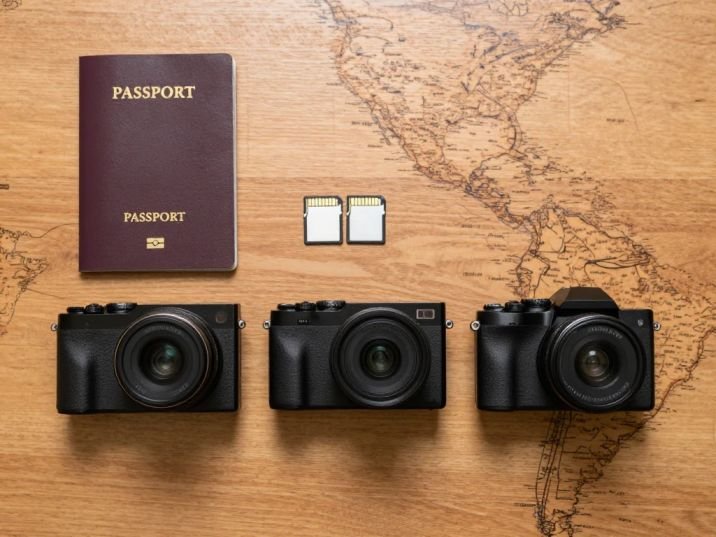
Compact cameras often called point and shoots are the unsung heroes of travel photography. The best compact travel cameras deliver 1 inch or larger sensors in packages that weigh under half a pound. Sony’s RX100 series, Canon’s G7 X Mark III, and Ricoh’s GR IIIx consistently rank among the top choices in this category.
Sony RX100 VII
Sony’s RX100 VII packs a 1 inch 20.1MP sensor with a 24–200mm equivalent zoom range into a body that fits most jacket pockets. Its real time eye tracking autofocus is remarkably effective, and 4K video capability makes it a dual purpose machine for travel vloggers. The drawbacks are real: it’s expensive for a compact (around $1,300), and the small body gets tiring during long shooting sessions. Battery life sits around 260 shots carry a spare on full day adventures.
Canon PowerShot G7 X Mark III
The G7 X Mark III earns its place in nearly every travel photography shortlist for one practical reason: it streams live directly to YouTube and Facebook, making it a genuine travel vlogger’s tool. Its 1 inch 20.1MP sensor performs well in daylight, and the flip up touchscreen is genuinely useful for selfies and low angle shots. Low light performance lags behind Sony’s RX100 series, but the $749 price point makes it easier to justify.
Ricoh GR IIIx
The Ricoh GR IIIx is the choice for street photographers who want absolute discretion. Its 40mm equivalent fixed lens produces razor sharp images on a 26.1MP APS C sensor that’s a larger sensor than most compacts in a body about the size of a deck of cards. It has no viewfinder, no zoom, and limited video specs, but for travelers who prioritize still image quality in a minimal package, very little competes with it.
Best Mirrorless Cameras for Travel
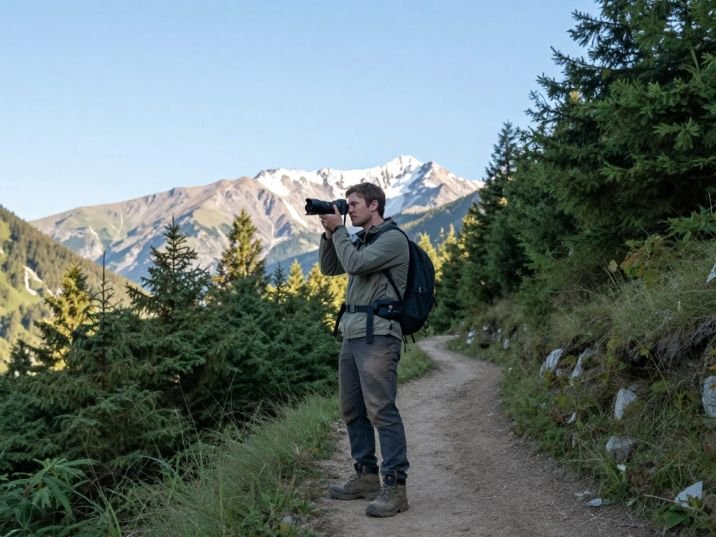
Mirrorless cameras have largely replaced DSLRs as the enthusiast travel standard. They offer interchangeable lenses, larger sensors, and better autofocus than compacts in smaller, lighter bodies than traditional DSLRs. The APS C mirrorless category hits the sweet spot for most travel photographers.
Sony a6700
The Sony a6700 represents a significant step forward for APS C travel photography. Its 26MP BSI sensor, AI powered subject recognition, and in body image stabilization (IBIS) combine in a body weighing just 493g (about 1.1 lbs) with kit lens. The a6700 handles high ISO noise impressively well, making it reliable for dimly lit restaurants, museums, and evening street scenes where flash isn’t welcome. The Sony E mount ecosystem offers an enormous lens selection and a meaningful long term advantage.
Fujifilm X S20
Fujifilm’s X S20 deserves more attention than it typically gets outside enthusiast circles. Its 26.1MP X Trans sensor renders colors with a film-like quality that Fujifilm’s proprietary film simulations Velvia, Classic Chrome, Eterna make immediately usable straight from camera. For travelers who don’t want to spend hours post processing every shot, this is a compelling advantage. The X S20 also offers 6.2K video and a fully articulating screen, and it’s priced around $1,299 body only.
OM System OM 5
For adventure travelers, the OM System OM 5 stands apart. It’s rated to IP53 standards fully splash, dust, and freeze proof down to 14°F ( 10°C) while weighing just 414g body only. The Micro Four Thirds sensor is smaller than APS C, which some photographers notice in low light, but the system’s legendary 5 axis IBIS (up to 7.5 stops of stabilization) compensates for a lot. Hikers, kayakers, and anyone spending time outdoors in unpredictable conditions should put this camera near the top of their list.
Best Full Frame Mirrorless for Serious Travel Photographers
Full frame mirrorless cameras produce the finest image quality available in a portable form but they demand a real commitment in weight, cost, and lens investment. The Sony a7C II, Nikon Z5 II, and Canon EOS R8 represent the most travel friendly full frame options currently available.
Sony a7C II
The a7C II is genuinely compact for a full frame system. At 514g body only, it undercuts many APS C cameras in weight while delivering Sony’s 33MP full frame sensor with AI based autofocus that tracks subjects, humans, animals, and vehicles with exceptional reliability. Paired with Sony’s compact G series lenses, it builds into a full frame travel kit that fits in a mid size camera bag without drama. Expect to spend $2,500–$3,500 building a complete kit.
Nikon Z5 II
Nikon’s Z5 II offers full frame performance at one of the most accessible price points in the category around $1,700 body only. Its 24.5MP sensor and Expeed 7 processor produce excellent images across a wide ISO range, and the Z mount’s optical quality is widely considered among the best available. For travelers already invested in Nikon glass, this is the obvious upgrade path from a DSLR.
Best Action Cameras for Adventure Travel
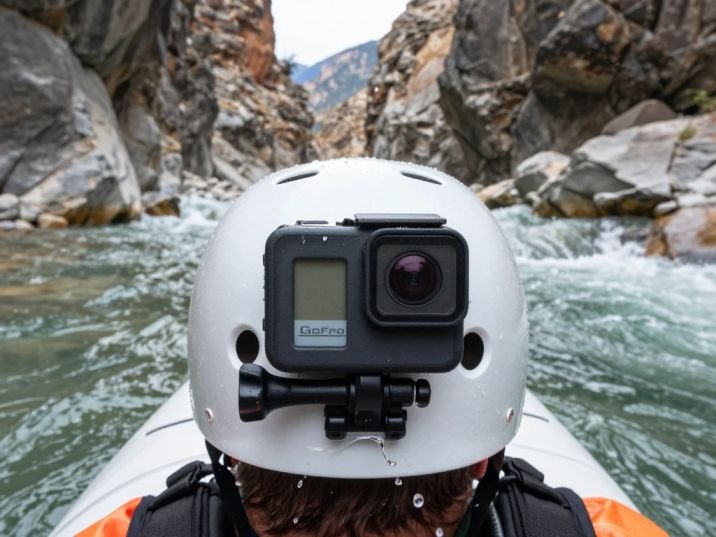
Action cameras solve a specific problem: capturing immersive footage in conditions that would destroy conventional cameras. GoPro dominates this category, with the GoPro Hero 13 Black setting the current standard for adventure travel video.
GoPro Hero 13 Black
The Hero 13 Black shoots up to 5.3K/60fps video with HyperSmooth 6.0 stabilization, which keeps footage watchable even from a mountain bike or kayak. Its magnetic mounting ecosystem is extensive and genuinely useful. Battery life runs about 70 minutes at 4K/60fps shorter than most travelers expect so carrying the GoPro Enduro battery and a portable power bank is essential for full day adventures.
DJI Osmo Action 5 Pro
DJI’s Osmo Action 5 Pro challenges GoPro seriously on battery life (up to 4 hours on a single charge) and low light performance. Its dual front and rear screens make vlogging and action capture genuinely versatile in one small package. For travelers who prioritize battery endurance over GoPro’s broader accessory ecosystem, the Osmo Action 5 Pro is a strong alternative.
Can a Smartphone Replace a Travel Camera?
For many casual travelers, the honest answer is yes with important caveats. Modern flagship smartphones from Apple, Google, and Samsung shoot images that outperform entry level compact cameras in good light and match them in others. The iPhone 16 Pro’s 48MP main sensor and computational photography pipeline produce impressive results, and the always in your pocket convenience is a real advantage.
Smartphones fall behind dedicated cameras in three meaningful ways:
- Optical zoom: Computational zoom degrades quality beyond 5–10x; telephoto lenses on dedicated cameras maintain quality at 10x, 20x, and beyond
- Low light performance: Larger sensors capture dramatically more light smartphone night mode is impressive but still limited
- Manual control: Serious photographers want full control over aperture, shutter speed, and ISO not approximated by software
The practical middle ground: Many experienced travelers carry a flagship smartphone plus one compact camera or a GoPro. That combination covers 95% of travel shooting scenarios without the weight and cost of a full mirrorless kit.
TSA Rules and Flying With Camera Gear
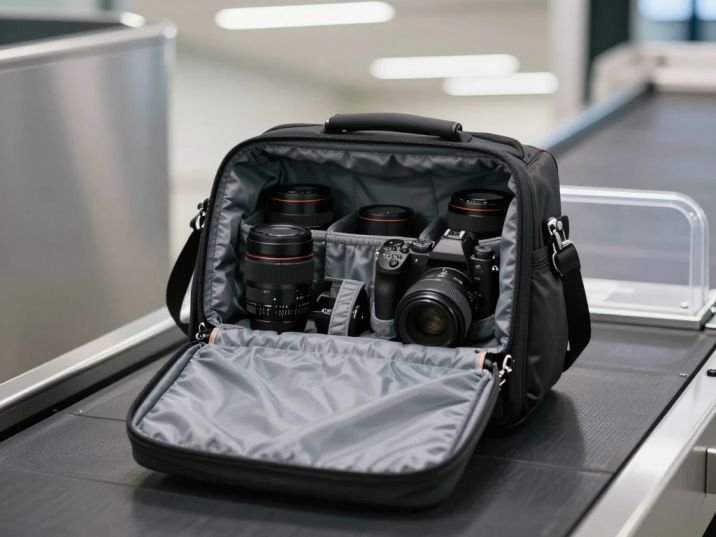
Traveling with camera equipment through U.S. airports involves a few important TSA guidelines every photographer should know before heading to the airport.
Carry On vs. Checked Baggage
The TSA strongly recommends carrying camera equipment as carry on luggage rather than checking it. Camera bodies, lenses, memory cards, and batteries are all permitted in carry on bags. Lithium batteries including camera batteries must travel in carry on bags, not checked luggage, per TSA and FAA regulations. This applies to external battery packs and camera grip batteries as well.
Drone Rules at U.S. Airports and National Parks
If you’re traveling with a drone, additional rules apply. The FAA requires registration for drones over 0.55 lbs, and many National Parks including Grand Canyon, Yellowstone, and Yosemite prohibit drone use entirely. Always check National Park Service (NPS) regulations for your specific destination before packing a drone. Flying near airports requires authorization through the FAA’s LAANC system.
Always verify current TSA and FAA policies at tsa.gov and faa.gov before travel, as regulations change.
Choosing the Right Travel Camera Bag
The camera bag you choose affects how much you actually shoot during a trip. A bag that’s awkward to access means missed moments. A bag that screams “expensive gear inside” invites theft in crowded areas.
Top Travel Camera Bag Types
Sling bags (like Peak Design Sling 6L or Shimoda Explore V2) offer quick one handed access and minimal profile. They work well for street photography and urban environments where you’re moving frequently.
Backpacks with camera compartments (like Lowepro Fastpack or F Stop Tilopa) carry more gear comfortably over long distances ideal for hiking or multi day trips where you’re carrying other gear too.
Packing cubes + dry bags are underrated for adventure travelers. Waterproof dry bags (Sea to Summit, SealLine) protect camera bodies and lenses in rain, kayaking, or beach conditions without adding much weight.
Memory Cards, Batteries, and Travel Accessories
Memory Cards
For mirrorless cameras, UHS II SD cards or CFexpress Type A cards are worth the investment. Slower cards create buffer bottlenecks during burst shooting, frustrating when you’re photographing wildlife or fast moving subjects. SanDisk Extreme Pro and Sony Tough series cards are consistently reliable. Always travel with at least two cards; card failures happen without warning.
Extra Batteries and Charging
Cold temperatures common in destinations like Alaska, Colorado ski towns, or the Upper Midwest in winter drain camera batteries faster than the rated shot count suggests. Carry at least two batteries for full day excursions. A multi battery USB charger (like Watson Duo LCD) lets you charge two batteries simultaneously from a single outlet or power bank.
ND Filters and Polarizers
A circular polarizing filter cuts glare on water and glass, deepens sky contrast, and makes a visible difference in landscape shots. For waterfall and long exposure work, a neutral density (ND) filter kit is worth carrying. Brands like B+W, Hoya, and Tiffen make travel worthy options; matching the filter size to your most used lens keeps costs manageable.
5 Insider Tips for Travel Photography
1. Shoot during the golden hour and plan specifically for it. The hour after sunrise and before sunset produces light that makes ordinary scenes extraordinary. Before each destination, use apps like PhotoPills or The Photographer’s Ephemeris to know exactly when and where the sun rises and sets relative to your subject.
2. Enable airplane mode strategically. Notifications, vibrations, and incoming calls interrupt focus during long exposure shots. Switch to airplane mode when shooting; it also conserves battery on camera connected smartphones.
3. Learn your camera’s back button focus before you leave. Back button focus (BBF) separates autofocus activation from the shutter button, giving you dramatically better control over moving subjects. It takes about 15 minutes to set up and one day to feel natural don’t learn it for the first time at the Grand Canyon.
4. Use RAW format for landscapes, JPEG for events. RAW files give you maximum post processing flexibility for landscape and architectural shots. For crowded, fast moving situations festivals, markets, city streets JPEG keeps storage manageable and shooting faster.
5. Bring a small flexible tripod (like a Joby GorillaPod). A full size tripod rarely makes it into travel bags. A GorillaPod (weighs about 0.6 lbs) wraps around railings, perches on rocks, and opens up long exposure and self portrait options that would otherwise be impossible.
3 Tourist Camera Mistakes and How to Fix Them
Mistake 1: Relying on auto white balance in mixed lighting. Indoor venues, restaurants, and museums often mix tungsten, fluorescent, and LED lighting. Auto white balance makes inconsistent choices across a shoot. Fix: Set white balance manually or use a specific preset (Tungsten, Fluorescent) in consistent lighting environments.
Mistake 2: Shooting with a full memory card. Filled cards mean deleted shots or missed moments. Fix: Offload photos to a laptop or portable SSD (like Samsung T7 Shield) every evening. Carry a second card as backup insurance.
Mistake 3: Ignoring local photography rules. Many museums, historic sites, and religious locations prohibit flash photography or photography entirely. In some international destinations (even when visiting from the U.S.), photographing government buildings or military installations carries real legal consequences. Fix: Research photography restrictions for each destination before visiting. The NPS website publishes photography policies for all National Parks.
3 Underrated Travel Camera Alternatives
Fujifilm X100VI: Often overlooked because of its fixed 35mm lens, the X100VI is one of the most capable and stylish travel cameras ever made. Its built in ND filter, weather sealing, and film simulations make it a complete package that many professional photographers use as their primary travel camera.
Panasonic Lumix G100: For travel vloggers on a budget, the G100 offers directional stereo audio recording, something most cameras ignore completely in a Micro Four Thirds body under $600. Sound quality matters as much as image quality for video.
Used/Refurbished Previous Generation Flagships: A Sony a7 III or Canon EOS R purchased from reputable dealers (B&H Photo, KEH Camera, Adorama) delivers full frame performance for significantly less than current models. Camera technology improves incrementally; a three year old flagship still outperforms most new mid range cameras.
Best Travel Cameras by Traveler Type
| Traveler Type | Recommended Camera | Why It Fits |
| Backpacker / Ultralight | Ricoh GR IIIx or iPhone + clip lens | Minimal weight and space |
| Family Vacation | Sony RX100 VII or Canon G7 X III | Easy to use, excellent zoom |
| Adventure / Outdoor | OM System OM 5 + GoPro Hero 13 | Weather sealed, action capable |
| Landscape Photographer | Sony a7C II or Fujifilm X S20 | Image quality and color science |
| Travel Vlogger | Sony ZV E10 II or DJI Osmo Action 5 | Video specs, compact, directional mic |
| Street Photographer | Fujifilm X100VI or Leica Q3 | Discreet size, exceptional lenses |
| Wildlife / Nature | Sony a6700 + 70 350mm G lens | Fast AF, reach, portability |
What’s Overrated and What’s Underrated
Overrated: Megapixel counts above 24MP for most travel photography. Prints up to 20×30 inches look excellent at 24MP. Chasing 50MP or 60MP sensors adds file size, storage costs, and processing time without visible benefit for typical travel images shared online or printed at standard sizes.
Underrated: In body image stabilization (IBIS). IBIS lets you shoot sharp handheld shots at shutter speeds two to four stops slower than you’d otherwise need which means better low light performance without a tripod. For travelers who frequently shoot in dim interiors, evening street scenes, or dusk landscapes, IBIS is worth prioritizing over raw resolution.
Is it worth it? For serious photographers and anyone who wants to look back at their travels with sharp, beautiful images, a dedicated travel camera is worth the investment. The difference between a well captured travel photo and a mediocre one isn’t the destination. It’s the light, the moment, and the tool used to capture it.
FAQs
What is the best camera for travel beginners?
For beginners, the Sony RX100 VII or Canon PowerShot G7 X Mark III offer the best balance of automatic ease and image quality. Both shoot excellent photos in auto mode right out of the box while offering manual controls to grow into. They’re compact, well supported, and widely recommended by travel photography communities.
Is a mirrorless camera better than a DSLR for travel?
Yes, for most travelers today. Mirrorless cameras are lighter, more compact, and offer faster autofocus than comparable DSLRs. Major manufacturers including Canon and Nikon have shifted their lens development to mirrorless systems, making mirrorless the smarter long term investment for new buyers.
Can I take my camera on a plane to carry on luggage?
Yes. Camera bodies, lenses, and accessories are all permitted as carry on items through TSA screening. Lithium batteries including camera batteries must travel in carry on bags, not checked luggage, per FAA regulations. Always verify current rules at tsa.gov before your trip.
How many megapixels do I need for travel photography?
For most travel photography and social media sharing, printing up to 20×30 inches 20–24 megapixels is more than sufficient. More megapixels produce larger files that require more storage and processing time without meaningful quality improvement at typical output sizes.
What camera do travel photographers actually use?
Working travel photographers most commonly use Sony a7 series full frame mirrorless cameras or Fujifilm X series APS C cameras. Sony’s a6700 and a7C II, along with the Fujifilm X S20 and X100VI, appear frequently in travel photography portfolios. The specific camera matters less than learning to use it well.
What’s the best camera for travel video?
For travel video, the Sony ZV E10 II, DJI Osmo Action 5 Pro, and GoPro Hero 13 Black all deliver excellent results depending on your style. The ZV E10 II suits structured vlogging; the GoPro and DJI suit action and adventure footage. Regardless of camera, always pair it with an external microphone or use a camera with directional audio capture.
How do I protect my camera while traveling?
Use a weather sealed camera when possible, store it in a padded bag with a waterproof lining, and carry silica gel packets to combat humidity. Never leave camera equipment in a hot car temperatures inside parked vehicles can damage sensors and battery cells. For international travel, photograph your gear’s serial numbers and keep them in a secure cloud location in case of loss or theft.
Conclusion
The best camera for travel is the one you’ll actually carry and actually learn to use well. Three things are worth remembering as you make this decision.
First, match the camera to your travel style, not to the most impressive spec sheet. A weatherproof APS C mirrorless handles the majority of real world travel photography scenarios better than a heavy full frame system left at the hotel.
Second, investing in one good lens before buying a second camera body glass improves images more than sensor upgrades in most cases. Third, practice at home before you travel. The best shots from any destination come from knowing your camera’s controls without thinking about them.
Great travel photos don’t happen by accident. They come from being ready when the light is right, the moment appears, and your camera is already in your hand. Choose the tool that fits your life, learn it deeply, and the images will follow.
Ready to start shooting? Explore camera reviews, hands on comparisons, and travel photography guides across our site and bring back images that do your adventures justice.