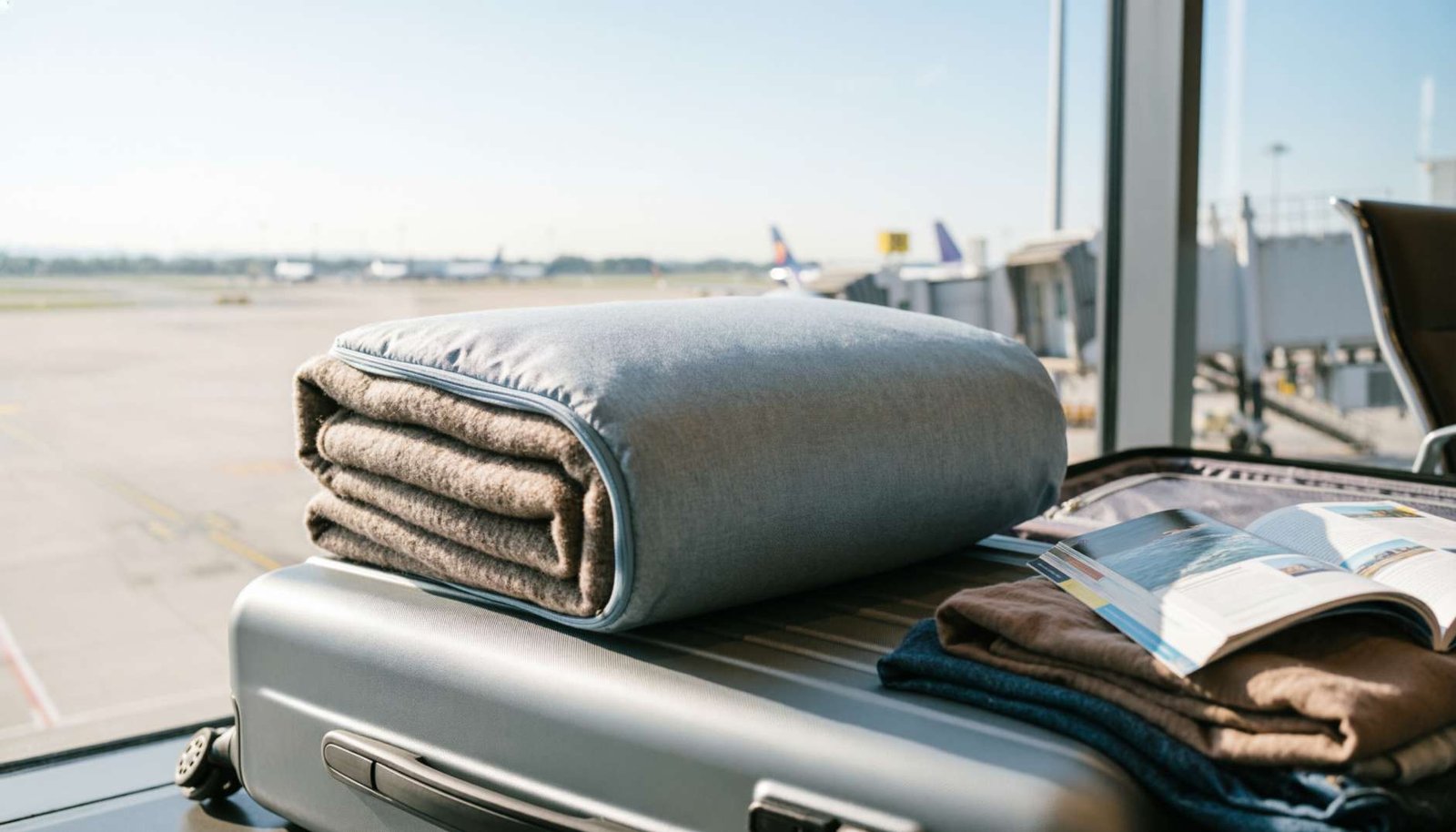
A travel blanket is a compact, lightweight blanket designed specifically for use on planes, trains, road trips, and outdoor adventures.
The best options weigh under 12 ounces, pack into their own pouch, and provide real warmth without taking up valuable luggage space.
If you’re freezing on a red eye flight or camping under the stars, the right travel blanket makes the difference between a miserable journey and a comfortable one.
Why Every Traveler Needs a Travel Blanket
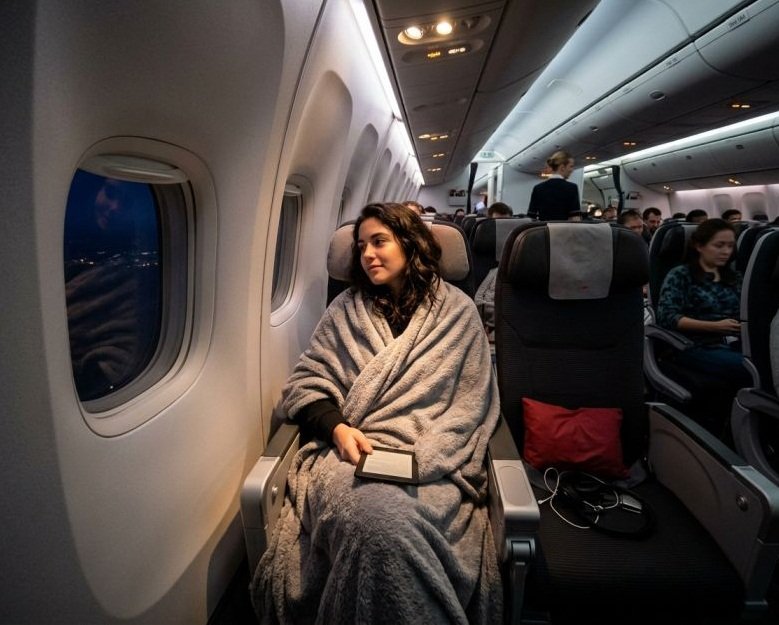
Most travelers don’t think about a blanket until they’re shivering in a 62°F airplane cabin at 35,000 feet. Airlines have quietly scaled back complimentary blanket programs over the past decade, and the thin “comfort kits” on budget carriers are barely worth unfolding. A dedicated travel blanket solves that problem and does much more.
Beyond the airplane, a quality travel blanket works as a beach layer, a picnic spread, a stadium wrap, or extra insulation in a drafty hotel room. Outdoor travelers use them as lightweight camp blankets or emergency warmth layers on hiking trails in places like Rocky Mountain National Park or the Blue Ridge Parkway.
The market has expanded dramatically. Today’s options range from $15 budget fleece throws to $120+ merino wool travel blankets with cases made from recycled bottles. Understanding what separates a great pick from a forgettable one saves money and packing frustration. This guide covers everything: materials, size, weight, top uses, and real packing strategies so you arrive comfortable every time.
Quick Facts: Travel Blanket at a Glance
| Feature | What to Look For |
| Weight | Under 12 oz for air travel; 1–2 lbs for camping |
| Packed Size | Fits in a quart bag or smaller |
| Material | Fleece, microfiber, merino wool, down, or recycled synthetic |
| Size (open) | At least 50″ × 60″ for full body coverage |
| Warmth Rating | Check tog or temperature rating for outdoor use |
| Machine Washable | Strongly preferred |
| Carry On Legal | Yes no TSA restrictions |
Types of Travel Blankets: Which One Is Right for You?
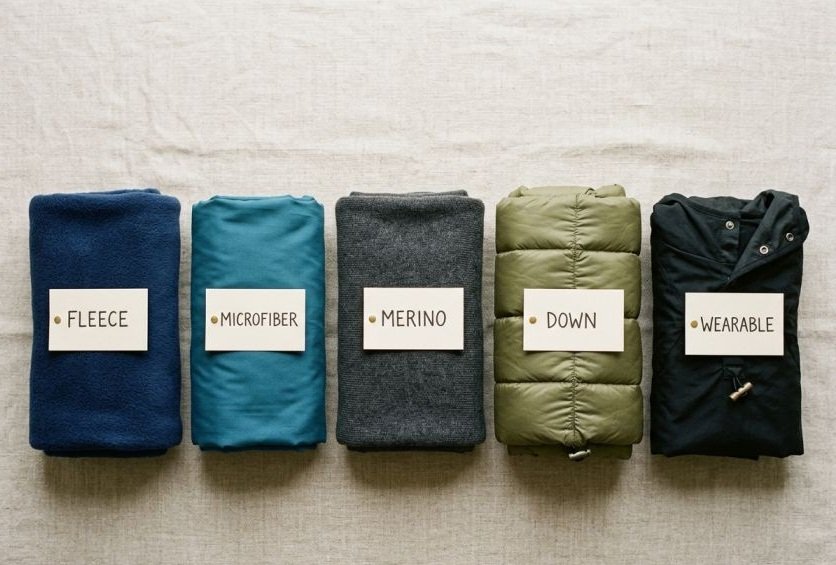
Choosing the right type of travel blanket depends entirely on how and where you travel. There are five main categories, each with real strengths and trade offs.
Fleece Travel Blankets
Fleece is the most popular travel blanket material for good reason. It’s soft, quick drying, affordable, and provides solid warmth even when slightly damp. Fleece blankets typically weigh between 8 and 14 ounces and pack into attached pouches. They’re ideal for flights, road trips, and light outdoor use. The main downside is bulk fleece doesn’t compress as tightly as down or microfiber.
Microfiber Travel Blankets
Microfiber blankets offer the best compression to softness ratio in the budget category. A full sized 50″ × 60″ microfiber blanket can pack down to the size of a softball. They’re lightweight (often under 8 oz), dry fast, and clean easily. The trade off is breathability microfiber traps heat well but can feel stuffy in warm climates or during active use.
Merino Wool Travel Blankets
Merino wool is the premium choice for serious travelers. It regulates temperature naturally (warm when cold, cool when warm), resists odors for multiple uses, and feels luxuriously soft. Brands like Coyuchi and Woolly produce high quality options that double as elegant cabin or hotel throws. Expect to spend $80–$150+. Merino works especially well for long international flights, train travel, and mountain destinations.
Down and Down Alternative Blankets
Down travel blankets compress to the smallest packed size of any warm option. Ultralight down throws from brands like Rumpl weigh as little as 10 ounces while providing impressive loft warmth. They’re ideal for backpackers, cold destinations, and anyone who prizes packability above all else. Down alternative (synthetic fill) versions offer similar compression without the allergy concern and perform better when wet.
Wearable and Hooded Travel Blankets
A newer category, wearable blankets feature arm holes, snaps, or hoods that let you move around freely, useful on long road trips, at outdoor events, or in airports. Some double as ponchos. They’re bulkier to pack but incredibly versatile.
Best Travel Blanket Uses: From 30,000 Feet to the Trail head
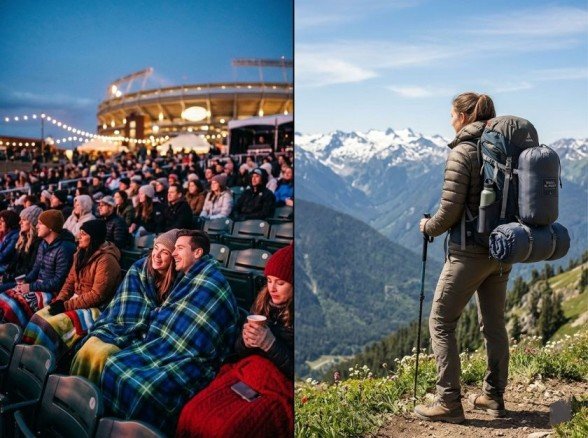
A good travel blanket earns its space across a wider range of situations than most people expect.
On Airplanes: The airplane cabin is the most common use case. Cabin temperatures average between 64°F and 75°F, but individual zones vary widely, and window seats near the wing can feel noticeably cooler. Budget carriers like Spirit and Frontier rarely provide blankets at all. A compact travel blanket keeps you comfortable without relying on the airline.
On Road Trips: If you’re driving Route 66, the Pacific Coast Highway, or a family trip to Yellowstone National Park, a travel blanket has multiple jobs. It keeps passengers warm on cool mornings, works as a picnic blanket at roadside stops, and provides a cushion for napping in the back seat.
At Outdoor Events and Stadiums: Watching a game at Lambeau Field in Green Bay, a concert at Red Rocks Amphitheatre outside Denver, or a sunset showing at a drive in requires warmth. Lightweight blankets are typically allowed in most venues and always check the specific stadium or venue policy before arrival.
Camping and Backpacking: On ultralight overnight trips, a packable travel blanket supplements a sleeping bag or serves as an insulating layer in a hammock. Hikers on the Appalachian Trail and the John Muir Trail often carry a small travel blanket as an emergency layer and the extra weight is almost always worth it.
In Hotels: Budget hotels sometimes provide thin bedding. A personal travel blanket adds warmth without needing to call housekeeping at midnight.
How to Choose a Travel Blanket: 5 Key Factors
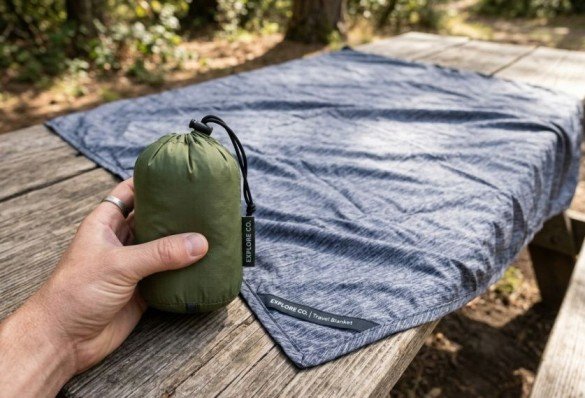
Buying the right travel blanket comes down to matching specs to your actual travel style. Here’s what matters most.
1. Weight and Packed Size
For carry-on travelers, weight and compression are the priority. Aim for under 12 ounces and a packed size no larger than a water bottle. Microfiber and down options excel here.
For checked baggage travelers or car trips, weight matters less. You can opt for heavier, more luxurious options like merino wool or thick fleece without the carry on penalty.
2. Size When Unfolded
A travel blanket should cover your entire body from shoulders to feet when you’re seated in economy class. Look for a minimum of 50″ × 60″. Many “travel blankets” marketed to kids or as “lap blankets” measure only 40″ × 50″ too small for most adults. Always check the unfolded dimensions before buying.
3. Material and Warmth
Match the material to your most common travel scenarios. Fleece and microfiber suit casual flyers and road trippers. Merino wool works for year round travelers who visit varying climates. Down and synthetic insulation belong in backpacks for cold weather adventures.
4. Packability and Storage Solution
The best travel blankets include an attached stuff sack or storage pouch. This keeps the blanket contained in your bag and makes repacking fast. Blankets that roll or fold into a built in pocket are more practical than those that require a separate bag.
5. Care Instructions
Machine washable is essential for frequent travelers. Dry clean only is a dealbreaker. Check If the blanket can go in a hotel laundromat on cold wash a useful test for long trip practicality.
Travel Blanket Sizes: A Practical Comparison
| Blanket Type | Typical Open Size | Packed Size | Best For |
| Microfiber throw | 50″ × 60″ | Softball | Flights, day trips |
| Fleece travel blanket | 50″ × 60″ | Small paperback | Road trips, hotels |
| Merino wool blanket | 55″ × 70″ | Hardcover book | Long haul travel |
| Down puffy throw | 50″ × 70″ | Water bottle | Backpacking, camping |
| Wearable blanket | 55″ × 70″ | Trade paperback | Road trips, events |
Is a Travel Blanket TSA Approved? What the Rules Say
Yes travel blankets are fully TSA approved for carry on luggage. There are no federal restrictions on bringing blankets through airport security checkpoints. The TSA does not limit the number or type of blankets you can carry. You can keep a travel blanket in your personal item, your carry on bag, or drape it over your arm as you board.
One practical note: security screeners may ask you to remove a bulky blanket from your bag during X ray screening if it obscures other items. To speed things along, pack your blanket at the top of your carry on or in an outside pocket where it’s easy to remove and replace.
For international travel, some countries have restrictions on bringing agricultural items like untreated wool across borders but commercially manufactured travel blankets face no such restrictions. Always verify current entry requirements with the destination country’s customs authority before international trips.
Packing a Travel Blanket: 5 Smart Strategies
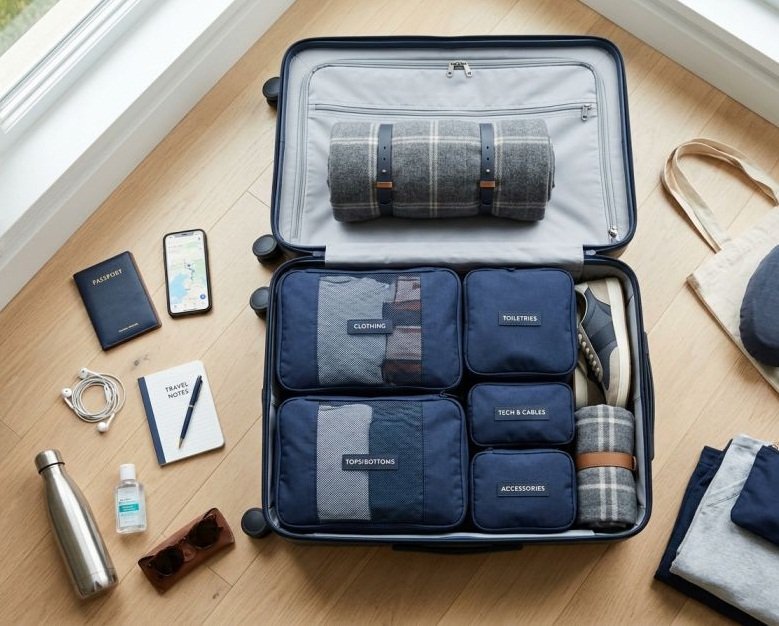
Packing smart separates experienced travelers from everyone else. These strategies help you bring a travel blanket without sacrificing space.
- Use it as padding. Wrap fragile items such as a camera, a laptop, and souvenirs in your travel blanket before packing. It protects your gear and fills dead space efficiently.
- Pack it last, pull it out first. Place your travel blanket at the very top of your carry on so you can grab it immediately at your seat without digging through your bag.
- Use compression cubes. A light compression packing cube reduces the size of even a thick fleece blanket by 30–40%, freeing up bag space.
- Choose dual purpose options. Some travel blankets double as scarves, light jackets, or beach covers. Rumpl’s smaller Nano Throw weighs 10 oz and works as both a lightweight blanket and a picnic mat.
- Skip the stuff sack on short trips. For day trips or commutes, skip repacking into the pouch. Fold the blanket loosely and tuck it into your tote or daypack for quick access.
Insider Tips: What Experienced Travelers Know
Tip 1: Book a window seat for blanket comfort. Window seats let you lean against the fuselage, reducing drafts and giving you a corner to tuck your blanket. Middle and aisle seats lose more body heat to passing passengers and flight crew.
Tip 2: Bring a blanket even on short domestic flights. A two hour flight from Dallas–Fort Worth (DFW) to Denver International (DEN) might not seem long enough to warrant a blanket but cabin temperature drops within 20 minutes of takeoff and stays cold until descent.
Tip 3: Use a stuff sack, not a compression bag. Over compressing a down blanket damages the fill clusters and reduces warmth over time. Stuff sacks that allow light compression work best for preserving long term performance.
Tip 4: Merino wool handles multiple trips without washing. On long trips through multiple time zones say, a two week circuit from Los Angeles to Tokyo to Rome merino wool’s natural odor resistance means you don’t need to wash your blanket mid trip.
Tip 5: Register for flight temperature preferences when possible. Some airlines, including United and Delta, allow frequent flyers to note temperature preferences in profiles. This doesn’t guarantee a warmer cabin, but it’s worth noting.
Common Mistakes Travelers Make with Travel Blankets
Mistake 1: Buying One That’s Too Small
Many people buy “travel blankets” that are really just lap blankets 40″ × 50″ or smaller. These don’t cover a seated adult from shoulders to feet. Always check unfolded dimensions. Fix: Look for at least 50″ × 60″ open size.
Mistake 2: Relying on Airline Blankets
Even full service airlines including American, United, and Delta don’t guarantee blanket availability on every flight. Policies vary by route, cabin class, and aircraft. Economy class blankets on domestic flights have been quietly eliminated on many carriers. Fix: Bring your own and treat the airline blanket as a bonus, not a plan.
Mistake 3: Choosing Weight Over Warmth for Cold Destinations
An ultralight 6 ounce microfiber blanket works beautifully for a flight to Miami. It won’t cut it on an October road trip through Montana or a camping weekend near Lake Tahoe. Fix: Match warmth rating to destination temperature, not just to carry on convenience.
Best Travel Blanket for Different Traveler Types
Budget Travelers: A microfiber travel blanket in the $15–$25 range from brands like LANGRIA or BEARZ Outdoor provides solid coverage and compression. The machine washable and packable, nothing fancy, but completely functional.
Frequent Flyers: Invest in merino wool or a premium fleece option. The higher upfront cost pays off across hundreds of flights. Coyuchi and Rumpl produce options used by road warriors who travel more than 100,000 miles per year.
Families with Kids: Look for oversized blankets (60″ × 80″) that two small kids can share, or individual kid sized throws with kid friendly prints. Many families on road trips through national parks keep two or three blankets in the back seat year round.
Backpackers and Outdoor Travelers: A down or synthetic insulated travel blanket from brands like Rumpl (the Nano Throw weighing 10 oz), or a lightweight fleece from REI, offers warmth at minimal packable size.
Luxury Travelers: Merino wool, cashmere blends, and high thread count cotton blankets in stylish colors fold into beautiful cases. These work on long haul business class flights and in upscale Airbnbs.
Underrated Alternatives Worth Considering
A Packable Down Jacket: On ultralight backpacking trips where every ounce matters, a packable down jacket doubles as a torso blanket. It’s not a true blanket replacement but works well for shoulder season adventures when full blanket bulk isn’t practical.
A Large Pashmina or Wrap Scarf: A 28″ × 80″ pashmina covers your lap and shoulders on a flight, packs nearly flat, and doubles as a scarf in cool destinations. Many travelers find a quality pashmina more versatile than a dedicated travel blanket for warm weather trips.
A Travel Sleeping Bag Liner: For budget travelers staying in hostels or places with uncertain bedding quality, a lightweight sleeping bag liner adds warmth and a hygiene layer without the bulk of a full blanket. Sea to Summit and Cocoon make excellent ultralight options.
Sample Packing Checklist: Travel Blanket Setup by Trip Type
Weekend Flight Trip (carry on only):
- Microfiber travel blanket (packed in stuff sack, top of carry on)
- Neck pillow (optional, use blanket as pillow alternative)
- Compression packing cube
10 Day Road Trip:
- Fleece travel blanket (one per passenger)
- Waterproof stuff sack for wet weather
- Separate lightweight picnic blanket for outdoor stops
5 Day Backpacking Trip:
- Down travel blanket (10–12 oz)
- Compression stuff sack
- Emergency space blanket (backup layer, under 2 oz)
International Long Haul Flight:
- Merino wool travel blanket
- Stored in personal item or top of carry on
- Folds flat enough to use as neck support pillow
Responsible Travel: Sustainable Travel Blanket Options
Sustainable travel matters more every year, and the blanket category now includes several genuinely eco conscious choices. Rumpl produces blankets made from 100% recycled plastic bottles; each Nano Throw repurposes approximately 17 bottles. Woolly and Coyuchi source merino from Responsible Wool Standard (RWS) certified farms. Several budget microfiber options carry OEKO TEX Standard 100 certification, confirming they’re free of harmful chemicals.
When replacing a travel blanket, look for take back programs. Some outdoor brands accept worn blankets for recycling or repurposing rather than landfill disposal.
FAQs
Can I bring a travel blanket on a plane?
Yes. Travel blankets are fully TSA approved with no restrictions on type, size, or quantity. Pack it in your carry on, personal item, or hold it on your lap during boarding. No special rules apply for domestic or international U.S. departures.
What size travel blanket should I get for flights?
Look for a minimum unfolded size of 50″ × 60″ for full adult coverage in an airplane seat. Many economy seats are 17–18 inches wide, so a blanket in the 50–55 inch width range wraps comfortably around your shoulders and covers your legs to the feet.
Do airlines still provide blankets on domestic flights?
Most major U.S. airlines have eliminated complimentary blankets on domestic economy flights. First class and business class cabins still typically provide them. On international flights, economy blankets are more common but not guaranteed. Always check your specific airline’s amenity policy before flying.
What is the lightest travel blanket available?
Ultralight down and synthetic throw blankets can weigh as little as 6–10 ounces. Rumpl’s Nano Throw weighs 10 ounces and packs to water bottle size. For pure minimalism, a large microfiber blanket can weigh under 8 ounces while still providing decent warmth.
How do I wash a travel blanket while traveling?
Most microfiber and fleece travel blankets work in hotel laundromat machines on a gentle cold water cycle. Merino wool requires cool water and gentle detergent (or delicate cycle). Down blankets should air dry flat or tumble dry on low heat with tennis balls to restore loft. Always check the care label before your first wash.
Is a travel blanket worth it for short trips?
Absolutely even on a two hour flight or a day trip. Cabin temperatures drop fast, stadium nights get cold, and you can’t always predict when you’ll need extra warmth. A 6 ounce microfiber blanket takes up almost no space and earns its keep the first time you use it.
What’s the difference between a travel blanket and a regular throw blanket?
Travel blankets are engineered specifically for portability: they pack into attached pouches, weigh significantly less than home throws, and often use moisture wicking or quick dry materials. A standard home throw blanket typically weighs 2–4 pounds and doesn’t compress for travel. The functionality gap is real.
Conclusion: Pack Warm, Travel Better
Three things to take away: first, don’t depend on the airline, blanket availability is unreliable on domestic flights, and the cost of being cold for five hours is measured in misery, not dollars.
Second, match the blanket to the trip a $20 microfiber throw handles most flights beautifully, but merino or down earns its place on longer journeys.
Third, packability is a feature. The best travel blanket is the one small enough that you actually bring it.
A travel blanket under 12 ounces costs less than two airport coffees and fits in an outer pocket of any carry on bag. Once you travel with one, you won’t understand why you ever went without.
Pack it, bring it, and enjoy every mile more comfortably.












1 thought on “Travel Blanket Essentials: Best Packing Tips & Buying Guide”