Quick Answer:
The best European travel destinations for U.S. travelers include Paris, Rome, Barcelona, Amsterdam, and Santorini for first timers, while Prague, Porto, and the Scottish Highlands reward return visitors. The ideal trip length is 7–14 days, the best months are April–June and September–October, and most U.S. citizens can travel visa free to the Schengen Area for up to 90 days.
Staring at a map of Europe with 44 countries and thousands of cities can feel overwhelming, especially when vacation days are limited and every travel blog seems to push a different “must see” list. Picking the wrong destination can mean wasted money, jet lagged rushing, and missing the experiences that actually matter to you. This guide breaks down the best European travel destinations by traveler type, season, and budget, so the planning stage feels manageable instead of stressful.
If the goal is a romantic Paris getaway, a budget friendly Balkans adventure, or a multi country rail itinerary, this guide covers what to see, when to go, how to get there, and the mistakes to avoid all researched specifically for American travelers planning their first (or fifth) trip across the Atlantic.
Quick Facts: European Travel at a Glance
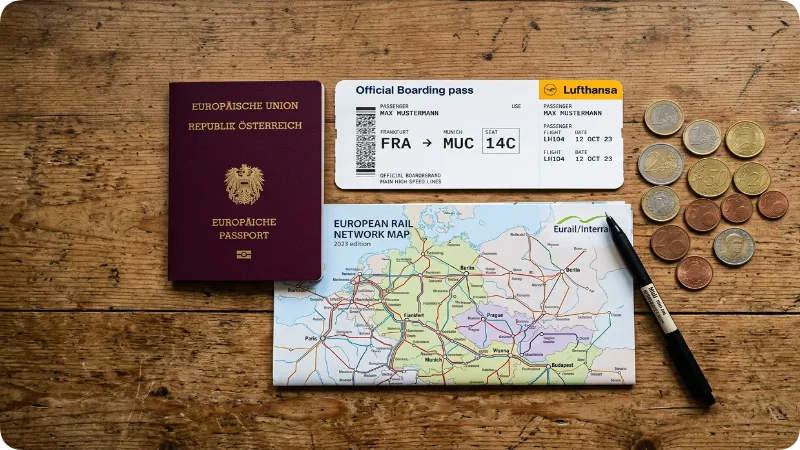
Europe spans roughly 27 countries in the European Union alone, with the Schengen Area allowing visa free travel between 29 countries for up to 90 days within a 180 day period for U.S. passport holders. Flight times from major U.S. hubs range from 6–8 hours to Western Europe and 9–11 hours to Eastern Europe or the Nordics.
| Category | Details |
| Best months to visit | April–June, September–October |
| Average trip length | 7–14 days |
| Visa requirement | None for stays under 90 days (Schengen) |
| Currency | Euro (€) in most countries; some use local currency |
| Flight time (East Coast) | 6–9 hours to major hubs |
| Time zone difference | 5–9 hours ahead of U.S. time zones |
Always verify current visa rules on the U.S. Department of State travel website, since ETIAS (European Travel Information and Authorization System) requirements for U.S. citizens have been delayed multiple times and should be confirmed before booking.
Best Time to Visit European Travel Destinations

The best time to visit most of Europe is late spring (April–June) or early fall (September–October), when temperatures are mild, crowds are thinner, and prices sit below peak summer rates. These shoulder seasons offer the best balance of good weather and manageable tourist volume across nearly every major destination.
Peak season (June–August) brings the warmest weather but also the biggest crowds, highest hotel prices, and long lines at attractions like the Colosseum or the Eiffel Tower. Shoulder season (April–May, September–October) is widely considered the sweet spot, flights and hotels cost less, and popular sites are far less congested. Off season (November–March) offers the lowest prices and a more local experience, especially in cities like Vienna or Prague during the Christmas markets, though some coastal and island destinations (like the Greek islands) partially shut down.
Seasonal Comparison Table
| Season | Pros | Cons |
| Peak (Jun–Aug) | Warmest weather, festivals, long daylight hours | Crowds, highest prices, extreme heat in Southern Europe |
| Shoulder (Apr–May, Sep–Oct) | Mild weather, lower costs, fewer crowds | Some attractions have reduced hours |
| Off season (Nov–Mar) | Cheapest flights/hotels, festive markets | Cold, shorter days, some island destinations close |
How to Get to Europe from the U.S.

Most U.S. travelers fly directly into major hub airports such as Paris Charles de Gaulle (CDG), London Heathrow (LHR), Amsterdam Schiphol (AMS), or Frankfurt (FRA), then connect to smaller cities via budget carriers. Round trip flights from East Coast cities typically run 6–9 hours, while West Coast departures often require one connection.
Direct flights are available from cities like New York, Boston, Chicago, and Atlanta on carriers including Delta, United, American, and European partners like Lufthansa, Air France, and British Airways. Travelers departing from smaller U.S. cities usually connect through a major hub first. Booking 3–5 months in advance generally secures the best fares, and Tuesday or Wednesday departures tend to be cheaper than weekend flights.
Transport Options Once You Arrive
Europe’s train network is one of its biggest advantages over U.S. domestic travel, with high speed rail connecting major cities in just a few hours. A Eurail Pass can be cost effective for multi country itineraries, while budget airlines like Ryanair and easyJet offer cheap short hops though baggage fees can add up quickly. Renting a car makes sense for countryside regions like Tuscany or the Scottish Highlands, but isn’t necessary (and can be a hassle) in dense city centers with limited parking and complex traffic rules.
Best European Travel Destinations by Travel Style
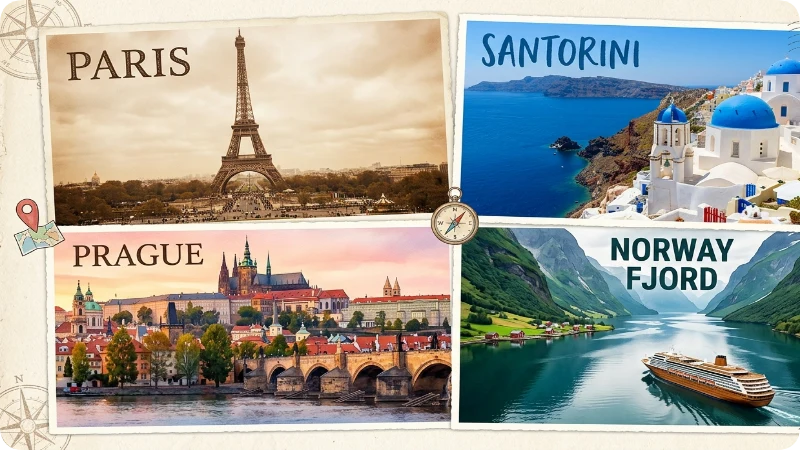
Choosing a destination becomes much easier when you start with the kind of vacation you want rather than a specific country. Europe offers everything from romantic cities and beach escapes to mountain adventures and cultural experiences.
| Travel Style | Recommended Destinations | Why They’re Great |
| First-time visitors | Paris, Rome, Amsterdam | Iconic landmarks, easy transportation, excellent tourism infrastructure |
| Couples | Santorini, Venice, Paris | Romantic scenery, dining, and unforgettable sunsets |
| Families | Copenhagen, Edinburgh, Vienna | Safe, walkable cities with family-friendly attractions |
| Budget travelers | Prague, Budapest, Porto | Lower accommodation and dining costs |
| Nature lovers | Iceland, Norway, Swiss Alps | Mountains, waterfalls, hiking, and scenic drives |
| Food lovers | Italy, Spain, France | Regional cuisine, wine, markets, and cooking classes |
| History enthusiasts | Rome, Athens, Berlin | Ancient ruins, museums, and historical landmarks |
Thinking about your travel style first usually leads to a much more satisfying itinerary than simply choosing the most famous cities.
How to Choose the Right European Destination
Europe offers hundreds of incredible places to visit, but the best destination depends on your priorities rather than popularity.
Ask yourself these questions before booking:
- Do you prefer cities, beaches, mountains, or countryside?
- Is this your first trip to Europe?
- How many vacation days do you have?
- Do you want to visit multiple countries or explore one deeply?
- Is food, history, nightlife, or nature your highest priority?
- What is your daily travel budget?
For first-time visitors, focusing on one region often creates a more relaxed and enjoyable experience than trying to see the entire continent in one vacation.
Best European Destinations for First-Time Visitors
If you’ve never visited Europe before, choosing destinations with excellent transportation, strong tourism infrastructure, and plenty of iconic attractions makes planning much easier.
Some of the best options include:
Paris
Perfect for art, architecture, museums, and cafés.
Rome
Ideal for ancient history, food, and unforgettable landmarks.
Amsterdam
Compact, easy to navigate, and excellent for cycling and canal cruises.
Barcelona
A great mix of beaches, architecture, nightlife, and culture.
London
Although outside the Schengen Area, London offers world-class museums, historic attractions, and excellent public transportation.
These cities also provide numerous direct flights from major U.S. airports, making them practical entry points for a first European vacation.
Common First-Time Europe Planning Mistakes
Even experienced travelers sometimes make avoidable planning mistakes.
Some of the most common include:
- Trying to visit too many countries.
- Underestimating train travel times.
- Booking accommodations far from transit.
- Forgetting to validate train tickets where required.
- Carrying too much luggage.
- Assuming every country uses the euro.
- Not checking local holidays.
- Overbooking every day without downtime.
Avoiding these mistakes helps create a more enjoyable and less stressful vacation.
Best European Destinations by Month
The ideal destination changes throughout the year because weather, crowds, and seasonal activities vary across Europe.
Spring (March–May)
- Paris
- Amsterdam
- Seville
- Tuscany
Summer (June–August)
- Greek Islands
- Croatian Coast
- Norwegian Fjords
- Swiss Alps
Fall (September–November)
- Prague
- Bavaria
- Porto
- Florence
Winter (December–February)
- Vienna
- Salzburg
- Lapland
- Strasbourg
Planning around seasonal strengths often creates a better experience than choosing a destination based solely on popularity.
Hidden Gems Beyond the Tourist Trail

Beyond the well known capitals, destinations like Porto (Portugal), Ljubljana (Slovenia), and the Azores islands offer authentic European charm with significantly lower crowds and costs. These underrated spots let travelers experience local culture without competing for space at every landmark.
Porto offers riverside views and port wine cellars at a fraction of Lisbon’s tourist density. Ljubljana’s compact, pedestrian friendly old town makes it one of Europe’s most walkable capitals. The Azores, a Portuguese archipelago in the mid Atlantic, combines volcanic landscapes with direct flights from Boston making it one of the easiest “off the beaten path” trips for East Coast travelers.
Budget Breakdown: What a European Trip Costs
A mid range 10 day European trip for one traveler typically costs $2,500–$4,000, covering flights, budget to midrange hotels, public transit, meals, and a few paid attractions. Costs vary significantly by region Western European capitals run higher, while Central/Eastern Europe and the Balkans can cost 30–50% less for comparable experiences.
Typical daily budget ranges (per person, excluding flights):
- Budget travel (hostels, street food, public transit): $60–$100/day
- Mid range (3 star hotels, casual restaurants): $120–$200/day
- Luxury (4–5 star hotels, fine dining): $300+/day
Money saving tip: Booking a city tourism pass (like the Paris Pass or Roma Pass) often bundles skip the line attraction access with public transit, saving both money and time in line.
How Much Should You Budget for Europe?
Your budget depends largely on where you travel. Western and Northern Europe are generally more expensive than Central and Eastern Europe.
| Region | Typical Daily Budget |
| Western Europe | $180–$300 |
| Southern Europe | $140–$250 |
| Central Europe | $100–$180 |
| Eastern Europe | $80–$150 |
| Nordic Countries | $220–$350 |
Traveling during shoulder season and using trains instead of short flights can help reduce costs without sacrificing the overall experience.
One Country or Multiple Countries?
One of the biggest planning decisions is whether to explore one country in depth or visit several countries during the same trip.
One Country
Best for:
- 7-day vacations
- Families
- Travelers wanting a relaxed pace
Advantages:
- Less transportation time
- Lower stress
- More authentic local experiences
Multiple Countries
Best for:
- Trips lasting 10–14 days
- First-time visitors
- Travelers wanting to compare cultures
Advantages:
- More variety
- Greater flexibility
- Efficient rail connections
Most first-time visitors find that visiting two or three countries provides the best balance between sightseeing and relaxation.
Where to Stay: Accommodation Options
European accommodations range from budget hostels and boutique guesthouses to historic hotels converted from castles or palaces, with neighborhood choice mattering as much as star rating for a good trip. Staying near a train station or metro hub generally beats staying near a single landmark, since it keeps the whole city accessible.
Apartment rentals work well for longer stays or families needing kitchen access, while hotels near city centers suit shorter visits focused on sightseeing. Always check cancellation policies and confirm If “city tax” (common in European hotels) is included in the quoted price, as it’s often billed separately at check in.
Experiences You Shouldn’t Miss in Europe
Although every destination has its own highlights, some experiences consistently rank among travelers’ favorites.
Historic Landmarks
- Eiffel Tower
- Colosseum
- Acropolis
- Tower of London
Scenic Experiences
- Norwegian fjords
- Swiss mountain railways
- Amalfi Coast
- Iceland’s Golden Circle
Food Experiences
- Pasta-making classes
- Wine tastings
- Local food markets
- Traditional bakeries
Cultural Experiences
- Christmas markets
- Flamenco performances
- Classical concerts
- Canal cruises
Balancing famous landmarks with local experiences usually creates the most memorable European itinerary.
Food & Dining: What to Know Before You Go
European dining customs differ from U.S. norms in ways that catch first time visitors off guard tipping is smaller (often just rounding up or 5–10%), meals are slower paced, and lunch spots frequently close between 2–4 PM in Southern Europe. Tap water is safe to drink in most of Western and Northern Europe, though bottled water is standard at restaurant tables and often comes with a charge.
Tourist mistake #1: Assuming U.S. style tipping (18–20%) is expected everywhere. In most European countries, service is already included, and over tipping isn’t necessary. Fix: Round up the bill or leave 5–10% for excellent service.
Tourist mistake #2: Expecting restaurants to be open all afternoon. Fix: Plan lunch before 2 PM or after 4 PM in Italy, Spain, and Greece, where kitchens often close mid afternoon.
Tourist mistake #3: Not validating train tickets before boarding in countries like Italy. Fix: Look for small yellow or green validation machines on the platform unvalidated tickets can result in an on the spot fine.
Culture & Etiquette Tips
Understanding basic etiquette greeting shopkeepers, dressing modestly at religious sites, and avoiding loud conversation on public transit goes a long way toward a smoother trip and warmer interactions with locals. Many European cultures value a brief greeting (“Bonjour,” “Buongiorno,” “Hola”) before launching into a request, even in English.
Religious sites like St. Peter’s Basilica and Sagrada Família enforce dress codes requiring covered shoulders and knees, so packing a light scarf or shawl is a practical fix for spontaneous stops. Learning a handful of local phrases, even just “please,” “thank you,” and “excuse me,” is consistently appreciated by locals and can smooth over small interactions.
Safety Tips for European Travel
Europe is generally safe for U.S. travelers, though pickpocketing in crowded tourist areas particularly around major train stations, metro lines, and landmarks remains the most common issue. The U.S. State Department publishes country specific travel advisories that are worth checking before departure.
Practical precautions include using a crossbody bag with zippers, avoiding back pockets for wallets, and staying alert in crowded areas like the Barcelona metro or Rome’s Termini station, both frequently cited for pickpocketing. Registering with the State Department’s STEP program before departure allows the nearest U.S. embassy to reach travelers in an emergency.
Packing Advice for a European Trip
Packing light with versatile, layerable clothing works best across most of Europe, since weather can shift quickly and many trips involve significant walking on cobblestone streets. A packing cube system and a universal power adapter (Europe uses Type C/E/F plugs at 230V) are two of the most recommended items by frequent travelers.
- Comfortable walking shoes (broken in before the trip)
- A crossbody or anti theft daypack
- Weather appropriate layers, including a packable rain jacket
- A universal plug adapter with USB ports
- A portable charger for full days of sightseeing
Family Travel Tips
Family friendly European destinations tend to combine shorter travel distances between sights, interactive museums, and outdoor space for kids to release energy, with cities like Copenhagen, Edinburgh, and Vienna ranking especially well for families. Many European museums offer free or discounted admission for children under a certain age, and family rail passes can reduce transit costs significantly.
Planning fewer activities per day than an adult only itinerary helps prevent meltdowns, and building in park or playground time between museum visits keeps younger travelers engaged.
Rail Pass vs Individual Train Tickets
Europe’s rail system is one of its greatest advantages, but not every traveler benefits from buying a rail pass.
A Eurail Pass often works well if you’ll take several long-distance train journeys across multiple countries. However, travelers visiting only one or two cities may spend less by purchasing advance point-to-point tickets.
Before buying a rail pass, compare:
- Number of planned train journeys
- Distance between destinations
- Reservation fees
- Advance ticket prices
In many cases, booking high-speed trains several months ahead provides significant savings.
Solo Travel Tips
Solo travelers tend to have the smoothest experience in destinations with strong public transit, active hostel/social scenes, and good English proficiency think Amsterdam, Lisbon, Berlin, and Copenhagen. Staying in social hostels or joining free walking tours (common in most major cities) is one of the easiest ways to meet other travelers early in a trip.
Sharing an itinerary with someone back home and keeping digital copies of important documents are simple habits that add peace of mind without adding hassle.
Common Mistakes to Avoid
- Overpacking the itinerary Trying to see 6 countries in 10 days often means seeing airports and train stations more than actual destinations. Fix: Choose 2–3 countries or one region per week of travel.
- Skipping travel insurance Medical care abroad isn’t covered by most U.S. health insurance plans. Fix: Purchase a travel insurance policy that covers medical emergencies and trip interruption.
- Not checking visa/ETIAS updates Entry requirements for U.S. citizens have changed in recent years. Fix: Check travel.state.gov within a few weeks of departure, not months in advance.
European Travel Checklist Before You Leave
Preparing before departure helps avoid many common travel problems.
Before flying, make sure you:
- Verify passport validity.
- Check visa or ETIAS requirements.
- Notify your credit card company.
- Purchase travel insurance.
- Download offline maps.
- Reserve major attractions.
- Save digital copies of important documents.
- Pack a universal adapter.
- Confirm transportation from the airport.
Completing these tasks before leaving home allows you to spend more time enjoying your vacation and less time solving preventable problems.
Responsible Travel in Europe
Overtourism has become a real concern in cities like Venice, Barcelona, and Dubrovnik, prompting some destinations to introduce visitor fees or daily entry caps. Choosing shoulder season travel, staying in locally owned accommodations, and visiting lesser known alternatives (like Bologna instead of Florence) helps spread tourism’s economic benefit while reducing strain on the most crowded sites.
Sample 10 Day European Itinerary
This sample itinerary balances iconic sights with rest days and covers three countries connected by high speed rail at a manageable pace for first time visitors.
| Days | Destination | Highlights |
| 1–4 | Paris, France | Eiffel Tower, Louvre, Montmartre, day trip to Versailles |
| 5–7 | Amsterdam, Netherlands | Canal cruise, Rijksmuseum, Anne Frank House |
| 8–10 | Berlin, Germany | Brandenburg Gate, East Side Gallery, museum island |
Train travel between these cities takes 3–4 hours each leg, making this route far less exhausting than flying between each stop.
Alternatives to Consider
Travelers who find Western Europe’s classic capitals too crowded or pricey might consider the Balkans (Croatia, Slovenia, Montenegro), the Baltics (Estonia, Latvia, Lithuania), or Portugal as lower cost, lower crowd alternatives with comparable historic charm and increasingly good flight connections from major U.S. hubs.
Who European travel is best for: History lovers, food focused travelers, and anyone wanting efficient train travel between diverse cultures in a compact area. Who might want to reconsider: Travelers with very limited vacation time who want to avoid the jet lag of a 6+ hour time difference, or those seeking guaranteed warm weather in winter months the Caribbean or Southeast Asia may suit that better.
FAQs
Do U.S. citizens need a visa to travel to Europe?
U.S. passport holders can currently travel visa free to the Schengen Area for up to 90 days within a 180 day period. This may change with the rollout of ETIAS, a travel authorization system, so checking travel.state.gov close to the departure date is recommended.
What is the cheapest time to visit Europe?
Late fall through early spring (November–March, excluding holidays) generally offers the lowest flight and hotel prices. Shoulder seasons (April–May, September–October) balance affordability with better weather.
How many days do I need for a European trip?
Ten to fourteen days allows comfortable exploration of 2–3 countries without excessive rushing. A single city trip can work well in 4–5 days, while first time multi country trips often benefit from two full weeks.
Is it better to rent a car or use public transportation in Europe?
Public transportation, especially high speed rail, is usually more efficient and less stressful for city to city travel. A rental car makes more sense for exploring rural regions like Tuscany, the Scottish Highlands, or the French countryside.
Is Europe expensive to visit?
Costs vary widely by region; Switzerland and Norway rank among the most expensive, while Portugal, Poland, and much of the Balkans offer significantly lower prices for comparable experiences.
What should I pack for a multi country European trip?
Pack light, layerable clothing, comfortable walking shoes, a universal power adapter, and a compact daypack. Checking the weather for each specific city on the itinerary is more useful than packing for “Europe” generally, given how much the climate varies by region.
What is the best European country to visit first?
For many first-time visitors, France, Italy, and the Netherlands are excellent choices because they combine iconic attractions, reliable public transportation, and strong tourism infrastructure. The best destination ultimately depends on your interests, budget, and travel style.
How many European countries should I visit in one trip?
A 10–14 day itinerary is usually best limited to two or three countries. Trying to visit too many destinations often means spending more time in airports and train stations than actually exploring each place.
Is Europe easy to travel around?
Yes. Europe has one of the world’s most extensive transportation networks, making it easy to travel between major cities by high-speed train, regional rail, or short flights. Many travelers find train travel to be the most convenient option for journeys within the continent.
What is the cheapest European country to visit?
Several Central and Eastern European countries, including Poland, Hungary, and parts of the Balkans, generally offer lower accommodation, dining, and transportation costs than Western Europe, making them excellent choices for budget-conscious travelers.
When should I book my Europe trip?
Booking flights and accommodations about three to six months before departure often provides the best combination of availability and pricing, especially for spring and summer travel.
Final Takeaways
Choosing the right European travel destination comes down to matching the trip to personal priorities If that’s iconic landmarks, quiet hidden gems, budget friendly exploration, or dramatic natural scenery. Three things make the biggest difference in trip quality: traveling during shoulder season, limiting the itinerary to 2–3 destinations, and booking key train tickets or attraction passes in advance.
Europe rewards travelers who plan with intention rather than trying to see everything at once. Starting with one region Western Europe’s classics, Southern Europe’s coastlines, or Central Europe’s affordable charm makes the next trip planning decision that much easier. The next great European adventure is closer to being booked than it might feel right now.

Gordon Ramsay is a travel writer and destination researcher who helps U.S. travelers plan smarter trips, covering destinations, seasonal trends, budgets, and logistics to help readers decide where—and when—to go.
Rather than simply listing popular places, Gordon Ramsay focuses on what travelers actually need: comparing weather against crowds, weighing costs and accessibility, and researching current conditions alongside official tourism guidance—delivering honest, practical advice without the hype.