Travel RBT jobs let Registered Behavior Technicians work short term contracts in new cities across the USA while earning pay that often includes housing stipends and travel reimbursement. Contracts typically run 8–13 weeks, pay ranges from $22–$38/hour depending on location and demand, and most positions are found through ABA staffing agencies or specialized job boards.
Packing a career and a suitcase into the same decision is not easy. Many RBTs feel stuck between wanting new experiences and worrying about pay cuts, unfamiliar cities, or losing steady client relationships.
This guide breaks down everything you need to know about travel RBT jobs, from pay and requirements to housing, licensing, and insider tips from technicians who have already made the leap. If you are exploring this path for the adventure, the income boost, or a fresh start, you will find practical, research based answers here not vague promises.
What Is a Travel RBT Job?

A travel RBT job is a short term, contract based position where a Registered Behavior Technician relocates temporarily to provide Applied Behavior Analysis (ABA) therapy in an area facing staffing shortages. Contracts usually last 8 to 13 weeks and can be renewed or extended based on client and clinic needs.
| Quick Facts | Details |
| Typical contract length | 8–13 weeks (renewable) |
| Average pay range | $22–$38/hour |
| Common employers | ABA clinics, home based therapy agencies, school districts |
| Certification required | RBT credential through the BACB |
| Housing | Often stipend based or agency arranged |
| High demand states | Texas, Florida, Arizona, Colorado, North Carolina |
This model mirrors travel nursing, where clinics facing a shortage of qualified behavior technicians bring in short term staff rather than leaving families without ABA services. Demand has grown steadily as more states mandate insurance coverage for autism therapy, creating gaps that traveling RBTs help fill.
How Much Do Travel RBT Jobs Pay?
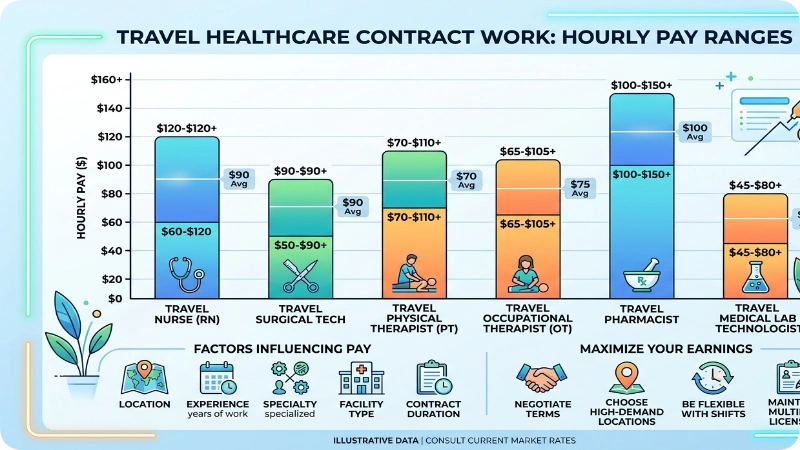
Travel RBT pay typically ranges from $22 to $38 per hour, higher than many permanent RBT roles, because it accounts for the technician’s flexibility and relocation. Total compensation packages often include a taxable hourly wage plus a non taxable housing or travel stipend, which can add meaningful value beyond the base rate.
Pay varies by region, cost of living, and how urgently a clinic needs coverage. Rural or underserved areas often offer higher stipends to attract traveling staff quickly.
| Region Type | Average Hourly Rate | Stipend Likelihood |
| Major metro areas (Dallas, Phoenix, Denver) | $26–$34 | Moderate |
| Rural/underserved areas | $28–$38 | High |
| Coastal high cost cities | $24–$32 | Moderate to high |
Always confirm If a quoted rate is hourly only or a “blended rate” that combines wages and stipends, since agencies present offers differently.
Requirements to Become a Travel RBT
To qualify for travel RBT positions, you must hold an active RBT certification through the Behavior Analyst Certification Board (BACB), complete required supervision hours, and pass a background check. Most agencies also prefer at least six months to one year of clinical experience before offering travel contracts.
Core requirements generally include:
- Active RBT certification (BACB issued)
- High school diploma or equivalent
- Completion of the 40 hour RBT training
- Passed competency assessment and exam
- Clean background check and, in many states, fingerprinting
- Reliable transportation, since many roles involve home or community based sessions
Some states require additional registration even if your RBT credential transfers, so confirm state specific rules before signing a contract.
Licensing and Certification Across State Lines

The RBT credential itself is national through the BACB, but some states add their own registration or notification requirements for behavior technicians working within their borders. Always verify state specific rules through your state’s professional licensing board before starting a new contract, since requirements can change without much notice.
A few practical notes:
- The BACB certification does not expire when you cross state lines, but supervising BCBAs must still be properly registered in that state.
- Some states, like Massachusetts and Rhode Island, require formal registration of behavior technicians.
- Agencies typically handle credentialing paperwork, but it is worth confirming this in writing before your start date.
Flag: licensing rules change periodically, so verify current requirements directly with your state licensing board and the BACB before accepting a contract. Some agencies reimburse licensing, fingerprinting, or credentialing fees, while others expect technicians to pay upfront.
Employee vs. Independent Contractor: Know Your Employment Status
Not every travel RBT position is structured the same way. Some agencies hire technicians as W-2 employees, while others offer 1099 independent contractor contracts.
Before accepting an assignment, ask:
- Will you receive a W-2 or 1099?
- Are taxes withheld from each paycheck?
- Does the agency provide health insurance or retirement benefits?
- Are mileage and travel expenses reimbursed?
- Are paid time off or sick days included?
Understanding your employment status helps you compare offers accurately and avoid unexpected tax responsibilities later.
How to Find Travel RBT Jobs

The fastest way to find travel RBT jobs is through ABA specific staffing agencies, which match technicians with clinics facing coverage gaps, followed by general healthcare travel job boards and direct outreach to multi state ABA clinic networks. Many agencies also post openings on LinkedIn and Indeed under “travel RBT” or “contract RBT.”
Effective search strategies include:
- Search ABA staffing agencies that specialize in behavioral health placements.
- Set alerts on healthcare travel job boards for “RBT,” “travel behavior technician,” or “contract ABA.”
- Network with BCBAs and clinic directors who may know of openings before they’re posted.
- Check multi state ABA clinic groups, which often move staff internally between locations.
- Ask about extension options upfront, since a good contract location may lead to repeat placements.
Housing and Travel Stipends for RBTs

Most travel RBT contracts include either a housing stipend or agency-arranged housing, along with a separate travel reimbursement for mileage or flights to the assignment location. Stipend amounts vary widely by city and cost of living, so it’s worth comparing the total package rather than the hourly rate alone.
Insider tip: ask If the stipend is paid regardless of your actual housing cost in many cases, keeping costs below the stipend amount lets you pocket the difference.
Typical inclusions to ask about:
- Furnished short term housing or a monthly housing stipend
- Mileage reimbursement for local travel between clients
- One time relocation or travel reimbursement to the assignment city
- Extension bonuses for renewing a contract
Travel reimbursement may be paid after completing the assignment rather than before relocation.
Questions to Ask Before Accepting a Travel RBT Contract
A higher hourly rate doesn’t always mean a better assignment. Asking detailed questions before signing helps avoid surprises after relocating.
Important questions include:
- How many guaranteed hours are provided each week?
- What happens if client cancellations reduce my schedule?
- Who arranges BCBA supervision?
- Is housing agency-provided or stipend-based?
- Are relocation expenses reimbursed?
- What is the cancellation policy?
- Is overtime available?
- Can the contract be extended?
Having these answers in writing provides extra peace of mind before moving.
Contract Length and Scheduling
Most travel RBT contracts run between 8 and 13 weeks, though some clinics offer shorter 4 week bridge contracts or longer 6 month placements depending on client needs. Schedules typically follow standard clinic or school hours, though home based ABA work may involve more flexible or split shifts.
Before accepting a contract, clarify:
- If the schedule is full time or part time
- If sessions are clinic based, home based, or a mix
- If weekend or evening availability is expected
- Cancellation or no show policies, since ABA sessions can be affected by client availability
| School-based, clinic-based, and home-based travel RBT assignments have different schedules and travel requirements. |
Pros and Cons of Travel RBT Work
Travel RBT jobs offer higher pay, new clinical experience, and the chance to explore different parts of the country, but they also come with less schedule stability and the emotional adjustment of frequently changing client relationships. Weighing both sides honestly helps you decide if this path fits your current life stage.
Pros:
- Higher earning potential than many permanent roles
- Housing and travel stipends reduce relocation stress
- Broader clinical experience across different clinics and populations
- Flexibility to choose new locations every few months
Cons:
- Frequent transitions can be emotionally taxing for both technician and clients
- Contracts can occasionally be cut short if funding or client needs change
- Building consistent supervision relationships with a BCBA takes extra effort
- Moving every few months limits long term community roots
Who Travel RBT Jobs Are Best For
Travel RBT jobs work best for technicians who are early in their careers, adaptable to new environments, and motivated by both income and experience variety. They tend to be a poor fit for RBTs who prioritize long term client continuity or who have significant caregiving responsibilities that make relocation difficult.
Best suited for:
- Recent RBT certified graduates building experience
- Technicians without dependents who value flexibility
- Those wanting to explore different states before settling down
Consider avoiding if:
- You have strong ties to current clients you don’t want to disrupt
- You have family or caregiving obligations that make relocating hard
- You strongly prefer routine and predictability in daily work
Packing and Relocation Tips for Travel RBTs
Packing for a travel RBT assignment means balancing professional needs comfortable clinical attire, therapy materials, and documentation tools with the practical basics of short term relocation. Most technicians find it easiest to pack for a capsule wardrobe and ship or store larger belongings rather than moving everything each contract.
Five practical tips:
- Pack versatile, washable clothing suited for both clinic and community based sessions.
- Bring a portable file system for client notes and data sheets if working with paper records.
- Confirm what supplies the clinic provides before packing therapy materials yourself.
- Keep certification documents digitized in case of last minute verification requests.
- Research the climate of your contract city, since a 12 week assignment can span a full seasonal shift.
Budgeting Your Travel RBT Income
Budgeting as a travel RBT means separating your taxable wages from non taxable stipends and planning for gaps between contracts. Because stipends are typically tied to maintaining a “tax home,” it’s worth speaking with a tax professional familiar with travel healthcare workers to avoid costly mistakes.
Key budgeting considerations:
- Track taxable vs. non taxable income separately for tax season
- Set aside savings for potential gaps between contracts
- Compare total compensation (wage + stipend), not just hourly rate
- Factor in costs like renter’s insurance or short term storage for belongings
Flag: tax rules for travel stipends can be complex and vary by individual circumstances consult a tax professional rather than relying on general guidance. Maintain an emergency fund for gaps between contracts or delayed assignment starts.
Benefits Beyond Pay to Compare
Compensation isn’t just about hourly wages. Benefits can significantly affect the overall value of a travel assignment.
Compare:
- Health insurance
- Dental and vision coverage
- 401(k) or retirement plans
- Continuing education reimbursement
- Paid certification renewal fees
- Professional liability insurance
- Referral bonuses
- Completion bonuses
Sometimes a slightly lower hourly rate offers a better overall compensation package.
Common Mistakes to Avoid
New travel RBTs often make avoidable mistakes that cost them money or clinical goodwill, such as accepting the first offer without comparing total compensation or failing to confirm supervision arrangements before arriving. Learning from these patterns can save both stress and income.
Three common mistakes and how to fix them:
- Mistake: Focusing only on hourly rate. Fix: Compare total package, including stipends and reimbursements.
- Mistake: Not confirming BCBA supervision availability in the new state. Fix: Ask agencies to confirm supervision arrangements in writing before your start date.
- Mistake: Underestimating cost of living in the contract city. Fix: Research local housing and grocery costs before negotiating your stipend.
Alternatives to Travel RBT Jobs
If full relocation feels like too big a step, alternatives like per diem RBT work, hybrid telehealth supported ABA roles, or short local contract assignments offer some of the same flexibility without long distance moves. These options can be a good stepping stone before committing to a multi state travel career.
Three underrated alternatives:
- Per diem RBT work for flexible scheduling without relocation
- Local contract assignments within driving distance of home
- Hybrid roles combining in person sessions with telehealth supported supervision
Sample First 90 Days as a Travel RBT
The first 90 days of a travel RBT contract typically involve an initial orientation period, a settling in phase as you build client rapport, and a final stretch focused on either transitioning out or renewing the contract. Knowing this rhythm in advance helps set realistic expectations.
| Timeframe | Focus |
| Weeks 1–2 | Orientation, credentialing checks, meeting supervising BCBA |
| Weeks 3–8 | Building client rapport, settling into housing and routine |
| Weeks 9–13 | Evaluating contract renewal or preparing for next assignment |
Finding Housing for a Short-Term Assignment
Securing temporary housing is often one of the biggest challenges for first-time travel RBTs.
Popular options include:
- Furnished short-term apartments
- Extended-stay hotels
- Corporate housing providers
- Month-to-month rentals
- Rooms rented by other healthcare travelers
When comparing housing, consider commuting distance, neighborhood safety, parking availability, internet access, laundry facilities, and total monthly costs instead of rent alone.
| Recommend inspecting lease terms and understanding what utilities or furnishings are included before signing temporary housing. |
Safety and Self Care on the Road
Traveling RBTs should prioritize safety by researching neighborhoods before booking housing, keeping emergency contacts accessible, and building small routines that support mental health during frequent transitions. Isolation is one of the most common challenges reported by traveling healthcare workers, so proactive connection matters.
Practical safety and wellness steps:
- Research your contract city’s neighborhoods before selecting housing
- Keep a local emergency contact list, including your agency’s support line
- Build in downtime between contracts to avoid burnout
- Connect with local travel healthcare worker communities for support
Share your assignment address and travel itinerary with a trusted family member or friend when relocating alone.
Insider Tips from Experienced Travel RBTs
Seasoned travel RBTs consistently recommend negotiating your contract terms in writing, asking detailed questions about supervision structure, and choosing agencies with strong track records of on time pay and clear communication. These small steps prevent most of the common frustrations new travelers report.
- Get everything in writing, including stipend amounts and cancellation policies.
- Ask agencies for references from other RBTs they’ve placed.
- Confirm supervision hours count toward BACB renewal requirements before starting.
- Avoid agencies that pressure quick decisions without full contract details.
- Build a simple moving checklist you can reuse for each new assignment.
FAQs
Is travel RBT work worth it?
For many technicians, yes the combination of higher pay, stipends, and varied clinical experience can outweigh the challenges of frequent relocation, especially for those without heavy family obligations.
How long are travel RBT contracts?
Most contracts run 8 to 13 weeks, though shorter bridge contracts and longer assignments also exist depending on clinic needs and location.
Do travel RBTs need a new certification for each state?
No, the RBT credential is national through the BACB, but some states require additional registration, so it’s important to verify state specific rules beforehand.
Can new RBTs apply for travel jobs right after certification?
Some agencies hire newly certified RBTs, but most prefer candidates with at least six months to one year of hands-on ABA experience. Building experience first often leads to more job opportunities and higher-paying travel contracts.
Can I extend my travel RBT contract?
Yes. If both you and the employer are satisfied with the assignment, many agencies offer contract extensions. Extensions can range from a few weeks to several months, depending on client needs and staffing demands.
Will I work with the same clients throughout my assignment?
Usually, yes. Most travel RBTs are assigned a consistent caseload during their contract, although schedules and clients may change if treatment needs, staffing, or funding change during the assignment.
What is the average pay for a travel RBT?
Pay typically ranges from $22 to $38 per hour, often supplemented by housing or travel stipends that increase total compensation.
Do agencies provide housing for travel RBTs?
Many agencies offer either arranged housing or a stipend so you can choose your own accommodation, though terms vary by contract and location.
Is prior experience required before taking a travel RBT job?
Most agencies prefer at least six months to one year of clinical RBT experience before offering travel contracts, though requirements vary.
What’s the biggest challenge of travel RBT work?
Frequent transitions and building new client relationships every few months are commonly cited as the hardest part, alongside occasional isolation from moving to unfamiliar cities.
Final Thoughts
Travel RBT jobs offer a genuine path to higher pay, broader clinical experience, and the chance to explore new parts of the country but they require careful planning around licensing, housing, and budgeting. Comparing total compensation, confirming supervision arrangements, and choosing a reputable agency are the steps that matter most before signing your first contract.
If this path fits your season of life, start by getting your RBT credential documentation in order and reaching out to a few reputable ABA staffing agencies to compare offers. The right contract can turn a career move into a genuinely rewarding adventure.