A bullet’s speed depends on the cartridge, firearm, ammunition, barrel, and testing conditions. Common handgun rounds may travel roughly 500 to 1,000 mph at the muzzle, while some rifle cartridges can exceed 2,000 mph. Bullet velocity is normally measured in feet per second (fps), then converted to miles per hour (mph).
For travelers visiting a supervised U.S. shooting range, the most useful numbers are muzzle velocity, how quickly a bullet loses speed, and the difference between handgun and rifle ammunition. This guide explains those basics, then covers practical range-visit planning, safety, and current TSA considerations for travelers who are transporting firearms.
What Determines How Fast a Bullet Travels?
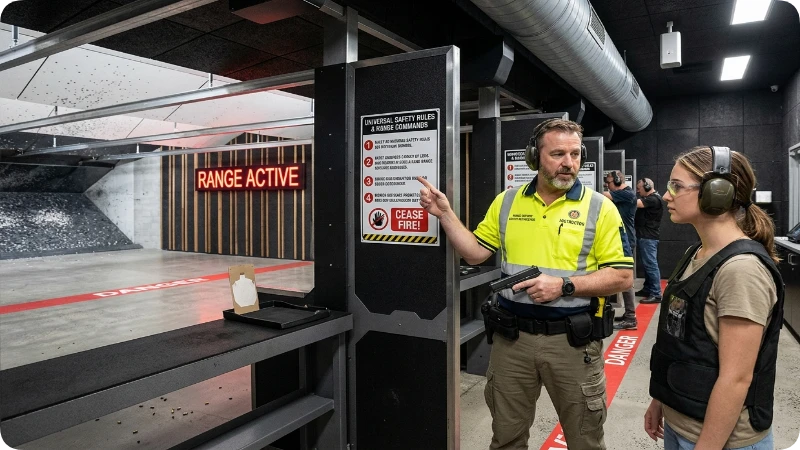
Bullet velocity is not determined by caliber alone. The ammunition load, firearm, barrel length, and testing conditions can all affect the number shown on a specification sheet.
The easiest way to compare speeds is to start with feet per second (fps), the unit commonly used for projectile velocity. For example, 1,000 fps is about 682 mph.
It is also important to distinguish muzzle velocity from the bullet’s speed farther downrange. A bullet normally loses velocity after leaving the barrel because of aerodynamic drag. That means a number advertised as muzzle velocity should not be treated as the speed the projectile maintains throughout its flight.
Quick Facts Table
| Fact | Detail |
| Speed unit used by professionals | Feet per second (fps), not mph |
| Typical handgun speed | 700–1,500 fps (477–1,023 mph) |
| Typical rifle speed | 2,000–4,000 fps (1,364–2,727 mph) |
| Fastest common sporting round | .220 Swift, ~4,000 fps (~2,727 mph) |
| Conversion formula | fps × 0.6818 = mph |
| Regulating agency (air travel) | Transportation Security Administration (TSA) |
How Fast Is a Bullet Compared With a Passenger Plane?
Converting bullet velocity to mph makes the numbers easier for travelers to picture, but the comparison should be treated as a simple speed comparison rather than a prediction of how a bullet behaves in flight.
For example, 1,000 fps converts to about 682 mph, while 3,000 fps converts to about 2,045 mph. Those figures describe velocity at the point being measured, usually near the muzzle. A bullet continuously loses velocity as it travels through the air.
That is why a bullet’s published muzzle velocity should not be interpreted as a constant travel speed. Distance, air resistance, and the projectile’s design all affect its velocity after it leaves the firearm.
How Is Bullet Speed Measured?
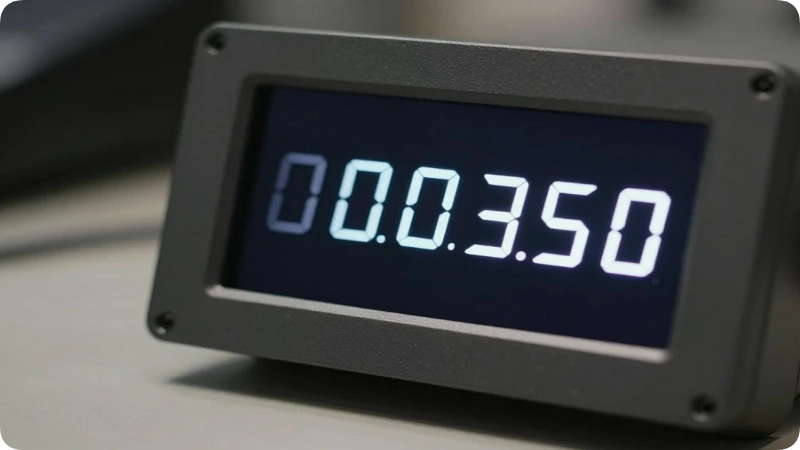
Bullet velocity is commonly reported in feet per second (fps). A chronograph can measure the projectile’s velocity as it passes a designated measurement point, allowing testers to compare ammunition and firearm performance under controlled conditions.
The number most often quoted is muzzle velocity, meaning the projectile’s velocity as it leaves the barrel. This figure is useful for comparisons, but it is not the same as the speed farther downrange.
For readers who prefer mph, the conversion is simple: multiply fps by 0.6818. A velocity of 1,000 fps is therefore approximately 682 mph.
Typical Bullet Speeds by Common Cartridge
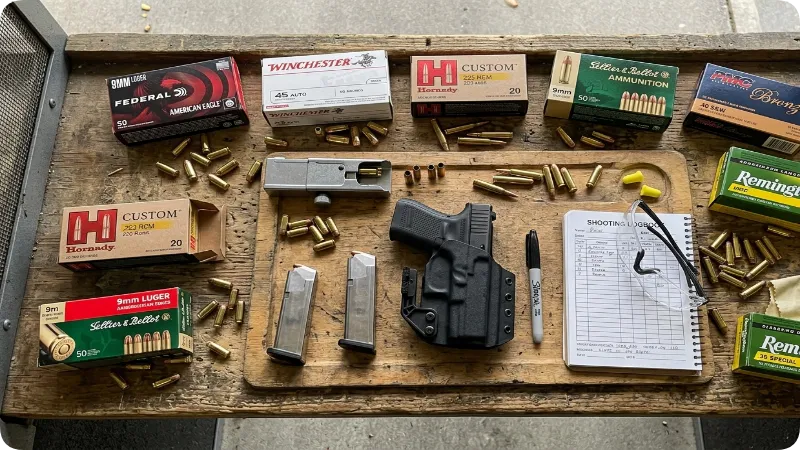
Different firearms are built for different purposes, and their speeds vary widely. Below is a general reference range compiled from publicly available ballistics data; always check manufacturer specs for the exact ammunition used at a given range.
| Caliber/Round | Typical Speed (fps) | Approx. MPH |
| .45 ACP (handgun) | ~830 fps | ~566 mph |
| 9mm Luger (handgun) | ~1,150 fps | ~784 mph |
| .357 Magnum (handgun) | ~1,450 fps | ~989 mph |
| .308 Winchester (rifle) | ~2,700 fps | ~1,841 mph |
| .223 Remington (rifle) | ~3,240 fps | ~2,209 mph |
| .50 BMG (rifle) | ~2,910 fps | ~1,984 mph |
Key takeaway: Rifle rounds are almost always faster than handgun rounds because of longer barrels and higher pressure cartridges. Speeds vary by manufacturer and load, so treat these as general ranges rather than fixed numbers.
How Fast Does a 9mm Bullet Travel?
A typical 9mm load may have a muzzle velocity around 1,100 to 1,200 feet per second, which converts to roughly 750 to 820 mph. The exact figure varies by ammunition, firearm, barrel length, and test conditions.
That means there is no single mph figure that applies to every 9mm round. When comparing ammunition, look for the manufacturer’s published velocity and note the conditions under which it was measured.
For travelers visiting a range, the important point is that 9mm is generally a handgun cartridge with substantially lower muzzle velocity than many rifle cartridges.
How Fast Does a Rifle Bullet Travel?
Rifle cartridges cover a wide range of velocities, but many common examples have muzzle velocities around 2,000 to 3,500 feet per second. That works out to approximately 1,364 to 2,386 mph.
Some specialized rifle cartridges can exceed that range, while others are considerably slower. The exact speed depends on the cartridge, ammunition, firearm, barrel, and test conditions.
The important comparison is that many rifle cartridges leave the muzzle considerably faster than common handgun cartridges. However, muzzle velocity alone does not tell you everything about a projectile’s performance or behavior downrange.
Why Do Bullets Slow Down After Leaving the Barrel?
A bullet does not maintain its muzzle velocity throughout its flight. Air resistance, also called drag, continuously removes energy from the projectile as it travels.
The amount of velocity lost depends on factors such as the projectile’s shape, mass, starting velocity, and atmospheric conditions. Because of this, a bullet measured at the muzzle can have a substantially different velocity farther downrange.
For travelers, this distinction is useful because range staff may discuss different measurements when explaining a shooting experience. A published muzzle velocity is simply the starting point for understanding the projectile’s speed, not a constant speed for the entire flight.
When Is the Best Time to Visit a U.S. Shooting Range?
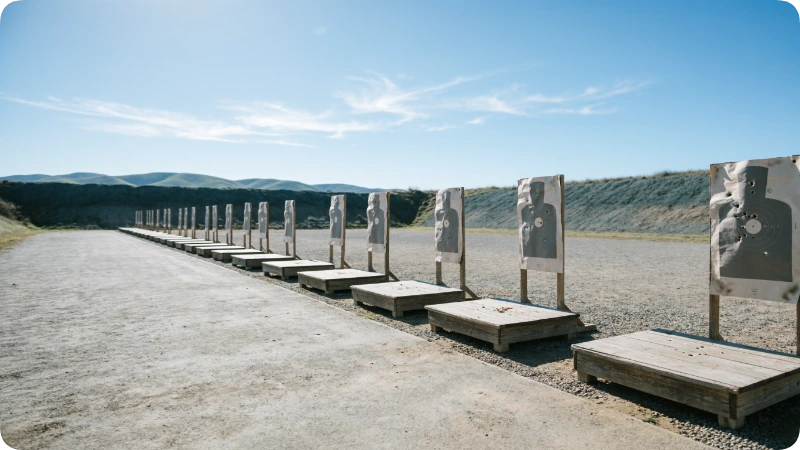
The best time depends on the type of range and destination. Indoor ranges can be visited throughout the year and are less affected by heat, rain, or winter weather. Outdoor ranges are more dependent on local conditions and operating schedules.
For a first visit, a weekday appointment is often a practical choice because it may be easier to find an available session and have time for questions before or after the experience. During busy travel periods, booking ahead is especially important at ranges that market directly to tourists.
Before booking, check the range’s current hours, age requirements, identification rules, reservation policy, and whether instruction is included. These policies vary by facility.
U.S. Destinations Where Travelers Can Find Supervised Range Experiences
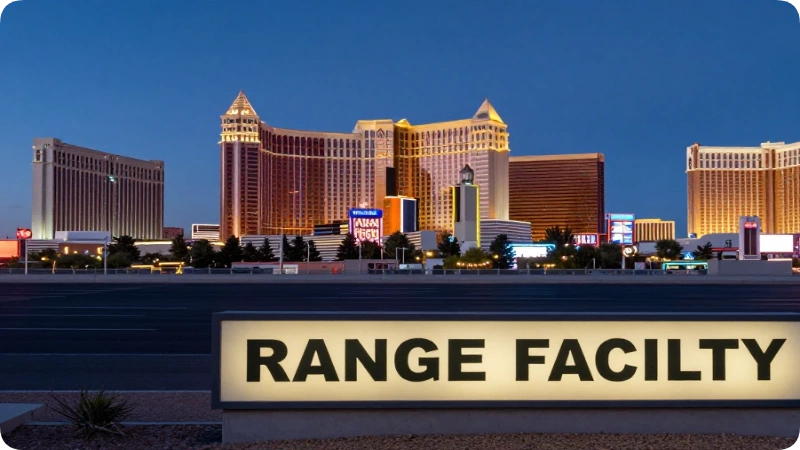
Several US cities have built entire tourism niches around supervised shooting experiences, often bundling transportation, instruction, and gear rental into one package.
- Las Vegas, Nevada: Home to some of the country’s largest tourist oriented ranges, often combining machine gun experiences with themed venues near the Strip.
- Phoenix/Scottsdale, Arizona: Known for professional training academies that also welcome first time visitors for guided sessions.
- Nashville, Tennessee: A growing hub for beginner friendly ranges paired with Southern hospitality and instruction heavy formats.
- Los Angeles, California: Long established indoor ranges cater to both locals and tourists exploring urban attractions.
Hidden Gems Worth Seeking Out
- A small, family run outdoor range in rural Texas Hill Country offering long distance rifle experiences with far shorter wait times than big city venues.
- Historic Old West heritage sites in states like Wyoming and South Dakota that combine cowboy era shooting demonstrations with museum tours.
- Regional gun clubs in the Pacific Northwest that open limited public sessions and often provide more personalized instruction than large commercial operations.
Can You Fly With a Firearm to a U.S. Shooting Range?
Travelers who plan to fly with a firearm need to follow both TSA requirements and the airline’s rules. TSA states that firearms are not permitted at passenger screening checkpoints. They must be unloaded, secured in a locked hard-sided container, and transported in checked baggage. Travelers must also declare the firearm to the airline at the ticket counter.
Ammunition is not permitted in carry-on baggage. TSA guidance allows certain small-arms ammunition to be transported in a magazine or container within the same hard-sided case as an unloaded firearm, subject to the applicable requirements. Airlines may have additional restrictions, including limits or packaging requirements.
Travelers should check their airline’s current firearm and ammunition policy before leaving for the airport. They should also check the laws that apply at their departure point and destination because state and local requirements can differ.
For most visitors who are simply booking a supervised range experience, renting equipment at the destination may be simpler than transporting a personal firearm.
What Should You Bring to a Shooting Range?
For a first-time range visit, keep your packing simple. Wear comfortable clothing and closed-toe shoes. Eye and hearing protection may be available at the facility, but check its visitor policy before arriving.
Bring the identification required by the range, along with your reservation information and a payment method for admission, rentals, or other services. Outdoor locations may also require ordinary travel items such as water and sun protection.
Before leaving your hotel, check the facility’s website for its current dress code, identification requirements, age restrictions, photography rules, and equipment policies. These details can vary considerably between ranges.
Shooting Range Safety Rules for First-Time Visitors
A reputable shooting range should provide a safety briefing before a visitor begins. Pay close attention because each facility can have its own commands, procedures, and restrictions.
The most important rule is to follow the range staff’s instructions immediately. Visitors should also keep firearms pointed in the direction designated by the range, keep their hands away from the trigger unless instructed otherwise, and stop when staff give a cease-fire command.
If anything about the equipment, range layout, or instructions is unclear, ask a range employee before continuing. There is no advantage to pretending you understand something you do not.
Common Mistakes First Time Visitors Make
- Skipping the briefing mentally Fix: Treat the safety talk as mandatory information, not a formality, since it covers range specific rules.
- Wearing inappropriate clothing Fix: Choose closed shoes and higher necklines to avoid hot casing burns.
- Booking during peak weekend hours Fix: Reserve weekday morning slots for shorter waits and more staff attention.
Are Shooting Ranges Suitable for First-Time Visitors?
Some commercial ranges offer supervised experiences specifically designed for beginners, but policies vary by facility. Age requirements, identification rules, instructor availability, and participation requirements can differ by location.
First-time visitors should choose a range that clearly explains its beginner policy and provides an orientation or instructor-led session when available. Ask about requirements before booking, particularly when traveling with a group that includes younger visitors.
If anyone in your group is uncomfortable with loud noises or firearms, consider a non-shooting alternative such as an Old West museum, historical demonstration, or another activity with a similar theme.
Visiting a Shooting Range Alone
Solo travelers can look for facilities that offer scheduled instruction or guided visitor sessions. Before booking, ask whether individual visitors can participate and whether reservations are required.
A scheduled session can also make the experience easier to plan around sightseeing, especially in cities where ranges operate on appointment-based schedules. Check the facility’s policies in advance rather than assuming walk-ins are accepted.
How Much Does a Shooting Range Visit Cost?
The total cost of a range visit can include several separate charges. Depending on the facility, travelers may pay for the range session, equipment rental, ammunition, instruction, and optional add-ons.
Tourist-oriented experiences may bundle several of these costs into one package, while traditional local ranges may list them separately. This makes it important to compare the total package price, not just the advertised entry fee.
Before booking, check exactly what is included, whether ammunition is charged separately, whether protective equipment is provided, and whether taxes or other fees are added at checkout. Prices can change, so use the facility’s current published rates when planning your trip.
Sample One-Day Shooting Range Experience
Morning: Have breakfast near your hotel and arrive at your scheduled range session with enough time for check-in and the required safety briefing.
Late morning: Complete the supervised beginner or visitor experience and allow extra time for the facility’s check-in and closing procedures.
Lunch: Choose a nearby restaurant and take a break from the activity.
Afternoon: Visit a nearby museum, historic district, viewpoint, or other destination that fits your trip.
Evening: Return to your hotel or continue with your normal sightseeing plans.
Building the range visit into a broader sightseeing day works especially well for travelers who are interested in the experience but do not want it to dominate their entire itinerary.
Accessibility at U.S. Shooting Ranges
Accessibility varies significantly between shooting ranges. Some newer facilities may have accessible entrances, restrooms, parking, or adapted stations, while older facilities may have more limitations.
Travelers with mobility, hearing, vision, or other accessibility needs should contact the facility before booking. Ask specifically about entrance access, seating, accessible restrooms, the range layout, communication options, and whether staff can accommodate the visitor’s needs.
Do not rely on a general accessibility statement alone. Confirm the exact features available at the location you plan to visit.
Is a Shooting Range Visit Worth Adding to a U.S. Trip?
For travelers who are interested in firearms, American history, or trying a supervised activity outside the usual sightseeing circuit, a shooting-range visit can be an unusual addition to a U.S. itinerary.
The experience is not for everyone. Visitors who dislike loud noises, feel uncomfortable around firearms, or are traveling with people who do not want to participate may prefer alternatives such as Old West museums, historical sites, or archery experiences.
If you decide to go, choose a reputable facility, follow its safety briefing, and confirm its visitor policies before booking.
FAQs About Bullet Speed and Shooting Range Visits
How many mph does a bullet travel?
Bullet speed varies widely by cartridge, firearm, ammunition, and testing conditions. Common handgun rounds may travel roughly 500 to 1,000 mph at the muzzle, while many rifle cartridges exceed 1,300 mph. Some specialized rifle cartridges can exceed 2,000 mph.
How fast does a 9mm bullet travel in mph?
A typical 9mm load may have a muzzle velocity around 1,100 to 1,200 feet per second, equivalent to roughly 750 to 820 mph. Exact velocity varies by ammunition and firearm.
Is bullet speed measured in mph or fps?
Bullet velocity is commonly reported in feet per second (fps). To convert fps to mph, multiply the fps figure by 0.6818. For example, 1,000 fps is approximately 682 mph.
Why does a bullet slow down after it is fired?
A bullet loses velocity because of aerodynamic drag as it travels through the air. The amount of velocity lost depends on factors including projectile design, mass, starting velocity, and atmospheric conditions.
What is the difference between muzzle velocity and bullet speed downrange?
Muzzle velocity is the projectile’s velocity as it leaves the barrel. Downrange velocity is its speed at a later point in its flight. Because the projectile encounters air resistance, its velocity normally decreases with distance.
Can tourists visit a U.S. shooting range?
Many U.S. shooting ranges offer visitor or beginner experiences, but requirements vary by facility. Check the range’s current age, identification, reservation, and participation rules before booking.
Do shooting ranges provide equipment for visitors?
Some commercial ranges offer rentals and protective equipment, while others have different policies. Check what is included in the experience before arriving rather than assuming equipment is provided.
Can I bring a firearm on a flight to a U.S. shooting range?
TSA requires firearms transported by air to be unloaded, secured in a locked hard-sided container, and transported in checked baggage. Travelers must declare the firearm to the airline. Firearms and ammunition are prohibited at passenger screening checkpoints. Airlines and local jurisdictions may impose additional requirements.
Can ammunition go in my carry-on bag?
No. TSA guidance states that ammunition is prohibited in carry-on baggage. Applicable ammunition may be transported in checked baggage under TSA requirements, and airlines can impose additional restrictions.
Are shooting ranges suitable for first-time visitors?
Some ranges offer beginner-oriented, supervised experiences, but policies vary. Look for a facility that clearly explains its visitor requirements and provides appropriate instruction or orientation.
What should I wear to a shooting range?
Comfortable clothing and closed-toe shoes are sensible choices. Check the individual facility’s dress code before visiting, particularly if you are booking a tourist-oriented experience.
Are shooting ranges accessible to travelers with disabilities?
Accessibility varies by facility. Contact the range before booking and ask about entrances, restrooms, seating, range access, communication support, and any other accommodations you may need.
What is the fastest bullet?
There is no single answer without defining the category being compared. Different cartridges have different published velocities, and specialized high-velocity rifle cartridges can exceed the speeds of common handgun and rifle rounds. Avoid treating one published figure as the universal “fastest bullet.”
Final Takeaways
So, how many mph does a bullet travel? It depends on the cartridge and firearm. Common handgun ammunition can travel roughly 500 to 1,000 mph at the muzzle, while many rifle cartridges reach well above 1,300 mph, with some specialized rounds exceeding 2,000 mph.
The key number to remember is that bullet velocity is normally reported in feet per second, and muzzle velocity is not the same as speed farther downrange. Air resistance causes a projectile to lose velocity after it leaves the barrel.
For travelers planning a supervised U.S. shooting-range visit, the practical priorities are different: check the facility’s visitor rules, follow its safety briefing, confirm what equipment is provided, and verify current airline and TSA requirements if transporting a firearm. TSA requires firearms transported by air to be unloaded, locked in a hard-sided case, placed in checked baggage, and declared to the airline.
A well-planned range visit can be an interesting addition to a U.S. trip for travelers who are comfortable with the activity, while museums and historical attractions offer alternatives for those who are not.

Gordon Ramsay is a travel writer and destination researcher who helps U.S. travelers plan smarter trips, covering destinations, seasonal trends, budgets, and logistics to help readers decide where—and when—to go.
Rather than simply listing popular places, Gordon Ramsay focuses on what travelers actually need: comparing weather against crowds, weighing costs and accessibility, and researching current conditions alongside official tourism guidance—delivering honest, practical advice without the hype.