Quick answer:
The best jewelry travel case is a compact, TSA friendly organizer with padded compartments, a secure zipper or snap closure, and separate slots for rings, earrings, necklaces, and bracelets. Look for tangle free necklace hooks, a hard or semi rigid shell for crush protection, and a size that fits inside a carry on or personal item without adding bulk.
Packing jewelry for a trip always feels riskier than it should. A tangled necklace, a lost earring back, or a scratched ring can turn a simple packing job into a stressful scramble the morning of departure. That frustration is exactly why choosing the right jewelry travel case matters more than most travelers realize.
A good jewelry travel case protects your pieces from tangling, scratching, and crushing while keeping everything visible and easy to find at security checkpoints or hotel check in. If you’re headed on a weekend road trip, a beach vacation, or an international flight, the right case turns jewelry packing from a headache into a two minute task. This guide walks through what to look for, the best styles for different travel types, packing techniques, TSA considerations, and mistakes to avoid so your favorite pieces arrive exactly as you packed them.
What Makes a Jewelry Case Travel Ready
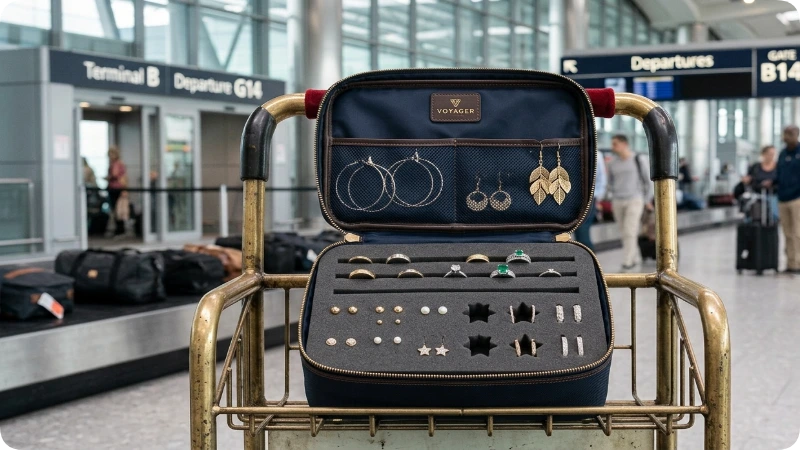
A travel ready jewelry case combines separated storage, tangle prevention, and durable materials in a compact footprint. The best options weigh under half a pound, fit in a carry on side pocket, and use zippers or snaps rather than open flaps that can spill contents. Materials like vegan leather, ballistic nylon, or molded EVA foam hold up best against daily handling.
Three features separate a travel ready case from a plain jewelry box: individual compartments for each piece type, a closure system that won’t pop open in transit, and a shape that survives being tossed into a suitcase. A case that checks all three boxes will outlast a dozen budget trips.
Compartment Design
Compartments should separate rings, studs, dangle earrings, bracelets, and necklaces into their own zones. Mesh pockets, elastic loops, and foam cutouts each work differently; foam suits structured pieces like rings, while soft pouches protect delicate chains from scratching against harder metals.
Closure and Security
A reliable closure, a full zip perimeter, magnetic snap, or roll and buckle design keeps contents contained even if the case gets flipped upside down in a backpack. Avoid cases with only a flap or button, since these tend to open under pressure from other packed items.
Types of Jewelry Travel Cases Compared
| Case Type | Best For | Capacity | Typical Size |
| Roll up pouch | Minimalist packers, day trips | 5–10 pieces | 6–8 inches |
| Hard shell box | Fragile or valuable pieces | 10–20 pieces | 4–6 inches |
| Hanging organizer | Long trips, full collections | 20+ pieces | 8–12 inches |
| Travel tray/mat | Frequent travelers who reorganize often | Variable | 6–9 inches |
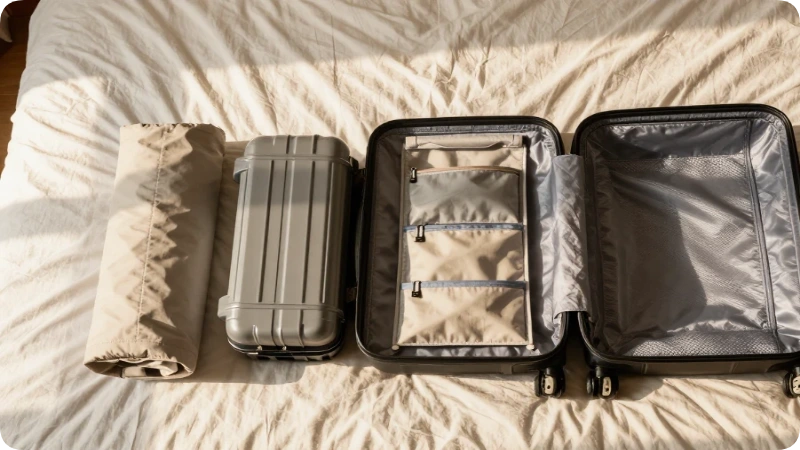
Roll up pouches are the lightest and most packable option, sliding easily into a purse or backpack pocket. Hard shell boxes offer the strongest crush protection, making them ideal for rings with stones or heirloom pieces. Hanging organizers work best for longer trips where a full jewelry wardrobe is coming along, and travel trays give quick access for travelers who swap jewelry daily.
Which Jewelry Travel Case Is Best for Your Travel Style?
The best jewelry travel case depends less on how much jewelry you own and more on how you travel. Someone packing for a weekend city break needs something very different from a traveler preparing for a two-week international vacation or a cruise.
| Travel Style | Recommended Case |
| Weekend getaway | Small roll-up pouch |
| Business travel | Slim hard-shell organizer |
| Beach vacation | Waterproof zip case |
| Cruise | Medium organizer with necklace hooks |
| International trip | Hard-shell case with multiple compartments |
| Luxury travel | Lockable structured jewelry case |
Frequent flyers usually benefit from a compact hard-shell organizer because it protects jewelry inside crowded carry-on bags. Travelers who only pack a few everyday pieces often save space with a lightweight roll-up pouch that slips easily into a handbag or backpack.
Traveler Tip: If you change outfits often during your trip, choose a case with dedicated necklace hooks and multiple ring slots instead of one large compartment.
Best Materials for Durability and Protection
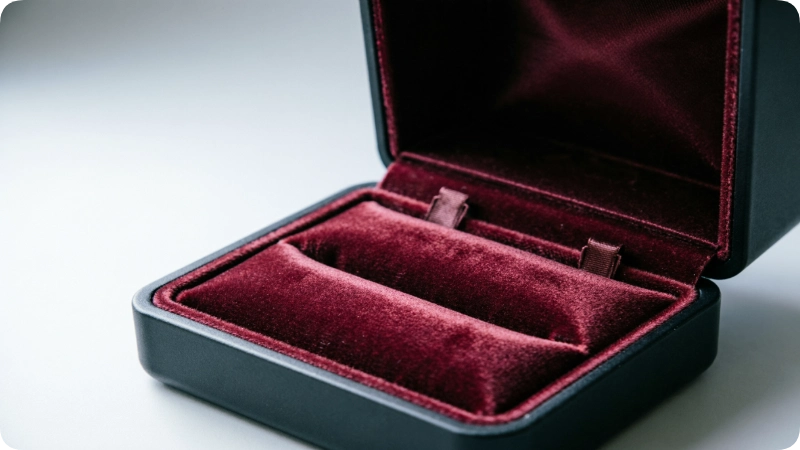
The most durable jewelry travel cases use a combination of a rigid or semi rigid outer shell with a soft, non abrasive interior lining. Velvet, microsuede, and felt linings prevent surface scratching, while an outer shell of molded EVA, hard sided polycarbonate, or thick vegan leather resists crushing in a packed suitcase.
Avoid cases with a thin, single layer fabric shell and no internal padding; these offer little protection if the case gets compressed under heavier luggage. A quick pinch test at the store or a look at product photos showing the interior lining can reveal If a case has real structure or just decorative packaging.
Size and Portability Considerations
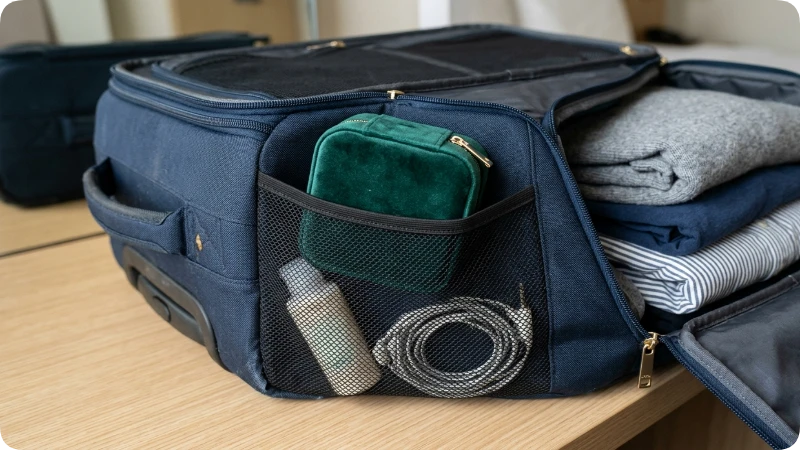
The right case size depends on trip length and how much jewelry you typically bring. For weekend trips, a case under 6 inches with 5–8 slots is usually enough, while week long or international trips may call for a mid size organizer with 15–20 compartments. Oversized cases add unnecessary bulk to a carry on.
A useful rule of thumb: pack one case slot per outfit, plus two or three “everyday” pieces like a watch or stud earrings. This keeps the case compact without leaving favorite pieces behind. Frequent flyers often prefer a slim case that fits flat in a laptop bag or purse rather than a bulky standalone box.
How Much Jewelry Should You Actually Pack?
Packing more jewelry doesn’t always give you more outfit options. In fact, bringing too many pieces usually increases the chance of tangles, scratches, or accidentally leaving something behind.
A practical guideline is:
- Weekend trip: 3–5 pieces
- 5–7 day vacation: 8–12 pieces
- Two-week trip: 12–18 pieces
- Business travel: 4–6 versatile pieces
Rather than packing every favorite accessory, choose jewelry that works with multiple outfits. Neutral metals, classic studs, and one statement necklace often provide enough variety without overfilling your travel case.
Keeping empty compartments inside your organizer also makes unpacking at hotels faster and gives you room for any jewelry you buy during your trip.
TSA Rules for Traveling with Jewelry
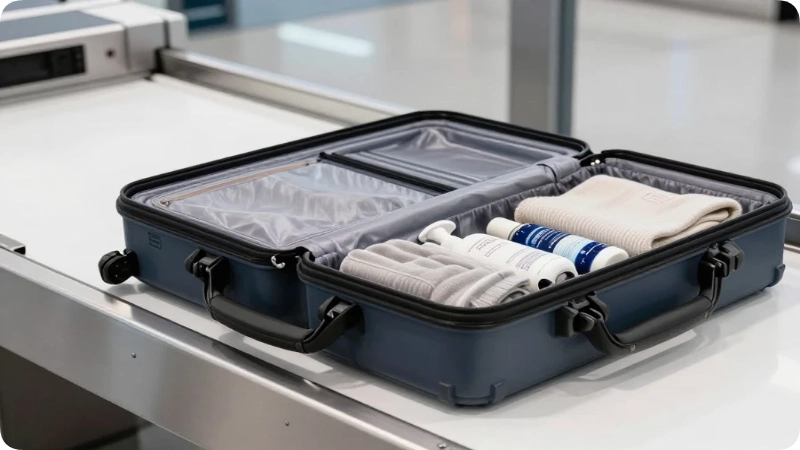
TSA does not require jewelry to be removed from your carry on for screening, but pieces with heavy metal content statement necklaces, thick cuffs, or bulky rings may trigger additional screening at the checkpoint. Wearing minimal jewelry through security and packing the rest in your case can speed up the process.
According to TSA guidance, valuables including jewelry are best kept in carry on luggage rather than checked bags, since checked bags are more prone to loss or mishandling. If a piece is high value, consider wearing it through security rather than placing it in a bin, and always confirm current screening rules on the official TSA website before departure, since procedures can change.
Packing Jewelry in Carry On vs. Checked Luggage
Carry on is strongly preferred for anything valuable or sentimental, since checked luggage carries a higher risk of delay, damage, or loss. If checked luggage is unavoidable, pack the jewelry case in the center of the suitcase, surrounded by clothing, rather than near the outer edges where impact is most likely.
How to Pack a Jewelry Travel Case Step by Step
- Sort by outfit lay out jewelry next to the outfits you’re packing so you only bring what you’ll actually wear.
- Separate metals keep gold, silver, and mixed metal pieces apart to prevent scratching and tarnishing.
- Secure earring backs push earring posts through a small piece of felt or the case’s earring strip so backs don’t slip off.
- Button necklace clasps clasp necklaces closed and lay them flat in a designated slot to avoid tangling.
- Cushion loose stones or fragile pieces wrap in a soft cloth before placing in a compartment.
- Zip and check close the case fully and give it a gentle shake to confirm nothing shifts or falls loose.
Preventing Tangled Necklaces on the Go
Necklaces tangle when they’re allowed to move freely against other pieces, so the fix is restricting movement, not just storage. Threading a necklace through a straw before coiling it, using a case with built in hooks, or buttoning the clasp through a fabric loop are all reliable low cost solutions.
Silicone necklace organizers with individual grooves work especially well for multiple chains, since each necklace stays in its own channel. For travelers without a dedicated case, even a pill organizer or contact lens case can separate small chains in a pinch.
Protecting Rings and Delicate Stones While Traveling
Rings with raised stones are the most vulnerable jewelry type in transit, since impact against a hard surface can chip or loosen a setting. A padded ring roll, foam ring slots, or a small hinged box with a cushioned interior all reduce this risk significantly.
Avoid tossing loose rings into a bag pocket with keys or coins, since metal on metal contact is a leading cause of scratches on softer metals like gold. If a case doesn’t have dedicated ring slots, wrapping each ring individually in a soft cloth adds a simple layer of protection.
Budget Breakdown: What to Expect at Each Price Point
Jewelry travel cases typically range from budget roll up pouches to premium hard shell organizers, with price generally tracking material quality and compartment count. Since pricing shifts often, always check current listings on retailer sites before buying, as figures below are general ranges rather than fixed prices.
- Budget tier: Simple fabric roll ups or zip pouches with basic compartments best for occasional travelers.
- Mid range tier: Structured cases with foam inserts, multiple compartment types, and sturdier zippers best for regular travelers.
- Premium tier: Hard shell or leather cases with lock closures, adjustable dividers, and reinforced corners best for valuable or heirloom pieces.
Is an Expensive Jewelry Travel Case Worth It?
A premium jewelry travel case isn’t automatically the best choice for every traveler. The right investment depends on the value of the jewelry you’re protecting and how often you travel.
A higher-end organizer may be worthwhile if you:
- Travel several times each year
- Carry fine jewelry or heirloom pieces
- Want stronger crush protection
- Prefer premium materials that last for years
A budget organizer is usually enough if you:
- Travel only occasionally
- Pack inexpensive fashion jewelry
- Carry just a few pieces
- Mainly take weekend trips
For many travelers, a quality mid-range case provides the best balance of protection, organization, and portability without adding unnecessary cost.
Insider Tips for Packing Jewelry Like a Pro
- Photograph your jewelry before the trip. A quick photo of everything packed makes it easy to confirm nothing was left behind or lost.
- Pack a spare earring back or two. These are the most commonly lost jewelry components while traveling.
- Use the case as a packing list. Filling each compartment naturally limits over packing.
- Keep the case in the same bag every day. Switching bags mid trip is a common cause of misplaced jewelry.
- Store the case upright when possible. This reduces pressure on compartments compared to lying flat under heavier items.
Hidden Gems: Smart Alternatives to a Dedicated Case
Not every traveler wants to buy a new case, and a few resourceful alternatives work surprisingly well for short trips.
- A soft eyeglass case works well for a single necklace and a pair of earrings on a short trip.
- A divided pill organizer separates small studs and rings by day, doubling as a packing guide.
- A rolled sock can cushion a single valuable ring or pair of earrings inside a suitcase corner.
Jewelry Travel Case vs DIY Storage Solutions
Many travelers improvise with household items instead of buying a dedicated jewelry organizer. While these solutions can work for short trips, each has trade-offs.
| Storage Method | Best For | Drawback |
| Jewelry travel case | Frequent travel | Costs more |
| Pill organizer | Rings and earrings | Limited capacity |
| Eyeglass case | One necklace | Little organization |
| Small zip pouch | Minimal packing | Pieces can tangle |
| Resealable bags | Emergency backup | Minimal protection |
DIY storage works well for occasional travel, but travelers who regularly pack jewelry usually appreciate the added protection and organization of a purpose-built travel case.
Common Mistakes When Packing Jewelry for Travel
- Packing jewelry loose in a suitcase pocket is the top cause of tangling and lost pieces; fix it with a compartmentalized case.
- Checking valuable jewelry in luggage checked bags carry a higher loss risk; keep valuables in your carry on instead.
- Overpacking “just in case” pieces extra jewelry adds bulk and risk of loss without added benefit; stick to outfit matched pieces.
Underrated and Overrated Jewelry Travel Solutions
The most underrated solution is a simple silicone necklace organizer, since it solves tangling the single biggest jewelry travel complaint for very little cost or bulk. The most overrated option is an oversized multi tier jewelry box marketed for travel; these are often too bulky for a carry on and better suited to home storage.
Is a Dedicated Jewelry Travel Case Worth It?
For anyone who travels with more than a couple of pieces per trip, a dedicated case is worth the investment because it prevents tangling, scratching, and loss problems that are far more time consuming to fix than the case costs to buy. Occasional travelers with minimal jewelry may get by with a simple pouch or repurposed container instead.
How long do you need to pack one? Most travelers can sort and pack a jewelry case in under five minutes once outfits are chosen. Building that habit before every trip is the real time saver, not the case itself.
Who Should Consider a Jewelry Travel Case (and Who Can Skip It)
A dedicated case makes the most sense for frequent flyers, travelers with fine or heirloom jewelry, and anyone packing for multi day trips with several outfit changes. Travelers who wear only one or two everyday pieces, like a watch or stud earrings, may not need a separate case at all.
Who Should Avoid Bringing Expensive Jewelry While Traveling?
Sometimes the safest jewelry is the jewelry you leave at home.
If your trip includes adventure activities, crowded festivals, remote hiking trails, or destinations where you’ll frequently swim or participate in water sports, wearing expensive jewelry may create unnecessary risk.
Consider leaving valuable items at home if you plan to:
- Go snorkeling or scuba diving
- Visit busy tourist markets
- Hike long distances
- Camp outdoors
- Attend large public events
- Travel through multiple airports in a short period
Simple everyday jewelry or inexpensive travel pieces often provide the same style with much less stress if something becomes lost or damaged.
Sample Packing Scenario: A 5 Day Trip
For a five day trip with two dressier outfits and three casual days, a mid size case with 10–12 compartments comfortably covers two necklace sets, three pairs of earrings, two rings, and a bracelet, leaving room for a watch. This kind of outfit matched packing keeps the case light while covering every planned look.
Caring for Your Jewelry Travel Case After the Trip
Taking a few minutes to clean your jewelry case after each trip helps it last much longer and keeps your jewelry in better condition.
A simple routine includes:
- Empty every compartment before storing the case.
- Wipe the interior with a soft microfiber cloth.
- Remove dust or sand from zipper tracks.
- Allow the case to air dry completely if it was exposed to moisture.
- Store it in a cool, dry place away from direct sunlight.
Cleaning the case regularly also prevents lotion residue, cosmetics, and dust from transferring onto jewelry during future trips.
Buying Checklist: Don’t Purchase Until It Has These Features
Before ordering a jewelry travel case, run through this quick checklist to make sure it fits your travel needs.
✔ Separate necklace storage to reduce tangles
✔ Ring rolls or padded ring slots
✔ Dedicated earring holder
✔ Soft scratch-resistant interior lining
✔ Durable zipper or secure snap closure
✔ Crush-resistant outer shell (for valuable jewelry)
✔ Compact size that fits inside your carry-on
✔ Lightweight construction for easier packing
✔ Water-resistant exterior if you travel frequently
Checking these features before buying can help you avoid replacing a poorly designed organizer after only a few trips.
FAQs
Can you bring a jewelry case through TSA security?
Yes, jewelry cases are allowed through TSA security in carry on bags without restriction. Metal heavy pieces may trigger additional screening, so wearing minimal jewelry through the checkpoint can speed things up. Always check current TSA guidance before flying, since screening procedures can change.
Should jewelry go in a carry on or checked bag?
Jewelry, especially valuable or sentimental pieces, should go in a carry on rather than checked luggage. Checked bags carry a higher risk of loss, delay, or mishandling. Keeping jewelry with you also means it stays within reach if you need to access it during the flight.
What’s the best way to stop necklaces from tangling while traveling?
Clasping necklaces closed and threading them through a straw, fabric loop, or dedicated hook before packing is the most effective way to prevent tangling. A case with individual necklace slots or a silicone organizer with separate grooves works even better for multiple chains.
How many jewelry pieces should I pack for a week long trip?
A good guideline is one jewelry set per outfit, plus two or three everyday pieces like a watch or simple studs. This usually totals 10–15 pieces for a week long trip, which fits comfortably in a mid size travel case.
Are hard shells or soft jewelry cases better for travel?
Hard shell cases offer better protection for fragile or valuable pieces since they resist crushing under other luggage. Soft cases are lighter and more packable, making them better suited for minimal jewelry or short trips where space is limited.
Do jewelry travel cases work for men’s jewelry and watches too?
Yes, many jewelry travel cases include a dedicated watch slot or cushioned compartment suitable for cufflinks, rings, and chains. Travelers packing multiple watches may prefer a case with a specific watch roll or padded watch pillow section.
What should I do if a piece of jewelry goes missing while traveling?
Retrace where you last wore or packed the item, check hotel lost and found policies, and contact the airline promptly if it may have been left on a flight. Photographing your jewelry collection before the trip makes it much easier to identify and report a missing piece.
Final Thoughts: Pack Smarter, Travel Lighter
The right jewelry travel case comes down to three things: separated compartments, a secure closure, and a size that matches your trip length. Getting these right prevents the tangling, scratching, and lost earring frustration that turns jewelry packing into a chore.
A few minutes of thoughtful packing before each trip protects pieces that often carry more sentimental value than dollar value. If it’s a simple roll up pouch for a weekend getaway or a structured hard shell case for a two week trip abroad, choosing gear that fits how you actually travel makes every departure a little smoother.
Next time you’re laying out outfits for a trip, lay your jewelry out beside them. It’s the easiest way to pack exactly what you need, and nothing more.

Gordon Ramsay is a travel writer and destination researcher who helps U.S. travelers plan smarter trips, covering destinations, seasonal trends, budgets, and logistics to help readers decide where—and when—to go.
Rather than simply listing popular places, Gordon Ramsay focuses on what travelers actually need: comparing weather against crowds, weighing costs and accessibility, and researching current conditions alongside official tourism guidance—delivering honest, practical advice without the hype.