Cheap small travel trailers are lightweight, towable RVs typically under 20 feet and priced between $5,000 and $20,000 that let budget conscious travelers hit the open road without the crushing cost of a full size rig. They’re ideal for weekend warriors, solo adventurers, couples, and small families who want freedom, flexibility, and a cozy home base wherever the highway leads.
Every year, millions of Americans dream about trading their alarm clocks for sunrise views from a campsite tucked in the Rockies or a seaside spot along the Pacific Coast Highway. The problem? Most people assume that kind of freedom comes with a massive price tag. It doesn’t have to.
The RV and travel trailer market has exploded in recent years, and so has the variety of cheap small travel trailers designed for real people with real budgets. If someone is looking for a used teardrop trailer for under $5,000 or a brand new lightweight camper under $15,000, the options are wider and smarter than ever before.
This guide covers everything from what to look for, which brands deliver real value, how to avoid costly beginner mistakes, and what the hidden costs actually look like before signing anything. By the end, the path to affordable road life will be crystal clear.
How to Choose the Right Cheap Small Travel Trailer for Your Camping Style
The best cheap small travel trailer isn’t necessarily the least expensive one—it’s the one that matches how you actually plan to travel. Before comparing floor plans or dealership prices, think about where you’ll camp, how often you’ll travel, and who will be joining you.
If your trips mostly involve weekend campground stays with electric hookups, a lightweight conventional trailer with a small kitchen and bathroom offers the most comfort without adding much towing difficulty. Couples planning longer road trips may appreciate a fiberglass trailer because it’s durable, weather-resistant, and easier to maintain over many years.
Solo travelers often gravitate toward teardrop trailers because they’re inexpensive, fuel-efficient, and simple to tow. Although they provide limited interior living space, they make spontaneous road trips much easier and can often be pulled by smaller SUVs.
Families with young children may find pop-up campers offer the best value. They provide multiple sleeping areas while remaining relatively affordable and compact for storage.
Ask yourself these questions before buying:
- How many nights will I camp each year?
- Do I need an indoor bathroom?
- Will I camp with hookups or boondock?
- Can my current vehicle safely tow the trailer?
- Do I have space to store it at home?
Buying based on camping style rather than appearance usually leads to far greater long-term satisfaction.
What Counts as a “Cheap” Small Travel Trailer?
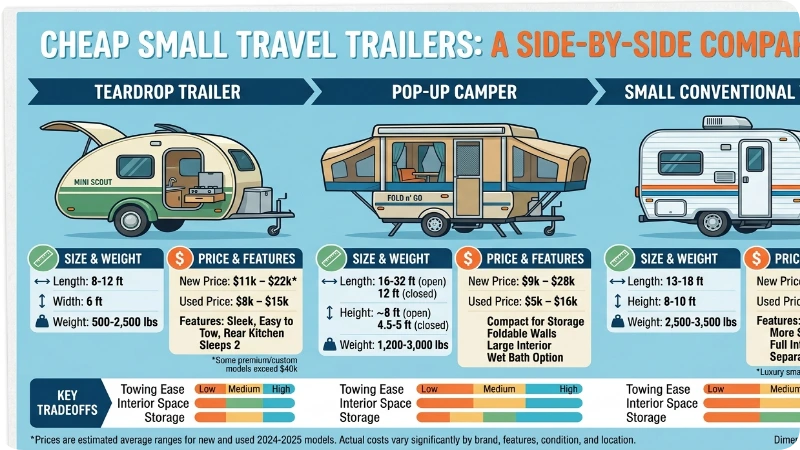
A cheap small travel trailer generally falls between $3,000 and $20,000, measures under 20 feet in length, and weighs less than 5,000 pounds, often far less. These trailers sit at the sweet spot where affordability meets genuine functionality.
The price range breaks down roughly like this:
| Price Range | What to Expect |
| Under $5,000 | Used teardrops, basic pop ups, older fiberglass units |
| $5,000–$10,000 | Entry level new trailers, quality used rigs with amenities |
| $10,000–$15,000 | New lightweight trailers with kitchens, bathrooms |
| $15,000–$20,000 | Feature rich small trailers, aluminum framed models |
Size matters more than storage; it determines what vehicle can tow the trailer, which campgrounds accept it, and how easy parking and maneuvering becomes. Trailers under 3,500 lbs can often be towed by a standard SUV or even a capable crossover, which removes the need to buy a separate truck.
Best Cheap Small Travel Trailers for First-Time Buyers
Buying your first travel trailer can feel overwhelming, but several models consistently stand out because they’re easy to tow, simple to maintain, and affordable to own.
For buyers who prioritize low towing weight, the Scamp 13 remains one of the best beginner-friendly trailers thanks to its durable fiberglass shell and excellent resale value.
Families looking for more living space often choose the Coachmen Clipper because it combines practical layouts with relatively affordable pricing.
Those interested in off-grid adventures frequently gravitate toward Forest River’s No Boundaries series, which includes solar-ready options and rugged tires suitable for rougher roads.
Pop-up campers continue to be one of the lowest-cost ways to enter RV ownership, especially for families upgrading from tent camping.
Rather than chasing luxury features, first-time buyers are usually better served by purchasing a simple trailer that’s easy to learn and inexpensive to maintain.
Features That Are Worth Paying For in a Budget Travel Trailer
Even affordable travel trailers can include features that dramatically improve comfort without dramatically increasing the purchase price. Instead of focusing only on exterior appearance, pay attention to the equipment you’ll use every day.
A comfortable bed is often more valuable than extra seating. Since most travelers spend more time sleeping than sitting inside the trailer, mattress size and sleeping layout deserve careful consideration.
Kitchen functionality is another major factor. Look for sufficient countertop space, a reliable refrigerator, and enough cabinet storage for cookware and groceries. Outdoor kitchens can also be a valuable addition for travelers who enjoy cooking outside.
Storage is easy to overlook during a dealership walkthrough but becomes essential during extended trips. Under-bed compartments, overhead cabinets, and exterior pass-through storage make packing significantly easier.
Other useful features include:
- Electric brakes
- Power tongue jack
- Roof air conditioner
- Solar prep
- USB charging ports
- LED lighting
- Large freshwater tank
- Exterior shower
- Spare tire mount
Many of these features cost relatively little when included from the factory but can be expensive to add later
Can You Negotiate the Price of a Small Travel Trailer?
Yes. Unlike automobiles, travel trailers often have significant room for negotiation, especially during slower sales months.
Dealerships may advertise a manufacturer’s suggested retail price, but many buyers successfully negotiate discounts of several thousand dollars depending on inventory levels and seasonal demand.
When negotiating, focus on the total out-the-door price rather than the monthly payment. Dealers sometimes offset discounts by adding preparation fees, documentation charges, or expensive accessories.
Items worth negotiating include:
- Hitch installation
- Battery
- Propane tanks
- Weight distribution hitch
- Starter camping kit
- Warranty upgrades
Shopping near the end of the month or during late fall often provides additional leverage because dealers are trying to clear inventory
Should You Finance or Pay Cash for a Cheap Travel Trailer?
The right choice depends on your financial situation, but understanding the long-term cost of financing is essential before signing any paperwork.
Paying cash eliminates interest charges and immediately lowers the total cost of ownership. Buyers also avoid the risk of owing more than the trailer is worth if depreciation outpaces loan repayment.
Financing, however, allows buyers to preserve savings for campground fees, maintenance, and travel expenses. It may also make sense when promotional interest rates are available.
Before financing, compare:
- Interest rate
- Loan length
- Monthly payment
- Total repayment cost
- Early payoff penalties
Sometimes a lower-priced used trailer purchased with cash ultimately costs thousands less than financing a new unit over ten years.
Why Small Travel Trailers Are Surging in Popularity
Small travel trailers have gone from niche products to mainstream must haves over the past five years, driven by a perfect storm of factors.
First, the pandemic fundamentally shifted how Americans vacation. According to the RV Industry Association (RVIA), 2021 saw record breaking RV shipments, with towable units especially smaller ones leading demand. Second, younger buyers in their 20s and 30s are entering the market in large numbers, and they’re drawn to minimalist, adventure focused setups rather than big luxury coaches. Third, remote work has untethered millions of workers from fixed locations, making the idea of a mobile base camp not just a vacation but a lifestyle.
The result: manufacturers responded with more affordable, lighter, and smarter small trailers than ever before.
The Financial Case for Going Small
A standard 30 foot travel trailer can cost $35,000 to $80,000 new. A well chosen small trailer at $12,000 frees up tens of thousands of dollars for actual travel campground fees, national park passes, meals, gear, and experiences. The math is hard to argue with.
Best Types of Cheap Small Travel Trailers
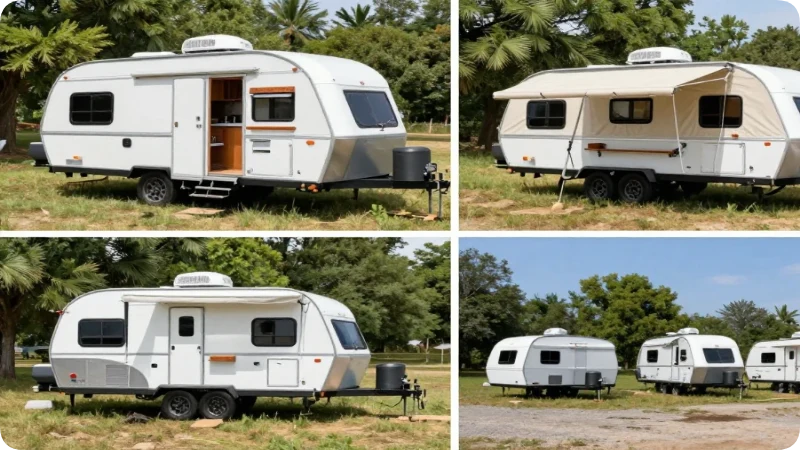
Not all small trailers are built the same. Understanding the main categories helps narrow the search considerably before stepping onto any lot.
Teardrop Trailers
Teardrop trailers are the most compact option available typically 8 to 12 feet long, aerodynamic, and featherlight. Most weigh between 500 and 2,000 lbs. They usually include a sleeping area for two and a rear “galley kitchen” that opens from outside. Best for: Solo travelers and couples who prioritize towing ease and fuel efficiency.
Popular affordable models include the Airstream Bambi (higher end), the Little Guy Mini Max, and various used teardrops found on platforms like RVTrader or Facebook Marketplace for $3,000 to $8,000.
Pop Up Campers (Folding Trailers)
Pop up campers fold flat for towing and expand into a surprisingly roomy canvas sided tent structure when set up. They’re often the cheapest entry point into the trailer world used models regularly appear for $2,000 to $6,000. Brands like Jayco Jay Sport and Forest River Rockwood Pop Up have solid reputations.
Insider tip: Pop ups require more setup time than hard sided trailers, but they’re easier to store in a standard garage when not in use.
A Frame / Hard Sided Pop Ups
Frame trailers, like those made by Aliner and Chalet, collapse similarly to pop ups but use rigid walls instead of canvas. They’re more weather resistant and slightly pricier, with used models typically ranging from $5,000 to $12,000. They strike a strong balance between towability and comfort.
Small Conventional Travel Trailers
These are the classic rectangular trailers, scaled down to 14–19 feet. Many include a dinette, small kitchen, bathroom, and dedicated sleeping area. Brands like Coachmen Clipper, Keystone Hideout, and Forest River No Boundaries offer quality new units in the $12,000–$18,000 range. Used versions of similar trailers often appear for $6,000–$10,000.
Lightweight Fiberglass Trailers
Fiberglass trailers like the Casita, Scamp, and Bigfoot are legendarily durable. Their molded shells resist water intrusion far better than wood framed trailers, making them smart long term investments. New Scamp trailers start around $18,000; used units hold their value but still regularly sell for $8,000–$15,000.
Essential Accessories for Your First Small Travel Trailer
Most new owners discover that buying the trailer is only the beginning. Several inexpensive accessories make towing, camping, and maintenance much easier.
Start with safety equipment such as wheel chocks, leveling blocks, a surge protector, and a quality tire pressure gauge. These items help prevent common campground problems and improve towing safety.
Comfort-focused accessories include folding camp chairs, outdoor rugs, portable grills, and storage organizers that maximize limited interior space.
Every owner should also carry:
- Freshwater drinking hose
- Sewer hose kit
- Water pressure regulator
- Electrical adapter kit
- Basic tool kit
- Flashlight
- Fire extinguisher
- Spare fuses
Purchasing these essentials early helps avoid unnecessary frustration during your first few trips.
Top Cheap Small Travel Trailer Brands Worth Knowing
Choosing a reputable brand dramatically reduces the risk of buying a money pit. These manufacturers consistently earn strong marks from budget focused buyers.
Keystone Hideout
Keystone’s Hideout series offers genuine value at entry level price points. The 178LH floor plan, for example, delivers a full bathroom, queen bed, and galley kitchen in under 22 feet. New pricing hovers around $15,000–$18,000 at dealerships, though negotiation is common.
Forest River No Boundaries
Forest River built the No Boundaries series specifically for off road and boondocking use. Models like the NB10.6 weigh under 1,500 lbs and offer solar ready setups, making them favorites among dry campers. They typically land between $12,000 and $16,000 new.
Coachmen Clipper
The Coachmen Clipper line covers pop ups and small conventional trailers with a reputation for durable build quality. Used Clippers are among the most common finds on the second hand market, often for well under $8,000 with solid remaining life.
Lance 1475
Lance trailers are premium builds, but the 1475 model consistently appears on best value lists. At under 16 feet and roughly $20,000 new (closer to $13,000–$16,000 used), it offers serious quality per dollar, including a full bathroom and comfortable sleeping setup.
Casita Spirit / Scamp 13 Footer
These fiberglass teardrops punch way above their price class in durability. A used Casita Spirit regularly sells for $10,000–$15,000, which sounds like a lot until factoring in that 20 year old units still command those prices. The resale value is exceptional.
New vs. Used: Which Makes More Financial Sense?
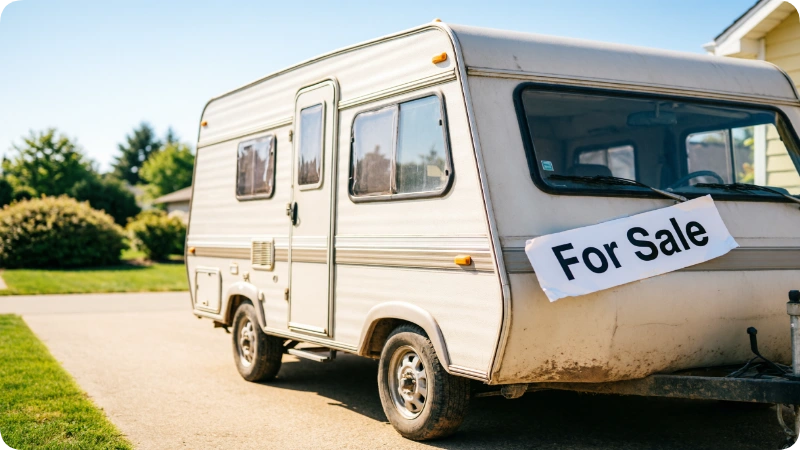
Buying used nearly always wins on pure cost, but several variables should inform that decision before committing.
Buy used if:
- The budget is under $10,000
- There’s comfort inspecting a used unit before purchase
- A trusted mechanic or RV inspector is available (inspections typically cost $100–$300)
Buy new if:
- Financing is needed (lenders often prefer new units; rates are more favorable)
- A warranty matters for peace of mind
- A specific floor plan or feature set isn’t readily available used
🔍 Insider tip: The best used trailer deals appear in late fall and winter, when sellers want to offload units before storage costs hit. Spring and early summer prices spike significantly.
Hidden Costs to Budget Before Buying
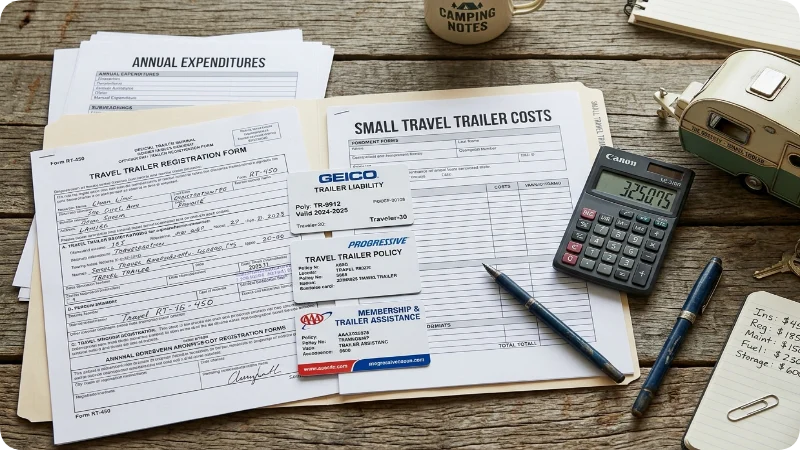
Sticker price is just the beginning. First time buyers routinely underestimate what ownership actually costs.
Registration and Taxes
Sales tax on a $12,000 trailer can add $600–$1,200 depending on state. Annual registration varies widely in Texas, it might be $45/year; in California, it can exceed $200 based on trailer value.
Campground Fees
KOA campgrounds, state parks, and private campgrounds charge anywhere from $15/night (primitive sites) to $65+/night for full hookup electric sites. Budgeting $800–$2,000 per year for campground fees is reasonable for moderate travelers. The Dyrt, Campendium, and Recreation.gov are excellent free tools for finding affordable sites.
Insurance
Trailer insurance through companies like Progressive, National General, or Good Sam typically runs $150–$500 per year for liability only coverage on an inexpensive trailer. Full coverage comprehensive policies on a $12,000 unit might cost $400–$800 annually.
Maintenance and Repairs
Budget 1–2% of the trailer’s value per year for maintenance. On a $10,000 trailer, that’s $100–$200 in routine upkeep but unexpected repairs (roof seals, wheel bearings, water damage) can cost far more. Always inspect roof seals and undercarriage before buying used.
Tow Vehicle Upgrades
If the current vehicle can’t tow the chosen trailer, adding a hitch and wiring harness runs $200–$600 installed. Brake controller requirements kick in for trailers over 3,000 lbs in most states, adding another $100–$250.
What Tow Vehicles Work With Small Travel Trailers?
One of the biggest advantages of small trailers is that most don’t require a full size truck. Here’s a practical breakdown:
| Tow Vehicle | Safe Towing Capacity | Trailer Types It Can Handle |
| Subaru Outback | Up to 3,500 lbs | Teardrops, small pop ups |
| Toyota RAV4 (V6) | Up to 3,500 lbs | Teardrops, A frames |
| Ford F 150 | Up to 13,000 lbs | All small trailers |
| Honda Pilot | Up to 5,000 lbs | Small conventional trailers |
| Jeep Grand Cherokee | Up to 7,200 lbs | Most small travel trailers |
Critical rule: Never exceed 80% of a vehicle’s rated tow capacity. Real world towing hills, wind, and highway speeds demands headroom beyond the maximum spec.
Understanding Payload vs. Tow Rating
Many first-time buyers focus only on maximum towing capacity, but payload is equally important. Payload refers to the amount of weight your tow vehicle can safely carry, including passengers, cargo, hitch weight, and anything packed inside the vehicle.
A trailer may fall within your vehicle’s towing capacity, yet still exceed its payload rating once luggage, coolers, bicycles, and passengers are added.
Before purchasing any trailer, check the payload sticker inside the driver’s door and calculate the combined weight of everyone and everything traveling with you. Staying within both towing and payload limits improves safety, braking performance, and vehicle longevity.
Best Places to Find Cheap Small Travel Trailers for Sale

Knowing where to look cuts search time dramatically and often means finding better deals.
- RVTrader.com the largest online RV marketplace; excellent filter tools for price, length, and weight
- Facebook Marketplace often the best source for private party deals with no dealer markup
- Craigslist still useful in rural areas and smaller cities
- RVUSA.com strong inventory of new and used units from dealers
- Good Sam Classifieds community focused listings from experienced RV owners
- Local RV dealers end of season sales and demo unit markdowns can yield genuine bargains
🔍 Insider tip: Search “teardrop trailer” and “pop up camper” in addition to “travel trailer” many sellers don’t categorize correctly, meaning good deals get missed.
3 Tourist Mistakes to Avoid When Buying a Cheap Trailer
Even experienced shoppers fall into these traps. Avoiding them saves thousands.
Mistake #1: Skipping the Pre Purchase Inspection
Buying a used trailer without a professional inspection is one of the most expensive mistakes in the RV world. Water damage behind walls and under flooring can cost $3,000–$8,000 to repair and it’s often invisible to the untrained eye. Fix: Hire a certified RV inspector through NRVIA.org. The $150–$300 fee pays for itself immediately.
Mistake #2: Buying More Trailer Than the Tow Vehicle Can Handle
Many buyers fall in love with a floor plan, then realize after purchase that their vehicle can’t safely tow it. Fix: Look up tow ratings before shopping, not after. The vehicle manufacturer’s towing guide (available on any brand’s website) provides accurate, legal limits.
Mistake #3: Ignoring the True Cost of Financing
A $15,000 trailer financed over 10 years at 8% APR costs over $22,000 total. Many buyers focus only on the monthly payment. Fix: Use a loan calculator and factor total repayment cost. Buying used with cash, even at a slightly higher unit price, often wins financially.
5 Insider Tips for Getting the Best Deal
These aren’t common knowledge and they make a real difference.
- Shop in January and February. Dealer inventory is highest and foot traffic is lowest. Motivation to deal is real.
- Ask for dealer demos and floor models. These units have been set up and shown but not lived in. They often sell for 10–20% below new pricing.
- Negotiate the out the door price, not the sticker. Dealers bundle fees, prep charges, and “mandatory” add ons into the final bill. Challenge everything.
- Join RV owner forums before buying. Communities like iRV2.com and Reddit’s r/RVLiving contain thousands of real world reviews, common failure points, and model specific advice.
- Check the National Highway Traffic Safety Administration (NHTSA) recall database at nhtsa.gov before purchasing any used trailer. Open recalls are common and sometimes critical to safety.
3 Underrated Alternatives to Consider
Sometimes the best cheap small travel trailer isn’t a trailer at all or it’s a category buyers overlook.
Converted Cargo Trailers
Blank 6×12 or 7×14 cargo trailers sell new for $3,000–$5,000. With a $1,000–$2,000 DIY build out (insulation, a sleeping platform, lighting, ventilation), they become functional micro campers. They’re nearly indestructible, easily repaired, and deeply customizable.
Used Class B Motorhomes (“Campervans”)
For travelers who want to avoid backing and hitching entirely, older Class B vans think early 2000s Pleasure Way or Roadtrek models occasionally appear for $12,000–$18,000. They’re an entirely different ownership experience but solve similar needs at comparable cost.
Rooftop Tent + Truck Bed Setup
For pickup owners who already have a truck, a quality rooftop tent ($800–$2,000) and a truck bed sleeping platform eliminate trailer costs and fees entirely. It’s not for everyone, but for solo adventurers and couples, it’s devastatingly efficient.
Sample Weekend Trip Budget: Cheap Small Trailer in Action
Here’s what a realistic 3 night weekend trip looks like when based out of a small travel trailer:
| Expense | Estimated Cost |
| Campground (3 nights, state park) | $75–$105 |
| Fuel (200 mile round trip, towing) | $60–$90 |
| Groceries and meals | $80–$120 |
| Entry fees / activities | $20–$50 |
| Total Weekend Cost | $235–$365 |
Compare that to a weekend hotel stay at a popular destination: two nights alone easily run $300–$500 before meals, parking, and activities. The trailer pays for itself over time typically within 2–4 years of active use.
Seasonal Buying and Camping Guide
Timing the purchase and travel calendar around seasons unlocks real savings.
Best Time to Buy a Trailer
October through February offers the best deals. Dealers clear inventory, private sellers want to avoid winter storage fees, and competition among buyers drops sharply.
Best Time to Camp (by Region)
| Region | Best Camping Season | Notes |
| Southwest (Arizona, NM, Nevada) | October–April | Summer heat is extreme; spring and fall are ideal |
| Pacific Northwest | June–September | Rainy season runs October through May |
| Mountain West (Colorado, Utah) | May–October | High elevations close campgrounds in winter |
| Southeast (Florida, Georgia) | November–March | Summer humidity and heat are intense |
| Midwest/Great Plains | May–September | Watch severe weather season May–June |
Safety Tips for Small Travel Trailer Owners
Small trailers are safe when set up and towed correctly. These habits prevent the most common problems.
- Check tire pressure before every trip. Trailer tires fail at highway speed when underinflated and the results can be catastrophic. Use a quality gauge and inflate to the spec on the tire sidewall, not the vehicle door jamb spec.
- Inspect hitch connections and safety chains every time. A disconnected trailer at highway speed is a lethal event. This takes 60 seconds and should never be skipped.
- Level the trailer properly at camp. Sleeping in a tilted trailer wrecks sleep quality and strains propane appliances designed to operate level.
- Carry a carbon monoxide detector. Propane appliances in enclosed spaces can create CO buildup especially dangerous during sleep. Basic CO detectors cost $20–$30 and can be lifesaving.
- Know the campfire rules before you go. The USDA Forest Service and individual state parks publish current fire restriction information. Violating burn bans carries heavy fines.
Is a Cheap Small Travel Trailer Worth It?
For most Americans who camp more than 10–15 nights per year, yes a small travel trailer delivers genuine value over tents, hotels, and full size RVs alike.
Worth it if: Regular camping is already part of the lifestyle, a suitable tow vehicle exists, and storage space (driveway, garage, or nearby storage facility) is available.
Less ideal if: Camping happens only once or twice a year, no suitable tow vehicle exists, or the goal is solo backpacking rather than car camping.
The honest answer is that a well chosen small trailer, even a used one at $6,000–$10,000 radically upgrades camping comfort and flexibility while costing less per night than almost any other travel format over a multi year window.
FAQs
What is the cheapest small travel trailer available now?
New small travel trailers start around $10,000–$12,000 for basic models from brands like Coachmen and Forest River. Pop up campers can be found new for even less some under $8,000 but hard sided trailers with a kitchen and bathroom typically start in the $12,000 range. Always verify current pricing directly with dealers, as costs fluctuate with supply chain conditions.
Can a small car tow a travel trailer?
Many compact SUVs and crossovers can tow trailers up to 2,000–3,500 lbs, which covers teardrops and lightweight pop ups. Larger conventional trailers (4,000–6,000 lbs) require a mid size or full size SUV or truck. Always check the vehicle’s official tow rating, never guess or rely on general estimates.
How much does it cost to insure a small travel trailer?
Liability only insurance for a small travel trailer typically costs $100–$300 per year. Full comprehensive coverage on a $10,000–$15,000 trailer runs $300–$700 annually. Rates vary by state, storage location, and usage frequency. Progressive, National General, and Good Sam are commonly recommended insurers for RV owners.
What is the lightest travel trailer available?
The lightest travel trailers on the market weigh as little as 400–800 lbs mostly teardrops from manufacturers like nuCamp (Tab 320), Little Guy, and various custom builders. These ultra light units can be towed by compact cars and even some standard sedans. However, they offer minimal amenities beyond a sleeping area.
Are cheap travel trailers durable?
Budget trailers built with aluminum framing and fiberglass walls tend to outlast wood framed units significantly. Brands like Scamp and Casita have 20–30 year old units still in active use. The key durability factor is moisture management; water intrusion destroys cheap construction fast. Prioritize trailers with well sealed roofs and minimal wood in the structure.
How do I know if a used trailer has water damage?
Press firmly on walls, floors, and ceiling near seams and corners. Soft, spongy, or flexing material almost always indicates moisture damage. A moisture meter (available at hardware stores for $30–$60) gives more precise readings. Discoloration, staining, and musty odors are other red flags. Never skip this step on any used purchase.
Do small travel trailers have bathrooms?
Many do, but not all. Trailers under 16 feet often sacrifice a bathroom to maximize living space. Trailers in the 17–20 foot range frequently include a wet bath (toilet and shower combined) or dry bath layout. For buyers who prioritize a bathroom, filtering searches to trailers 17 feet and longer, or specifically choosing “bath” models, saves a lot of confusion.
Can I live full-time in a small travel trailer?
Yes, many people successfully live full-time in small travel trailers, especially couples and solo travelers. However, space is limited, so choosing an efficient floor plan with adequate storage becomes essential. Before committing, check whether the trailer is designed for extended use and whether local campgrounds allow long-term stays.
Do cheap travel trailers hold their value?
Most travel trailers depreciate during the first several years, but well-maintained models from respected manufacturers often retain value better than lesser-known brands. Fiberglass trailers such as Scamp and Casita are particularly known for strong resale prices because of their durability and long service life.
Can I store a small travel trailer in my driveway?
In many areas, yes, but local homeowners’ associations and municipal ordinances may limit driveway parking or require trailers to be stored behind a fence. Always check neighborhood rules before purchasing to avoid unexpected storage costs or fines.
What is the easiest small travel trailer to tow?
Teardrop trailers are generally the easiest because of their lightweight construction and aerodynamic shape. Many weigh well under 2,000 pounds, making them suitable for a wide range of SUVs and crossover vehicles while remaining easy to maneuver into campsites.
How long do small travel trailers typically last?
A well-maintained small travel trailer can remain in service for 20 years or more. Regular roof inspections, prompt seal maintenance, proper winterization, and indoor or covered storage all help extend its lifespan. Fiberglass models often last even longer due to their resistance to water intrusion.
Conclusion
Cheap small travel trailers have democratized road travel in the best possible way. They’ve made it possible for teachers, nurses, tradeworkers, retirees, and young families to hit the road without burning through savings or taking on suffocating debt. A thoughtful $8,000–$15,000 purchase backed by smart research, a pre purchase inspection, and honest budgeting opens up America’s national parks, coastal highways, mountain campgrounds, and quiet desert skies to anyone willing to hitch up and go.
The three biggest takeaways: buy within the tow vehicle’s limits, inspect used trailers thoroughly before purchasing, and budget for the real cost of ownership not just the sticker price. Do those three things, and the road gets a whole lot wider.
The freedom to wake up wherever the map leads isn’t reserved for the wealthy. It just takes a little planning, a reliable hitch, and the right trailer.