
The best travel blow dryer is a dual voltage, lightweight model (under 1 pound) with fold able handle, multiple heat/speed settings, and ceramic or ionic technology. Look for 1875 watt or lower models for international compatibility, a concentrator nozzle for packing ease, and a travel pouch. These features balance performance, safety, and suitcase space.
Packing for a trip often means choosing between bulky bathroom essentials and a carry on that actually zips shut. A hair dryer is one of those items travelers either forget entirely or pack the wrong one, only to find a hotel’s built in dryer barely works or doesn’t exist at all. Getting this small decision right saves morning stress, protects your hair from under powered airflow, and keeps your bag light. This guide walks through what actually matters when choosing a travel blow dryer, from wattage and voltage to TSA rules and packing tricks, so you can shop smart instead of guessing in a big box store aisle.
What Makes a Hair Dryer “Travel Friendly”?
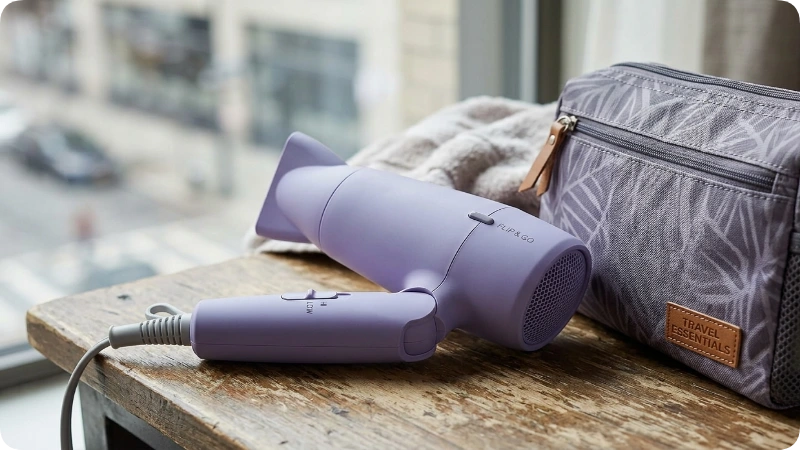
A travel friendly hair dryer is compact, lightweight, foldable, and ideally dual voltage so it works safely in outlets outside the United States. Most travel models weigh between 0.5 and 1.5 pounds and fold down to fit a quart sized bag or dopp kit. The goal is convenience without sacrificing enough power to actually dry your hair.
Standard at home dryers often run 1,800 to 2,000 watts and are built for daily counter use, not suitcases. Travel versions trim down the motor and housing while keeping core functions like heat and speed settings intact. The trade off is usually a few extra minutes of drying time in exchange for significant space and weight savings.
Folding Handle vs. Fixed Handle
Folding handle dryers hinge at the base so the unit collapses into a smaller, more compact shape for packing. Fixed handle dryers skip this feature, which slightly increases durability but adds bulk. For carry on travelers, a folding handle is usually worth the minor trade off in long term sturdiness.
Missing “Quick Comparison Table”
Near the beginning.
Example
| Feature | Recommendation |
| Weight | Under 1 lb |
| Wattage | 1200–1875W |
| Voltage | Dual Voltage |
| Handle | Foldable |
| Technology | Ionic or Ceramic |
| Best For | Frequent Flyers |
Wattage: How Much Power Do You Actually Need?
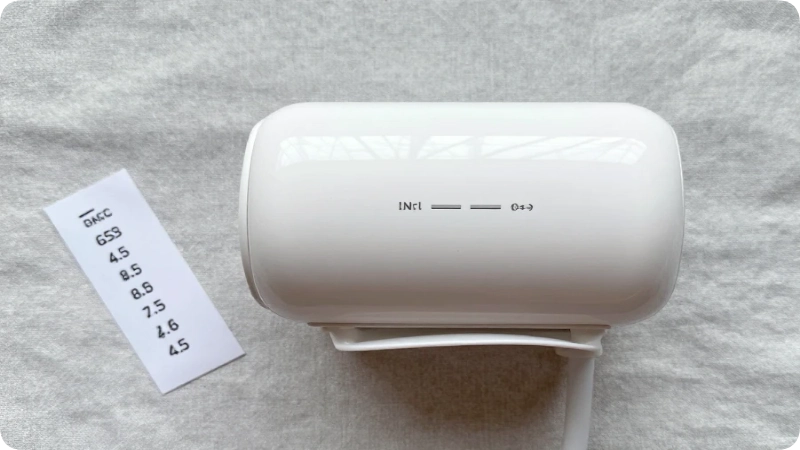
For most travelers, 1,200 to 1,875 watts is enough power to dry hair efficiently without overloading a hotel circuit or transformer. Lower wattage dryers (under 1,000 watts) work but take noticeably longer, especially for thick or long hair. Higher wattage home dryers (2,000+ watts) typically aren’t designed for international electrical systems.
Wattage affects more than speed. Hotel rooms, especially older buildings or properties outside the U.S., may have circuits that trip under heavy electrical load. A dryer in the 1,200–1,875 watt range strikes a practical balance between performance and electrical safety.
Quick Wattage Reference
| Wattage Range | Best For | Drying Speed |
| Under 1,000W | Short hair, light packing | Slower |
| 1,200–1,500W | Most travelers | Moderate |
| 1,600–1,875W | Thicker hair, frequent travel | Faster |
| 2,000W+ | Home use, not ideal for travel | Fastest |
Dual Voltage: Why It Matters for International Travel
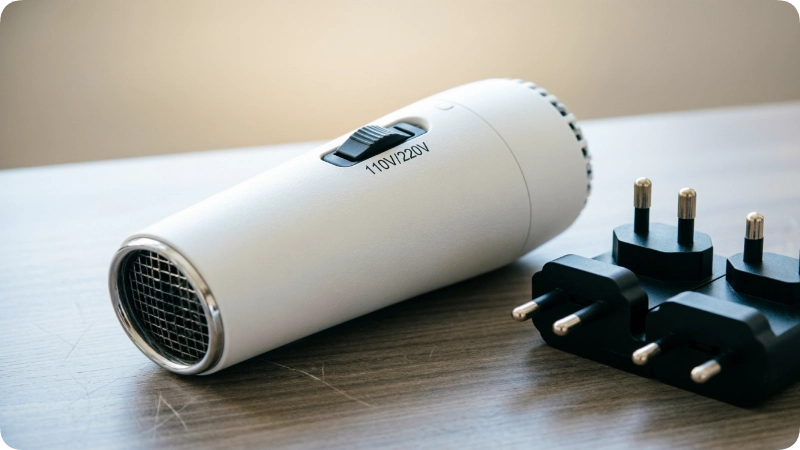
A dual voltage hair dryer automatically (or manually) switches between 110–120V and 220–240V, allowing safe use in most countries without a separate converter. Single voltage U.S. dryers can overheat, malfunction, or even start a fire if plugged into a 220–240V outlet abroad without proper conversion.
If your travel plans are limited to the U.S. and Canada, dual voltage isn’t essential. But for trips to Europe, parts of Asia, Africa, or South America, it becomes a real safety consideration, not just a nice extra. Always check the label on the dryer itself, not just the marketing copy, since voltage specs are sometimes printed only on the unit or cord.
Manual Switch vs. Automatic Dual Voltage
Manual dual voltage dryers require you to physically flip a switch to match the local voltage before use. Automatic (auto sensing) models detect voltage on their own. Manual switches are common and reliable, but forgetting to flip the switch before plugging in is a frequent traveler mistake that can damage the device.
Ionic vs. Ceramic vs. Tourmaline: Does Technology Matter for Travel Models?
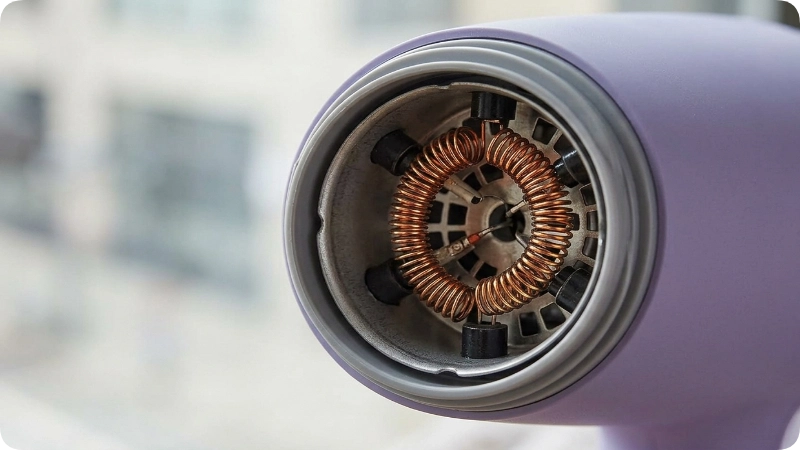
Ionic technology reduces frizz and static by breaking down water molecules faster, while ceramic elements distribute heat more evenly to reduce hot spots. Tourmaline combines crushed gemstone particles into the heating element for similar frizz reducing benefits. For travel dryers, any of these technologies is a bonus, but core wattage and voltage compatibility matter more.
Budget friendly travel dryers sometimes skip these features entirely, relying on a basic heating coil. That’s not necessarily a dealbreaker for occasional trips, but frequent travelers with fine or frizz prone hair may notice the difference ionic or ceramic models make over a basic coil dryer.
Missing Buying Mistakes
7 Things to Check Before Buying a Travel Blow Dryer
Before purchasing a travel dryer, confirm that it:
- Supports dual voltage if traveling internationally
- Weighs under one pound
- Includes multiple heat settings
- Has overheat protection
- Uses a foldable handle
- Comes with at least one styling attachment
- Fits your carry-on packing space
Checking these details before buying helps avoid disappointment once you’re on the road.
Weight and Size: What Fits in a Carry On?
Most travel hair dryers weigh between 0.5 and 1.5 pounds and measure roughly 8 to 11 inches when folded. This footprint typically fits inside a quart size toiletry bag alongside other liquids and personal care items, though the dryer itself is not a liquid and isn’t subject to the same TSA restrictions.
Packing cubes designed for electronics or a padded pouch can prevent the cord and nozzle from tangling with clothing. If your suitcase space is extremely tight, prioritize fold flat designs over dryers with a fixed, protruding handle.
How to Compare Travel Hair Dryers Before You Buy
Shopping for a travel hair dryer becomes much easier when you compare the specifications instead of focusing on brand names alone.
Look for:
- Weight under 1 pound
- Foldable handle
- Dual voltage (110–240V)
- Two or more heat settings
- Cool shot button
- Ionic or ceramic technology
- Removable air filter for cleaning
- Concentrator nozzle
- Travel pouch
- Cord length of at least 5 feet
If two dryers have similar prices, choose the one with better build quality and more practical travel features rather than the highest advertised wattage.
Best Travel Blow Dryers for Different Types of Travelers
Not every traveler needs the same type of travel hair dryer. Someone flying internationally every month has different priorities than a family taking one vacation each year. Instead of choosing the most expensive model, focus on the features that match your travel style.
Best Budget Choice
If you’re looking for an affordable option under $25, prioritize dual voltage compatibility, a folding handle, and at least 1,200 watts of power. Budget dryers may skip advanced technologies like tourmaline, but they can still perform well for occasional trips.
Best for International Travel
Frequent international travelers should look for automatic dual voltage, compact dimensions, and a universal plug adapter. These features reduce setup time and lower the risk of using the wrong voltage in hotels overseas.
Best for Thick or Curly Hair
Travelers with thick, curly, or textured hair should choose dryers closer to 1,800 watts with ionic technology and a diffuser attachment. These features help reduce drying time while minimizing frizz.
Best Premium Option
Premium travel dryers often include ceramic heating, multiple airflow settings, quieter motors, and higher-quality materials. While they cost more, they generally last longer and provide a drying experience closer to a full-size home dryer.
Which Travel Blow Dryer Is Best for Your Hair Type?
The best travel blow dryer depends partly on your hair type. Choosing the right combination of airflow, heat, and attachments can improve styling results while reducing heat damage.
Fine Hair
Use lower heat settings with ceramic technology to prevent excessive drying and breakage.
Thick Hair
Look for dryers between 1,600 and 1,875 watts with ionic technology to reduce drying time.
Curly Hair
A diffuser attachment helps preserve curl definition while minimizing frizz. Adjustable heat settings also make it easier to dry curls gently.
Damaged or Color-Treated Hair
Choose a dryer with ceramic heating and multiple temperature settings so you can use moderate heat instead of maximum airflow.
TSA Rules: Can You Bring a Hair Dryer on a Plane?
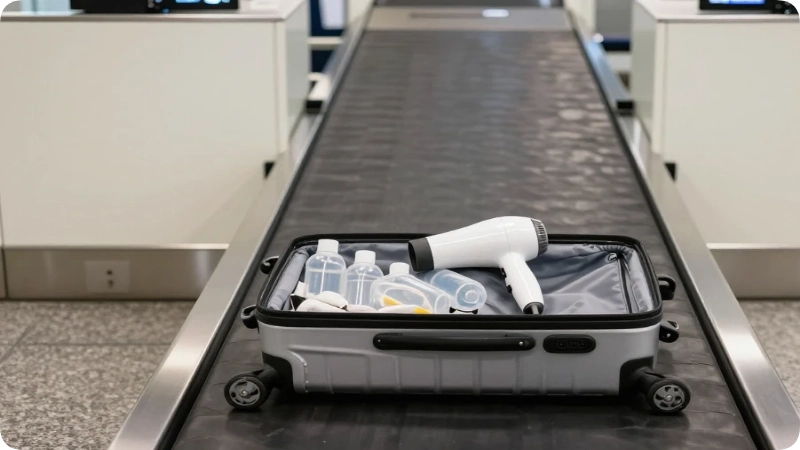
Yes, hair dryers are allowed in both carry on and checked luggage according to TSA guidelines, since they are not classified as liquids, gels, or restricted electronics. There is no wattage limit for hair dryers specifically, unlike battery powered devices such as power banks, which do have capacity restrictions.
That said, TSA policies can change, and individual airline or airport screening practices sometimes vary. Always check the current rules on the official TSA website or the “What Can I Bring?” tool before a trip, especially if you’re also packing other electrical or battery powered grooming devices.
A Common Mistake: Confusing Hair Dryers With Restricted Items
Some travelers mistakenly leave hair dryers at home assuming they fall under liquid restrictions or battery limits. They don’t. The fix is simple: pack it in either carry on or checked luggage without worry, and save your liquid restriction attention for actual liquids, gels, and aerosols like hairspray.
Where to Use It Safely: Outlets, Adapters, and Converters
A plug adapter changes the shape of the prong to fit a foreign outlet, while a voltage converter changes the electrical output itself. Dual voltage dryers only need a plug adapter abroad. Single voltage dryers need both an adapter and a converter, and even then, performance and safety can be inconsistent.
Bathroom outlets in older hotels, especially in Europe, sometimes have lower amperage limits than U.S. bathroom circuits. If your dryer trips a breaker, switch outlets, lower the heat setting, or check with hotel staff before assuming the unit is broken.
How to Clean and Maintain a Travel Hair Dryer
Many travelers forget that compact dryers collect dust and lint just like full-size models. Cleaning the rear air intake every few months helps maintain airflow and prevents the motor from overheating.
Before cleaning, unplug the dryer and allow it to cool completely. If the filter cover is removable, gently remove lint with a soft brush or dry cloth. Never rinse the motor housing under water or use compressed air at very close range, as this may push debris further into the motor.
Store the dryer only after it has cooled completely. Wrapping the cord loosely instead of tightly around the handle also reduces strain on the internal wiring and helps extend the dryer’s lifespan.
Are Travel Hair Dryers Safe for Everyday Use?
Many compact travel dryers are designed for occasional use, but higher-quality models can handle daily drying without problems. The main difference is that travel models usually have smaller motors and lighter housings, which may not be as durable as full-size salon dryers after years of heavy use.
If you travel frequently and also plan to use the dryer at home, investing in a premium travel model can provide a good balance between portability and long-term reliability.
Hotel Provided Dryers: Are They Worth Skipping Your Own?
Many U.S. hotels provide a basic wall mounted or drawer stored hair dryer, but quality varies dramatically by property and price tier. Budget and mid range hotels often supply low wattage, underpowered units, while higher end hotels and resorts tend to offer better equipment.
If you’re staying somewhere unfamiliar, a budget rental property, hostel, or international Airbnb, packing your own travel dryer removes the guesswork entirely. Business travelers and those with longer or thicker hair benefit most from bringing a personal unit rather than relying on the room.
Budget Breakdown: What Should You Expect to Pay?
Travel hair dryers generally range from budget options under $20 to premium dual voltage models above $60, depending on brand reputation, wattage, and added technology like ionic or ceramic elements. Mid range options between $25 and $45 typically offer the best balance of durability and features for most travelers.
Premium options from established hair tool brands often add diffusers, multiple nozzle attachments, and sturdier housings, but these extras add weight and bulk that work against the core goal of a travel dryer. Always check current pricing directly with retailers, since costs shift with sales and availability.
Who Should Buy a Dedicated Travel Dryer (and Who Shouldn’t)
Frequent international travelers, business travelers staying in varied hotel tiers, and anyone with thick or long hair benefit most from owning a dedicated travel dryer. Occasional domestic travelers staying in mid to high end hotels may be fine relying on in room units instead.
Best for: frequent flyers, international travelers, those with longer or thicker hair, budget hotel or hostel guests. Consider skipping if: you exclusively stay at full service hotels, travel rarely, or already pack a diffuser style multi tool that covers drying needs.
Packing Tips: 5 Insider Strategies
- Wrap the cord separately from the dryer body using a velcro cord tie to prevent tangling with clothes or other electronics.
- Pack it on top, not bottom of your suitcase to avoid pressure damage to the folding hinge.
- Test the voltage switch before departure, not at your destination, since labels can be hard to read in dim hotel lighting.
- Bring a basic plug adapter even with a dual voltage dryer, since the prong shape still needs to match the outlet.
- Keep the original box or a labeled pouch so security screeners can quickly identify the item if your bag is hand checked.
How to Pack a Travel Blow Dryer Without Damaging It
A travel hair dryer lasts longer when it’s packed carefully. Allow it to cool fully before placing it in your luggage, then secure the cord with a reusable cable tie instead of wrapping it tightly around the handle.
Store the dryer inside a padded pouch or between soft clothing to protect the folding hinge from impact. If you’re carrying styling attachments such as a diffuser or concentrator nozzle, pack them separately so they don’t crack under pressure from heavier items.
Common Mistakes Travelers Make (and How to Fix Them)
Three frequent mistakes show up again and again with travel hair dryers: assuming a U.S. only dryer will work abroad, forgetting to flip a manual voltage switch, and overpacking with bulky home size units that don’t fit dopp kits. Each is avoidable with a quick check before departure.
The fix for voltage confusion is simple: check the label on the cord or housing, not the box, since boxes get separated from products quickly. The fix for size issues is choosing a model under 1.5 pounds specifically marketed as a travel or compact dryer, rather than just the smallest one available at a local pharmacy.
Travel Blow Dryer vs Hotel Hair Dryer
| Feature | Travel Dryer | Hotel Dryer |
| Power | Consistent | Varies |
| Hair Protection | Better | Often Basic |
| Weight | Lightweight | Fixed |
| Convenience | Pack Yourself | Already Available |
| Styling Options | Multiple | Limited |
| Reliability | High | Depends on Hotel |
Content
Hotel hair dryers are convenient, but their quality varies widely. Bringing your own travel dryer gives you consistent airflow, familiar controls, and styling attachments that may not be available in hotel rooms. Travelers with long, thick, or textured hair often appreciate the predictable performance of a personal dryer, while occasional travelers staying at upscale hotels may be comfortable relying on the in-room option.
Best Dual Voltage Travel Hair Dryer for International Trips
If you regularly travel outside the United States, choosing the best dual voltage travel hair dryer is one of the smartest investments you can make. Dual voltage models work with both 110–120V and 220–240V electrical systems, allowing you to use the same dryer in North America, Europe, Asia, Australia, and many other destinations with only a compatible plug adapter.
For the smoothest experience, look for a dryer with automatic dual voltage switching, although manual switch models are also reliable when set correctly before plugging them in. Always verify the voltage rating printed on the dryer itself rather than relying only on the product description.
Choosing the Best Travel Blow Dryer for Europe
Europe uses 220–240V electricity and different outlet shapes than the United States, making voltage compatibility essential. The best travel blow dryer for Europe should support dual voltage and be paired with the correct Type C, E, F, G, or L plug adapter depending on the country you’re visiting.
A lightweight, foldable dryer with at least 1,200 watts provides enough drying power for most travelers while remaining easy to pack in a carry-on. Checking your hotel’s electrical setup before departure can also help you avoid surprises after arrival.
Mini Hair Dryer vs. Foldable Travel Hair Dryer
Travelers often compare a mini hair dryer for travel with a traditional foldable model. While both save space, they serve slightly different needs.
Mini hair dryers are extremely compact and work well for short trips, minimalist packing, or travelers with shorter hair. However, they usually have lower wattage and may take longer to dry thick or long hair.
A foldable travel hair dryer offers a better balance between portability and performance. Folding handles reduce packing size without sacrificing airflow, making them the preferred choice for frequent flyers.
Is a Lightweight Travel Blow Dryer Better?
A lightweight travel blow dryer makes a noticeable difference when every ounce counts. Most quality travel models weigh between 0.5 and 1 pound, making them easy to carry in backpacks, carry-on suitcases, or weekender bags.
Lighter dryers also reduce fatigue while styling your hair, especially during longer drying sessions. However, avoid choosing a model based on weight alone. Features such as dual voltage, multiple heat settings, and durable construction are equally important for long-term satisfaction.
Do You Need a Travel Hair Dryer With a Diffuser?
A travel hair dryer with a diffuser is especially helpful for travelers with curly, wavy, or textured hair. The diffuser spreads airflow evenly, helping maintain natural curl patterns while reducing frizz and minimizing heat concentration.
If your hair is mostly straight, a concentrator nozzle may be more useful because it directs airflow for smoother styling. Some travel dryers include both attachments, making them a versatile choice for households with different hair types.
Travel Hair Dryer vs. Regular Hair Dryer
Although they perform the same basic function, travel hair dryers and regular home dryers are designed for different priorities.
Travel models emphasize portability through compact dimensions, folding handles, and dual voltage compatibility. Regular hair dryers typically provide stronger airflow, larger motors, and additional styling features but are heavier and less practical for luggage.
For occasional vacations, a travel dryer provides excellent convenience. If maximum drying speed is your top priority, a full-size dryer remains the better option for home use.
Alternatives to Packing a Full Size Travel Dryer
Diffuser caps, drying towels designed for faster absorption, and hooded mini dryers are common alternatives for travelers trying to save even more space. None fully replace a dedicated heat source, but they can supplement air drying on shorter trips where a full dryer isn’t essential.
Travel size flat irons with built in airflow functions also exist, though they’re a niche option better suited to travelers who already minimize their hair routine on the road.
Honest Drawbacks of Travel Hair Dryers
Travel dryers trade power for portability, meaning drying time is almost always longer than with a full size home unit. Some budget models also run louder relative to their airflow output, and plastic housings on ultra light models can feel less durable over years of repeated folding and packing.
These trade offs are usually worth it for the space and weight savings, but travelers with very thick or long hair should set realistic expectations about drying time rather than assuming a compact dryer performs identically to a full size one.
What’s Overrated and What’s Underrated
Overrated: ultra high wattage in a travel dryer, since most hotel circuits and dual voltage systems aren’t built to fully utilize 2,000+ watts safely. Underrated: a simple, sturdy plug adapter kit, which solves more travel problems (charging phones, laptops, and the dryer itself) than any single hair tool feature.
Sample Packing Checklist for Your Travel Dryer Setup
- Dual voltage travel hair dryer
- Universal plug adapter
- Cord tie or small pouch
- Heat resistant travel mat (optional, for counter protection)
- Diffuser attachment, if your hair type benefits from one
FAQs
Is it worth buying a separate travel hair dryer?
Yes, for frequent travelers or anyone staying in varied hotel tiers, a dedicated travel dryer offers consistent performance and avoids relying on unpredictable in room units. Occasional travelers staying at full service hotels may not need one.
Can you bring a hair dryer in a carry on bag?
Yes, hair dryers are permitted in both carry on and checked luggage under current TSA guidelines, since they aren’t classified as restricted liquids or limited capacity batteries. Always verify current rules on the official TSA website before flying.
Do I need a voltage converter for my hair dryer abroad?
You only need a voltage converter if your dryer is single voltage and you’re traveling somewhere with a different electrical standard, such as much of Europe or Asia. Dual voltage dryers only require a plug shape adapter, not a converter.
How long do travel hair dryers typically last?
With normal use and careful packing, a quality travel hair dryer can last several years, though lighter weight models may show wear in the folding hinge sooner than full size dryers. Storing it in a padded pouch extends its lifespan.
What wattage is best for a travel hair dryer?
Most travelers do well with 1,200 to 1,875 watts, which balances reasonable drying speed with safety on varied international electrical circuits. Higher wattage isn’t always usable abroad and adds unnecessary weight.
Are hotel hair dryers usually good enough to skip packing my own?
It depends on the hotel tier; higher end hotels often provide solid dryers, while budget and mid range properties frequently supply weak, underpowered units. Packing your own removes the uncertainty entirely.
What’s the difference between ionic and ceramic travel dryers?
Ionic technology reduces frizz and static by breaking down water molecules faster, while ceramic elements spread heat more evenly across the airflow. Both are beneficial extras, though core wattage and voltage compatibility matter more for travel use.
Can I use a travel hair dryer every day?
Yes. Many quality travel hair dryers are suitable for daily use, especially premium models with ceramic heating and multiple temperature settings. Budget models can also handle regular use, but they may wear out faster because of their smaller motors and lighter construction.
Can a travel hair dryer dry thick hair?
Yes, provided it has enough power. Models with 1,600 to 1,875 watts, ionic technology, and a diffuser or concentrator attachment usually perform well for thick hair, although drying may still take slightly longer than with a full-size salon dryer.
Are travel hair dryers quieter than regular hair dryers?
Not necessarily. Some premium travel dryers use quieter motors, but many compact models produce similar or even higher noise levels because of their smaller fan design. Checking user reviews can give you a better idea of real-world noise performance.
Do travel hair dryers come with universal plugs?
Most travel hair dryers do not include universal plug adapters. Even if a dryer supports dual voltage, you’ll usually need a separate plug adapter to fit electrical outlets in other countries.
Can I use a travel hair dryer in Europe?
Yes, if it supports dual voltage (typically 110–240V). You’ll also need the correct plug adapter for the country you’re visiting. Using a single-voltage U.S. dryer in Europe without a compatible converter can damage the appliance.
Final Takeaways
Choosing the best travel blow dryer comes down to three priorities: dual voltage for international safety, a wattage range of 1,200–1,875 for balanced performance, and a compact, foldable design that won’t weigh down your carry on. Getting these right means fewer surprises at the hotel and one less thing to stress about while packing.
Before your next trip, double check your dryer’s voltage label, confirm current TSA guidance for your route, and pack a basic plug adapter regardless of which dryer you choose. A little prep now means smoother mornings wherever you land.












1 thought on “Best Travel Blow Dryer: A Useful Buying Guide for Frequent Flyers”