Quick Answer:
Edinburgh, Scotland’s capital, blends a medieval Old Town, Georgian New Town, and dramatic castle views into one walkable city. The best time to visit is May–September for mild weather and festivals, or December for Hogmanay. Most USA travelers need 4–5 days, a valid passport (no visa for stays under 6 months), and a mix of walking shoes and layers for unpredictable weather.
Cobblestones slick with rain, a castle looming over the skyline through morning mist, bagpipes echoing down a medieval close, Edinburgh has a way of making first time visitors feel like they’ve stepped into a different century. But that romantic image is exactly what trips up a lot of American travelers: they show up without a plan for the hills, the weather, or the sheer density of things to see packed into one compact city.
This guide fixes that. If you’re flying in from New York, Chicago, or Los Angeles, you’ll find a full Edinburgh travel guide built specifically for USA readers covering flights, neighborhoods, budgets, food, safety, and a day by day itinerary you can actually use. No fluff, no recycled brochure copy, just what you need to plan a trip that works.
Scotland’s capital rewards travelers who plan ahead but still leave room to wander. By the end of this guide, you’ll know exactly when to go, where to stay, what to skip, and how to avoid the mistakes that trip up most first timers.
Quick Facts About Edinburgh

Edinburgh sits in southeast Scotland, part of the United Kingdom, and uses the British Pound (GBP). The city runs on Greenwich Mean Time (5 hours ahead of US Eastern Time) and has a population of roughly 530,000, making it walkable in a way many US cities aren’t.
| Category | Details |
| Country | Scotland, United Kingdom |
| Currency | British Pound (£/GBP) |
| Language | English (Scots and Scottish Gaelic also spoken) |
| Time Zone | GMT/BST (5 hrs ahead of US Eastern) |
| Nearest Airport | Edinburgh Airport (EDI) |
| Best For | History lovers, foodies, festival goers, walkers |
| Ideal Trip Length | 4–5 days |
Best Time to Visit Edinburgh
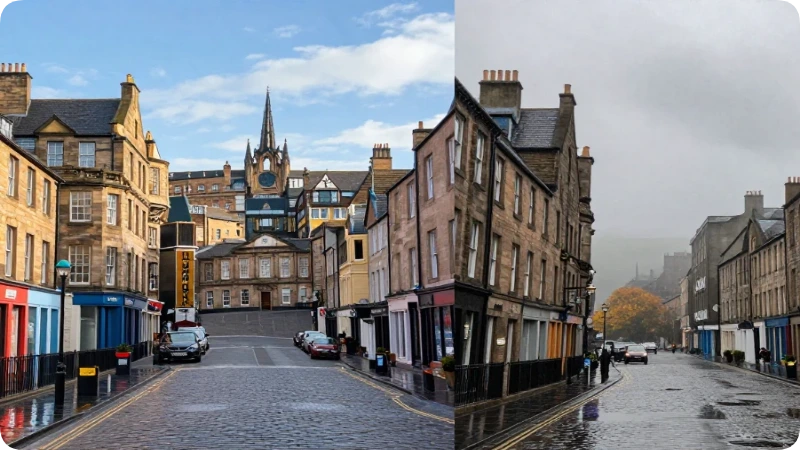
The best time to visit Edinburgh is May through September, when daylight stretches past 9 p.m. and average highs sit in the 60s°F. Shoulder seasons (April and October) bring thinner crowds and lower hotel rates, while December’s Hogmanay festival offers a completely different, festive version of the city.
Seasonal Breakdown
Edinburgh’s weather is famously changeable, locals joke you can experience four seasons in one afternoon. Layers and a compact umbrella matter more than any single “right” month.
| Season | Months | Weather | Crowds | Best For |
| Peak | Jun–Aug | 55–65°F, occasional rain | Very high (Fringe Festival) | Festivals, long daylight |
| Shoulder | Apr–May, Sep–Oct | 45–58°F, mixed | Moderate | Value, comfortable walking |
| Off Season | Nov–Mar | 35–45°F, short days | Low (except Hogmanay) | Budget travel, cozy pubs |
Insider tip: August is spectacular for the Edinburgh Festival Fringe but books up fast and prices spike. If you want the festival energy without the peak crowds, aim for the final week of August or arrive a few days before the official start.
Annual Festivals Worth Planning Around
Edinburgh hosts world-famous festivals throughout the year.
Major events include:
- Edinburgh Festival Fringe (August)
- Edinburgh International Festival (August)
- Royal Edinburgh Military Tattoo (August)
- Hogmanay New Year Celebration (December)
- Edinburgh Christmas Markets (November–January)
- Beltane Fire Festival (April)
- Edinburgh Science Festival (Spring)
Accommodation prices rise significantly during these events, so booking several months ahead is recommended.
Edinburgh Weather Month by Month
Weather changes quickly in Edinburgh, but each season offers a different experience.
| Month | Weather | Good For |
| January | Cold, quiet | Budget trips |
| February | Cold | Museums and pubs |
| March | Cool | Fewer crowds |
| April | Mild | Spring flowers |
| May | Pleasant | Walking tours |
| June | Warmest daylight | Sightseeing |
| July | Busy | Summer travel |
| August | Festivals | Fringe Festival |
| September | Mild | Best overall balance |
| October | Crisp | Autumn colors |
| November | Cool | Lower prices |
| December | Christmas & Hogmanay | Holiday travel |
How to Get to Edinburgh from the USA

Most American travelers fly into Edinburgh Airport (EDI), which sits about 8 miles from the city center and offers direct seasonal flights from cities like New York (JFK/Newark), Boston, Chicago, and Philadelphia. Flight time from the US East Coast runs roughly 6.5–7.5 hours.
If a direct flight isn’t available from your home airport, connecting through London Heathrow, Amsterdam, or Reykjavik is common and often affordable, especially on airlines like Icelandair, which uses Reykjavik as a natural stopover point for a mini Iceland detour.
Getting from the Airport to the City
From Edinburgh Airport, the Airlink 100 bus and Edinburgh Trams both run directly to the city center in about 30–35 minutes. Taxis and rideshares are available but cost significantly more than public transport for a straightforward airport run.
- Tram: Direct line to St Andrew Square, easy with luggage
- Airlink Bus: Slightly cheaper, runs every 10–15 minutes
- Taxi/Rideshare: Fastest door to door option, priciest choice
Always check current fares on the official Edinburgh Trams or Lothian Buses websites before you travel, since pricing changes periodically.
UK Entry Requirements for U.S. Travelers
Most U.S. citizens can visit Edinburgh for tourism without a traditional visa for stays of up to six months. However, before traveling, check whether you need a UK Electronic Travel Authorization (ETA), as entry requirements continue to evolve. Your passport should remain valid for the duration of your stay, and immigration officers may ask for proof of onward travel, accommodation details, or evidence that you can support yourself financially during the trip.
When arriving in the UK:
- Carry your passport in your personal bag.
- Keep hotel confirmations easily accessible.
- Have your return or onward flight information available.
- Declare restricted goods if required by UK customs.
Checking the latest UK Government travel requirements a few weeks before departure helps prevent surprises at immigration.
Getting Around Edinburgh
Edinburgh is a compact, walkable city, and most major attractions in the Old Town and New Town sit within a 20 minute walk of each other. For anything farther out, the local bus network (Lothian Buses) is reliable, and a day pass often pays for itself after two or three rides.
Transport Options Compared
| Method | Best For | Notes |
| Walking | Old Town/New Town sightseeing | Expect hills and cobblestones |
| Bus (Lothian Buses) | Longer distances, Leith, suburbs | Day passes available |
| Tram | Airport, Haymarket, city center | Limited single line |
| Taxi/Rideshare | Late nights, luggage | Metered black cabs are common |
Practical note: Cobblestone streets and steep closes (narrow alleys) make rolling suitcases and high heels genuinely impractical. Comfortable, broken in walking shoes will save you more discomfort than almost any other packing decision.
Public Transportation Tips
Using Edinburgh’s public transport is straightforward once you know a few basics.
- Tap-to-pay contactless cards are widely accepted.
- Have your ticket ready before boarding buses.
- Exact cash is required if paying with coins.
- Trams are ideal for airport transfers.
- Most city buses stop running after midnight, though night buses operate on selected routes.
Walking remains the fastest way to explore the Old Town and New Town.
Stay Connected: SIM Cards, eSIMs, and Wi-Fi
Most American travelers can use international roaming, but buying a local SIM card or installing an eSIM is usually much cheaper for stays longer than a few days. Edinburgh Airport, convenience stores, and mobile shops sell prepaid plans from major UK providers.
Many visitors now choose eSIMs because they can activate service before landing without swapping physical SIM cards.
Free Wi-Fi is available in:
- Edinburgh Airport
- most hotels
- cafés
- restaurants
- shopping centers
- many museums
If you plan day trips into the Highlands, download offline Google Maps before leaving the city since mobile coverage becomes less reliable in remote areas.
Where to Stay in Edinburgh
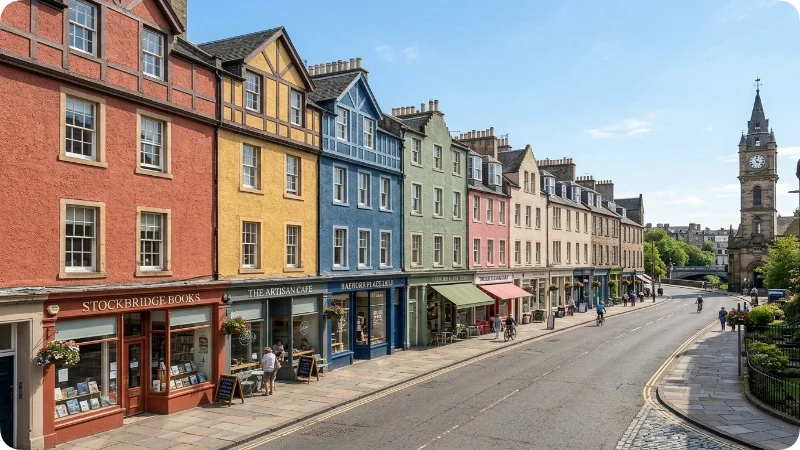
Choosing the right neighborhood matters more in Edinburgh than in many cities, since each area has a distinct feel and different proximity to major sights. Old Town puts you steps from the castle and Royal Mile, while New Town offers quieter, Georgian era elegance with easy access to shopping.
Best Neighborhoods for Different Travelers
- Old Town best for first timers who want to walk everywhere; can be noisy at night
- New Town best for travelers who prefer wide streets, boutique shopping, and a calmer base
- Stockbridge best for a residential, village like feel with good cafes, a short walk or bus ride from downtown
- Leith best for foodies and a trendier, waterfront vibe, with a longer commute to major sights
- West End best for travelers who want proximity to Haymarket Station and easy airport access
Book accommodations several months ahead if your trip falls during August’s festival season, when hotel rates in Edinburgh can double or triple compared to shoulder season pricing.
Edinburgh Budget Breakdown
A realistic daily budget in Edinburgh ranges from budget backpacker to mid range comfort, depending on your accommodation and dining choices. Because prices shift with inflation and season, always cross check current costs on hotel booking sites and VisitScotland before finalizing your budget.
| Travel Style | Daily Budget (approx.) | Includes |
| Budget | Lower range | Hostel dorm, groceries/casual pubs, walking + occasional bus |
| Mid Range | Moderate range | 3 star hotel, sit down meals, some paid attractions |
| Luxury | Higher range | Boutique hotel, fine dining, private tours |
Money saving tip: Many of Edinburgh’s best experiences climbing Arthur’s Seat, wandering the Royal Mile, exploring Dean Village are completely free. Save your paid attraction budget for one or two must-sees like Edinburgh Castle rather than trying to pay for everything.
Typical Prices in Edinburgh
Knowing everyday prices makes budgeting much easier.
Typical costs include:
- Coffee: £3–£5
- Pub meal: £12–£20
- Nice restaurant dinner: £25–£50+
- Bus ticket: around £2
- Edinburgh Castle admission: varies by season
- Hotel breakfast: £10–£20
- Taxi from airport: higher than tram or Airlink bus
Prices increase noticeably during the Edinburgh Festival Fringe, Hogmanay, and summer holidays, so booking early usually saves money.
Are Edinburgh City Passes Worth Buying?
If you plan to visit several paid attractions in a short time, an attraction pass may reduce overall costs. However, not every traveler saves money.
A city pass is usually worthwhile if you intend to visit multiple museums, castles, or guided experiences over two or three consecutive days. Travelers who mostly enjoy free attractions like Arthur’s Seat, Dean Village, Calton Hill, and the Royal Mile often spend less by purchasing tickets individually.
Before buying any sightseeing pass:
- Compare included attractions.
- Check opening hours.
- Estimate your planned visits.
- Calculate whether individual tickets are actually cheaper.
A little planning can prevent paying for attractions you never have time to visit.
Top Attractions in Edinburgh

Edinburgh’s must see attractions cluster around the Old Town’s Royal Mile, with Edinburgh Castle, the Palace of Holyroodhouse, and the National Museum of Scotland anchoring most first time itineraries. Booking castle tickets online in advance avoids the longest queues, especially in summer.
Edinburgh Castle
Perched on an extinct volcanic rock, Edinburgh Castle dominates the skyline and houses the Scottish Crown Jewels and the Stone of Destiny. Arrive right at opening or in the last two hours before closing to avoid the thickest crowds.
The Royal Mile
This stretch of streets connects Edinburgh Castle to the Palace of Holyroodhouse and is lined with shops, pubs, and hidden closes worth ducking into. Looking beyond the main tourist shops, the small alleyways branching off the Mile hide some of the city’s best photo spots.
Arthur’s Seat
An extinct volcano rising above the city, Arthur’s Seat offers a moderately challenging hike with panoramic views over Edinburgh and the Firth of Forth. Plan for 1.5–2.5 hours round trip and wear sturdy shoes, since the trail can get muddy and windy.
Palace of Holyroodhouse
The official Scottish residence of the British monarch, this palace sits at the opposite end of the Royal Mile from the castle and includes the ruins of Holyrood Abbey. Check ahead, since the palace occasionally closes for royal visits.
Hidden Gems in Edinburgh
Beyond the headline attractions, Edinburgh rewards travelers who venture slightly off the main tourist path. These three spots consistently surprise first time visitors who expect only castle and kilt clichés.
- Dean Village A fairy tale like former milling village along the Water of Leith, just a short walk from the New Town, often missed because it isn’t on the main Royal Mile route.
- Circus Lane A quiet cobbled lane in Stockbridge lined with flower draped cottages, one of the most photogenic (and least crowded) corners of the city.
- The Scotch Whisky Experience’s lesser known neighbor bars Skip the tourist heavy whisky bars near the castle and ask a Leith pub for a local’s dram recommendation instead.
Things to Do in Edinburgh
Beyond sightseeing, Edinburgh offers layered experiences for different traveler interests, from underground history tours to literary pilgrimages tied to its UNESCO City of Literature status.
- Take an underground vaults tour through the South Bridge Vaults for a look at the city’s darker history
- Visit the National Museum of Scotland, which is free to enter and covers everything from natural history to Scottish innovation
- Walk the Vennel for one of the most photographed views of Edinburgh Castle
- Explore Calton Hill at sunset for sweeping views and Greek inspired monuments
- Take a day trip to the Scottish Highlands or coastal towns like North Berwick for a change of pace
Best Day Trips from Edinburgh
Edinburgh makes an excellent base for exploring more of Scotland without changing hotels.
| Destination | Travel Time | Best For |
| Stirling Castle | 1 hour | Scottish history |
| St Andrews | 1.5 hours | Golf and coastline |
| North Berwick | 35 minutes | Beach town |
| Rosslyn Chapel | 30 minutes | History & architecture |
| Loch Lomond | Full day | Scenic landscapes |
| Glencoe | Full day | Mountains |
| Isle of May (seasonal) | Full day | Wildlife |
Many organized tours depart directly from Edinburgh, making these trips easy even without renting a car.
Food and Dining in Edinburgh
Edinburgh’s food scene stretches well beyond haggis and shortbread, with a strong farm to table movement and a growing fine dining reputation, including several Michelin recognized restaurants. Traditional Scottish pub fare, fish and chips, Scotch pies, and hearty stews pairs naturally with the city’s thriving whisky bar culture.
Must Try Local Foods
- Haggis, neeps, and tatties the classic Scottish dish, worth trying at least once even for skeptics
- Cullen skink a smoky, creamy fish soup that’s a genuine local comfort food
- Scotch pies a quick, affordable, and filling lunch option from bakeries across the city
- Whisky tasting flights widely available in bars throughout Old Town and New Town
Underrated tip: Some of the best, most affordable meals in Edinburgh come from casual spots in Leith and Stockbridge rather than the tourist priced restaurants directly on the Royal Mile.
Shopping in Edinburgh
Whether you’re looking for Scottish souvenirs or modern fashion, Edinburgh offers plenty of shopping options.
Popular purchases include:
- Cashmere scarves
- Harris Tweed products
- Whisky
- Shortbread
- Scottish gin
- Clan tartans
- Handmade jewelry
- Local artwork
Princes Street is best for major retailers, while Victoria Street, Grassmarket, and Stockbridge feature independent boutiques and artisan shops.
Culture and Etiquette Tips
Scots generally appreciate polite, low key friendliness over loud enthusiasm, and tipping culture differs from the US. A 10% tip for good table service is standard and appreciated, but not obligatory the way it is in American restaurants.
- Don’t confuse Scotland with England Scottish identity is distinct, and locals notice the difference
- Queuing (lining up) is taken seriously; cutting in line is considered rude
- Pubs are social hubs, not just bars striking up conversation with locals is common and welcomed
- Bagpipers on the street are often working buskers; a small tip is a nice gesture if you stop to listen or photograph
Safety Tips for Edinburgh
Edinburgh is generally a safe city for tourists, including solo travelers, though standard urban precautions apply, especially around Cowgate and Grassmarket late at night. Petty theft (pickpocketing) is the most common issue in crowded tourist areas, not violent crime.
- Keep valuables in a zipped, front facing bag in crowded areas like the Royal Mile
- Stick to well lit main streets late at night, particularly in Old Town closes
- Emergency services in the UK can be reached by dialing 999 (or 112)
- Check the US State Department’s official travel advisories before departure for any current alerts
Packing Advice for Edinburgh
Pack in layers for Edinburgh’s unpredictable weather, since a sunny morning can turn into wind and rain within hours, even in summer. A waterproof jacket and comfortable walking shoes matter more than any single “statement” outfit.
- Waterproof, packable jacket (rain gear beats umbrellas on windy days)
- Broken in walking shoes for cobblestones and hills
- Layers: light sweater, T shirt, and a warm mid layer even in summer
- A compact daypack for castle visits and day trips
- A universal UK plug adapter (Type G), since US plugs won’t fit UK outlets
Things to Do in Edinburgh at Night
Edinburgh changes character after sunset. Historic buildings become beautifully illuminated, traditional pubs fill with live music, and ghost tours bring the city’s darker history to life.
Popular evening activities include:
- Whisky tastings
- Ghost walks
- Live folk music
- Rooftop cocktail bars
- Sunset at Calton Hill
- Evening castle views
- Theatre performances
- Comedy shows during the Fringe
If you’re staying in Old Town, most attractions are within walking distance, making evenings easy without needing transportation.
Family Tips for Visiting Edinburgh
Edinburgh works well for families thanks to free museums, engaging outdoor spaces like Holyrood Park, and relatively short distances between major sights. Younger kids tend to enjoy the underground vaults tours and dramatic castle setting, while teens often connect with the city’s Harry Potter literary connections.
- The National Museum of Scotland is free and has interactive exhibits kids enjoy
- Arthur’s Seat makes a fun, moderate family hike with a big payoff view
- Strollers struggle on cobblestones a baby carrier is often more practical for Old Town
Solo Travel Tips for Edinburgh
Edinburgh is one of the more solo friendly cities in the UK, with a strong hostel scene, walkable layout, and pub culture that makes it easy to meet other travelers. Solo diners are common and not treated as unusual, even at sit down restaurants.
- Free walking tours are a great way to meet other solo travelers on day one
- Hostels in Old Town often organize pub crawls and group day trips
- Solo hikers on Arthur’s Seat should stick to daylight hours and marked trails
Accessibility in Edinburgh
Edinburgh’s historic Old Town, with its cobblestones, steep closes, and stairs, presents real challenges for wheelchair users and travelers with mobility limitations. New Town’s wider, flatter streets and modern trams are considerably more accessible.
- Edinburgh Trams and many buses are wheelchair accessible
- Edinburgh Castle offers accessible routes and a shuttle for parts of the site, though some areas remain difficult due to the site’s hilltop location
- Contact venues directly in advance, since accessibility features can vary by attraction and change over time
Common Mistakes First Time Visitors Make
Most first time mistakes in Edinburgh come down to underestimating the hills, overpacking the itinerary, or missing the city beyond the Royal Mile. Fixing these is usually as simple as adjusting expectations before you land.
- Wearing the wrong shoes Cobblestones and hills punish anything without real support; fix it with broken walking shoes.
- Only exploring the Royal Mile Skipping New Town, Stockbridge, or Dean Village means missing a huge part of the city’s character; fix it by budgeting at least half a day for a non Old Town neighborhood.
- Not booking Edinburgh Castle tickets in advance Walk up lines can eat hours of your day; fix it by booking timed entry tickets online before you arrive.
Nearby Attractions Worth a Day Trip
Edinburgh’s location makes it an easy base for day trips into the Scottish Highlands, coastal towns, and historic sites within an hour or two of the city.
- Stirling Castle Roughly an hour away, another major Scottish castle with strong historical significance
- North Berwick A charming coastal town about 30–40 minutes away, good for a beach and seafood day
- The Scottish Highlands (Loch Lomond, Glencoe) Popular full day tour routes from Edinburgh for dramatic mountain scenery
Sample 4 Day Edinburgh Itinerary
This sample itinerary balances major sights with neighborhood exploration and one day trip, giving first timers a realistic pace without over scheduling.
Day 1: Old Town Essentials
Morning: Edinburgh Castle (book early entry). Afternoon: Walk the Royal Mile, duck into a few closes. Evening: Dinner and whisky tasting in Old Town.
Day 2: History and Views
Morning: Palace of Holyroodhouse. Midday: Hike Arthur’s Seat. Evening: Sunset at Calton Hill.
Day 3: New Town and Stockbridge
Morning: National Museum of Scotland. Afternoon: Stroll New Town’s Georgian streets and Circus Lane. Evening: Dinner in Stockbridge.
Day 4: Day Trip
Full day: Choose Stirling Castle or a Highlands tour, depending on interest in castles versus mountain scenery.
Alternatives to Edinburgh
If Edinburgh doesn’t quite match what you’re looking for, a few nearby alternatives offer a different flavor of Scottish or UK travel.
- Glasgow Better for travelers wanting a grittier, more music and art focused city with a lower cost of living
- York, England A smaller, walkable historic city with a similar medieval charm, easily combined with a UK wide trip
- The Isle of Skye Better for travelers prioritizing dramatic nature and hiking over city sightseeing
Is Edinburgh Worth Visiting?
Edinburgh is worth visiting for most travelers, particularly those interested in history, walkable cities, and a manageable mix of urban and outdoor experiences. It’s best suited for travelers who don’t mind hills and changeable weather, and less ideal for those wanting guaranteed sunshine or a car centric, sprawling destination.
How long do you need? Four to five days covers the essentials comfortably, though a week allows time for day trips into the Highlands or coastal towns.
What’s overrated? Some of the souvenir shops directly on the Royal Mile charge tourist premiums for generic tartan goods available cheaper elsewhere.
What’s underrated? New Town’s Georgian architecture and Stockbridge’s village get far less attention than the Old Town but offer some of the city’s most charming, less crowded streets.
FAQs
Do US citizens need a visa to visit Edinburgh?
US citizens don’t need a visa for tourist stays in the UK under six months, only a valid passport. Requirements can change, so confirm current entry rules on the official UK government website before booking.
How many days do you need in Edinburgh?
Four to five days is enough to see the major sights, explore a couple of neighborhoods, and take a one day trip. Travelers with only two or three days should prioritize the castle, Royal Mile, and Arthur’s Seat.
Is Edinburgh expensive for American tourists?
Edinburgh sits in the mid to upper range for European city travel costs, with August festival season pushing prices noticeably higher. Choosing shoulder season dates and neighborhood restaurants over Royal Mile tourist spots helps control costs.
What is the best month to visit Edinburgh?
May and September offer a strong balance of decent weather, longer daylight, and lower crowds than peak summer. August brings the Fringe Festival’s energy but also the highest prices and biggest crowds.
Is Edinburgh worth visiting in winter?
Yes. Winter brings Christmas markets, festive decorations, Hogmanay celebrations, and fewer tourists than summer. Expect colder weather, shorter daylight hours, and occasional rain, but also lower hotel prices outside the holiday period.
What should Americans know before driving in Scotland?
Cars drive on the left side of the road in Scotland. Many visitors find city driving unnecessary because Edinburgh is highly walkable and well served by public transportation. If you plan to explore the Highlands, consider renting a car after leaving the city rather than immediately at the airport.
Is tipping expected in Edinburgh?
Tipping is appreciated but not expected to the same extent as in the United States. Around 10% is common for good restaurant service if a service charge hasn’t already been added to the bill.
Can you use U.S. dollars in Edinburgh?
No. Businesses accept British Pounds (GBP), although nearly all shops, restaurants, and attractions accept major credit and debit cards. Carrying a small amount of cash can still be helpful for markets and independent businesses.
Do I need cash in Edinburgh?
Not usually. Contactless card payments are accepted almost everywhere, including buses, restaurants, cafés, museums, and many taxis. Keeping £20–£40 in cash is generally enough for small purchases or emergencies.
Is Edinburgh good for first-time international travelers?
Yes. English is the primary language, the city is compact and easy to navigate, public transportation is reliable, and many attractions are within walking distance, making Edinburgh one of the easiest European destinations for first-time U.S. visitors.
Is Edinburgh safe for solo female travelers?
Edinburgh is generally considered safe for solo travelers, including women, with petty theft in crowded areas being the main concern rather than violent crime. Standard precautions, like avoiding poorly lit closes late at night, apply.
Can you walk everywhere in Edinburgh, or do you need a car?
Most major Edinburgh attractions are walkable from Old Town or New Town, and a car isn’t necessary for the city itself. A car becomes more useful only for independent day trips into the Highlands or rural coastal areas.
What currency should I bring to Edinburgh?
Edinburgh uses the British Pound (GBP), and most places accept credit cards, though carrying some cash is useful for small shops or markets. Notify your US bank of international travel to avoid card issues.
Final Thoughts: Planning Your Edinburgh Trip
Edinburgh rewards travelers who plan around its hills, weather, and dense concentration of history rather than fighting against them. Three things to remember: book Edinburgh Castle tickets in advance, pack real walking shoes, and leave room in your itinerary to wander beyond the Royal Mile.
If you’re drawn by the castle silhouette, the festival energy, or the quiet charm of Dean Village, Edinburgh delivers a walkable, story rich trip that’s hard to match elsewhere in the UK. Start mapping your dates, check current flight and hotel pricing, and let this compact, dramatic city do the rest.