Staring at a blank search bar, unsure where to go next, is one of the most common travel roadblocks. Too many choices of mountains or coastline, city buzz or small town quiet can leave a trip idea stuck before it even starts. That’s exactly the gap a where should I travel quiz is built to close.
This guide breaks down how these quizzes work, which ones are actually worth your time, and how to turn a quiz result into a real, bookable trip across the United States. It also covers budgeting, timing, packing, and the mistakes that lead travelers to ignore good advice and book the wrong trip anyway. By the end, a five minute quiz will feel less like a guessing game and more like the first real step of trip planning.
Where Should I Travel? Take This 10-Question U.S. Travel Quiz
Not sure where your next trip should be? Answer these 10 questions based on the trip you would actually enjoy—not the trip that sounds impressive on paper. At the end, match your answers to the travel personality that fits you best.
1. What kind of scenery sounds best?
- A. Beach or coastline
- B. Mountains, forests, or lakes
- C. Historic streets and architecture
- D. Desert landscapes
- E. A lively city skyline
2. What’s your ideal vacation pace?
- A. Slow and relaxing
- B. Active and outdoorsy
- C. A mix of sightseeing and downtime
- D. Packed with adventure
- E. Busy with restaurants, museums, and nightlife
3. What’s your approximate daily budget?
- A. Under $150
- B. $150–$250
- C. $250–$350
- D. $350+
- E. It depends on the experience
4. Who are you traveling with?
- A. Solo
- B. My partner
- C. Family with children
- D. Friends
- E. A mixed group
5. Which activity would you choose first?
- A. Sitting by the water
- B. Hiking a scenic trail
- C. Exploring a historic neighborhood
- D. Taking an unusual outdoor adventure
- E. Trying a new restaurant
6. What weather do you prefer?
- A. Hot and sunny
- B. Cool and mild
- C. Four-season weather
- D. Cold and snowy
- E. I don’t mind
7. How much driving are you willing to do?
- A. Almost none
- B. A few short drives
- C. Several hours for the right destination
- D. I enjoy road trips
- E. I’d rather use public transportation
8. What matters most when choosing a destination?
- A. Relaxation
- B. Nature
- C. Culture and history
- D. Adventure
- E. Food and entertainment
9. What kind of trip sounds most memorable?
- A. A beach escape
- B. A national park adventure
- C. A charming historic city
- D. A scenic road trip
- E. A food-focused city break
10. How far are you willing to travel?
- A. A weekend drive
- B. A short domestic flight
- C. Anywhere in the continental U.S.
- D. A long-haul domestic trip
- E. Distance doesn’t matter if the destination is worth it
Your Results
Mostly A — The Relaxer
Look toward beach towns, lakeside destinations, and resort areas. Good starting points include Florida’s Gulf Coast, the Outer Banks, coastal South Carolina, and Hawaii if your budget allows a longer trip.
Mostly B — The Explorer
National parks, mountain towns, and outdoor destinations are likely to suit you. Consider Colorado, Utah, Montana, Wyoming, Washington, or the Great Smoky Mountains.
Mostly C — The Culture Seeker
You may prefer historic cities with museums, architecture, local food, and walkable neighborhoods. Consider Charleston, Savannah, Santa Fe, New Orleans, Boston, or Philadelphia.
Mostly D — The Adventurer
Look for destinations where the journey is part of the experience. Utah’s national parks, Alaska, the Pacific Northwest, Arizona, and the Rockies offer plenty of hiking, wildlife, and outdoor activities.
Mostly E — The Foodie and City Traveler
A city break may be your best match. Consider New Orleans, Chicago, New York City, Portland, Austin, or San Francisco, depending on your budget and travel dates.
If your answers are split between two categories, that’s normal. Use both results as a shortlist and compare the destinations based on weather, flight prices, lodging, and activities for your actual travel dates.
What Is a “Where Should I Travel Quiz” and How Does It Work?
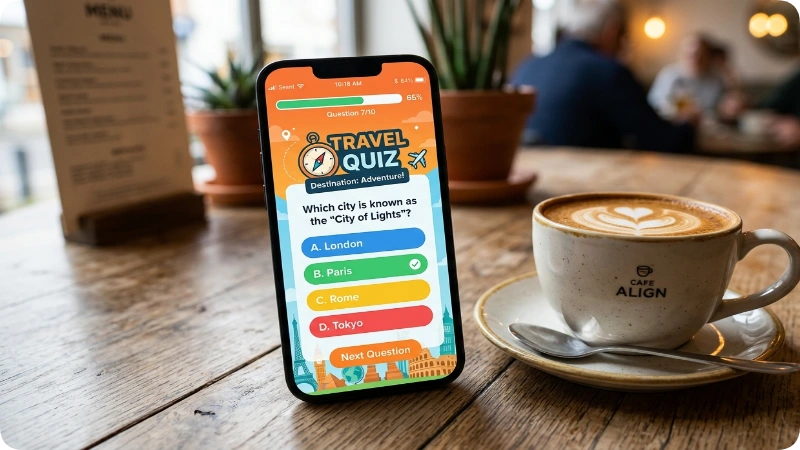
A where should I travel quiz asks a short series of multiple choice questions about budget, preferred climate, activity level, and travel companions then matches those answers to a destination profile. “Many travel quizzes use relatively simple scoring or matching systems, while others use more sophisticated recommendation technology.” They work best as inspiration, not an itinerary.
Typical questions cover:
- Preferred pace (relaxed vs. packed schedule)
- Budget range
- Climate preference (beach heat vs. mountain cool)
- Group type (solo, couple, family, friends)
- Activity interest (hiking, museums, nightlife, food)
Why Take a Travel Quiz Before Booking a Trip?
A quiz narrows overwhelming options into a shortlist, which saves research time and reduces decision fatigue. Travelers with no fixed destination in mind benefit most, since a quiz surfaces regions they might not have considered on their own, like the Gulf Coast instead of a crowded coastal hotspot.
It’s especially useful for open ended trips, milestone birthdays, or group trips where everyone has different ideas. It’s less useful for travelers with a fixed date, visa requirement, or specific event already in mind. In those cases, logistics should drive the decision, not a quiz.
Quick Facts: Travel Personality Types
| Travel Personality | Typical Quiz Match | Best U.S. Fit |
| Relaxer | Beach or lakeside | Gulf Coast, Outer Banks |
| Explorer | National Parks | Utah’s Mighty 5, Rockies |
| Culture Seeker | Historic cities | Charleston, Santa Fe |
| Foodie | Culinary hubs | New Orleans, Portland |
| Adrenaline Traveler | Adventure regions | Colorado, Pacific Northwest |
Which U.S. Destination Matches Your Travel Personality?
Your quiz result becomes more useful when you connect your travel personality to specific destinations. Instead of choosing a city simply because it is popular, start with the type of experience you want.
| Travel style | Destinations to consider | Best for |
| Relaxer | Gulf Coast, Outer Banks, Maui | Beaches, resorts, slow mornings |
| Explorer | Yellowstone, Zion, Rocky Mountains | Hiking, wildlife, scenery |
| Culture Seeker | Santa Fe, Charleston, Boston | History, art, architecture |
| Foodie | New Orleans, Chicago, Portland | Restaurants, local specialties |
| Adventurer | Alaska, Utah, Arizona | Outdoor activities and road trips |
| Family Traveler | Orlando, San Diego, Smoky Mountains | Attractions and easy activities |
| Solo Traveler | Chicago, Boston, Seattle | Walkability, culture, dining |
| Road Tripper | Blue Ridge Parkway, Pacific Coast, Utah | Scenic drives and flexible itineraries |
These are starting points rather than fixed matches. A foodie can have an amazing trip to New Orleans, for example, but the destination may be a poor fit if your travel dates overlap with extreme heat or a major event that pushes hotel prices beyond your budget.
The best destination is where your interests, budget, available time, and travel dates overlap.
How to Get the Most Accurate Quiz Results
Accurate results depend on answering honestly rather than aspirationally choosing what you’d actually enjoy on a real trip, not what sounds impressive. Vague or rushed answers produce generic results like “anywhere sunny,” which aren’t actionable for planning.
Tips for better results:
- Set a real budget range before starting.
- Answer for the trip you’re planning now, not a dream trip.
- Note your actual vacation days available.
- Retake the quiz if the result feels off, small answers change shift outcomes.
Best Free Online “Where Should I Travel” Quizzes
Several travel and media sites host free destination quizzes, typically built by editorial or tourism teams rather than travel agents. These are best used to generate 2–3 candidate destinations, which are then researched individually for cost, weather, and travel time.
Since quiz tools and links change often, search directly for current, active versions before relying on results, and always cross check any destination against official state or city tourism board sites for up to date information.
How to Choose Between Your Top 3 Quiz Results
A good travel quiz should give you ideas, not force you into one destination. If your results produce several strong matches, compare them using five practical filters.
1. Total trip cost: Compare flights, hotels, rental cars, meals, and attraction costs rather than looking at airfare alone.
2. Travel time: A destination that takes two connections and a rental car may not be worth choosing for a three-day weekend.
3. Weather: Check typical conditions and current forecasts for your travel dates. Your perfect summer destination may feel completely different in January.
4. Activity fit: Look at the actual activities available during your trip. A destination can match your personality but still disappoint if its main attractions are closed.
5. Energy level: Consider how much effort the trip requires. A packed national park itinerary may be exciting but isn’t necessarily the best choice after a stressful few months at work.
If two destinations still look equally good, choose the one with the easier logistics. Less time spent in transit usually means more time enjoying the destination.
Travel Quiz by Trip Type

Beach & Coastal Quizzes
These weigh water temperature, crowd levels, and nightlife access, typically pointing toward Florida, the Carolinas, or California depending on season and budget answers.
Mountain & National Park Quizzes
These focus on hiking difficulty, elevation comfort, and wildlife interest, often matching travelers to parks like Yellowstone, Great Smoky Mountains, or Zion.
City Break Quizzes
These weigh museum interest, food scene, and walkability, commonly suggesting cities like Chicago, New Orleans, or Austin.
Road Trip Quizzes
These ask about driving tolerance and stop frequency, often generating multi stop routes like the Pacific Coast Highway or Blue Ridge Parkway.
Where Should I Travel in the U.S. by Month?
The best destination for you can change depending on when you travel. A beach destination that looks perfect in July may be less appealing during hurricane season, while a mountain destination may have completely different activities in winter.
As a general starting point:
- January: Florida, Hawaii, Arizona, and Southern California for warmer weather.
- February: Florida, Hawaii, Arizona, and desert Southwest destinations.
- March: California, Arizona, Texas, Florida, and southern cities.
- April: Southern national parks, Charleston, Savannah, and Washington, D.C.
- May: Great Smoky Mountains, coastal New England, Utah, and California.
- June: Alaska, the Pacific Northwest, Maine, and northern national parks.
- July: Yellowstone, Glacier, the Pacific Northwest, and northern coastal destinations.
- August: Alaska, New England, Pacific Northwest, and mountain states.
- September: New England, Utah, Colorado, California, and national parks.
- October: New England, the Blue Ridge region, Arizona, Utah, and the Southeast.
- November: New Orleans, Southern California, Arizona, and Florida.
- December: New York City, Florida, Hawaii, ski destinations, and holiday-focused cities.
Treat this as a starting point rather than a fixed calendar. Weather, wildfire conditions, hurricanes, snow, and seasonal closures can change what is practical in a given year.
Best Time to Visit Popular Quiz Recommended Destinations

Timing a trip around weather and crowds matters as much as picking the destination itself. A quiz result works best paired with a seasonal check, since even a perfect match destination can disappoint during its off season.
| Destination Type | Peak Season | Shoulder Season | Off Season Trade Off |
| Beach (Gulf/Atlantic) | Jun–Aug | Apr–May, Sep–Oct | Cooler water, lower prices |
| National Parks | Jun–Aug | May, Sep | Snow closures possible |
| Historic Cities | Mar–May | Sep–Nov | Fewer crowds, some rain |
| Mountain Towns | Dec–Mar (ski) | Jun–Sep | Limited lift access off peak |
Always verify seasonal hours and closures on official National Park Service (NPS) or state tourism sites before finalizing dates, since conditions shift year to year.
Budget Breakdown: Matching Your Quiz Result to Your Wallet
A quiz result only becomes useful once it’s checked against real costs, since two destinations in the same “personality” category can differ by hundreds of dollars per day. Compare flights, lodging, and daily activity costs before committing.
General daily budget ranges (per person, excluding flights):
- Budget trip: $100–$150/day
- Mid range trip: $150–$300/day
- Higher end trip: $300+/day
Prices vary by city and season, so confirm current rates through airline and hotel booking sites before budgeting a full trip.
Where Should I Travel Based on My Budget?

Your quiz result should always pass a budget check before you book. The same travel style can work at several price levels if you choose the right destination.
For a lower-cost trip: Consider smaller cities, state parks, nearby beach towns, and destinations reachable by car. Avoid major event weekends and peak holiday periods when hotel prices rise.
For a mid-range trip: You can usually consider larger U.S. cities, national park gateway towns, or popular coastal destinations, depending on the season.
For a higher-end trip: Luxury resorts, premium hotels, Alaska trips, Hawaii, and expensive major cities become more realistic options.
Don’t forget costs beyond the hotel. Parking, resort fees, rental cars, attraction tickets, restaurant prices, and airport transfers can change the real cost of a trip dramatically.
A simple rule is to compare the total trip cost, not just the advertised room or flight price.
How to Get There: Transport Options for Top Quiz Picks
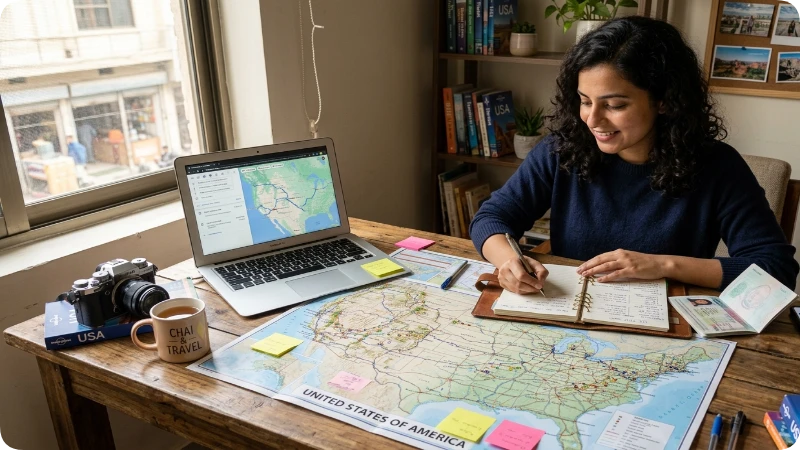
Most quiz recommended U.S. destinations are reachable by major airline hubs, though smaller mountain and coastal towns often require a connecting flight plus a rental car. Checking flight routes early avoids a mismatch between a quiz’s “easy getaway” suggestion and a destination that’s actually hard to reach.
Options to compare:
- Direct flights via major carriers into regional airports
- Amtrak routes for coastal or Northeast city trips
- Rental car for national park and road trip results
- Regional shuttle or ferry systems for island destinations
Check the Department of Transportation (DOT) or individual airline sites for current route maps.
Where Should I Travel for a 3-Day Weekend?
For a three-day weekend, travel time matters almost as much as the destination itself. A nearby city or direct-flight destination usually makes more sense than somewhere that requires a full day of connections.
Beaches: Consider Charleston, the Outer Banks, coastal Florida, or Southern California depending on the season.
History and culture: Boston, Philadelphia, Savannah, and Charleston can provide plenty to do without long drives between attractions.
Outdoor trips: Choose a national park or mountain destination with attractions close to the gateway town.
Food and nightlife: New Orleans, Chicago, Austin, and Nashville offer concentrated entertainment and dining options.
For a short trip, try to keep the itinerary focused on one city or one compact region. Spending half your weekend changing hotels or driving between distant attractions can turn a relaxing getaway into a logistics exercise.
Where to Stay Based on Your Quiz Result
Lodging choice should match the quiz’s activity profile a hiking focused result pairs better with a park adjacent lodge, while a food and culture result suits a walkable downtown hotel. Booking location, not just price, determines how much of the trip is spent commuting versus exploring.
Quick guide:
- Relaxers → beachfront or resort style stays
- Explorers → cabins or lodges near park entrances
- City seekers → centrally located hotels near transit
- Families → suite hotels or vacation rentals with kitchens
Top Attractions for Each Travel Personality
Every personality type has a handful of attractions that consistently satisfy that traveler profile. Culture seekers gravitate toward historic districts and museums, while explorers prioritize scenic overlooks and marked trail systems within National or State Parks.
Cross reference attraction hours and entry fees on official NPS or city visitor center sites, since both change seasonally.
| Personality | Destination | Attractions/Experiences |
| Relaxer | Florida Gulf Coast | Beaches, sunsets, seafood |
| Explorer | Yellowstone | Wildlife, geysers, scenic drives |
| Culture Seeker | Santa Fe | Museums, adobe architecture, galleries |
| Foodie | New Orleans | Creole food, markets, live music |
| Adventurer | Utah | Hiking, canyon scenery, road trips |
Hidden Gems Quizzes Rarely Mention
Mainstream quizzes tend to recommend well known hubs, skipping smaller destinations that fit the same personality type with fewer crowds.
- Ashland, Oregon a culture seeker alternative to bigger festival cities, known for its Shakespeare festival and walkable downtown.
- Beaufort, South Carolina a quieter coastal history pick near Charleston, with preserved antebellum architecture.
- Marfa, Texas a desert arts town alternative for explorers who want quiet, open landscapes over crowded parks.
Food & Dining Suggestions by Destination Type
Regional food scenes are a strong secondary filter after a quiz result, since dining style often reveals if a destination truly fits. Foodie leaning results tend to overlap with cities known for a distinct culinary identity rather than general variety.
Examples by type:
- Gulf Coast → fresh seafood, Creole and Cajun influence
- Southwest → New Mexican and Tex Mex staples
- Pacific Northwest → coffee culture and farm to table dining
Packing Advice Based on Your Quiz Result
Packing should follow the destination’s climate and activity level, not a generic list. A national park match calls for layered clothing and sturdy footwear, while a city break calls for versatile, comfortable walking outfits.
Core packing checklist:
- Weather appropriate layers
- Comfortable walking or hiking shoes
- Reusable water bottle
- Portable charger and offline maps
- Travel insurance documents
Family Tips: Taking the Quiz With Kids
Letting kids answer a few quiz questions themselves builds excitement and gives useful input, but parents should still filter final results for nap schedules, drive time tolerance, and kid friendly dining. A “relaxed pace” answer usually produces a more realistic family match than an “adventure packed” one.
Family friendly picks tend to favor destinations with shorter driving distances between attractions and easy access to grocery stores or kitchens.
Solo Travel Tips: Using Quizzes to Build Confidence
Solo travelers can use a quiz result to narrow down a first solo trip destination, prioritizing walkable, well reviewed areas over remote ones. Choosing a mid sized city or a well established park gateway town often offers the right balance of independence and safety infrastructure.
Sharing an itinerary with someone at home and choosing accommodations with 24 hour front desks are practical extra steps beyond the quiz result itself.
Common Mistakes When Using Travel Quizzes (+ Fixes)
- Treating the result as final. Fix: use it as a shortlist, then research 2–3 matches.
- Answering aspirationally instead of honestly. Fix: answer based on the actual upcoming trip.
- Ignoring the budget mismatch. Fix: check flight and lodging costs before booking a quiz pick.
Alternatives to Online Quizzes
Travelers who want a more tailored recommendation can talk to a travel advisor, browse official state tourism board destination finders, or ask in travel focused online communities for real traveler input. These options take longer but often produce more specific, current suggestions than a generic quiz.
Safety Tips for Any Destination
Regardless of which destination a quiz suggests, basic safety planning stays the same: share an itinerary with someone at home, keep copies of key documents, and check current travel advisories before departure. Confirm any local safety notices through official city or state tourism sites closer to the travel date.
How to Turn Your Quiz Result Into a Real Trip
Once you have a destination match, move from inspiration to planning in a simple order.
Step 1: Check your dates. Look at weather, major events, holidays, and seasonal closures.
Step 2: Price the trip. Check airfare, hotels, rental cars, meals, and major attractions.
Step 3: Confirm transportation. Make sure the destination is practical from your home airport or by car.
Step 4: Choose your neighborhood. Staying close to the attractions you care about can save hours of commuting.
Step 5: Pick your must-do activities. Choose two or three priorities rather than filling every hour.
Step 6: Build a flexible itinerary. Leave room for weather changes, restaurant stops, and unexpected discoveries.
Step 7: Recheck everything before departure. Confirm reservations, operating hours, entry requirements, weather, and transportation details.
The quiz should be the beginning of the planning process, not the end.
Sample 3 Day Itinerary Based on a Quiz Result
Example: “Explorer” result matched to a National Park gateway town
- Day 1: Arrive, settle into lodging near the park entrance, short orientation walk or visitor center stop.
- Day 2: Full day hike or scenic drive within the park, pack lunch, evening at a local restaurant.
- Day 3: Morning at a nearby overlook or lake, afternoon departure.
This structure can be adapted to any quiz matched destination type by swapping park activities for city, beach, or road trip equivalents.
FAQs
Are “where should I travel” quizzes accurate?
They’re a helpful starting point rather than a precise recommendation. Results reflect broad pattern matching from your answers, so they work best combined with independent research on budget, weather, and travel time.
How long do travel quizzes usually take?
Most quizzes take two to five minutes and include eight to twelve questions. Longer quizzes tend to ask more detailed budget and activity questions, which can produce more specific results.
Can a travel quiz plan my whole trip?
No, a quiz only suggests a destination or region. Booking flights, lodging, and activities still requires separate research and confirmation through official travel sites.
What if my quiz result doesn’t fit my budget?
Retake the quiz with a stricter budget answer, or look for a similar destination type in a lower cost region, such as a smaller coastal town instead of a major beach city.
Should I trust a quiz over my own gut feeling?
A quiz works best as a tiebreaker or idea generator, not a replacement for personal preference. If a result doesn’t feel right, it’s reasonable to explore the runner up suggestion instead.
Do quiz results change with the seasons?
Some quizzes factor in the current month, while others don’t account for seasonality at all. Always double check a result against the destination’s best time to visit information before booking.
Are these quizzes free to use?
Most travel and media hosted quizzes are free, with no booking obligation attached to the result. Be cautious of any quiz that requires payment or personal financial information to reveal a destination.
Conclusion
A where should I travel quiz won’t book a flight or pack a suitcase, but it does something just as valuable: it turns “I don’t know where to go” into a real, workable shortlist. The key takeaways are simple answers honestly, treat results as a starting point, and always confirm budget, timing, and logistics before committing to a destination.
If the result points toward a quiet coastal town, a national park gateway, or a food forward city, the next step is the same: check current prices, verify seasonal conditions through official sources, and start turning that quiz match into a real itinerary. The right trip is often just a few honest answers away.

Gordon Ramsay is a travel writer and destination researcher who helps U.S. travelers plan smarter trips, covering destinations, seasonal trends, budgets, and logistics to help readers decide where—and when—to go.
Rather than simply listing popular places, Gordon Ramsay focuses on what travelers actually need: comparing weather against crowds, weighing costs and accessibility, and researching current conditions alongside official tourism guidance—delivering honest, practical advice without the hype.