A hanging clothes travel bag is a garment bag designed to carry suits, dresses, and dress shirts on a built-in hanger so they arrive with fewer wrinkles. Most fold in half for suitcase storage or roll up for carry on use, and a well-designed option typically combines a sturdy hook, breathable fabric, and enough interior pockets for shoes, ties, and toiletries.
Why Use a Hanging Clothes Travel Bag?
A hanging clothes travel bag protects formal clothing by letting you transport suits, dresses, dress shirts, and other structured garments on hangers instead of compressing them inside a suitcase. The main benefit is not that your clothes will arrive perfectly wrinkle-free, but that the bag can reduce folding, crushing, and deep creases during travel.
These bags are especially useful for business trips, weddings, conferences, cruises, and special events where you need to look polished soon after arrival.
A garment bag can also make packing easier. You can keep formalwear together in one compartment while storing shoes, ties, belts, or accessories in separate pockets. At the hotel, simply remove the bag, hang it in the closet, and let minor wrinkles relax before getting dressed.
A hanging garment bag makes the most sense when you are carrying at least one structured outfit. If your trip consists mostly of T-shirts, jeans, athletic clothing, and other casual items, packing cubes may take up less space and offer better overall value.
How a Hanging Clothes Travel Bag Works
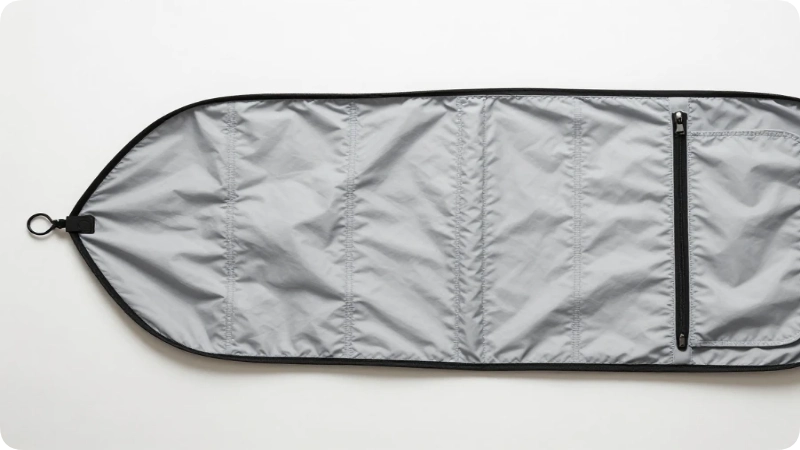
A hanging clothes travel bag works by keeping garments on a hanger inside a zippered protective cover, which prevents the folding and crushing that causes wrinkles in a standard suitcase. Here’s the basic process:
- Hang the suit jacket, dress, or shirt on the bag’s built in hook or removable hanger.
- Zip the garment inside the protective cover to shield it from dust and friction.
- Fold the bag in half (bi fold) or roll it (tri fold) to fit inside a suitcase, or carry it separately on its own strap.
- Use interior pockets for shoes, belts, ties, or toiletries to maximize space.
- Hang the garments from the bag in the hotel closet rod upon arrival to let any minor creases fall out.
Hanging Garment Bag vs. Garment Duffel vs. Packing Cube
A hanging garment bag is the strongest choice when your main goal is protecting suits, dresses, and other structured clothing from deep folding creases. A garment duffel offers more flexibility because it combines hanging storage with room for casual clothing, shoes, and accessories.
Packing cubes take the least space and work well for everyday clothing, but they require garments to be folded or rolled. That makes them less suitable for tailored suits, formal dresses, and structured jackets.
Choose a hanging garment bag for formal events and business travel, a garment duffel when you want one versatile bag for a short trip, and packing cubes when most of your wardrobe is casual and wrinkle-resistant.
Can a Hanging Clothes Travel Bag Be a Carry-On?
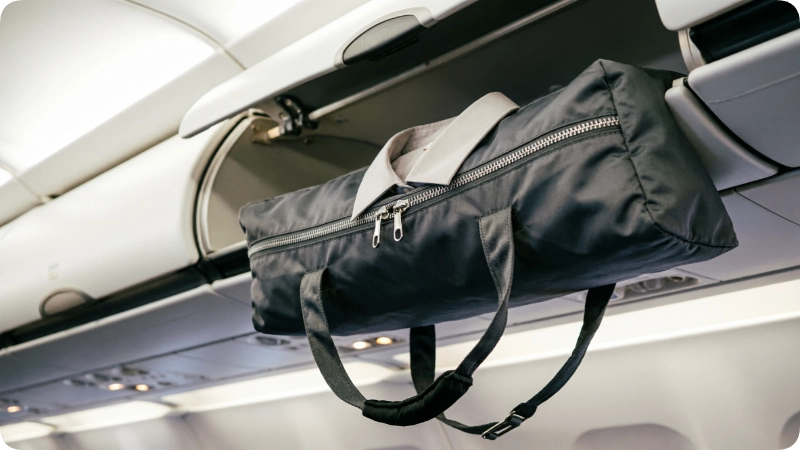
A hanging clothes travel bag can be used as a carry-on when its packed dimensions comply with the airline’s current carry-on allowance. TSA does not give garment bags a special size exemption, so the airline’s baggage policy ultimately determines whether you can bring the bag into the cabin.
The important detail is the bag’s folded or compressed dimensions, not just its length when fully opened. A long garment bag may fold in half and fit within a carrier’s carry-on limits, while an oversized garment bag may have to be checked.
Some airlines and aircraft also have small closets where crew members may hang garment bags, but travelers should not assume this service will be available. Space can be limited, and cabin crew decide how that storage is used.
Before flying, check three things:
- The airline’s maximum carry-on dimensions
- Whether the garment bag counts as your carry-on or personal item
- Whether your aircraft offers an in-cabin garment closet
If the bag exceeds the airline’s allowance, you may have to check it or pay an applicable baggage fee. Measuring the bag after packing is the safest way to avoid a gate-side surprise.
How Many Clothes Can You Fit in a Hanging Garment Bag?
Most hanging garment bags work best when you avoid filling every inch of available space. A typical bag can comfortably hold one complete suit or dress outfit plus several shirts and accessories, while larger multi-garment models may accommodate two or more formal outfits.
For a short business trip, one suit, two dress shirts, trousers, and a tie may fit comfortably. A wedding guest might pack one dress or suit with a second shirt, shoes, and accessories in the exterior compartments.
Overpacking defeats the purpose of the bag. When garments are squeezed tightly against one another, they can develop the same creases you were trying to avoid.
As a general guide:
- 1 formal outfit: Slim garment sleeve or basic hanging bag
- 1–2 outfits: Fold-over or carry-on garment bag
- 2–3 formal outfits: Larger multi-compartment garment bag
- Formalwear plus casual clothing: Garment duffel hybrid
- Several suits or dresses: Large checked garment bag
Choose capacity based on the number of structured garments you actually need, rather than buying the largest bag available.
Hanging Garment Bag Size Guide: What Should You Buy?
The best garment bag size depends on what you are carrying and whether you want the bag to travel alone or inside another suitcase.
A slim garment bag works well for one suit, dress, or formal outfit. It is lightweight and easy to store inside a larger suitcase.
A carry-on garment bag is better for short business trips because it provides room for formalwear while remaining compact enough to travel in the cabin when the airline allows it.
A multi-garment bag makes sense for weddings, conferences, or longer trips when you need several suits, dresses, or dress shirts.
A garment duffel is the most versatile choice when you want one bag to carry both hanging clothing and casual travel items. The garment section folds around the clothes while the duffel compartment holds shoes, toiletries, and everyday clothing.
When comparing bags, pay attention to the packed dimensions rather than the bag’s advertised capacity alone. A bag that holds three suits may be less useful if it becomes too bulky to carry comfortably.
Types of Hanging Clothes Travel Bags
Not all garment bags serve the same purpose, and picking the right style depends on how much you’re packing and how you plan to travel.
- Fold over garment bags: These fold in half and fit inside a checked suitcase, making them ideal for travelers who don’t want to carry a separate bag.
- Carry on garment bags: Built with a shoulder strap or handle, these are designed to be carried onto the plane and hung in the overhead bin closet on select airlines.
- Garment duffel hybrids: These combine a duffel bag body with a fold out hanging compartment, giving travelers one bag for both casual and formal items.
- Suit covers: Lightweight, single garment sleeves meant to protect one outfit inside a larger suitcase rather than travel independently.
Carry-On vs. Checked Garment Bag: Which Is Better?
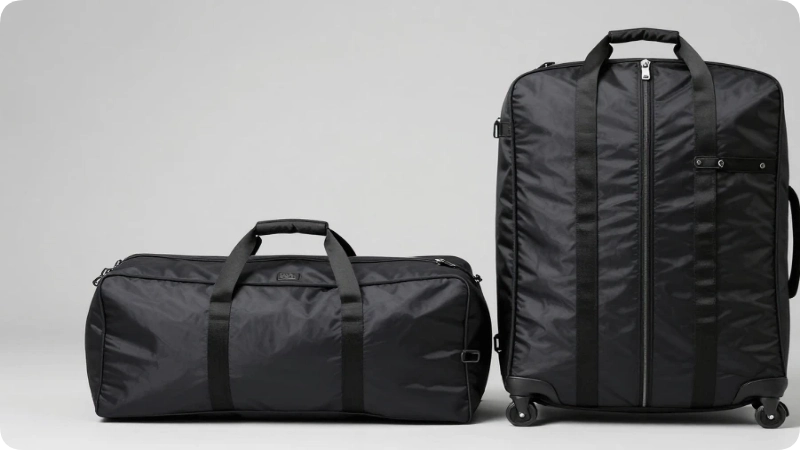
The best choice depends on the value of the clothing, the length of the trip, and how much formalwear you need to carry.
| Feature | Carry-On Garment Bag | Checked Garment Bag |
| Best for | Short business trips and events | Longer trips with several outfits |
| Clothing protection | Excellent when kept in the cabin | Good, but exposed to baggage handling |
| Convenience | Easy access during travel | Less convenient until arrival |
| Airline size rules | Must meet current cabin limits | Subject to checked-bag size and weight rules |
| Ideal capacity | One or two formal outfits | Several formal outfits |
| Main advantage | Keeps formalwear with you | More space for bulky clothing |
For expensive suits, wedding dresses, or clothing you need immediately after landing, carrying the garment bag in the cabin can be preferable when the airline permits it. For multiple formal outfits, a checked garment bag may provide more practical capacity.
TSA Rules and Airline Policies for Garment Bags
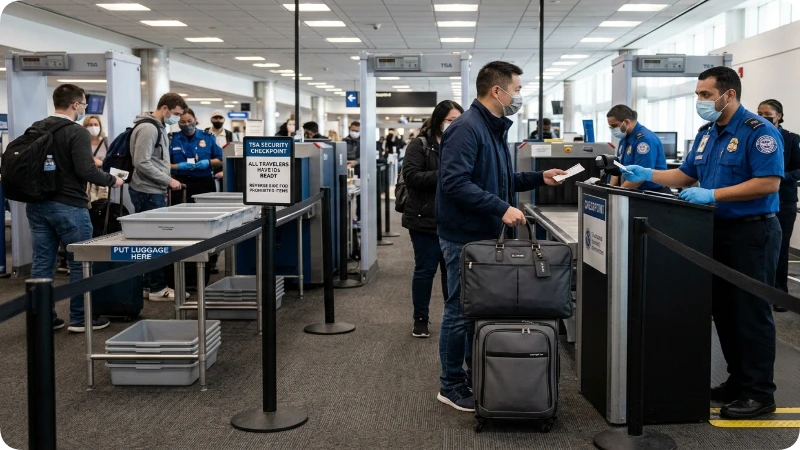
TSA does not classify garment bags as a separate carry on category, so standard carry on size and liquid rules still apply. Most airlines treat a garment bag as either a personal item or a carry on, depending on its folded dimensions, so travelers should always check the airline’s published size chart before departure. Policies and size limits can change, so confirm current rules directly with the TSA and the specific airline before flying.
Some full service carriers offer in cabin garment closets for first or business class passengers, but this perk is not guaranteed on every aircraft. Budget airlines are far stricter and often count a garment bag as the traveler’s one personal item, so measuring the folded bag beforehand prevents a stressful gate check surprise.
What to Look for in a Hanging Clothes Travel Bag
- A good hanging clothes travel bag should protect clothing without becoming so heavy or bulky that it creates another packing problem. Focus on the features that match your travel style.
- Hanger and hook: Look for a reinforced hanging point that can support a suit or dress without bending or pulling away from the fabric.
- Garment capacity: Choose enough space for your actual clothing needs. Extra capacity is useful, but overpacking creates wrinkles.
- Fold design: Bi-fold bags are simple and compact, while tri-fold designs can be smaller when packed. A garment duffel offers more flexibility if you want one bag for formal and casual clothing.
- Material: Water-resistant nylon or polyester provides a good balance of durability, weight, and protection from light moisture.
- Interior organization: Shoe compartments, accessory pockets, and compression straps can prevent smaller items from moving around and crushing your clothing.
- Carry options: A shoulder strap is useful when walking through an airport, while reinforced handles make short-distance carrying easier.
- Airline-friendly dimensions: If you plan to carry the garment bag onto the plane, check its packed dimensions against your airline’s current baggage rules before buying.
Can a Hanging Clothes Travel Bag Replace a Suitcase?
Sometimes, but not always. A garment bag can replace a suitcase on a short business trip when you only need one or two formal outfits, a few casual clothes, and small accessories.
A garment duffel is particularly useful because it combines a hanging clothing section with a larger compartment for shoes, underwear, toiletries, and casual clothing.
For a week-long vacation or a trip requiring bulky shoes, jackets, and several casual outfits, a garment bag alone may not provide enough space. In that situation, use the garment bag for formalwear and a suitcase or travel backpack for everything else.
The easiest rule is simple: use a garment bag when protecting formalwear is your priority; use a suitcase when overall packing capacity matters more.
Packing Tips to Keep Clothes Wrinkle Free
Even the best garment bag needs proper packing technique to prevent wrinkles. Layer heavier items like blazers closest to the fold line, and place lighter garments like dress shirts toward the outer edge. Button jackets and zip dresses before hanging them, since this helps the fabric hold its shape during transit.
Avoid overstuffing the bag, since compressed garments crease just as easily as folded ones. Adding tissue paper between layers or using garment specific hangers with wider shoulders also reduces friction points that cause wrinkling.
How to Pack a Suit in a Hanging Clothes Travel Bag
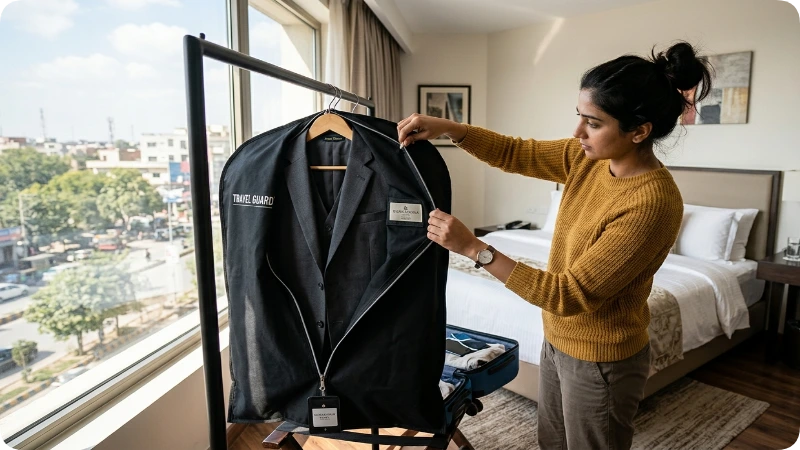
Packing a suit correctly can make a noticeable difference in how it looks when you arrive. Start by cleaning and pressing the suit before packing, then give the fabric time to cool before placing it inside the bag.
Hang the jacket from a sturdy hanger and keep the shoulders properly supported. Button the jacket so it holds its shape, then place the trousers over the hanger bar or use the garment bag’s built-in trouser system.
Add dress shirts on top of the suit rather than squeezing them underneath heavy items. Keep belts, ties, and other accessories in separate pockets so they do not press against the fabric.
If the garment bag folds, avoid placing hard shoes or heavy objects directly on the clothing. Put those items in dedicated compartments instead.
Once you reach the hotel, remove the suit from the bag and hang it immediately. Small travel creases often relax naturally. For stubborn wrinkles, use the hotel’s iron or steamer according to the garment’s care instructions.
How to Pack a Dress in a Hanging Garment Bag
A hanging garment bag works particularly well for dresses because it reduces the number of folds placed across the fabric. Start by hanging the dress from a padded or suitable hanger and fasten any zippers, buttons, or closures.
For delicate dresses, avoid stuffing shoes, jewelry cases, or toiletries into the same garment compartment. Use the bag’s separate pockets whenever possible.
Long dresses should hang naturally inside the full length of the bag rather than being compressed into a small fold. If the bag requires folding for transport, follow its intended fold pattern and avoid placing heavy luggage on top of it.
For formal or delicate fabrics, check the garment’s care label before using a hotel iron or steamer. Some materials require low heat or professional pressing.
Common Hanging Clothes Travel Bag Mistakes to Avoid
- Even a well-designed garment bag cannot prevent wrinkles if it is packed incorrectly.
- Overpacking the garment compartment: Too many shirts, jackets, and dresses press against each other and create creases. Leave enough room for the clothing to hang naturally.
- Using weak or unsuitable hangers: A poor hanger can distort jacket shoulders or collapse under the weight of a formal outfit. Use the hanger recommended for the garment and bag.
- Putting heavy items on top of clothing: Shoes, toiletry kits, and electronics should stay in dedicated compartments instead of pressing against formalwear.
- Forgetting to check packed dimensions: A garment bag that looks compact at home may exceed an airline’s carry-on allowance once fully packed.
- Leaving clothing folded after arrival: Hang the garments as soon as you reach your hotel so minor creases can relax before the event.
- Ignoring fabric care instructions: Not every dress or suit can safely handle a hot shower, iron, or steamer. Check the care label before attempting to remove stubborn wrinkles.
Underrated Alternatives to a Dedicated Garment Bag
Travelers who don’t want to invest in a standalone hanging bag have workable alternatives, though each comes with tradeoffs. A packing cube designed for folded dress shirts can minimize creasing without a hanger, though it won’t protect suits as well. A compression sleeve for a single blazer works for short trips but lacks the multi garment capacity of a true garment bag. Rolling formalwear with tissue paper is a free alternative, though it typically produces more wrinkles than hanging storage.
Best Hanging Clothes Travel Bags by Traveler Type
Different travelers have different priorities, so matching the bag to the trip matters more than chasing the priciest option.
- Business travelers benefit most from a carry on garment bag with a laptop sleeve, since it consolidates work essentials and formalwear into one item.
- Wedding guests typically do well with a lightweight fold over bag that fits inside a checked suitcase alongside gifts or extra shoes.
- Frequent flyers should prioritize durable, water resistant fabric that withstands repeated use and rough handling.
- Solo travelers packing light may prefer a garment duffel hybrid that doubles as an everyday bag when not carrying formalwear.
Which Hanging Clothes Travel Bag Is Best for Your Trip?
Different trips call for different garment bag designs.
Business trip: Choose a compact carry-on garment bag with a laptop compartment and space for one suit, two or three shirts, and accessories.
Wedding or formal event: A fold-over garment bag works well when you need one dress or suit plus shoes and accessories.
Frequent travel: Look for reinforced handles, durable zippers, water-resistant fabric, and a strong hanging system that can withstand repeated airport handling.
Longer trip: A garment duffel or larger multi-garment bag provides more room for formalwear and casual clothing.
Minimalist traveler: Choose a lightweight garment sleeve that protects one outfit without adding unnecessary bulk.
Destination wedding: Prioritize cabin-friendly dimensions when possible, especially if the formalwear would be difficult or expensive to replace after arrival.
Is a Hanging Clothes Travel Bag Worth It?
A hanging clothes travel bag is worth buying when you regularly travel with suits, dresses, uniforms, dress shirts, or other clothing that wrinkles easily. It can save time at the destination and reduce the need for hotel ironing or professional pressing.
The investment makes less sense for travelers who mainly wear casual, wrinkle-resistant clothing. In that case, packing cubes or a standard carry-on may provide more useful storage.
Before buying one, consider how often you travel with formalwear. If you attend several weddings, conferences, business meetings, or special events each year, a durable garment bag can quickly become one of the more useful pieces of luggage you own.
For occasional use, a basic foldable model may be enough. Frequent travelers should spend more attention on construction quality, zippers, hanger support, packed dimensions, and comfortable carrying options rather than premium branding alone.
Care and Maintenance for Long Lasting Garment Bags
Wipe down the exterior after each trip to remove dust and airport grime, and air out the interior before storing it to prevent mildew. Check the hook and zipper regularly, since these are the first components to wear out with frequent use. Storing the bag flat rather than tightly folded when not traveling helps it maintain its shape over time.
Sample Packing Scenario: A 3 Day Business Trip
A traveler heading to a three day conference might hang one suit, two dress shirts, and a tie inside the garment bag, then use the side pocket for dress shoes. Casual clothes, toiletries, and electronics go into a separate carry on, keeping the garment bag dedicated solely to formalwear. This separation makes both bags easier to pack and unpack quickly at the hotel.
Instagram Ready Travel Captions for Sharp Dressers
Short, catchy captions work well for travelers documenting their polished packing routine:
- “Wrinkle free and ready to go.”
- “Packed sharp, arrived sharper.”
- “Suit up, jet set.”
- “Travel smart, dress smarter.”
- “No creases, just good choices.”
FAQs
FAQs About Hanging Clothes Travel Bags
Can I take a hanging clothes travel bag on a plane?
Yes, if the packed garment bag meets your airline’s current carry-on dimensions and baggage allowance. Airlines may count it as a carry-on or personal item depending on its size and how it is packed. Check the carrier’s current baggage policy before departure.
Does a garment bag count as a carry-on or personal item?
It depends on its packed dimensions and the airline’s policy. A compact garment bag may qualify as a personal item, while a larger fold-over garment bag may count as a carry-on. Do not assume that its thin design automatically makes it a personal item.
Can I put a garment bag in the overhead bin?
Many compact garment bags can travel in the overhead bin when they meet the airline’s carry-on requirements. Larger bags may need to be folded or checked. Some aircraft also have limited closet space, but travelers should not rely on an onboard garment closet being available.
How many suits can fit in a hanging garment bag?
Capacity varies by design, but most standard bags work best with one or two complete formal outfits. Larger multi-garment bags can hold more, but overpacking increases pressure on the fabric and can create wrinkles.
What is the best garment bag for a wedding dress?
A full-length garment bag with a strong hanger system and enough vertical space is usually better for a wedding or formal dress. Look for breathable, protective material and avoid models that force a delicate dress into several tight folds.
Is a garment bag better than a suitcase for suits?
For protecting suits and other structured clothing, a garment bag generally has an advantage because the clothing can remain on hangers instead of being repeatedly folded. A suitcase provides more general storage space, so the better option depends on how much formalwear you need.
Can I put shoes inside a hanging garment bag?
Yes, if the bag has a dedicated shoe compartment. Keep shoes away from clean clothing by using a shoe pouch or the bag’s separate compartment. Avoid placing dirty or heavy shoes directly against formalwear.
How do I keep a garment bag from wrinkling clothes?
Avoid overpacking, use suitable hangers, fasten jackets and dresses before packing, and keep heavy items away from the garments. Hang the clothes as soon as you arrive so minor creases can relax naturally.
Can I check a hanging garment bag on an airplane?
Yes, a garment bag can generally be checked if it meets the airline’s checked-baggage requirements. However, checked luggage can experience rough handling, so valuable or difficult-to-replace formalwear may be better kept in the cabin when permitted.
Are garment bags worth it for business travel?
Yes. A compact garment bag can be particularly useful for business travelers because it keeps suits, shirts, ties, and other formal clothing together while reducing the deep creases caused by folding.
What should I pack in a garment bag besides clothes?
Depending on the design, you can use dedicated compartments for shoes, belts, ties, jewelry, cufflinks, and other accessories. Keep toiletries and liquids separate when possible to reduce the risk of spills reaching formalwear.
Final Thoughts: Travel Sharp, Travel Smart
A hanging clothes travel bag remains one of the simplest upgrades for keeping formalwear wrinkle free, if heading to a business meeting, wedding, or special dinner. Choosing the right style carry on or fold over depends on trip length and how much formalwear needs protecting. With smart packing habits and proper bag care, travelers can consistently arrive looking pressed and ready, no hotel iron required.
Before the next trip, check current TSA and airline size policies to confirm the chosen garment bag travels smoothly from home to destination.