A travel agency is a business that plans, books, and manages travel arrangements on behalf of individuals or groups. Services typically include flights, hotels, tours, car rentals, cruises, and travel insurance. Travel agencies act as intermediaries between travelers and service providers, using industry expertise and supplier relationships to save clients time, money, and planning stress.
Planning a vacation should feel exciting, not like a second job. Yet millions of Americans spend dozens of hours buried in browser tabs, comparing flight prices, decoding hotel reviews, and second guessing every booking. The result? Stress, decision fatigue, and sometimes costly mistakes that could have been avoided entirely.
That’s exactly where a travel agency steps in. If you’re planning a honeymoon in Tuscany, a family road trip through national parks, or a solo backpacking adventure through Southeast Asia, a travel agency can turn an overwhelming process into a seamless experience. But with so many options available today from traditional storefront agencies to AI powered online booking platforms, understanding what a travel agency actually does (and If you need one) has never been more important.
This guide breaks down everything: how travel agencies work, the different types, what services they offer, when they’re worth it, and how to choose the right one for your trip.
What Does a Travel Agency Actually Do?

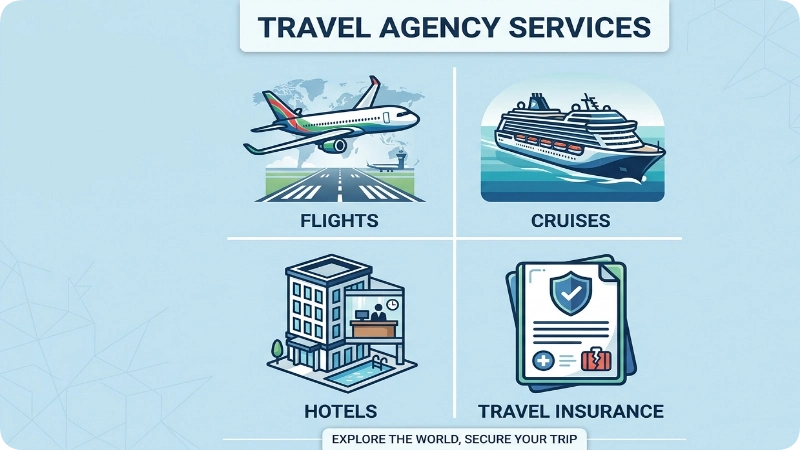
At its core, a travel agency handles the logistics of travel planning so you don’t have to. Agencies book flights, accommodations, tours, ground transportation, and travel insurance, often securing rates and packages that aren’t available to the general public. Many also provide destination expertise, visa guidance, and 24/7 support during your trip.
Think of a travel agent as your personal travel problem solver. When a flight gets canceled at midnight or a hotel overbooks your room, your agent is the one making calls, not you. According to the American Society of Travel Advisors (ASTA), travelers who use agents report higher satisfaction rates and fewer unexpected costs than those who book independently.
Beyond logistics, a good travel agency:
- Saves you research time by leveraging established supplier relationships
- Adds value through expertise, particularly for complex or multi destination trips
- Provides a human advocate if something goes wrong before or during travel
- Offers access to exclusive perks like cabin upgrades, hotel credits, or early boarding
A Brief History of Travel Agencies in the United States

Travel agencies have been part of American life for well over a century. Thomas Cook, widely considered the father of modern travel agencies, organized the first commercial group tour in 1841. By the mid 20th century, storefront travel agencies were a fixture on Main Streets across the U.S., helping families book everything from Caribbean cruises to European rail passes.
The rise of the internet in the 1990s changed everything. Online travel agencies (OTAs) like Expedia, Orbitz, and Travelocity disrupted the traditional model, giving consumers direct booking access. Many predicted the end of travel agents entirely but that never happened. Instead, the industry evolved. Today, experienced travel advisors command premium fees precisely because they offer something no algorithm can: genuine expertise and personal advocacy.
Types of Travel Agencies: Which One Is Right for You?
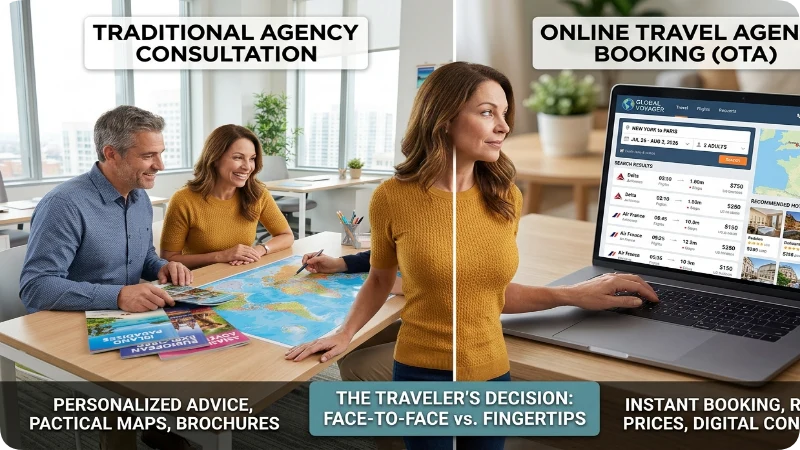
Not all travel agencies operate the same way. Understanding the different models helps you match the right agency to your specific travel needs.
Traditional (Brick and Mortar) Travel Agencies
These are physical offices staffed by licensed travel agents. They’re ideal for complex itineraries, luxury travel, group bookings, and travelers who prefer face to face communication. Many specialize in specific destinations or travel types like cruises or adventure travel.
Online Travel Agencies (OTAs)
Platforms like Expedia, Booking.com, and Kayak operate as digital travel agencies. They aggregate flights, hotels, and car rentals into one searchable interface. OTAs work best for straightforward, point to point trips where price comparison matters most.
Home Based Travel Agents
Thousands of certified travel advisors in the U.S. operate independently from home, often affiliated with a host agency for supplier access and credentialing. They frequently specialize in niche Disney vacations, African safaris, river cruises and offer highly personalized service.
Corporate Travel Agencies
These agencies focus exclusively on business travel, managing employee travel programs, negotiating corporate rates with airlines and hotels, and handling policy compliance. Companies like American Express Global Business Travel and BCD Travel dominate this segment.
Specialty and Niche Travel Agencies
Some agencies focus on specific travel types: luxury travel, LGBTQ+ travel, accessible travel for people with disabilities, eco tourism, or adventure sports. These specialists often have supplier relationships and destination knowledge that general agents simply can’t match.
| Agency Type | Best For | Typical Cost Model |
| Traditional | Complex trips, luxury, groups | Service fees + commission |
| Online (OTA) | Simple bookings, price comparison | Free (earns supplier commission) |
| Home Based Agent | Niche expertise, personalized service | Service fees + commission |
| Corporate | Business travel management | Subscription or per transaction fee |
| Specialty/Niche | Unique travel types (cruises, safaris) | Service fees + commission |
How Travel Agencies Make Money
Many travelers assume travel agencies are expensive, but the economics are more nuanced than most people realize. Agencies earn revenue through two primary channels: supplier commissions and service fees.
Supplier commissions are paid directly by airlines, hotels, cruise lines, and tour operators not by you. When an agent books a resort on your behalf, the resort pays the agency a percentage (typically 10–20%) of the booking value. This is why using an agent for a high value trip often costs you nothing extra, or less than you’d expect.
Service fees are charged directly to clients, typically ranging from $25 to $500 depending on the complexity of the trip. Many luxury agencies charge planning fees upfront, which are often credited toward the booking. Specialty agents may charge consultation fees for detailed itinerary planning.
🔍 Insider tip: Always ask upfront how an agency earns its revenue. Transparent agents will explain their fee structure clearly. Agents who refuse to disclose commissions or fees are a red flag.
How Much Does It Cost to Use a Travel Agency?
One of the biggest misconceptions is that travel agencies are only for luxury travelers with large budgets. In reality, the cost depends on the agency, the type of trip, and how much planning is involved.
For simple hotel or cruise bookings, many agencies earn commissions directly from suppliers, meaning you may not pay anything extra. More complex itineraries, however, often involve planning fees because the advisor spends significant time researching routes, comparing suppliers, coordinating reservations, and providing ongoing support.
| Service | Typical Cost |
| Basic hotel or cruise booking | Often free |
| Domestic vacation planning | $25–$100 |
| International itinerary planning | $100–$300 |
| Luxury or custom travel planning | $250–$500+ |
| Corporate travel management | Contract or transaction based |
Remember that the cheapest option isn’t always the best value. A good travel advisor can often save more through better routing, supplier perks, or avoiding costly mistakes than the planning fee itself.
What Services Do Travel Agencies Offer?

The range of services varies by agency type and specialization, but most full service travel agencies offer the following:
Flight Booking and Management
Agents have access to global distribution systems (GDS) like Sabre, Amadeus, and Galileo the same tools airlines use internally. This gives them visibility into unpublished fares, complex routing options, and award availability that standard booking sites don’t always surface.
Hotel and Resort Reservations
Travel agencies particularly those affiliated with luxury consortia like Virtuoso or Signature Travel Network can access special rates and perks at partner properties. These benefits often include complimentary room upgrades, daily breakfast, resort credits, and early check in or late checkout.
Cruise Planning
Cruise bookings are one of the most popular services travel agencies offer. Agents can compare itineraries across major lines like Royal Caribbean, Carnival, Norwegian, and Celebrity, and often secure group rates, onboard credits, or prepaid gratuities that aren’t available direct.
Tour Packages and Guided Trips
Many agencies partner with tour operators like Tauck, G Adventures, or Collette to offer curated itineraries with guides, accommodations, and activities bundled together. These packages are particularly valuable for first time visitors to complex destinations.
Travel Insurance
Reputable agencies strongly recommend and help you select travel insurance policies that cover trip cancellation, emergency medical evacuation, baggage loss, and travel delay. The U.S. Travel Insurance Association (USTIA) reports that travel insurance claims have increased significantly following the pandemic, making this service more important than ever.
Visa and Documentation Assistance
While agencies can’t apply for visas on your behalf, they can guide you through requirements, timelines, and documentation. For destinations with complex entry requirements like India, China, or Brazil this guidance alone can save hours of confusion.
What Travel Agencies Usually Cannot Do
Although travel agencies handle many parts of trip planning, there are limits to what they can legally or practically provide.
For example, travel agents generally cannot approve visas, guarantee entry into another country, or override airline policies regarding cancellations and baggage. They also cannot control weather disruptions, immigration decisions, or government travel restrictions.
Instead, their role is to explain requirements, recommend trusted providers, assist with documentation, and help resolve problems if they occur.
Understanding these limits helps travelers know when they should contact an embassy, airline, insurance provider, or government agency directly.
Travel Agency vs. Booking Direct: An Honest Comparison
The most common question travelers ask is If using an agency is actually worth it compared to booking everything themselves. The honest answer depends entirely on your trip type, comfort level, and the value you place on your time.
| Factor | Travel Agency | Booking Direct |
| Time investment | Minimal agent handles logistics | High research intensive |
| Cost | Often comparable; may include perks | Sometimes cheaper for simple trips |
| Expertise | Deep destination/supplier knowledge | Self researched |
| Problem resolution | Agent advocates on your behalf | You handle it independently |
| Complex itineraries | Major advantage | Difficult and error prone |
| Simple trips | May be overkill | Works well |
| Perks & upgrades | Common via agency partnerships | Rare without elite status |
Bottom line: For complex itineraries, luxury travel, group trips, or destinations requiring careful planning (think Galapagos, Antarctica, or a multi country European circuit), a travel agency delivers clear value. For a simple weekend flight and hotel booking, an OTA is probably sufficient.
Travel Agency vs Online Booking Sites
Many travelers compare a professional travel agency with popular booking websites before making a decision. While both can reserve flights and hotels, they serve different purposes.
| Feature | Travel Agency | Online Booking Site |
| Personalized recommendations | ✓ | Limited |
| Human support during emergencies | ✓ | Usually limited |
| Price comparison | Moderate | Excellent |
| Complex itinerary planning | Excellent | Basic |
| Exclusive hotel perks | Often available | Rare |
| Visa and travel guidance | ✓ | Limited |
Online booking platforms work well for simple vacations, while travel agencies become increasingly valuable as trips become more expensive or more complicated.
When Should You Use a Travel Agency?
A travel agency adds the most value in specific circumstances. Recognizing those moments can save you money, frustration, and serious headaches on the road.
Use a travel agency when:
- You’re planning a honeymoon, anniversary, or once in a lifetime trip where getting it right matters
- Your itinerary involves multiple countries, connections, or complex logistics
- You’re traveling with a large group and need coordinated bookings
- You’re visiting a destination with unfamiliar visa, health, or safety requirements
- You want access to exclusive perks, upgrades, or bundled packages
- You’re booking a cruise, safari, or guided tour where agency relationships unlock better rates
Consider booking independently when:
- Your trip involves a single destination with a direct flight and straightforward hotel
- You’re an experienced traveler comfortable handling logistics and disruptions
- You’re traveling on a tight budget with flexible dates and no need for customization
When You Probably Don’t Need a Travel Agency
Professional travel planning isn’t necessary for every trip.
If you’re booking a nonstop domestic flight, staying in one hotel for a weekend, and already know exactly where you want to go, booking directly through an airline or hotel website is often the fastest option.
Likewise, experienced travelers who enjoy researching destinations and comparing prices may prefer planning independently.
Travel agencies provide the greatest value when a trip involves multiple destinations, cruises, international travel, special events, large groups, or expensive once-in-a-lifetime vacations where expert guidance reduces risk.
3 Common Mistakes Travelers Make with Travel Agencies
Even when people decide to use a travel agency, they sometimes undermine their own experience with avoidable missteps.
Mistake #1: Choosing an agent based on price alone. The cheapest agency isn’t always the best. An agent who cuts corners on service, misses important details, or lacks destination expertise can cost you far more in the long run in stress, missed experiences, and money spent fixing problems.
Fix: Read verified reviews on ASTA’s member directory or Google, and ask agents for recent client references.
Mistake #2: Waiting until the last minute. Travel agencies provide the most value when they have time to research, negotiate, and plan. Calling an agent three days before departure leaves little room for the work that produces great results.
Fix: Start planning at least 3–6 months in advance for international trips, and 1–2 months for domestic travel.
Mistake #3: Not asking about service fees upfront. Some travelers are surprised to discover fees after extensive planning has already begun. Understanding the cost structure from the first conversation prevents awkward surprises.
Fix: Ask directly: “How do you charge for your services, and what’s included?”
5 Insider Tips for Getting the Most from a Travel Agency
Getting the most out of a travel agency is about preparation and communication. These tips come from experienced travelers who’ve learned what actually works.
- Be specific about your budget range. Agents can’t find the right options if they’re guessing. Share a realistic number not your dream number so they can build something achievable.
- Describe the trip experience, not just destinations. Instead of saying “I want to go to Italy,” say “I want a mix of city culture and coastal relaxation, with good food and no more than two flights.” This gives agents the context to create genuinely great itineraries.
- Ask what’s included and what isn’t. Packages often exclude airport transfers, tips, and some meals. A good agent proactively explains this; ask directly if they don’t.
- Request alternatives before committing. A strong agent will present 2–3 options that meet your criteria, not just one. Options give you control and reveal how well the agent understands your preferences.
- Stay in contact during your trip. Exchange phone numbers and email before departure. If something goes wrong, your agent is your first call but only if they know you need help.
How to Choose a Travel Agency: What to Look For
Choosing the right travel agency requires asking the right questions and knowing which credentials matter. The travel industry has fewer formal regulations than many service industries, so doing your homework protects you.
Look for Industry Credentials
- ASTA (American Society of Travel Advisors): The most recognized U.S. trade association for travel agents. ASTA members agree to a code of ethics.
- CLIA (Cruise Lines International Association): Important certification for cruise focused agents.
- Virtuoso or Signature Travel Network: Membership in these luxury consortia indicates access to premium supplier partnerships.
Ask These Questions Before Hiring
- How long have you been in business?
- Do you specialize in a particular type of travel or destination?
- How do you handle trip disruptions or emergencies while clients travel?
- Can you share recent client references or reviews?
- What’s your fee structure?
Red Flags to Watch For
- Agents who pressure you to book immediately
- Vague or evasive answers about fees and commissions
- No verifiable online reviews or professional affiliations
- Inability to clearly explain what’s included in a quoted price
Questions to Ask Before Hiring a Travel Agent
Before committing to any agency, schedule a short consultation and ask a few important questions.
Helpful questions include:
- Do you specialize in my destination or travel style?
- How are your planning fees structured?
- Will I work with one advisor throughout the process?
- What happens if my flight is canceled while I’m traveling?
- Are you affiliated with ASTA, CLIA, Virtuoso, or another professional organization?
- Do you provide support outside normal business hours?
- What is your cancellation or refund policy?
The answers often reveal far more about the quality of service than price alone.
Travel Agencies and Technology: How the Industry Has Evolved
Today’s travel agencies bear little resemblance to the storefront offices of the 1980s. Modern agencies blend human expertise with powerful technology to deliver a level of service that neither alone can match.
Most professional agents work with global distribution systems (GDS) that provide real time access to millions of flights, hotel inventory, and rental car availability. Some agencies have invested in custom client portals where travelers can review itineraries, share documents, and communicate in one place.
The pandemic accelerated digital transformation across the industry. According to a 2023 report by Phocuswright, the U.S. online travel market reached $205 billion, with a growing share attributed to hybrid agency models that combine agent expertise with digital booking tools. The fastest growing segment? Travelers who start research online but complete complex bookings through a human agent.
How AI Is Changing Travel Agencies
Artificial intelligence has changed how many travel agencies operate, but it hasn’t replaced experienced travel advisors.
Many agencies now use AI tools to compare airfare, monitor fare changes, build draft itineraries, and recommend hotels based on traveler preferences. These technologies reduce research time and allow advisors to spend more time providing personalized recommendations.
Human expertise still matters when trips become complicated. An experienced advisor understands supplier relationships, negotiates upgrades, adapts plans when disruptions occur, and recommends destinations based on real experience rather than algorithms.
The future of travel planning is increasingly becoming a combination of AI efficiency and human expertise rather than one replacing the other.
Are Travel Agencies Worth It? The Honest Answer
For the right kind of trip, travel agencies are absolutely worth using and sometimes they cost you nothing extra. The key is matching the agency type to your travel needs.
Complex international travel, luxury trips, cruises, group tours, and adventure itineraries in remote destinations all benefit enormously from professional planning. In these cases, the time saved, stress avoided, and exclusive perks gained typically outweigh any service fees.
For simple, domestic, or budget travel, a capable DIY approach using OTAs often works perfectly. The mistake is defaulting to one approach for every trip rather than evaluating each journey on its own merits.
The travel agency industry generated approximately $47 billion in revenue in 2023, according to IBISWorld clear evidence that millions of Americans continue to find real value in professional travel planning services.
3 Underrated Alternatives to Traditional Travel Agencies
If a traditional agency doesn’t feel like the right fit, consider these alternatives before committing to full independent booking:
1. Travel advisor networks: Platforms like Fora, Uniglobe, or Internova connect independent travel advisors with travelers. These advisors often specialize in specific niches and offer personalized service at competitive rates.
2. Credit card concierge services: Premium travel credit cards like the Chase Sapphire Reserve or Amex Platinum include concierge services that can assist with bookings, restaurant reservations, and event tickets. It’s not full service travel planning, but for cardholders, it’s a valuable free resource.
3. Destination management companies (DMCs): For international travel, a local DMC in your destination country can handle ground logistics with unmatched local knowledge. They’re particularly valuable for events, corporate travel, and experiential trips.
Quick Facts: Travel Agency in the U.S.
| Fact | Details |
| Industry revenue (2023) | ~$47 billion (IBISWorld) |
| Number of travel agencies in U.S. | Approximately 78,000+ |
| Average agent booking fee | $25–$500 depending on complexity |
| Top booking categories | Cruises, international tours, luxury travel |
| Key industry body | American Society of Travel Advisors (ASTA) |
| Typical commission rate | 10–20% (paid by supplier, not traveler) |
Popular Types of Trips Travel Agencies Specialize In
Not every travel agency books every type of vacation. Many advisors build expertise in specific travel styles and maintain relationships with suppliers in those niches.
Some of the most common specialties include:
- Luxury vacations
- Cruises and river cruises
- Disney vacations
- Honeymoons and destination weddings
- Adventure travel
- Safari tours
- European rail vacations
- National park road trips
- Business travel
- Group travel
- Family vacations
- Accessible travel
- Solo travel
- All-inclusive Caribbean resorts
Choosing an advisor who regularly plans trips similar to yours often leads to better recommendations, smoother logistics, and access to exclusive travel perks.
FAQs
What is the difference between a travel agent and a travel agency?
A travel agency is the business entity the company offers travel planning and booking services. A travel agent is the individual professional who works within that agency (or independently). The terms are often used interchangeably in casual conversation, but technically, an agency can employ many agents with different specializations.
Do travel agencies charge fees?
Some do, some don’t. Many agencies earn revenue through supplier commissions, meaning they charge you nothing directly. Others particularly luxury, niche, and independent advisors charge planning or consultation fees ranging from $25 to $500 or more. Always ask upfront, and remember that fee charging agents are often more incentivized to serve your interests rather than maximize commission.
Is it cheaper to book through a travel agency or on your own?
It depends on the trip. For simple bookings, OTAs may offer slightly lower prices. For complex, multi stop, or luxury trips, agencies often match or beat direct rates while adding exclusive perks upgrades, credits, priority access that have real monetary value. Factor in the value of your time when comparing costs.
Are travel agencies still relevant in the age of online booking?
Yes, more than many people expect. While OTAs excel at simple bookings, experienced travel agencies offer expertise, supplier relationships, and personal advocacy that no algorithm replicates. The industry has grown steadily since 2021 as travelers recovering from pandemic disruptions sought professional support for complex international travel.
How do I find a reputable travel agency?
Start with ASTA’s member directory at asta.org, which lists vetted agents who follow a professional code of ethics. Check Google reviews and ask for recent client references. Look for agents who specialize in your destination or travel type rather than generalists, and prioritize those with verifiable credentials from CLIA, Virtuoso, or similar bodies.
What happens if something goes wrong during my trip when I use a travel agency?
This is one of the clearest advantages of using an agency. If a flight is canceled, a hotel is overbooked, or a tour operator shuts down, your travel agent becomes your advocate calling suppliers, rebooking arrangements, and navigating refunds. This support is especially valuable when you’re abroad, exhausted, and in a time sensitive situation.
Can travel agencies book domestic U.S. trips, or are they only for international travel?
Travel agencies can book domestic trips within the U.S. just as effectively as international ones. Agents are particularly valuable for domestic group trips, multi city road trip logistics, national park itineraries involving multiple lodges, or luxury domestic travel where property relationships and perks matter. That said, for a simple domestic flight and hotel, an OTA is usually sufficient.
Final Checklist Before Choosing a Travel Agency
Before paying a deposit or signing a planning agreement, make sure you’ve completed a few simple checks.
Compare at least two or three agencies.
Read recent verified customer reviews.
Understand every planning fee before work begins.
Confirm emergency support availability.
Verify professional memberships such as ASTA or CLIA.
Ask what supplier perks or upgrades may be available.
Review cancellation and refund policies carefully.
A few minutes of research before choosing an agency can make the planning process much smoother and help you avoid unnecessary surprises later.
Conclusion
A travel agency is far more than a booking service it’s a professional partner that can transform how you plan, experience, and recover from any trip. If you choose a traditional agency, a home based specialist, or a corporate travel management firm, the right agency brings expertise, relationships, and personal advocacy that independent booking simply can’t replicate.
Three things to take away: first, match the agency type to your trip complexity. Not every journey needs full service planning, but the complex ones almost always benefit from it. Second, always ask about fees, specializations, and emergency support before committing to any agent. Third, the best travel experiences usually happen when great planning meets great execution and that’s exactly what travel agencies are built to deliver.
Your next great trip deserves more than a search engine. It deserves someone in your corner who’s been there, knows the suppliers, and answers the phone when things go sideways.
Note: Service fees, commission structures, agency affiliations, and industry statistics are subject to change. Always verify current information directly with any agency you consider, and consult official bodies like ASTA (asta.org) or CLIA (cruising.org) for the most up to date credentialing information.

Gordon Ramsay is a travel writer and destination researcher who helps U.S. travelers plan smarter trips, covering destinations, seasonal trends, budgets, and logistics to help readers decide where—and when—to go.
Rather than simply listing popular places, Gordon Ramsay focuses on what travelers actually need: comparing weather against crowds, weighing costs and accessibility, and researching current conditions alongside official tourism guidance—delivering honest, practical advice without the hype.