Quick answer:
In 2026, US citizens still get a free 30 day visa on arrival in the Maldives, but travel costs have risen, the resort “green tax” doubled to $12 per person per night and the tourism tax (TGST) climbed to 17%. Flight routes through the Middle East have also faced periodic disruptions, so book flexible tickets and confirm your itinerary close to departure.
Planning a trip to a place as dreamy as the Maldives shouldn’t come with confusion about visas, prices, or If your flight will actually take off. Between new tax rules, shifting flight schedules through the Middle East, and record tourist arrivals, Maldives travel news has been moving fast in 2026. This guide breaks down exactly what’s changed, what hasn’t, and how to plan a trip that still feels like paradise without any surprises at check in.
If you’re chasing overwater villas, world class diving, or a quiet honeymoon on a private sandbank, here’s everything a US traveler needs to know right now from entry rules to budgeting to the best islands to visit.
Quick Facts Table: Maldives Travel at a Glance
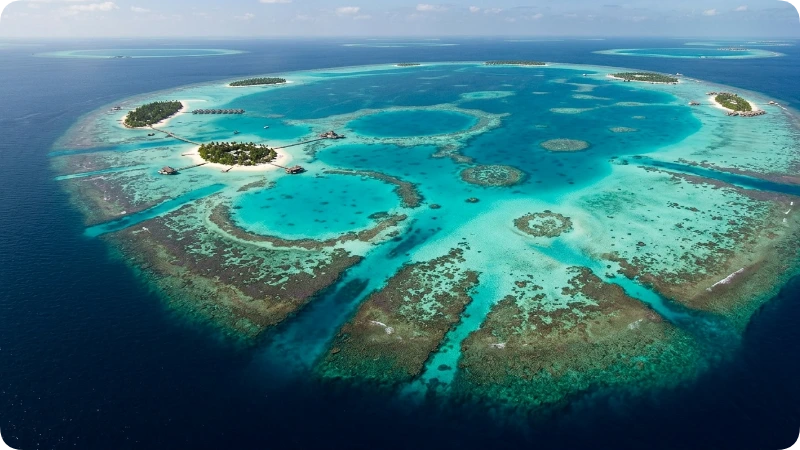
The Maldives sits in the Indian Ocean southwest of Sri Lanka and India, made up of roughly 1,200 coral islands spread across 26 atolls. Here’s what US travelers need to know in one glance before diving into the details.
| Category | Details |
| Visa for US citizens | Free 30 day visa on arrival |
| Entry requirement | Passport valid 6+ months, proof of onward travel, IMUGA declaration |
| Currency | Maldivian Rufiyaa (MVR); US dollars widely accepted at resorts |
| Main airport | Velana International Airport (MLE), near Malé |
| Time zone | MST, UTC+5 (10 hours ahead of US Eastern Time) |
| Green tax (2026) | $12 per person, per night at resorts; $6 at small guesthouses |
| Tourism tax (TGST) | 17% |
| Alcohol | Only permitted at licensed resort islands |
Latest Maldives Travel News in 2026
The biggest developments this year involve pricing, flight reliability, and record breaking arrivals. Understanding these three threads will help you time your trip and set a realistic budget.
Tourism Taxes Have Increased
Starting January 1, 2025, the Maldives Inland Revenue Authority (MIRA) doubled the green tax at resorts, resort hotels, and tourist vessels from $6 to $12 per person, per night, while smaller guesthouses on inhabited islands moved to $6 per night. On top of that, the Tourism Goods and Services Tax (TGST) rose from 16% to 17% on July 1, 2025, and it applies to nearly everything on your resort bill, room rate, meals, spa treatments, and excursions. A 10% service charge is typically added as well, so a couple’s week long resort stay can see hundreds of dollars in taxes and fees layered on top of the nightly rate. Always ask If a quoted price is “all inclusive of tax” or listed as “++,” which means tax is added separately.
Flight Disruptions Tied to Regional Tensions
Many US and European travelers connect to the Maldives through Middle Eastern hubs like Doha, Dubai, or Abu Dhabi. Periodic regional tensions in 2026 have caused temporary route suspensions and rerouted schedules on some carriers, adding complexity for long haul travelers. Some airlines have resumed normal operations after brief pauses, but flight schedules to Malé remain more variable than in a typical year. Book refundable or flexible fares and check your airline’s app 24–48 hours before departure.
Arrivals Are Strong, But Traveler Habits Are Shifting
The Maldives opened 2026 with strong early year numbers, and green tax revenue collections were up sharply in the first quarter compared to 2025, reflecting continued visitor growth. At the same time, rising costs are pushing some travelers to compare the Maldives against value driven alternatives like Sri Lanka, Thailand, and Bali, or to shorten resort stays and combine them with regional stopovers. If you’re budget conscious, this is good news: more resorts are offering promotional rates and added value packages to stay competitive.
What’s Changed for U.S. Travelers Visiting the Maldives in 2026?
For most American travelers, the Maldives is still as accessible as ever, but a few important updates can noticeably affect both planning and budgeting. The biggest changes aren’t new visa rules or entry restrictions they’re higher tourism taxes, occasional airline schedule disruptions through Middle Eastern hubs, and stronger demand during peak travel months.
If you visited a few years ago, expect your total trip cost to be higher once mandatory taxes and service charges are added. Travelers should also allow more flexibility when booking connecting flights, as some international routes have experienced schedule changes throughout 2026. Despite these updates, the Maldives remains visa-friendly for U.S. citizens and continues to rank among the world’s most sought-after tropical destinations.
| Topic | Previous | 2026 Update |
| Visa | Free 30-day visa | No change |
| Green Tax | Lower rate | $12 per person, per night at resorts |
| Tourism Tax (TGST) | 16% | 17% |
| Flight Routes | More stable | Occasional schedule changes |
| Tourism Demand | Strong | Continued record visitor numbers |
Entry Requirements & Visa Rules for US Citizens
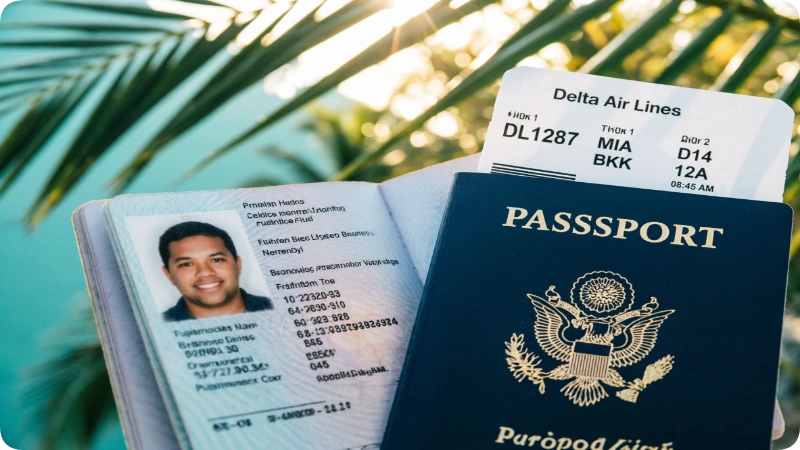
US passport holders do not need to apply for a visa in advance to visit the Maldives for tourism. On arrival, you’ll receive a free 30 day visitor visa, provided you have a passport valid for at least six months, proof of your onward or return flight, and confirmed accommodation.
Before you fly, every traveler must complete the IMUGA Traveller Declaration online within 96 hours of arrival. This free digital form covers health, customs, and immigration details, and border officials check it on arrival. Be cautious of scam websites mimicking the real IMUGA portal that try to charge a fee; the official form is always free.
What’s Prohibited on Entry
The Maldives enforces strict customs rules that surprise many first time visitors. Vaping devices and e cigarette liquids are completely banned and will be confiscated, with possible fines. Alcohol, pornography, pork products, and religious items considered offensive to Islam (including idols and non Islamic religious texts intended for distribution) are also restricted. Personal religious texts for private use are typically allowed, but organized religious gatherings involving Maldivian citizens are illegal.
Travel Documents to Prepare Before Flying to the Maldives
Having the right paperwork ready before leaving home helps avoid unnecessary stress at check-in or immigration. While entry into the Maldives is straightforward for U.S. travelers, border officials may ask to verify several documents before granting admission.
Before departure, make sure you have:
- A U.S. passport valid for at least six months beyond your arrival date
- Your completed IMUGA Traveller Declaration confirmation
- A return or onward flight ticket
- Hotel or resort reservation confirmation
- Travel insurance details, especially if your policy includes medical evacuation
- Copies of important documents stored digitally and separately from the originals
- A credit card and some U.S. cash for small purchases or emergencies
Keeping printed and digital copies of important documents can also make replacing lost paperwork much easier while traveling abroad.
Best Time to Visit the Maldives
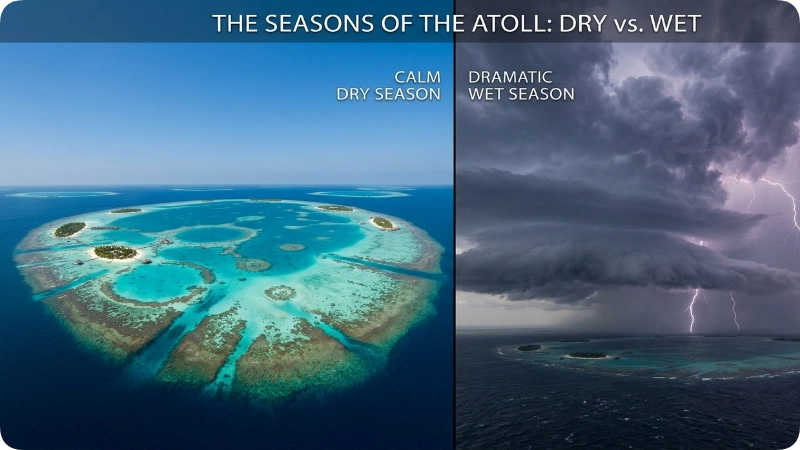
The Maldives has a tropical climate, so timing your trip around the monsoon seasons matters more than chasing a specific month.
Dry season (December–April) brings the best weather: low humidity, minimal rainfall, and calm seas, making it the peak season with the highest resort prices. Wet season (May–November) sees more rain and wind, especially in June and July, but also lower rates and fewer crowds plus this is when the Maldives sees excellent surf swells on the southern atolls. Shoulder months like November and April often strike the best balance of decent weather and lighter crowds.
| Season | Months | Weather | Pros | Cons |
| Peak/Dry | Dec–Apr | Sunny, low humidity | Best visibility, calm seas | Highest prices, busiest resorts |
| Wet/Green | May–Nov | Rain showers, wind | Lower rates, fewer crowds, good surf | Occasional storms |
| Shoulder | Nov, Apr | Transitional | Good value, decent weather | Some unpredictability |
How to Get to the Maldives from the USA
There are no direct flights between the United States and the Maldives, so every US traveler connects through a major international hub. Popular routing options include Doha (Qatar Airways), Dubai or Abu Dhabi (Emirates or Etihad), Istanbul (Turkish Airlines), or Singapore (Singapore Airlines), each landing at Velana International Airport (MLE) near the capital, Malé.
Given the flight disruptions mentioned earlier, it’s worth building in a longer connection window than usual and enrolling in your airline’s flight status alerts. Total travel time from the US East Coast typically runs 18–22 hours including layovers; from the West Coast, expect closer to 22–26 hours.
Getting to Your Resort from the Airport
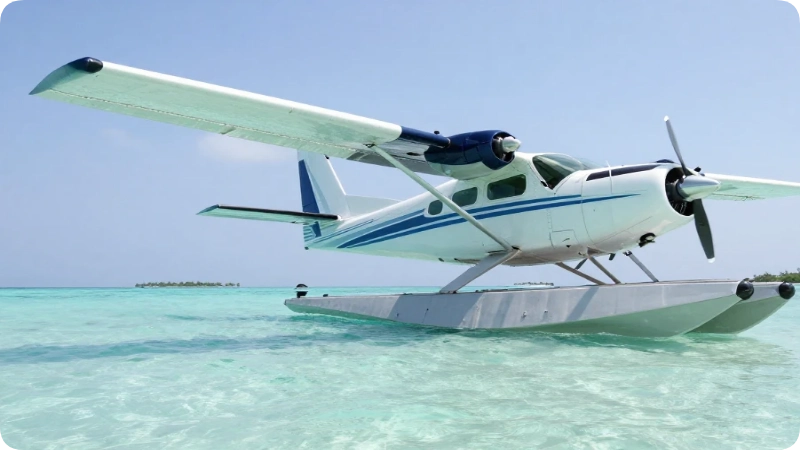
Once you land at Velana International Airport, getting to your resort depends entirely on how far it is from Malé. Nearby resorts use speedboat transfers (20 minutes to about an hour), while farther atolls require a scenic seaplane transfer, which only operates during daylight hours. Some southern atolls are reached by a short domestic flight followed by a boat transfer. Always confirm your transfer type when booking, since seaplane transfers can add significant cost and require arriving early enough in the day.
Getting Around Once You’re There
Most Maldives vacations center on a single resort island, and since these islands typically measure only 0.3 to 0.7 square miles, getting around is simple. Resorts commonly offer bicycles or chauffeured golf buggies for guests, especially useful in the heat and humidity. In Malé and Hulhumalé, walking, local buses, and taxis are the main ways to get around if you’re exploring beyond the resort. Travelers with mobility concerns should note that speedboat and seaplane transfers, sandy paths, and unpaved walkways can make navigation more challenging; a few resorts, including one IncluCare certified property, have specifically built out accessible facilities.
Speedboat vs. Seaplane vs. Domestic Flight Transfers
One expense that surprises many first-time visitors is the transfer from Velana International Airport to their accommodation. Because resorts are scattered across different atolls, transportation often becomes one of the largest costs after airfare.
Speedboats are the quickest option for nearby islands and usually operate throughout the day and evening. They’re generally the most affordable transfer method.
Seaplanes provide spectacular aerial views of the islands and are often part of the Maldives experience itself. However, they only operate during daylight hours, so late-arriving international flights may require an overnight stay near Malé.
Domestic flights connect travelers to more distant atolls before a short speedboat ride to the resort. While longer than seaplanes, they often serve destinations outside seaplane operating areas.
| Transfer Type | Typical Time | Best For |
| Speedboat | 20–60 minutes | Resorts near Malé |
| Seaplane | 30–60 minutes | Luxury resorts in distant atolls |
| Domestic Flight + Boat | 1–3 hours | Southern and remote islands |
Always confirm transfer arrangements directly with your accommodation before booking international flights, since many resorts organize transfers themselves.
Where to Stay: Resorts, Guesthouses & Liveaboards
The classic Maldives experience is the one island one resort model, where an entire island is dedicated to a single luxury property with overwater and beach villas. This remains the most popular option, but it’s not the only way to visit.
Local island guesthouses, found on inhabited islands like Maafushi, Ukulhas, and Dhigurah, offer a far more affordable and culturally immersive alternative, often at a fraction of resort prices with the tradeoff of a lower green tax rate but generally simpler amenities. Liveaboard safari vessels let divers and snorkelers cruise between multiple atolls, waking up at a new dive site each day. Hotels on Hulhumalé, close to the airport, work well for a short layover stopover or a budget friendly base for day tripping to nearby islands.
Which Type of Maldives Stay Is Right for You?
Choosing where to stay has a bigger impact on your Maldives experience than almost any other decision. Each accommodation style offers a different balance of luxury, privacy, cost, and local culture.
- Luxury resorts are ideal for honeymooners, anniversary trips, and travelers seeking overwater villas with premium amenities.
- Local island guesthouses offer excellent value while allowing visitors to experience everyday Maldivian life, local restaurants, and community-run excursions.
- Liveaboard boats are especially popular with scuba divers and snorkelers who want to explore multiple atolls during one trip.
- Airport hotels on Hulhumalé provide a practical overnight option for travelers arriving late or departing early.
Matching your accommodation to your travel style often results in a better experience than simply choosing the most luxurious option available.
Budget Breakdown & 2026 Tax Rates
Budgeting for the Maldives means accounting for more than the nightly room rate. On top of your accommodation cost, expect a 17% TGST, a 10% service charge, and the green tax layered separately.
As of 2026, the green tax runs $12 per person, per night at resorts, resort hotels, and larger hotels, or $6 per person, per night at small guesthouses (50 rooms or fewer) on inhabited islands. Children under two are exempt. For a couple staying seven nights at a resort, the green tax alone now adds roughly $168 to the final bill. Look for “all inclusive of tax” language when comparing quotes, since some booking platforms display “++” rates that exclude these mandatory charges.
Money saving tips:
- Travel during the wet season (May–November) for lower resort rates.
- Consider a guesthouse stay on a local island for one or two nights to offset resort costs.
- Bundle transfers, meals, and excursions into a package rate rather than paying à la carte.
- Bring US dollars in smaller denominations, since some local shops and restaurants price in USD directly.
What Does a Maldives Trip Really Cost in 2026?
The Maldives can fit a range of travel budgets depending on where you stay and how you travel. Luxury overwater villas receive most of the attention, but guesthouses on local islands have made the destination far more affordable than many travelers expect.
Budget Traveler
- Guesthouse accommodation
- Local ferries
- Local restaurants
- Shared excursions
Estimated daily budget: $100–$180 per person
Mid-Range Traveler
- Beach villa or quality resort
- Speedboat transfers
- Several organized excursions
- Mix of local and resort dining
Estimated daily budget: $300–$600 per person
Luxury Traveler
- Overwater villa
- Seaplane transfer
- Private excursions
- Spa treatments
- Fine dining
Estimated daily budget: $900–$2,000+ per person
Remember that mandatory taxes, service charges, and resort transfer fees can significantly increase the final price, so always calculate your total vacation cost rather than focusing only on the advertised room rate.
Top Attractions & Things to Do
Beyond lounging in an overwater villa, the Maldives offers some of the world’s best marine life encounters. Snorkeling and diving are the headline activities, with manta ray and whale shark sightings possible in certain atolls depending on the season, particularly around Baa Atoll’s UNESCO Biosphere Reserve.
- Sandbank picnics and private island excursions for a classic postcard moment.
- Sunset dolphin cruises, widely offered by resorts and local operators.
- Underwater dining, including glass walled restaurants set beneath the reef.
- Surfing in the southern atolls during the wet season swells.
- Visiting Malé, the compact capital, for local markets, mosques, and city life beyond the resorts.
Hidden Gems Worth Seeking Out
Most visitors never leave their resort island, which means a few standout experiences fly under the radar.
- Local island snorkeling near Maafushi offers reef access nearly as good as resort house reefs, at a fraction of the price.
- Fulhadhoo and other quiet Baa Atoll islands provide a slower, more residential feel away from Kaafu Atoll’s resort heavy waters.
- Night fishing excursions, a traditional Maldivian activity many resorts offer as an evening add on, give a genuine cultural glimpse most tourists skip entirely.
Food & Dining in the Maldives
Traditional Maldivian cuisine centers on fresh fish, coconut, and rice, with dishes like mas huni (shredded smoked tuna with coconut and lime) served for breakfast, and garudhiya (a clear fish soup) as a local staple. Resort dining leans international, with multiple restaurants per property serving everything from Japanese to Italian cuisine, though a few properties now offer standout novelty experiences like underwater or treetop dining.
Remember that alcohol is only served on licensed resort and hotel islands local islands and guesthouses are typically alcohol free due to Islamic law, so factor that into your stay if cocktails by the pool are part of your plan.
Culture & Etiquette
The Maldives is a conservative Muslim nation, and etiquette expectations shift depending on where you are. On resort islands, swimwear and Western dress are completely normal. On local, inhabited islands, modest dress is expected covering shoulders and knees is a respectful baseline, especially for women.
Public practice of any religion other than Islam is prohibited outside private settings, and organized religious gatherings involving Maldivian citizens are illegal, even informally. Personal religious items for private use are generally fine to bring, but importing religious idols is not permitted.
Safety Tips
The Maldives has a low overall crime rate, and violent crime against tourists is rare, especially on resort islands. That said, standard precautions still apply: don’t leave valuables unattended on beaches or in unlocked rooms, and be alert to scams.
The US State Department has flagged an uptick in travel booking, romantic, and financial scams targeting travelers, along with fake websites mimicking the official IMUGA declaration form. Drug laws are extremely strict, with severe penalties for possession, so never accept packages or “gifts” from strangers. If you’re arrested or detained, you have the right to ask officials to notify the nearest US embassy, located in Colombo, Sri Lanka, since there is no US embassy in the Maldives itself. It’s also worth purchasing travel insurance that covers medical evacuation, given the remote nature of many resort islands.
Packing Advice
Pack light, breathable clothing for the tropical heat, along with reef safe sunscreen to protect the coral reefs you’ll likely be snorkeling over. A rash guard is useful for extended time in the water and sun protection. Bring a modest cover up or outfit for any time spent on local islands or in Malé, and don’t pack vaping devices of any kind, since they’ll be confiscated at customs. A dry bag is handy for boat and seaplane transfers, and a portable charger is worth it since some overwater villas have limited outlet access near the water.
Small Items That Can Make a Big Difference During Your Trip
Many travelers remember swimsuits and sunscreen but forget several small items that become surprisingly useful once they arrive in the Maldives.
Consider packing:
- Waterproof phone pouch
- Dry bag for boat transfers
- Reef shoes for coral beaches
- Polarized sunglasses
- Motion sickness medication for speedboat transfers
- Portable power bank
- Reusable insulated water bottle
- Small first-aid kit
- Lip balm with SPF
- Lightweight rain jacket if traveling during the wet season
These inexpensive items take up very little luggage space but can make your trip noticeably more comfortable.
Family Tips
Many resorts cater specifically to families, with kids’ clubs, shallow lagoon access, and connecting villa options. Green tax exemptions apply to children under two, which helps offset costs slightly for families traveling with infants. Because pools and lagoons open directly off many villas, closely supervise young children around water at all times, and ask about villa safety features like pool fencing before booking.
Solo Travel Tips
The Maldives has a reputation as a honeymoon destination, but it works well for solo travelers too, particularly divers drawn to liveaboard trips or budget travelers exploring local island guesthouses. Solo travelers should still watch for online romance and booking scams, which the State Department has specifically flagged as common in the Maldives. Guesthouses on islands like Maafushi tend to have a more social, backpacker friendly atmosphere than isolated resort islands.
Accessibility
Mobility impaired travelers should plan carefully, since most inter island transport involves speedboats or seaplanes without ramps, and many resort paths are unpaved sand. A small number of resorts Baros, Kuramathi, and Adaaran Select Meedhupparu among them have been specifically recommended by travelers with mobility issues, and Amilla Fushi holds an IncluCare accessibility certification. There’s no jet bridge at Velana International Airport, but airlines can arrange a lifting device if notified in advance.
Responsible Travel
The green tax you pay directly funds environmental infrastructure across the islands, including coastal protection, waste management, and water and sewerage systems, a meaningful contribution given the Maldives’ vulnerability to rising sea levels. You can travel more responsibly by choosing reef safe sunscreen, never touching or standing on coral, declining single use plastics where resorts offer alternatives, and supporting local island guesthouses or Maldivian owned excursion operators when possible.
First-Time Maldives Visitor Mistakes
Many first-time visitors expect the Maldives to function like a typical beach destination, but its geography and local customs create a few unique challenges.
Common mistakes include:
- Assuming every island has restaurants, shops, and nightlife.
- Forgetting to budget for mandatory resort transfer fees.
- Booking flights that arrive after seaplane operations have ended.
- Underestimating how much taxes and service charges add to the final bill.
- Wearing beachwear while visiting local inhabited islands.
- Packing prohibited items such as vaping devices.
- Scheduling too many excursions instead of leaving time to simply enjoy the island.
A little planning beforehand helps avoid unexpected expenses and allows you to enjoy the relaxed pace that makes the Maldives so memorable.
Common Mistakes to Avoid
Mistake 1: Assuming the quoted price includes taxes. Always confirm If green tax, TGST, and service charge are included a “++” rate can add 25% or more to your final bill.
Mistake 2: Packing a vape device. It will be confiscated at customs, and you could face fines. Leave it at home entirely.
Mistake 3: Booking a tight layover. Given ongoing regional flight disruptions, a short connection window through Middle Eastern hubs risks missed transfers to the Maldives. Build in extra buffer time.
Alternatives to the Maldives
If rising costs or flight disruptions have you considering other options, a few destinations offer similar turquoise water appeal at a different price point. Sri Lanka combines beaches with cultural sites and is more budget friendly. Bora Bora and other French Polynesian islands offer a comparable overwater villa experience for US travelers, with more direct connections through Los Angeles or Tahiti. Thailand’s southern islands provide tropical scenery with far more affordable dining and activities outside the resort bubble.
Sample 5 Day Maldives Itinerary
Day 1: Arrive at Velana International Airport, transfer to your resort by speedboat or seaplane, settle into your villa.
Day 2: Morning house reef snorkeling, afternoon relaxation, sunset dolphin cruise.
Day 3: Full day excursion sandbank picnic, diving trip, or a visit to a nearby local island.
Day 4: Spa morning, water sports (paddleboarding, kayaking), evening underwater or beachfront dining experience.
Day 5: Final morning swim, checkout, transfer back to the airport for your departure flight.
FAQs
Do US citizens need a visa for the Maldives?
No. US citizens receive a free 30 day visa on arrival, as long as they have a passport valid for at least six months and proof of onward travel.
Is the Maldives expensive right now?
Costs have risen in 2026 due to a doubled green tax ($12 per person, per night) and a 17% tourism tax, though budget friendly guesthouses on local islands remain a lower cost alternative to resorts.
Are there direct flights from the US to the Maldives?
No direct flights exist. US travelers connect through hubs like Doha, Dubai, Abu Dhabi, Istanbul, or Singapore before landing at Velana International Airport.
Is the Maldives safe for tourists in 2026?
Yes, overall crime is low, especially on resort islands, though travelers should watch for booking and romance scams and avoid any involvement with drugs due to severe penalties.
Can you drink alcohol in the Maldives?
Alcohol is only served on licensed resort and hotel islands. Local, inhabited islands and most guesthouses do not serve alcohol due to Islamic law.
What’s the best month to visit the Maldives?
December through April offers the driest, calmest weather and is peak season. Shoulder months like November and April balance good weather with lower prices.
What should I avoid packing for the Maldives?
Leave vaping devices at home entirely, as they’re banned and will be confiscated at customs, along with alcohol, pornography, and religious idols intended for distribution.
Final Takeaways
Three things matter most for a smooth 2026 Maldives trip: confirm If your quoted price already includes the green tax and 17% TGST, build extra buffer time into flight connections given ongoing regional disruptions, and match your accommodation style resort, guesthouse, or liveaboard to your actual budget and travel style rather than defaulting to the most photographed option.
Prices, tax rates, and travel advisories can shift, so double check current details on the official Visit Maldives site, MIRA’s tax pages, and the US State Department’s travel advisory before you book. None of that changes what makes this place worth the trip: turquoise water, quiet islands, and a kind of stillness that’s genuinely rare to find. Start planning now, and the Maldives you land in will feel just as extraordinary as the one in the photos.