A travel crossbody bag is a compact, hands free bag worn across the body, designed to keep your essentials secure and accessible while you explore. The best options combine slash resistant materials, hidden zippers, and RFID blocking pockets. Choose one sized between 5–10 liters for day trips, made from water resistant nylon or recycled polyester, with an adjustable strap and multiple compartments.
Every traveler knows that sinking feeling: the crowd closes in at a European train station, your hands are full of luggage, and somewhere in that chaos, your wallet disappears. Or you spend ten minutes at airport security digging through a tote bag that swallows everything. A great travel crossbody bag solves both problems before they start.
This guide is built for U.S. travelers who want more than a trendy accessory. If you’re navigating the streets of New Orleans, boarding a flight out of LAX, or hiking through a national park, the right crossbody bag keeps your passport, phone, and cash organized and away from pickpockets. Here, you’ll find expert advice on what features actually matter, how to match a bag to your travel style, and which mistakes to avoid before you ever leave home. No fluff, no vague recommendations, just practical, tested knowledge for travelers who plan ahead.
What Makes a Travel Crossbody Bag Different from a Regular One?
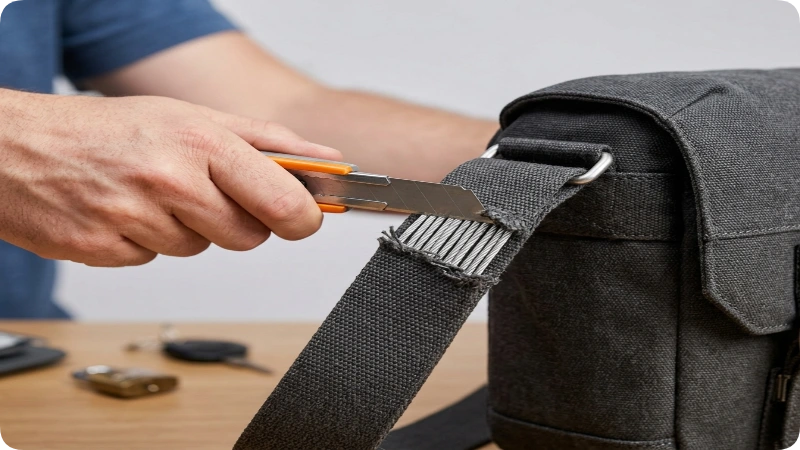
A travel crossbody bag is purpose built to handle the unique demands of travel security, durability, and organization rather than just looking good. Standard fashion crossbody bags lack anti theft features like slash resistant straps, lockable zippers, and RFID blocking pockets. Travel specific crossbody bags typically weigh between 0.3–0.8 lbs (empty), carry 5–10 liters of gear, and use materials tested for abrasion and water resistance.
The difference shows up fast in the real world. A fashion bag’s thin shoulder strap can be cut in seconds in a crowded market. A travel bag’s steel reinforced strap requires serious effort to sever. Most dedicated travel crossbody bags also feature compartments engineered around traveler needs: a slim slot for a boarding pass, a fleece lined pocket to protect sunglasses, and a front quick access pocket sized for a transit card.
Key Features That Set Travel Crossbody Bags Apart
- Slash resistant panels and straps (often stainless steel wire embedded in fabric)
- Lockable or hidden zippers that prevent quick grab theft
- RFID blocking pockets to protect credit cards and passports
- Water resistant exterior (often rated IPX4 or above)
- Padded, adjustable straps for all day comfort
- Lightweight construction ideally under 1 lb empty
How to Choose the Right Size Travel Cross body Bag
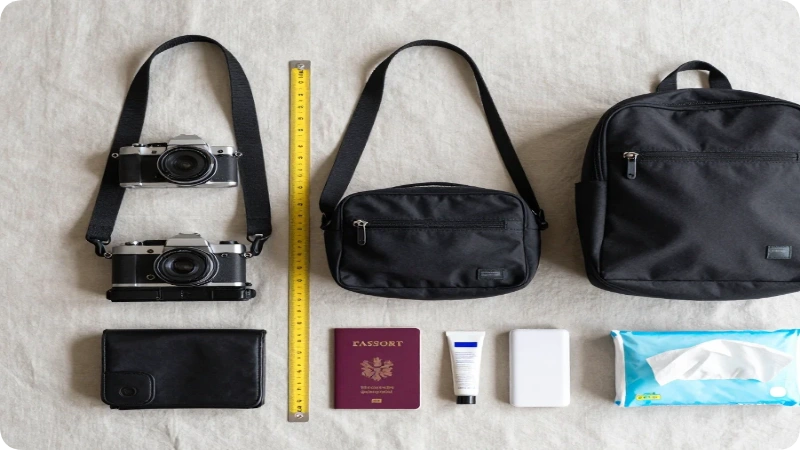
The ideal travel crossbody bag holds 5–10 liters enough for a passport, phone, sunglasses, a water bottle, and a light layer without becoming bulky. Going larger (12+ liters) shifts the center of gravity and causes shoulder strain on long days. Going smaller (under 4 liters) means sacrificing essential storage.
Think about your typical travel day. A city sightseeing day requires different capacity than a beach trip or a theme park visit. Most experienced travelers keep two sizes: a slim 5 liter bag for evenings and urban exploration, and a slightly roomier 8–10 liter version for full travel days. For TSA purposes, crossbody bags count as your personal item on most U.S. carriers but always confirm with your specific airline, as policies vary. The TSA does not restrict crossbody bags at security checkpoints, though you will need to remove the bag and place it in a bin for screening.
Size Guide by Travel Type
| Travel Type | Recommended Size | What Fits |
| City sightseeing | 5–7 liters | Phone, wallet, passport, snacks |
| Day hiking | 8–10 liters | All above + water bottle, first aid |
| Beach / Resort | 6–8 liters | Sunscreen, book, towel (thin) |
| Airport transit | 5–7 liters | Documents, headphones, charger |
| Evenings out | 3–5 liters | Phone, cards, lip balm |
The Best Materials for a Durable Travel Crossbody Bag
Ripstop nylon and recycled polyester are the top material choices for travel crossbody bags lightweight, abrasion resistant, and naturally water repellent when coated with a DWR (Durable Water Repellent) finish. Ballistic nylon offers even more durability but adds weight. Leather looks premium but absorbs water and requires maintenance that most travelers don’t want on the road.
Recycled materials have become increasingly common among leading travel bag brands, reflecting a shift toward sustainable travel gear. Some manufacturers now use fabric made from reclaimed ocean plastic, reducing environmental impact without sacrificing performance. The exterior coating matters as much as the base material. Look for bags that specify a TPU coating or DWR treatment rather than just claiming “water resistant.”
Material Comparison at a Glance
| Material | Weight | Water Resistance | Durability | Best For |
| Ripstop nylon | Light | Good (with DWR) | High | All purpose travel |
| Recycled polyester | Light | Good | Medium High | Eco conscious travelers |
| Ballistic nylon | Medium | Good | Very High | Long term, heavy use |
| Canvas | Medium | Low | Medium | Casual, short trips |
| Leather | Heavy | Poor (untreated) | High (maintained) | Style focused travelers |
Anti Theft Features That Actually Matter
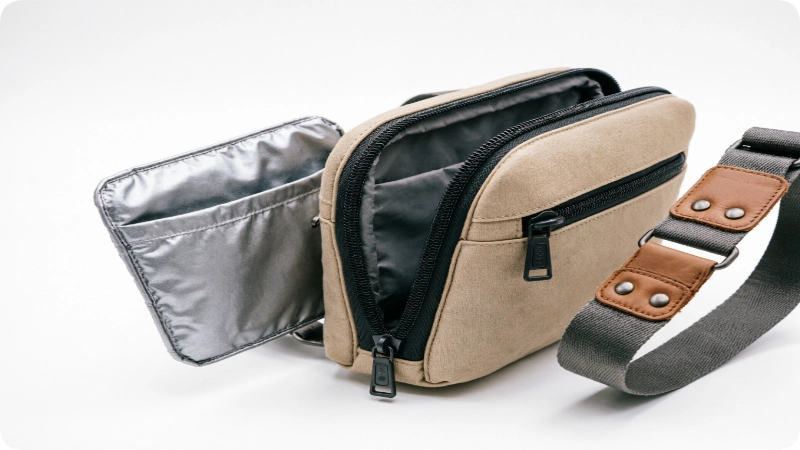
The most effective anti theft features in travel crossbody bags are slash resistant construction, lockable zippers, and RFID blocking fabric. These three elements address the three most common theft methods: strap cutting, quick unzipping, and electronic card skimming. Other features like hidden pockets and lockable D rings add secondary protection.
Pickpocketing is a real concern in crowded tourist areas, even in major U.S. cities. The TSA and the U.S. Department of State both recommend using anti theft travel accessories in high risk environments. RFID theft, while less common than media coverage suggests, remains a documented threat and the cost of RFID blocking fabric adds almost nothing to a bag’s retail price, making it an easy feature to prioritize.
Anti Theft Features Ranked by Effectiveness
- Slash resistant strap steel cable or Dyneema fiber inside strap material
- Hidden/internal zipper pockets places valuables out of sight and reach
- Lockable zipper pulls compatible with small TSA approved padlocks
- RFID blocking passport pocket lined with metallic fabric that blocks scanner signals
- Flat D ring anchor lets you clip the bag to a fixed object when seated
RFID Blocking: Do You Really Need It?
RFID blocking pockets are worth having in a travel crossbody bag, even if the threat level is debated. Modern chip enabled credit cards and passport cards use RFID or NFC signals that can technically be read by a scanner within a few inches. RFID blocking fabric typically woven with metallic threads interrupts that signal entirely.
Security experts note that most modern chip cards require close proximity and a point of sale terminal to process a transaction, making casual skimming difficult. However, travel situations, crowded subways, airport queues, dense markets create the conditions where proximity theft is most feasible. Since RFID blocking fabric adds negligible weight and cost, there’s no practical reason to skip it when buying a dedicated travel bag. The U.S. Department of State issues RFID blocking sleeves with new passports, signaling the government’s own acknowledgment of the concern.
Best Travel Crossbody Bags by Traveler Type
The best travel crossbody bag depends on your travel style solo backpackers need different things than families, business travelers, or outdoor adventurers. Below are specific recommendations by traveler profile, focusing on features rather than brand loyalty.
For Solo Female Travelers
Solo female travelers consistently prioritize slash resistant straps, hidden pockets, and a slim profile that doesn’t signal “tourist.” A bag that sits flat against the body and holds a pepper spray canister in an accessible outer pocket is worth seeking out. Straps that extend long enough to wear across the body (not just at the shoulder) add a layer of security in crowded areas.
For Business Travelers
Business travelers need a crossbody bag that transitions from airport to meeting room without looking out of place. Look for structured shapes with a padded tablet sleeve (fits a 9″ iPad or Kindle), a dedicated charging cable pocket, and a muted colorway navy, charcoal, or black that pairs with professional attire. Quick access card slots near the exterior reduce the time spent fumbling at transit gates.
For Outdoor and Adventure Travelers
Hikers and adventure travelers need a crossbody bag that handles sweat, rain, and the occasional stream crossing. Waterproof zippers (YKK Aquaguard), a hydration compatibility hole, and a sternum strap clip that keeps the bag stable during movement are key. Bright interior colors help locate small items quickly on the trail.
For Families Traveling with Kids
Parents juggling children and gear benefit from a crossbody bag with multiple exterior pockets one for snacks, one for sunscreen, one for a phone. A wipe clean interior lining saves grief from leaky drinks. For theme parks like Disney World in Orlando or Universal Studios in Los Angeles, a 10 liter capacity crossbody handles the full day load without requiring a backpack.
How to Pack a Travel Crossbody Bag Like a Pro
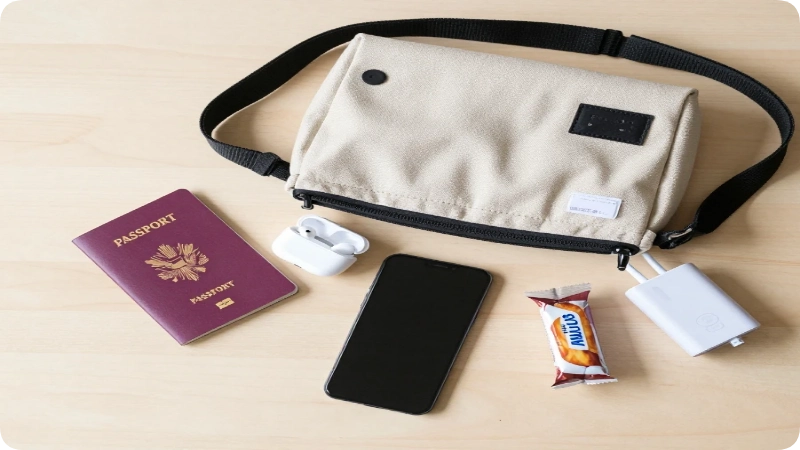
The most efficient packing strategy for a travel crossbody bag places frequently used items in exterior pockets and valuables in interior or hidden compartments. This creates a logical retrieval system that prevents you from unzipping the entire bag every time you need a transit card.
Start with the heaviest items, a water bottle or small camera positioned closest to your body for balance. Layer in the essentials: passport in the RFID blocking pocket, phone in a quick access exterior slot, cards and cash in a hidden interior pocket. Snacks, sunglasses, and a compact umbrella fill in around the core.
Recommended Crossbody Bag Packing List
- Passport or passport card (RFID pocket)
- Phone + portable charger (inner compartment)
- 2–3 credit/debit cards + local cash
- Earbuds / headphones
- Sunglasses in a hard case
- Lip balm, hand sanitizer
- Snack bar or small water bottle
- Compact foldable tote (for shopping)
- Pen + small notebook or transit card
- Any medications you need mid day
TSA Rules and Airport Travel with a Crossbody Bag
Travel crossbody bags are not restricted by the TSA and count as a personal item on most U.S. domestic flights. At security checkpoints, you’ll remove the bag and place it in a screening bin; it does not need to be emptied unless flagged. Items inside the bag still must comply with TSA’s 3 1 1 liquids rule (containers of 3.4 oz or less, in one quart sized clear bag).
Most major U.S. airlines including United, Delta, American, and Southwest allow one carry on bag and one personal item. A crossbody bag qualifies as a personal item alongside a carry on suitcase. However, always verify with your specific carrier before flying, as budget airlines like Spirit and Frontier apply stricter personal item size limits. According to the TSA’s website, travelers can pre enroll in TSA PreCheck to speed through security without removing shoes or small electronics though bags still go through the X ray belt.
Insider Tip: Use a crossbody bag as your “cockpit” on the plane, keep it under the seat in front of you rather than in the overhead bin so your travel documents, earbuds, and snacks stay accessible throughout the flight.
Travel Crossbody Bags vs. Fanny Packs vs. Money Belts
Travel crossbody bags offer the best balance of capacity, security, and accessibility compared to fanny packs and money belts. Each option has a distinct use case.
Fanny packs (also called belt bags or hip packs) sit at the waist and offer quick access but limited capacity usually 2–4 liters. They work well for theme parks or concerts where you want hands free movement without much gear. Money belts worn under clothing offer maximum security for passports and emergency cash but make items nearly impossible to access on the go.
Comparison: Crossbody vs. Fanny Pack vs. Money Belt
| Feature | Crossbody Bag | Fanny Pack | Money Belt |
| Capacity | 5–10L | 2–4L | <1L |
| Security | High | Medium | Very High |
| Accessibility | High | High | Low |
| Comfort (all day) | High | Medium | Low |
| Style versatility | High | Medium | N/A (hidden) |
| Best for | All day travel | Short outings | High risk areas |
Many experienced travelers use a crossbody bag as their primary carry paired with a money belt tucked under clothing for a backup passport copy and emergency cash a two layer security system that handles most theft scenarios.
How to Wear a Travel Crossbody Bag Safely

Wearing a travel crossbody bag with the zipper facing your body not outward is the single most effective way to reduce opportunistic theft. Position the bag in front of your hip or against your stomach in crowded areas, rather than letting it hang at your side or behind you.
In very crowded areas Times Square in New York, the Las Vegas Strip, or Bourbon Street in New Orleans during peak events keep one hand resting lightly on the bag without gripping it. This posture signals awareness without drawing attention. Avoid placing your crossbody bag on the back of a restaurant chair; instead, loop the strap around your leg or the chair leg. This simple habit has saved countless travelers from the “chair theft” one of the most common restaurant based theft methods.
5 Insider Tips for Safe Crossbody Bag Wear
- Rotate the bag to your front in metros, markets, and tourist attractions
- Use the anchor clip when sitting at cafes clip to a fixed object
- Never put your phone in an exterior open pocket interior zippered pockets only
- Keep your crossbody bag on your non dominant side for better reaction time
- Adjust strap length so the bag sits between your hip and ribcage not dangling at your thigh
Common Mistakes Travelers Make When Buying a Crossbody Bag
The three most common crossbody bag mistakes are buying based on aesthetics alone, choosing the wrong size, and skipping anti theft features to save money. Each mistake creates avoidable problems on the road.
Mistake 1: Prioritizing looks over function. A beautiful leather bag with no organization system becomes a liability when you’re hunting for your boarding pass in a security line. Fix: choose function first, then find the most attractive bag that meets your requirements.
Mistake 2: Buying too large. A 15 liter crossbody sounds appealing until it hangs down to your hip and throws off your balance. Fix: realistically assess one typical day’s worth of carry and size accordingly most travelers need 5–8 liters.
Mistake 3: Skipping slash resistant straps. Budget crossbody bags often use thin fabric straps that can be cut with ordinary scissors. Fix: check product listings for “steel cable reinforced” or “slash resistant” strap specifications before buying.
Caring for and Maintaining Your Travel Crossbody Bag
Proper care significantly extends the life of a travel crossbody bag most quality bags last 5–10 years with basic maintenance. After each trip, empty the bag completely, wipe the interior with a damp cloth, and air dry before storing.
For nylon and polyester bags, a gentle hand wash in cool water removes embedded dirt without damaging DWR coatings. Avoid machine washing unless the manufacturer specifically permits it agitation degrades waterproof coatings over time. Re treat DWR coatings annually with a spray on water repellent (available at most outdoor retailers). Zippers benefit from periodic lubrication with beeswax or a dedicated zipper lubricant this keeps them gliding smoothly even after saltwater or dust exposure.
Sustainable and Eco Friendly Travel Crossbody Bag Options
Sustainable travel crossbody bags made from recycled materials now match the durability and performance of conventional options, making them a responsible choice without functional compromise. Several travel brands now manufacture bags from reclaimed ocean plastic, recycled nylon, and organic cotton blends.
When evaluating sustainability claims, look for third party certifications rather than marketing language. Bluesign certification indicates responsible chemical use in fabric manufacturing. Fair Trade certification addresses labor conditions. The Global Recycled Standard (GRS) verifies the percentage of recycled content in a product. These certifications are listed on manufacturer websites and are worth checking before purchase.
Responsible Travel Note: Investing in one high quality, long lasting crossbody bag reduces the consumption cycle of cheap bags that end up in landfills after one or two trips. Durability is sustainability.
Budget Breakdown: What to Spend on a Travel Crossbody Bag
Quality travel crossbody bags range from $30 to $250+, with the most reliable anti theft options sitting in the $60–$130 range. Budget bags under $30 typically sacrifice slash resistance or RFID blocking. Premium bags above $150 often add lifetime warranties and heavier duty hardware.
| Price Range | What You Get | Best For |
| Under $40 | Basic organization, no anti theft | Occasional, low risk travelers |
| $40–$80 | RFID blocking, water resistance | Most travelers, domestic trips |
| $80–$130 | Anti theft construction, lifetime warranty | Frequent international travelers |
| $130–$200+ | Premium materials, advanced features | Long term travel, high risk destinations |
Prices and product availability change frequently, always check current listings and reviews before purchasing.
FAQs
What is the best travel crossbody bag for women?
The best travel crossbody bag for women combines slash resistant straps, RFID blocking pockets, and a slim profile that works across casual and semi formal settings. Prioritize bags with a sternum clip option and enough interior depth for a smartphone without the screen touching anything abrasive. Size the bag to your daily carry needs. Most women find 5–8 liters covers full day travel comfortably.
Can a crossbody bag be a personal item on a plane?
Yes, a crossbody bag qualifies as a personal item on most major U.S. airlines, including Delta, United, American, and Southwest. It must fit under the seat in front of you. Budget carriers like Spirit and Frontier have stricter size limits to verify dimensions against your specific airline’s personal item policy before flying.
Are travel crossbody bags worth it for men?
Absolutely. Travel crossbody bags are practical for men, especially in urban travel environments, theme parks, and international destinations. Styles designed for men typically feature rectangular silhouettes, neutral colorways, and wider straps. The hands free carry and organized storage solve real travel problems regardless of gender.
How do I keep my crossbody bag safe from pickpockets?
Wear the bag on your front in crowded areas, keep zippers facing your body, use interior pockets for valuables rather than exterior ones, and anchor the bag to a fixed surface when seated. In very high risk areas, supplement your crossbody bag with a hidden money belt for emergency documents and backup cash.
What size crossbody bag is best for travel?
In most travel scenarios, a 5–8 liter crossbody bag handles everything you need for a full day passport, phone, cards, snacks, sunglasses, a portable charger, and a light layer. Go up to 10 liters for hikes or full day theme park visits. Anything larger starts behaving more like a backpack and loses the streamlined advantages of the crossbody format.
Do travel crossbody bags work for hiking?
Yes, purpose built outdoor crossbody bags handle light to moderate hiking well, particularly for trail access rather than multi day backcountry trekking. Look for waterproof zippers, a stabilizing sternum strap, and a fabric rated for water resistance. For serious hikes in national parks like the Grand Canyon or Zion, combine a 10 liter crossbody for essentials with a daypack for water and gear.
Can I take a crossbody bag through TSA security?
Yes. TSA does not restrict crossbody bags. Place the bag in a screening bin at the checkpoint. Electronics, liquids, and other screened items still apply their normal rules regardless of what bag they’re carried in. TSA PreCheck members do not need to remove laptops or liquids from bags, but the bag still goes through the X ray machine.
The Bottom Line: What Every Traveler Should Know
Three things matter most when choosing a travel crossbody bag: anti theft construction, the right size for your travel style, and material quality that lasts beyond one trip. A bag in the $60–$130 range that checks all three boxes outperforms a designer option that checks none.
The hands free freedom of a crossbody bag genuinely changes how you move through airports, cities, and trails. When your documents are organized, your hands are empty, and your mind isn’t racing about where your passport ended up, travel becomes what it’s supposed to be. Start with the features, find the style that appeals to you, and invest in something you’ll carry through a hundred future adventures.
Ready to upgrade your travel setup? Start by auditing one typical travel day’s worth of carry then size and feature match from there.
Every great trip deserves gear that works as hard as you do.