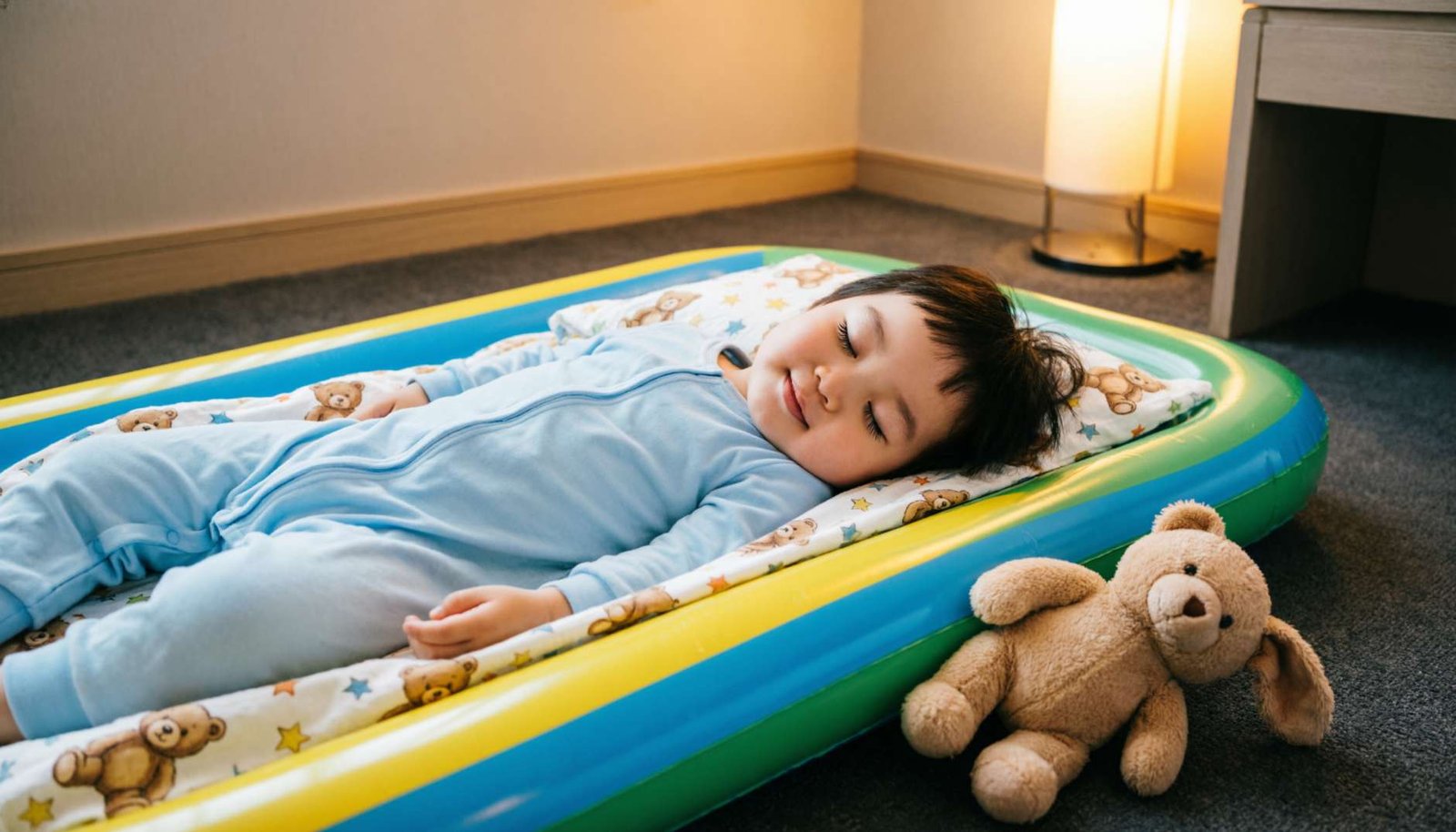
A toddler travel bed is a portable sleeping surface designed specifically for children ages 1–5 who have outgrown a travel crib but aren’t ready for a full sized bed away from home.
The best options inflate in under 3 minutes, include bumper rails to prevent rolling off, weigh under 5 pounds, and pack into a carry bag small enough to fit in a checked suitcase or car trunk.
Why Sleep Is the Make or Break Factor for Family Travel
Every parent who has traveled with a toddler knows the dread: a strange sleep environment, an overtired two year old, and 11:30 PM becoming the most miserable hour of what was supposed to be a dream vacation. Hotels rarely stock toddler appropriate bedding. Vacation rentals in family friendly destinations like Orlando, the Outer Banks, or San Diego often have guest rooms with only adult beds nothing safe or suitable for a toddler.
A toddler travel bed solves this problem at the source. Rather than hoping the Airbnb has a crib or that the hotel will set up a rollaway that actually fits your child, you bring a familiar sleep surface your toddler already associates with bedtime. That familiarity the same inflated mattress, the same bumper rails, possibly the same fitted sheet from home significantly reduces the sleep disruption that derails family trips.
This guide covers every type of toddler travel bed available, the safety standards that matter most, how to pick the right one for your trip type, and the practical strategies that make portable toddler sleep actually work. If you’re flying to see grandparents, road tripping to a national park, or booking a beach vacation, better toddler sleep starts before you pack the car.
Toddler Travel Bed Types at a Glance
| Type | Best For | Packed Size | Setup Time | Approx. Weight |
| Inflatable toddler bed | Hotels, vacation rentals, grandparents’ homes | Grocery bag | 2–4 min | 3–5 lbs |
| Portable foam mat | Car trips, floor sleeping, camping | Rolled tube | Instant | 2–4 lbs |
| Pack n Play / travel crib | Younger toddlers (12–24 months) | Large duffel | 5–10 min | 13–20 lbs |
| Toddler air mattress with rails | Extended stays, vacation rentals | Medium bag | 3–5 min | 4–6 lbs |
| Foldable travel toddler bed | Frequent travel, older toddlers | Backpack | Instant | 4–8 lbs |
Types of Toddler Travel Beds: A Detailed Breakdown
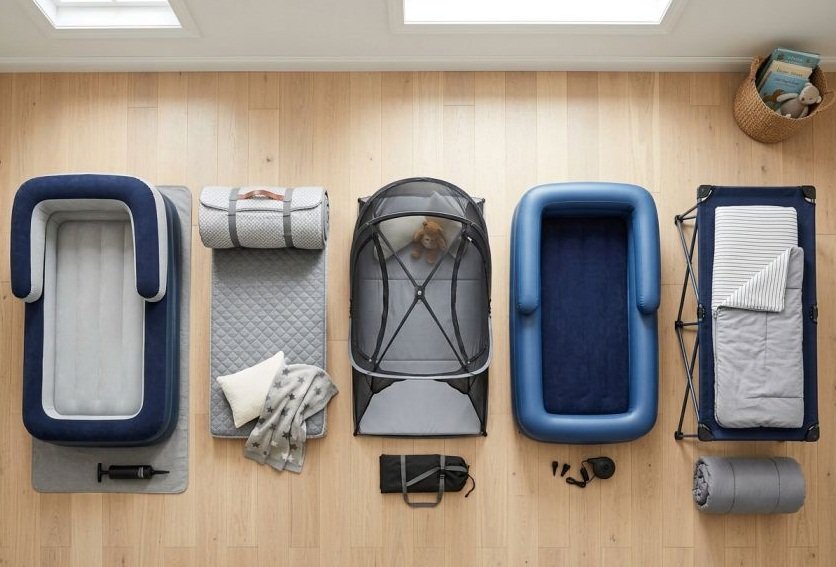
The right type of toddler travel bed depends on your child’s age, the trip length, your transportation method, and where you’re sleeping. Each type has genuine strengths and real limitations worth knowing before you buy.
Inflatable Toddler Beds
Inflatable toddler beds are the most popular portable sleep option for toddlers ages 18 months to 5 years. They consist of an air mattress with built-in bumper rails raised sides that prevent toddlers from rolling off during sleep. The Shrunks Toddler Travel Bed and the Hiccapop Inflatable Toddler Travel Bed rank among the most recommended in this category. Both inflate in under three minutes with an included electric pump, pack into a grocery bag sized carry case, and weigh under 5 pounds.
The main limitation of inflatable beds is puncture risk. A sharp corner on hotel furniture or a curious toddler with a pen can deflate the mattress overnight. Pack a small repair kit most inflatable beds include one and do a test inflation at home before your first trip.
Portable Foam Travel Mats
Foam travel mats offer zero setup time and zero puncture risk. They roll or fold into a compact tube, unfold onto any floor, and provide a clean, cushioned surface for toddlers who are past the falling off the edge stage usually 3 years and up. Milliard and KidCo make well regarded options. These work best on car trips where weight and packed size matter less, and where the mat can stay unrolled in the trunk.
The trade off is bulk. A foam mat doesn’t compress the way an inflatable does, which makes it impractical for flights or trips where every square inch of luggage space counts.
Pack n Play and Travel Cribs
For younger toddlers between 12 and 24 months who are still transitioning from a crib, a travel crib or Pack n Play remains the safest option. The Graco Pack ‘n Play folds into a large duffel style bag and provides a fully enclosed sleep space with a flat mattress. The Lotus Travel Crib earns particular praise for its lighter weight (13 lbs) and faster fold and unfold system.
The downside is size and weight. A Pack n Play in its bag runs 20–28 pounds and takes up roughly half a checked bag. For families traveling by air, this often means a dedicated checked bag for the sleep setup alone worth factoring into airline baggage fees, which vary significantly across carriers like Southwest, Delta, and United.
Toddler Air Mattresses with Bumper Rails
A step up from basic inflatable beds, full toddler air mattresses with bumper rails provide more sleeping surface useful for larger toddlers or for trips lasting several weeks. These resemble a miniature adult air mattress with soft foam or inflatable walls on all sides. They typically weigh 4–6 pounds and pack into a medium sized bag. Intex and Regalo both make options in this format. These work especially well for extended vacation rental stays where setup time matters less than long term comfort.
Foldable Portable Toddler Beds
Foldable travel beds use a lightweight frame and fabric sleeping surface similar in concept to a cot. They fold flat or into a compact rectangle and set up without inflation. The Joovy Foocot and similar designs weigh 5–8 pounds and handle toddlers up to 50 pounds. These suit frequent travelers who want a quick deploying, durable sleep surface without worrying about air pressure maintenance.
Toddler Travel Bed Safety: What Parents Must Know
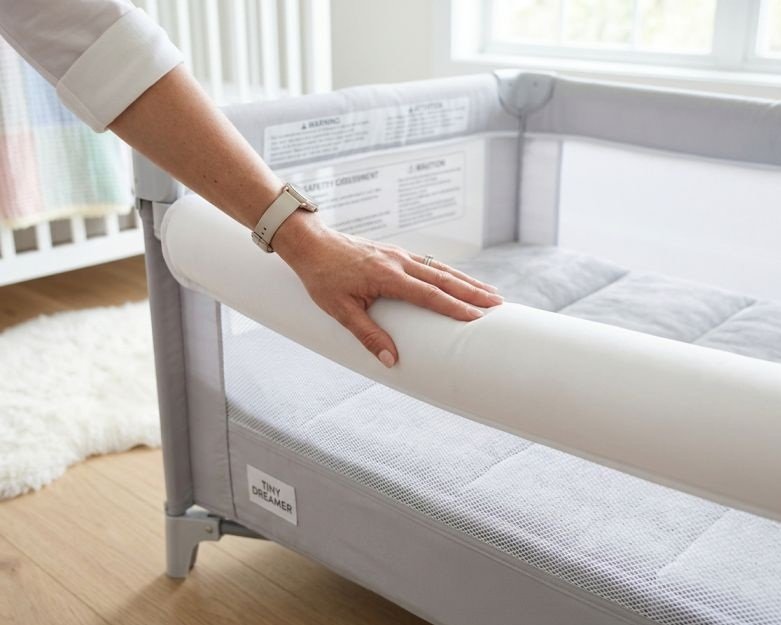
Safety is the top priority for any toddler sleep product. The Consumer Product Safety Commission (CPSC) oversees infant and toddler sleep product standards in the United States, and their guidelines carry real weight for any parent choosing a travel sleep option.
Key safety guidelines for toddler travel beds:
- Age and weight limits matter. Most toddler travel beds are designed for children 18 months and older who can roll over independently and push up on their own. Always check the manufacturer’s stated weight limit, most cap at 50 pounds.
- Sleep surface firmness. The American Academy of Pediatrics (AAP) recommends firm, flat sleep surfaces for children under 18 months. Inflatable beds that sag or sink in the middle don’t meet this standard for younger children.
- Bumper rail height. Bumper rails should be at least 6–8 inches tall when inflated to prevent a sleeping toddler from rolling over the edge. Measure before trusting the product description.
- No loose bedding for under 2s. Pillows, thick blankets, and stuffed animals on or near a toddler sleep surface increase suffocation risk for children under 2. A fitted travel sheet and a wearable sleep sack are safer choices.
- Floor placement only. Never place an inflatable toddler bed on a raised surface like a hotel bed or couch. The floor prevents fall injury and removes the risk of the bed shifting during the night.
- Test fully at home first. Inflate and use the toddler travel bed at home for at least one nap before your trip. This identifies deflation issues, confirms your toddler accepts it, and lets you practice setup speed.
Always verify that any toddler sleep product you purchase carries ASTM International safety certification or JPMA (Juvenile Products Manufacturers Association) certification. Check current product recalls through the CPSC website (cpsc.gov) before purchasing or using any infant or toddler sleep product.
5 Insider Tips for Toddler Travel Sleep Success
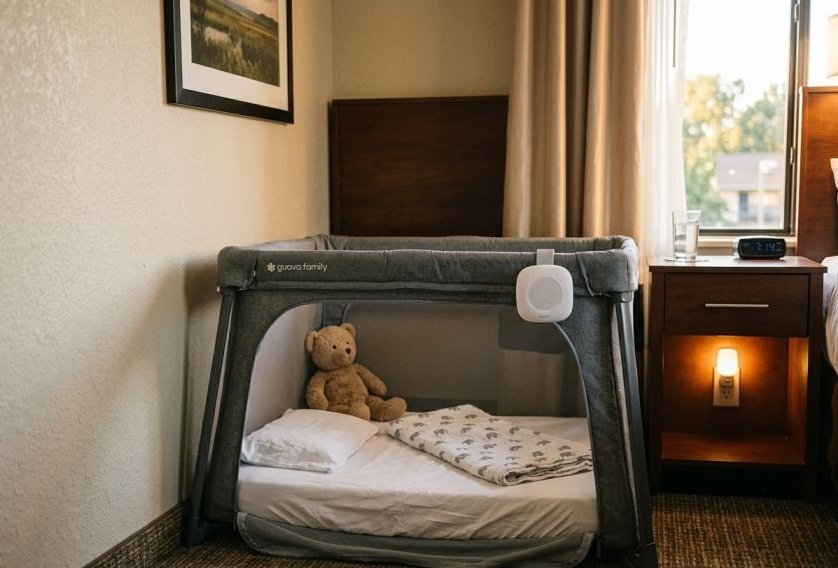
Tip 1: Bring the fitted sheet from home. Familiar smell is one of the most powerful sleep cues for toddlers. Washing a fitted travel sheet with your usual detergent and packing it with the travel bed creates an olfactory signal that says “this is safe, this is bedtime.” Many parents report this single step dramatically shortens the time it takes toddlers to fall asleep in unfamiliar environments.
Tip 2: Set up the travel bed before your toddler sees the hotel room. Arrive early when possible and inflate the travel bed while your toddler is still in the stroller or carrier. When they walk in, the familiar sleep setup is already there; it anchors the room as a safe space before exploration and stimulation take over.
Tip 3: Maintain your bedtime routine to the minute. The physical sleep surface matters less than the routine around it. Bath, books, song, lights out in the same order, at the same time as home signals your toddler’s brain that sleep is happening regardless of geography. Parents who skip the routine in vacation mode almost universally report worse toddler sleep.
Tip 4: Bring a white noise machine or white noise app. Hotel rooms are noisier than home: hallway conversations, elevator sounds, air conditioning cycling. A compact white noise machine like the LectroFan Micro2 weighs 2 ounces and fits in a diaper bag pocket. Downloaded white noise apps work on airplane mode and eliminate data concerns.
Tip 5: Request a ground floor room when possible. Ground floor hotel rooms minimize hallway traffic noise from above and make nighttime emergencies (a sick toddler, a diaper issue) easier to handle without disturbing neighbors. They also allow the air conditioning unit to run without the overhead thumping that upper floor rooms sometimes have.
Flying with a Toddler Travel Bed: TSA Rules and Logistics
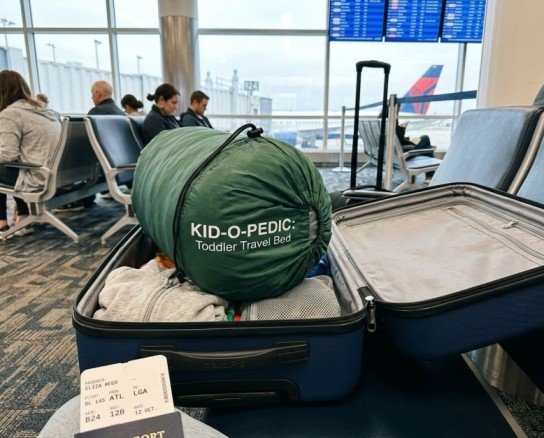
Toddler travel beds in all forms inflatable, foam, or foldable are permitted in both carry on and checked luggage per TSA guidelines. The electric air pump that comes with most inflatable beds is also permitted. There are no specific restrictions on toddler sleep products in U.S. airport security.
Practical flying logistics:
- Checked bag strategy: An inflatable toddler bed (deflated and packed) typically fits alongside clothing in a standard checked suitcase. Most weigh under 5 pounds, well within checked baggage weight limits. Foam mats, by contrast, often require their own bag or attachment to the outside of luggage.
- Carry on strategy: Compact inflatable beds like the Shrunks Toddler Travel Bed pack small enough to fit in a large carry on leaving the checked bag for other family gear. This approach protects the sleep setup from checked bag delays or loss.
- Gate checking: Car seats and strollers gate check free on most major U.S. airlines. Toddler travel beds don’t qualify for this; they’re standard baggage items.
For international travel, verify customs rules for your destination country. Most manufactured travel beds clear customs without issue, but it’s worth confirming with your destination’s customs authority if traveling with multiple large child related items.
Road Trips with a Toddler Travel Bed
Road trips are the easiest context for toddler travel beds because weight and packed size matter much less when you’re loading a car rather than weighing a suitcase. Families driving to destinations like Great Smoky Mountains National Park, Myrtle Beach, or a lake house in the Adirondacks can pack the foam mat or full air mattress that would be impractical for air travel.
Road trip toddler sleep strategies:
- Pack the travel bed last so it’s first out of the trunk at your destination
- Bring a portable sound machine clipped to the window shade to block parking lot noise
- Identify the quietest room at your accommodation before arrival call ahead and request it specifically
- For multi night road trips through multiple states, keep the bed setup identical at each stop to preserve sleep associations
- Consider scheduling long driving segments during nap time a toddler sleeping in the car seat for two hours means more alert family time at the destination
Using a Toddler Travel Bed at Different Accommodations
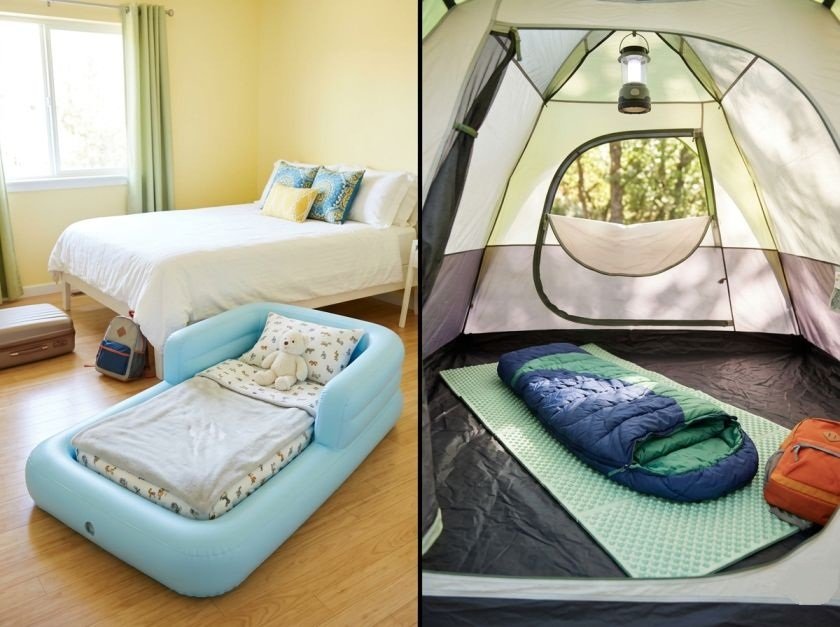
The accommodation type shapes which toddler travel bed works best and how you deploy it.
Hotels
Most hotels provide cribs on request, but availability isn’t guaranteed and crib quality varies widely. A hotel crib is typically a basic Pack n Play in average condition. Bringing your own toddler travel bed ensures a familiar, clean surface you trust. Request a room with carpeted floors rather than hard floors inflatable beds on carpet stay in place better and feel softer underfoot for nighttime wake ups.
Vacation Rentals (Airbnb, Vrbo)
Vacation rental listings sometimes advertise a “pack n play available” but listings aren’t regulated for accuracy, and the stated item may be absent, broken, or inappropriate for your child’s age. Always message the host before booking to confirm exactly what sleep equipment exists, the age it’s designed for, and its condition. Bringing your own toddler travel bed removes the uncertainty entirely.
Camping and Glamping
Families camping in national parks like Acadia, Zion, or Yosemite need a different approach. A foam mat inside a tent provides cushioning, insulation from the ground, and easy cleaning. For glamping setups in furnished tents or cabins, an inflatable toddler bed works well to confirm that the glamping site provides a power outlet for the pump, or bring a battery powered pump as backup.
Grandparents’ Homes
Grandparents’ homes are one of the most common toddler travel bed use cases. The guest room has an adult bed, nothing toddler safe, and grandparents aren’t about to buy a crib for occasional visits. An inflatable toddler bed sets up in minutes on any floor and doesn’t require the host to have any special equipment.
3 Common Mistakes Parents Make with Toddler Travel Beds
Mistake 1: Waiting Until the Trip to Test It
Introducing a toddler travel bed for the first time in an already unfamiliar hotel room combines two sleep disruptions at once. The result is often a toddler who refuses the bed entirely, leaving parents with a deflated mattress on the floor and a toddler in the adult bed. Fix: Use the travel bed for at least three naps or nights at home before the trip. By the time you travel, it’s already a familiar object.
Mistake 2: Overestimating the Crib at the Destination
“The Airbnb has a crib” sounds reassuring until you arrive and find a broken down Pack n Play with a sagging mattress, last cleaned in an unknown decade. Some vacation rental cribs are genuinely unsafe. Fix: Always inspect any provided sleep equipment before putting your toddler in it to check for structural damage, mattress condition, and manufacturer recall status. When in doubt, use your own travel bed on the floor.
Mistake 3: Skipping the Sleep Routine Because “It’s Vacation”
Parents who relax bedtime routines on vacation by staying out past the toddler’s usual sleep window, skipping the bath, rushing through books almost always pay for it with 5 AM wake ups and overtired afternoons. Fix: Keep the routine as close to home as possible for at least the first two nights. Once your toddler establishes a sleep pattern in the new environment, small routine adjustments are much easier.
Underrated Alternatives to a Traditional Toddler Travel Bed
A Fitted Crib Sheet Over a Folded Hotel Duvet: For toddlers 3 and older who are beyond rolling off edges, a hotel comforter folded two or three times creates a cushioned, low to the ground sleep surface. Add a fitted crib sheet for cleanliness. This weighs essentially nothing and works for short trips where bringing a full travel bed isn’t practical.
A Kids’ Sleeping Bag on a Foam Pad: For camping families or for older toddlers comfortable on the floor, a lightweight kids’ sleeping bag (Sea to Summit and REI both make toddler sized options) pairs with any thin foam pad for a cozy, portable sleep setup. This combination works especially well at campsites and cabins where the floor is flat and clean.
An Inflatable Pool Float: Not a first choice, but in genuine pinch situations an unexpected overnight, a family gathering without any sleep equipment a firm, low profile inflatable pool float can serve as a temporary toddler sleep surface for a night. Place it flat on the floor and add familiar bedding. This isn’t a substitute for a proper travel bed, but it’s better than no floor level sleep surface at all.
How to Pack a Toddler Travel Bed: Checklist
A complete toddler sleep setup for travel goes beyond just the bed itself. These supporting items make the difference between a smooth bedtime and a chaotic one:
- Toddler travel bed (deflated and packed in its carry case)
- Electric air pump (packed separately from the bed)
- Repair kit (included with most inflatable beds)
- Fitted travel sheet (washed in home detergent)
- Wearable sleep sack (age appropriate tog rating for destination temperature)
- Familiar small comfort object (one stuffed animal or lovey not a loose blanket)
- Portable white noise machine or downloaded white noise app
- Nightlight (a plug in nightlight or battery clip on adds $0 to your luggage weight)
- Portable baby monitor (optional, but useful in large vacation rental homes)
Budget Guide: What Toddler Travel Beds Actually Cost
Prices vary significantly by type and brand. All price ranges below are approximate and subject to change verify current pricing with retailers before purchasing.
| Type | Price Range | Best Value Consideration |
| Basic inflatable toddler bed | $25–$45 | Good for occasional use |
| Premium inflatable with high bumper rails | $50–$80 | Best for frequent travelers |
| Foam travel mat | $40–$70 | No deflation reliability |
| Lightweight travel crib (Lotus style) | $180–$250 | Best for under 18 month toddlers |
| Foldable toddler cot | $50–$90 | Good for older toddlers (3–5 yrs) |
Beyond the bed itself, the travel sheet ($10–$20), white noise machine ($20–$40), and pump (often included) round out a complete travel sleep setup for well under $150 for most families.
FAQs
What age is a toddler travel bed appropriate for?
Most toddler travel beds suit children between 18 months and 5 years old. Children under 18 months need a flat, firm sleep surface; a travel crib or Pack n Play is safer for that age range. At the upper end, once a child stays reliably in a regular bed at home, they typically transition well to adult beds on vacation without needing a dedicated travel bed.
Can a toddler travel bed go on top of a hotel bed?
Never place a toddler travel bed on a raised surface like an adult hotel bed or sofa. The risk of the travel bed shifting and falling, or a toddler rolling off the edge onto a hard floor, is serious. Always set up the toddler travel bed directly on the floor, ideally on carpet. This also keeps the sleep surface at the safest possible height for toddlers who wake and climb out independently.
How do I get my toddler to sleep in a travel bed away from home?
The most effective approach combines familiarity and routine. Use the travel bed for naps and nights at home for at least a week before your trip so it’s already associated with sleep. Bring a fitted sheet washed in your regular detergent, maintain your exact bedtime routine, and set up the travel bed before your toddler enters the room. A portable white noise machine also helps mask unfamiliar hotel sounds.
Are toddler travel beds allowed on airplanes?
Yes toddler travel beds are permitted in both carry on and checked luggage per TSA guidelines. The included air pumps are also legal. Compact inflatable models pack small enough to fit in a large carry on bag. For travel cribs and larger foam mats, checked baggage is more practical. Always weigh your packed luggage before departure to avoid airline overweight fees.
Do hotels provide toddler beds?
Most hotels provide a basic Pack n Play or hotel crib on request, but availability isn’t guaranteed, quality varies, and these are typically designed for infants rather than toddlers over 18 months. Some larger family focused resorts Disney affiliated hotels in Orlando, for example have better family sleep equipment available, but calling ahead to confirm is always worth doing. Bringing your own toddler travel bed eliminates the uncertainty.
How do I clean a toddler travel bed while traveling?
Wipe down the inflatable surface with a mild unscented baby safe disinfectant wipe after each use. Wash the fitted travel sheet in any hotel laundry or laundromat on a gentle cycle. For foam mats, spot clean with a damp cloth and allow to air dry fully before rolling or folding. Avoid harsh chemical cleaners that could leave residue on a surface your toddler’s face will contact.
What’s the lightest toddler travel bed for air travel?
The lightest category is compact inflatable toddler beds, which typically weigh 3–5 pounds when packed. Models from Hiccapop and the Shrunks brand compress to a small carry bag and inflate quickly with a small electric pump. If you prioritize absolute minimum weight, a foam travel mat weighs slightly more but eliminates any pump requirement. Always check current weight specs directly with the manufacturer before purchasing.
Conclusion: Better Sleep Means a Better Trip For Everyone
Three things to remember before you book your next family trip. First, test the toddler travel bed at home before you travel. Familiarity with the sleep surface is the single most effective tool for smooth bedtime away from home.
Second, match the bed type to the trip an inflatable bed suits most hotel and vacation rental stays, while a foam mat or foldable cot works better for camping or car trips.
Third, the routine matters more than the product the travel bed creates the surface, but a consistent bedtime routine creates the sleep.
A well rested toddler is a genuinely happier traveler. So are the parents. The right toddler travel bed doesn’t guarantee a perfect night every time, but it removes one of the biggest variables working against you in an unfamiliar place and that’s worth every ounce it weighs in your suitcase.
Bring the bed. Keep the routine. Go explore.

Gordon Ramsay is a travel writer and destination researcher who helps U.S. travelers plan smarter trips, covering destinations, seasonal trends, budgets, and logistics to help readers decide where—and when—to go.
Rather than simply listing popular places, Gordon Ramsay focuses on what travelers actually need: comparing weather against crowds, weighing costs and accessibility, and researching current conditions alongside official tourism guidance—delivering honest, practical advice without the hype.