Travel insurance is a policy that reimburses trip costs and medical expenses when unexpected events disrupt your travel plans. It typically covers trip cancellation, medical emergencies abroad, lost luggage, and travel delays. Most policies cost between 4% and 10% of your total trip price, and buying within 14–21 days of your first trip payment unlocks the best benefits, including pre existing condition waivers.
Nobody plans for a broken ankle on a hiking trail in Zion, a canceled flight out of Chicago O’Hare, or a stolen backpack in downtown Miami. But these things happen every single day to American travelers, and without the right coverage, a single mishap can turn a dream vacation into a financial headache. This guide walks through everything U.S. travelers need to know about travel insurance, from what it actually covers to how to pick a plan that fits your trip, your budget, and your peace of mind. If you’re booking a weekend getaway or a monthlong international itinerary, understanding your options before you fly can save you thousands of dollars and a lot of stress.
What Is Travel Insurance and Why It Matters
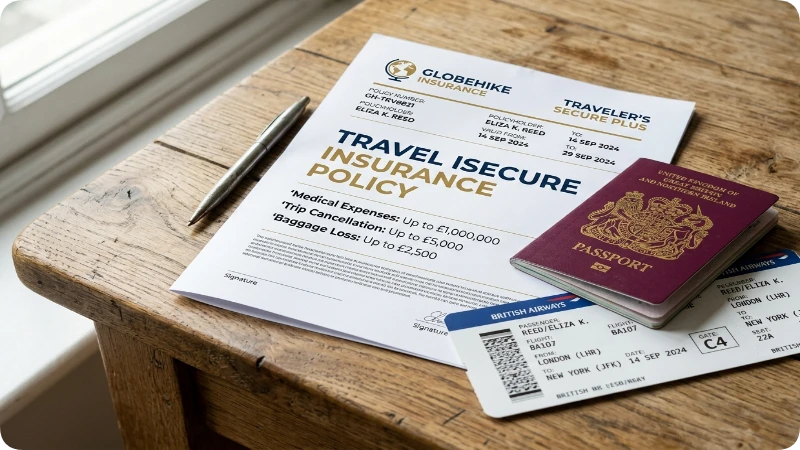
Travel insurance is a short term policy designed to protect the money and health of a traveler before and during a trip. It reimburses non refundable costs like flights and hotels if a covered event forces a cancellation, and it can pay for emergency medical care or evacuation overseas. For U.S. travelers, this matters because domestic health insurance plans rarely cover care received outside the country.
Many travelers assume their credit card or standard health plan already protects them abroad. In reality, most U.S. health insurers, including Medicare, provide little to no coverage outside the United States, according to guidance from the Centers for Disease Control and Prevention (CDC). That gap is exactly what travel insurance is built to close.
Which Type of Travel Insurance Do You Need?
Not every traveler needs the same level of protection. Choosing the right policy starts with understanding how you’ll be traveling.
| If You’re… | Consider… |
| Traveling internationally | Comprehensive policy with medical and evacuation coverage |
| Taking a domestic vacation | Trip cancellation and baggage coverage may be enough |
| Going on a cruise | Cruise-specific coverage with evacuation benefits |
| Backpacking or adventure traveling | Medical + adventure sports rider |
| Traveling several times a year | Annual multi-trip policy |
| Booking an expensive honeymoon | Comprehensive policy with CFAR option |
Buying coverage that matches your trip helps avoid paying for benefits you may never use while ensuring important risks are protected.
Is Travel Insurance Worth It?
Travel insurance isn’t necessary for every trip, but it can provide significant financial protection when unexpected events occur. Whether it’s worth buying depends on how much money is at risk and how easily you could absorb those costs yourself.
For a low-cost domestic weekend trip with refundable hotel reservations, skipping insurance may be reasonable. On the other hand, an international vacation involving expensive flights, cruises, guided tours, or prepaid accommodations often justifies the extra cost.
Medical coverage is one of the biggest reasons travelers purchase insurance. Emergency treatment or medical evacuation overseas can cost tens of thousands of dollars, and many U.S. health insurance plans provide little or no coverage outside the country.
Travel insurance also becomes more valuable when traveling during hurricane season, winter storm months, or to destinations where flight disruptions are common.
As a general rule, the more expensive, complicated, or international your trip is, the more worthwhile comprehensive travel insurance becomes.
Quick Facts Table: Travel Insurance at a Glance

| Feature | Typical Range or Detail |
| Average cost | 4%–10% of total trip cost |
| Best time to buy | Within 14–21 days of first trip deposit |
| Medical coverage (international plans) | $50,000–$250,000+ |
| Emergency evacuation coverage | $100,000–$1,000,000 |
| Cancel for Any Reason (CFAR) reimbursement | Usually 50%–75% of trip cost |
| Claim filing window | Typically 20–90 days after the trip or incident |
Prices and coverage limits vary by provider and change over time, so always confirm current figures directly with the insurer before purchasing.
Types of Travel Insurance Coverage
Travel insurance isn’t one size fits all. Plans are usually built from a combination of coverage types, and understanding each one helps you avoid paying for protection you don’t need while making sure you’re not missing something critical.
Trip Cancellation and Interruption Insurance
This is the most commonly purchased coverage. It reimburses prepaid, non refundable trip costs if you have to cancel or cut a trip short for a covered reason, such as a sudden illness, a death in the family, or severe weather.
Travel Medical Insurance
This covers emergency medical treatment, hospital stays, and sometimes prescription costs while traveling, particularly important for international trips where U.S. insurance often doesn’t apply.
Emergency Medical Evacuation Coverage
If you’re injured somewhere remote, like backcountry Alaska or a rural stretch of Southeast Asia, this pays for transport to the nearest adequate medical facility, which can otherwise cost tens of thousands of dollars out of pocket.
Baggage and Personal Belongings Coverage
This reimburses lost, stolen, or damaged luggage and personal items, and often includes a daily allowance for essentials if your bags are delayed.
Cancel for Any Reason (CFAR)
CFAR is an upgrade added to a standard policy that lets you cancel for reasons outside the standard covered list like simple hesitation or a change of plans usually reimbursing 50–75% of costs.
What Travel Insurance Typically Covers
Standard comprehensive plans generally include trip cancellation, trip interruption, emergency medical care, emergency evacuation, baggage loss, and travel delay reimbursement. Coverage details differ by provider, so reading the policy’s “covered reasons” list carefully before purchase is essential.
Common covered reasons include:
- Sudden illness or injury to the traveler or a family member
- Death of a traveler or immediate family member
- Natural disasters or severe weather at the destination
- Airline caused delays or cancellations
- Jury duty or required military service
What Travel Insurance Does Not Cover

Most standard policies exclude pre existing medical conditions (unless waived), pandemics unrelated to a specific “named event” clause, cosmetic procedures, extreme sports without an add on, and simply changing your mind about the trip. Knowing these exclusions upfront prevents denied claims later.
Other common exclusions:
- Traveling against a government travel advisory
- Injuries from illegal activities or intoxication
- Losses from leaving belongings unattended
- Mental health related cancellations, unless specifically included
Always request the full policy document, not just the summary, before purchasing, since exclusions are where most claim disputes happen.
Travel Insurance Cost Examples
| Trip Cost | Estimated Insurance Cost (4–10%) |
| $1,000 | $40–$100 |
| $2,500 | $100–$250 |
| $5,000 | $200–$500 |
| $8,000 | $320–$800 |
| $12,000 | $480–$1,200 |
Remember: Older travelers, longer trips, adventure activities, cruises, and higher medical coverage limits can increase premiums above these estimates.
Single-Trip vs. Annual Travel Insurance
If you travel only once or twice a year, purchasing a single-trip policy is usually the most cost-effective option. These plans are designed to cover one specific journey from departure until you return home.
Frequent travelers who take several vacations or business trips each year may save money with an annual multi-trip policy. Instead of buying separate insurance for every trip, one policy provides coverage for multiple journeys during a 12-month period, although each trip may have a maximum length.
| Single-Trip Policy | Annual Multi-Trip Policy |
| Covers one vacation | Covers multiple trips for one year |
| Lower upfront cost | Higher initial cost but better for frequent travelers |
| Best for occasional travelers | Best for business travelers and frequent vacationers |
Travel Insurance Buying Timeline
Buying travel insurance at the right time helps maximize available benefits.
| When | What to Do |
| Day you book your trip | Compare policies and coverage options |
| Within 14–21 days | Purchase the policy to qualify for time-sensitive benefits such as pre-existing condition waivers and CFAR eligibility (where offered) |
| Before final payment | Review coverage limits and update trip costs if needed |
| One week before departure | Save policy documents, emergency contact numbers, and claim instructions |
| During the trip | Keep receipts and documentation if something goes wrong |
Planning ahead reduces the risk of missing important deadlines or optional benefits.
When to Buy Travel Insurance
The ideal window to buy travel insurance is within 14 to 21 days of making your first trip payment, such as a deposit on a flight or tour package. Buying in this window typically unlocks time sensitive benefits like pre existing condition waivers and CFAR eligibility, which aren’t available if you wait longer.
That said, buying later than this window still provides valuable coverage for medical emergencies, baggage issues, and many cancellation reasons; it just may exclude certain time limited perks.
How to Choose the Right Travel Insurance Plan
Choosing a plan starts with matching coverage to your actual trip risks: international medical needs, expensive nonrefundable bookings, or adventure activities all call for different levels of protection. Compare at least three quotes and read the covered reasons list rather than relying on marketing summaries.
Questions to Ask Before Buying
- Does my destination require proof of medical coverage for entry?
- Are my activities (skiing, diving, hiking) included or excluded?
- What is the medical and evacuation coverage limit?
- Is there a 24/7 emergency assistance hotline?
- How and when do I file a claim?
Comparing Providers
Look for insurers registered with your state’s department of insurance, and check third party comparison sites that show real customer claim experiences rather than just price.
Domestic vs. International Travel Insurance
Domestic U.S. trips usually need lighter coverage focused on trip cancellation and baggage, since standard health insurance often still applies within the country. International trips call for comprehensive plans with strong medical and evacuation coverage, since U.S. health plans frequently stop working the moment you cross a border.
| Trip Type | Priority Coverage | Typical Need Level |
| Domestic U.S. trip | Cancellation, baggage, delay | Low–Moderate |
| International trip | Medical, evacuation, cancellation | High |
| Cruise | Medical, evacuation, “cruise interruption” | High |
| Remote/adventure travel | Evacuation, activity add ons | Very High |
Travel Insurance for Families, Seniors, and Solo Travelers

Coverage needs to shift depending on who’s traveling. Families often benefit from “kids stay free” policy add ons offered by many insurers, seniors typically need higher medical limits due to age related premium increases, and solo travelers should prioritize 24/7 emergency assistance lines since they have no travel companion to help coordinate care.
Tips for Families
Many insurers cover children under 17 for free when traveling with an insured adult, so check this before paying for a separate child policy.
Tips for Seniors
Travelers over 60 often see premiums rise significantly; comparing multiple quotes and asking about pre existing condition waivers is especially important here.
Tips for Solo Travelers
A plan with strong emergency assistance and evacuation coverage matters more when there’s no one else on the trip to advocate for you.
Common Mistakes to Avoid When Buying Travel Insurance
- Buying based on price alone the cheapest plan often has the thinnest medical coverage.
- Assuming credit card coverage is comprehensive many cards only offer limited trip delay or rental car coverage, not medical evacuation.
- Skipping the exclusions list this is where denied claims usually originate.
- Waiting too long to purchase missing the 14–21 day window can forfeit CFAR and pre existing condition benefits.
- Not saving documentation receipts, medical records, and police reports are often required for claims.
How to File a Travel Insurance Claim
Filing a claim generally involves contacting the insurer promptly, submitting proof of the covered event, and providing receipts or documentation for all costs being claimed. Most insurers require claims to be filed within 20 to 90 days of the trip or incident, so acting quickly matters.
Steps to file a claim:
- Contact the insurer’s claims department or emergency line immediately.
- Gather documentation (medical reports, police reports, airline delay confirmations).
- Keep all original receipts for expenses being claimed.
- Submit the claim form with supporting evidence before the deadline.
- Follow up if you haven’t heard back within the insurer’s stated timeframe.
Tips to Improve the Chances of a Successful Claim

Insurance companies often deny claims because required documentation is incomplete rather than because the event wasn’t covered.
To improve the chances of a smooth claims process:
- Report medical emergencies or travel disruptions to your insurer as soon as reasonably possible.
- Keep copies of receipts for hotels, meals, transportation, and replacement purchases.
- Take photos of damaged baggage or stolen belongings whenever possible.
- Request written confirmation of flight delays or cancellations from the airline.
- Save emails, booking confirmations, police reports, and medical records until your claim has been finalized.
Organized documentation makes it easier for the insurer to verify your expenses and process reimbursement more quickly.
Travel Insurance and Legal Considerations for U.S. Travelers
Some countries legally require proof of travel medical insurance for entry, particularly parts of the European Schengen Area and select destinations with mandatory coverage minimums. The U.S. Department of State and destination embassies publish current entry requirements, and travelers should verify these directly before departure since rules change.
The U.S. Department of State’s travel advisory system is also worth checking, since traveling to a country under certain advisory levels can affect claim eligibility with some insurers.
Alternatives to Travel Insurance
For travelers who prefer not to buy a standalone policy, options include annual multi trip plans for frequent travelers, credit card travel protections for card purchased trips, and medical only plans for those who already have strong cancellation protection through a tour operator. None of these fully replace comprehensive coverage, but they can supplement it depending on travel frequency.
Travel Insurance vs. Credit Card Travel Protection
Many premium travel credit cards include benefits such as trip delay reimbursement, rental car coverage, or lost baggage protection. However, these benefits are usually more limited than a comprehensive travel insurance policy.
| Credit Card Protection | Travel Insurance |
| Limited medical coverage (often none) | Comprehensive emergency medical benefits |
| Limited evacuation benefits | High emergency evacuation limits |
| Basic trip delay coverage | Broader cancellation and interruption coverage |
| Must usually pay for the trip with the card | Applies regardless of payment method (depending on the policy) |
Credit card benefits can be a helpful supplement, but they shouldn’t automatically replace comprehensive travel insurance for expensive or international trips.
How to Compare Travel Insurance Providers
Price is only one part of choosing the right travel insurance. A slightly more expensive policy may provide much higher medical limits, better customer support, or faster claims processing.
When comparing providers, look at:
- Medical coverage limits
- Emergency evacuation limits
- Deductibles
- Covered reasons for cancellation
- Adventure sports coverage (if needed)
- Customer reviews about claims handling
- Availability of 24/7 emergency assistance
Comparing at least three policies before purchasing often results in better value than selecting the cheapest option immediately.
Insider Tips from Experienced Travelers
- Photographing valuables before you pack them speeds up baggage claims significantly.
- Save your insurer’s emergency hotline number offline, since it’s the fastest way to get evacuation help without relying on hotel Wi Fi.
- Buy CFAR only for high cost, high uncertainty trips, like an expensive honeymoon booked far in advance.
- Check if your destination’s hospitals require upfront payment, which some international clinics do even with insurance, so ask your provider about direct billing partnerships.
- Re read your policy every year, coverage terms and prices change annually even with the same provider.
Which Coverage Is Most Important?
| Travel Situation | Most Important Coverage |
| Domestic vacation | Trip cancellation |
| International vacation | Medical + evacuation |
| Cruise | Medical + evacuation + interruption |
| Adventure travel | Medical + adventure sports rider |
| Family vacation | Cancellation + medical |
| Senior travelers | Medical + pre-existing condition waiver |
| Business trip | Trip delay + baggage + cancellation |
Sample Traveler Scenarios: Is It Worth It?
Budget domestic weekend trip: Often not essential, since risk and nonrefundable costs are usually low, though basic cancellation coverage is inexpensive insurance against last minute changes.
International honeymoon costing $8,000: Strongly worth it, given the high nonrefundable cost and the value of CFAR flexibility plus medical coverage abroad.
Solo backpacking trip through multiple countries: Worth it primarily for medical and evacuation coverage, since healthcare costs and communication barriers can compound quickly without support.
Cruise with elderly parents: Worth it due to higher medical premiums for seniors and the added complexity of medical evacuation from international waters.
FAQs
Does travel insurance cover COVID 19 or other pandemics?
Some comprehensive plans cover COVID 19 as a “named” illness under trip cancellation and medical benefits, but coverage varies widely by insurer, so this should be confirmed directly with the provider before purchase.
Is travel insurance required to enter another country?
Some destinations, including parts of the Schengen Area, legally require proof of minimum medical coverage for entry, while most countries do not mandate it. Always check current entry requirements through the destination’s embassy or the U.S. Department of State.
Can I buy travel insurance after booking my trip?
Yes, travel insurance can typically be purchased any time before departure, though buying within 14–21 days of the first trip payment unlocks time sensitive benefits like CFAR and pre existing condition waivers.
Does travel insurance cover flight cancellations?
Yes, most comprehensive plans reimburse nonrefundable costs when a flight is canceled for a covered reason, and some include delay benefits that cover meals or lodging during long airline delays.
What’s the difference between trip cancellation and trip interruption coverage?
Trip cancellation reimburses costs if you cancel before departure, while trip interruption reimburses costs if the trip is cut short after it has already begun, such as needing to fly home early for a family emergency.
Do credit cards offer enough travel insurance on their own?
Credit card travel benefits often provide limited protection, such as rental car coverage or minor trip delay reimbursement, but they rarely match the medical and evacuation limits of a standalone comprehensive policy.
How long does it take to receive a travel insurance payout?
Payout timing varies by insurer and claim complexity, but many process straightforward claims within a few weeks of receiving complete documentation, while complex medical claims can take longer.
Can I cancel my travel insurance policy?
Many insurers allow a review period often referred to as a “free look” period during which you can cancel the policy for a full refund if you haven’t started your trip or filed a claim. The exact timeframe varies by provider, so review the policy terms before purchasing.
Does travel insurance cover missed connecting flights?
It can. If the missed connection results from a covered reason, such as a weather-related delay or another covered travel disruption, many comprehensive policies reimburse eligible expenses. Always review the policy wording to understand what qualifies.
Can I buy travel insurance after leaving home?
In most cases, travel insurance should be purchased before departure. Some insurers offer limited post-departure medical policies, but cancellation and interruption benefits are generally unavailable once the trip has started.
Does travel insurance cover rental cars?
Many comprehensive travel insurance policies do not automatically include rental car damage protection. Some insurers offer it as an optional add-on, while many travel credit cards provide rental car coverage when the rental is paid for with the card.
How much medical coverage should I buy for international travel?
Many travel experts recommend at least $100,000 in emergency medical coverage and $250,000 or more in emergency medical evacuation coverage for international trips, especially when traveling to remote areas or destinations with high healthcare costs. The ideal amount depends on your destination, planned activities, and personal risk tolerance.
Final Takeaways
Travel insurance isn’t about expecting the worst, it’s about protecting the trip you’ve already worked hard to plan and pay for. Three things matter most: buy within the 14–21 day window for the best benefits, match your coverage to your actual trip risks, and always read the exclusions before you click purchase.
If it’s a quick domestic getaway or a once in a lifetime international adventure, a little research into the right policy means one unexpected hiccup doesn’t have to derail the whole journey. Compare a few quotes, ask the right questions, and travel with the confidence that comes from knowing you’re covered.

Gordon Ramsay is a travel writer and destination researcher who helps U.S. travelers plan smarter trips, covering destinations, seasonal trends, budgets, and logistics to help readers decide where—and when—to go.
Rather than simply listing popular places, Gordon Ramsay focuses on what travelers actually need: comparing weather against crowds, weighing costs and accessibility, and researching current conditions alongside official tourism guidance—delivering honest, practical advice without the hype.