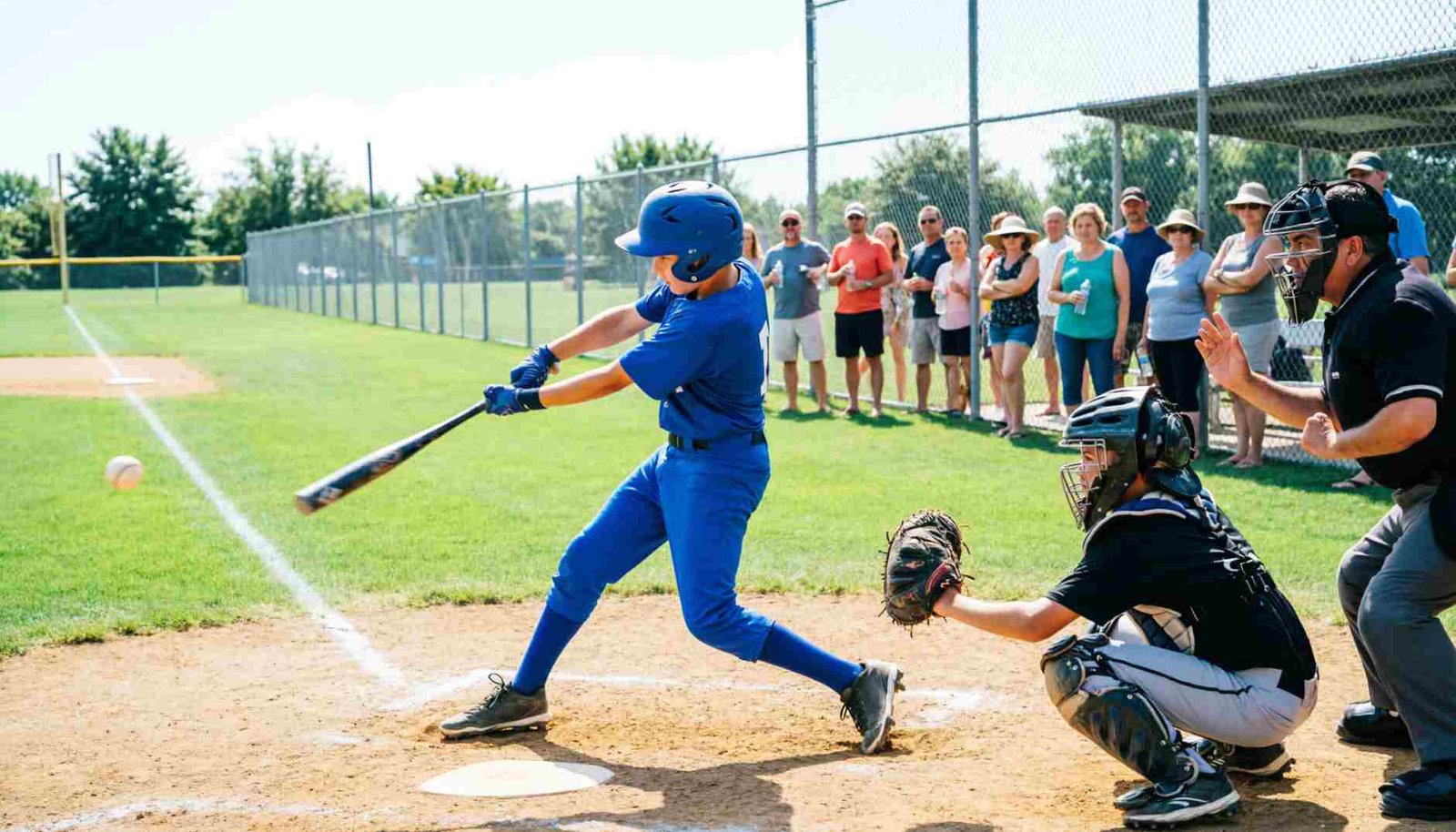
Travel baseball teams are competitive, select youth baseball organizations that play in tournaments and leagues beyond the local recreational level, typically requiring tryouts, year round commitment, and travel to games across your region, state, or the country. To find travel baseball teams near you, search platforms like Perfect Game, USSSA Baseball, Triple Crown Sports, and Baseball Factory or check with your local baseball association, batting cages, and youth sports complexes.
Every parent has seen that kid on the field, the one with the arm, the instincts, the love for the game that goes beyond a Tuesday night rec league. Maybe that kid is yours. And when the question shifts from “should we try travel ball?” to “how do I actually find travel baseball teams near me that are worth joining?” That’s where most families get stuck.
The search sounds simple but turns complicated fast. Some programs cost thousands of dollars before the first tournament. Others look impressive online but run disorganized operations on the ground. Tryout windows are short and poorly advertised. The gap between elite programs and pay to play operations can be hard to see until you’re already committed.
This guide covers everything a family needs to navigate the travel baseball world how to find legitimate teams in your area, what to look for in a program, how to evaluate coaches, what the real costs look like, how tournament travel works, and the mistakes that set families back a full season before they realize what went wrong. By the end, you’ll know exactly how to find the right travel baseball team for your player.
What Is Travel Baseball and How Does It Differ from Rec Ball?
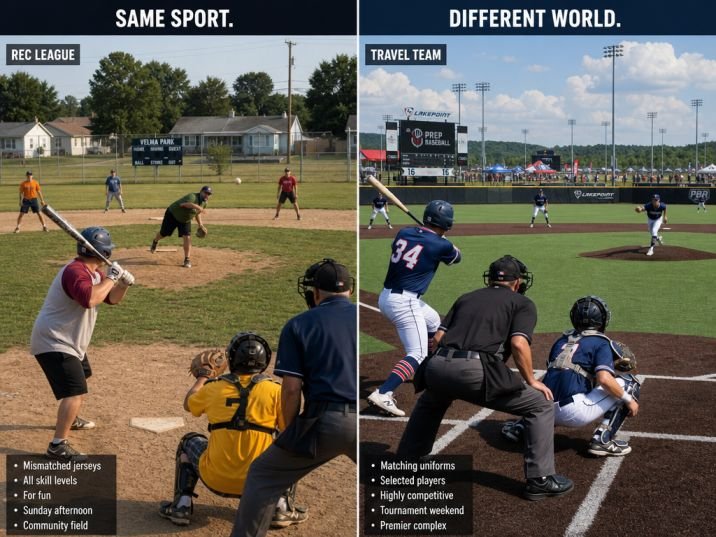
Travel baseball is a competitive, select level youth baseball program where players are chosen through tryouts, practice at higher intensity, and compete in regional and national tournaments rather than purely local leagues. Unlike recreational baseball, travel ball requires significant time, financial commitment, and often multi state travel. Most travel programs operate independently from local parks and recreation departments.
Recreational baseball prioritizes participation every kid plays, schedules stay local, and costs stay minimal. Travel baseball flips those priorities: competitive selection, elite coaching, and advanced player development come first. The two systems serve genuinely different purposes, and recognizing that difference helps families decide If travel ball is the right next step not just the obvious one.
| Feature | Rec Baseball | Travel Baseball |
| Player selection | Open enrollment | Tryouts required |
| Season length | Spring only (typically) | Year round in many regions |
| Travel required | Local only | Regional to national |
| Annual cost range | $100–$400 | $1,500–$8,000+ |
| Coaching style | Volunteer based | Paid or experienced coaches |
| Tournament play | Occasional local | Regular multi day tournaments |
| College exposure | Minimal | High at elite levels |
How to Find Travel Baseball Teams Near You
The fastest way to find travel baseball teams near you is to search the team directories on Perfect Game (perfectgame.org), USSSA Baseball (usssa.com), and Triple Crown Sports (triplecrownsports.com) filtering by age group and state then cross reference with recommendations from local batting cages, baseball academies, and other travel baseball families in your area.
Start digital, then go local. Online directories give you a broad view of programs operating in your region. Local contacts give you the ground level truth about which programs are actually well run.
Step by Step Search Process
- Go to Perfect Game’s team finder at perfectgame.org filter by your state and age group to see sanctioned teams competing in PG affiliated tournaments
- Search USSSA Baseball at usssa.com USSSA is one of the largest youth baseball governing bodies in the U.S. and maintains a searchable team directory
- Check Triple Crown Sports at triplecrownsports.com particularly strong in the Midwest and Mountain West regions
- Search Facebook Groups nearly every region has a local travel baseball parent community; searching “[Your City/County] Travel Baseball” on Facebook usually surfaces active groups with recommendations and tryout announcements
- Call local baseball academies and batting cages these facilities typically know every team operating in the area and often host tryouts themselves
- Ask at your current rec league coaches and league coordinators know which travel programs operate locally and can offer candid assessments
Regional and National Organizations to Know
Travel baseball operates under several governing bodies, each running their own tournament circuits and team rankings. Understanding these helps you identify which programs are serious and which are loosely organized:
- Perfect Game (PG) the most prestigious showcase and tournament organization in amateur baseball; PG sanctioned teams carry credibility for college recruiting
- USSSA Baseball one of the largest youth baseball organizations nationally; strong regional tournament infrastructure
- Triple Crown Sports major tournament operator across 30+ states
- USA Baseball the national governing body for amateur baseball; runs programs including 14U, 15U, 16U, 18U national teams
- PONY Baseball long established youth baseball organization with structured age divisions
- American Amateur Baseball Congress (AABC) operates Connie Mack Baseball and other age division national tournaments
What Age Groups Do Travel Baseball Teams Cover?
Travel baseball programs exist for players as young as 7U (7 and under) through 18U, with the most competitive and development focused programs typically starting at 10U or 11U. Age group designations vary slightly by organization; some use birth year cutoffs, others use the traditional league age system.
The most common age divisions in travel baseball:
- 8U and 9U: Entry level travel; focuses on fundamentals, lighter competitive schedule
- 10U and 11U: Where serious travel programs typically begin building structured development
- 12U: Heavy tournament season; many families make their first major travel ball commitment at this level
- 13U and 14U: Recruiting relevant age for higher level players; showcase tournaments become important
- 15U, 16U, 17U, 18U: College exposure window; programs connected to Perfect Game showcases and WWBA (World Wood Bat Association) events carry significant recruiting weight
Know your organization’s age cutoff system. Some organizations use “league age” (age as of April 30 or May 1), while others use “birth year age” (calendar year). Placing a player in the wrong age group even accidentally can affect eligibility and create problems mid season.
How to Evaluate a Travel Baseball Team Before You Commit
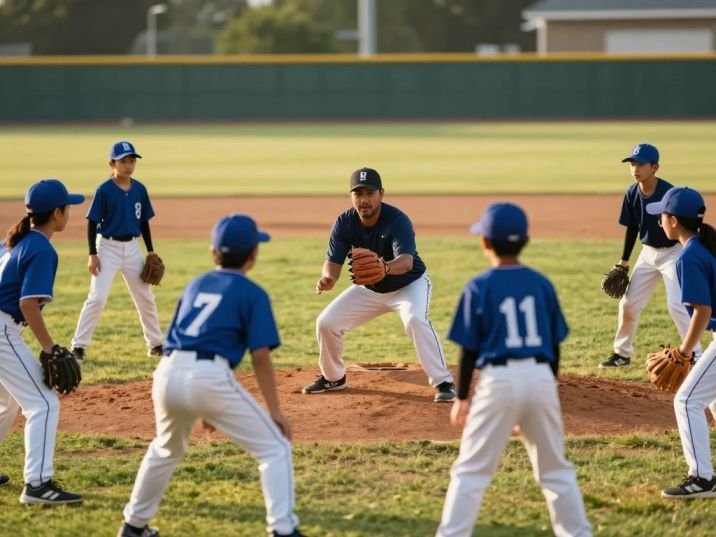
Evaluate a travel baseball team by attending a practice or scrimmage as a visitor before committing, speaking directly with current team parents (not just the coach), asking specific questions about the coaching staff’s background, and requesting a clear written breakdown of all costs and travel requirements for the season.
Signing early is one of the most common travel baseball mistakes. Programs that rush families to commit before they’ve had time to observe and ask questions often have reasons for that urgency. A legitimate, well run program welcomes questions and gives families time to decide.
Key Questions to Ask Before Joining
Ask these questions of both the coaching staff and current team parents:
Coaching:
- What is the head coach’s playing and coaching background?
- How long has the coaching staff been together?
- How does the coach handle playing time decisions?
- What is the player development philosophy every player improves, or only the best play?
About the program:
- How many tournaments do you play per season, and in which geographic area?
- What is the total cost breakdown registration, tournament fees, uniform costs, batting practice fees?
- Are there any additional costs that are not included in the registration fee?
- What happens if we need to miss a tournament for a family commitment or school event?
About team culture:
- How does the team handle conflict between parents and coaches?
- What is the typical roster size and how is playing time distributed?
- Has the coaching staff changed significantly in the past year?
Understanding the Real Costs of Travel Baseball
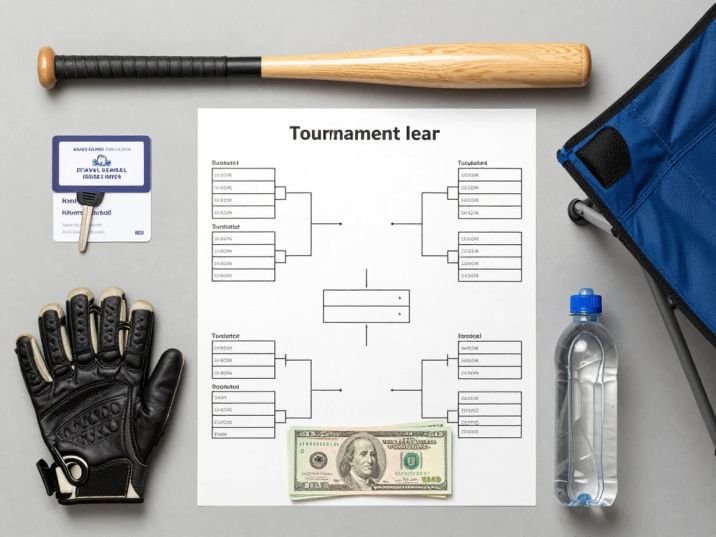
Total annual costs for travel baseball range from approximately $1,500–$3,000 for regional programs to $5,000–$8,000 or more for elite national programs and most families underestimate the full cost because registration fees represent only a portion of the total expense. Hotel stays, gas, food, equipment, and tournament entry fees add up quickly over a full season.
Breaking down the real cost picture helps families plan accurately rather than getting surprised mid season.
Travel Baseball Cost Categories
Program fees (paid to the organization):
- Registration and team fees
- Uniform package (jersey, pants, helmet, bag in some programs)
- Batting practice and facility fees where separate
Tournament related travel costs (paid independently):
- Hotel accommodations most tournaments run 2–3 days, often requiring Friday to Sunday hotel stays
- Gas or airfare for distant tournaments
- Food and incidentals for tournament weekends
- Parking at tournament complexes
Equipment costs:
- Baseball bat ($200–$500+ for quality USA Baseball or USSSA approved bats)
- Cleats (typically replaced annually)
- Catcher’s gear if applicable
- Fielding glove upgrades as players grow
Hidden recurring costs:
- Private lessons and pitching instruction (many travel families invest $75–$150 per session weekly or biweekly)
- Off season training programs at baseball academies
- Showcase registration fees at upper age levels
Smart money tip: Ask the team manager directly for a “total cost of last season” figure from a family who completed the previous year. This number including all travel, fees, and equipment gives a far more accurate picture than any published registration fee.
What Makes a Good Travel Baseball Coach?
A good travel baseball coach prioritizes player development alongside winning, communicates clearly and consistently with both players and parents, demonstrates a verifiable background in the sport, and handles playing time and conflict with transparency rather than favoritism. The coach is the single most important factor in a travel program.
Background matters at the higher age levels but character and communication matter at every level. Many of the best coaches for 10U and 12U programs are former college players or coaches without professional experience who simply love the game and have a gift for teaching fundamentals. Conversely, some coaches with impressive playing résumés are poor communicators who create toxic environments for developing players.
Watch for these red flags during the evaluation process:
- Promises of guaranteed college scholarships no youth coach can guarantee scholarships
- Dismissiveness about academic commitments baseball should not conflict with schooling
- No clear playing time policy opacity on this issue almost always means favoritism
- Negative talk about other programs during recruitment focus on their own program’s strengths, not tearing down competitors
- Pressure to commit at or immediately after tryouts good programs give families a day or two to decide
Tryouts: How to Prepare Your Player and What to Expect
Travel baseball tryouts typically last 60–90 minutes and evaluate players on hitting (live batting practice or tee work), fielding (infield or outfield ground balls and fly balls), throwing velocity and accuracy, and running speed (60 yard dash). Preparation in the 2–4 weeks before a tryout makes a meaningful difference at the 10U–14U levels.
What Tryout Evaluators Look For
At younger ages (8U–11U), evaluators focus primarily on:
- Athletic ability and body control
- Coachability and attitude
- Throwing mechanics (correctable vs. deeply ingrained)
- Basic fielding fundamentals
At older ages (12U–18U), the evaluation gets more specific:
- Measurable velocity (pitchers especially)
- Bat speed and power potential
- Positional aptitude
- Baseball IQ decision making on the bases and in the field
Tryout Preparation Checklist
- Practice the 60 yard dash running form time matters and many players don’t practice this
- Work on clean fielding mechanics, not showmanship
- Bring a bat you’re comfortable hitting with (don’t borrow one at tryouts)
- Wear appropriate cleats for the surface (metal cleats may not be allowed at younger age levels)
- Arrive 15–20 minutes early to warm up properly
- Make sure your player knows: play hard, communicate loudly on the field, and never hang their head after an error
Tournament Travel: What Families Should Expect
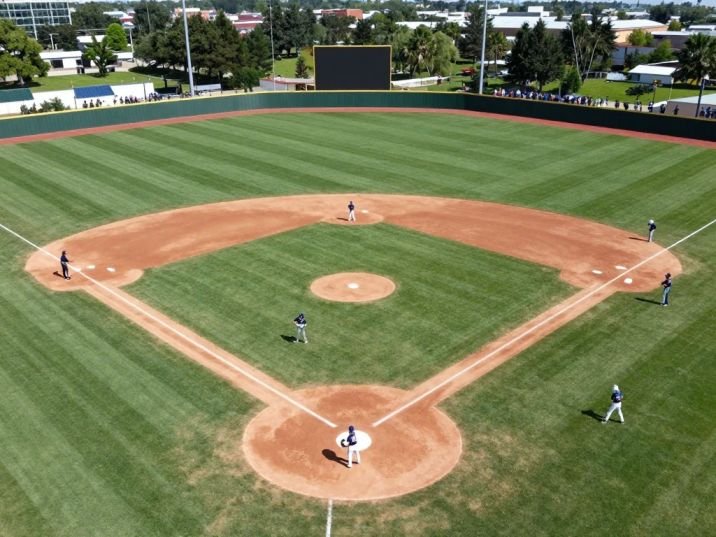
Travel baseball tournaments typically run over 2–3 days on a Friday–Sunday schedule, take place at multi field complexes 1–4 hours from home for regional programs, and require families to book hotels in tournament cities often months in advance, since other teams fill nearby hotels quickly.
Tournament travel is where the “travel” in travel baseball becomes real. A competitive 12U team in the Midwest might attend 10–15 tournaments per season, with several requiring overnight stays. Managing the logistics of tournament travel hotel booking, travel coordination with the team, tournament bracket schedules is part of the commitment.
Major Tournament Hubs Across the U.S.
Several cities host major national and regional travel baseball events that draw teams from across the country:
- Cooperstown, New York Home to the Cooperstown Dreams Park and Cooperstown All Star Village, which together host thousands of youth teams annually in one of the most iconic tournament settings in the country; highly recommended as a once in a career experience for young players
- Myrtle Beach, South Carolina Year round youth sports tourism destination with multiple large baseball complexes; popular for spring and fall tournaments in the Southeast
- Branson, Missouri Central U.S. tournament hub with multiple sports complexes; draws Midwest and South Central teams
- Elizabethtown, Kentucky Home to the renowned Elizabethtown Sports Park, a major national tournament host
- Gatlinburg and Pigeon Forge, Tennessee Combine Great Smoky Mountains family appeal with competitive baseball; popular family tournament destination
- Surprise, Arizona Spring training home to several MLB teams; major youth tournament destination, especially for winter and spring tournaments in the Southwest
- Hoover, Alabama Major Southeast regional tournament hub at the Hoover Metropolitan Complex
Hotel Booking Tips for Tournament Travel
- Book immediately when the tournament schedule is released hotels near major tournament complexes fill within hours of bracket announcements for high demand events
- Coordinate with your team manager many teams block hotel rooms at the same property for team cohesion, which simplifies logistics and creates a stronger team building environment
- Use tournament affiliated hotel blocks some large tournaments have official hotel partners with special rates; check the tournament website before booking independently
- Book refundable rates tournament cancellations due to weather happen; having a refundable booking prevents losing hotel costs when a tournament washes out
The Travel Side of Travel Baseball: Packing and Logistics
Smart tournament packing for travel baseball includes the player’s gear bag pre packed with all equipment, a folding camp chair, sunscreen, a portable cooler for snacks, and a rain poncho plus a separate parent kit with phone chargers, cash for concessions, and a printed schedule.
Multi day tournament weekends at large complexes mean long days in the sun. Families who arrive prepared spend their energy watching baseball; families who don’t spend it running to find food, sunscreen, and somewhere comfortable to sit.
Player Gear Bag Checklist
- Batting helmet
- Batting gloves (plus a backup pair)
- Cleats and turf shoes
- Athletic supporter and cup
- Extra socks and undershirts
- Sunflower seeds or approved dugout snacks
- Water bottle (2+ for hot weather tournaments)
- Extra bat grip tape
Parent Tournament Weekend Kit
- Folding camping chair (bleachers at multi field complexes are often minimal)
- Portable pop up shade canopy for open fields
- Sunscreen SPF 50+ (reapply every 2 hours)
- Cash many tournament concession stands and small complexes don’t accept cards
- Printed or downloaded tournament bracket and schedule (cell service at large complexes gets spotty)
- Portable phone charger / power bank
Common Mistakes Families Make When Joining Travel Baseball
The three most costly travel baseball mistakes are committing to a program too quickly without proper evaluation, underestimating the total financial commitment, and choosing a team based on reputation rather than fit for the specific player.
Mistake #1: Signing After One Tryout Without Observing the Program
Tryouts show the coaching staff; practices and tournaments show the coaching character. A coach can put on an impressive, energetic tryout performance that bears little resemblance to how they actually run a team during a long tournament weekend.
Fix: Request to attend one practice or scrimmage as a guest before committing. Most legitimate programs accommodate this request. If a program refuses or pressures you to commit before observing, consider it a warning sign.
Mistake #2: Choosing the “Best” Team Rather Than the Right Team
Many families target the highest ranked team in their area assuming it gives their child the best development. But a player sitting the bench on an elite team, getting minimal reps and no coaching attention, develops far more slowly than a player getting meaningful time on a slightly lower level program.
Fix: Honestly assess your player’s current level and what type of experience will build their confidence and skills most effectively at this stage. The best team for development is the one where your child plays, grows, and loves the game, not necessarily the one with the best win loss record.
Mistake #3: Ignoring the Team Culture Among Families
A toxic parent culture on a travel team makes every tournament weekend miserable for the kids and the coaches. Sideline criticism, second guessing coaches, and aggressive complaining about playing time filter directly down to players and destroy team chemistry.
Fix: Spend time with current team families before committing. If multiple parents immediately start venting about the program the first time you talk to them, that culture will be your experience too.
Travel Baseball vs. High School Baseball: What Families Need to Know
Travel baseball and high school baseball are not mutually exclusive; most elite travel players also play for their high school teams but scheduling conflicts during the spring season require communication and often formal agreements with both programs about participation expectations.
Most high school coaches expect their players to commit to the school program during the spring season. Travel programs that operate spring tournament schedules alongside the high school season need clear agreements about player availability. Many elite travel programs specifically structure their spring schedules around high school commitments to retain their best players.
At the 15U–18U level, families should understand that college recruiting increasingly happens through Perfect Game showcases, WWBA events, and similar elite level tournaments rather than through high school games. College coaches attend these events specifically to evaluate prospects. High school baseball remains important for development and school community, but families whose goal is college baseball need to understand where recruits get seen.
Underrated Alternatives to Traditional Travel Baseball Programs
Three underrated alternatives to traditional travel baseball programs are showcase focused academies that play a lighter tournament schedule, PONY Baseball’s structured league system, and independent player development programs at regional baseball academies that build skills without requiring full travel team commitment.
Not every strong young player needs a full travel ball commitment right now. These alternatives serve different goals effectively:
- Baseball academies with player development focus: Organizations like Impact Baseball, D BAT Baseball, and regional equivalents emphasize skill development over tournament wins. Players get professional instruction and measurable improvement without the full travel schedule and cost.
- PONY Baseball leagues: PONY’s age division structure (Mustang, Bronco, Pony, Colt, Palomino) offers more competitive baseball than rec leagues without the extreme time and financial commitment of elite travel programs. Find PONY programs at pony.org.
- Area Code Baseball and showcase only events (older players): For 15U–18U players whose primary goal is college recruiting, targeted showcase participation at events like Area Code Games, Under Armour All America, and PG Nationals can deliver more recruiting exposure per dollar than a full year of tournament travel.
5 Insider Tips for Travel Baseball Families
Five things experienced travel baseball families know that first year families learn the hard way:
- The second year is always cheaper: Your first year of travel ball involves one time equipment purchases, uniform costs, and a learning curve about what you actually need. By year two, you have the gear, you know which tournaments are worth traveling to, and you’ve optimized your approach significantly.
- Hotel loyalty programs pay off fast: Travel baseball families who concentrate hotel stays with one brand (Marriott Bonvoy, Hilton Honors, or IHG One Rewards) earn points quickly and can convert them to free tournament weekend stays, effectively reducing annual travel costs by hundreds of dollars.
- Google Maps “baseball complex” searches before booking hotels: Don’t just search the tournament city; search the actual complex address. Many tournament facilities sit 20–30 minutes from the city center, and booking a hotel based on city proximity can result in long drives to every game.
- Roster spot math matters: Ask how many players the team carries at your child’s position. A team that carries four outfielders for three outfield positions gives much more development and playing time than one carrying six. Smaller, position balanced rosters consistently produce better player development outcomes.
- The off season is where the real development happens: Most tournament improvement traces back to off season work: private lessons, hitting facilities, pitching programs. Families who invest in quality off season training see dramatic tournament season improvement; those who only play and rarely train individually plateau quickly.
FAQs
How do I find travel baseball tryouts near me?
Search for travel baseball tryouts near you on Perfect Game (perfectgame.org), USSSA Baseball (usssa.com), and local Facebook groups for “[your city] travel baseball.” Most programs post tryout dates in August–September for the following fall and spring seasons. Joining local travel baseball parent Facebook groups is often the fastest way to get notified about open tryouts in your area.
How much does travel baseball typically cost per year?
Travel baseball costs range from roughly $1,500–$3,000 per year for regional level programs to $5,000–$8,000 or more for elite national programs. Registration fees alone don’t tell the full story factor in hotel stays for tournament weekends, gas, food, equipment, and private lessons. Ask current team families for their actual total annual spend before committing to any program.
What age should a kid start to travel baseball?
Most development focused coaches recommend 10U or 11U as the ideal starting age for travel baseball, when players have enough fundamental skill development to benefit from the competitive environment. Some programs begin at 7U or 8U, but the heavy tournament schedules at those ages can create burnout without proportional development benefit. Starting between 10–12 years old is the most common and generally recommended entry point.
Is travel baseball worth it for average players?
Travel baseball is worth it for players who love competitive baseball and want to develop seriously regardless of If they’re currently “above average.” The right program meets players at their level and elevates them. The wrong program for an average player is an elite team where they won’t play or get coaching attention. Fit matters far more than raw talent level when determining If a specific program is worth the investment.
What is the difference between USSSA and Perfect Game baseball?
USSSA (United States Specialty Sports Association) and Perfect Game (PG) are two separate organizations that run travel baseball tournaments and team registries. USSSA has one of the largest youth baseball tournament networks nationally and is strong in regional play. Perfect Game is the most prestigious organization for college recruiting exposure and runs the most high profile showcases and events at 14U–18U. Many elite programs participate in both circuits.
How do travel baseball tournaments work?
Travel baseball tournaments typically run Friday evening through Sunday. Teams play pool play games on Friday and Saturday, then bracket play (single or double elimination) on Saturday and Sunday. Games are usually played at multi field complexes with 4–8 or more diamonds. A typical weekend tournament involves 4–6 games. Teams that advance to finals or championship rounds may play an additional 1–2 games on Sunday afternoon.
Can my child play travel baseball and still have time for other activities?
Time commitment varies significantly by program. Regional programs with 10–12 tournaments per year are manageable alongside school and one other activity. Elite programs with 20+ events and year round practice schedules demand near total athletic commitment. Before joining any program, get the full calendar for the previous season and honestly assess If that schedule works for your family including siblings, school demands, and your own schedule.
Conclusion
Three things define If a travel baseball experience succeeds or disappoints: choosing a program whose level and culture match your player right now, understanding the real total cost before you commit, and prioritizing development over prestige when those two things point in different directions.
Finding travel baseball teams near you is only the first step. The families who navigate travel ball successfully are the ones who ask hard questions before signing, stay flexible as their player grows, and keep the joy of the game at the center of every decision. Baseball at its best is still about the kid on the field, the one who lights up when the ball jumps off the bat and the day stretches out ahead with nothing but green grass and clean innings.
Start your search on Perfect Game, USSSA, and your local Facebook groups then go watch a practice before you commit. The right team is out there, and it’s worth finding carefully.

Gordon Ramsay is a travel writer and destination researcher who helps U.S. travelers plan smarter trips, covering destinations, seasonal trends, budgets, and logistics to help readers decide where—and when—to go.
Rather than simply listing popular places, Gordon Ramsay focuses on what travelers actually need: comparing weather against crowds, weighing costs and accessibility, and researching current conditions alongside official tourism guidance—delivering honest, practical advice without the hype.











1 thought on “How to Find the Best Travel Baseball Teams Near Me for Your Child”