Rent to own travel trailers lets you hit the open road with low or no down payment, making RV living accessible without a large upfront investment or traditional financing. Through a rent to own agreement, you make fixed weekly or monthly payments toward ownership, typically for 12 to 48 months, and the trailer becomes yours once all payments are complete.
The open road is calling but the price tag on a brand new travel trailer might be telling you to wait. For millions of American families, retirees, and adventure seekers, that waiting has gone on long enough. Rent to own travel trailers have quietly become one of the fastest growing ways to enter the RV lifestyle without draining savings or jumping through traditional bank hoops.
If your credit score is less than stellar, you’re not ready to commit to a $40,000 purchase, or you simply want to test the RV life before going all in, the rent to own model offers a practical, flexible path. This guide breaks down everything you need to know from how the process actually works to what the contracts really say, which dealers to trust, and how to avoid the pitfalls that catch first timers off guard. By the end, you’ll know exactly If rent to own is the right move for your next chapter.
What Are Rent to Own Travel Trailers and How Do the Programs Work?
Rent to own travel trailers are a financing alternative where you lease a trailer with the option or obligation to purchase it after completing a set payment schedule. Most programs require little to no credit check, ask for minimal down payments ranging from $0 to $1,500, and set payment terms between 12 and 48 months. You take possession of the trailer immediately and use it just like an owned unit while you pay it off.
Here’s how a typical program flows:
- Choose your trailer from a dealer’s rent to own inventory (often older or lightly used units).
- Sign a lease purchase agreement that outlines your monthly payment, total contract value, early buyout options, and default terms.
- Make your scheduled payments weekly, biweekly, or monthly, usually auto drafted.
- Own the trailer outright once all payments clear, receiving the title in your name.
The key difference from a standard RV loan is that most rent to own programs do not report to credit bureaus and do not require a minimum credit score. That makes them especially popular with buyers who have been turned down by banks or dealerships offering conventional financing.
Quick Facts: Rent to Own Travel Trailers at a Glance
| Factor | Typical Range |
| Down Payment | $0 – $1,500 |
| Monthly Payment | $200 – $700+ |
| Contract Length | 12 – 48 months |
| Credit Check Required | Usually none |
| Trailer Age | Often 5–15 years old |
| Total Cost vs. Purchase Price | 1.5x – 2.5x retail value |
| Early Buyout Option | Available with most programs |
| Who Holds the Title | Dealer/lender until paid off |
Verify all terms directly with your dealer before signing. Rates and policies vary widely by state and provider.
The Real Cost of Rent to Own vs. Traditional Financing
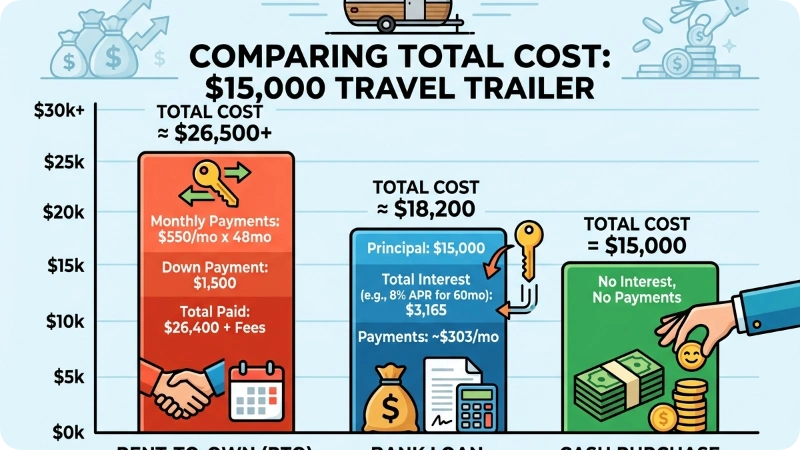
Rent to own convenience comes at a price total costs can run 1.5 to 2.5 times the trailer’s retail value. A travel trailer priced at $15,000 on the lot might cost $28,000 to $35,000 under a rent to own contract when all payments are summed. That’s a significant premium compared to a traditional RV loan, where interest rates for good credit buyers currently range from roughly 6% to 12% annually.
However, the math shifts when you factor in your actual situation:
- No credit check means no hard inquiry, no denial, and no waiting.
- Low upfront cost preserves emergency savings.
- Immediate possession means you start camping now.
- No loan on your credit report can be a strategic advantage for some buyers.
For buyers with poor or no credit who would otherwise pay predatory personal loan rates often 25% to 36% APR the rent to own total cost can actually be comparable or even lower. Run your own numbers before assuming it’s always the more expensive choice.
Hidden Fees to Watch For
Before signing any contract, ask the dealer directly about these potential extras:
- Reinstatement fees if a payment is missed
- Delivery or setup charges if the trailer is brought to you
- Late payment penalties (sometimes $25–$75 per incident)
- Early termination fees if you decide to walk away
- Required insurance add ons bundled into the payment
Who Should Consider Rent to Own Travel Trailers?
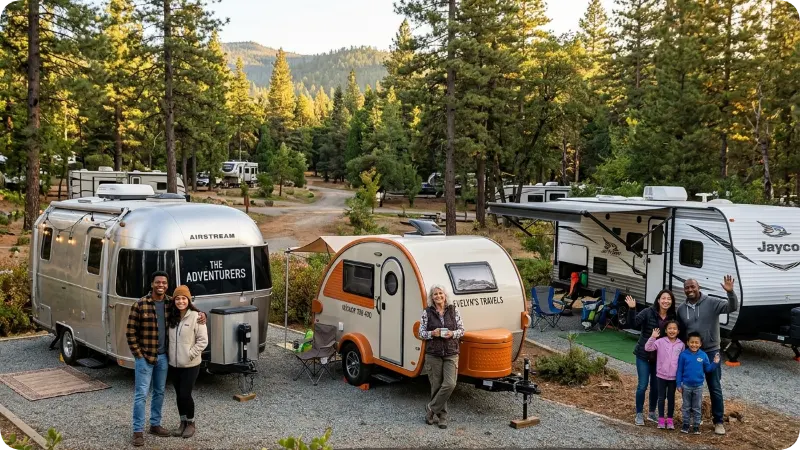
Rent to own travel trailers makes the most sense for buyers who can’t qualify for traditional financing, need immediate access to an RV, or want to try the lifestyle before committing to a large purchase.
Best For:
- Buyers with credit scores below 580 or limited credit history
- Seasonal workers and travelers needing temporary housing on job sites
- Families wanting an affordable vacation alternative to hotels
- Recent retirees testing the full time RV lifestyle before selling their home
- Self employed borrowers with inconsistent income documentation
Not Ideal For:
- Buyers with good credit who qualify for low rate RV loans (the total cost difference is substantial)
- Buyers wanting a new or late model trailer (most RTO inventory is older)
- Those planning to upgrade within 1–2 years (early termination terms can be costly
- Anyone who needs manufacturer warranty coverage on a new unit
Where to Find Rent to Own Travel Trailers in the USA
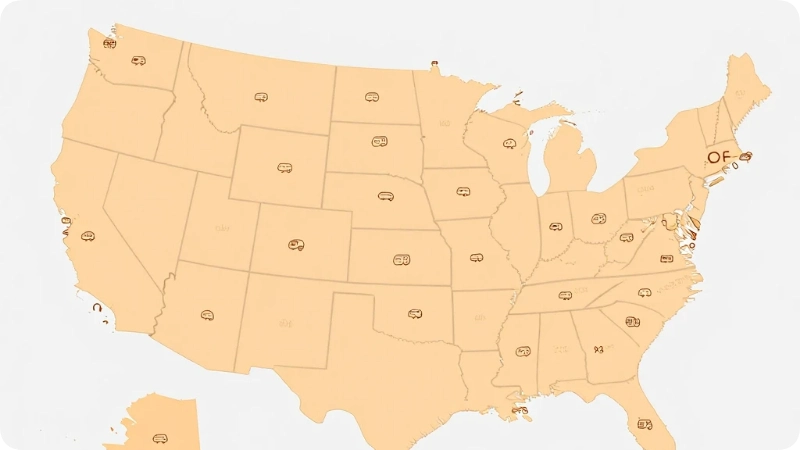
Rent to own travel trailers are available through specialized RTO dealerships, local used RV lots, private sellers, and a growing number of national online platforms. Major metro areas and RV heavy states like Texas, Florida, Arizona, and Tennessee tend to have the most inventory.
National Dealers and Platforms to Know
- RTO National One of the largest networks of rent to own dealers, with locations in multiple states and an online search tool.
- FlexShopper Offers lease to own agreements on various goods including RVs; check availability in your state.
- Local independent RV dealers Many mom and pop lots in rural areas offer informal rent to own arrangements worth negotiating directly.
- Facebook Marketplace and Craigslist Private sellers sometimes offer owner financed or rent to own setups, though these carry higher risk without a formal dealer contract.
- SmartRVing.com and RVT.com Useful for comparing prices on inventory before approaching a dealer.
Insider Tip #1
Search for dealers in states with no sales tax on private vehicle sales (like Oregon or Montana) if you plan to pick up the unit yourself. State laws on rent to own agreements vary significantly; some states cap the total cost or require specific disclosures, so check your state’s consumer protection laws before signing.
Understanding the Rent to Own Contract: What to Read Before You Sign
The rent to own contract is the most important document in this process and the section most buyers skip. Reading every clause before signing can save you thousands of dollars and significant stress down the road.
Key Clauses to Examine
Ownership Transfer Terms
Confirm exactly when the title transfers to you. Some contracts require a final “balloon” payment or a separate title fee at the end of the term. Never assume the title is automatic.
Default and Repossession Policy
Most rent to own agreements classify the deal as a lease, not a loan. That means the dealer can repossess the trailer after just one or two missed payments often without the same notice requirements as a traditional repossession. Understand the grace period, if any.
Early Buyout Option
Many programs allow you to purchase the trailer early at a discounted price often 50% to 70% of remaining payments. This is one of the best features of rent to own, but the buyout amount and timing window must be spelled out in writing.
Maintenance Responsibility
Unlike renting, rent to own buyers are almost always responsible for all repairs and maintenance from day one. You’re treated as an owner from the moment you take the keys, even though you don’t hold the title yet.
Insurance Requirements
Most dealers require you to carry full comprehensive and collision coverage for the duration of the agreement. This is an additional monthly cost often $50 to $150 per month that new buyers sometimes forget to budget for.
Types of Travel Trailers Available Through Rent to Own Programs
Rent to own programs most commonly feature used travel trailers ranging from lightweight pop ups to full size fifth wheels, with the sweet spot being 20 to 30 foot conventional trailers in the $10,000 to $25,000 retail range.
Common Types Available
- Pop up campers / folding trailers Lightest, most affordable, easiest to tow; good starter option for new RVers
- Teardrop and ultra lite trailers Compact, fuel efficient; growing in availability through RTO programs
- Standard travel trailers (18–32 ft) Most common in RTO inventory; good mix of features and towability
- Fifth wheels Larger and more home like; available through some dealers but require a pickup truck with a fifth wheel hitch
- Toy haulers Popular in the Southwest and Mountain West; less commonly found in RTO programs
Insider Tip #2
Before choosing a trailer, check its towing weight against your vehicle’s tow rating. Many first time buyers fall in love with a 7,500 pound trailer only to discover their SUV is rated for 5,000 pounds. The NHTSA and your vehicle’s owner manual are the authoritative sources for tow capacity don’t rely on online estimates alone.
How to Inspect a Rent to Own Travel Trailer Before You Commit
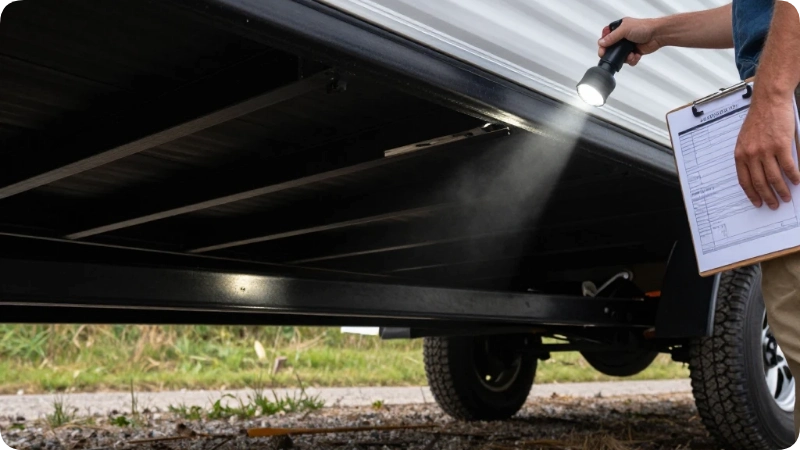
Inspect any rent to own trailer as thoroughly as you would a used home because structurally, they share many of the same problems. Most RTO units have been previously owned, and some have hidden water damage, roof leaks, or delamination that can cost more to repair than the trailer is worth.
Inspection Checklist
- Roof and seams Check for soft spots, staining, or cracked caulk around vents and AC units
- Interior walls and floors Press gently; soft spots indicate water intrusion and rot
- Slide out operation Run it in and out multiple times; listen for grinding or resistance
- Plumbing and water system Run all faucets, flush the toilet, check under sinks for staining
- Electrical system Test all outlets, lights, and the 30/50 amp shore power connection
- Propane system Check for leaks around connections; test stovetop and furnace
- Tires and axles Look for cracking on sidewalls; check manufacturing date (DOT code on the sidewall)
- Hitch and coupler Should lock securely with no excessive play
Hire a certified RV inspector if you’re unsure. The National RV Inspectors Association (NRVIA) maintains a directory of certified inspectors. A $200–$400 inspection can save you from a $5,000 repair bill.
Hidden Gem #1
Ask the dealer for the trailer’s VIN history report through a service like CARFAX or a state DMV lookup. Some dealers will pull this for you free of charge. A salvage title or prior flood damage disclosure is an immediate dealbreaker regardless of how good the price looks.
The Best States for Rent to Own Travel Trailer Programs
Texas, Florida, North Carolina, Tennessee, and Ohio have the highest concentration of rent to own RV dealers in the country, driven by large rural populations, strong camping culture, and favorable state regulations for lease purchase agreements.
State by State Highlights
| State | Why It’s Popular for RTO | Notable RV Areas |
| Texas | Large inventory, minimal regulation | Hill Country, Big Bend, Gulf Coast |
| Florida | Year round camping demand | Keys, Ocala NF, Everglades |
| Tennessee | Strong Smoky Mountain RV culture | Great Smoky Mountains, Cherokee NF |
| North Carolina | Growing RTO dealer network | Blue Ridge Parkway, OBX |
| Ohio | Central location, high dealer density | Hocking Hills, Lake Erie Shore |
| Arizona | Popular snowbird destination | Sedona, Saguaro NP, Sonoran Desert |
Insider Tip #3
Some states have specific “rent to own” statutes that provide consumer protections not found in general contract law. Before signing, search your state’s consumer protection agency website or contact your state Attorney General’s office to understand your rights. The FTC also publishes general guidance on lease to own agreements at ftc.gov.
Rent to Own vs. Other Ways to Get Into an RV: A Full Comparison
Rent to own is one of six common paths into RV ownership, each with distinct trade offs depending on your credit, budget, and how long you plan to use the trailer.
| Option | Credit Required | Upfront Cost | Total Cost | Best For |
| Rent to Own | None/Low | $0–$1,500 | High | Poor credit, immediate need |
| Traditional RV Loan | Good (620+) | 10–20% down | Moderate | Good credit buyers |
| Personal Loan | Fair–Good | None | Moderate–High | No collateral needed |
| Buy Used (Cash) | None | Full price | Lowest | Savers with cash |
| RV Rental (Long term) | Varies | First/last month | Very High | Testing lifestyle |
| Buy New (Dealer Finance) | Good–Excellent | Varies | Moderate | New unit seekers |
Hidden Gem #2
Check your local credit union before signing any rent to own deal. Many credit unions offer RV loans with lower credit score requirements than banks, sometimes accepting scores as low as 580–600. The National Credit Union Administration (NCUA) maintains a credit union locator at mycreditunion.gov.
Seasonal Considerations: When to Shop for Rent to Own Travel Trailers
The best time to find the widest selection and most negotiable terms on rent to own travel trailers is late fall through early spring October through March when demand drops and dealers are motivated to move inventory.
Seasonal Shopping Guide
| Season | Inventory | Dealer Flexibility | Camping Conditions |
| Winter (Dec–Feb) | Best selection | Most flexible | Varies by region |
| Spring (Mar–May) | Good | Moderate | Excellent most regions |
| Summer (Jun–Aug) | Limited | Least flexible | Peak camping season |
| Fall (Sep–Nov) | Moderate | Good | Ideal in South & Southwest |
Summer is when dealers hold firm on price and terms demand from families and vacationers keeps their lots busy. Shopping in January or February often yields the best negotiating position on payment terms, early buyout pricing, and included accessories like propane tanks, hitch balls, or basic toolkit packages.
Insider Tip #4
If you’re buying in a cold weather state in winter, ask the dealer to demonstrate the furnace, water heater, and all systems in operation before taking possession. Winter inspections frequently uncover frozen water line damage that goes undetected in warmer months.
Setting Up Your Travel Trailer: What You Need Beyond the Trailer Itself
First time rent to own buyers often underestimate the setup costs that come with trailer ownership. Beyond the monthly payment and insurance, budget for the following essentials before your first trip.
Essential Gear Checklist
- Tow vehicle with proper hitch Weight distribution hitch may be needed for heavier trailers
- Electrical hookup supplies 30 amp or 50 amp power cord, surge protector ($100–$300)
- Fresh water hose Dedicated drinking water safe hose; never use a garden hose
- Sewer kit Gloves, 20 ft drain hose, rinse tool ($40–$80)
- Wheel chocks and leveling blocks Critical for stability on uneven ground
- Stabilizer jacks Most trailers include them; verify before purchase
- Propane tanks Usually two 20 lb or 30 lb tanks; confirm what’s included
- Roadside emergency kit Flares, tire inflator, basic tools, first aid
- Backup camera or spotter Invaluable for solo travelers backing into sites
Hidden Gem #3
Many state parks and Corps of Engineers campgrounds offer significantly lower nightly rates than private RV parks, often $20–$35 per night with full hookups versus $50–$80 at a KOA or commercial campground. America the Beautiful National Parks and Federal Recreational Lands Pass ($80/year) provides free day use access at hundreds of federal recreation areas and discounts at many federal campgrounds.
Common Mistakes Buyers Make With Rent to Own Trailers (And How to Fix Them)
Even experienced buyers sometimes stumble when entering a rent to own agreement. Avoid these three costly errors:
Mistake #1: Not Reading the Default Clause
The fix: Before signing, ask the dealer: “What happens if I miss one payment?” Get the answer in writing. Many RTO contracts allow repossession after a single missed payment with no refund of previous payments that’s your entire payment history gone.
Mistake #2: Skipping the Inspection
The fix: Always inspect the unit in person, and consider hiring a certified NRVIA inspector for any trailer priced above $10,000. Water damage repair on a travel trailer can easily run $3,000 to $10,000 or more far exceeding the cost of an inspection.
Mistake #3: Forgetting to Factor in All Monthly Costs
The fix: Build a complete monthly cost picture before committing. Add the RTO payment + insurance + campground fees + propane + maintenance reserve + vehicle fuel. For many buyers, the total monthly RV lifestyle cost runs $800 to $1,800 well above the base trailer payment alone.
How to Negotiate Better Terms on a Rent to Own Agreement
Rent to own dealers have more flexibility than most buyers realize especially on early buyout terms, included accessories, and the total payoff amount.
These strategies give you more leverage at the table:
- Ask for a lower early buyout price. Dealers price early buyouts with a profit margin. A counter offer of 40–50% of remaining payments is reasonable to start.
- Request a lower initial payment in exchange for a slightly longer term. This preserves your cash flow while still building toward ownership.
- Ask what’s included. Many dealers will throw in a propane tank fill, sewer kit, basic hitch equipment, or first month’s campground fees to close a deal.
- Point out any flaws. A worn tire, faded awning, or missing vent cover is worth $100–$300 in concessions. Document everything and negotiate before you sign.
- Get competing quotes. Even two dealers in your area is enough to create competition and lower your total contract cost.
Insider Tip #5
Ask If on time payments are reported to any credit bureau. A small but growing number of RTO programs have begun reporting positive payment history to Equifax or Experian. If credit building matters to you, this could be a meaningful benefit and worth choosing one dealer over another.
FAQs
Can I rent to own a travel trailer with bad credit?
Yes most rent to own travel trailer programs require no credit check at all. That’s one of the primary appeals of the model. Dealers take on the risk themselves rather than relying on lender approval, which means buyers with poor credit, no credit, or past bankruptcies can typically qualify with proof of income and a valid ID.
Is rent to own more expensive than buying outright?
Almost always, yes. The total cost of a rent to own agreement typically runs 1.5 to 2.5 times the market value of the trailer due to the risk premium built into the program. However, if you lack cash or financing access, paying a premium for access and flexibility may be worth it for your specific situation.
Who is responsible for repairs on a rent to own trailer?
In nearly all rent to own contracts, the buyer is responsible for all maintenance and repairs from the day of possession even though the dealer holds the title until the contract is paid off. Read your agreement carefully and budget for ongoing maintenance costs before signing.
Can I use a rent to own travel trailer as a full time residence?
Many buyers do use rent to own trailers as full time or semi permanent housing, particularly in rural areas or while working remote jobs. However, some dealers restrict how the unit can be used for example, prohibiting use as a primary residence or limiting geographic movement. Confirm this with your dealer in writing before planning full time residency.
What happens if I want to return the trailer early?
Most RTO agreements allow you to return the trailer and walk away without penalty beyond losing all payments made similar to ending a lease. However, some contracts include early termination fees. Read this clause carefully, and understand that unlike a loan, you typically receive no equity back if you return the unit.
Are rent to own travel trailers covered by warranty?
Most RTO inventory consists of used trailers sold as is, with no manufacturer warranty remaining. A small number of dealers offer limited dealer warranties, but these are the exception. Some buyers purchase third party extended warranty plans, which range from $800 to $3,000 and vary widely in coverage and reliability research providers carefully through the Better Business Bureau before buying one.
Can I make improvements to a rent to own trailer?
Yes, in most cases but confirm this with your dealer first, particularly for modifications that affect the structure (roof vents, solar panels, slide out alterations). Minor improvements like bedding, curtains, or small appliances are universally allowed. Some dealers actually welcome improvements since it increases the trailer’s value.
Conclusion: Is Rent to Own the Right Road for You?
Rent to own travel trailers opens a door that traditional financing often keeps closed. For buyers navigating credit challenges, those who need a trailer immediately, or anyone who simply wants to experience the RV lifestyle before fully committing, these programs offer a real and practical on ramp to life on the road.
Three things worth remembering as you move forward:
- Read the full contract, especially the default, repossession, and early buyout clauses before signing anything.
- Inspect every trailer thoroughly, ideally with a certified NRVIA inspector for units above $10,000 in value.
- Run the complete monthly cost numbers including insurance, campground fees, and maintenance to ensure the lifestyle fits your actual budget.
The open road rewards preparation. If your first campsite is at a Great Smoky Mountains pull through or a desert BLM flat outside Sedona, the experience of waking up somewhere beautiful in your own trailer makes the process worth getting right.
Start by contacting two or three dealers in your area, asking every question in this guide, and comparing total contract costs not just monthly payments. The right deal is out there, and now you know exactly how to find it.

Gordon Ramsay is a travel writer and destination researcher who helps U.S. travelers plan smarter trips, covering destinations, seasonal trends, budgets, and logistics to help readers decide where—and when—to go.
Rather than simply listing popular places, Gordon Ramsay focuses on what travelers actually need: comparing weather against crowds, weighing costs and accessibility, and researching current conditions alongside official tourism guidance—delivering honest, practical advice without the hype.