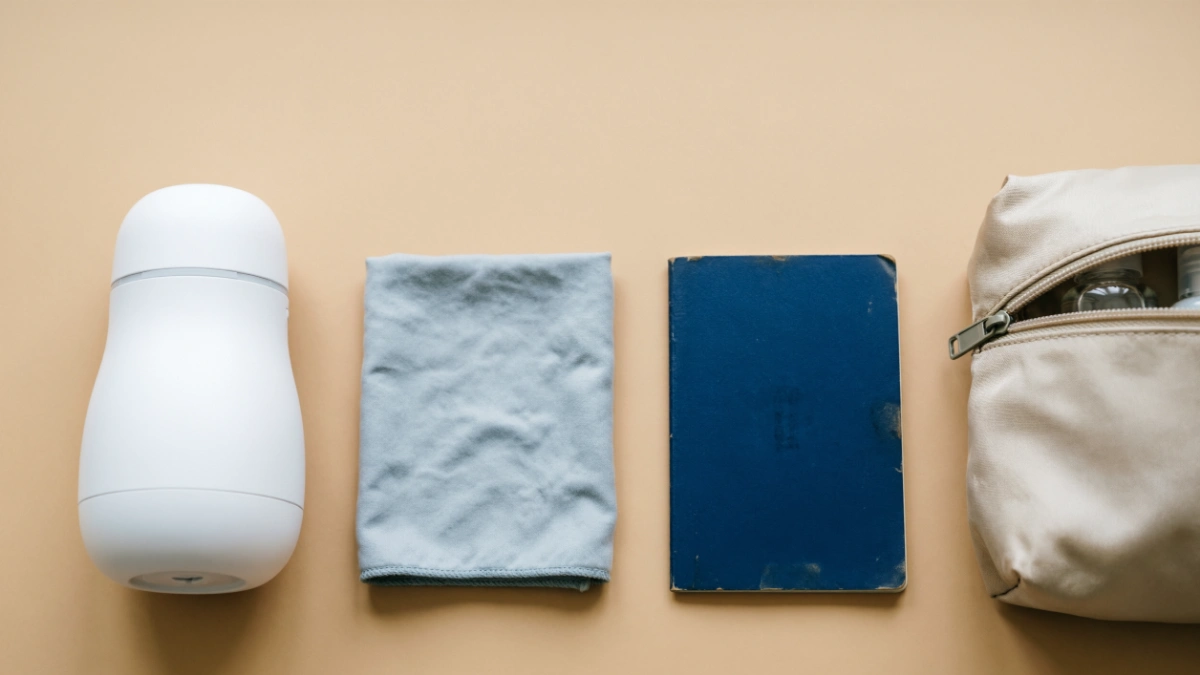
A portable bidet for travel is a compact, handheld device that sprays water for personal hygiene after using the toilet with no plumbing required. It fits in a carry on, weighs under 6 oz, and works in hotel rooms, campgrounds, airports, and international restrooms. Most travelers who try one never go back to relying on toilet paper alone.
There’s a moment every traveler dreads you’re in a foreign restroom, there’s no toilet paper, the plumbing is ancient, and the nearest convenience store is three cobblestone blocks away. It happens in Peru, Portugal, and plenty of American campgrounds too.
Toilet paper is one of the most overlooked packing problems in travel. Americans use an average of 141 rolls per year, according to Statista, yet paper isn’t always available or reliable abroad. Meanwhile, bidets are standard in 80% of Japanese homes and widely used across Europe, the Middle East, and South America yet most U.S. travelers have never packed one.
A portable bidet solves this quietly but completely. It’s lightweight, TSA friendly, reusable, and genuinely more hygienic than dry wiping alone. This guide covers everything how they work, which types suit which trips, what to buy, how to pack one, and why many experienced travelers say it’s the single best hygiene upgrade they’ve ever made.
If you’re road tripping across national parks, backpacking through Southeast Asia, or managing a medical condition on a long haul flight, this guide gives you the practical, no fluff breakdown you need.
What Is a Portable Bidet and How Does It Work?
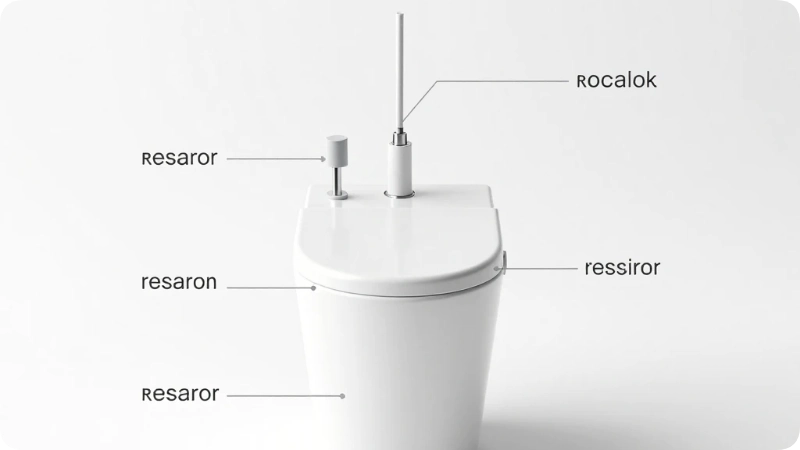
A portable bidet is a squeeze bottle or battery powered device that delivers a controlled stream of water for post toilet cleansing. Most models hold 150–400ml of water, weigh 2–6 oz, and fit easily in a toiletry bag or day pack.
The mechanics are simple: fill the reservoir with water from a sink or bottle, position the nozzle, and gently squeeze or press a button. The water stream rinses the area clean. Most users pat dry with a small amount of toilet paper or a personal cloth afterward.
There are two main mechanisms:
- Squeeze/manual bidets: No batteries needed. You control pressure by squeezing. Great for minimalist packers.
- Electric/battery powered bidets: Offer consistent pressure and sometimes adjustable nozzle angles. Slightly heavier but more control.
Both types are effective. The choice comes down to trip style and personal preference.
Types of Portable Bidets: Which One Is Right for Your Trip?
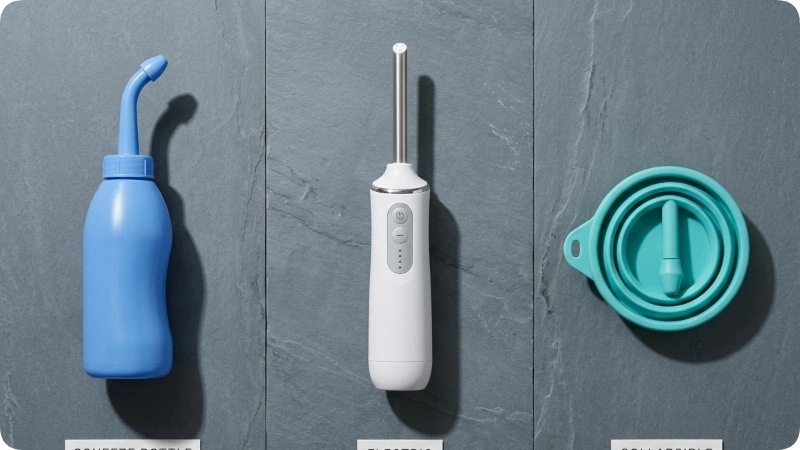
There are three main types of portable travel bidets: squeeze bottle, electric, and collapsible, each designed for different trip lengths, budgets, and traveler preferences.
Squeeze Bottle Bidets
These are the most common and affordable. Brands like Brondell GoSpa and Toto Travel Washlet Handheld lead this category. They typically cost $10–$30, require no batteries, and weigh about 2–3 oz.
Best for: Budget travelers, backpackers, campers, minimalist packers, and anyone doing a first time trial.
Drawbacks: Pressure varies with how hard you squeeze. Not ideal for users with limited hand strength.
Electric Portable Bidets
Battery powered models like the Tushy Travel Bidet or LUXE Bidet Neo offer push button operation and more consistent spray. They often include USB charging and cost $25–$60.
Best for: Frequent travelers, long trips, users who want hands free consistency, or those managing post surgical hygiene needs.
Drawbacks: Slightly heavier, requires charging or batteries, and costs more upfront.
Collapsible/Silicone Bidets
These fold flat for ultra compact packing. Models from brands like Brondell or Hibbent collapse into roughly the size of a credit card stack. They’re less powerful but incredibly packable.
Best for: Ultra light packers, festival goers, weekend trips, or as backup travel hygiene tools.
Drawbacks: Pressure is low; the silicone can feel less durable over time.
Are Portable Bidets TSA Approved?
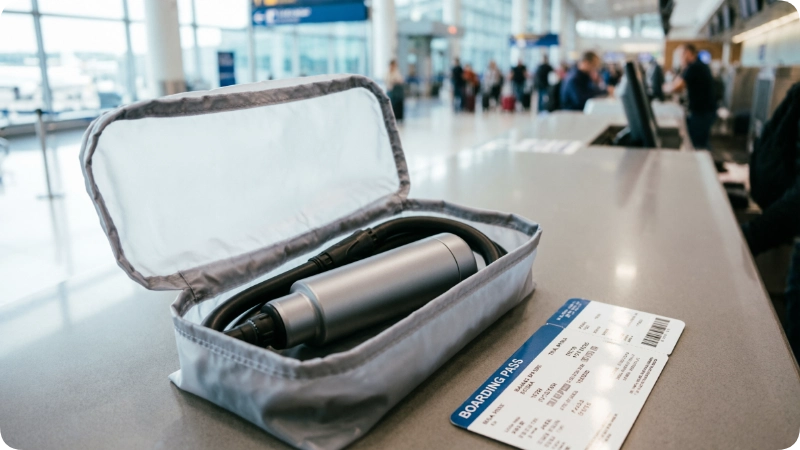
Yes portable bidets are TSA approved for carry on luggage. They are considered personal care devices, not liquids or gels. The water inside, however, must follow TSA’s 3 1 1 liquid rule if carried in a squeeze bottle.
The TSA’s 3 1 1 rule requires all liquids, aerosols, gels, creams, and pastes in carry on bags to be in containers of 3.4 oz (100ml) or less, all placed in one quart sized clear bag. A portable bidet device itself is not a liquid, it’s a plastic or silicone tool so it clears security without issue.
The catch: If you’re carrying water inside it, technically that water counts as a liquid. Most travelers simply empty the reservoir before going through security and refill it at a water fountain or restroom sink on the other side.
Pro tip: Pack the bidet empty in your quart bag or toiletry pouch. Refill it post security at any airport water refill station. All major U.S. airports have these.
Always check the TSA official website for updated rules on personal care items before each flight, as policies can change.
Top Portable Bidets Worth Packing in 2026
The best portable bidet for travel balances weight, water capacity, ease of use, and durability. Here are the top performing options tested and reviewed by frequent travelers, organized by traveler type.
| Model | Type | Weight | Capacity | Price Range | Best For |
| Brondell GoSpa | Squeeze | 2.6 oz | 400ml | $12–$18 | Budget travelers |
| Tushy Travel Bidet | Electric | 5.5 oz | 150ml | $39–$49 | Daily users |
| TOTO Travel Washlet | Manual nozzle | 3 oz | 360ml | $25–$35 | Quality focused |
| LUXE Bidet Travel | Electric | 5 oz | 200ml | $29–$45 | Frequent flyers |
| Hibbent Collapsible | Silicone squeeze | 1.8 oz | 300ml | $15–$22 | Ultralight packers |
Prices are approximate and subject to change. Verify current pricing on retailer sites before purchasing.
What to Look for When Buying
- Water capacity: 300–400ml is ideal. Less than 150ml often means you’ll need multiple refills mid use.
- Nozzle angle: An angled or retractable nozzle provides more effective aim and better hygiene between uses.
- Leak proof seal: Critical for packed luggage. Look for screw top caps with rubber gaskets.
- Material: BPA free plastic or medical grade silicone. Avoid thin plastics that crack under pressure.
- Drying ease: A wide mouth opening makes it easy to dry inside the reservoir between uses.
How to Use a Portable Bidet While Traveling
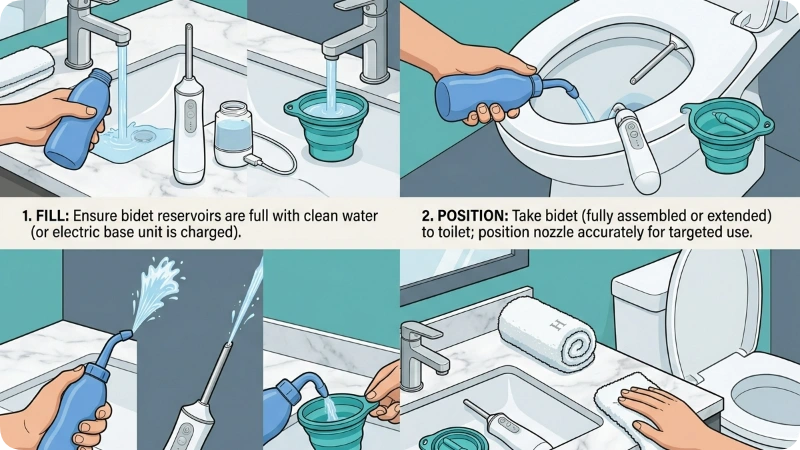
Using a portable bidet takes about 30 seconds once you’re practiced. Fill, aim, squeeze or press, and pat dry. The technique adjusts slightly depending on the restroom setup.
Here’s a step by step breakdown:
- Fill the reservoir at a restroom sink before entering the stall, or bring a small water bottle.
- Sit on the toilet and complete your business as usual.
- Position the nozzle angle it toward the area you need to clean. For squeeze models, tilt the bottle slightly so water flows from the nozzle naturally.
- Squeeze gently or press the button. Start with light pressure. Too much pressure too fast is uncomfortable.
- Rinse until clean. Most people need 150–250ml per use.
- Pat dry with a small piece of toilet paper, a personal cloth, or a dedicated travel towel.
- Rinse the nozzle and cap it before returning the bidet to your bag.
Using One in Tricky Situations
No sink in the stall? Fill at the restroom sink before entering and carry it in. This is standard practice worldwide.
Squat toilet? Portable bidets work great here since they require no special attachment. Positioning yourself and aiming squat toilets are actually common in Japan, Turkey, India, and many campground settings.
Airplane restroom? Yes, it works. Fill at the small sink, use it in the stall, and dispose of paper minimally. Flight attendants often appreciate passengers who reduce trash output.
Why Travelers Are Switching: Health and Hygiene Benefits
Studies show that water based cleansing is more effective than toilet paper alone. A 2016 study published in the Journal of Wound, Ostomy and Continence Nursing found that bidet use significantly reduced bacterial contamination compared to paper wiping.
Beyond the science, here’s what real travelers report:
- Less irritation: Toilet paper, especially rough international varieties can cause or worsen irritation, hemorrhoids, and skin sensitivity. Water is gentler.
- Better management of GI issues on the road: Traveler’s diarrhea affects an estimated 30–70% of international travelers according to the CDC. A portable bidet becomes a genuine comfort tool when stomach troubles hit.
- Post surgical or medical travel: People managing conditions like Crohn’s disease, IBD, or post surgical recovery often cite portable bidets as medically important travel items.
- Environmental edge: The average American uses about 57 sheets of toilet paper per day. Reducing that consumption even while traveling cuts paper waste meaningfully.
Portable Bidet for Camping and Outdoor Travel
A portable bidet is one of the best tools for Leave No Trace hygiene at campsites. It replaces or significantly reduces toilet paper waste, which the National Park Service and Leave No Trace Center both flag as a major environmental concern in backcountry areas.
The National Park Service (NPS) recommends packing out all used toilet paper in wilderness areas. A portable bidet dramatically reduces how much paper you need or eliminates it entirely when paired with a small pack out cloth.
What to Know for Outdoor Use
- Water source: Fill at a campsite spigot or treated water bottle. Never use untreated stream water directly on sensitive skin areas.
- Disposal: Water from a portable bidet use should be dispersed at least 200 feet from water sources, trails, and camp areas the same rule as washing dishes in the backcountry.
- National Parks that get the most backcountry use Grand Canyon, Yosemite, Zion, Olympic, and Great Smoky Mountains all benefit from reduced paper waste from campers.
- Pack weight: Most squeeze models weigh under 3 oz, lighter than a full roll of TP.
Portable Bidet for International Travel
A portable bidet is arguably more essential on international trips than domestic ones. Restroom conditions, paper availability, and hygiene infrastructure vary enormously across countries.
Here’s what travelers encounter abroad:
Countries Where a Bidet Helps Most
| Region | Common Restroom Situation | Bidet Helpfulness |
| Southeast Asia | Squat toilets; hose sprayers sometimes available | High |
| Middle East | Paper sometimes unavailable; water spray common but shared | High |
| Eastern Europe | Variable quality; often coin operated | Medium–High |
| Western Europe | Bidets exist but are standalone fixtures, not attachments | Medium |
| Japan | High tech bidets built in; a portable one is backup only | Low–Medium |
| Latin America | Paper sometimes restricted (don’t flush signs common) | High |
| Sub Saharan Africa | Extremely variable; remote areas have no paper | Very High |
Insider tip: In many countries Peru, Egypt, Morocco, parts of India it’s disrespectful or impossible to flush toilet paper. A portable bidet lets you reduce paper use entirely and navigate those situations with ease.
Packing a Portable Bidet: The Smart Traveler’s Approach
A portable bidet packs best in a toiletry bag, dry bag, or the outer pocket of a daypack. Keep it empty during transit and refill on arrival.
Packing Checklist
- Empty the bidet before airport security
- Pack in a small zip lock or silicone pouch to prevent any residual drips
- Include one microfiber cloth (hand towel size) as a drying option reduces paper use to near zero
- If electric, pack the USB cable and check voltage compatibility for international travel
- Bring a backup (a small squeeze bottle) on long international trips in case the primary fails
What NOT to Do
- Don’t pack it filled with water it may leak under cabin pressure or violate TSA liquid rules
- Don’t store it wet inside a sealed bag mold can develop in the reservoir over time
- Don’t share a personal bidet it’s a hygiene item, not shareable gear
Common Mistakes Travelers Make with Portable Bidets
Most problems with portable bidets come from packing errors, pressure misjudgment, and skipping the drying step.
Mistake 1: Buying Too Small a Capacity
Models under 150ml often require refilling mid use, which means getting up and going back to the sink. Choose 300ml or above for comfortable single fill use.
Fix: Check capacity specs before buying. 350–400ml handles most uses in one fill.
Mistake 2: Not Drying the Reservoir Between Uses
Leaving water sitting in a plastic reservoir creates mold risk over days or weeks of travel.
Fix: After each use, empty the remaining water, invert the bottle, and let it air dry with the cap off. At night, leave it uncapped in your toiletry bag.
Mistake 3: Using Too Much Pressure Too Fast
First time users often over squeeze. High pressure directed incorrectly causes discomfort and mess.
Fix: Start with very gentle pressure. You need far less force than you’d expect. Practice once at home before your trip.
5 Insider Tips from Experienced Travelers
These aren’t found in product descriptions they come from people who’ve used portable bidets across dozens of countries:
- Mark it clearly in your luggage. A small piece of colored tape or a labeled pouch prevents confusion if a bag checker handles your toiletries. It’s a perfectly legal item, but clear labeling avoids questions.
- Use filtered or bottled water when stomach sensitivity is a concern. In countries where tap water isn’t potable, using tap water externally is generally fine but carry a water bottle for filling in case the restroom sink looks questionable.
- Pair it with a small bamboo travel cloth. Zero paper needed. Wash the cloth in your hotel sink at night. It dries fast and travels light.
- Keep it in your daypack on travel days, not checked luggage. You’ll use it on the plane, at the airport, and on transit more than you’ll expect.
- Buy a second one and leave it in your travel kit permanently. At $12–$20 for a manual model, leaving one packed at all times means you never forget it again.
Alternatives to a Portable Bidet
If a portable bidet doesn’t feel right for your trip, there are a few alternatives though most are less effective, less eco friendly, or more situational.
Flushable Wipes
Widely used by U.S. travelers. The problem: most so called “flushable” wipes are not actually biodegradable in most sewer systems. The National Association of Clean Water Agencies (NACWA) warns they clog municipal systems. They’re also single use and add plastic to your packing footprint.
Better for: Short domestic trips where plumbing is reliable and you’re using truly certified flushable brands.
Peri Bottles
Used postpartum and medically, peri bottles are essentially squeeze bidets they just aren’t designed with travelers in mind. They often lack nozzles, don’t seal well, and are bulkier than purpose built travel bidets.
Better for: Travelers who already own one and are managing postpartum or post surgical recovery on a trip.
Wet Wipes + Dry Paper Combo
The most common backup. More effective than dry paper alone, but still single use and wasteful. Not a long term solution for frequent travelers.
Budget Breakdown: What a Portable Bidet Actually Costs
A portable bidet is one of the most cost efficient travel purchases available. A $15 squeeze model used across 50 trips costs $0.30 per trip less than a pack of airport gum.
| Item | Cost Range | Lifespan |
| Manual squeeze bidet | $10–$25 | 1–3 years |
| Electric USB bidet | $25–$60 | 2–4 years |
| Collapsible silicone bidet | $12–$22 | 1–2 years |
| Replacement microfiber cloth | $3–$8 | 6–12 months |
| Travel pouch/bag | $5–$15 | 3–5 years |
Prices are approximate. Verify with retailers before purchasing.
A quality manual bidet typically pays for itself within one or two trips simply through reduced need to buy emergency toilet paper at inflated travel prices.
FAQs
Is a portable bidet sanitary?
Yes when used and maintained properly, a portable bidet is more sanitary than toilet paper alone. Water physically removes bacteria rather than smearing it. Rinse the nozzle after each use, dry the reservoir, and replace the device every 1–2 years. The key is keeping the interior dry between uses to prevent mold growth.
Can you use a portable bidet on an airplane?
Yes. Airplane restrooms have small sinks that work perfectly for filling a portable bidet. Fill it at the sink, return to the toilet seat, and use it normally. Most users find this takes under 2 minutes total. It significantly reduces toilet paper waste in aircraft restrooms, which helps reduce clogs.
How much water does a portable bidet use per session?
Most users need about 150–250ml per use. A 350ml bidet covers a standard session comfortably with water to spare. Electric models with precise pressure control tend to use slightly less water than squeeze models due to more efficient spray patterns.
Are portable bidets good for people with hemorrhoids or IBS?
Yes many gastroenterologists recommend bidet use for patients with hemorrhoids, inflammatory bowel disease (IBD), Crohn’s disease, or general anal fissures. Water cleansing is gentler than paper and significantly less irritating. Travelers managing these conditions often cite a portable bidet as a medical necessity for comfort and recovery. Consult your physician for personalized advice.
Do portable bidets work with squat toilets?
Yes, and they work well. Squat toilets are common across Japan, Southeast Asia, the Middle East, and Eastern Europe. A portable bidet doesn’t attach to the toilet at all it’s handheld. Positioning may require a slight adjustment in technique compared to seated toilets, but most users adapt quickly.
Can kids use a portable bidet while traveling?
Yes, with adult supervision and a gentler squeeze. Many families traveling with young children find it easier and cleaner than hunting for toilet paper in unfamiliar restrooms. Start with the lightest possible pressure. Electric models with adjustable settings can be set to the gentlest spray for younger users.
How do you clean and maintain a portable bidet between trips?
After your trip, rinse the reservoir thoroughly with warm water. Let it air dry completely before storing. Once a month with regular use, rinse the interior with a diluted white vinegar solution (1 part vinegar, 4 parts water), then rinse again with clean water. Store in a dry, open pouch rather than a sealed bag.
Conclusion
A portable bidet for travel is one of the smallest purchases that makes one of the biggest differences on the road. It weighs almost nothing, costs less than a single airport meal, and solves one of travel’s most persistent and least discussed discomforts.
Three things to take away:
- Manual squeeze bidets are the best starting point affordable, lightweight, and TSA friendly.
- Pair yours with a small microfiber cloth to eliminate paper dependence entirely on longer trips.
- International travel, camping, and medical travel are where a portable bidet delivers the most value.
Pack it once, and it’ll earn its spot on every future packing list. Clean, comfortable travel isn’t a luxury, it’s a mindset.

Gordon Ramsay is a travel writer and destination researcher who helps U.S. travelers plan smarter trips, covering destinations, seasonal trends, budgets, and logistics to help readers decide where—and when—to go.
Rather than simply listing popular places, Gordon Ramsay focuses on what travelers actually need: comparing weather against crowds, weighing costs and accessibility, and researching current conditions alongside official tourism guidance—delivering honest, practical advice without the hype.