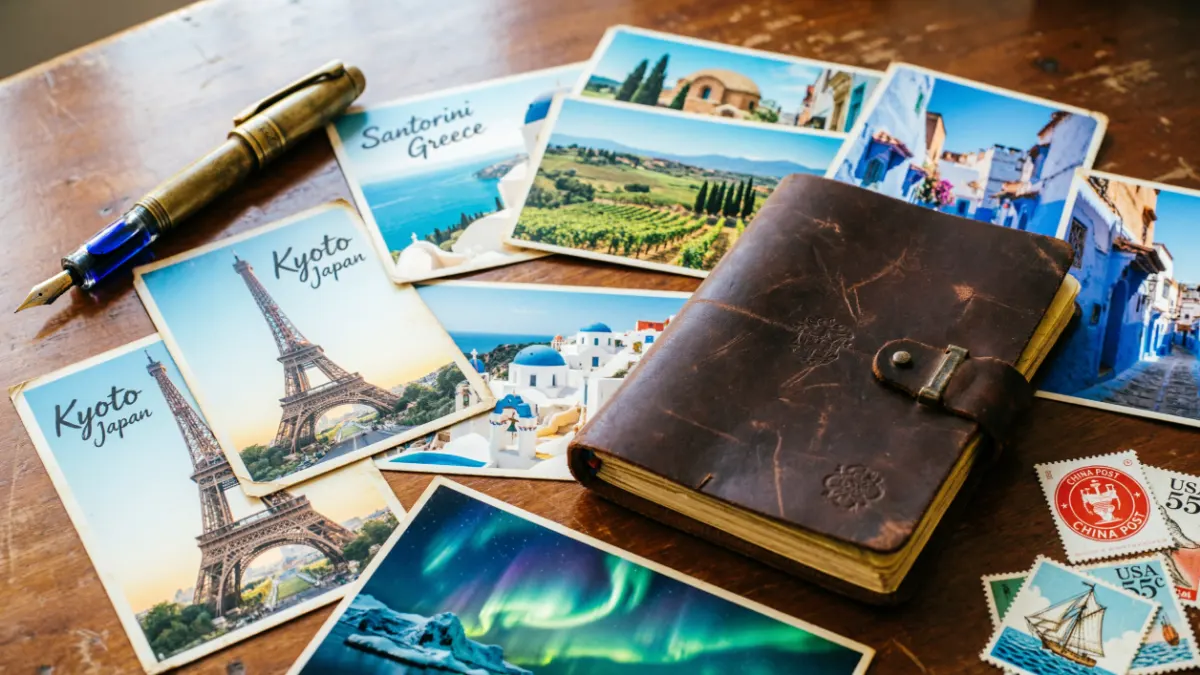
Travel postcards are small printed cards typically 4×6 inches that travelers send or collect as tangible souvenirs from destinations around the world. They capture a place’s landmarks, scenery, or culture in a single image and remain one of the most affordable, personal, and meaningful ways to share a travel experience with someone back home.
There’s something a typed text message can never replace. When a postcard arrives in the mailbox worn at the edges, stamped with a foreign postmark, scrawled with someone’s handwriting it carries the weight of an actual place. It says I was here, and I thought of you.
Yet millions of travelers skip the postcard ritual entirely. They’re not sure where to find good ones, how international mailing works, or how to keep cards from getting lost in transit. Others want to start a collection but don’t know where to begin.
Travel postcards are having a genuine comeback. Independent shops, postal museums, and even Instagram communities have reignited interest in what was once considered a dying art form. If you’re a sender, a collector, or someone who just stumbled across a box of vintage cards at a flea market, this guide covers everything you need from sourcing the best designs to mailing across borders, to building a collection that actually means something.
Quick Facts: Travel Postcards at a Glance
| Feature | Details |
| Standard postcard size (USA) | 4 × 6 inches |
| USPS domestic postcard rate | Currently under $1 (verify at usps.com) |
| International postcard postage | Varies by country; check USPS Global Forever stamp |
| Best places to buy | Independent bookshops, museum gift shops, local art markets |
| Vintage postcard term | “Deltiology” (the hobby of collecting postcards) |
| Most collected era | 1900–1930 (Golden Age of Postcards) |
| Fastest delivery destination | Within the continental USA (2–5 business days) |
Always verify current USPS postage rates at usps.com before mailing, as rates change periodically.
Why Travel Postcards Still Matter in the Digital Age
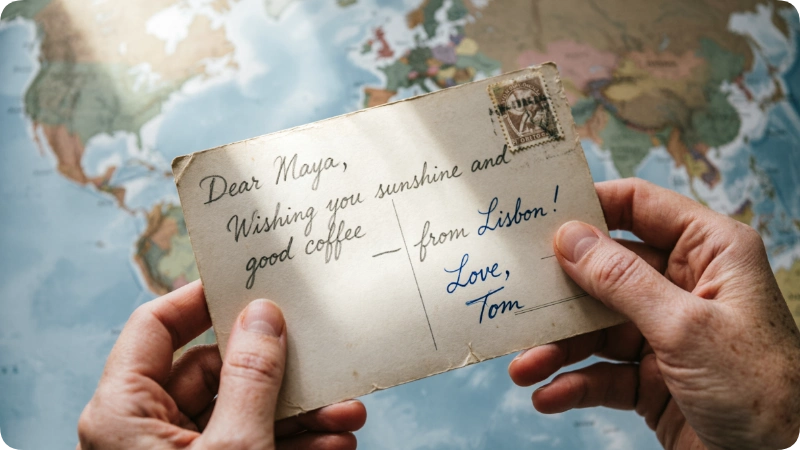
Travel postcards offer something social media never can: a physical object that someone touched, chose, wrote on, and mailed. That tactile experience creates an emotional connection that a screenshot simply doesn’t.
Research in psychology consistently links physical objects to stronger memory formation. A postcard pinned to a bulletin board or tucked into a journal becomes a memory anchor in a way that a digital photo buried in a camera roll doesn’t. Postcards are also surprisingly democratic they cost almost nothing to buy and very little to send, making them one of the most accessible travel souvenirs for any budget.
Beyond sentiment, postcards serve a practical purpose for travelers who want to document a trip without hauling home heavy gifts. A stack of ten cards weighs almost nothing in a carry on bag, yet each one represents a specific moment, neighborhood, or feeling from a journey.
The Deltiology Community
Deltiology the hobby of collecting postcards is one of the top three most popular collecting hobbies in the world, alongside stamps and coins. The United States has an especially rich postcard history, with the Library of Congress holding over 37 million historical postcards in its collection. Collector shows happen regularly across the country, including large events in cities like Chicago, Philadelphia, and Kansas City, where dealers trade cards spanning more than a century of American travel history.
Where to Buy the Best Travel Postcards in the USA
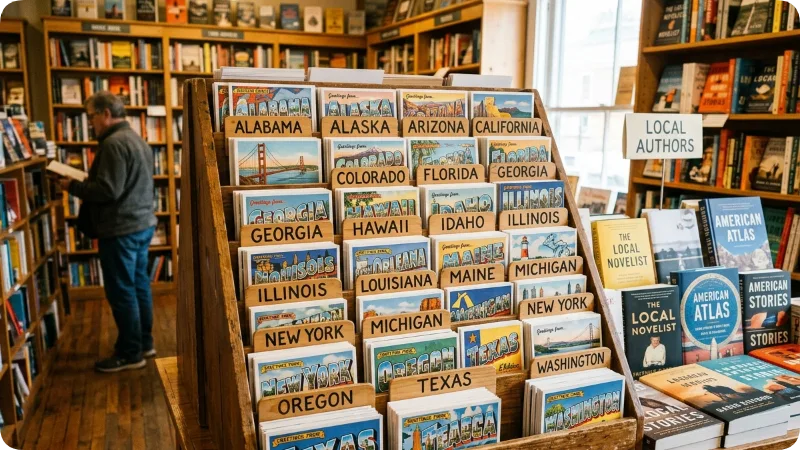
The best travel postcards come from places that actually care about the image quality and local authenticity. Mass produced tourist shop cards exist everywhere, but finding ones worth sending or keeping takes a little more intention.
Museum and gallery gift shops consistently stock the highest quality cards. Institutions like the Smithsonian in Washington, D.C., the Art Institute of Chicago, and the Getty Center in Los Angeles all produce postcard lines tied to their collections. These are often artist designed, printed on heavy stock, and genuinely unique to the location.
Independent bookshops are another excellent source. Many stock locally printed cards from regional artists and photographers, particularly in cities with strong creative communities like Portland, Oregon, Asheville, North Carolina, and Brooklyn, New York.
Farmers markets and art fairs in tourist heavy destinations frequently feature local photographers and illustrators selling postcards directly. Buying directly from the creator means the card is one of a kind and supports a local artist.
Best Online Sources for Travel Postcards
- Etsy Wide range of vintage and artist designed cards by region
- eBay Best for vintage and rare collector cards
- Postcrossing International postcard exchange community with over 800,000 members worldwide
- Society6 / Redbubble Print on demand cards from independent designers
- Local tourism board websites Some state tourism offices (like Visit California and New York State tourism) sell or link to licensed postcard vendors
How to Send Travel Postcards: A Step by Step Guide
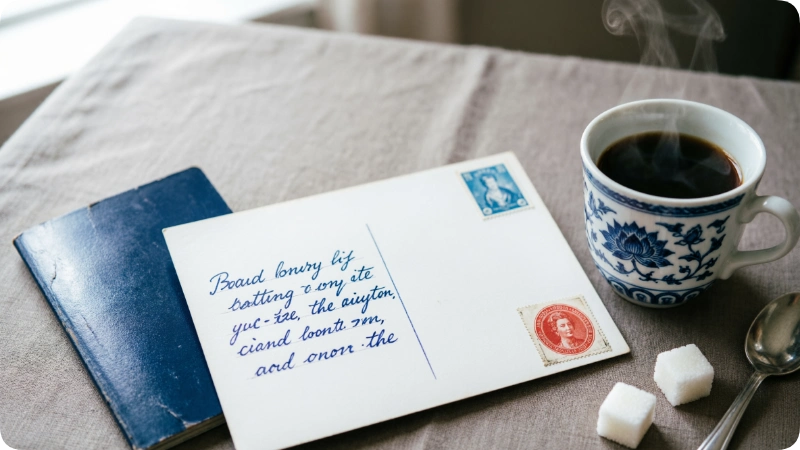
Sending a postcard seems simple, but a few missteps can mean your card never arrives. Follow these steps for reliable delivery every time.
- Write the address first. Always fill in the address before the message. If ink smears or you run out of room, you want the destination safe.
- Use a permanent, dark pen. The pencil fades in transit. Ballpoint or fine tip markers work best.
- Keep the message in the left column, address on the right. The right side is reserved for the address and stamp. Most postcards have a dividing line printed on the back.
- Apply the correct postage. For domestic USA cards, check USPS for the current postcard rate (it differs from standard letter postage). For international use, use a USPS Global Forever stamp, which covers standard postcard mailings to most countries.
- Mail from a post office when possible. Dropping cards in blue street mailboxes works, but post offices offer tracking confirmation and ensure cards aren’t overstuffed into a box.
- Allow extra time for international cards. Cards to Europe typically take 1–3 weeks. Cards to Asia or South America can take 3–6 weeks or longer depending on local postal systems.
Insider Tip: Get Your Card Hand Canceled
Ask postal workers to hand cancel your postcard instead of running it through the machine. Machine cancellation can smear ink or damage cards. A hand canceled card also tends to feel more personal to the recipient.
Mailing Postcards Internationally from the USA
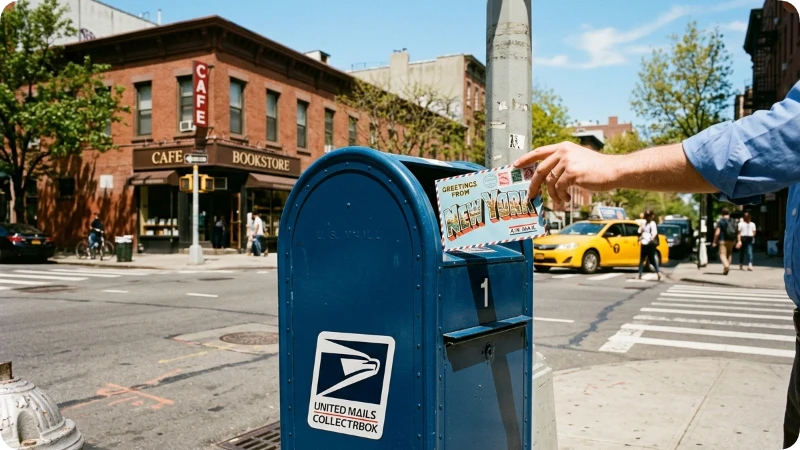
Sending postcards abroad from the United States is straightforward with the right stamp, but a few extra details help ensure smooth delivery.
The USPS Global Forever stamp covers First Class Mail International postcards to most destinations. As of the most recent USPS rate schedule, this stamp covers international postcard mailings but always verify current pricing at usps.com since postal rates change.
Write addresses in the local format of the destination country when possible. For countries with non Latin alphabets, also include the country name in English on a separate line at the bottom of the address block. The Universal Postal Union (UPU), the United Nations agency overseeing global mail, recommends printing the destination country in capital letters for clarity.
Some countries have slower or less reliable domestic delivery systems. Experienced postcard senders suggest sending to a reliable person a hotel concierge, a family home, or a permanent address rather than a temporary rental when mailing to developing nations.
Countries Where Postcards Often Take Longest
- Southeast Asian nations: 3–6 weeks average
- Parts of South America and Africa: 4–8 weeks
- Remote Pacific islands: 6–12 weeks or more
Delivery times are estimates. Contact destination country postal services or check the UPU website for updated estimates.
Collecting Travel Postcards: How to Start and What to Look For
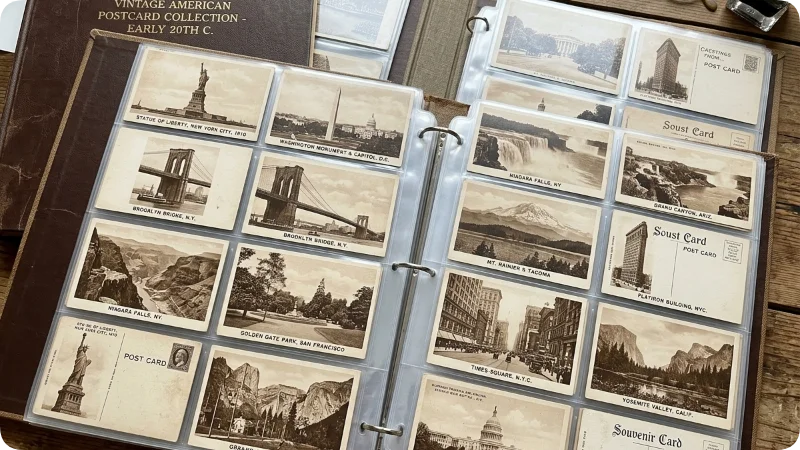
A postcard collection can organize itself around almost any theme geography, time period, subject matter, or artistic style. Starting with a clear focus makes collections more satisfying and valuable over time.
New collectors often start by keeping cards from every place they visit personally. This creates a travel diary in postcard form. Others focus on a single state, country, or landmark category (lighthouses, national parks, small town diners).
Vintage collectors look for cards from the early 20th century, particularly from the “Golden Age” of postcards (roughly 1900–1930), when printing technology first allowed mass production of high quality illustrated cards. Cards from this era show how places looked before major development they’re historical documents as much as collectibles.
What Makes a Postcard Valuable?
- Age Pre 1940 cards generally hold more collector interest
- Condition Unposted cards in mint condition fetch higher prices
- Rarity Limited print runs, discontinued designs, or cards from demolished landmarks
- Handwritten content Cards with interesting messages or famous signatures
- Real Photo Postcards (RPPCs) Actual photographs printed on postcard stock, common 1900–1950
How to Store and Preserve Your Collection
Store cards in acid free sleeves (available at most hobby and archival supply stores) to prevent yellowing and ink transfer. Keep collections away from direct sunlight, humidity, and extreme temperatures. Binders with postcard sized clear pages work well for smaller collections. Serious collectors use archival flat storage boxes.
The Best Destinations in the USA for Postcard Worthy Scenes
Some American destinations practically demand a postcard. These spots offer scenes so visually striking that finding a quality card or taking one worth printing comes naturally.
National Parks
The National Park Service (NPS) manages gift shops at major parks that sell high quality postcard sets tied to park landscapes. Yosemite National Park (California), Zion National Park (Utah), Grand Canyon National Park (Arizona), and Acadia National Park (Maine) all have strong postcard traditions and gift shop selections that reflect serious landscape photography.
Insider tip: Buy NPS postcards inside the park visitor centers, not from gas stations on the approach road. Park gift shops typically carry photography based cards by professional landscape photographers who have specific permits to shoot inside the park.
Historic American Cities
Cities with distinct visual identities produce the best postcards. New Orleans, Louisiana, offers cards featuring the French Quarter’s wrought iron balconies, jazz musicians, and Creole architecture. San Francisco, California, the cable cars, the painted ladies of Alamo Square, the Golden Gate Bridge at dawn remains one of the most photographed cities in America.
Charleston, South Carolina stands out as an underrated postcard city. Its pastel Rainbow Row homes, historic church steeples, and horse drawn carriages make for genuinely beautiful card images that differ from the coastal cities most travelers default to.
Small Towns Worth the Detour
Small towns often produce the most interesting regional postcards because local artists and photographers capture scenes that national postcard distributors overlook. Towns like Marfa, Texas, Bar Harbor, Maine, Jerome, Arizona, and Walla Walla, Washington all have active local artist communities that supply independent shops with genuinely distinctive cards.
Hidden Gems: Unexpected Places to Find Great Postcards
Most travelers walk past the best postcard sources without realizing it. These three places consistently reward those who look carefully.
1. Thrift stores and estate sales Donated boxes of old postcards turn up regularly in Goodwill stores and estate sales, particularly in older communities. Cards from the 1940s through 1970s surface for pennies each. This is where serious collectors find their best vintage pieces.
2. Laundromats and community bulletin boards in small towns Local artists in tourist adjacent small towns sometimes leave postcard sized prints in exchange for donations or small fees at community spaces. These are handmade, often extraordinary, and found nowhere else.
3. Botanical gardens and zoos These institutions invest heavily in beautiful photography for their gift shops and often produce postcard lines featuring macro photography of flowers, animals, and habitat scenes that rival anything sold in fine art stores.
Postcrossing: The Global Postcard Exchange Community
Postcrossing is a nonprofit project that connects postcard senders around the world through a randomized exchange system. A member sends a card to a randomly assigned address anywhere in the world; once it’s registered as received, the sender’s address enters the pool for someone else to mail to.
Founded in Portugal in 2005, Postcrossing now has more than 800,000 members across 200+ countries, with the United States consistently ranking among the top three most active member nations. The project has facilitated the exchange of over 76 million postcards since its launch.
For travelers who want to extend the postcard experience beyond their own trips, Postcrossing offers a way to receive cards from destinations on every continent and to send pieces of American culture to curious recipients around the globe. Sign up and learn more at postcrossing.com.
Making Your Own Travel Postcards
Printing custom postcards from your own travel photography has never been easier. Several services allow travelers to upload photos and receive professionally printed cards within days.
Services worth considering:
- Canva Design templates, printable at home or via their print service
- Artifact Uprising Premium printing on thick matte stock
- Moo Cards Popular for postcard quality prints with multiple designs per order
- Snapfish / Shutterfly Budget friendly options for larger print runs
- Vistaprint Good for bulk orders at lower cost per card
When designing your own cards, keep the back layout correct: address on the right, message on the left, with a clear dividing line. Leave adequate space for a stamp in the upper right corner of the address side. USPS guidelines specify that postcard rate items must be no smaller than 3.5 × 5 inches and no larger than 4.25 × 6 inches to qualify for postcard postage rates; custom cards outside these dimensions require standard letter postage.
Postcard Etiquette and Creative Writing Tips
The message on a postcard is limited typically 5–7 lines at most which makes it a surprisingly challenging form of writing. The best postcard messages are specific, sensory, and personal rather than generic.
Avoid: “Having a great time, wish you were here!” This tells the recipient nothing unique.
Try instead: Describe one specific detail from the day the smell of the food market, an unexpected encounter, the exact color of the water. One vivid sentence beats three vague ones every time.
The golden rule of postcard writing: Write as if describing the scene to someone who will never visit. Give them something real to hold onto.
Creative Postcard Ideas for Travelers
- Mail a card to yourself it becomes a time capsule of how you felt that day
- Send cards to children in your life with a simple “I found something amazing today” opener
- Start a postcard journal by sending dated cards to your own address throughout a long trip
- Write in the language of the country you’re visiting (even imperfectly recipients love the effort)
Common Mistakes Travelers Make with Postcards (and How to Fix Them)
Mistake 1: Waiting until the last day of a trip to buy and send cards. Cards bought on departure day rarely get mailed. Shop early, write cards in the evening after sightseeing, and mail them by midweek. Cards posted early in a trip often arrive home before the traveler does a fun surprise for the recipient.
Fix: Buy postcards within the first 48 hours of any trip.
Mistake 2: Using insufficient postage for international cards. A domestic stamp does not cover international mail. Many travelers don’t realize this until their cards come back marked “return to sender” sometimes weeks after the trip ends.
Fix: Always ask at the post office for international postcard postage or purchase USPS Global Forever stamps before departure.
Mistake 3: Storing vintage postcards in regular plastic sleeves. Standard vinyl sleeves off gas chemicals that damage old paper and ink over time. This ruins the condition of cards that might otherwise hold collector value.
Fix: Use archival quality, acid free polyester (Mylar) or polypropylene sleeves for any card worth keeping.
Budget Breakdown: What Postcards Actually Cost
| Item | Estimated Cost |
| Tourist shop postcard | $0.50–$2.00 |
| Museum or art gallery postcard | $2.00–$5.00 |
| Artist designed / handmade card | $3.00–$8.00 |
| Vintage postcard (common) | $0.50–$5.00 |
| Vintage postcard (rare/collectible) | $10–$500+ |
| USPS domestic postcard stamp | Check usps.com for current rates |
| USPS Global Forever stamp (international) | Check usps.com for current rates |
| Custom printed postcard (per card, bulk) | $0.30–$1.50 depending on quantity |
Prices are approximate. Verify current USPS postage rates directly at usps.com.
Sample Postcard Itinerary: A National Parks Road Trip
For travelers planning a multi stop trip, building a postcard habit into the itinerary makes the journey more memorable and ensures friends and family receive something from each location.
Day 1–3 | Grand Canyon National Park, Arizona Stop at the South Rim Visitor Center gift shop. Buy 3–4 cards featuring different angles of the canyon dawn, rim view, and Colorado River shots. Write and mail before leaving the park. The Grand Canyon Village post office is located near the Bright Angel Lodge.
Day 4–6 | Zion National Park, Utah The Zion Canyon Visitor Center carries cards by local Utah photographers. The nearby town of Springdale has a small independent shop with artist designed cards that capture the red rock formations more creatively than standard tourist cards.
Day 7–9 | Bryce Canyon National Park, Utah One of the most visually distinctive parks in the country the hoodoo formations photograph unlike anything else in America. The Bryce Canyon Lodge gift shop stocks a strong postcard selection. Mail from the lodge desk.
Day 10–12 | Arches National Park, Utah Delicate Arch at sunset is perhaps the single most iconic postcard image in the American West. The Moab area has several local art galleries with handmade cards worth seeking out.
FAQs
How much does it cost to send a postcard internationally from the USA?
The USPS Global Forever stamp covers standard international postcard mailings from the USA to most countries. Rates change periodically, so verify the exact current cost at usps.com before mailing. Buying Global Forever stamps in advance protects against future rate increases.
How long does a postcard take to arrive from another country?
Delivery times vary widely by destination. Cards sent to Western Europe typically arrive in 1–3 weeks. Cards from Southeast Asia, South America, or remote Pacific destinations can take 4–8 weeks or longer. The destination country’s postal infrastructure significantly affects speed.
What is deltiology?
Deltiology is the formal term for the hobby of collecting postcards. It ranks among the top three most popular collecting hobbies in the world. Collectors focus on age, condition, rarity, subject matter, or geographic region. Vintage postcards from the 1900–1930 “Golden Age” are particularly sought after.
Can I send a postcard without an envelope?
Yes, that’s the defining feature of a postcard. It mails as an open card. Standard postcards must meet USPS size requirements (minimum 3.5 × 5 inches, maximum 4.25 × 6 inches) to qualify for postcard postage rates. Cards outside those dimensions require standard letter postage.
Where is the best place to find vintage travel postcards?
Estate sales, thrift stores, antique malls, and flea markets are the most reliable sources for vintage postcards at reasonable prices. Online, eBay and Etsy offer the widest selection. Dedicated postcard collector shows (held regularly in major cities) are where serious collectors and dealers gather for trading and buying.
Is Postcrossing free to use?
Postcrossing is free to join at postcrossing.com. Members only pay for the postcards themselves and the postage to mail them. There are no subscription fees. The platform connects millions of members in 200+ countries for randomized postcard exchanges.
How should I organize a growing postcard collection?
Most collectors start with binders using postcard sized clear pages. As collections grow, flat archival boxes stored in a climate controlled environment offer better long term protection. Organize by theme, geography, or date whichever system you’ll actually maintain. Acid free sleeves protect individual cards from moisture and handling damage.
Conclusion
Travel postcards do something nothing else in a traveler’s toolkit manages: they turn a moment into an object someone else can hold. Three things to take away from this guide:
First, the best postcards come from places invested in the destination museum shops, independent art stores, and national park visitor centers, not generic tourist stands. Second, mailing internationally is easier than most travelers assume; the right stamp and a post office visit are all it takes. Third, If you’re sending, receiving, or collecting, postcards reward the small effort they require with out sized meaning.
The next time you stand in front of something genuinely beautiful: a canyon at dawn, a city street at magic hour, a coastline you’ll never forget, find the local shop. Buy the card. Write something true on the back. Then mail it.

Gordon Ramsay is a travel writer and destination researcher who helps U.S. travelers plan smarter trips, covering destinations, seasonal trends, budgets, and logistics to help readers decide where—and when—to go.
Rather than simply listing popular places, Gordon Ramsay focuses on what travelers actually need: comparing weather against crowds, weighing costs and accessibility, and researching current conditions alongside official tourism guidance—delivering honest, practical advice without the hype.