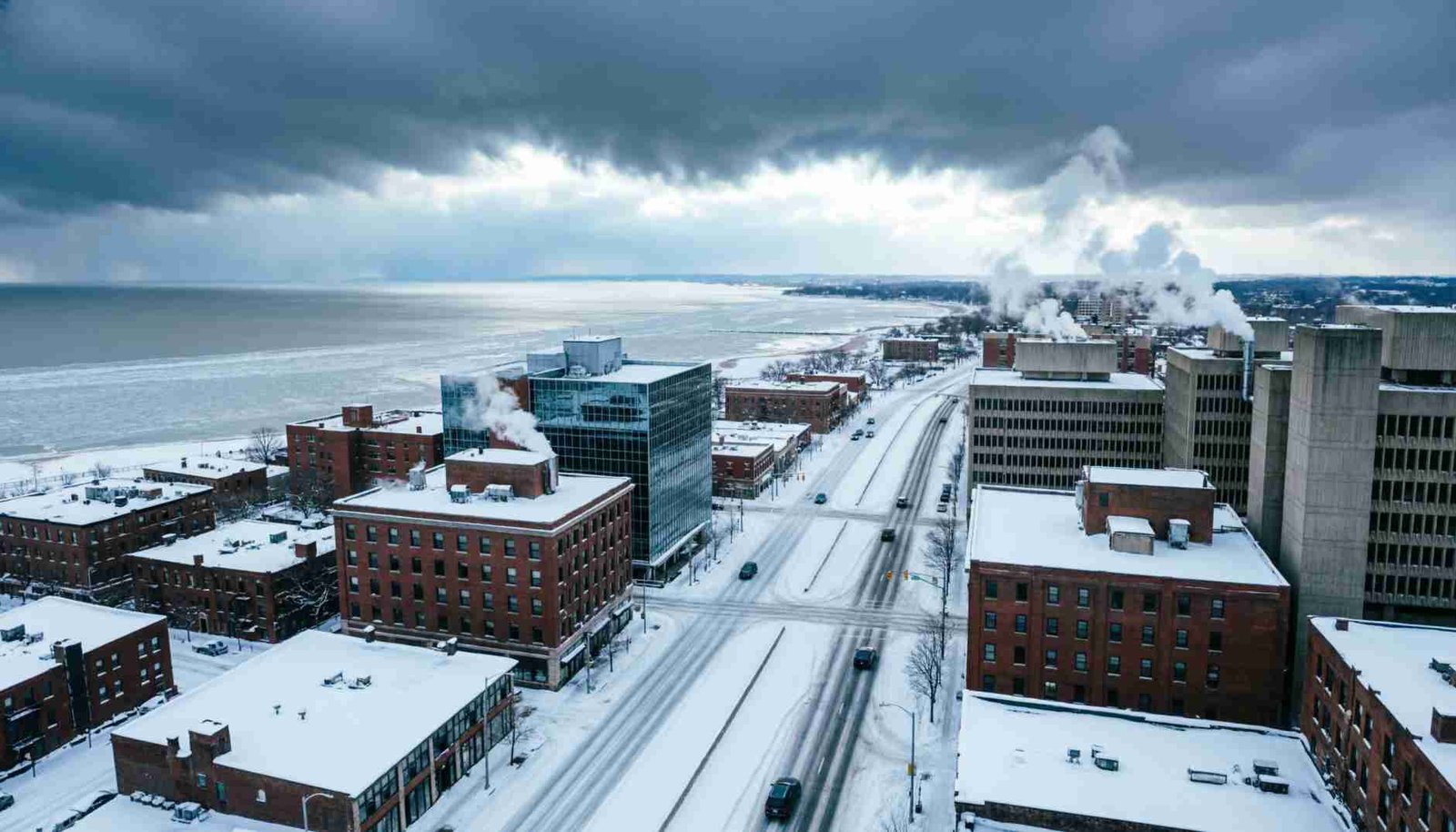
A Buffalo travel ban is an emergency driving restriction issued by New York Governor Kathy Hochul, Erie County Executive Mark Poloncarz, or Buffalo’s mayor when severe winter storms typically lake effect snow events make roads in the Buffalo metro area and Erie County too dangerous for safe travel. Bans range from travel advisories (avoid unnecessary travel) to full driving bans (all passenger and commercial vehicles prohibited). Always verify current status before traveling to or through Western New York.
A single weather alert can turn a perfectly planned trip to Buffalo into a dangerous situation or leave you stranded with nowhere to go. Western New York sits in one of the most extreme lake effect snow corridors in the entire United States. When a storm hits, authorities can issue a Buffalo travel ban with just a few hours’ notice, and the consequences for ignoring it range from hefty fines to life threatening danger.
If you’re driving to a Buffalo Bills game at Highmark Stadium, visiting family in Erie County, flying through Buffalo Niagara International Airport (BUF), or passing through on Interstate 90, understanding how Buffalo’s travel ban system works can be the difference between a smooth trip and a serious emergency.
This guide explains exactly how the travel ban system works, what each restriction level means, where to get real time updates, what to do if a ban catches you mid trip, and how to build a smarter travel plan for Western New York’s winter season. Always confirm current travel ban status directly with official sources before traveling conditions change rapidly and no article can substitute for a live update.
What Is a Buffalo Travel Ban and How Does It Work?
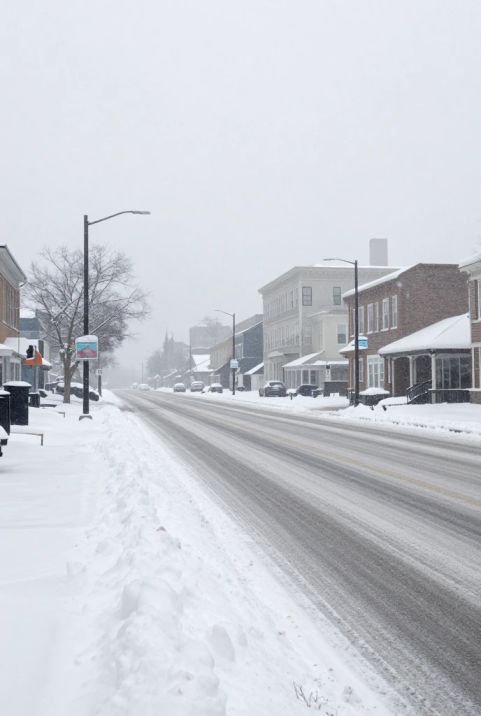
State and county officials impose a Buffalo travel ban when winter storms create life-threatening driving conditions across Erie County.Restrictions escalate from travel advisories to partial bans to full driving bans, and violations carry real legal penalties. The system exists because Buffalo’s lake effect snowstorms can go from manageable to catastrophic within hours.
Erie County’s position southeast of Lake Erie makes it one of the most vulnerable areas in North America for intense, localized lake effect snow. The Buffalo metro area can receive multiple feet of snow in a matter of hours when cold air passes over the still warm lake in late fall and winter. During the catastrophic December 2022 blizzard, Buffalo Niagara International Airport recorded nearly 52 inches of snowfall, according to the National Weather Service. More than 37 people died in Erie County alone during that storm a tragedy that underscored exactly why travel bans exist and why compliance matters.
The Three Levels of Buffalo Travel Restrictions Explained
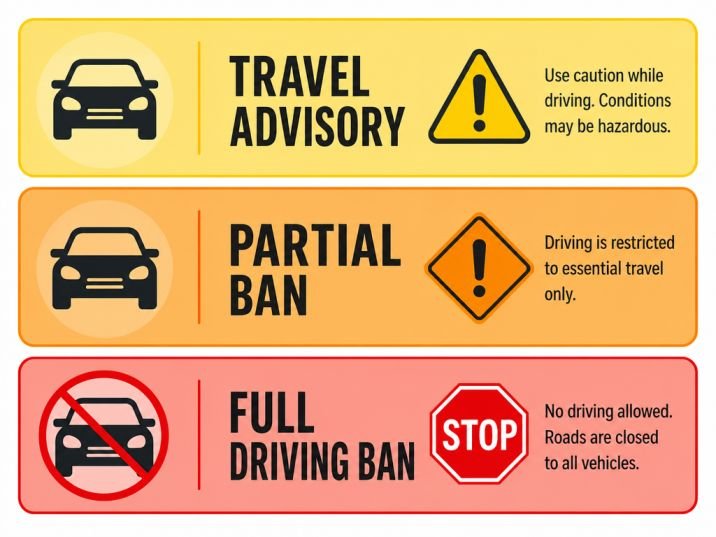
Buffalo and Erie County use three distinct restriction levels: travel advisory, partial driving ban, and full driving ban each with different legal requirements and enforcement mechanisms. Understanding what each level means determines if you legally can or cannot be on the road.
| Restriction Level | What It Means | Who It Covers | Penalty for Violation |
| Travel Advisory | Avoid unnecessary travel; roads open | All vehicles | No criminal penalty, but liability risk |
| Partial Driving Ban | Only essential travel permitted | Typically passenger vehicles in specified zones | Fines and possible vehicle impoundment |
| Full Driving Ban | All travel prohibited | All passenger and commercial vehicles | Criminal violation; fines, impoundment |
Travel Advisory
A travel advisory is the least restrictive level. Roads remain legally open, but authorities strongly urge residents and visitors to avoid all non-essential travel. Conditions during a travel advisory are typically hazardous but not yet catastrophic reduced visibility, accumulating snow, slippery roads. During the December 29, 2025 storm, Erie County Executive Mark Poloncarz issued a travel advisory for all of Erie County citing high winds and near whiteout conditions. The Buffalo Skyway bridge also closed at 6 a.m. that day due to wind conditions, a common occurrence during severe winter weather events.
Partial Driving Ban
A partial ban restricts driving in specific municipalities, zip codes, or road corridors while allowing travel in others. Officials typically issue partial bans in areas receiving the heaviest snow bands which shift locations as lake effect systems oscillate across Western New York. During the January 2024 storm, officials lifted travel bans in southern Erie County towns such as Collins and North Collins before lifting restrictions in the City of Buffalo and the eastern suburbs, where heavy snowfall continued.
Full Driving Ban
A full driving ban prohibits all passenger and commercial vehicles from roads in the designated area until conditions improve and officials lift the order. Violators face criminal penalties, fines, and vehicle impoundment. During the January 2024 lake effect event, Governor Hochul declared a full travel ban for all of Erie County beginning at 9 p.m. Saturday which coincided with a Buffalo Bills playoff game postponement. Buffalo Police issued 164 tickets and the New York State Police issued 94 tickets for travel ban violations during that storm.
Where to Get Real Time Buffalo Travel Ban Updates
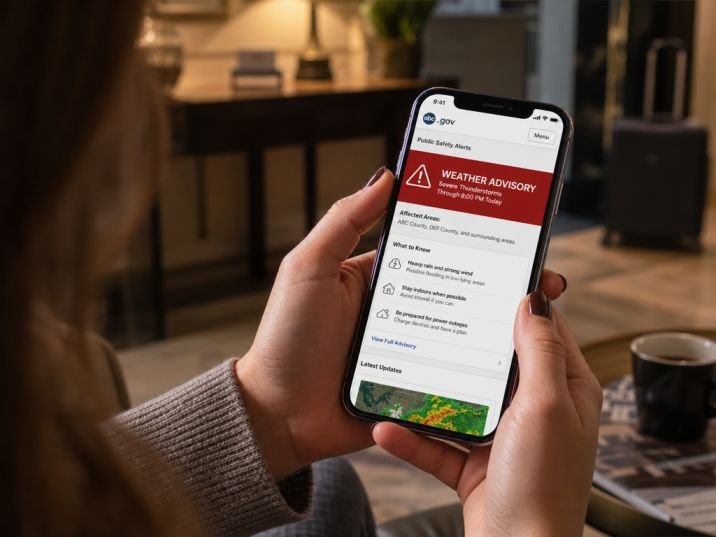
The most reliable sources for current Buffalo travel ban status are the Erie County Executive’s official social media accounts, WIVB News 4 Buffalo, WGRZ Buffalo, Governor Hochul’s press office at governor.ny.gov, and the New York State Thruway Authority for highway specific restrictions. No single source covers everything, so checking two or three simultaneously during an active event gives the clearest picture.
Official and Primary Sources
- Erie County Executive Mark Poloncarz Posts real time updates on X (formerly Twitter) at @markpoloncarz; historically the fastest official source for ban announcements and status changes
- Governor Kathy Hochul’s press office Full press releases at governor.ny.gov; essential for statewide emergency declarations and Thruway restrictions
- City of Buffalo Official announcements at buffalo.gov
- NY State Thruway Authority Highway specific commercial vehicle ban updates at thruway.ny.gov and @NYSThruway on X
- 511NY The New York State Department of Transportation’s 24/7 road condition and travel advisory service, available at 511ny.org or by calling 511
Local News Sources
Buffalo’s local television stations provide continuous live coverage during major storm events:
- WIVB News 4 Buffalo (wivb.com) CBS affiliate with strong weather team and real time ban tracking
- WGRZ (wgrz.com) NBC affiliate; runs continuously updated ban status pages during active events
- WKBW (wkbw.com) ABC affiliate; strong social media presence for rapid updates
- Spectrum News 1 Buffalo (spectrumlocalnews.com) 24 hour local news coverage
Weather Services
- National Weather Service Buffalo weather.gov/buf issues Winter Storm Warnings, Lake Effect Snow Warnings, and Wind Advisories that often precede official travel bans
- Erie County Department of Health erie.gov/health provides winter storm preparedness resources and Code Blue updates for the City of Buffalo
How Buffalo Travel Bans Are Announced and Lifted
County and city officials typically announce Buffalo travel bans through press conferences, social media updates, and emergency alert systems. They can issue these bans with as little as 2–4 hours’ notice when storm conditions develop faster than forecast.. Lifts follow the same channels and often happen in stages by municipality.
The decision making chain typically flows from the National Weather Service’s storm forecast → Erie County and City of Buffalo emergency management teams → Erie County Executive → Governor’s office for statewide declarations. During major events, Governor Hochul holds press conferences that set the parameters for county level action.
Bans are rarely lifted all at once. Erie County Executive Poloncarz typically begins lifting restrictions area by area first in towns where snow bands have moved on, while maintaining bans in areas still receiving heavy snowfall. Travelers planning to drive through the region should wait for a specific lift announcement for their route, not assume that a partial lift elsewhere means their path is clear.
What Happens to Flights During a Buffalo Travel Ban
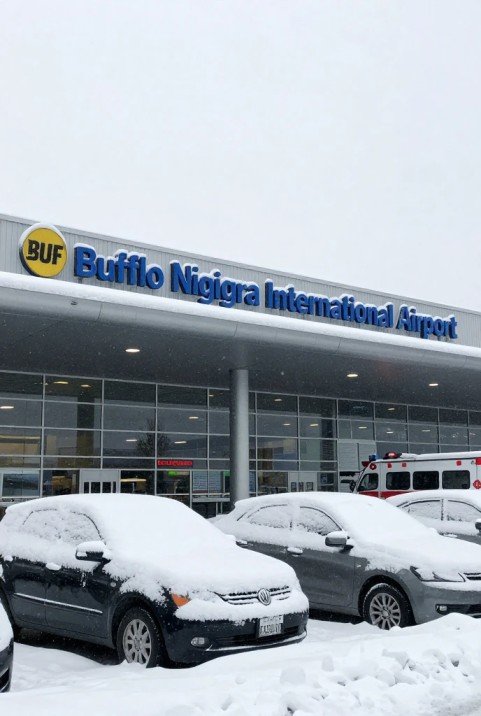
Buffalo Niagara International Airport (BUF) may partially or fully close during extreme winter storm events as it did during the December 2022 blizzard, when it remained closed for several days. However, travel bans and airport operations are technically separate systems; the airport can remain open during a travel advisory while roads to and from BUF remain dangerous.
During the December 2022 Christmas blizzard, Buffalo Niagara International Airport closed when the storm hit and did not reopen until several days later as conditions improved. For travelers using BUF during winter, this creates a compound risk: even if your flight operates, getting to or from the airport during a travel ban or advisory may not be possible.
Practical Steps for Buffalo Airport Travelers During Winter Storms
- Check your flight status directly with your airline not just aggregator apps before attempting airport travel
- Confirm If a travel ban or advisory is in effect along your specific route to BUF before leaving your accommodation
- Contact your airline early about rebooking options; most major carriers issue weather waivers during declared emergencies that allow free changes
- Consider travel insurance that covers trip interruption due to weather particularly important for Buffalo winter travel
- Monitor the Peace Bridge and other border crossings if traveling from Canada; crossings including the Peace Bridge, Lewiston Queenston Bridge, and Rainbow Bridge have been closed during major storm events
What to Do If a Travel Ban Catches You Mid Trip
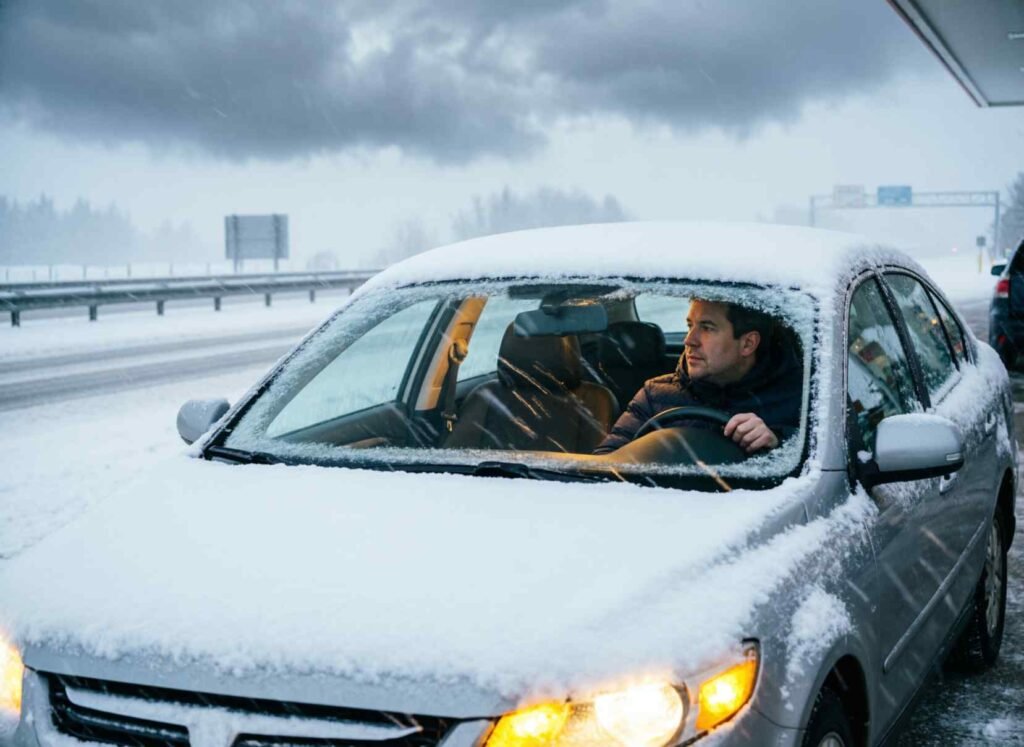
If a travel ban is declared while you’re already en route in Western New York, immediately pull off the road at the nearest safe location a hotel, a rest stop, a business, or a public shelter and do not attempt to continue driving until authorities officially lift the ban.
This is not a situation to push through. The December 2022 blizzard claimed lives partly because people became stranded in vehicles on roads that became impassable within minutes. Law enforcement does not make exceptions for travelers who were “almost there” and more importantly, conditions that kill people don’t either.
If You’re Stranded on the Road
- Call 911 if you are in danger, injured, or stuck in a location with no shelter option
- Stay in your vehicle unless you can clearly see a safe shelter nearby disorientation in a whiteout is a genuine deadly risk
- Run the engine sparingly only to warm the car and ensure the exhaust pipe is clear of snow accumulation
- Signal for help by tying something bright to your antenna or door handle
- Text rather than call if cell service is poor texts often go through when voice calls don’t
Emergency Shelters During Buffalo Storms
New York State activates warming shelters at locations including community colleges and schools during declared emergencies. Erie Community College South Campus in Orchard Park and locations in the city of Buffalo have served as warming shelter sites during past major storm events. Check erie.gov or call 211 for current shelter locations during an active event.
Understanding the Difference: Travel Ban vs. Travel Advisory
The practical difference between a travel ban and a travel advisory is legal enforceability a travel advisory urges you to stay off roads, while a travel ban legally prohibits driving and carries criminal penalties for violations. Many travelers confuse the two, which leads to either unnecessary fear during advisories or dangerous risk taking during actual bans.
During a travel advisory, you can technically drive but conditions are hazardous enough that officials strongly discourage it. If you’re caught in an accident or get stranded during a travel advisory, you carry significant personal liability and emergency resources may be stretched thin.
During a full travel ban, you are legally prohibited from driving in the designated area. Erie County Executive Poloncarz has stated clearly that the full travel ban gives plow crews the time and space they need to clear roads safely and that driving during a ban puts both the driver and any first responders who must respond to accidents at serious risk.
Who Issues Buffalo Travel Bans: The Authority Structure
Travel bans in the Buffalo area can be issued by multiple levels of government: the Erie County Executive, individual city and town mayors, and the New York Governor each covering their specific jurisdiction. This layered system means a ban may apply only to one town, only to Erie County, or to multiple counties simultaneously.
Understanding who issued which ban matters for travelers because conditions can vary dramatically across just a few miles. During the January 2024 storm, the ban in southern Erie County towns lifted hours before the ban in the city of Buffalo and eastern suburbs because the lake effect snow band had shifted north. Governor Hochul, County Executive Poloncarz, and Buffalo Mayor Byron Brown issued joint statements coordinating the staggered lifting of bans across different parts of Erie County.
The key authorities and their jurisdictions:
- Governor Kathy Hochul Issues statewide emergency declarations, controls New York State Thruway restrictions, coordinates National Guard deployment
- Erie County Executive Mark Poloncarz Issues county wide travel bans and advisories for Erie County
- Buffalo Mayor Sean Ryan Issues city specific bans and advisories for the City of Buffalo
- Individual town supervisors May issue bans for their specific municipalities (e.g., the Town of Cheektowaga, City of Lackawanna, City of North Tonawanda)
Commercial Vehicle Restrictions During Buffalo Storms
Commercial vehicle bans in Western New York typically cover the New York State Thruway (I 90) from Exit 46 near Rochester to the Pennsylvania state line, and the Niagara Thruway (I 190), and are often issued separately from and earlier than passenger vehicle bans. Truckers and commercial drivers should monitor the New York State Thruway Authority closely.
The Western New York Commercial Vehicle Ban covers the New York State Thruway (I 90) from Exit 46 to the Pennsylvania State Line and on the Niagara Thruway (I 190) between I 90 and the North Grand Island Bridge. These restrictions apply specifically to commercial trucks and are designed to prevent jackknifed vehicles that block critical evacuation and emergency routes.
Commercial drivers planning routes through Western New York between November and March should build weather holds into their schedules and monitor the Thruway Authority’s real time alerts system.
How to Plan Buffalo Travel Safely During Winter Months
The safest approach to Buffalo winter travel involves booking refundable accommodations, purchasing travel insurance with weather and trip interruption coverage, choosing hotels near your destination rather than routing through multiple storm prone areas, and building a 24 hour weather window into your schedule before and after travel days.
Buffalo’s winter weather events can develop and resolve within 12–36 hours in many cases lake effect systems are intensely localized, not prolonged frontal systems. This means a storm that shuts down roads on Saturday afternoon may be fully over by Sunday morning. Flexible planning works in your favor.
Winter Travel Tips for the Buffalo Area
- Book refundable rates whenever possible November through March even budget chains offer refundable options that protect against storm related cancellations
- Stay close to your destination if visiting Highmark Stadium in Orchard Park, book in the Orchard Park or South Buffalo area rather than across the region
- Watch the 72 hour National Weather Service forecast for Buffalo at weather.gov/buf starting three days before your trip
- Sign up for NY Alerts the state’s emergency notification system lets you receive travel ban announcements directly; register at nyalerts.gov
- Know the I 90 Thruway exit structure Exits 45–53 cover the Buffalo metro area; know which exit gets you to your destination so you can navigate if GPS signals become unreliable in severe conditions
Common Mistakes Travelers Make with Buffalo Travel Bans
The three most common mistakes during a Buffalo travel ban are driving during a travel advisory assuming it’s “just a suggestion,” failing to check ban status before leaving the airport, and underestimating how quickly conditions can shift in a lake effect event.
Mistake #1: Treating a Travel Advisory as Optional Guidance
Many out of town visitors particularly those from snowless southern states see a travel advisory and assume it’s a minor caution. Buffalo advisories can precede extreme deterioration by just minutes when a lake effect band intensifies. Local emergency managers issue them early precisely to give people time to get off roads before conditions turn catastrophic.
Fix: Treat every travel advisory in Western New York during winter as “stay put unless your life depends on moving.” The advisory is the warning before the ban takes it seriously.
Mistake #2: Not Checking Road Conditions After Landing at BUF
Travelers sometimes land at Buffalo Niagara International Airport, collect their bags, and walk straight to their rental car without checking current road conditions. A ban could have been issued while the plane was in the air.
Fix: Before leaving the terminal, check 511ny.org or the Erie County Executive’s social media for current travel restrictions. The five minutes this takes can save hours of serious trouble.
Mistake #3: Assuming One Area’s Lift Means All Areas Are Clear
Lake effect snow bands move. An announcement that the ban has been lifted in Amherst or the northern towns does not mean it has been lifted in South Buffalo, Cheektowaga, or along the Thruway. Travelers have driven into active ban zones by assuming a partial lift applied to their whole route.
Fix: Confirm the ban status specifically for your planned route, not just for Erie County generally. Check both the county and city sources simultaneously.
5 Insider Tips for Navigating Buffalo Winter Travel
Five things experienced Western New York travelers do that most visitors overlook:
- Follow the Erie County Executive on X directly During active storm events, @markpoloncarz posts real time updates that often precede formal press releases by 30–60 minutes. This is the fastest reliable source for ban announcements and lifts in Erie County.
- Know the difference between lake effect and frontal snowstorms Lake effect events are intense but geographically narrow; a frontal system affects the whole region. The type of storm affects how quickly conditions change and how long a ban might last. The National Weather Service Buffalo office explains the storm type in every warning it issues.
- The Bills game is not an excuse to drive The January 2024 Bills Steelers playoff game was postponed when Governor Hochul issued a full travel ban. Authorities will not lift a ban for sporting events. If a ban coincides with a major event, expect the event to move not the ban.
- The Buffalo Skyway closes early The Buffalo Skyway bridge (Route 5) closes at significantly lower wind speeds than it takes to trigger a full travel ban. If the Skyway is closed, conditions are already deteriorating. Use this as an early warning signal even before an advisory is announced.
- Build in a recovery day on each end Even after a travel ban lifts, roads in Western New York need time to be plowed to safe conditions. Planning to leave the morning after a ban lifts often means driving on packed snow and ice. A 24 hour buffer after a ban lift gives plows time to clear major routes.
FAQs
Is there a Buffalo travel ban in effect right now?
Current travel ban status cannot be confirmed in this article because conditions change rapidly. Check 511ny.org, the Erie County Executive’s social media (@markpoloncarz on X), WGRZ Buffalo (wgrz.com), or WIVB News 4 Buffalo (wivb.com) for real time updates. You can also call 511 from any phone in New York State for current road condition information.
What is the penalty for driving during a Buffalo travel ban?
Driving during a full travel ban in Erie County carries criminal penalties including fines and vehicle impoundment. During the January 2024 storm, the New York State Police issued 94 tickets and Buffalo Police issued 164 tickets over two days. Exact fine amounts vary; the more important risk is personal safety people have died in vehicles during past Buffalo blizzards after becoming stranded on roads that became impassable.
Does a travel ban affect Buffalo Niagara International Airport?
A travel ban affects road access to and from Buffalo Niagara International Airport (BUF) but does not automatically close the airport. The airport can remain technically operational while roads leading to it are under a travel ban. Always check both your airline’s flight status and current Erie County road conditions before attempting to travel to BUF during winter storm events.
How long do Buffalo travel bans typically last?
Buffalo travel bans typically last 12–48 hours for most lake effect snow events, though the December 2022 Christmas blizzard resulted in travel restrictions that remained in place for several days across parts of Erie County. Lake effect events can end relatively quickly once the snow band moves; frontal blizzards last longer. The current storm type and forecast trajectory are the best indicators of expected duration.
Who has the authority to issue a Buffalo travel ban?
Travel bans in the Buffalo area can be issued by the Erie County Executive, the City of Buffalo mayor, individual town supervisors, and the New York Governor. The Governor’s office also controls New York State Thruway and commercial vehicle restrictions. Multiple jurisdictions can have different restriction levels simultaneously, which is why checking your specific route not just Erie County generally is important.
Can I get a refund on my hotel if a travel ban prevents me from traveling to Buffalo?
Hotel refund policies during travel bans vary by property and booking terms. Many hotels in the Buffalo area have weather exception policies, especially during declared state of emergencies. Contact your accommodation directly and mention the official emergency declaration. Travel insurance with trip interruption coverage is the most reliable protection; a policy that specifically covers weather events can reimburse non refundable booking costs when a declared emergency prevents travel.
Where do I find official New York State travel ban announcements?
Official travel ban announcements from the Governor’s office are published at governor.ny.gov. Erie County announcements appear at erie.gov and on the Erie County Executive’s social media. The New York State Thruway Authority posts commercial vehicle restriction updates at thruway.ny.gov and @NYSThruway on X. For real time road conditions statewide, 511ny.org is the official NYSDOT platform.
Conclusion
Three things every traveler headed to Buffalo or Western New York in winter must internalize: travel bans happen fast and without much warning, the three tier system (advisory → partial ban → full ban) carries real legal weight at the ban level, and the only reliable source for current status is official not a cached article or an app that hasn’t updated in the last hour.
The best protection is a simple combination: flexible bookings, travel insurance with weather coverage, and 60 seconds checking Erie County’s official sources before you get in the car. Most Buffalo winter trips go off without a storm related hitch but the ones that don’t go wrong quietly.
Buffalo is an exceptional city worth visiting in any season. Its waterfront on Lake Erie, the Albright Knox Art Gallery (now Buffalo AKG Art Museum), Canalside, and the legendary beef on weck food culture make it one of upstate New York’s most underrated destinations. Just plan winter travel with the weather in mind and know exactly where to look when conditions start to shift.
⚠️ Important Reminder: Travel ban status, restriction levels, road conditions, and flight information all change rapidly during storm events. Always verify current conditions with official Erie County, City of Buffalo, and New York State sources before traveling. This article provides general guidance only and cannot reflect real time conditions.

Gordon Ramsay is a travel writer and destination researcher who helps U.S. travelers plan smarter trips, covering destinations, seasonal trends, budgets, and logistics to help readers decide where—and when—to go.
Rather than simply listing popular places, Gordon Ramsay focuses on what travelers actually need: comparing weather against crowds, weighing costs and accessibility, and researching current conditions alongside official tourism guidance—delivering honest, practical advice without the hype.