The best travel trailer for full time living balances livability, durability, and towing ease without sacrificing comfort. Top picks include the Airstream Classic (premium build quality), Grand Design Reflection 337RLS (residential feel), Lance 2465 (lightweight durability), Oliver Legacy Elite II (fiberglass longevity), and Forest River Wildwood 28DBUD (budget friendly family option). Your ideal choice depends on budget, tow vehicle, family size, and how many months per year you plan to live on the road.
Every year, more than a million Americans are choosing to trade mortgage payments for campsite fees and the numbers keep climbing. The appeal makes sense: freedom to move with the seasons, lower monthly costs, and a lifestyle that puts experiences ahead of square footage. But choosing the wrong travel trailer for full time living can turn that dream into a very expensive mistake.
Unlike weekend campers, full timers need a rig that handles daily cooking, consistent climate control, reliable water systems, proper storage, and a comfortable sleeping arrangement night after night, month after month. The market is flooded with options, and most of them are not built for this kind of sustained use.
This guide cuts through the noise. Here, you will find the best travel trailers designed or proven for full time living, ranked by real world livability, construction quality, and long term value. If you are a solo adventurer, a couple looking to downsize, or a family ready to hit the road full time, this breakdown gives you exactly what you need to choose wisely.
Which Travel Trailer Is Right for You?
| If You Are… | Best Choice | Why |
| Solo traveler | Lance 2465 | Easy towing, durable, excellent for moving often |
| Couple | Grand Design Reflection | Residential comfort and spacious layout |
| Luxury buyer | Airstream Classic | Premium construction and resale value |
| Off-grid traveler | Oliver Legacy Elite II | Fiberglass shell, solar-ready, minimal maintenance |
| Family with kids | Forest River Wildwood 28DBUD | Separate bunkhouse and affordable price |
“Best Travel Trailer Brands for Full-Time Living”
Airstream
Best for buyers wanting premium quality, outstanding resale value, and decades of durability.
Grand Design
Known for thoughtful floor plans, excellent customer service, and strong owner communities.
Lance
One of the lightest premium trailers available, making it ideal for travelers with smaller tow vehicles.
Oliver
Hand-built fiberglass trailers that resist leaks, rot, and delamination better than traditional RVs.
Outdoors RV
Built specifically for mountain climates with reinforced frames, heavy-duty suspension, and four-season insulation.
Arctic Fox (Northwood)
A favorite among serious full-timers because of excellent insulation and rugged construction.
What Makes a Travel Trailer Good for Full Time Living?
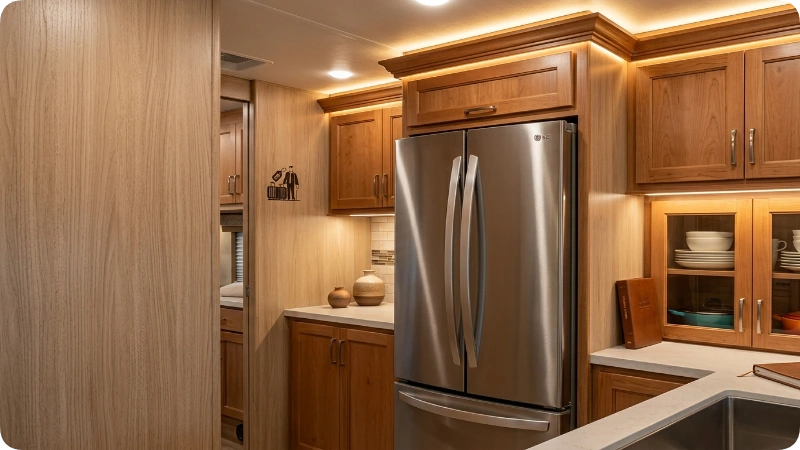
A travel trailer built for full time living must offer more than a weekend camper. It needs four season insulation, residential grade appliances, generous freshwater and tank capacity, real storage space, and a floor plan that feels livable at 2 a.m. in a rainstorm just as much as it does on a sunny afternoon by the lake.
The key differentiators between a weekend camper and a full timer rig are construction quality and livability features. Full timers put roughly 3–5 times more wear on their trailers than seasonal users, which means cheap laminate walls, undersized tanks, and builder grade plumbing will fail faster than you expect. Look for aluminum or steel cage framing, laminated sidewalls with rigid foam insulation, holding tanks rated above 40 gallons, and residential depth refrigerators.
Construction Quality Checklist
- Frame: Aluminum or steel cage construction avoid staple gun and wood only builds
- Walls: Laminated fiberglass or one piece aluminum exterior with spray foam or Azdel composite backer
- Insulation: R value of at least R 11 in the floor, walls, and roof for four season use
- Tanks: Fresh, gray, and black water tanks of 40+ gallons each
- Slideouts: Electric with manual override; frameless windows for better seal
- Appliances: Residential refrigerator, convection microwave or full oven, 30 amp or 50 amp shore power
Top 5 Best Travel Trailers for Full Time Living in 2026
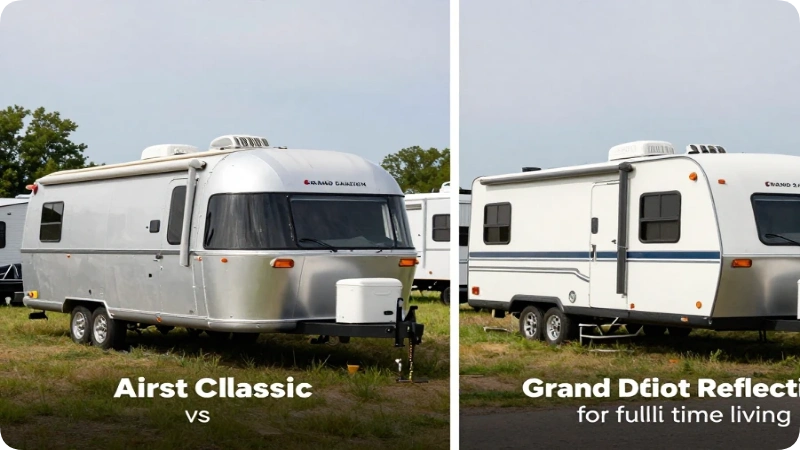
These five trailers consistently earn praise from the full time RV community, not just from dealership brochures. Each one earns its spot based on real owner feedback, build quality, and long term livability.
1. Airstream Classic 33FB Best Overall for Full Timers
The Airstream Classic 33FB is the gold standard for full time travel trailer living. Its riveted aluminum monocoque shell resists flex, rot, and delamination better than virtually any other trailer on the market. Inside, you get a residential size refrigerator, a real oven, solid wood cabinetry, and a king size bed all packed into a 33 foot layout that feels more like a studio apartment than a camper.
Who it’s best for: Couples or solo travelers with a strong tow vehicle (minimum 1 ton truck recommended) and a budget to match.
Realistic price range: $170,000–$200,000+ new | $90,000–$140,000 used
Strengths:
- Legendary durability; shells regularly last 30–40+ years
- Extremely high resale value
- Official dealer service network across the USA
- Four season ready with proper insulation packages
Honest drawback: The price point puts it out of reach for many new full timers. Also, finding campsite hookups that fit its 33 foot length can limit boondocking options.
2. Grand Design Reflection 337RLS Best Residential Feel
The Grand Design Reflection 337RLS offers a floor plan that genuinely feels like a small home, with a rear living room, a full length sofa, and a kitchen island that works for real cooking. Grand Design uses a 101 point quality control inspection and a dedicated full timer focused construction process that stands out in the mid range market.
Who it’s best for: Couples who want the most residential floor plan available without going into the premium tier.
Realistic price range: $65,000–$85,000 new | $40,000–$55,000 used
Strengths:
- Rear living room maximizes evening comfort
- King bed standard, not an upgrade
- Strong owner community with active Grand Design forums
- Triple slide design maximizes living space when parked
Honest drawback: At 42 feet with slides out, this rig needs a level pad and careful site selection. It requires a heavy duty tow vehicle with at least 18,000 lbs towing capacity.
3. Lance 2465 Best Lightweight Option for Full Timers
For full timers who want genuine quality without a massive truck requirement, the Lance 2465 is a standout. Lance builds trailers with vacuum bonded laminated walls, Azdel composite backer panels (which resist moisture and mold far better than luan wood), and an aluminum cage frame. The result is a 24 foot trailer that is built far tougher than its size suggests.
Who it’s best for: Solo travelers or couples with a half ton or three quarter ton truck, or those who want to camp in more remote locations.
Realistic price range: $50,000–$62,000 new | $30,000–$42,000 used
Strengths:
- Lighter GVWR (7,995 lbs) allows half ton towing with the right package
- Azdel composite walls resist delamination better than wood backed competitors
- Well known for excellent customer service
- Solid four season insulation package available
Honest drawback: The compact size means trade offs in storage and kitchen counter space compared to larger fifth wheels or longer trailers. Not ideal for families.
4. Oliver Legacy Elite II Best Fiberglass Build Quality
The Oliver Legacy Elite II is one of the few travel trailers built with a true double hull fiberglass construction meaning no wood anywhere in the main shell. This makes it extraordinarily resistant to moisture damage, the number one killer of travel trailers used full time. Oliver builds these trailers in small numbers at their Hohenwald, Tennessee factory, and each one ships with a comprehensive warranty and in person orientation.
Who it’s best for: Full timers who plan to camp in wet climates or off grid settings and want a trailer that will last decades with minimal maintenance.
Realistic price range: $85,000–$115,000 new (long wait times are common)
Strengths:
- Zero wood in the shell immune to delamination and mold
- Factory in Tennessee means US based support
- Exceptional resale value (Olivers hold value like few other trailers)
- Solar and lithium battery packages available factory direct
Honest drawback: The floor plan options are limited, and the interior square footage is smaller than trailers in the same price range. Wait times can stretch 12–18 months.
5. Forest River Wildwood 28DBUD Best Budget Option for Families
If budget is the primary constraint and family space is the priority, the Forest River Wildwood 28DBUD delivers solid livability at a price that makes full time living financially accessible. The double bunk layout in the rear works well for families with kids, and the front master bedroom provides genuine separation, something most budget trailers skip.
Who it’s best for: Families of 3–5 on a tight budget who want to test full time living without a massive upfront investment.
Realistic price range: $35,000–$48,000 new | $20,000–$30,000 used
Strengths:
- Double bunks plus master bedroom true family separation
- Affordable enough to buy used and still have money left for repairs
- Widely available at dealers across the USA
- Plenty of aftermarket support and owner community knowledge
Honest drawback: Forest River’s build quality does not match Lance, Oliver, or Airstream. Expect to upgrade seals, reseal the roof annually, and replace some components within the first few years of full time use. Budget for a maintenance fund.
Four-Season Travel Trailer Checklist
If you plan to live in your trailer year-round, look for:
- Heated enclosed underbelly
- Heated holding tanks
- Dual-pane windows
- High BTU propane furnace
- Roof insulation rated at least R-18
- Thermal package
- Heated water lines
- 12V tank heaters
- Weather-resistant seals
- Roof capable of handling snow loads
Not every trailer advertised as “four-season” includes all these features, so verify the specifications before buying.
Essential Upgrades Every Full-Timer Should Consider
- Lithium batteries
- 400–800W solar system
- Inverter (2000–3000W)
- SoftStart for air conditioner
- Tire Pressure Monitoring System (TPMS)
- EMS surge protector
- Water filtration system
- Composting toilet (optional)
- Cell signal booster
- Starlink Mini or Standard
- Backup camera
- RV dehumidifier
- Keyless RV door lock
Travel Trailer Comparison Table for Full Timers
| Trailer | Length | GVWR | Best For | Price (New) |
| Airstream Classic 33FB | 33 ft | 10,100 lbs | Couples / Solo | $170K–$200K+ |
| Grand Design Reflection 337RLS | 42 ft (slides) | 14,995 lbs | Couples | $65K–$85K |
| Lance 2465 | 24 ft | 7,995 lbs | Solo / Couples | $50K–$62K |
| Oliver Legacy Elite II | 23.5 ft | 7,760 lbs | All climates | $85K–$115K |
| Forest River Wildwood 28DBUD | 32 ft | 8,995 lbs | Families | $35K–$48K |
Prices are approximate. Always verify current pricing with dealers. MSRP can differ significantly from actual sale price.
Pros & Cons Table
Instead of only listing strengths.
| Trailer | Pros | Cons |
| Airstream | Incredible resale, premium build | Very expensive |
| Reflection | Huge living space | Requires heavy-duty truck |
| Lance | Lightweight | Limited storage |
| Oliver | Extremely durable | Smaller interior |
| Wildwood | Budget-friendly | More maintenance required |
Floor Plans That Actually Work for Full Time Living
Choosing the right floor plan matters as much as choosing the right brand. A layout that feels spacious on a weekend trip can feel cramped after three weeks of full time use.
Best Floor Plans for Full Timers
Rear Living Room (RLR): Puts the living area at the back of the trailer, away from the bedroom. This works well for couples who want to separate sleep and living zones. The Grand Design Reflection 337RLS uses this layout to excellent effect.
Front Bedroom: The most common full timer layout for good reason the master bedroom sits at the nose of the trailer, away from road noise when parked and away from foot traffic. Most full timers with kids choose this layout for privacy.
Bunkhouse with Separated Master: The only family viable floor plan for full timing. Look for models where the master bedroom has a door not just a curtain separating it from the bunk area.
Avoid: U shaped dinette only seating plans (no real sofa makes evenings uncomfortable long term) and any trailer where the bathroom is squeezed in without a separate shower/toilet compartment.
Tow Vehicle Requirements for Full Time Living
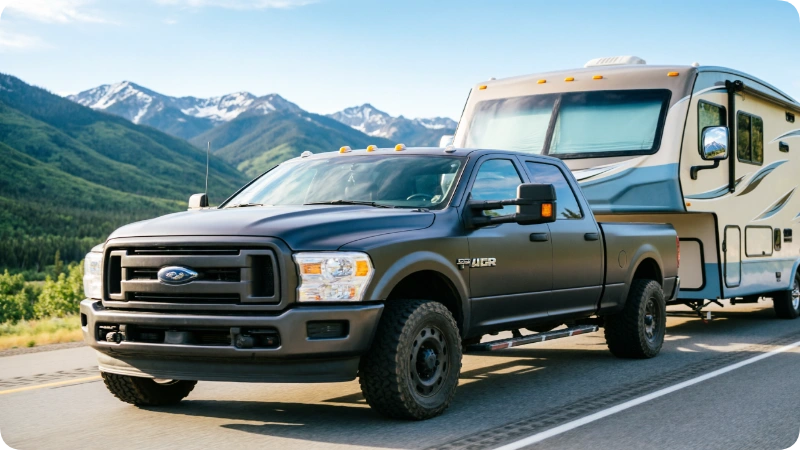
Matching your trailer to the right tow vehicle is not optional, it is a safety requirement. Many first time full timers underestimate tow ratings and end up with a dangerous setup.
The rule of thumb most experienced full timers follow is the 80% rule: never tow more than 80% of your vehicle’s rated tow capacity. A truck rated for 10,000 lbs should only tow an 8,000 lb trailer. This buffer accounts for loaded weight (full water tanks, gear, bikes, and everything else you bring on the road), which almost always exceeds the trailer’s dry weight by 1,500–2,500 lbs.
Tow Vehicle by Trailer Size
| Trailer GVWR | Minimum Vehicle | Recommended Vehicle |
| Under 5,000 lbs | Half ton truck (F 150, RAM 1500) | Half ton with tow package |
| 5,000–7,500 lbs | Half ton (max payload packages) | 3/4 ton (F 250, RAM 2500) |
| 7,500–10,000 lbs | 3/4 ton truck | 1 ton (F 350, RAM 3500) |
| 10,000–14,000 lbs | 1 ton dually | 1 ton dually with diesel |
| 14,000+ lbs | Heavy duty 1 ton dually diesel | 1 ton dually diesel (highly recommended) |
Always verify the Gross Combined Weight Rating (GCWR) of your specific tow vehicle with the manufacturer, not just the tow rating sticker.
Full Time Living Costs: What to Actually Budget
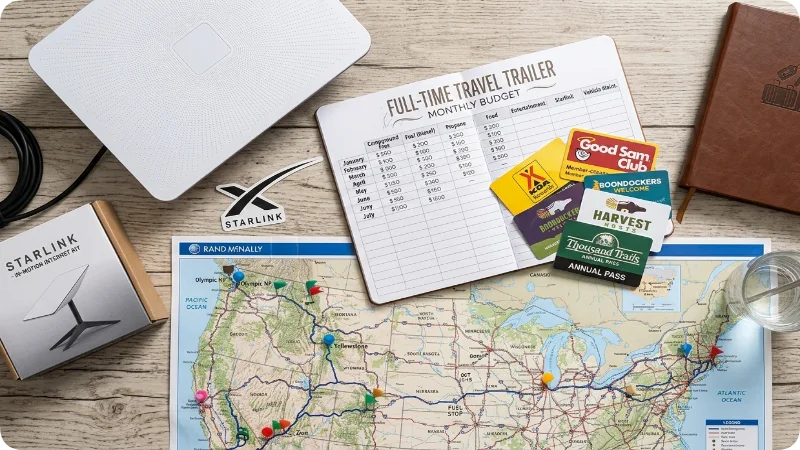
Full time travel trailer living can cost significantly less than traditional housing or more, depending on how you approach it. Here is a realistic monthly budget breakdown for two adults living in a travel trailer full time in the USA.
Monthly Cost Breakdown (2 Person Couple, Mid Range Lifestyle)
| Expense | Budget Range |
| Campsite fees (mix of full hookups + boondocking) | $300–$900/month |
| Propane | $30–$80/month |
| Diesel / gasoline (tow vehicle) | $200–$600/month (varies by movement frequency) |
| Groceries | $400–$700/month |
| Cell data plans (2 carriers recommended) | $100–$200/month |
| Health insurance | $300–$800/month |
| Trailer maintenance fund | $100–$300/month |
| Vehicle maintenance | $100–$200/month |
| Entertainment / activities | $100–$300/month |
| Total Estimate | $1,630–$4,080/month |
Money saving tip: Memberships like Thousand Trails, Harvest Hosts, Boondockers Welcome, or a Passport America card can cut campsite costs by 30–50%. Free camping on Bureau of Land Management (BLM) land and National Forest land is legal across millions of acres of the Western USA, a major cost advantage many full timers use heavily.
Best States for Full Time Travel Trailer Living
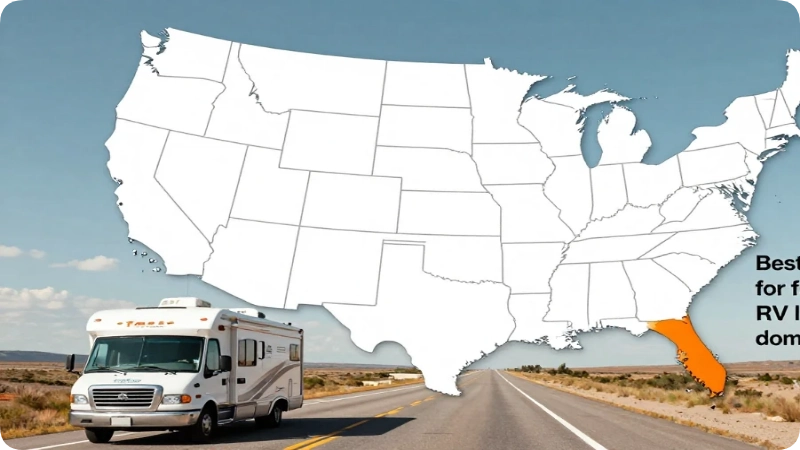
Some states make full time RV living significantly easier than others. South Dakota, Texas, and Florida are the three most popular states for full timers to claim as their domicile each offers no state income tax and reasonably straightforward RV registration processes.
South Dakota is the single most popular domicile state among full timers. It has no state income tax, easy mail forwarding services in Sioux Falls and Rapid City, and allows you to get a driver’s license without long residency requirements. America’s Mailbox and Dakota Post are two well known mail forwarding services in the state.
Texas works well for full timers already in the region, but vehicle registration costs can run higher than South Dakota. Still, the no income tax benefit is significant for remote workers with substantial income.
Florida has no income tax and offers practical residency options, but insurance rates, especially health insurance can run higher than South Dakota for RVers without a fixed address.
Always consult a tax professional or an RV specialized attorney before establishing a domicile, as the rules change and vary depending on your prior state of residence.
Insider Tips for Full Time Travel Trailer Living
These are the lessons that full timers learn after months on the road the kind of advice that rarely appears in dealer brochures.
Tip 1 Weight your trailer before you buy. Most people look at a trailer’s dry weight and assume they can load it up freely. In reality, fully loaded trailers regularly run 2,000–3,500 lbs over their listed dry weight. Visit a CAT scale (available at most truck stops nationwide) with a fully loaded trailer before committing to a full time lifestyle with that rig.
Tip 2 Two cell carriers, not one. Verizon covers some regions that AT&T does not, and vice versa. Full timers who work remotely almost universally recommend running two cellular data plans on different carriers. This is especially important in the Mountain West, where coverage gaps are common.
Tip 3 Seal the roof every spring. Delamination where the wall layers separate and let moisture in is the number one long term killer of travel trailers. Inspect and reseal every roof penetration (vents, A/C, antennas) once a year, no exceptions. Dicor self leveling lap sealant is the standard product used by full timers for this job.
Tip 4 Get a water pressure regulator. Campground water pressure varies wildly, sometimes exceeding 80 PSI. Most trailer plumbing is rated for 45–65 PSI. A simple brass or stainless steel pressure regulator ($15–$30) prevents burst fittings and blown water heater connections, a repair that can run $500 or more at a mobile RV tech.
Tip 5 Join state specific Facebook groups before you arrive. Groups like “Full Time RV Living USA,” “Solo Female RV Travelers,” and state specific camping groups are among the most useful tools for finding open campsites, avoiding bad roads, and getting local intel that no mapping app provides.
Average Annual RV Maintenance Costs
| Item | Annual Cost |
| Roof resealing | $150–400 |
| Tire replacement fund | $250–500 |
| Wheel bearing service | $150–350 |
| Brake inspection | $100–250 |
| Propane system inspection | $75–150 |
| Water heater maintenance | $50–150 |
| Miscellaneous repairs | $300–800 |
Typical annual maintenance budget:
$1,000–2,500
Dealer Add-Ons You May Not Need
Many dealers offer expensive extras during purchase. Some can be valuable, while others are often overpriced.
Potential upsells include:
- Paint protection packages
- Interior fabric treatments
- Extended warranties (compare third-party options)
- Nitrogen-filled tires
- Battery upgrades with high markups
- Dealer-installed solar packages
- Ceramic coatings
Compare prices independently before agreeing to add-ons.
Common Mistakes New Full Timers Make (And How to Avoid Them)
Mistake 1: Buying the Biggest Trailer They Can Afford
Bigger feels better in the showroom. On the road, it means fewer campsite options, harder campground navigation, and more fuel burn per mile. Most experienced full timers downsize after their first year. Start with a trailer you can confidently back into a tight spot, then upgrade if you genuinely need more space.
The fix: Rent a 30 foot trailer for two weeks before buying. If you can park it comfortably and the size feels right at the end of two weeks, buy something similar. If it feels big, go smaller.
Mistake 2: Skipping a Pre Purchase Inspection
Travel trailers new and used frequently have factory defects or hidden water damage. A certified RV inspector (find one at NRVIA.org, the National RV Inspectors Association) costs $300–$600 and can catch issues that would cost $5,000–$20,000 to repair after the purchase.
The fix: Always hire a certified inspector. Never skip this step on a used trailer, and do not skip it on a new one either.
Mistake 3: Underestimating Maintenance Time and Cost
Full time travel trailer living requires consistent maintenance not just campground chores, but real mechanical and structural upkeep. Budget at least $100–$300 per month for a maintenance fund, and expect to spend 2–4 hours per month on basic checks, sealing, and repairs in your first year.
The fix: Learn basic RV maintenance before you hit the road. YouTube channels like “Keep Your Daydream” and RV education platforms provide solid foundations. The more you can do yourself, the less you spend on mobile techs.
“Best Accessories”
- Weight distribution hitch
- Sway control hitch
- Leveling blocks
- Wheel chocks
- Sewer hose support
- Drinking water hose
- Inline water filter
- EMS surge protector
- Portable generator
- Folding camping table
- Outdoor rug
- Black tank treatment
- Tire covers
- Portable air compressor
Full-Time Living Timeline
Timeline Before Moving Into a Travel Trailer
6 months before
- Research trailers
- Set your budget
- Rent an RV for a trial trip
3 months before
- Purchase your trailer
- Practice towing
- Buy essential gear
1 month before
- Downsize belongings
- Arrange mail forwarding
- Finalize insurance
1 week before
- Weigh the trailer
- Test all systems
- Stock food and supplies
- Plan your first campground reservations
Hidden Gems: Underrated Full Timer Campgrounds Across the USA
Most full timers know the big names Zion, Yellowstone, the Florida Keys. These three locations offer something different: genuine community, lower costs, and the kind of scenery that does not show up on every influencer’s feed.
Quartzsite, Arizona (BLM La Posa Long Term Visitor Area): During winter months, tens of thousands of full timers converge in the Arizona desert west of Phoenix. The BLM charges around $180 for a season pass that allows 7 months of camping making this one of the cheapest winter options in the country. The community that forms here is genuinely unique.
Ouray, Colorado (Amphitheater Campground, Uncompahgre National Forest): Most travelers skip this $25/night National Forest campground above the “Switzerland of America” for the more obvious options in the region. The views over the San Juan Mountains are extraordinary, and the campground sees far fewer visitors than nearby dispersed spots that require a high clearance vehicle to reach.
Cape Hatteras National Seashore, North Carolina: The National Park Service operates campgrounds directly on the Outer Banks. Sites book up fast in summer, but shoulder season (May and September) offers open ocean beach camping at National Park prices significantly cheaper than the private resorts that dominate the area.
Safety Tips for Full Time Travel Trailer Living
Full time living comes with safety considerations that weekend campers rarely face. These are the most important ones to build into your routine from day one.
Carbon monoxide and propane detectors: Replace them every 5–7 years. Most trailer detectors are combination CO/LP units. Test them monthly and replace the batteries annually or buy units with sealed 10 year batteries. The Consumer Product Safety Commission (CPSC) recommends CO detectors in any sleeping space.
Fire extinguisher: Carry at least one ABC rated fire extinguisher, mounted in the kitchen area. Replace or recharge after any use, and check the pressure gauge monthly.
Tire maintenance: Trailer tire blowouts are a leading cause of serious accidents for RVers. Check tire pressure before every move (not just when the trailer is cold), inspect tires for sidewall cracking regularly, and replace trailer tires every 5–6 years regardless of tread, as UV and ozone degrade the rubber before the tread wears out. Tire Pressure Monitoring Systems (TPMS) designed for trailers run $100–$300 and are worth every cent for full timers.
Level parking: An unlevel trailer stresses the frame, throws off the refrigerator’s cooling system (residential compressor fridges handle this better than absorption fridges), and makes slideouts work harder. Carry leveling blocks like Lynx Levelers and a bubble level for every setup.
Full Time RV Living With Pets
Millions of full timers travel with dogs, cats, and even birds. Most campgrounds in the USA are pet friendly National Park campgrounds, state parks, and private KOA/Thousand Trails locations typically allow leashed pets. A few important considerations:
- Always carry vet records and vaccination documentation; some campgrounds and all boarding facilities require them
- Secure pets before moving the trailer (crates or secured pet beds prevent injury during transit)
- Check for pet restrictions before booking sites in popular National Parks, as some areas limit where pets can go on trails (the NPS website lists pet policies for each park)
- In hot climates, never leave pets in a trailer without a running A/C unit interior temps in a closed trailer can reach 130°F+ within 30 minutes in direct summer sun
Connectivity on the Road: Staying Online Full Time
Remote work has made full time RV living possible for a growing segment of Americans. Reliable internet is no longer a luxury for many full timers it is a requirement.
Internet Options for Full Time RVers
Starlink RV (SpaceX): The game changer for full time RV living in remote areas. Starlink’s RV plan provides high speed satellite internet virtually anywhere in the continental USA. As of 2025, the hardware costs around $599 and the monthly plan runs $150/month for the RV specific portable option. No long term contract is required.
Mobile hotspot with multiple carriers: Most full timers pair Starlink with a cellular backup using two plans (Verizon and AT&T are the most common combination for continental USA coverage). Unlimited data plans with hotspot prioritization from Visible (Verizon network) or AT&T’s prepaid options provide a reliable backup when Starlink signal is obstructed by trees or terrain.
WeBoost or SureCall signal boosters: In areas with weak but existing cell signal, a cellular signal booster can dramatically improve connection speeds. The WeBoost Drive Reach RV is the most widely used unit among full timers and runs $400–$500.
Sample 30 Day Budget Full Time Living Route: Southwest USA
This is a realistic one month route using a combination of paid campgrounds, BLM land, and National Forest camping. Fuel estimates assume a diesel truck towing a mid size trailer at roughly 12 MPG.
Week 1: Phoenix, AZ → Sedona, AZ → Flagstaff, AZ
- Coconino National Forest dispersed camping outside Flagstaff: Free
- Sedona area private campground for hookups: ~$45/night for 3 nights
2: Flagstaff → Page, AZ → Kanab, UT
- Grand Staircase Escalante BLM camping: Free
- Coral Pink Sand Dunes State Park, Utah: ~$20/night
3: Kanab → Bryce Canyon → Capitol Reef, UT
- NPS campgrounds (Bryce Canyon, Fruita): $20–$35/night
Week 4: Capitol Reef → Moab, UT → Cortez, CO
- Dead Horse Point State Park: $40/night
- Canyon of the Ancients BLM camping near Cortez: Free
Estimated monthly costs (this route):
- Campsite fees: ~$350–$550
- Fuel: ~$400–$600
- Groceries: ~$450–$650
- Total travel expenses: ~$1,200–$1,800
Rent Before You Commit
Before investing tens of thousands of dollars, spend a weekend—or even a full week—in a similar trailer. Renting helps you evaluate towing, storage, sleeping comfort, and everyday livability before making a long-term commitment.
Expert Verdict
If budget isn’t a concern, the Airstream Classic remains one of the best-built travel trailers available, with exceptional longevity and resale value.
For most couples, the Grand Design Reflection offers one of the best balances of comfort, quality, and price.
Travelers seeking durability without a heavy-duty truck should consider the Lance 2465, while those planning extensive off-grid adventures will appreciate the low-maintenance fiberglass construction of the Oliver Legacy Elite II.
Families entering full-time RV living on a budget will likely find the Forest River Wildwood 28DBUD provides the best value, provided they budget for routine maintenance and upgrades.
FAQs
What is the best travel trailer for living full time?
The best overall travel trailer for full time living is the Airstream Classic for premium buyers and the Grand Design Reflection 337RLS for mid range buyers. Both offer strong build quality, residential grade appliances, and floor plans designed for daily living. For those on a tighter budget or with a lighter tow vehicle, the Lance 2465 offers exceptional construction at a more accessible price point.
How much does it cost to live full time in a travel trailer?
Full time travel trailer living typically costs between $1,500 and $4,000 per month for a couple, depending on campsite choices, how often you move, and your lifestyle. The biggest variables are campsite fees (which range from free BLM camping to $60+/night for full hookups) and fuel costs. Many full timers average $2,000–$2,800/month total.
Can you live in a travel trailer year round?
Yes, but you need a trailer with proper four season insulation (R 11 or better in walls, floor, and roof), a heated and enclosed underbelly to protect tanks from freezing, and an adequate heating system typically a propane furnace plus an electric space heater for winter. Trailers marketed as “four season” or “all season” vary significantly; always check actual R values and tank protection specs, not just the marketing label.
What size travel trailer is best for full time living?
For couples, a 24–32 foot trailer hits the sweet spot between livability and maneuverability. Solo travelers often prefer 20–26 feet for easier parking and lighter tow requirements. Families with children generally need 28–35 feet with a bunkhouse layout. Anything over 35 feet significantly limits campsite options and increases fuel costs.
Do travel trailers depreciate quickly?
Most travel trailers depreciate 20–30% in the first three years, similar to vehicles. However, premium brands like Airstream and Oliver hold value exceptionally well sometimes appreciating during high demand periods. Buying a 2–3 year old used trailer from a reputable brand is often the smartest financial move for full timers: the steepest depreciation has already occurred, and the rig still has years of life ahead.
Is full time travel trailer living legal in all states?
Travel trailer living is legal across the USA, but regulations vary by location. You cannot permanently park a travel trailer on a residential lot in many municipalities without zoning approval. Most full timers maintain a legal domicile address in a mail forwarding state (South Dakota, Texas, or Florida are the most popular), camp at licensed campgrounds, and use BLM and National Forest land for dispersed camping. Always check local ordinances when planning to stay in one place for an extended period.
What is the most reliable travel trailer brand for full time living?
Airstream, Lance, and Oliver consistently earn the highest marks for long term reliability from the full timer community. Airstream’s aluminum shells have lasted 40+ years with proper care. Lance uses moisture resistant Azdel composite panels and aluminum frames. Oliver’s double hull fiberglass is the most moisture proof construction available. Grand Design earns strong reliability marks in the mid range category, with an active and responsive warranty department.
The Bottom Line: Is Full Time Travel Trailer Living Worth It?
For the right person, full time travel trailer living is genuinely transformative. It trades fixed costs and fixed geography for flexibility, adventure, and a direct connection to the USA’s extraordinary landscape from the red rock deserts of Utah to the Great Smoky Mountains of Tennessee to the shores of the Pacific Coast Highway.
The three things to take away from this guide: build quality matters more than floor plan features, match your trailer to your tow vehicle before anything else, and budget honestly for the first year including maintenance, campsite fees, and the inevitable upgrades you will want once you are living in the rig full time.
The right travel trailer does not just transport you. It becomes home and that distinction is worth getting right.
Start with a rental before you buy. Talk to full timers in online communities like Reddit’s r/fulltimervliving or the Escapees RV Club forums. And when you are ready to commit, buy the best build quality you can afford rather than the most square footage. The road will reward the decision.

Gordon Ramsay is a travel writer and destination researcher who helps U.S. travelers plan smarter trips, covering destinations, seasonal trends, budgets, and logistics to help readers decide where—and when—to go.
Rather than simply listing popular places, Gordon Ramsay focuses on what travelers actually need: comparing weather against crowds, weighing costs and accessibility, and researching current conditions alongside official tourism guidance—delivering honest, practical advice without the hype.