
Traveling with a saxophone sounds like a logistical nightmare: bulky cases, airline fees, security screenings, and the constant fear that your prized instrument will end up as checked luggage under a pile of suitcases. For musicians who travel regularly, that anxiety is very real. If you play a compact alto or a full sized tenor, getting your sax safely from one city to another requires planning, the right gear, and knowing your rights at the airport.
This guide covers everything from TSA rules, airline carry on policies, the best travel sax cases, tips for international travel, and how professional musicians protect their instruments on the road. By the end, you will know exactly how to travel with your saxophone without losing sleep or paying unnecessary fees.
Quick Facts: Traveling with a Saxophone
| Topic | Key Info |
| TSA policy | Musical instruments allowed as carry on or checked baggage |
| Carry on eligibility | Must fit in overhead bin or under seat |
| Best carry on size | Soprano or alto saxophone in slim cases |
| Airline instrument seat option | Allowed on most major US carriers (fee applies) |
| Average checked bag fee | $30–$40 per bag (verify with airline) |
| TSA screening | X ray required; may need to open case |
| International travel | Check country specific customs rules |
Always verify current fees and policies directly with your airline before booking.
What the TSA Actually Says About Traveling with a Saxophone
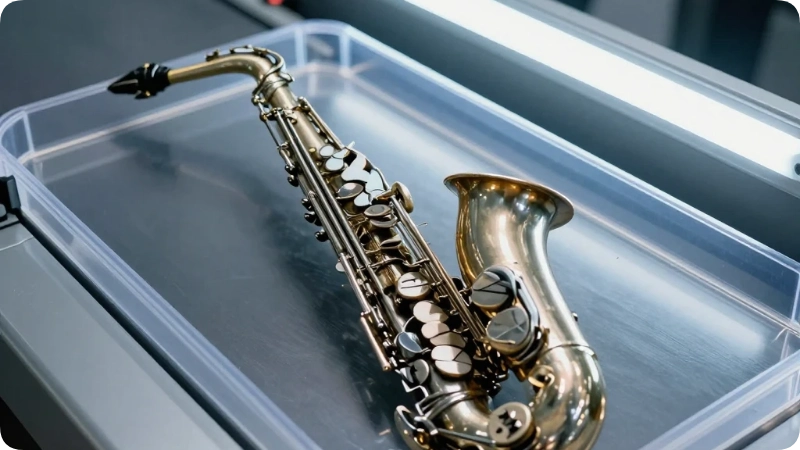
The TSA explicitly permits musical instruments in both carry on and checked baggage. According to the TSA’s official website, passengers may carry musical instruments onto the plane if the instrument fits in the overhead compartment or under the seat. If it does not fit, the airline may require it to be checked.
This is the foundational rule, and it matters. Many gate agents and flight attendants are not fully aware of TSA instrument policies, so knowing the exact wording helps you advocate for yourself calmly and confidently.
Know Your Rights at the Gate
The FAA Modernization and Reform Act of 2012 (Section 403) actually reinforced passenger rights for musicians. Airlines must allow a musical instrument as a carry on if it fits safely in an overhead bin, and they must allow passengers to purchase an extra seat for an instrument that is too large for a bin. Print a copy of this regulation and keep it with your travel documents.
Key points to remember:
- Gate agents cannot force you to check your instrument if it fits in the overhead bin
- If the flight is full and bins are crowded, arrive early to board and secure space
- TSA officers may ask you to open your case that is standard procedure
Carry On vs. Checked: Which Is Safer for Your Saxophone?
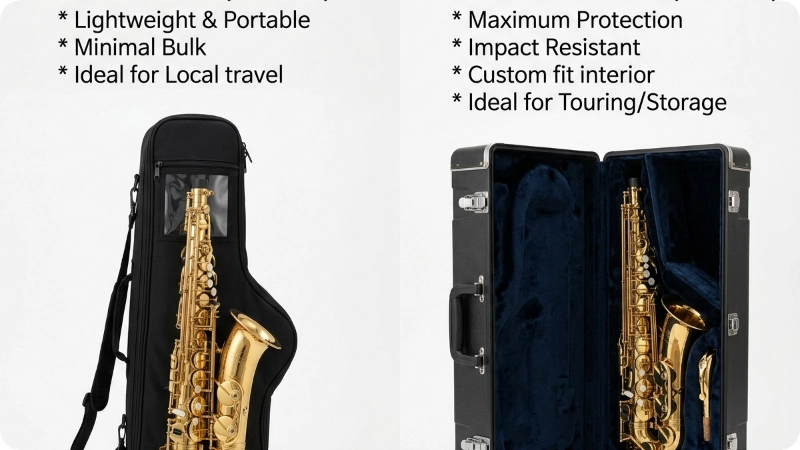
Carry on is almost always the safer choice for saxophones. Checked instruments face rough handling, temperature fluctuations in cargo holds, and the risk of theft or loss. However, If carry on is possible depends entirely on your saxophone type and case.
Saxophone Size Guide for Air Travel
| Saxophone Type | Carry On Possible? | Notes |
| Soprano (straight) | Yes | Easily fits overhead or under seat |
| Alto | Usually | Slim cases fit most overhead bins |
| Tenor | Depends | Requires a slim or soft case; tight fit |
| Baritone | Rarely | Almost always must be checked or bought a seat |
Soprano and alto saxophones are the most travel friendly. A tenor saxophone in a standard hard case is a challenge on regional jets and smaller aircraft with narrow overhead compartments. A baritone saxophone, given its sheer size, almost always needs either a purchased seat or careful checked bag packing.
The Best Saxophone Cases for Travel
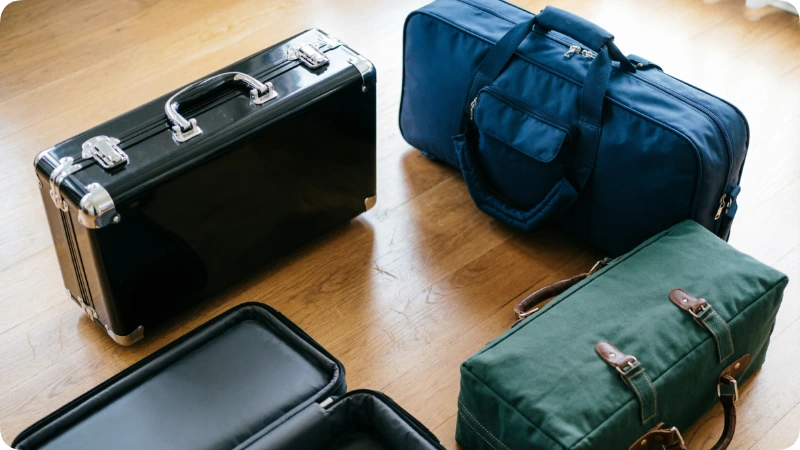
Choosing the right case is the single most important decision for a traveling saxophonist. A great case protects your instrument, fits airline dimensions, and does not weigh you down. Here is what to look for.
Hard Cases vs. Soft Gig Bags
Hard cases offer maximum protection. Look for ABS plastic or carbon fiber shells with plush interiors and locking latches. Brands like Protec, Marcus Bonna, and Bam are popular among touring professionals. The tradeoff is weight hard cases add significant pounds to your carry on allowance.
Soft gig bags are lighter and more compact, making carry on more feasible for alto and tenor players. High quality padded gig bags from brands like Reunion Blues or Gator provide surprisingly solid protection. They are not ideal for rough checked baggage handling, though.
Travel Specific Saxophone Cases Worth Knowing
- Bam Hightech cases slim profile, excellent shock absorption, popular with European touring musicians
- Protec Contego solid mid range option for alto and tenor, good padding
- Marcus Bonna MB 6 beloved by professionals for its balance of protection and slim dimensions
- Gator GL Series lightweight and TSA friendly for carry on alto travel
Pro tip: Measure your case dimensions before every trip. Airlines update their overhead bin size requirements, and even a centimeter difference can cause trouble on smaller regional aircraft.
Airline Policies for Musical Instruments: What US Carriers Say
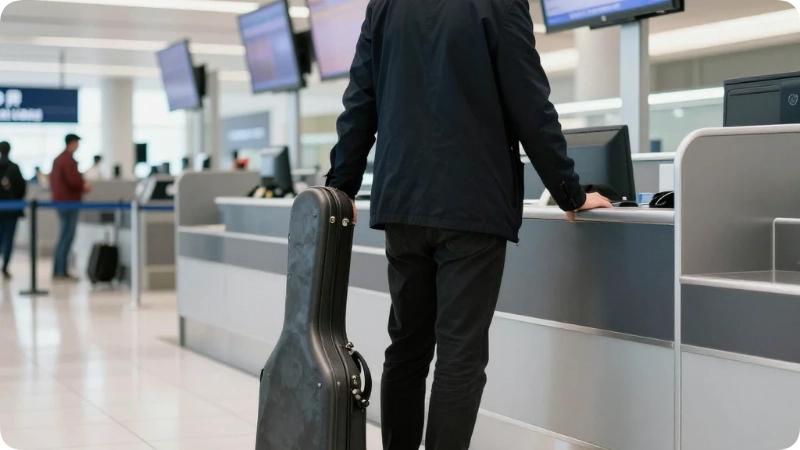
Each US airline has slightly different policies for musical instruments, and policies change. The guidelines below reflect general practices: always check the airline’s official instrument policy page before you book.
Major US Airlines at a Glance
| Airline | Carry On Instrument | Seat Purchase Option | Notes |
| American Airlines | Yes, if fits overhead | Yes | Extra seat required for large instruments |
| Delta Air Lines | Yes, if fits overhead | Yes | One carry on + personal item rule applies |
| United Airlines | Yes, if fits overhead | Yes | Fragile item tags available at check in |
| Southwest Airlines | Yes, if fits overhead | Yes | Known for flexible instrument policy |
| Alaska Airlines | Yes, if fits overhead | Yes | Instrument counts as carry on bag |
| Spirit / Frontier | Yes | Limited | Check exact dimensions for budget carriers |
Fees, seat purchase costs, and exact dimension limits vary by route and aircraft type. Always verify directly with the airline’s customer service or website.
Buying a Seat for Your Saxophone
Purchasing an extra seat for a large saxophone, especially a tenor or bari is a legitimate and often wise choice. The instrument goes in a window seat, buckled in with a seat belt around the case handle. Airlines differ on how they handle this, so call ahead and confirm the process. Some carriers issue a boarding pass under a name like “EXST” (extra seat).
How to Pack a Saxophone for Checked Baggage (When You Have No Choice)
When carry on is not possible, smart packing dramatically reduces the risk of damage. Follow these steps to give your saxophone the best chance of arriving intact.
- Loosen the neck strap and remove the neck store it separately in the case’s accessory compartment
- Pad every gap inside the case with soft cloths, bubble wrap, or foam inserts
- Lock the case with TSA approved locks (TSA agents can open these without breaking them)
- Place the case inside a padded hard shell luggage bag or a large duffel for a second layer of protection
- Label the case inside and out with your name, phone number, and email address
- Photograph your saxophone and case before checking this is critical if you need to file a damage claim
- Declare it as fragile at check in you may get a fragile sticker, which at minimum tells handlers to be careful
Avoid packing reeds, mouthpieces, and ligatures inside the instrument itself. Store them in your personal item bag for the cabin.
The Travel Sax: A Dedicated Travel Saxophone Option
The Travel Sax is an actual product designed for musicians who need a compact, portable saxophone for travel. Made by OLEG, the Travel Sax is a miniaturized electronic wind instrument that mimics the fingering of a standard saxophone. It produces sound through a connected app or speaker rather than acoustic resonance, making it silent practice capable and airplane friendly.
Who the Travel Sax Is For
- Jazz musicians who want to practice during long trips without a full acoustic instrument
- Music educators who travel frequently for workshops
- Hobbyist players who take frequent vacations and do not want to leave the music behind
Who Should Stick with a Traditional Sax
If you are a performing musician who needs to play gigs at your destination, the Travel Sax is a practice tool, not a performance instrument. Bring your real saxophone just pack it wisely using the strategies above.
Flying with Saxophone Reeds, Mouthpieces, and Accessories
TSA allows all standard saxophone accessories in both carry on and checked baggage. There are no restrictions on reeds, mouthpieces, ligatures, neck straps, or cleaning supplies. A few items warrant attention:
- Liquid cork grease must follow the TSA 3 1 1 liquids rule (under 3.4 oz in a quart sized bag) if in carry on
- Neck strap clips fine in carry on, no issues
- Polishing cloths and bore brushes completely unrestricted
- Electronic tuners and clip on mics carry in your personal item to avoid case weight
Pack your mouthpiece in a hard sided case within your carry on personal item. Mouthpieces, especially custom ones, are expensive and irreplaceable. Do not trust them with checked baggage.
International Travel with a Saxophone: What US Musicians Need to Know
Traveling internationally with a saxophone adds layers of customs, duty, and documentation requirements. The USA has specific rules, and destination countries have their own.
ATA Carnet Your Best Friend for International Gigs
An ATA Carnet is an international customs document that allows musicians and other professionals to temporarily import equipment into foreign countries without paying customs duties. If you are performing or recording abroad, an ATA Carnet prevents you from being taxed as if you are importing goods for sale.
- Issued in the US through the US Council for International Business
- Covers multiple trips within a one year period
- Required documentation includes serial numbers and descriptions of all instruments
For casual personal travel (tourism, vacation), a Carnet may not be necessary, but it is worth consulting US Customs and Border Protection (CBP) before your trip if your saxophone is high value.
CITES and Instrument Materials
Saxophones are primarily brass and are not typically subject to CITES (Convention on International Trade in Endangered Species) restrictions. However, some vintage saxophones have components including certain pads or decorative elements that could theoretically raise flags. Modern production saxophones from brands like Yamaha, Selmer, Yanagisawa, and Conn Selmer are CITES clean. Check with the US Fish and Wildlife Service if you travel with an antique instrument.
Best US Cities for Saxophone Players to Visit

The USA’s live music scene offers incredible destinations for traveling saxophonists. These cities are not just great places to hear saxophone, they are communities where the instrument holds deep cultural roots.
New Orleans, Louisiana
No city in America is more intertwined with saxophone culture. The French Quarter, Frenchmen Street, and the New Orleans Jazz Museum make this the top destination for any sax player. Street musicians here play at a professional level, and sitting in with a band is a real possibility if you bring your instrument.
Kansas City, Missouri
Kansas City’s jazz heritage runs deep it is the birthplace of the Kansas City jazz style that shaped bebop. The 18th and Vine Jazz District and the American Jazz Museum are essential stops.
Chicago, Illinois
Chicago’s jazz and blues scene has fueled some of the greatest saxophone players in history. Andy’s Jazz Club, the Green Mill, and the Chicago Jazz Festival (held in Millennium Park each August) are highlights.
New York City, New York
The Village Vanguard, Smalls Jazz Club, and Dizzy’s Club at Jazz at Lincoln Center represent the pinnacle of American jazz. New York remains the most competitive and vibrant jazz scene in the country.
Nashville, Tennessee
Beyond country music, Nashville has a growing jazz scene and the city’s musician friendly culture makes it a welcoming stop for traveling sax players.
Hidden Gems for Saxophone Travelers in the USA
Three destinations most music traveling guides overlook entirely:
1. Asheville, North Carolina A thriving arts community with an active jazz scene tucked into the Blue Ridge Mountains. The Grey Eagle and the Isis Music Hall both host regular jazz nights. The small city feel means easier travel logistics and lower costs.
2. Detroit, Michigan Detroit’s role in the history of jazz and R&B is underappreciated by travel writers. The Detroit Jazz Festival (held Labor Day weekend) is one of the largest free jazz festivals in the world and draws world class saxophonists.
3. Portland, Oregon Portland’s music scene is eclectic and welcoming. The Jimmy Mak’s venue (now relocated under a new concept) left a legacy of serious jazz appreciation, and the city’s independent music community is genuinely enthusiastic about live saxophone performance.
Insider Tips for Traveling with a Saxophone
These tips come from the habits of working musicians and road tested experience not generic travel advice:
- Board early, always. Overhead bin space disappears fast on full flights. Use any early boarding option available credit card perks, frequent flyer status, or simply checking in the moment the window opens.
- Call the airline 48 hours before departure. Confirm instrument policy with a live agent and note the agent’s name and employee ID. If a gate agent challenges you, that call log is your leverage.
- Use a luggage scale at home. Most airlines cap carry on weight at 40–50 lbs. A saxophone plus a hard case can creep close to limits. Weigh your setup before leaving home.
- Photograph everything before you travel. Instrument serial numbers, case condition, mouthpiece details store these photos in cloud storage. Airlines require documentation for damage claims.
- Bring a small instrument “go bag” in your personal item. Keep your mouthpiece, a few reeds, ligature, and neck strap with you always. If your case gets gate checked at the last minute, you will still have what you need to play.
Common Mistakes Saxophone Players Make at the Airport
Mistake 1: Assuming the gate agent knows the instrument policy. Fix: Carry a printed copy of TSA instrument guidelines and the FAA 2012 Act reference. Be polite but firm. Escalate to a supervisor if needed calmly.
Mistake 2: Packing reeds in the bell of the instrument. Fix: Reeds can warp, crack, or get lost if stored inside the instrument during travel. Keep them in a dedicated reed case in your personal bag.
Mistake 3: Arriving at the gate without a plan for the case. Fix: If the overhead bin is full and a gate agent offers to check your instrument, you have the right to ask for space on the aircraft or purchase a seat. Do not feel pressured at the moment to know your options in advance.
Budget Breakdown: Traveling with a Saxophone
| Expense | Estimated Cost | Notes |
| TSA approved case lock | $15–$30 | One time purchase |
| Quality gig bag (alto) | $80–$200 | Replaces bulky hard case for carry on |
| Hard travel case (tenor) | $200–$600 | Professional grade protection |
| Extra airline seat (instrument) | $100–$400 | Route dependent; call airline |
| ATA Carnet (international) | $250–$500 | For professional touring |
| Travel insurance with gear coverage | $50–$150/trip | Verify instrument coverage in policy |
All prices are estimates and subject to change. Verify current costs with relevant providers.
Travel Insurance for Saxophone Players
Standard travel insurance often does not cover musical instruments and read the fine print carefully. Look for policies that specifically list musical instruments under covered personal property. Companies like Clarion, Music Pro Insurance, and Berkley One offer dedicated instrument insurance that covers travel damage, loss, and theft.
If you own a valuable saxophone, especially a vintage Selmer Mark VI or a professional grade Yamaha 82Z, instrument specific insurance is a worthwhile investment that standard travel policies will not replace.
Responsible Travel Tips for Saxophone Musicians
When traveling to music destinations like New Orleans or Kansas City, support local musicians and venues:
- Tip generously at live music venues cover charges often do not come close to paying musicians fairly
- Buy directly from local artists CDs, vinyl, and merchandise sold at the venue go directly to the performers
- Sit in respectfully if invited to join a session, follow the musical and social etiquette of the room; listen first
- Choose locally owned hotels and guesthouses when possible to keep tourism dollars in the community
FAQs
Can I bring my saxophone on a plane as a carry on?
Yes. The TSA permits musical instruments as carry on baggage if they fit in the overhead compartment or under the seat in front of you. The FAA Modernization and Reform Act of 2012 reinforces this right. Soprano and alto saxophones in slim cases are the most carry on friendly. Always verify your specific airline’s carry on size limits before traveling.
Do airlines charge extra fees to bring a saxophone on a plane?
Not for carry on if your saxophone and case fit within the airline’s standard carry on dimensions, no extra fee applies. If you need to purchase an additional seat for an oversized instrument or check it as baggage, standard checked bag fees or extra seat pricing apply. Budget airlines may have stricter or different rules, so confirm in advance.
What is the best saxophone to travel with?
The soprano saxophone is the easiest to travel with because of its compact size and straight body, which fits in slim overhead bins. The alto saxophone is a close second and is manageable in most carry on cases. Tenor and baritone saxophones require more careful planning a purchased seat, slim case, or checked baggage.
Can the TSA make me open my saxophone case at security?
Yes. TSA officers may ask you to open your instrument case for inspection during the X ray screening process. This is standard procedure and not a cause for concern. Officers are trained to handle musical instruments carefully. If you have concerns, politely ask the TSA officer to handle your instrument or allow you to handle it yourself during inspection.
What is the Travel Sax and is it worth buying for trips?
The Travel Sax is a compact electronic wind instrument made by OLEG that uses saxophone fingering and connects to an app for sound output. It is excellent for silent practice during travel and does not require a large case. It is not a substitute for a full acoustic saxophone at gigs or performances, but it is a smart tool for musicians who want to maintain technique during long trips.
Should I buy travel insurance for my saxophone?
Yes, especially for professional or high value instruments. Standard travel policies rarely cover musical instruments adequately. Look for dedicated instrument insurance from companies like Clarion or Music Pro Insurance, which cover travel specific risks including airline damage, loss, and theft. Verify coverage limits and deductibles before purchasing.
How do I protect my saxophone in checked baggage?
Use a high quality hard shell case, remove the neck and pad all gaps inside the case, place the case inside a padded outer bag, use TSA approved locks, label the case inside and out, and photograph everything before check in. Declare it fragile at the check in counter and keep documentation of the instrument’s serial number and condition for any potential damage claims.
Conclusion
Traveling with a saxophone does not have to be stressful. Know the rules, choose the right case, and board early. Those three habits alone will solve the majority of problems traveling musicians face. If you are flying from Chicago to New Orleans for a jazz festival, touring internationally with an ATA Carnet, or just looking for a compact Travel Sax to keep your chops up on vacation, preparation makes all the difference.
The USA’s music destinations from the French Quarter to Kansas City’s 18th and Vine are worth the extra logistical effort. Your saxophone is more than gear; it is the reason you are making the trip. Treat the travel planning with the same care you give your music, and you will arrive ready to play.
Before every trip: Verify airline instrument policies, check your case dimensions, confirm your travel insurance covers your instrument, and board as early as possible.