
A travel cot also called a portable crib or pack and play is a lightweight, fold able sleeping space designed for infants and toddlers to sleep safely away from home. For US families, the most popular options weigh between 10 and 30 pounds, fold into a carry bag, and meet CPSC and ASTM safety standards. Choosing the right one before your trip can mean the difference between restful nights and exhausting ones.
Traveling with a baby is one of the most rewarding things a family can do and one of the most stressful. Between flight logistics, diaper bags, and stroller debates, where your baby actually sleeps often gets pushed to the last minute. Then comes the rude awakening: hotel cribs are not always clean, safe, or available. Airbnb hosts rarely provide them. And a baby who can’t sleep means a family that can’t function.
That’s where a quality travel cot changes everything. This guide covers every question American traveling parents actually have: what to buy, how to pack it, where it’s allowed, how to keep your baby safe, and what rookie mistakes to avoid. If you’re road tripping across Texas or flying to Florida for a family reunion, you’ll leave this page fully prepared.
What Exactly Is a Travel Cot and Do You Really Need One?
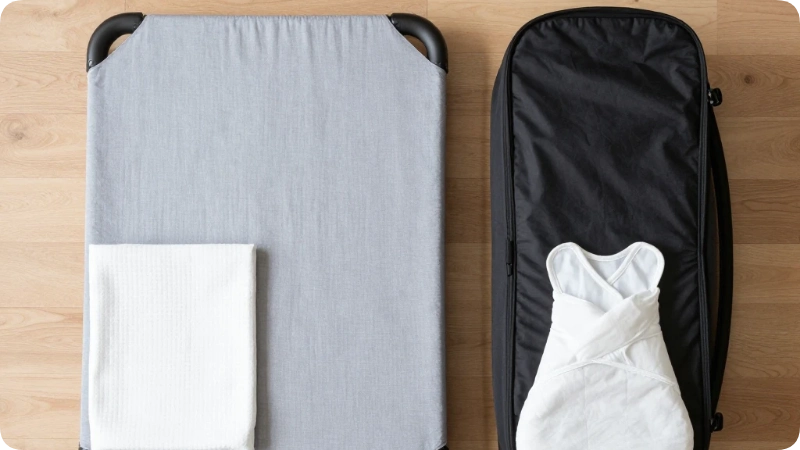
A travel cot is a portable, collapsible sleep surface built specifically for babies and toddlers, typically up to 35 pounds or three years of age. Most US models fall into two categories: full size pack and plays (like the Graco Pack ‘n Play) and compact ultralight travel cribs (like the Lotus Travel Crib or BabyBjörn Travel Crib Light). Both offer a firm, flat sleep surface which the American Academy of Pediatrics (AAP) identifies as essential for safe infant sleep.
Do you need one? If your baby is under 12 months, yes, absolutely. The AAP advises against placing infants in adult beds due to suffocation risks. Travel cots provide a dedicated, safe sleep zone that gives parents peace of mind and babies a consistent sleep environment which also helps maintain sleep routines on the road.
Travel Cot vs. Hotel Crib: Which Is Safer?
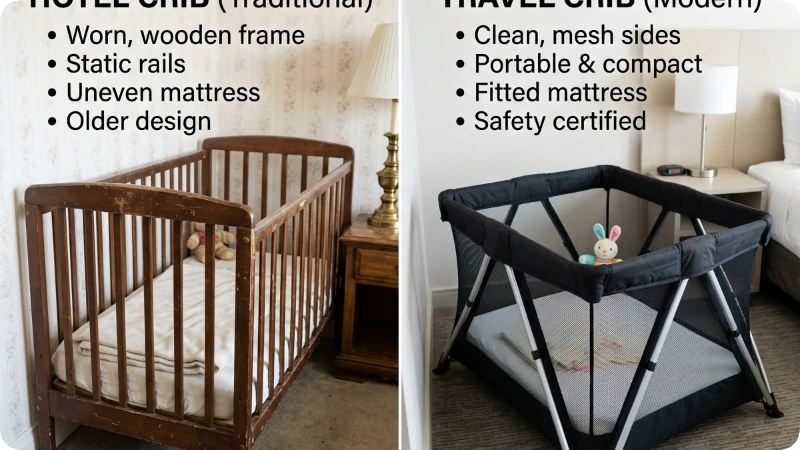
Bringing your own travel cot is safer and more reliable than depending on a hotel provided crib. Hotel cribs vary widely in age, condition, and compliance with current safety standards. Some older hotel cribs may predate the 2011 drop side crib ban enforced by the CPSC (Consumer Product Safety Commission). You have no way to verify when a hotel last inspected their crib or If it meets current ASTM F406 standards for non full size baby cribs.
Your own travel cot, on the other hand:
- Meets the exact safety standards you verified at purchase
- Offers a familiar sleep environment for your baby
- Arrives with a warranty and recall history you can check on the CPSC recall database at cpsc.gov
- Doesn’t require advance reservation or incur extra hotel fees (which can run $15–$30/night at many properties)
Insider tip: Always verify a product’s recall status on cpsc.gov before packing it. Even brand name travel cots have occasionally been recalled.
Types of Travel Cots Available for US Families
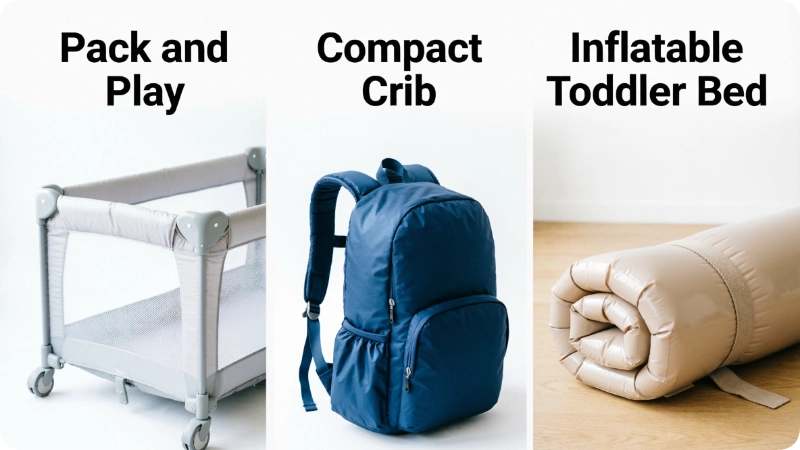
Full Size Pack and Play
The American standard. Brands like Graco, Chicco, and Baby Trend dominate this category. These typically weigh 16–28 pounds, fit into a rectangular carry bag, and double as a playard during the day. Many include a bassinet insert for newborns, a changing station, and even a rocking function.
- Best for: Road trips, extended stays, families who drive to their destination
- Drawback: Too bulky for most airline carry ons; may count as checked baggage
Compact Ultralight Travel Crib
Models like the BabyBjörn Travel Crib Light (weighs about 13 lbs) and the Lotus Travel Crib (11 lbs) fold into a backpack style carry case and fit in an overhead bin on most US carriers. These meet the same safety standards as pack and play but prioritize portability.
- Best for: Air travel, international trips, families who move hotels frequently
- Drawback: More expensive ($200–$350 range); no bassinet insert option
Inflatable Travel Cots
A newer category, inflatable travel cribs like the Shrunks Toddler Travel Bed are better suited for toddlers over 18 months rather than young infants. They’re extremely lightweight (under 4 lbs) but do not offer the firm, flat surface the AAP recommends for babies under 12 months.
- Best for: Toddlers aged 18 months and up, ultra minimalist packing
- Not recommended for: Infants under 12 months
Key Safety Standards Every US Parent Must Know
Before purchasing or using any travel cot in the United States, confirm it meets the following standards. This is non negotiable when infant safety is involved.
| Standard | What It Covers |
| ASTM F406 | Non full size baby cribs and play yards the core standard for travel cots |
| CPSC 16 CFR Part 1221 | Federal mandatory safety rule for play yards (effective 2013) |
| JPMA Certification | Voluntary third party certification by the Juvenile Products Manufacturers Association |
| AAP Safe Sleep Guidelines | Firm, flat surface; no soft bedding; back sleeping position |
Always check that the mattress pad fits snugly with no gap larger than two fingers between the pad and the cot wall. The CPSC mandates this in all certified play yards. Never add an aftermarket mattress topper; it can create suffocation hazards.
How to Choose the Right Travel Cot for Your Family
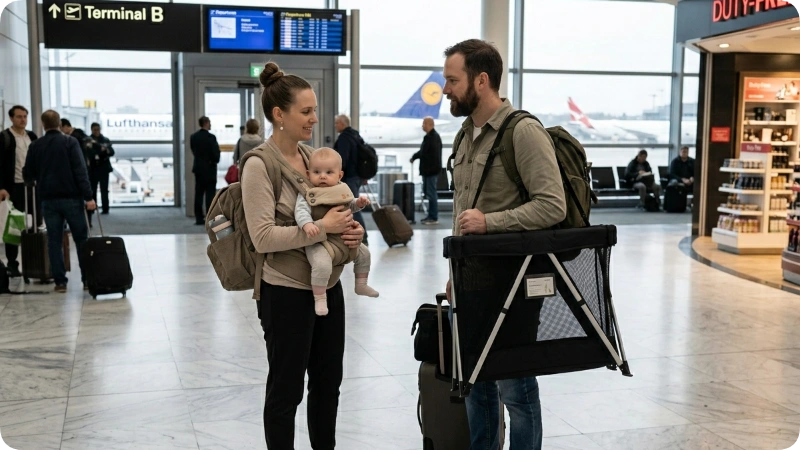
Choosing the right travel cot depends on four factors: your baby’s age and weight, your mode of transport, how often you travel, and your budget.
Age and Weight
- Newborns to 3 months: Look for a pack and play with a bassinet insert (baby should not sleep flat in the lower level until they can push up on all fours)
- 3 months to 12 months: Any CPSC certified pack and play or compact travel crib is appropriate
- 12 months to 3 years: Compact cribs, larger play yards, or toddler travel beds depending on size
Transport Mode
| Mode of Travel | Recommended Type |
| Road trip (car/RV) | Full size pack and play |
| Domestic flight | Compact travel crib (backpack style) |
| International flight | Ultralight compact crib or check pack and play as luggage |
| Train/cruise | Compact or full size depending on cabin space |
Budget
Quality travel cots in the US range from $80 to $350+. Mid range options ($120–$200) from established brands like Graco, Chicco, or Regalo typically offer the best balance of safety, durability, and portability. Always verify prices directly with retailers, as they change frequently.
How to Pack a Travel Cot for a Flight
Most airlines allow travel cots to be checked as luggage for free when traveling with a child, but policies vary and always confirm directly with your carrier before you fly. Major US airlines including Delta, United, and American Airlines generally permit one piece of child related gear (stroller, car seat, or crib) to be checked at no charge. Compact models can also fit in overhead bins.
Here’s a practical packing checklist:
- Confirm airline policy Call or check the airline’s official website. Policies change, and gate agents don’t always know the exceptions.
- Weigh your packed cot Compact cribs average 11–13 lbs; pack and plays average 18–25 lbs. Know your number before check in.
- Label the bag clearly Include your name, phone number, and destination inside and outside the carry bag.
- Pack the fitted sheet inside the cot bag Travel cot sheets are sized differently from standard cribs; don’t assume your destination will have the right fit.
- Gate check if needed If the carry bag fits airline size limits, you may be able to gate check it alongside a stroller.
Insider tip: Place a brightly colored luggage tag or ribbon on your travel cot bag. Dark carry bags all look alike on baggage carousels, and you don’t want someone accidentally walking off with your baby’s sleep setup.
Setting Up a Travel Cot: Step by Step
Setting up a travel cot in an unfamiliar hotel room or vacation rental takes practice. Do a trial run at home before your first trip so you’re not fumbling with instructions at 10 PM with a tired baby in your arms.
General setup process (most models follow this sequence):
- Open the carry bag and remove all components, including the mattress pad
- Unfold the frame and lock the corner joints into place listen for the click
- Set the base level to the appropriate height for your baby’s age (bassinet insert for newborns; lower play yard floor for mobile babies)
- Check the mesh walls all four sides should be taut with no sagging or gaps
- Lay the mattress pad flat and confirm it fits snugly with no corners lifting
- Add only a fitted cot sheet no pillows, positioners, bumpers, or blankets for babies under 12 months
- Test stability by pressing gently on each side and corner before placing your baby inside
If anything feels loose, creaks, or doesn’t click into position, do not use the cot. Contact the manufacturer before your trip.
Where Can You Use a Travel Cot in the US?
Travel cots work in more settings than most families realize and knowing where they’re allowed prevents last minute surprises.
Hotels and Motels
Most US hotels allow personal travel cots in guest rooms. Always inform the front desk when you check in. Some properties charge a small fee for room “setup assistance,” though this varies. Boutique hotels and motels may have smaller rooms called ahead to confirm floor space (a standard pack and play requires roughly a 4×4 foot footprint).
Vacation Rentals (Airbnb, Vrbo)
Vacation rentals are ideal for travel cot use you typically have more floor space, better lighting for nighttime setup, and full control of the sleep environment. Message the host before booking to ask about available space and If outlet covers or nightlights are provided.
National Parks and Campgrounds
Several US National Parks including Yellowstone, Great Smoky Mountains, and Yosemite offer cabin and lodge accommodations where a travel cot fits easily. If you’re tent camping, travel cots also work inside larger tents and provide a clean, elevated sleep surface off the ground. The NPS website (nps.gov) lists lodging options at each park always book well in advance, especially for summer visits.
Cruise Ships
Major US cruise lines including Royal Caribbean, Carnival, and Disney Cruise Line permit personal travel cots in staterooms. Call the cruise line directly to confirm stateroom dimensions and If they stock cribs themselves.
Maintaining Safe Sleep on the Road: AAP Guidelines for Travel
The AAP’s safe sleep guidelines apply everywhere, not just at home. Many sleep related infant deaths occur in non home environments precisely because caregivers assume “just this once” shortcuts are okay while traveling.
Always follow these rules, regardless of location:
- Back to sleep: Always place your baby on their back for every sleep
- Firm, flat surface only: Never let your baby sleep in a car seat, stroller, swing, or soft sided travel bassinet for extended periods
- No soft objects: No pillows, loose blankets, bumper pads, or positioners inside the cot
- Room sharing is fine, bed sharing is not: Your travel cot keeps your baby close without the risks of co sleeping
- Temperature: Keep the room between 68°F and 72°F overheating is a SIDS risk factor
Common mistake: Using the hotel’s decorative throw blanket as a crib liner “just for one night.” Don’t do it. Pack your own fitted travel cot sheet and use a wearable blanket (sleep sack) for warmth instead.
Top 3 Tourist Mistakes When Traveling with a Travel Cot
Mistake 1: Assuming the Hotel Crib Will Be Ready and Safe
Many parents call ahead to request a hotel crib but arrive to find it unavailable, dirty, or missing parts. Fix: Bring your own. If you prefer not to pack one, rent from a local baby gear rental service like BabyQuip (babyquip.com), which operates in most major US cities and many tourist destinations.
Mistake 2: Skipping the Home Setup Practice Run
Assembling a travel cot for the first time at midnight in a dark hotel room with a crying baby is genuinely miserable. Fix: Set it up and break it down at least twice at home before your trip. Involve all caregivers who will be setting it up during travel.
Mistake 3: Forgetting the Travel Cot Sheet
Standard crib sheets don’t fit travel cots; the mattress pads are sized differently. Most parents only discover this at bedtime on the first night. Fix: Pack at least two fitted sheets sized specifically for your travel cot model, and store them inside the cot’s carry bag so they’re never forgotten.
Hidden Gems: Lesser Known Travel Cot Tips Most Parents Miss
1. Many children’s museums and indoor play spaces have designated nap rooms. Facilities in cities like Chicago (Chicago Children’s Museum), Washington D.C. (Children’s Museum of Washington), and Houston (Children’s Museum of Houston) sometimes offer quiet family spaces. Call ahead these spots are rarely advertised online.
2. TSA allows travel cots through security. According to TSA guidelines, baby gear including portable cribs can go through airport security checkpoints. Fold the cot and place it on the belt, or ask a TSA officer for assistance. They are trained to help families with baby equipment without requiring full disassembly.
3. Some pediatric friendly vacation rental hosts stock travel cot extras. Search Airbnb with the “crib” amenity filter these hosts often include fitted sheets, a nightlight, and a sound machine with the cot setup, saving you packing space.
Underrated Alternatives to Buying a Travel Cot
Not every family needs to own a travel cot outright especially for one or two annual trips.
| Alternative | Best For | Cost Range |
| BabyQuip Gear Rental | Families who travel occasionally | $30–$60/trip |
| KidCoKidCare (local rental) | Short local trips | $20–$40/night |
| Travel Cot Subscription Services | Frequent travelers | $30–$50/month |
| Resort/Hotel Crib (verified safe) | Luxury hotels with documented cribs | Usually free–$30/night |
Note: Always ask rental companies for documentation that gear has been cleaned, inspected, and is free from recalls before your rental begins.
Packing Smart: What to Bring Alongside Your Travel Cot
Your travel cot is one piece of a larger baby sleep kit. Pack these alongside it for the smoothest possible nights on the road:
- Portable white noise machine (or a phone app) babies sleep better with familiar sound cues
- Two fitted travel cot sheets one for use, one as backup
- Sleep sack in the right TOG rating for your destination’s climate
- Blackout curtain clip hotel curtains rarely fully block light; a simple clip or portable blackout solution costs under $20 on Amazon
- Nightlight dim enough not to disturb sleep, bright enough for 2 AM feeding checks
- Baby monitor if needed many travel friendly video monitors now connect to your smartphone
Budget Breakdown: What Does Traveling with a Baby Cot Actually Cost?
Note: All price ranges below are estimates based on publicly available retail data as of 2024–2025. Verify current prices with retailers before purchasing.
| Item | Estimated Cost |
| Budget pack and play (Graco Portable) | $80–$110 |
| Mid range compact travel crib (Lotus, BabyBjörn) | $200–$350 |
| Travel cot sheet (2 pack) | $18–$35 |
| Portable white noise machine | $25–$50 |
| Blackout curtain clip | $10–$20 |
| Wearable sleep sack (travel weight) | $20–$40 |
| BabyQuip crib rental (per trip) | $30–$60 |
| Estimated total (own your cot) | $160–$600 |
| Estimated total (rent per trip) | $80–$170 |
Sample 5 Day Family Road Trip Itinerary: Travel Cot in Action
Here’s how a travel cot fits into a real family road trip from Atlanta, GA to the Smoky Mountains:
Day 1 Atlanta to Gatlinburg, TN (~3.5 hrs) Set up your travel cot at the cabin immediately upon arrival during naptime. Baby gets an afternoon nap while you unpack.
Day 2 Great Smoky Mountains National Park Morning hike on the Alum Cave Trail (stroller unfriendly use a baby carrier). Baby naps in the travel cot back at the cabin. Afternoon: Cades Cove loop drive. NPS admission to Great Smoky Mountains is free year round.
Day 3 Gatlinburg + Pigeon Forge Explore Ripley’s Aquarium of the Smokies (stroller friendly; ideal for sensory curious toddlers). Midday nap at the cabin in the travel cot maintains your baby’s schedule.
Day 4 Hiking or Lazy Day Laurel Falls Trail is one of the most paved, accessible trails in the Smokies good for parents with carriers. Reserve cabin dinner locally.
Day 5 Return to Atlanta Pack the travel cot first so it’s accessible if your baby needs a roadside nap stop.
Key insight: Maintaining your baby’s sleep environment (travel cot + white noise + sleep sack + blackout) across every overnight location is what keeps the schedule intact.
FAQs
Can a newborn sleep in a travel cot overnight?
Yes provided the travel cot includes a certified bassinet insert and meets CPSC and ASTM F406 standards. Newborns should not sleep in the lower play yard level until they are able to push up on all fours. Always follow AAP safe sleep guidelines: back to sleep, firm flat surface, no soft objects.
Are travel cots allowed on airplanes as carry on luggage?
Compact travel cribs like the BabyBjörn Travel Crib Light and Lotus Travel Crib fit in most overhead bins and are permitted as carry on bags on major US airlines, subject to the airline’s specific size limits. Always confirm with your carrier before flying, as policies vary. Most airlines also allow travel cots to be checked for free with a child ticket.
What’s the difference between a travel cot and a pack and play?
In the US, the terms are often used interchangeably. Technically, a pack and play is a brand style term (originating from Graco) that refers to a full size portable play yard. “Travel cot” can mean any portable sleep surface, including more compact ultralight options. The key difference is size and weight: compact travel cribs prioritize portability for air travel, while pack and plays offer more features and space.
Can I rent a travel cot instead of buying one?
Absolutely. BabyQuip (babyquip.com) is the largest baby gear rental service in the US, operating in hundreds of cities and resort destinations. You can rent a certified, cleaned travel cot and have it delivered to your hotel or vacation rental. This is a smart choice for families who travel only once or twice a year.
Do travel cots need special sheets?
Yes. Travel cot mattress pads are non standard sizes and require fitted sheets specifically designed for your model. Standard crib sheets are too large and create dangerous gaps. Purchase at least two travel cot sheets in the right size for your specific model and store them in your travel cot bag.
Are inflatable baby travel beds safe for infants?
Inflatable travel beds are generally not recommended by the AAP for babies under 12 months due to their soft, uneven surfaces. They’re better suited for toddlers 18 months and older. For infants, always use a firm, flat, CPSC certified surface.
How do I keep my baby’s sleep schedule intact while traveling?
Consistency is the most important factor. Use the same travel cot, the same sleep sack, the same white noise machine, and the same pre sleep routine you use at home. Babies respond more to environmental cues (darkness, sound, familiar scent) than to location. A blackout curtain clip and portable white noise machine are the two most impactful investments for travel sleep success.
Conclusion: Your Best Nights on the Road Start with the Right Cot
Three things matter most when traveling with a baby: safety, consistency, and preparation. A certified travel cot checks all three boxes at once. It gives your baby a safe, familiar place to sleep no matter where you land, and it gives you the peace of mind to actually enjoy your trip.
If you invest in a compact ultralight model for frequent flyers or a full featured pack and play for road trip families, the right travel cot pays for itself on the first trip in better sleep for your baby, and actual rest for you.
Start with the AAP safe sleep guidelines, verify your cot’s compliance on cpsc.gov, practice setup at home, and pack your travel sleep kit like a pro. Then go explore because the USA is full of places worth showing your little one, even before they can remember the trip.

Gordon Ramsay is a travel writer and destination researcher who helps U.S. travelers plan smarter trips, covering destinations, seasonal trends, budgets, and logistics to help readers decide where—and when—to go.
Rather than simply listing popular places, Gordon Ramsay focuses on what travelers actually need: comparing weather against crowds, weighing costs and accessibility, and researching current conditions alongside official tourism guidance—delivering honest, practical advice without the hype.











1 thought on “Travel Cot for Babies: Smart Choices for Family Adventures”