Europe travel essentials for Americans include a valid passport (with at least six months validity), the right power adapters (Europe uses Type C, E, or F plugs), a mix of local currency and a no foreign transaction fee card, travel insurance, and any required visas. Most U.S. travelers can visit Schengen Zone countries visa free for up to 90 days within any 180 day period.
Every year, millions of Americans board transatlantic flights buzzing with excitement only to land jet lagged, underprepared, and suddenly unsure why their phone charger doesn’t fit the outlet. Europe is one of the world’s greatest travel destinations, but the gap between a smooth trip and a stressful one often comes down to the details nobody mentions until it’s too late.
This guide cuts through the noise. If you’re planning your first trip to Paris or your fifth loop through Central Europe, these European travel essentials cover everything from what to pack and which documents to carry, to money, safety, connectivity, and the unwritten rules of European travel culture. Consider this your pre departure checklist researched, practical, and built specifically for American travelers heading across the Atlantic.
Tourist Scams to Watch Out For in Europe
Europe is generally very safe, but tourist scams remain common in major cities.
Some of the most frequent scams include:
- Fake petition scams
- Friendship bracelet scam
- Fake police officers
- Taxi meter scams
- Pickpockets working in teams
- “Free” flowers or gifts
- ATM distraction scams
The best defense is confidence. Ignore unsolicited approaches, keep valuables secure, and use official taxis or rideshare apps whenever possible.
Europe Travel Essentials Checklist Before You Leave the USA
Before heading to the airport, work through this final checklist to make sure nothing important has been overlooked. Even experienced travelers forget small but essential items, and replacing them overseas can be expensive or inconvenient.
Travel Documents
- Passport valid for at least six months after your return
- Flight tickets and boarding passes
- Hotel confirmations
- Travel insurance policy
- Emergency contacts
- Copies of passport stored separately
- Driver’s license (plus International Driving Permit if renting a car)
Money
- No foreign transaction fee credit card
- Debit card for ATM withdrawals
- €100–€200 in cash for arrival
- Backup credit card
- Notify your bank of travel dates
Electronics
- Universal power adapter
- Charging cables
- Portable power bank
- Camera and batteries
- Headphones
- Downloaded offline maps
Health
- Prescription medications
- First aid kit
- Motion sickness medicine
- Pain reliever
- Sunscreen
- Hand sanitizer
Packing
- Comfortable walking shoes
- Packable rain jacket
- Daypack
- Reusable water bottle
- Packing cubes
- Travel umbrella
1. Understand Your Passport & Visa Requirements Before You Book
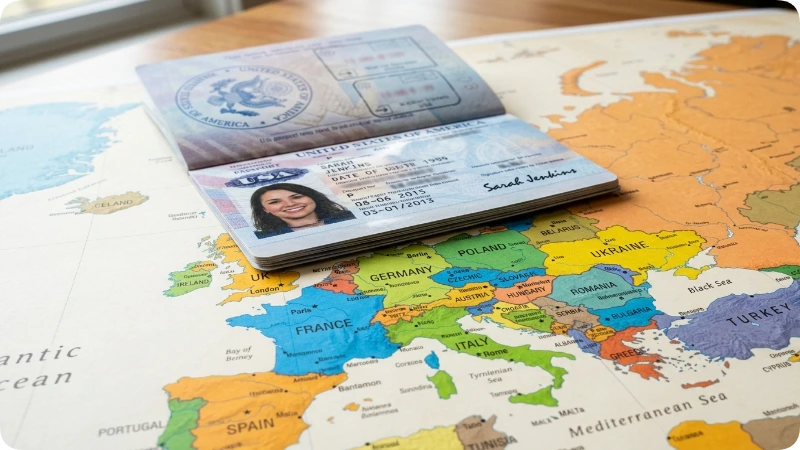
The single most important document in your travel kit is your passport and Americans are often surprised by the rules around it. Most European countries require your passport to be valid for at least three to six months beyond your planned departure date. If your passport expires within that window, renew it before you book anything.
For Schengen Area countries which include popular destinations like France, Germany, Italy, Spain, Greece, and 22 others U.S. citizens can travel visa free for up to 90 days within any 180 day period. That covers most vacation timelines easily. However, the ETIAS (European Travel Information and Authorization System) is expected to launch in 2025 for U.S. visitors. Always verify current requirements through the U.S. Department of State at travel.state.gov before your trip, as policies change.
Countries Outside the Schengen Zone
Not every European country is part of Schengen. The UK, Ireland, Albania, Montenegro, and Kosovo among others have their own entry rules. The UK, for instance, now requires a separate entry process post Brexit. Research each country individually if your itinerary spans multiple nations.
Insider Tip
Make two color photocopies of your passport ID page. Leave one with a trusted contact at home and keep one separate from your actual passport in your bag. If your passport gets lost or stolen, this speeds up the replacement process enormously at the nearest U.S. Embassy.
2. Get the Right Power Adapters Don’t Skip This One
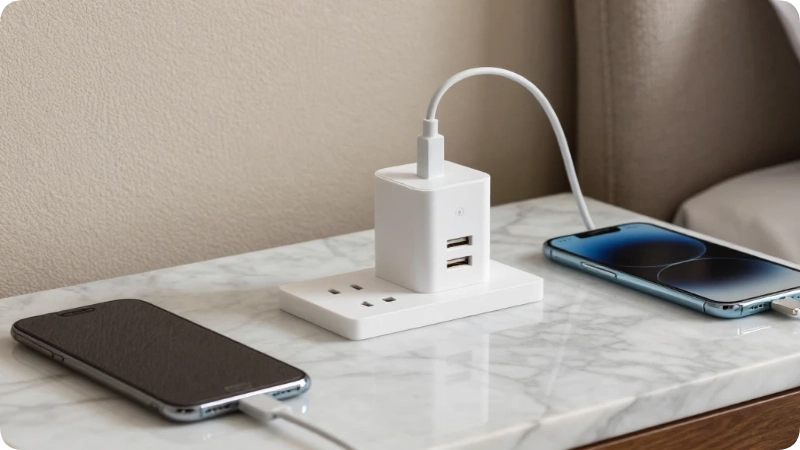
Europe runs on 220–240 volts and 50Hz frequency, compared to America’s 110–120 volts and 60Hz. Most modern electronics laptops, smartphones, cameras are dual voltage and will work fine with just an adapter plug. Check your device’s power brick; if it says “100–240V,” you only need a plug adapter, not a voltage converter.
The plug types you’ll encounter most are:
- Type C two round pins (used in most of continental Europe)
- Type G three rectangular pins (used in the UK and Ireland)
- Type F two round pins with grounding (Germany, Austria, Netherlands)
Buy a universal travel adapter with USB ports built in. This lets you charge multiple devices from one outlet, a real sanity saver in European hotel rooms, which often have fewer outlets than American rooms.
Insider Tip
Bring a small travel power strip. Plug your adapter into the European outlet, then run your American power strip from it. Suddenly you have four or five outlets instead of one. Fellow travelers will love you in shared spaces.
3. Sort Out Your Money Strategy Before Departure
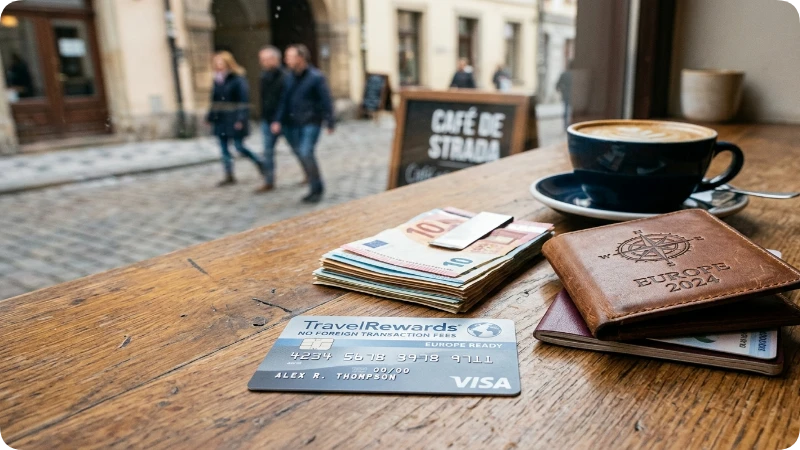
One of the most common (and costly) mistakes American travelers make is not planning their money situation in advance. ATM fees, foreign transaction fees, and bad exchange rates can quietly drain hundreds of dollars from your budget over a two week trip.
Here’s the smartest approach for most U.S. travelers:
- Get a no foreign transaction fee credit card before you leave. Cards like the Chase Sapphire Preferred, Capital One Venture, or Charles Schwab debit card waive all foreign transaction fees. Some even reimburse ATM fees globally.
- Use local ATMs for cash they consistently offer better exchange rates than airport currency exchange booths, which often charge 10–15% margins.
- Notify your bank and credit card companies of your travel dates before you leave, or they may freeze your account as a fraud precaution.
- Carry some euros (or local currency) before you arrive for tips, small purchases, or transit from the airport when card machines aren’t available.
Should You Exchange Dollars Before Traveling?
Many Americans wonder whether they should buy euros before leaving home.
For most travelers, exchanging a small amount—around €100 to €200—before departure is enough to cover transportation, snacks, or emergencies after landing. For the rest of your trip, withdrawing cash from bank-operated ATMs generally provides much better exchange rates than airport exchange counters or hotel desks.
Whenever paying by card, choose to be charged in the local currency rather than U.S. dollars. This avoids dynamic currency conversion, which often results in a poorer exchange rate.
Budget Snapshot (Per Day, Mid Range Travel)
| Category | Budget Traveler | Mid Range | Splurge |
| Accommodation | $40–$70 | $100–$180 | $250+ |
| Meals | $20–$35 | $50–$80 | $120+ |
| Transport | $5–$15 | $20–$40 | $60+ |
| Activities | $10–$20 | $30–$60 | $100+ |
| Daily Total | ~$75–$140 | ~$200–$360 | $530+ |
Prices vary significantly by country. Western Europe (UK, Switzerland, Scandinavia) runs notably more expensive than Eastern Europe (Poland, Czech Republic, Hungary).
4. What Most Americans Wish They Had Packed
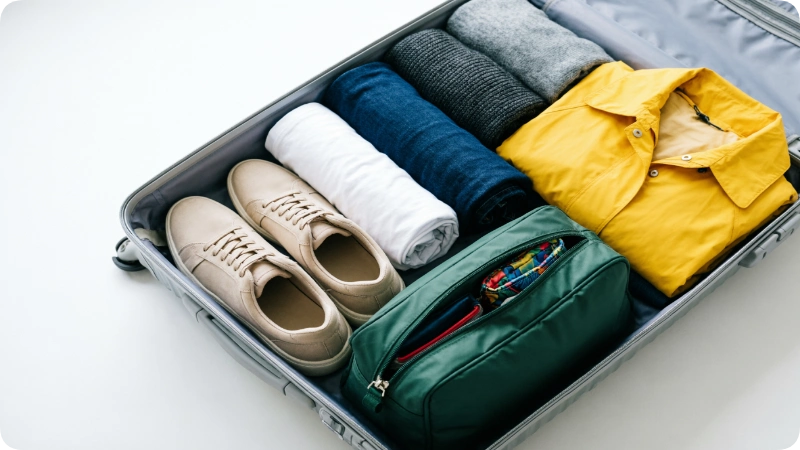
Even travelers who pack carefully often realize after arriving that a few inexpensive items would have made their trip much easier.
Many European hotel rooms have surprisingly few electrical outlets, making a compact power strip invaluable for charging multiple devices overnight. Laundry detergent sheets are another overlooked essential because self-service laundries are common throughout Europe, especially during longer trips.
Other frequently forgotten items include:
- Compression socks for overnight flights
- Reusable shopping bag
- RFID wallet
- Collapsible water bottle
- Mini sewing kit
- Small flashlight
- Luggage tracker (Apple AirTag or similar)
- Ziplock bags for wet clothing
- Microfiber towel
These lightweight additions take almost no luggage space but solve problems that travelers encounter repeatedly.
5. Get the Right Travel Insurance This Is Non Negotiable
Travel insurance is the europe travel essential that Americans most commonly skip and most often regret skipping. A single medical evacuation from Europe to the United States can cost $50,000 to $200,000 or more without coverage. Trip cancellation, lost luggage, flight delays, and emergency medical care add up fast.
What a solid travel insurance policy should cover:
- Emergency medical care and hospitalization
- Medical evacuation/repatriation
- Trip cancellation and interruption
- Baggage loss and delay
- Travel delay coverage
Compare policies through aggregators like InsureMyTrip or Squaremouth. If you carry a premium travel credit card, check If it already includes some coverage before buying a separate policy many do. The U.S. Embassy cannot pay your medical bills abroad, and Medicare does not cover care outside the United States.
6. Plan Your Connectivity: Phones, SIMs & Wi Fi
Arriving in a foreign country without a working phone is a stressful experience that’s entirely avoidable. Americans have three practical options for staying connected in Europe:
- International phone plan through your carrier T Mobile Magenta includes free international data (speeds may be slow). AT&T and Verizon offer international day passes for $10/day. Fine for short trips.
- Buy a local SIM card available at airports and convenience stores across Europe. This gives you fast, affordable data but requires an unlocked phone. Works best for longer trips.
- Buy an eSIM before departure services like Airalo or Holafly let you buy a European data plan digitally before you leave. This is the smoothest, most modern option for most travelers.
Insider Tip
Download offline maps for every city you plan to visit before you leave home Wi Fi. Google Maps allows offline downloads. If you end up in a dead zone or your SIM runs out of data, you’ll still be able to navigate.
What to Do During Your First Hour After Landing in Europe
Your first hour in Europe often determines whether the rest of your trip starts smoothly or stressfully. Instead of rushing out of the airport, take a few minutes to get organized.
After clearing immigration, withdraw a small amount of local currency from an airport ATM operated by a bank rather than using a currency exchange counter. Then connect to airport Wi-Fi or activate your eSIM before leaving the terminal.
Next, confirm how you’ll reach your accommodation. Many European airports have excellent train connections that are faster and cheaper than taxis. If you’re arriving late at night, pre-booking transportation may be worth the added cost.
Before leaving the airport:
- Confirm your hotel address.
- Save your accommodation on Google Maps.
- Check local public transportation schedules.
- Fill your reusable water bottle.
- Message family to let them know you’ve arrived safely.
Starting organized reduces stress and helps avoid expensive airport mistakes.
7. Book Accommodations Strategically
Where you stay in Europe shapes everything else about your trip, your transport costs, your daily walking range, your neighborhood experience, and your budget. Book accommodations as early as possible for peak season (June–August), when popular destinations like Rome, Barcelona, and Amsterdam fill up months in advance.
Accommodation Types to Consider
- Central boutique hotels often worth the premium for location; saves on transport and gives you walkable access to major sights.
- Aparthotels and short term rentals ideal for stays of a week or more, especially for families or groups. Having a kitchen saves money on meals.
- Hostels with private rooms are of excellent value in Eastern Europe; many are modern, clean, and social without being party focused.
- Small family run guesthouses (pensiones, B&Bs, chambres d’hôtes) are often the most culturally immersive option and frequently underpriced relative to chains.
Always check the neighborhood. A hotel near a train station isn’t always convenient; many European station neighborhoods are transient and less safe at night. Research the specific district using Google Street View before booking.
8. Should You Buy an Eurail Pass or Individual Train Tickets?

Many first-time visitors assume a Eurail Pass always saves money, but that’s not necessarily true.
A Eurail Pass is often worthwhile if you’re visiting several countries over multiple weeks and want maximum flexibility. However, travelers following a fixed itinerary usually spend less by booking advance tickets directly through each country’s rail operator.
As a general guideline:
| Trip Style | Best Option |
| 2 countries | Individual tickets |
| 3–4 countries | Compare both |
| 5+ countries | Eurail often wins |
| Last-minute travel | Eurail is more flexible |
Always compare total costs before purchasing.
9. Understand European Culture & Etiquette
Americans are often stereotyped as loud, tipping compulsively, and unaware of local norms. A little cultural awareness goes a long way in earning genuine warmth from locals.
Dining Etiquette
- Tipping culture is different in most of continental Europe, a service charge is included or tipping is minimal (rounding up the bill or leaving small change is standard). The UK and Ireland are more tip oriented. Research the specific country’s norms.
- Lunch, not dinner, is often the main meal especially in Spain, France, and Italy. Many restaurants offer a fixed price lunch menu (menu del día, prix fixe, pranzo) that gives you two or three courses for the price of a single entrée at dinner.
- Asking for the bill is your job European servers do not drop the check automatically. You’ll wait a long time if you don’t ask. Simply say “il conto” (Italy), “l’addition” (France), or “die Rechnung” (Germany).
General Manners
- Greet shopkeepers when you enter and say goodbye when you leave this is standard courtesy across most of Europe and Americans frequently skip it.
- Keep your voice at a conversational level in restaurants, public transit, and residential neighborhoods.
- Learn 5–10 words in the local language bonjour, gracias, danke, por favor. Locals notice and appreciate it genuinely.
10. Stay Safe: Practical Security Tips for American Travelers
Europe is, statistically, very safe for tourists. But petty theft, particularly pickpocketing is common in crowded tourist areas, train stations, and major city markets. The good news: most theft is entirely preventable with basic precautions.
- Use a crossbody bag or money belt for your passport, cards, and cash in crowded areas.
- Never put anything valuable in a back pocket or the outer pocket of a backpack.
- Be cautious at tourist hotspots specifically named for pickpocket activity: the area around the Eiffel Tower in Paris, Las Ramblas in Barcelona, Rome’s Termini station, and busy metro lines in major cities.
- Split your cash and cards, keep some in your bag and some in a different location. If one gets stolen, you’re not stranded.
- Register your trip with the U.S. State Department’s STEP program (Smart Traveler Enrollment Program) at step.state.gov it’s free, and it allows the Embassy to contact you in an emergency.
Emergency Numbers
- Pan European emergency number: 112 (works in all EU countries, equivalent to 911)
- Locate your nearest U.S. Embassy at usembassy.gov before departure.
11. Handle Your Health Abroad
Most Americans traveling to Europe for leisure don’t need special vaccinations. However, the CDC recommends making sure routine vaccines are up to date measles mumps rubella (MMR), COVID 19, and flu shots among them. If you’re visiting rural areas or specific regions, check the CDC Traveler’s Health page at cdc.gov/travel for destination specific recommendations.
Carry a basic prescription plan:
- Bring enough of any prescription medication to cover your trip plus extra in case of delays.
- Carry medications in original, labeled pharmacy bottles.
- If you take controlled substances (certain sleep aids, anxiety medications, ADHD medications), carry a doctor’s letter explaining the prescription. Some countries restrict these substances research before you pack.
European pharmacies (marked with a green cross) are excellent resources for minor ailments. Pharmacists across Europe are typically highly trained and can recommend over the counter treatments for most common travel complaints.
12. Plan Around the Best Times to Visit
Timing a Europe trip is one of the most impactful decisions you’ll make. The “best” time depends on your destination, your budget, and your tolerance for crowds.
Seasonal Comparison
| Season | Months | Pros | Cons |
| Spring | March–May | Mild weather, fewer crowds, lower prices, flowers in bloom | Unpredictable rain, some attractions still on reduced hours |
| Summer | June–August | Long days, festivals, all attractions open | Peak crowds, peak prices, extreme heat in southern Europe |
| Fall | Sept–Nov | Excellent weather, harvest festivals, fewer tourists than summer | Days getting shorter, some beach resorts closing down |
| Winter | Dec–Feb | Christmas markets (Dec), lowest prices, no crowds | Cold, short days, some smaller attractions closed |
The sweet spot for most U.S. travelers: late April through early June, or September through mid October. You get good weather, manageable crowds, and significantly lower prices on flights and hotels compared to peak summer.
13. Common Mistakes American Travelers Make in Europe (And How to Fix Them)
Even experienced travelers fall into predictable traps. Here are three of the most common and how to avoid them.
Mistake 1: Overpacking the itinerary. Americans often try to see seven countries in ten days. The result is exhausting, expensive, and you end up seeing nothing deeply. Fix: Pick two to three countries maximum for a two week trip. You’ll actually remember the experience.
Mistake 2: Waiting to book popular attractions. The Colosseum in Rome, Sagrada Família in Barcelona, the Anne Frank House in Amsterdam these sell out weeks or months in advance. Fix: Book timed entry tickets online as soon as your travel dates are confirmed.
Mistake 3: Relying on airport currency exchange. The rates at airport kiosks are often 10–15% worse than what you’d get from an ATM in the city. Fix: Use a no fee debit card at a local ATM after you clear customs, or order a small amount of euros through your bank before departure for immediate needs.
14. Hidden Gems & Underrated Alternatives Worth Knowing
Beyond the Paris Rome Barcelona loop, Europe has extraordinary destinations that offer depth, beauty, and far fewer crowds.
- Porto, Portugal is dramatically underrated compared to Lisbon. Stunning riverfront, port wine caves, affordable food and accommodation, and genuinely warm locals. Art nouveau architecture and azulejo tile everywhere.
- Ghent, Belgium larger than Bruges, far less touristy, and arguably more authentic. Medieval guild houses, a thriving café culture, and one of Europe’s finest art museums (the Mystic Lamb altarpiece at St. Bavo’s Cathedral).
- Tallinn, Estonia one of the best preserved medieval old towns in all of Europe, and budget prices that still feel like Eastern Europe a decade ago. Often overlooked because travelers don’t think “Baltic” when they think of Europe.
15. Responsible Travel Tips for Europe
Overtourism is a real and documented problem in cities like Venice, Dubrovnik, Santorini, and Amsterdam. Traveling responsibly doesn’t mean avoiding these places, it means being thoughtful about how you visit.
- Book smaller, locally owned accommodations over large chains when possible.
- Eat at restaurants away from the main tourist drag. The food is usually better and cheaper, and you support local businesses directly.
- Use public transit and trains over flights for short distances rail travel within Europe has a dramatically lower carbon footprint than flying.
- Visit in shoulder season when your presence adds economic benefit without overwhelming local infrastructure.
- Follow posted rules at cultural and natural sites: no selfies inside sacred spaces, no touching artwork, stay on marked paths in natural areas.
FAQs
What do I actually need to travel to Europe from the USA?
You need a valid U.S. passport (with at least six months validity beyond your return date), a way to access money internationally (a no foreign transaction fee card plus cash), a power adapter for European outlets, travel insurance, and any required documentation for your specific destinations. The ETIAS electronic authorization is expected to launch soon for Schengen countries to verify current requirements at travel.state.gov before booking.
Do I need a visa to travel to Europe as an American?
Most Americans can visit Schengen Zone countries visa free for up to 90 days within a 180 day period. Non Schengen countries like the UK have their own rules. Always check entry requirements for every country on your itinerary through the U.S. State Department website, as requirements do change.
Is travel insurance required for Europe?
Travel insurance is not legally required for most European countries (though Schengen visa holders, where a visa is required, must show proof of €30,000 in medical coverage). However, it is strongly recommended for all U.S. travelers because Medicare and most U.S. health insurance plans offer no or very limited coverage outside the U.S., and emergency medical evacuation can cost six figures.
What’s the best way to stay connected in Europe?
The easiest modern option is purchasing an eSIM before departure through a service like Airalo or Holafly. Alternatively, buying a local SIM card at your destination airport gives you fast, affordable data. Check If your current U.S. carrier plan includes international data T Mobile Magenta includes slow international data at no extra charge, while AT&T and Verizon offer $10/day international passes.
What should I not forget to pack for Europe?
The most commonly forgotten items are: a universal power adapter, comfortable broken walking shoes, a packable rain jacket, a modest scarf for entering religious sites, a money belt or anti theft bag, photocopies of your passport, and any prescription medications with pharmacy labels. Download offline maps before you leave home Wi Fi.
Can I use my U.S. driver’s license in Europe?
You can legally drive in some European countries using a valid U.S. driver’s license, but others also require an International Driving Permit (IDP). If you plan to rent a car, check the rules for each destination before departure, as rental companies may require an IDP even where local law does not.
How many power adapters should I bring to Europe?
One universal travel adapter is usually enough for solo travelers, but couples or families may benefit from bringing two. Choosing an adapter with multiple USB ports allows several devices to charge simultaneously, reducing the need for extra adapters.
Is Europe cashless?
Most European cities widely accept contactless credit and debit cards, but cash is still useful at small cafés, local markets, public restrooms, and rural businesses. Carrying a modest amount of local currency ensures you’re prepared when cards aren’t accepted.
Can I drink tap water in Europe?
Tap water is safe to drink throughout most of Europe, including France, Germany, Italy, Spain, Austria, Switzerland, and the Nordic countries. In some tourist destinations or rural areas, bottled water may still be recommended, so check local guidance if you’re unsure.
How early should I arrive at European train stations?
Unlike airports, most European train stations don’t require lengthy security procedures. Arriving 20–30 minutes before departure is usually sufficient for high-speed trains, while 10–15 minutes is often enough for regional services. Larger stations can be busy, so allow extra time if you’re unfamiliar with the layout.
Final Thoughts: Show Up Prepared, Leave with Stories
Three things will define your Europe trip more than any destination you choose: your documents, your money strategy, and how light you pack. Get those right, and everything else the croissants in Paris, the boat ride in Cinque Terre, the sunset over Santorini falls into place.
Europe rewards prepared travelers generously. The continent has extraordinary depth, beauty, and hospitality waiting for anyone who arrives ready to engage on its own terms. So get your passport renewed, download those offline maps, and book those timed entry tickets to the Colosseum before they sell out.
Your best European trip isn’t the one you’ve been dreaming about, it’s the one you’ve planned well enough to actually live.

Gordon Ramsay is a travel writer and destination researcher who helps U.S. travelers plan smarter trips, covering destinations, seasonal trends, budgets, and logistics to help readers decide where—and when—to go.
Rather than simply listing popular places, Gordon Ramsay focuses on what travelers actually need: comparing weather against crowds, weighing costs and accessibility, and researching current conditions alongside official tourism guidance—delivering honest, practical advice without the hype.