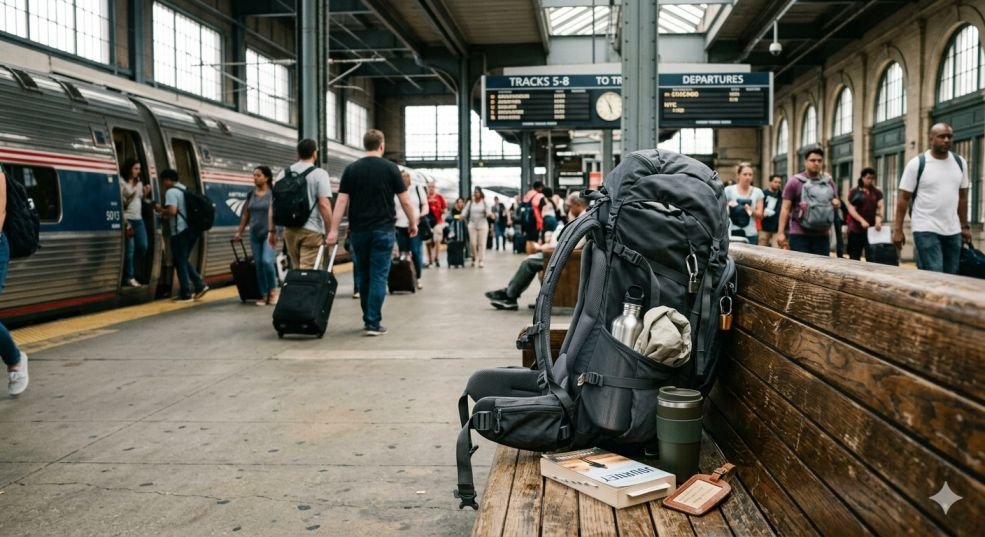
Choosing the right travel backpack without overspending is one of the most important decisions you will make before any trip and one of the most confusing.
Walk into any outdoor retailer or scroll through Amazon for five minutes and you will face hundreds of options ranging from $30 daypacks to $400 technical packs that look engineered for Everest.
For most travelers, the sweet spot sits somewhere in the middle, and that is exactly what this guide covers.
If you are planning a two week backpacking trip through the national parks of the American Southwest, hopping between hostels in Europe, or flying carry on only to save money on checked bag fees, a well chosen budget travel backpack can handle all of it without destroying your wallet.
The best budget travel backpacks deliver the core features that matter comfortable suspension, durable materials, smart organization, and airline friendly sizing at prices that leave money in your pocket for the actual trip.
This guide breaks down the best options for 2025, explains exactly what to look for, and helps you avoid the common mistakes that send travelers back to the store mid trip.
What Makes a Great Budget Travel Backpack?
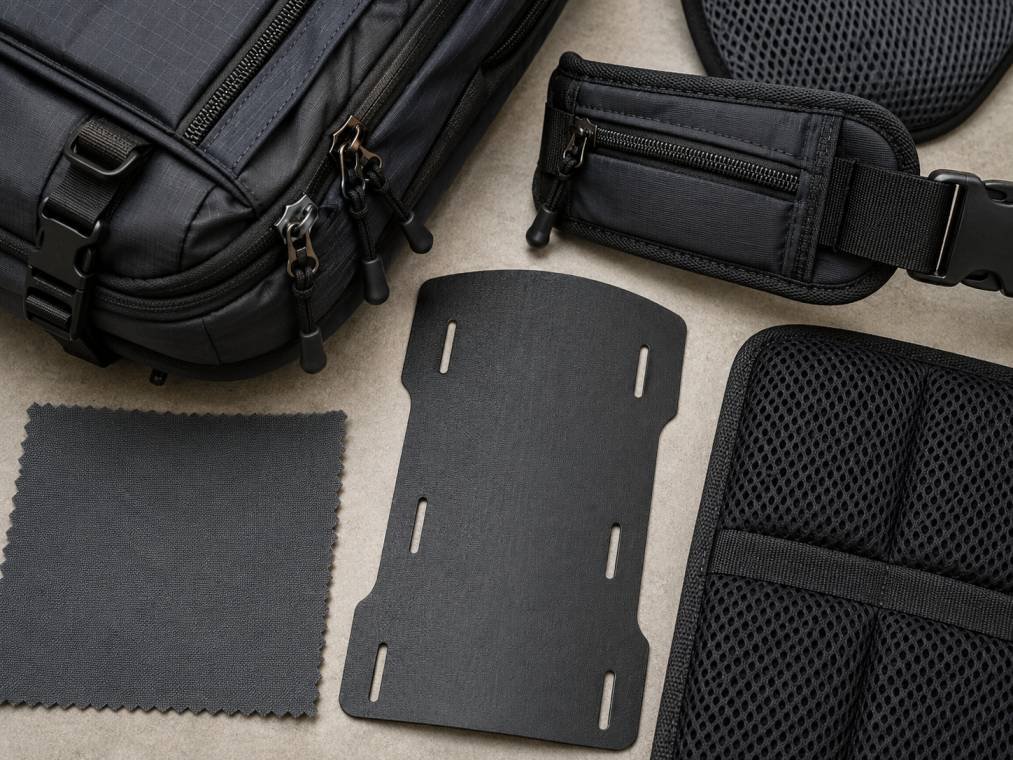
A great budget travel backpack balances four qualities: durability, comfort, organization, and size compliance for airlines. Most budget packs in the $60–$150 range can achieve all four if you know what specifications to look for. The biggest difference between a $50 bag and a $150 bag at this tier is usually the suspension system and the fabric quality not the brand name.
Capacity: For carry on travel, 40–46 liters is the sweet spot. It fits most airline overhead bins while still holding a week or more of clothing. For longer trips where you check bags, or for outdoor adventures, 55–65 liters gives you more room without going overboard.
Weight: Aim for a packable weight under 3 pounds for bags under 50 liters. Every pound the bag weighs is a pound you cannot fill with gear or clothing.
Suspension: Even a basic padded hip belt and shoulder straps with an internal frame (even a flexible one) distribute weight far better than a flat back school style bag. This matters enormously on travel days that run 10 or more hours.
Fabric: Look for at least 420D nylon or 600D polyester for the main body. Ripstop nylon costs more but resists tears far better. Avoid pure canvas bags for heavy travel they absorb water and are much heavier.
Access: Top loading bags are lighter but harder to organize. Panel loading (clamshell opening) bags function more like suitcases and are better for urban travelers. Many newer budget packs offer both.
Top Budget Travel Backpacks for 2026: At a Glance
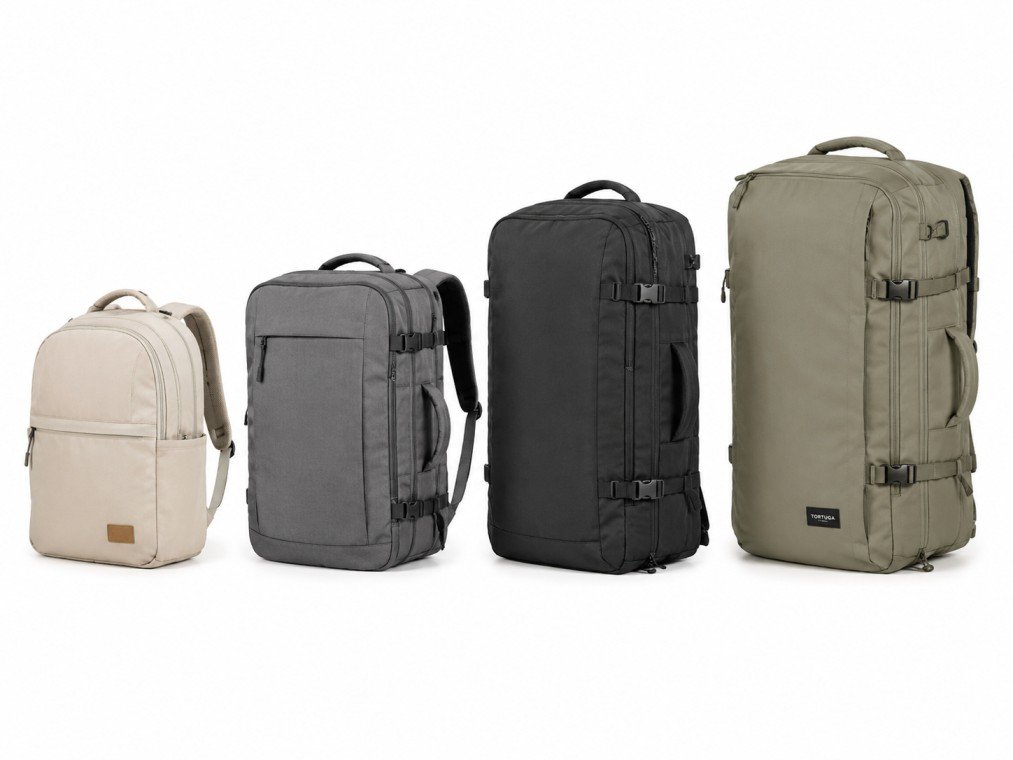
| Backpack | Capacity | Weight | Best For | Price Range |
| Osprey Farpoint 40 | 40L | 2.9 lbs | Carry on travel | $130–$160 |
| Osprey Fairview 40 (women’s) | 40L | 2.85 lbs | Carry on travel | $130–$160 |
| Tortuga Setout 45 | 45L | 3.3 lbs | Urban/hostel travel | $199 |
| REI Co op Ruckpack 40 | 40L | 3.5 lbs | Weekend to 1 week trips | $99–$129 |
| Deuter Speed Lite 30 | 30L | 1.8 lbs | Day hiking + light travel | $120–$140 |
| Mountaintop 40L | 40L | 2.6 lbs | Budget first travelers | $45–$65 |
| Gonex 50L | 50L | 2.2 lbs | First backpacks, short trips | $40–$60 |
Note: Prices fluctuate frequently. Always verify current pricing directly with retailers before purchasing.
How to Choose Among the Top Budget Travel Backpacks
The right budget travel backpack depends on how you actually travel. For a reliable carry-on option, the Osprey Farpoint 40 is the strongest all-around choice in this guide. Travelers who need a women-specific fit can consider the Osprey Fairview 40. A lower-cost Mountaintop or Gonex pack makes more sense for occasional trips and lighter loads. Hiking-focused travelers should choose a dedicated outdoor pack such as the Deuter Speed Lite 30 for day trips rather than expecting a large travel bag to perform like a technical hiking pack. Meanwhile, minimalist travelers may prefer a lightweight 30L to 35L model that is easier to carry and less tempting to overpack.
The Best All Around Budget Travel Backpack: Osprey Farpoint 40
For travelers who want the best overall value in a carry on sized travel backpack, the Osprey Farpoint 40 consistently earns its top rated status. It sits at the upper end of the budget range typically $130 to $160 but offers a comfort level and durability that most bags double its price struggle to match.
The Farpoint 40 uses a panel loading design that opens flat like a suitcase, making packing and unpacking at hostels or hotels dramatically easier than rummaging through a top loader. The shoulder straps and hip belt zip away into a dedicated compartment, turning the bag into a clean duffel style carry on that fits overhead bins on most U.S. and international airlines. This feature alone sets it apart from most budget competitors.
A separate daypack (the Osprey Farpoint 20) can be purchased to attach to the back, giving you a versatile two bag system that is ideal for day trips without dragging your full luggage. The women’s version, the Osprey Fairview 40, uses a torso fit optimized for a shorter back length and narrower shoulder width.
Insider tip: Osprey offers a lifetime warranty called the All Mighty Guarantee. Even a $150 Osprey is a long term investment many travelers use their Farpoints for a decade or more.
Best Ultra Budget Picks Under $70
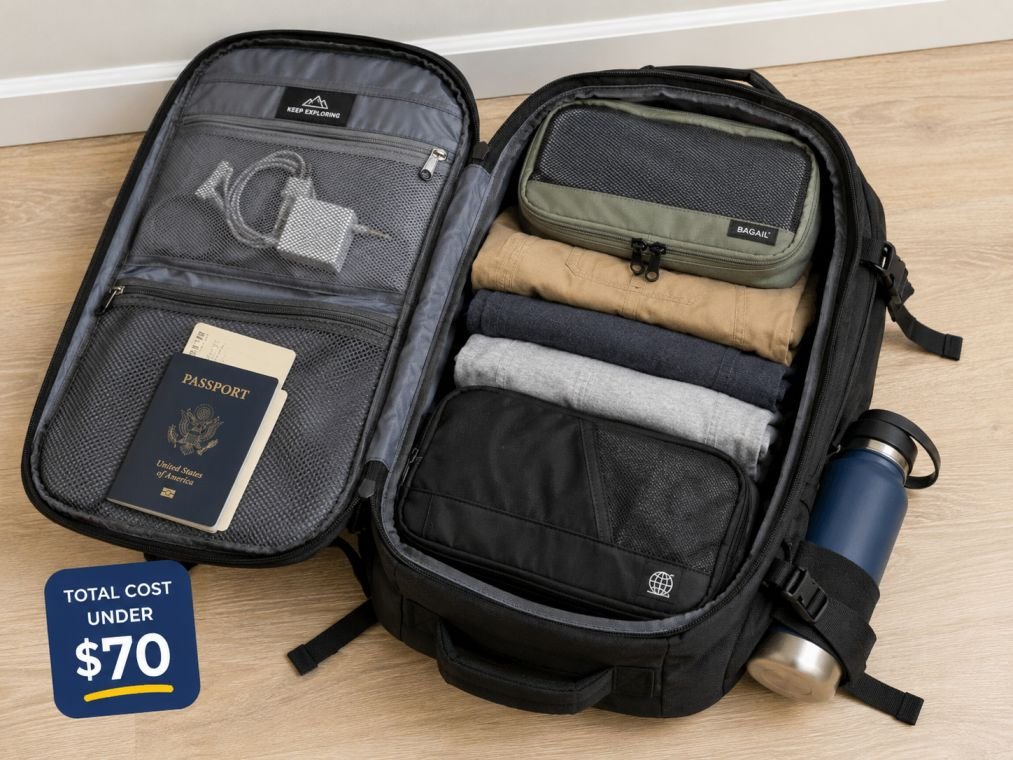
Not every traveler needs or wants to spend over $100 on a backpack, especially first time travelers, weekend warriors, or students making their first international trip. Several reliable options exist in the $40–$70 range.
Mountaintop 40L Travel Backpack (around $45–$65) is one of the most consistently reviewed budget packs on Amazon. It includes a dedicated laptop sleeve, rain cover, and a reasonably padded back panel. The materials are thinner than mid range options, so it is best suited for light packing and shorter trips. The suspension is basic but functional for one or two weeks of moderate use.
Gonex 50L Packable Travel Backpack (around $40–$60) is an excellent choice for travelers who want a large capacity at rock bottom pricing. It packs into its own front pocket for storage, weighs just over 2 pounds, and is water resistant. Do not expect the hip belt to carry serious weight it is a comfort pad more than a true load transfer system but for urban travel and light loads, it performs well.
Honest drawback: Ultra budget bags under $70 often use zippers and buckles that fail faster than name brand options. Bring a small zipper repair kit and inspect every zipper pull before you leave home.
Best Travel Backpacks Under $50
Travel backpacks under $50 can make sense for occasional trips, students, and travelers who pack light. At this price, prioritize a usable zipper system, reinforced stitching, padded shoulder straps, a laptop sleeve when needed, and a return policy that lets you inspect the bag before traveling. A cheap backpack can be a good purchase for a weekend or short city trip, but it is less likely to provide the frame support and long-term durability of a $100-plus travel pack. For bags under $50, keep the packed weight modest and avoid relying on a thin waist strap for heavy loads.
Best Budget Backpack for Carry On Only Travel
The best budget backpack for carry on only travel is the REI Co op Ruckpack 40, available at $99–$129 for REI members and slightly higher for non members. It is designed specifically for airline travel the back panel opens completely for flat packing, the straps zip away cleanly, and the capacity hits the sweet spot for most U.S. carriers’ overhead bin requirements.
Most major U.S. airlines Delta, United, American, Southwest allow a personal item and carry on at no charge for standard tickets. A 40 liter bag typically qualifies as a carry on rather than a personal item. For budget airlines like Spirit and Frontier, however, carry on bags cost extra, and only a personal item (typically under 18 x 14 x 8 inches) is included. Always check your specific airline’s size and weight policies before purchasing any travel backpack, as these rules change frequently.
Carry on size tip: The Osprey Farpoint 40 and REI Ruckpack 40 both meet the carry on dimensions for most major U.S. airlines, but neither is guaranteed to fit Frontier or Spirit’s strict personal item dimensions. Always check the airline’s website before your flight.
Best Budget Travel Backpack for Personal Item Travel
A personal-item backpack needs a much smaller profile than a standard carry-on travel backpack. For airlines with strict personal-item limits, look for a compact pack around 16L to 25L and compare its actual dimensions with the airline’s current allowance. A 30L to 40L travel backpack may be excellent for overhead-bin travel but can be too large for a free personal item. This distinction is especially important when flying low-cost carriers, where an oversized bag can lead to an additional fee at the airport. Measure the packed backpack rather than relying only on its advertised liter capacity.
Best Budget Backpack for Hiking and Outdoor Travel
If your travel involves serious trail time think national parks like Grand Canyon, Zion, Olympic, or Great Smoky Mountains you need a pack designed for load bearing rather than airline convenience.
Deuter Speed Lite 30 ($120–$140) is the top value pick for day hiking attached to a larger trip. At 1.8 pounds and 30 liters, it handles full day hikes with water, layers, snacks, and emergency gear without the bulk of a full travel bag. Deuter has an excellent reputation for suspension engineering that rivals much pricier competitors.
For multi day backpacking trips into areas managed by the National Park Service or U.S. Forest Service, a 55–65 liter pack is more appropriate. In that range, the Teton Sports Scout 3400 (around $70–$100) offers strong value it includes an internal frame, a removable rain cover, a sleeping bag compartment, and a functional hip belt system. The materials are heavier than premium competitors, but the price is hard to beat.
Permit reminder: Many popular backcountry areas in national parks require advance wilderness permits. The NPS wilderness permit system (recreation.gov) opens permits months in advance for popular locations like the Havasupai Falls area in Grand Canyon, Zion Narrows, and the Enchantments in Washington State.
What to Look for in a Budget Travel Backpack: Key Features Explained
Understanding exactly what specifications matter prevents you from making an expensive mistake. Here is what to evaluate before buying.
Hip belt vs. no hip belt: A true load transferring hip belt shifts weight from your shoulders to your hips, which are structurally much better equipped to carry heavy loads. If your packed bag will exceed 20 pounds, a real hip belt is not optional it is the difference between an exhausting travel day and a manageable one. Many ultra budget bags include only a thin webbing waist strap that does not transfer load at all.
Internal frame: Even a simple internal frame a flexible aluminum stay or a plastic framesheet dramatically improves how a pack carries. Frameless bags are best kept under 20 pounds.
Water resistance vs. waterproof: Almost no travel bags are fully waterproof. Water resistant coatings (DWR coatings) repel light rain for a period of time but fail under sustained heavy rain. A packable rain cover either included or purchased separately for $15–$25 is the more reliable solution. Many budget packs include a rain cover stuffed into a bottom or side pocket.
Laptop compartment: If you travel with a laptop, look for a padded, dedicated sleeve that suspends the laptop off the bottom of the bag a feature that helps protect the machine from impact when you set the bag down hard. Most travel focused bags in the $80+ range include this.
Compression straps: External compression straps cinch the bag tighter as it empties, preventing the contents from shifting and making the bag feel more balanced and secure.
Lightweight Travel Backpacks: How Much Weight Is Enough?
A lightweight travel backpack can make a major difference when you spend hours walking through airports, train stations, and city streets. For a carry-on pack around 40L, a base weight below 3 pounds is a useful target, provided the lighter construction does not sacrifice the frame, straps, or zippers you need. Packs around 1.5 to 2 pounds can be excellent for minimalist travelers, but they often provide less padding and load support. The goal is not simply to find the lightest backpack. Instead, choose the lightest model that remains comfortable with your expected packed weight.
How to Pack a Budget Travel Backpack Like a Pro
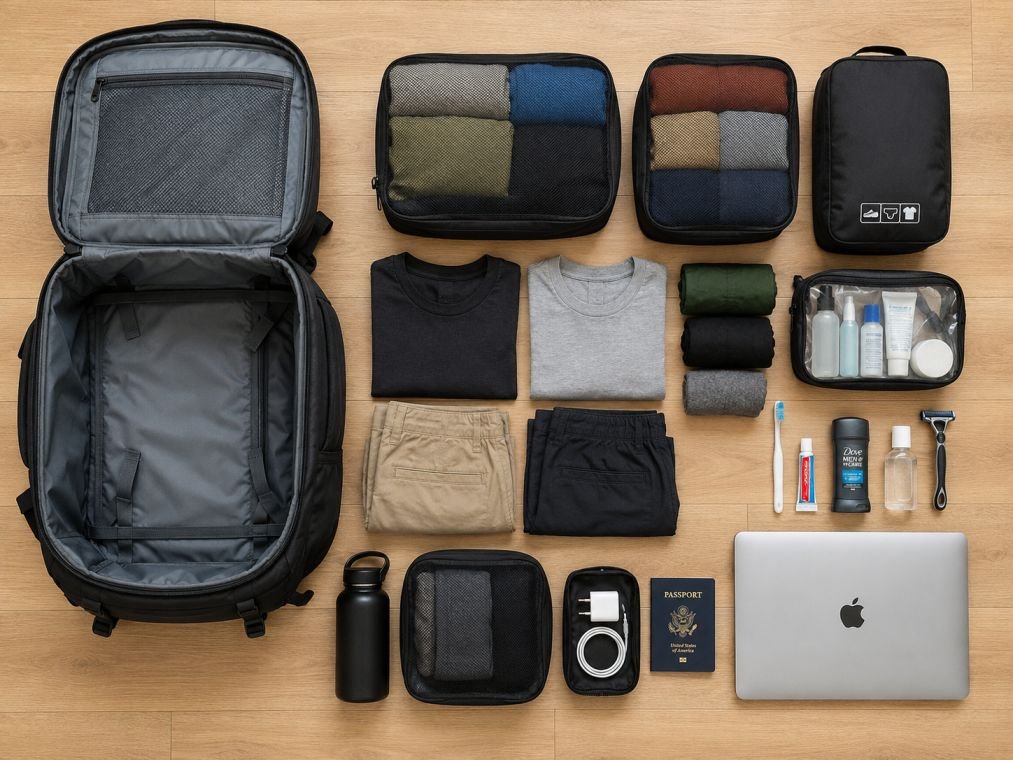
Packing efficiently is a skill that saves more frustration than upgrading your backpack. These strategies apply regardless of which bag you choose.
- Start with a packing list and cut it by 30%. Most travelers overpack on their first trip. A disciplined packing list forces deliberate choices.
- Use packing cubes. Packing cubes compress clothing, keep categories separated, and make repacking at hotels and hostels dramatically faster. Budget friendly options from brands like Amazon Basics or Gonex cost $15–$25 for a full set.
- Heaviest items go closest to your back. This keeps the center of gravity close to your body, reducing strain on your lower back and shoulders. Shoes, toiletry bags, and electronics go against the back panel.
- Medium weight items go in the middle. Clothing and other bulk items fill the center of the bag.
- Light items and frequently needed items go on top or in external pockets. Rain jacket, snacks, travel documents, and your daypack essentials belong here.
- Use every pocket. Hip belt pockets, top lid pockets, and external zip pockets are not afterthoughts they keep essentials accessible without opening the main compartment.
Insider tip: Roll clothes instead of folding them. Rolling reduces wrinkles and fits more efficiently into the curved internal space of a backpack than flat folded stacks.
3 Common Mistakes Travelers Make When Buying a Budget Backpack
Even experienced travelers make these errors when shopping for a new pack.
Mistake 1: Buying based on capacity alone. A 65 liter bag sounds like it gives you more freedom, but on most domestic and international flights, it forces a checked bag fee. It is also significantly heavier when full. Most travelers need far less space than they think. A 40 liter pack is genuinely sufficient for most trips up to two weeks when packed thoughtfully.
Fix: Buy the smallest bag that realistically fits your needs. You will thank yourself on every transit day.
Mistake 2: Not wearing the bag before buying. Fit matters as much as features. A back panel that fits a 6 foot traveler perfectly may be genuinely uncomfortable for a 5 foot 4 traveler. Many REI locations have a fitting station where staff can help adjust suspension and check torso length compatibility. This service is free and genuinely useful.
Fix: If buying online, prioritize brands with generous return windows. REI offers a one year return policy on most gear for members.
Mistake 3: Skipping the rain test. Many travelers discover that their “water resistant” bag leaks badly during their first rainy day. Budget bags often have weaker DWR coatings that fade quickly.
Fix: Test your bag with a garden hose before your trip, and always pack electronics in dry bags or zip lock bags inside your pack. A packable rain cover is cheap insurance.
Budget Backpack vs. Rolling Luggage: Which Is Right for You?
| Factor | Travel Backpack | Rolling Luggage |
| Stairs and cobblestones | Excellent | Poor |
| Flat airports and hotels | Neutral | Better |
| Weight on your body | Higher | None |
| Carry on compliance | Easier | Harder |
| Overpacking tendency | Lower | Higher |
| Urban hostels | Better | Neutral |
| Road trips with trunk loading | Better | Works well |
A backpack is the better choice for trips involving public transit, active travel, hostels, or destinations with uneven terrain most of Europe, Latin America, Southeast Asia, and outdoor destinations across the United States fall into this category. Rolling luggage performs best for hotel centric trips with smooth floors and direct transport between airports and accommodations.
Best Budget Backpack for International Travel and Air Travel
For international travel, the best budget backpack is usually one that combines carry-on-friendly dimensions, comfortable suspension, secure organization, and easy access to documents and electronics. A 35L to 45L clamshell backpack works especially well for travelers moving between airports, trains, buses, and hotels. For air travel, however, do not assume that a backpack advertised as “carry-on size” will meet every airline’s limits. International carriers and low-cost airlines can use different dimensions and weight restrictions. Check the airline’s current baggage rules before departure, especially when your trip includes several airlines.
Where to Buy Budget Travel Backpacks in the USA
REI: The best in person buying experience in the U.S. for travel and outdoor gear. REI’s membership ($30 lifetime) provides 10% back on purchases annually and access to the best return policy in the industry. REI.com also runs significant sales during Memorial Day, Labor Day, and late December.
Amazon: The widest selection and best prices for ultra budget options. Read reviews carefully and check the return policy before purchasing unfamiliar brands. Look for verified purchase reviews and filter for comments specifically about durability after 6+ months of use.
Backcountry, Moosejaw, and evo: These specialty outdoor retailers frequently offer 20–30% discounts on mid range packs from brands like Osprey, Deuter, and Gregory. Sign up for their email lists before you buy.
Brand direct: Osprey, Tortuga, and Cotopaxi all sell directly and offer better warranty support when purchasing through their own websites.
Best Budget Travel Backpacks on Amazon
Amazon offers one of the widest selections of cheap and affordable travel backpacks, including many models priced below $50. However, the large number of unfamiliar brands makes it important to compare the actual dimensions, empty weight, materials, zipper construction, warranty, and recent customer feedback. Reviews are most useful when they describe how the backpack performed after months of travel rather than simply commenting on its appearance after delivery. Before ordering, confirm the seller, return terms, and whether the listed measurements refer to the backpack itself or its maximum expanded size.
Best Budget Travel Backpacks for Specific Travelers
For students and first time travelers: The Mountaintop 40L or Gonex 50L provides enough quality for a first trip at a price that makes sense when you are not yet sure how much you will travel. Upgrade later once you know what you actually need.
For digital nomads: The Osprey Farpoint 40 or Tortuga Setout 45 give you the laptop protection, organization depth, and durability that full time travelers need. The Tortuga in particular is designed specifically around the digital nomad use case.
For outdoor adventurers visiting national parks: The Deuter Speed Lite 30 for day use, paired with a separate 65 liter pack for multi day backcountry use, covers most scenarios. The Teton Sports Scout 3400 is the top value pick for overnight backpacking.
For families traveling with kids: One adult typically takes a 40L carry on pack while the other manages kids’ gear in a second bag. REI and Osprey both make youth sized packs in the $60–$100 range for older children who can carry their own gear.
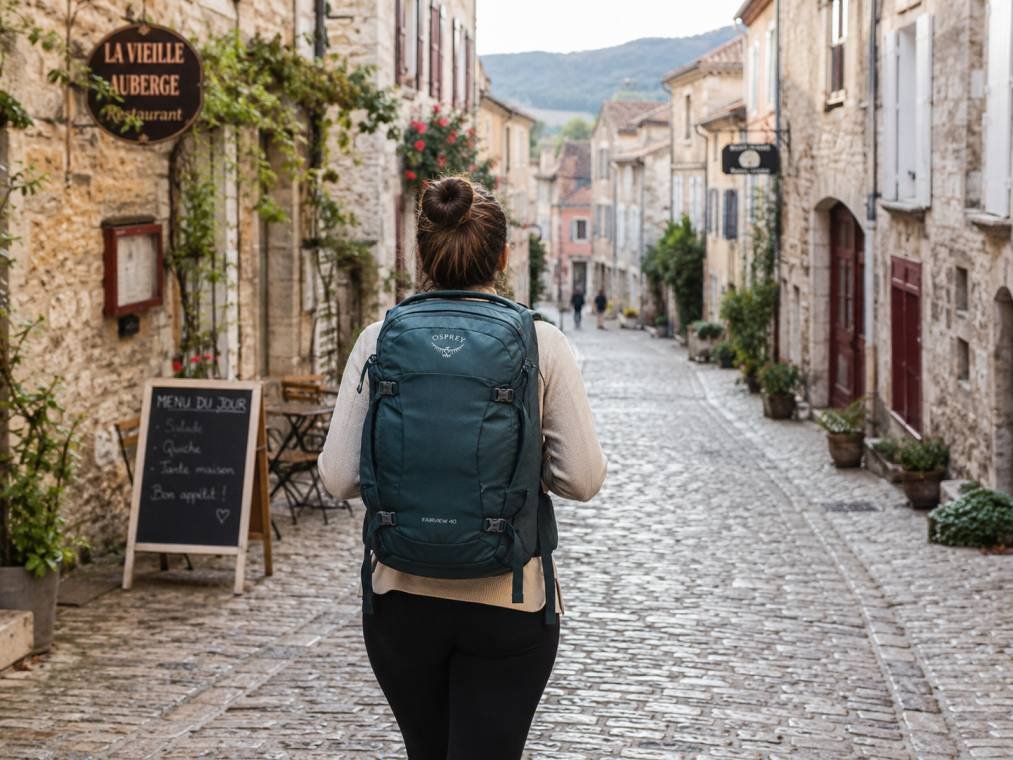
For solo female travelers: The Osprey Fairview 40 (the women’s version of the Farpoint) is designed specifically for a female torso fit and is one of the most recommended travel packs by solo female travelers. Cotopaxi Allpa 35 is another excellent women’s fit option.
Best Budget Travel Backpack for Men
For men looking for a budget travel backpack, a 40L to 45L pack is a practical starting point for carry-on travel. The Osprey Farpoint 40 is a strong choice for longer trips because its adjustable harness, hip belt, and panel-loading design balance comfort with easy packing. Travelers with a larger frame should pay close attention to torso length and shoulder-strap adjustment rather than choosing a bag based only on capacity. For shorter trips, a lightweight 30L to 35L backpack can reduce bulk and make public transportation easier. A good fit matters more than gender-specific labeling, so check the manufacturer’s size chart before ordering.
Best Budget Travel Backpack for Women
Women shopping for an affordable travel backpack should look for adjustable torso sizing, shoulder straps that sit comfortably without rubbing the neck, and a hip belt that transfers weight to the hips. The Osprey Fairview 40 is designed around a women-specific fit and remains a practical choice for carry-on travel. Other options, including the Cotopaxi Allpa 35, can work well when organization and a compact profile matter more than maximum capacity. Regardless of the label, the best backpack is the one that matches your torso length and feels stable when loaded.
Hidden Gems: Underrated Budget Travel Backpack Brands
Cotopaxi is one of the most underrated travel backpack brands in the U.S. market. Based in Salt Lake City, Utah, Cotopaxi uses repurposed materials and a certified B Corporation business model. Their Allpa 35 and Batac 24 are excellent travel packs in the $120–$160 range that frequently outperform competitors from bigger names. The distinctive multi color design also makes their bags instantly recognizable on a luggage carousel.
Mystery Ranch produces some of the most durable packs available, originally designed for U.S. military use and wildland firefighter gear. Their travel line, while not the cheapest, holds up to years of hard use better than almost anything in the mid range category. The Bridger 45 runs around $200 but is genuinely built to last a decade of heavy travel.
Kelty is a legacy outdoor brand that often flies under the radar in travel backpack discussions despite offering genuinely solid packs in the $80–$140 range. Their Redwing 44 and Asher 65 are particularly strong values for travelers who also use their bags for camping.
Responsible Travel: Choosing Sustainable Budget Gear
The outdoor and travel gear industry generates significant environmental impact through material production, fast fashion cycles, and short product lifespans. Buying a well made, durable bag even if it costs more upfront is a fundamentally more sustainable choice than replacing a cheap bag every two years.
Several brands operating in the budget and mid range space have made meaningful sustainability commitments. Cotopaxi uses recycled and repurposed materials and is a certified B Corporation. Osprey participates in repair programs and uses bluesign certified fabrics in many product lines. REI operates a used gear program REI Re/Supply where you can buy secondhand packs at significant discounts while extending the life of gear that would otherwise end up in landfills.
When your bag eventually wears out, many outdoor brands operate take back or repair programs. Osprey’s warranty department repairs bags free of charge in many cases. REI accepts used gear for resale through their Re/Supply program. These options are worth exploring before discarding a pack.
FAQ: Best Budget Travel Backpacks
What is the best budget travel backpack overall?
The Osprey Farpoint 40 is widely considered the best value travel backpack in its price range. At $130–$160, it offers carry on sizing, a hide away harness system, comfortable suspension, and Osprey’s lifetime warranty. For travelers under a strict budget, the Mountaintop 40L provides adequate performance for $45–$65.
What size travel backpack fits in an airplane overhead bin?
Most airlines allow carry on bags up to approximately 22 x 14 x 9 inches, which corresponds to roughly 40–46 liters for most backpack designs. Budget airlines like Spirit and Frontier have stricter personal item dimensions, often closer to 18 x 14 x 8 inches. Always verify your specific airline’s current size policy before your trip, as these policies change.
How much should I spend on a travel backpack?
For occasional travelers taking one or two trips per year, a $60–$100 bag is a sensible starting point. For frequent travelers four or more trips per year spending $130–$200 on a higher quality bag pays off through durability, comfort on long travel days, and a better warranty. Think of the cost per use rather than the sticker price.
Are budget backpacks good enough for international travel?
Yes, for most international trip types. Urban and hostel based travel through Europe, Latin America, and Southeast Asia does not require expensive gear. The key requirements are airline appropriate sizing, reasonable comfort for transit days, and durability through frequent packing and unpacking all achievable in the $80–$150 range.
What features should I avoid in a cheap travel backpack?
Avoid bags with no hip belt, no internal frame, and purely canvas construction for any trip longer than a weekend. Also avoid bags without a dedicated laptop compartment if you travel with electronics. Cheap zippers from unknown manufacturers are a common failure point look for YKK zippers even on budget bags.
Can I use a travel backpack for hiking in national parks?
A 40L travel pack can handle day hikes comfortably, but for multi day backcountry trips, you need a dedicated hiking pack in the 55–70 liter range with a proper frame and load transfer system. The Teton Sports Scout 3400 (about $70–$100) is a strong value option for budget minded backpackers planning overnight trips.
What is the difference between a travel backpack and a hiking backpack?
Travel backpacks prioritize organization, airline friendly sizing, and panel loading access. Hiking backpacks prioritize load transfer, ventilation, and gear attachment points for technical equipment. Some hybrid packs do both acceptably, but dedicated travel packs are better for airports and cities, while dedicated hiking packs are better for trail use.
What is the best budget travel bag?
For most travelers, a 35L to 45L travel backpack is the most useful budget travel bag because it can work for carry-on trips, city travel, hostels, and short international journeys. The Osprey Farpoint 40 is the strongest overall option in this guide, while less expensive models such as the Mountaintop 40L are better suited to occasional travelers with lighter loads. Your airline’s size limits and your planned packing weight should ultimately determine the best choice.
The Bottom Line
Three things matter most when choosing a budget travel backpack: get the right size for your airline and trip type, prioritize a real suspension system over flashy features, and buy the most durable option your budget allows.
The Osprey Farpoint 40 is the top overall recommendation for travelers willing to spend $130–$160 it earns that price every time you avoid a checked bag fee.
The REI Co op Ruckpack 40 is the strongest value for REI members at $99–$129. For travelers on the tightest budgets, the Mountaintop 40L delivers acceptable performance for around $50.
No matter which bag you choose, pack less than you think you need. The single most common regret among experienced travelers is not the bag they chose, it is how much they put in it.
Your next adventure is waiting. Choose the bag, pack deliberately, and go.












2 thoughts on “Best Cheap Travel Backpacks That American Travelers Will Love ”