
Travel nursing lets registered nurses work short term contracts typically 8 to 26 weeks at hospitals, clinics, and healthcare facilities across the country while earning competitive pay packages that often exceed staff nurse salaries.
To become a travel nurse, you need an active RN license, at least one to two years of acute care experience, and a contract with a staffing agency. Most travel nurses earn between $2,000 and $3,500 per week, depending on specialty, location, and housing stipends.
Every year, thousands of nurses reach a turning point: the routine feels too routine, the pay stops growing, and the idea of seeing the country while still doing meaningful clinical work starts sounding less like a dream and more like a plan. Travel nursing bridges that gap. It turns your nursing license into a passport.
If you’re a new RN wondering if you qualify, or an experienced nurse ready to escape the same unit, same city, same everything this guide walks you through exactly how to become a travel nurse in the United States.
You’ll learn what agencies actually look for, how the pay works (including the tax free stipends most people miss), which specialties are in highest demand, and what experienced travel nurses wish someone had told them before their first assignment.
This is not a generic career overview. This is a practical, step by step roadmap built for nurses ready to move.
Quick Facts: Travel Nursing at a Glance
| Factor | Details |
| Minimum Experience Required | 1–2 years acute care (most agencies require this) |
| Average Contract Length | 13 weeks (range: 8–26 weeks) |
| Typical Weekly Pay | $2,000–$3,500+ (base pay + stipends) |
| License Required | Active RN license (multi state Compact preferred) |
| Top Paying Specialties | ICU, ER, OR, Labor & Delivery, NICU |
| Top Demand States | California, Texas, New York, Florida, Washington |
| Housing | Agency provided or stipend (usually $800–$2,000/month) |
| Tax Free Stipends | Available if you maintain a tax home |
| Best Agency Search Tool | Travel Nurse Source, BluePipes, NurseRecruiter |
Always verify pay rates, licensing requirements, and tax rules directly with your agency and a travel nursing–savvy CPA.
Step 1: Make Sure You Meet the Basic Requirements

Most travel nursing agencies require a current RN license, at least one to two years of recent acute care experience in your specialty, and Basic Life Support (BLS) certification at minimum. Some specialties like ICU, OR, and L&D may require additional certifications such as ACLS, PALS, or NRP. Meeting these baselines is non negotiable before any agency will place you.
Here’s what you’ll typically need:
- Active RN license in the state you want to work, or a Compact license (more on that below)
- 1–2 years of experience in a clinical setting, ideally acute care not assisted living or outpatient only
- BLS certification (required everywhere); ACLS, PALS, TNCC, or specialty certs depending on your unit
- References from supervisors or charge nurses who can vouch for your clinical competency
- Flexibility travel nursing is inherently unpredictable, and agencies look for nurses who can adapt
One thing many aspiring travel nurses don’t realize: the experience clock starts on your hire date, not graduation date. If you’ve been working per diem or float pool, that typically counts as long as it’s in an acute care environment matching your target specialty.
Step 2: Get Your Nursing Licenses in Order
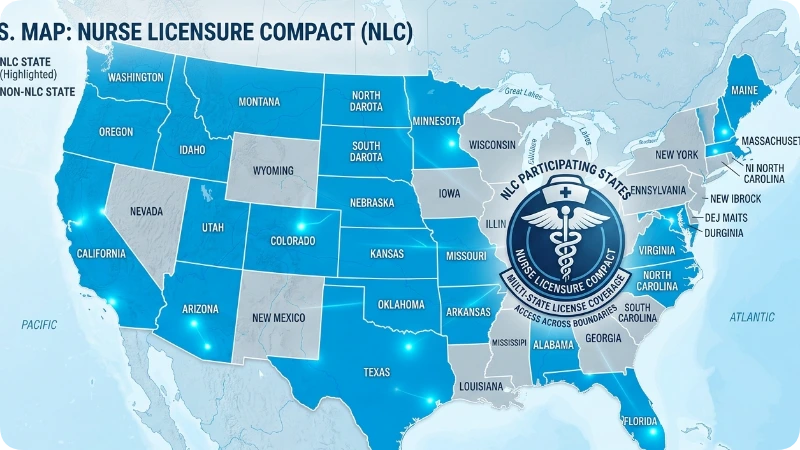
The Nurse Licensure Compact (NLC) is the single most important licensing tool for travel nurses. As of 2024, 41 states participate in the Compact, meaning one multi state license lets you practice in all member states without applying for individual licenses. If your home state is a Compact state, getting your multi state license should be your first priority.
Understanding the Compact License
The NLC allows nurses who live in a Compact state to hold a “multi state privilege” automatically. You apply for your license in your home state of legal residency not where you want to work. As long as your home state participates, you’re covered in all other Compact states.
States not in the Compact including California, New York, and Illinois require their own individual licenses. These can take 4–12 weeks to process, so plan ahead if you’re targeting assignments in those states.
Endorsement: Applying in Non Compact States
To work in a non Compact state, you’ll apply for licensure by endorsement. This means submitting your existing license verification, transcripts, and passing NCLEX scores to the new state board. Costs vary from $50 to $200+, and timelines differ significantly. California’s Board of Registered Nursing (BRN), for example, is known for longer processing windows.
Pro tip: Many travel nurses maintain 2–3 state licenses simultaneously. Start applications early before you’ve even selected an agency so you’re not waiting on paperwork when a great assignment opens up.
Step 3: Choose the Right Travel Nursing Agency

Your staffing agency is your employer on every assignment. The agency handles your contract, pays your salary, manages your benefits, and often arranges housing. Choosing the right one makes the difference between a smooth first assignment and a stressful one.
What to Look for in an Agency
Not all agencies are created equal. Here’s what experienced travel nurses evaluate:
- Joint Commission certification Look for agencies with The Joint Commission’s Gold Seal of Approval for healthcare staffing. This signals they meet national quality standards.
- Pay transparency Reputable agencies show you the full pay breakdown: base rate, housing stipend, M&IE (meals and incidental expenses), and any bonuses upfront.
- Recruiter responsiveness Your recruiter is your day to day contact. A good one answers texts, explains contracts clearly, and advocates for you.
- Assignment variety Larger agencies like AMN Healthcare, Aya Healthcare, Cross Country Nurses, and Travel Nurse Across America (TNAA) have broader facility networks, which means more options.
- Benefits packages Look at health insurance start dates (day one vs. after 30 days), retirement options, and If they offer professional liability insurance.
Working with Multiple Agencies
Many experienced travel nurses work with two or three agencies at once. This widens your job pool and gives you leverage when negotiating. There’s no rule against it just be upfront with your recruiters and never accept two overlapping contracts simultaneously.
Insider tip: Use platforms like BluePipes, Travel Nurse Source, or Highway Hypodermics to compare agency reviews from actual travel nurses before signing anything.
Step 4: Understand How Travel Nurse Pay Actually Works
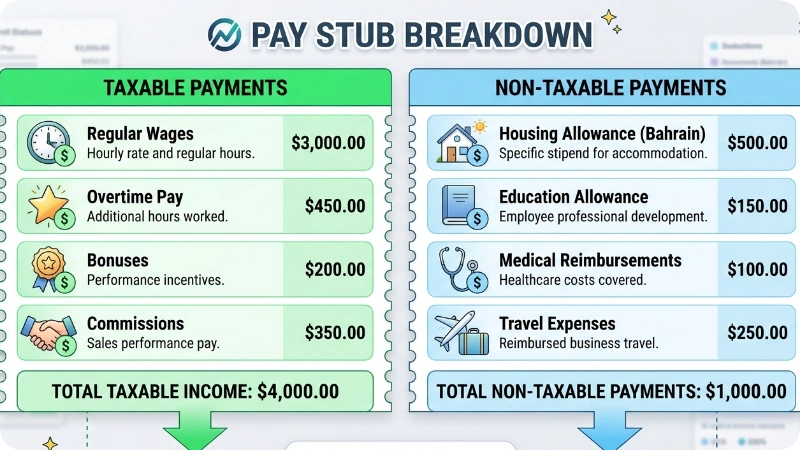
Travel nurse pay packages are structured differently from staff nurse salaries and understanding the difference is where most new travel nurses leave money on the table. The total package combines a taxable hourly base rate with non taxed stipends for housing and meals. The stipends are where a large portion of your earnings come from.
The Pay Package Breakdown
| Component | Type | Notes |
| Base Hourly Rate | Taxable | Typically $20–$35/hr, sometimes lower than staff nurses |
| Housing Stipend | Non taxable* | Usually $800–$2,000+/month; must qualify |
| M&IE Stipend | Non taxable* | Meals & incidental expenses; daily or weekly |
| Travel Reimbursement | Non taxable* | One time or per assignment |
| Completion Bonuses | Taxable | Some agencies offer bonuses for finishing contracts |
| Referral Bonuses | Taxable | Varies by agency |
*Non taxable stipends are only valid if you maintain a tax home at a permanent address where you have genuine financial ties (rent/mortgage, utilities, voter registration) and return to regularly. If you don’t maintain a tax home, stipends become taxable income.
The Tax Home Rule
This is the most misunderstood part of travel nursing compensation. The IRS considers you to be traveling away from home only if you have a home to travel away from. Many travel nurses rent out a room in their home state, maintain a primary address, and return during time off. Always consult a CPA who specializes in travel nursing taxes travel nursing compensation has specific IRS nuances that a general accountant might miss.
Step 5: Find and Apply for Assignments

Finding travel nursing jobs involves submitting a travel nursing profile not a traditional resume through your agency. This profile includes your skills checklists (specialty specific self assessments), license verifications, certifications, and references. Once your profile is complete, your recruiter pitches you to facilities.
How the Assignment Search Works
The process typically goes like this:
- Complete your agency profile Skills checklists, references, license copies, certifications
- Tell your recruiter your preferences Location, start date, specialty, shift type, housing preference
- Recruiter submits your profile To facilities matching your criteria
- Interview (usually brief) Many travel nurse interviews are 15–30 minutes by phone
- Offer and contract review Review every line; confirm hours, overtime rules, cancellation clauses
- Credentialing Background check, drug screen, health records (TB, flu, immunizations)
- Start date confirmed Usually 2–6 weeks after contract signing
High Demand Locations Right Now
Certain states consistently post higher travel nurse pay due to staffing shortages, union regulations, or high cost of living. California travel nurses often earn the highest gross pay due to mandatory nurse to patient ratios (set by California’s Department of Health Care Services). Texas, New York, Massachusetts, and Washington state are also perennial high demand markets.
Hidden gem: Rural critical access hospitals often pay competitive stipends and have faster credentialing timelines with far less competition than major metro areas.
Step 6: Know Your Contract Inside and Out
A travel nursing contract is a legal document that defines every aspect of your assignment and most disputes between nurses and agencies come down to terms the nurse didn’t fully read. Before you sign anything, understand these key clauses.
Critical Contract Terms to Review
- Guaranteed hours: Does the contract guarantee 36 or 40 hours per week? What happens if the hospital calls you off? Some contracts include “hours guarantees” that protect your income even during low census cancellations.
- Cancellation clause: Can the facility cancel your contract early? With how much notice? What’s your compensation if they do?
- Overtime rules: Is overtime calculated after 8 hours/day or 40 hours/week? California law (per the California Labor Code) mandates daily overtime a significant difference.
- Floating policy: Can the hospital float you to other units? What specialties are within scope?
- Loyalty bonuses and completion bonuses: Are they tied to the full contract length? What happens if you extend?
- Housing terms: If agency housing is provided, what are the terms if you leave early?
Never sign a contract the same day you receive it. Take 24–48 hours. Ask your recruiter to clarify anything unclear. If they pressure you to sign immediately, that’s a red flag.
Top Specialties in Highest Demand
ICU, Emergency Department, OR, Labor & Delivery, and NICU consistently top the list of highest demand and highest paying travel nurse specialties. These units require advanced certifications and handle the most critical patients making experienced nurses in these areas extremely valuable to hospitals.
Specialty Demand and Pay Overview
| Specialty | Avg. Weekly Pay Range | Key Certifications Needed |
| ICU (MICU/SICU/CVICU) | $2,500–$3,800+ | ACLS, CCRN preferred |
| Emergency Department | $2,200–$3,500 | ACLS, TNCC preferred |
| Operating Room (OR) | $2,400–$3,600 | CNOR preferred |
| Labor & Delivery (L&D) | $2,200–$3,400 | ACLS, NRP required |
| NICU | $2,200–$3,200 | NRP, S.T.A.B.L.E. |
| Stepdown/PCU | $1,900–$2,800 | ACLS |
| Med/Surg | $1,700–$2,400 | BLS minimum |
Pay ranges reflect total package estimates and vary significantly by location, agency, and market conditions. Verify current rates directly with agencies.
Housing Options for Travel Nurses
Travel nurses typically choose between agency provided housing or taking a housing stipend and finding their own place and the right choice depends on your destination, timeline, and personal preference. Neither option is universally better.
Agency Housing vs. Housing Stipend
Agency housing is convenient. The agency arranges a furnished apartment, handles utilities, and takes the logistics off your plate. The tradeoff: you have less control over location and quality, and the stipend you “save” by taking agency housing is often not added to your paycheck.
Taking the stipend gives you flexibility and potential savings especially in lower cost of living markets. In a city like Boise, Idaho or Wichita, Kansas, a $1,500/month housing stipend might cover a furnished apartment with money to spare. In San Francisco or Manhattan, that same stipend won’t cover a studio.
Finding Your Own Housing
When taking the stipend, travel nurses use:
- Furnished Finder The most popular platform specifically designed for travel nurse housing
- Corporate housing companies Month to month furnished apartments
- Facebook groups “Travel Nurse Housing” groups by city/state
- Airbnb and VRBO Flexible but often more expensive; negotiate longer stay discounts
- Extended stay hotels Last resort option for short gaps
Insider tip: Contact the hospital’s travel nurse coordinator before your assignment. Many maintain internal lists of vetted landlords who specifically rent to travel nurses.
Travel Nursing and Benefits: What You Need to Know
Benefits vary significantly between agencies, and gaps in health insurance coverage are one of the biggest travel nursing pain points. Understanding your options before you sign prevents expensive surprises.
Health Insurance
Most agencies offer health insurance, but coverage typically activates after 30 days or in some cases, immediately. Ask specifically:
- When does coverage start?
- Does it continue between contracts if there’s a gap?
- What’s the monthly premium deducted from your paycheck?
- Is it ACA compliant coverage?
Some travel nurses maintain their own marketplace insurance plan through Healthcare.gov for continuity, especially if they take breaks between contracts.
Retirement Benefits
Some agencies offer 401(k) plans, though vesting schedules and match percentages vary widely. If retirement savings matter to you, they should compare agency 401(k) terms as part of your overall package evaluation.
Professional Liability Insurance
Most hospitals cover staff nurses under their malpractice policies. Travel nurses often fall in a gray area. Ask your agency if their coverage extends to you, and consider a personal professional liability (malpractice) policy through organizations like NSO (Nurses Service Organization) for an added layer of protection.
5 Insider Tips From Experienced Travel Nurses
These are the things seasoned travel nurses share in forums, Facebook groups, and late night hospital break rooms that you won’t find on agency websites:
- Your first assignment matters most. Pick a location and facility with a good reputation for treating travel nurses well even if the pay is slightly lower. A rocky first assignment can sour the whole experience.
- Build your tax home before you leave. Document your permanent address with utility bills, bank statements, and voter registration before your first assignment departs. Retroactively trying to establish a tax home doesn’t work.
- Stack your certifications before applying. Every certification you add (ACLS, CCRN, TNCC) increases your marketability and negotiating power. Don’t wait until an agency asks to get them beforehand.
- Negotiate everything. Pay packages are rarely final on the first offer. Ask for more in housing stipend, completion bonus, or travel reimbursement. The worst they can say is no.
- Extend strategically. When a facility offers to extend your contract, use that moment to renegotiate pay. Your value to them has already been proven.
3 Common Travel Nursing Mistakes (and How to Avoid Them)
Mistake #1: Not Maintaining a Tax Home
The fix: Before leaving on your first assignment, set up and document your permanent tax home address. Keep paying rent or mortgage there, maintain utilities, and return regularly. Work with a CPA experienced in travel nurse taxes not a general tax preparer.
Mistake #2: Signing With Only One Agency
The fix: Register with two to three agencies simultaneously. More agencies means more job visibility, faster placement, and real leverage when comparing pay packages. There is no exclusivity required.
Mistake #3: Ignoring the Contract’s Cancellation Clause
The fix: Read the cancellation and low census policies before signing. Ask your recruiter: “What happens to my pay if the hospital puts me on low census three days in a row?” If there’s no guarantee, negotiate one or factor that risk into your financial planning.
What Is It Actually Like to Be a Travel Nurse?
The lifestyle is genuinely unlike any other nursing career path. You’re not just changing units you’re changing cities, cultures, food scenes, hiking trails, and sunsets every few months. Many travel nurses describe it as the first time their job and their personal life felt aligned.
That said, it’s not for everyone. Travel nursing comes with real challenges: being the “new nurse” constantly, navigating unfamiliar facility workflows, missing family events, and dealing with housing logistics. Some assignments are in hospitals that don’t treat travelers well under supported, floated constantly, and undervalued.
Who travel nursing is best for:
- Nurses with 2+ years of experience who feel professionally plateaued
- RNs who are geographically flexible and don’t have deep roots tying them to one place
- People who want to explore the U.S. without pausing their career
- Nurses who want to earn more without going into management
Who should think carefully before starting:
- New graduates (most agencies won’t take you, and the environment can be overwhelming)
- Nurses with serious family obligations tied to one location
- Anyone who needs clinical mentorship and support in an unfamiliar specialty
Responsible Travel Nursing: Giving Back to Communities You Serve
Travel nurses fill genuine gaps in communities that would otherwise operate short staffed. Rural hospitals and safety net facilities in underserved regions often rely on travel nurses to maintain ICU and ER services that local communities depend on.
Approach each assignment as a professional and a guest. Learn the facility’s culture, support the permanent staff (who are often stretched thin and dealing with long term workforce shortages), and leave each unit better than you found it. Many travel nurses describe connecting with patients and coworkers in ways that feel uniquely meaningful because every assignment is, in some ways, a fresh start.
FAQs
How long does it take to become a travel nurse?
Most agencies require one to two years of acute care experience after licensure before you qualify for travel assignments. Once you have that experience and an active RN license, the process of signing with an agency, completing credentialing, and starting an assignment typically takes four to eight weeks.
Can new grad nurses do travel nursing?
Most staffing agencies do not place new graduate nurses because facilities specifically request experienced staff for short term contracts. A small number of agencies have new grad travel programs, but these are rare and competitive. The standard recommendation is to work at a permanent position for one to two years first, then transition to travel nursing.
Do travel nurses pay taxes in every state they work in?
Generally, yes you may owe taxes in the state where you work, in addition to your home state. However, many states have reciprocity agreements. More importantly, if you maintain a legitimate tax home and qualify for non taxed stipends, your effective tax burden can be significantly lower than a staff nurse earning the same gross income. Consult a travel nurse–specialized CPA before your first assignment.
What is the best travel nursing agency for first timers?
There’s no single “best” agency; it depends on your specialty, preferred locations, and what you value most (pay, benefits, support). Frequently well reviewed agencies include Aya Healthcare, AMN Healthcare, Cross Country Nurses, and TNAA. Always compare at least two to three agencies before committing to one.
Can travel nurses bring their families or pets?
Yes. Many travel nurses travel with partners, children, and pets. Furnished Finder and corporate housing companies often have pet friendly options. It adds logistical complexity, but it’s entirely doable and many travel nursing families describe it as an incredible adventure for the whole family.
What happens between travel nursing contracts?
Between assignments, you can take time off, travel personally, or start the search for your next contract. Some nurses leave small gaps intentionally for rest or exploration. Note: if you’re relying on agency health insurance, gaps between contracts may create coverage gaps plan accordingly or maintain a marketplace plan as a bridge.
Is travel nursing worth it financially?
For most nurses, yes especially in high demand specialties and locations. The combination of competitive hourly rates, tax free housing stipends, M&IE stipends, and completion bonuses often results in total annual earnings significantly higher than comparable staff nurse positions. The exact benefit depends heavily on your specialty, location choices, how well you understand pay packages, and If you maintain a qualifying tax home.
Conclusion
Becoming a travel nurse is one of the most rewarding decisions an experienced RN can make professionally, financially, and personally. The path is clearer than most people expect: meet the experience requirements, get your licenses in order, partner with the right agencies, understand your pay package, and protect yourself with solid contracts.
Three things to take from this guide: experience and licensing come first, the tax home determines your take home pay more than your hourly rate, and your recruiter relationship matters enormously. Get those three things right, and travel nursing opens up in ways that feel almost too good to be true until you’re watching your first sunset from a city you chose.
The country is full of hospitals that need exactly what you know how to do. All that’s left is deciding where to go first.

Gordon Ramsay is a travel writer and destination researcher who helps U.S. travelers plan smarter trips, covering destinations, seasonal trends, budgets, and logistics to help readers decide where—and when—to go.
Rather than simply listing popular places, Gordon Ramsay focuses on what travelers actually need: comparing weather against crowds, weighing costs and accessibility, and researching current conditions alongside official tourism guidance—delivering honest, practical advice without the hype.











1 thought on “How to Become a Travel Nurse and Find High-Paying Contracts”