
Travel agency SEO refers to the process of optimizing a travel business’s online presence so it appears higher in search engine results when potential travelers search for trips, tours, or destinations. It combines technical website improvements, keyword rich content, local search optimization, and link building strategies to drive organic traffic and convert visitors into paying clients. Done right, SEO turns your website into your best performing sales agent one that works around the clock.
Every year, millions of Americans type phrases like “best travel agency near me” or “affordable Europe tours 2026” into Google. If your travel agency doesn’t appear on page one, those potential clients go straight to a competitor. That’s the painful reality of the digital travel market today visibility equals bookings, and invisibility equals empty seats.
The good news? Travel agency SEO isn’t rocket science. It’s a systematic process that any agency from a solo travel consultant in Nashville to a full service firm in New York City can learn and apply. This guide covers everything: keyword research, local SEO, content strategy, technical fixes, and the exact tactics that help travel agencies outrank their competitors. If you’re starting from scratch or trying to break out of page two, this is the roadmap you need.
What Is Travel Agency SEO and Why Does It Matter?
Travel agency SEO is the ongoing practice of improving your website so search engines like Google rank it higher for travel related queries. It matters because over 80% of travel research now begins online, and travelers rarely scroll past the first page of results.
Unlike paid ads that stop the moment your budget runs out, organic SEO builds compounding momentum. A well optimized destination guide you publish today can attract thousands of visitors for years. For travel agencies competing against online booking giants like Expedia and Booking.com, a smart SEO strategy focused on niche destinations, personalized service, and local expertise is the most sustainable path to growth.
How the Google Algorithm Views Travel Websites
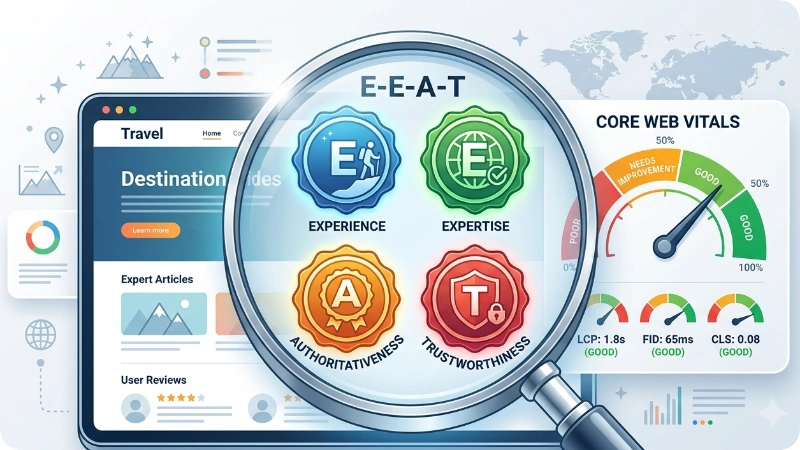
Google evaluates travel websites through several lenses before deciding where to rank them. Understanding this process helps agencies build sites that earn and maintain top positions.
Google’s algorithm prioritizes E E A T: Experience, Expertise, Authoritativeness, and Trustworthiness. For travel agencies, this means showcasing real itineraries, verified client reviews, agent credentials, and authoritative content about the destinations you sell. A page written by a certified travel advisor who has personally visited Tuscany ranks higher than generic fluff copied from a brochure.
Google also uses Core Web Vitals a set of performance metrics measuring page speed, visual stability, and interactivity as a ranking factor. Travel websites with slow loading photo galleries or clunky booking forms pay the price in lower rankings. The U.S. Travel Association reports that travelers abandon slow websites within three seconds, so speed directly affects both rankings and revenue.
Keyword Research for Travel Agencies: Finding the Terms That Convert

The foundation of travel agency SEO is targeting the right keywords the phrases your ideal clients actually type into search engines. Generic terms like “travel agency” are too competitive. Specific, intent driven phrases convert far better.
Three keyword tiers every travel agency needs:
- Broad terms (high volume, high competition): “travel agency USA,” “luxury travel agency”
- Niche terms (medium volume, lower competition): “African safari travel agency,” “honeymoon travel planner Texas”
- Long tail terms (low volume, high conversion): “best all inclusive Caribbean packages for families with toddlers”
Use free tools like Google Search Console, Google Keyword Planner, or the free tier of Ubersuggest to find what terms your potential clients search. Pay close attention to search intent. Someone searching “Costa Rica itinerary 10 days” wants content, while someone searching “book Costa Rica tour” is ready to buy.
High Value Keyword Categories for Travel Agencies
| Keyword Type | Example | Monthly Search Volume (Est.) |
| Destination specific | “Italy tour packages from USA” | 1,000–10,000 |
| Service specific | “luxury honeymoon travel agent” | 500–5,000 |
| Local/near me | “travel agency near me open now” | 10,000–100,000 |
| Problem solving | “how to plan a group trip abroad” | 1,000–10,000 |
| Review oriented | “best travel agencies for Europe tours” | 500–5,000 |
Always verify search volumes and trends using current tools these figures shift seasonally and year over year.
Local SEO for Travel Agencies: Dominating Your City and Region
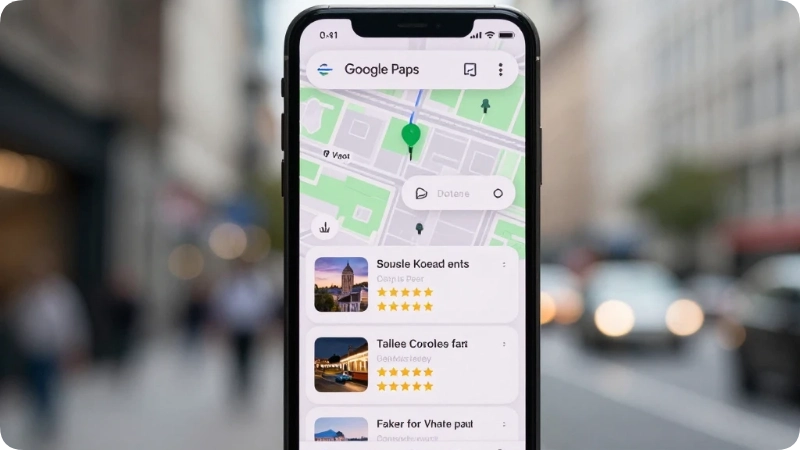
For travel agencies with a physical office or a defined service area, local SEO is arguably the highest ROI investment available. When someone nearby searches “travel agency” or “travel agent near me,” Google serves a Local Pack the map block with three business listings above the organic results. Appearing there drives phone calls, website visits, and walk ins.
How to Optimize Your Google Business Profile
Your Google Business Profile (GBP) is the most important local SEO asset you control for free. Here’s what to prioritize:
- Claim and verify your listing at business.google.com
- Complete every field name, address, phone, website, hours, and business category (“Travel Agency”)
- Add high quality photos of your office, team, and sample itineraries
- Collect and respond to Google reviews consistently agencies with 50+ recent reviews outperform competitors with fewer
- Post weekly updates special tour packages, travel tips, or destination highlights keep your profile active
- Use local keywords in your business description and posts (“Chicago’s top rated luxury travel agency”)
Building Local Citations
A citation is any online mention of your agency’s name, address, and phone number (NAP). Consistent NAP information across directories like Yelp, TripAdvisor, the American Society of Travel Advisors (ASTA) directory, and local Chamber of Commerce websites signals legitimacy to Google. Even small inconsistencies “Suite 200” vs. “#200” can hurt your local rankings. Audit your citations annually using tools like BrightLocal or Moz Local.
On Page SEO for Travel Websites: Optimizing Every Page
On page SEO refers to the elements you control directly on each webpage. For travel agencies, every destination page, service page, and blog post is an opportunity to rank for additional keywords and capture more organic traffic.
Crafting Title Tags and Meta Descriptions That Get Clicks
Your title tag is the blue headline that appears in Google search results. It should include your primary keyword, stay under 60 characters, and read naturally. For example:
- Weak: “Travel Agency | Home”
- Strong: “Italy Tour Packages from the USA | Book with Expert Travel Advisors”
Your meta description (the gray text beneath the title) doesn’t directly affect rankings but strongly influences click through rates. Aim for 140–160 characters, include a clear benefit, and add a soft call to action like “Explore custom itineraries.”
Destination Pages: Your Highest Value SEO Asset
Every major destination you sell deserves its own dedicated, in depth page. A strong destination page for, say, Japan should cover:
- Best time to visit (with seasonal comparison)
- Top attractions beyond the tourist trail
- Visa requirements for U.S. citizens (always link to the official U.S. Department of State at travel.state.gov for current requirements)
- Sample 10 day itinerary
- Packing tips
- Why booking through your agency beats DIY
Pages like these rank for dozens of long tail queries simultaneously. An agency in Dallas that maintains 20 detailed destination pages will consistently outrank a competitor with only a homepage and a contact form.
Internal Linking: Keeping Visitors (and Google) Moving
Internal links connect your pages to one another, distributing ranking authority and helping visitors discover more of your content. Every destination page should link to related itinerary posts, your booking page, and relevant travel tips articles. A well structured internal linking strategy reduces bounce rate and signals to Google that your site offers comprehensive coverage of a topic.
Content Marketing Strategy for Travel Agencies

Content is the engine that drives travel agency SEO. Google rewards websites that consistently publish helpful, accurate, experience backed content exactly what a knowledgeable travel agency can provide.
The Content Types That Drive the Most Organic Traffic
Travel guides and destination deep dives attract the highest organic search volume. A guide titled “10 Days in Southeast Asia: The Ultimate USA Traveler’s Itinerary” can rank for dozens of related searches and funnel readers toward booking inquiries.
Comparison articles (“River Cruise vs. Ocean Cruise: Which Is Right for You?”) capture travelers in the research phase who are close to making a decision. These pages convert at high rates because they address specific questions buyers ask.
Seasonal content taps into predictable traffic spikes. Articles about “best Christmas vacation packages,” “spring break destinations for families,” or “summer trips to Alaska” draw massive search volume at consistent times each year. Plan your editorial calendar around these seasonal peaks and start publishing at least 90 days before the season arrives to give Google time to index and rank your content.
FAQ and “how to” content earns featured snippet positions in Google the prominent answer boxes that appear above organic results. Structure these pages with clear H2 questions and concise 40–80 word answers directly below each heading.
Blogging Frequency: Quality Over Quantity
Many travel agencies make the mistake of publishing thin, generic blog posts twice a week rather than comprehensive, specific guides once or twice a month. One thoroughly researched 2,500 word guide outperforms ten 300 word posts in every SEO metric. Prioritize depth, accuracy, and unique perspective, especially first hand destination knowledge from your agents.
Technical SEO for Travel Agency Websites
Technical SEO ensures search engines can crawl, understand, and index your site efficiently. Even the most beautifully written content can’t rank if technical problems prevent Google from accessing it.
Site Speed and Core Web Vitals
Travel websites are notoriously image heavy, which slows them down. Use these fixes to improve load times:
- Compress all images to WebP format without sacrificing visible quality
- Enable browser caching so returning visitors load pages faster
- Use a Content Delivery Network (CDN) especially important if you attract travelers from across the country
- Minimize JavaScript that blocks page rendering
- Check your scores monthly using Google’s free PageSpeed Insights tool (pagespeed.web.dev)
Mobile Optimization
More than 60% of travel searches happen on mobile devices, according to Google’s own travel research. Your website must load quickly and display perfectly on smartphones. Use Google’s Mobile Friendly Test to check your site, and prioritize tap friendly navigation, readable font sizes, and booking forms that work on small screens.
Schema Markup for Travel Agencies
Schema markup is code you add to your website that helps Google understand what your content is about and display rich results in search. For travel agencies, the most valuable schema types include:
- LocalBusiness schema confirms your name, address, and hours to Google
- TouristAttraction schema for destination guides
- FAQPage schema makes your FAQ answers eligible for expanded search results
- Review schema displays star ratings in search results, dramatically improving click through rates
Link Building for Travel Agencies: Earning Authority
Backlinks links from other reputable websites to yours remain one of Google’s strongest ranking signals. For travel agencies, earning high quality links requires a proactive strategy.
Effective Link Building Tactics for Travel Agencies
Partner with travel bloggers and content creators. Many travel bloggers are actively looking for agency partnerships. Offering a complimentary familiarization trip (a “fam trip”) in exchange for honest coverage and a link to your site can produce backlinks from sites with large, engaged audiences. Always follow Google’s guidelines on sponsored content disclosure.
Get listed in authoritative travel directories. Listings on the American Society of Travel Advisors (ASTA) website, Virtuoso (if you qualify), and the U.S. Travel Association’s partner pages provide high authority links and referral traffic.
Create linkable assets. Comprehensive guides, original research (“The Most Popular International Destinations for American Travelers in 2026”), and free planning tools attract natural links from journalists, bloggers, and other travel websites. The more unique and genuinely useful the resource, the more naturally it accumulates links over time.
Local PR and news mentions. Reach out to your local newspaper’s travel section, city magazine, or regional lifestyle publication. Being quoted as a local travel expert earns a citation and often a link from a trusted local news domain exactly the kind of authoritative signal that boosts local rankings.
Reviews and Reputation Management: SEO’s Hidden Multiplier
Online reviews directly influence both local search rankings and traveler booking decisions. Google considers review quantity, recency, and rating when ranking local travel agencies. A steady stream of 4 and 5 star reviews signals an active, trusted business.
Build a systematic review request process. After every successful trip, send clients a personalized email thanking them and including a direct link to your Google review page. Timing matters request reviews within two weeks of their return, when the experience is still vivid. Agencies that ask consistently collect reviews consistently.
Respond to every review including negative ones. Thoughtful responses to negative reviews demonstrate professionalism and signal to potential clients that you genuinely care about the experience. Never argue or get defensive. Acknowledge the concern, apologize where appropriate, and offer to resolve the issue offline.
Social Media and SEO: Understanding the Real Relationship
Social media doesn’t directly improve your Google rankings links shared on Instagram or Facebook don’t count as backlinks. However, social platforms support SEO indirectly in powerful ways.
High quality social content drives traffic to your website, which improves behavioral signals like time on page and return visits that Google monitors. Social profiles rank in search results for branded queries, so a strong Instagram or Pinterest presence ensures potential clients find positive content when they Google your agency name. Additionally, content that goes viral on social media often attracts organic backlinks from journalists and bloggers who discover it there.
Common Travel Agency SEO Mistakes to Avoid
Many agencies invest time and money into SEO only to undermine their results with avoidable errors. Here are the three most common mistakes and exactly how to fix them.
Mistake 1: Targeting keywords that are too broad. Competing for “travel agency” against companies with million dollar marketing budgets is a losing strategy. Fix: Build authority in a niche If that’s adventure travel, luxury honeymoons, accessible travel for travelers with disabilities, or group tours for seniors. Own a niche before expanding.
Mistake 2: Publishing thin, duplicate destination content. Many agency websites have destination pages that contain only a few sentences and a stock photo. These pages not only fail to rank they actively drag down the authority of your entire domain. Fix: Either expand them into comprehensive guides of 1,500+ words or consolidate multiple thin pages into single authoritative resources.
Mistake 3: Neglecting Google Business Profile updates. An unclaimed, incomplete, or outdated GBP listing is one of the most common missed opportunities in local travel agency SEO. Fix: Assign one team member to own your GBP updating photos, responding to reviews, and publishing posts at least twice a month.
Travel Agency SEO Tools Worth Using
The right tools make SEO measurable, manageable, and strategic. Here are the most valuable options across different budget levels.
| Tool | Best For | Cost |
| Google Search Console | Monitoring rankings, fixing errors | Free |
| Google Analytics 4 | Understanding traffic and conversions | Free |
| Google Business Profile | Local SEO management | Free |
| Ubersuggest | Keyword research (basic) | Free / Paid |
| Semrush | Comprehensive SEO auditing | Paid |
| Ahrefs | Backlink analysis and content research | Paid |
| BrightLocal | Local citation management | Paid |
| PageSpeed Insights | Site speed testing | Free |
Start with the free tools. Once you understand your baseline performance, invest in one premium platform that fits your budget and goals.
Note: Tool features, pricing, and availability change frequently. Always verify current offerings directly on each platform’s website before purchasing.
How Long Does Travel Agency SEO Take to Show Results?
Most travel agencies see meaningful results from SEO within 4–12 months, though the timeline varies based on competition, website age, content quality, and consistency of effort.
Local SEO (appearing in the Google Map Pack) typically produces results fastest, often within 60–90 days of optimizing your Google Business Profile and building consistent citations. Organic content rankings take longer because Google needs time to discover, index, and evaluate new pages relative to established competitors.
The agencies that see the fastest results share one trait: they treat SEO as a long term investment rather than a one time project. Publishing new content monthly, monitoring performance weekly, and making iterative improvements consistently compounds into significant visibility gains over 12–24 months.
Insider Tips for Faster Travel Agency SEO Results
These five tactics separate agencies that see steady growth from those that spin their wheels.
- Prioritize your homepage title tag first. It’s the most influential on page element on your entire site. Include your primary keyword, your city or region, and one compelling differentiator within 60 characters.
- Create a “Why Use a Travel Agent?” page. This answers one of the most commonly searched questions in the industry and positions your agency as the answer. Optimize it for both informational and commercial intent.
- Use Google Search Console’s “Search Results” report to find pages ranking on page two (positions 11–20). These pages are the closest to page one and often need only minor improvements a stronger intro, better internal links, or one additional section to jump up.
- Build destination expertise before expanding. An agency known as the #1 resource for Portugal travel in the American market will rank faster for Portugal related queries than one trying to cover 50 destinations simultaneously.
- Leverage your agents’ personal travel experience. First person insights, specific hotel recommendations, and honest destination drawbacks signal real world expertise that AI generated content cannot replicate and Google increasingly rewards this authenticity.
Hidden Gems in Travel Agency SEO That Competitors Miss
Three underutilized tactics that most agencies overlook entirely:
Travel specific Q&A optimization. Sites like Quora, Reddit’s r/travel, and travel Facebook Groups contain thousands of questions asked by active travelers. Identifying recurring questions in your niche and building dedicated content pages around them can capture meaningful long tail traffic that competitors ignore.
Multimedia SEO. Optimizing YouTube videos (with keyword rich titles, descriptions, and chapters), podcast episode show notes, and Google Business Profile photo captions all contribute to overall search visibility. Travel is an inherently visual category agencies that invest in multimedia content to create more entry points into their brand.
Accessibility and inclusive travel content. Relatively few travel agencies publish substantive content for travelers with mobility limitations, visual impairments, or other accessibility needs despite the fact that approximately 28.7 million American adults have a disability that affects travel, according to the Centers for Disease Control and Prevention (CDC). Filling this content gap builds genuine authority and captures an underserved audience.
Sample 90 Day Travel Agency SEO Action Plan
Follow this structured plan to build SEO momentum from the ground up.
Fist Month Foundation
- Audit your current website for technical issues using Google Search Console and PageSpeed Insights
- Claim and fully optimize your Google Business Profile
- Identify 20 target keywords across three tiers (broad, niche, long tail)
- Fix broken links, duplicate title tags, and missing meta descriptions
Second Month Content and Local Authority
- Publish two comprehensive destination guides (1,500–2,500 words each)
- Build or audit local citations across 10 key directories
- Request reviews from 10 recent clients
- Add FAQ schema to your homepage and top destination pages
Third Month Link Building and Expansion
- Reach out to three local media contacts for potential coverage
- Submit your agency to ASTA and relevant travel directories
- Publish one comparison or “best of” content piece
- Analyze competitors’ top ranking pages and identify content gaps to fill
FAQs
How much does travel agency SEO cost?
SEO costs vary widely depending on If you manage it in house or hire a professional. DIY SEO using free tools costs primarily time, expect to invest 8–15 hours per month for meaningful results. Hiring a freelance SEO specialist typically costs $500–$2,000 per month. A full service SEO agency specializing in travel may charge $1,500–$5,000 per month or more. Always evaluate ROI against actual bookings generated rather than rankings alone. Verify current market rates before hiring, as pricing evolves.
Can a small travel agency compete with Expedia and Booking.com using SEO?
Yes but not by targeting the same broad keywords. Large OTAs dominate generic searches, but small agencies win by specializing. A boutique agency focused on African safaris, accessible travel, or culinary tours of Italy can absolutely outrank Expedia for those specific niche queries, where genuine expertise and personal service are compelling differentiators.
What is the best social media platform for travel agency SEO?
Pinterest and YouTube offer the strongest indirect SEO benefits for travel agencies. Pinterest pins rank in Google Image search and have long content lifespans, while YouTube videos appear prominently in search results for destination related queries. Instagram builds brand awareness and drives referral traffic but offers weaker direct SEO value. Choose platforms where your target clients actively spend time.
How do I get travel agencies to rank for “near me” searches?
“Near me” rankings depend primarily on your Google Business Profile optimization, local citation consistency, and review quantity. Ensure your GBP is 100% complete, your NAP information matches across all directories, and you actively collect reviews from clients. Embedding a Google Map on your contact page and using location specific keywords throughout your website further strengthens local signals.
Is blogging still effective for travel agency SEO in 2026?
Blogging remains highly effective when approached strategically. Generic, short posts produce minimal results. Long form, experience backed destination guides, itinerary posts, and comparison articles consistently attract organic traffic and backlinks. The key shift in 2026 is that Google increasingly rewards genuine first hand experience and specific, verifiable details over generic information that could appear on any website.
How do I measure If my travel agency SEO is working?
Track four core metrics: organic search traffic (via Google Analytics 4), keyword rankings for your target terms (via Google Search Console), local pack appearances for geo specific searches, and most importantly organic traffic to inquiry conversion rate. Rankings and traffic matter, but only bookings actually grow your business. Set up conversion tracking for contact form submissions, phone call clicks, and booking page visits.
Should a travel agency hire an SEO specialist or do it in house?
This depends on your team’s capacity and budget. In house SEO works well for agencies with a dedicated marketing person willing to invest time in learning the fundamentals. Hiring a specialist makes sense when you need faster results, lack internal expertise, or operate in a competitive market. Look for SEO professionals with demonstrated travel industry experience. The tourism sector has unique content and seasonal dynamics that general SEO practitioners may underestimate.
Conclusion: Your SEO Investment Pays Dividends Every Single Day
Travel agency SEO is not a quick fix, it’s a strategic investment that rewards patience, consistency, and genuine expertise. Three takeaways to carry into your strategy:
First, focus on depth before breadth. Own a niche, dominate local search, and build a foundation of comprehensive, trustworthy content before expanding your keyword targets.
Second, treat your Google Business Profile as your storefront window. For most local travel agencies, optimizing that single free tool delivers the fastest and most measurable returns.
Third, let your agents’ real world experience drive your content. First hand knowledge of destinations, honest assessments, and specific practical details are exactly what both travelers and Google’s algorithm value most right now.
The agencies appearing on page one of Google aren’t there by accident. They’ve systematically built authority through better content, smarter optimization, and consistent effort. Start today, stay consistent, and your best performing marketing channel will be one that costs a fraction of paid advertising and never stops working.











2 thoughts on “Travel Agency SEO Strategies to Rank Higher and Grow Faster”