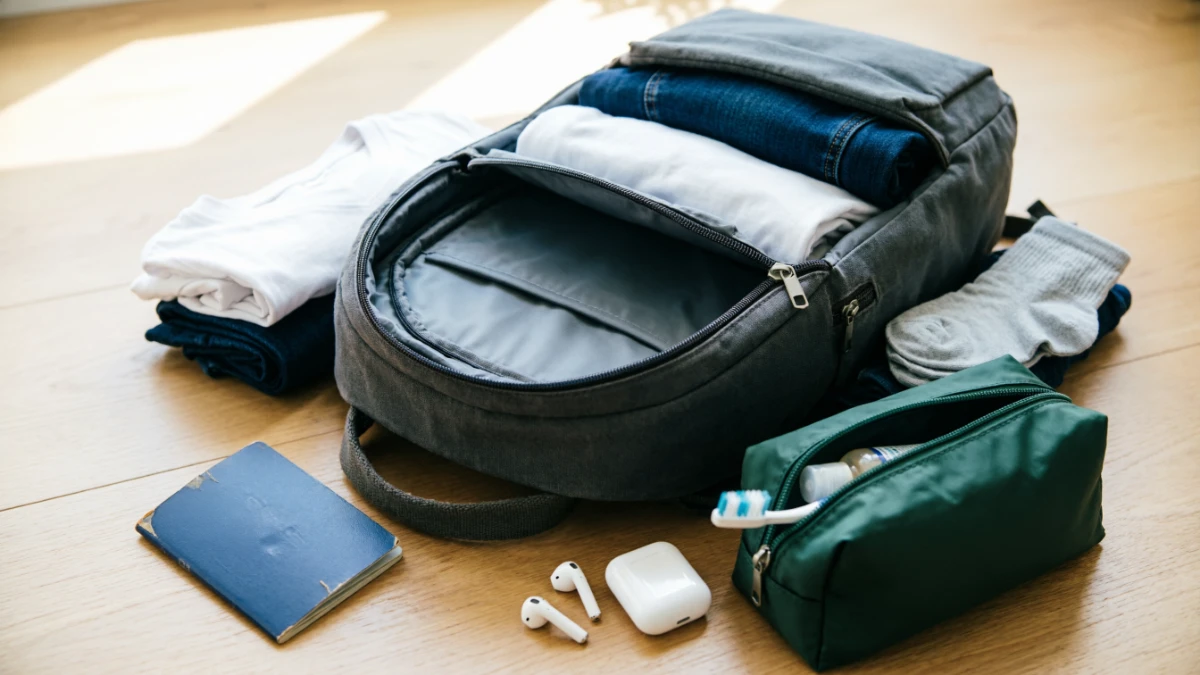
A weekend travel bag is a compact carry on bag typically 20–40 liters designed to hold 2–3 days’ worth of essentials without checking luggage. The best weekend bags balance size, organization, and comfort. Choose one that fits airline personal item rules or overhead bin requirements, depending on your travel style and destination.
You’re standing at baggage claim watching the carousel go around and around while everyone else from your flight has already grabbed a cab. Sound familiar? Over packing for a quick trip is one of the most common travel frustrations Americans face, and it costs real time and money.
A smartly packed weekend travel bag changes the entire experience. Instead of dragging a checked suitcase for a two night getaway, you walk off the plane, head straight to your destination, and start enjoying your trip. If you’re hitting a boutique hotel in Nashville, crashing with family in Denver, or exploring the streets of Savannah, the right bag packed the right way makes every weekend trip smoother.
This guide covers everything: how to choose the best weekend travel bag, what to pack (and what to leave behind), TSA rules, packing systems that actually work, and the insider tricks that experienced travelers use to move fast and travel light. By the end, you’ll have a clear packing game plan that works for every short trip you take this year.
What Size Weekend Travel Bag Do You Actually Need?
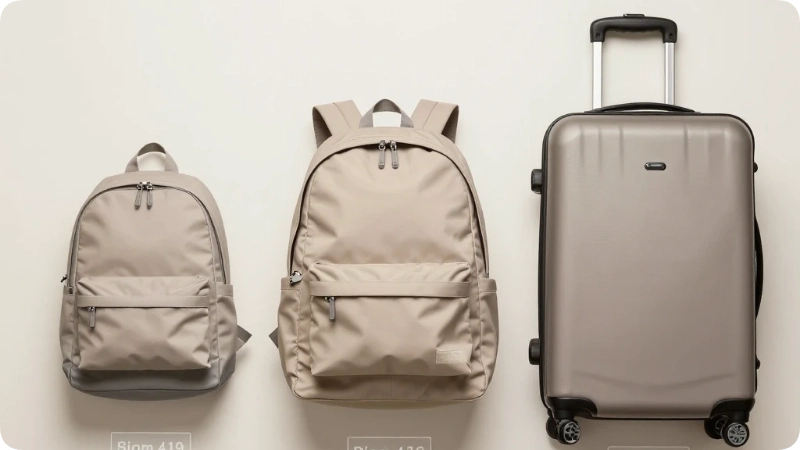
For most weekend trips, a bag between 25–40 liters hits the sweet spot. That’s large enough to carry clothes for two to three days, toiletries, and tech gear but small enough to slide under an airplane seat or into an overhead bin without a gate check fight.
Here’s how the sizes break down:
| Bag Size | Best For | Typical Carry On Status |
| 15–20L | Ultralight 1 night trips | Personal item ✅ |
| 25–35L | Standard 2–3 night weekend | Personal item or carry on |
| 40–45L | Extended weekends, overpacker | Carry on (check airline rules) |
| 50L+ | Not ideal for weekends | Often requires check in |
Most major U.S. airlines including Delta, American, and Southwest allow a personal item around 18 x 14 x 8 inches. Always verify dimensions on your airline’s website before you fly, as policies change. The TSA does not regulate bag size, only bag contents.
How to Choose the Best Weekend Travel Bag
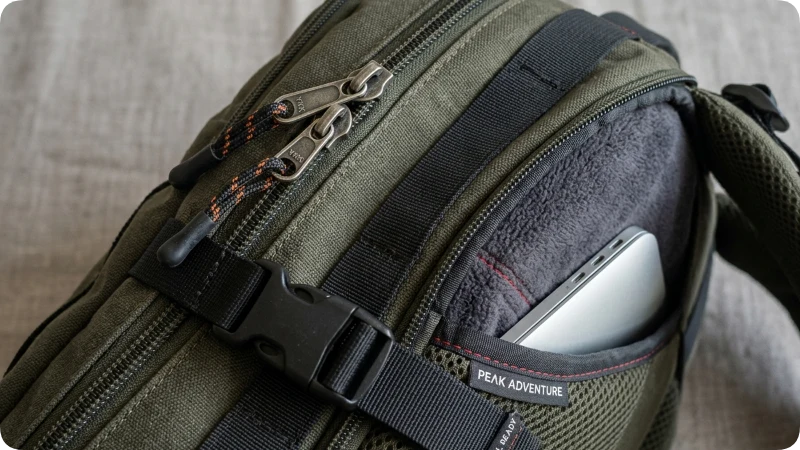
The best weekend travel bag fits your body, your trip type, and your airline’s rules. Look for a bag with a clamshell opening (so you can pack and access clothes easily), compression straps, and at least one exterior pocket for quick grab items like boarding passes or earbuds.
Key Features Worth Paying For
- Clamshell or panel loader design opens flat like a suitcase; far easier to pack than a top loader
- Hip belt or sternum strap critical if you’re walking more than 10 minutes with the bag
- Laptop sleeve padded, with a pass through for TSA screening
- Water resistant exterior protects against rain, spills, and overhead bin hazards
- External compression straps shrinks the bag when half full so it doesn’t look overloaded
Backpack vs. Duffel vs. Rolling Bag
Each style has real strengths. A backpack keeps your hands free and works great for city trips, transit travel, and walking heavy itineraries. A duffel offers flexible packing and often slides under seats easily. A rolling carry on is the most comfortable for airport corridors but can be clunky on cobblestones or crowded trains.
For most weekend travelers, a travel backpack with a laptop compartment offers the best combination of mobility, airline compliance, and organization.
The Weekend Packing System That Actually Works
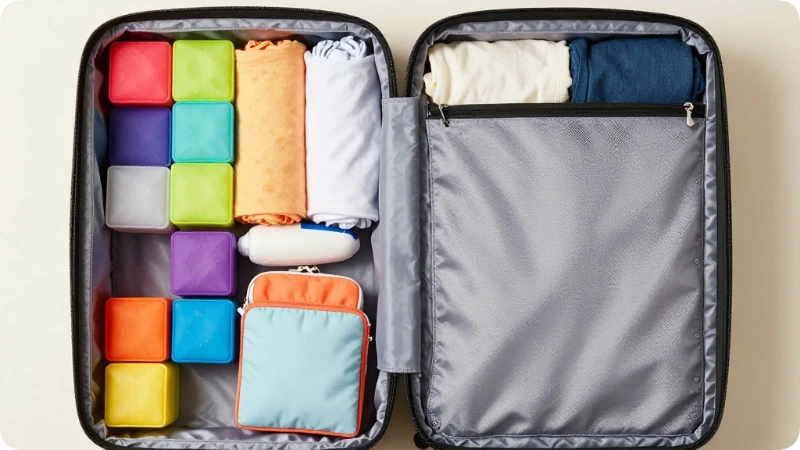
The most efficient weekend packing method uses a combination of packing cubes, the rolling technique, and a strict “one outfit per day plus one backup” rule. This approach cuts packing time in half and eliminates the panic of an overstuffed bag.
Step 1: Start with the Right Packing List Framework
Before you throw a single item into your bag, build your list around three categories:
- Essentials items you absolutely can’t replace at your destination (medication, ID, chargers, glasses)
- Clothing planned by outfit, not by individual pieces
- Toiletries & extras only what you’ll actually use in 48–72 hours
Step 2: Plan Outfits, Not Individual Items
Instead of packing seven tops “just in case,” plan each day’s outfit in full shoes, bottoms, top, and layer. Then ask: can any piece pull double duty? A neutral button down can work for dinner on Friday and sightseeing on Saturday. Dark jeans travel across most occasions without looking out of place.
Step 3: Use Packing Cubes
Packing cubes are the single biggest game changer for weekend travel. Use one cube for tops, one for bottoms, and a small pouch for underwear and socks. They compress your clothes, eliminate rummaging, and make airport security a non event since you can lift out the cube instead of unpacking the whole bag.
Step 4: Pack Heaviest Items Closest to Your Back
This applies If you’re using a backpack or a duffel. Shoes, laptops, and toiletry bags should sit closest to your spine or, in a rolling bag, at the bottom. This keeps the center of gravity balanced and reduces shoulder strain on long travel days.
Step 5: Save the Top Pocket for Airport Essentials
Your passport, boarding pass, phone, snacks, and headphones should be immediately accessible. Don’t bury them. Pack the top exterior pocket last, and only with items you’ll need before you land.
The Weekend Clothing Capsule: What to Actually Pack
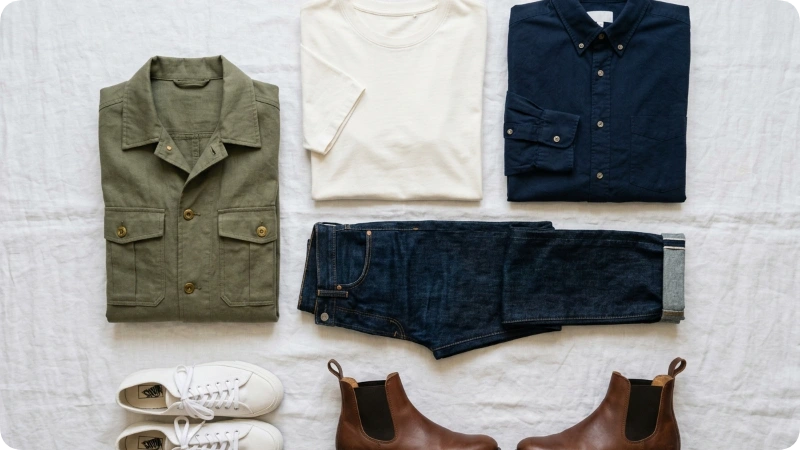
For a 2–3 night weekend trip, most travelers need no more than 6–8 clothing items total. This includes shoes. If your list is longer than that, you’re probably packing “just in case” items that you won’t touch.
The Core Weekend Clothing List
- 2 tops (one casual, one versatile enough for dinner)
- 1 bottom (jeans or versatile pants; skip shorts unless the trip is specifically outdoorsy)
- 1 dress or outfit for a specific event (skip if there’s no event)
- 1 lightweight layer a packable jacket or cardigan handles most weather swings
- Underwear and socks for each day, plus one spare
- 2 pairs of shoes max one comfortable walking shoe, one that works for dinner or a nicer setting
- Sleepwear one set; yes, this counts
The Shoes Problem
Shoes are the biggest space wasters in any weekend bag. Wear your bulkiest pair through the airport and pack the lighter pair. If you’re visiting a city with reliable weather, a versatile sneaker (white leather sneakers, for example) can work across casual and semi dressy settings.
Seasonal Adjustments
Cold weather weekends require more bulk. Swap one extra top for a base layer and pack your heaviest jacket as your travel layer wears it on the plane, don’t pack it. In summer, breathable fabrics like linen or moisture wicking blends take up less space and dry faster if you need to hand wash something.
TSA Rules Every Weekend Traveler Needs to Know
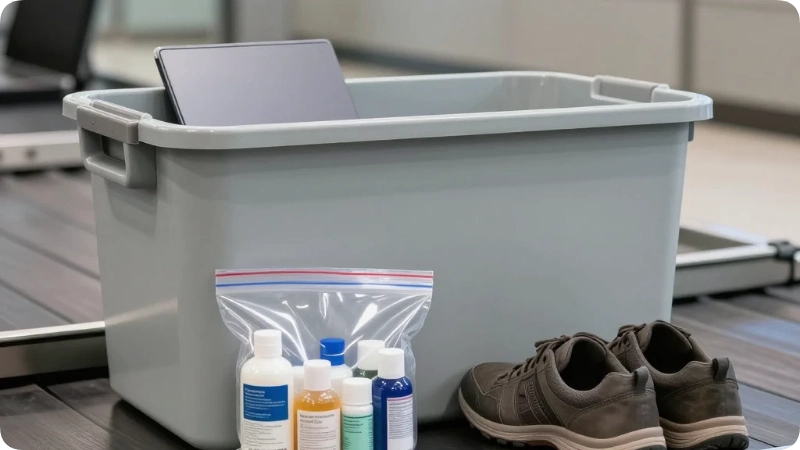
The TSA’s 3 1 1 liquids rule limits carry on travelers to containers of 3.4 oz (100ml) or less, all fitting in one quart sized clear bag. This single rule trips up more weekend packers than anything else, and forgetting it means losing items at the checkpoint or getting delayed in line.
TSA 3 1 1 Quick Reference
- 3.4 oz or less per container (check the label not by feel)
- 1 quart sized, clear, zip top bag per passenger
- 1 bag must be removed at the checkpoint and placed in a bin
Full size shampoo, conditioner, and lotion bottles are the most commonly confiscated items at checkpoints. Transfer them into travel size containers or buy TSA compliant travel sets. Many hotel chains across the U.S. provide toiletries to check with your accommodation before packing duplicates.
What Always Goes in a Bin at Security
Per the TSA, the following always require their own bin or removal from your bag:
- Laptops and large electronics (tablets sometimes included follow checkpoint signage)
- Quart bag of liquids
- Shoes (at standard lanes; TSA PreCheck members may keep shoes on)
- Jackets and heavy outerwear
TSA PreCheck is one of the best investments for frequent weekend travelers. At $85 for five years, it covers faster lanes, no shoe removal, and no laptop unpacking. Apply through the TSA’s website; enrollment requires an in person appointment.
Always verify current TSA policies at tsa.gov before your trip, as procedures are updated regularly.
Best Toiletry Packing Strategy for a Weekend Trip
A complete weekend toiletry kit fits comfortably in a one liter clear bag when you pack intentionally. The trick is distinguishing between what you genuinely need and what just lives in your bathroom cabinet.
The Minimal Weekend Toiletry Kit
| Category | What to Pack |
| Skincare | Travel size cleanser, moisturizer with SPF |
| Hair | Travel shampoo + conditioner OR dry shampoo bar |
| Dental | Travel toothbrush, mini toothpaste |
| Body | Small deodorant, travel body wash (or soap bar) |
| Health | Personal medications, pain reliever, bandages |
| Other | Razor, floss, any contact lens supplies |
Solid toiletries, shampoo bars, conditioner bars, and solid face wash bypass the 3 1 1 rule entirely because they’re not liquids. They’re also lighter, last longer, and eliminate leak risk. Brands like Lush, HiBar, and Ethique have made solid toiletry options widely available at U.S. drugstores and online.
Tech and Gear Packing for Weekend Travel
The biggest tech mistake weekend travelers make is packing every cable they own “just in case.” A streamlined tech kit for 2–3 nights includes a phone charger, one universal cable (USB C covers most modern devices), a portable battery bank, and earbuds. That’s it for most trips.
Recommended Weekend Tech List
- Phone + charger never forget the charger; keep a dedicated travel charger in your bag
- Portable battery bank 10,000mAh is plenty for a weekend; charges a phone 2–3 times
- Earbuds or headphones noise canceling makes a meaningful difference on flights
- Laptop or tablet only if you plan to work; otherwise, your phone handles most things
- Universal adapter only necessary for international travel; skip for domestic weekends
- Camera only if photography is a priority; modern phone cameras cover casual travel
The “One Cable” Rule
Switch entirely to USB C if your devices support it. A single USB C cable and a multi port GaN charger replace a tangle of Lightning, Micro USB, and USB A cables. This saves space, reduces weight, and eliminates the “wrong cable” problem at midnight when your phone is at 4%.
Packing for Different Weekend Trip Types
What you pack shifts significantly based on the type of weekend trip: a beach weekend, a city break, and a camping trip have almost no overlap in packing lists. Identify your trip type before you open your bag.
Urban Weekend Getaway
City trips prioritize comfortable walking shoes, versatile neutral clothing, a crossbody bag or daypack for sightseeing, and minimal tech. You’ll have access to stores if you forget something. Pack lighter than you think you need. Cities are walkable in layers, and most urban hotels have amenities.
Beach or Lake Weekend
Sun protection is non negotiable: reef safe sunscreen (required at many U.S. national parks and beaches), a rash guard or cover up, and polarized sunglasses. Pack a mesh bag or dry bag for wet gear. A soaked bathing suit in your main bag ruins everything else. A microfiber towel packs flat and dries in under an hour.
Outdoor or Hiking Weekend
Moisture wicking base layers, a rain shell, and broken hiking footwear take priority. Cotton kills in cold or wet conditions avoid it for any activewear. A small first aid kit, electrolyte packets, and a headlamp are essentials that many beginners forget until they need them.
Business + Leisure (Bleisure) Weekend
The bleisure traveler needs one business ready outfit that doesn’t wrinkle in a bag. Merino wool is the gold standard here; it resists odor, packs light, and looks polished enough for a client meeting. Pack it in a packing cube with a dryer sheet to prevent static.
Insider Tips From Experienced Weekend Travelers
These are the habits that separate smooth, stress free weekend trips from chaotic ones.
Keep a pre packed toiletry bag. Experienced travelers maintain a dedicated travel toiletry bag that stays packed and ready. After each trip, replace anything used, and the bag is ready to go within five minutes on your next trip.
Weigh your bag before leaving home. A small luggage scale (under $15 at most U.S. retail stores) tells you exactly where you stand before you hit the airport. Even if you’re carrying on, knowing your bag’s weight prevents gate check surprises on weight restricted small regional aircraft.
Research your hotel amenities before packing. Most Marriott, Hilton, Hyatt, and IHG properties provide shampoo, conditioner, body wash, and a hair dryer. Airbnbs vary check the listing. Skipping hotel provided items can eliminate 20–30% of your toiletry bag.
Pack a reusable laundry bag. A lightweight stuff sack keeps dirty clothes separate from clean ones inside your weekend bag. This solves the “did I wear this or not?” confusion and makes unpacking at home faster.
Use the “remove one item” rule. Once your bag is packed and closed, open it and remove one thing. That item is almost certainly something you packed “just in case” and will never touch. This forces the mental edit that transforms a stuffed bag into a comfortable one.
Common Weekend Packing Mistakes (and How to Fix Them)
Even experienced travelers fall into these traps. Here’s what to watch for.
Mistake #1: Packing for the Worst Case Weather Scenario
Bringing three rain layers for a weekend in Phoenix because “what if it rains” is common and counterproductive. Check a reliable forecast Weather.gov provides free, detailed regional forecasts and pack for the likely conditions, not the extreme edge case.
Fix: Check Weather.gov or a trusted weather app 48 hours before departure. Pack one layer for temperature swings; skip redundant backup layers.
Mistake #2: Waiting Until the Night Before to Pack
Last minute packing is the main cause of overpacking. When you’re stressed and rushing, you grab everything that might be relevant rather than thinking through what you’ll actually need.
Fix: Start your packing list three to four days before the trip. Pack the bag 24 hours in advance. This gives you time to add forgotten items without panic packing half your closet.
Mistake #3: Not Testing the Bag on Your Shoulder Before Leaving
A bag that feels light when you set it on the bed feels very different after walking six blocks to a subway station. Many weekend travelers underestimate how quickly a 35 liter bag loaded with shoes and a laptop becomes punishing.
Fix: Put the fully packed bag on, walk around your house or apartment for five minutes, and assess. If it’s uncomfortable at home, it’ll be worse at the airport.
Budget Weekend Travel Bag Picks by Category
You don’t need to spend a fortune on a weekend bag. The best bag is one that fits your needs and your budget consistently.
| Budget Level | Price Range | What to Expect |
| Budget friendly | $30–$60 | Basic organization, decent durability, fewer features |
| Mid range | $60–$150 | Better materials, laptop sleeves, waterproofing, warranty |
| Premium | $150–$300+ | Superior build quality, lifetime warranty, travel specific design |
| Ultralight | $100–$250 | Focus on weight reduction; less durable, specialist use |
Mid range bags in the $80–$130 price range offer the best value for most weekend travelers. At this price point, you get water resistant fabric, a proper laptop compartment, and a carry on compliant design without paying for brand premium.
Prices shift seasonally; major sales happen around Memorial Day, Labor Day, Black Friday, and Amazon Prime Day. If your budget is flexible, timing a purchase around these events can save 25–40%.
Responsible Packing and Sustainable Weekend Travel
Choosing a durable, high quality weekend bag is the most sustainable packing decision you can make. A bag you use for 10 years generates far less waste than replacing cheap bags every season.
Beyond the bag itself, small choices compound into meaningful impact. Solid toiletry bars eliminate plastic bottles. Reusable packing cubes replace plastic bags. A collapsible water bottle means you’re never buying single use plastic at the airport (water bottle refill stations are now required at all major U.S. airports under FAA regulations). Packing lighter also reduces aircraft fuel consumption at scale a real consideration for frequent travelers.
When visiting U.S. National Parks or protected outdoor areas, always follow Leave No Trace principles. The National Park Service provides free guidelines at nps.gov.
FAQs
What is the best size bag for a weekend trip?
For most 2–3 night weekend trips, a 25–35 liter bag is the ideal size. It holds enough clothing, toiletries, and tech without triggering airline size restrictions. If you’re flying on a regional jet or budget carrier, aim for the smaller end (25–28L) to guarantee personal item compliance. Always check your specific airline’s size limits before booking.
Can a weekend travel bag be a personal item on a plane?
Yes, many weekend travel bags qualify as personal items if they measure within your airline’s personal item dimensions (typically around 18 x 14 x 8 inches, though this varies by carrier). Bags 20–25 liters generally qualify. Bags 30 liters and above are more likely to qualify as carry on bags. Check your airline’s website directly, as policies differ between Delta, American, United, Southwest, and budget carriers like Spirit or Frontier.
How do I pack a weekend bag without overpacking?
Start by planning outfits, not individual items for each day of the trip. Limit yourself to one outfit per day plus one backup. Use packing cubes to compress and organize. Apply the “remove one item” rule after closing the bag. Identify what your hotel or Airbnb provides (toiletries, hair dryer) and skip packing duplicates. Most experienced travelers find they use about 70% of what they pack on a typical weekend trip.
What should I never pack in a weekend carry on bag?
Never pack full size liquid containers over 3.4 oz (100ml) in your carry on they’ll be confiscated at TSA checkpoints. Avoid packing valuables like jewelry or large amounts of cash in an exterior pocket where they’re easy targets. Don’t pack items you can’t afford to lose in checked baggage, either. Lithium battery powered devices (laptops, power banks) must go in carry on bags, not checked luggage, per FAA regulations.
Is a backpack or a rolling bag better for weekend travel?
It depends on your trip type and how you travel. Backpacks keep hands free, work better on uneven terrain and public transit, and fit more easily under airplane seats. Rolling bags are easier on your shoulders and back, better for flat airport corridors, and often easier to organize. For city trips and mixed transit travel, a backpack typically wins. For trips where you’ll mainly move between an airport, a rideshare, and a hotel, a rolling carry on may feel more comfortable.
How do I keep my weekend bag organized during the trip?
Use one packing cube per clothing category and return items to the same cube after each use. Designate a single spot for your passport, phone, and boarding pass so you never search for them. Keep dirty clothes in a separate laundry bag or stuff sack inside the bag. At your hotel or Airbnb, partially unpack what you need each day rather than fully unpacking and repacking; this saves time and reduces the chance of leaving items behind.
What’s the most forgotten item when packing a weekend bag?
Phone chargers and medications top the list of most forgotten items, according to repeated traveler surveys. Other commonly forgotten items include: a second pair of earrings or accessories for a nicer dinner, lip balm, travel size laundry detergent for hand washing, and a reusable water bottle. Keeping a printed or digital master packing checklist reviewed before every trip eliminates most forgotten items entirely.
Conclusion: Pack Less, Experience More
The best weekend trips share one thing in common: the travelers showed up ready to explore, not ready to wrestle with an overstuffed suitcase. A well chosen weekend travel bag, packed with intention and a smart system, removes friction from every part of the trip faster through security, no baggage claim wait, easier to move between stops.
Three takeaways to carry forward: choose the right size bag for your trip type, plan outfits instead of individual items, and use the TSA 3 1 1 rule as your liquid packing framework. These three habits alone cut packing time and stress in half for most travelers.
Your next weekend trip is already closer than it feels. Build your packing list today, get the bag that fits your style, and spend that saved time actually enjoying where you’re going.
Prices, TSA policies, and airline baggage rules change frequently. Always verify current guidelines at tsa.gov and your airline’s official website before traveling.












1 thought on “The Ultimate Weekend Travel Bag Packing Guide”