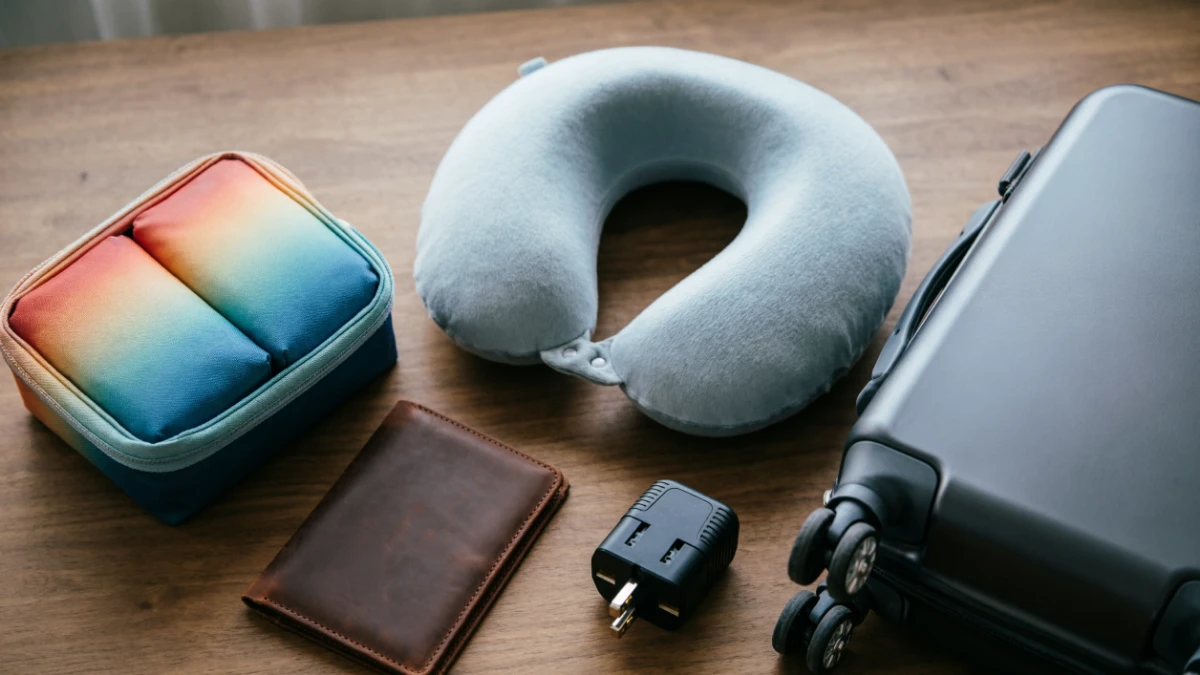
The right gear turns a stressful trip into a smooth adventure. If you’re rushing through airport security at O’Hare, navigating cobblestone streets in Europe, or road tripping through Yellowstone National Park, the best travel items are the ones that solve real problems before they start. Packing light, smart, and strategically isn’t just a nice idea, it’s the difference between breezing through your journey and scrambling at every turn.
Most travelers pack too much of the wrong stuff and too little of the right stuff. A bloated suitcase filled with “just in case” items weighs you down physically and mentally. Meanwhile, a few well chosen travel essentials: a packable daypack, a quality neck pillow, a universal adapter quietly carry you through long haul flights, layovers, and unexpected itinerary changes.
This guide covers the best travel items for every type of trip, from weekend getaways to international adventures. You’ll find gear organized by category, honest assessments of what’s worth buying, and insider tips to help you travel smarter without overspending.
Quick Reference: Best Travel Items by Category
| Category | Top Pick | Why It Matters |
| Luggage | Carry on spinner with TSA lock | Avoids checked bag fees and delays |
| Sleep & Comfort | Memory foam neck pillow | Critical for long flights and road trips |
| Tech & Power | Universal travel adapter | Works in 150+ countries |
| Organization | Packing cubes (set of 4) | Cuts packing time and bag chaos |
| Health & Safety | Portable first aid kit | Handles minor emergencies anywhere |
| Navigation | Offline GPS app + map | Works without cell signal |
| Hydration | Collapsible filtered water bottle | Saves money, reduces plastic waste |
| Security | RFID blocking wallet | Protects cards at busy airports and hotels |
The Best Carry On Luggage for American Travelers
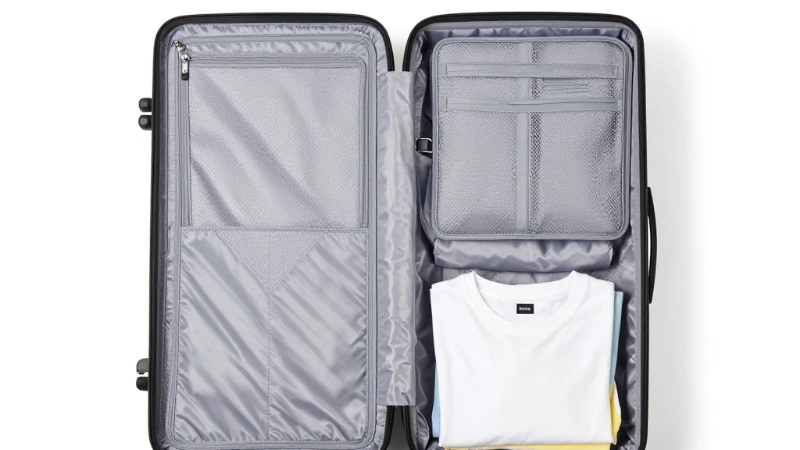
The best carry on luggage combines TSA approved locks, hard shell durability, and dimensions that fit most U.S. airline overhead bins (typically 22 x 14 x 9 inches). Look for a four wheel spinner with a telescoping handle, a built in USB charging port, and a weight under 8 pounds.
Checked bag fees at major U.S. airlines including American, Delta, and United often run $35 or more each way. A quality carry on pays for itself after just a few trips. Brands like Away, Samsonite, and Travelpro dominate the market for good reason: they balance durability with smart internal organization.
Look for a hard shell if you’re checking your bag on budget airlines like Spirit or Frontier, where bags often get handled roughly. A soft shell carry on offers more flexibility for tight overhead bins on regional jets.
What to Look for in Carry On Luggage
- TSA approved combination lock built into the zipper system
- Spinner wheels (4 wheel design rolls in all directions, reducing strain)
- Compression straps inside to hold clothing flat
- Expandable zipper for the return trip when you’ve shopped
Insider Tip: Weigh your carry on at home before leaving. Most U.S. airlines cap carry ons at 40 pounds for overhead storage. Frontier and Spirit have stricter size limits than legacy carriers and always check your specific airline’s current policy at their official site.
Packing Cubes: The Most Underrated Travel Essential
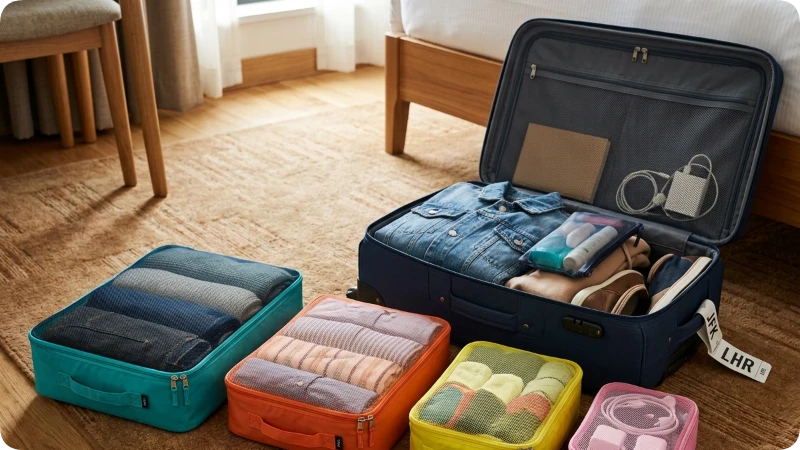
Packing cubes are lightweight, zippered fabric organizers that divide your suitcase into distinct sections. A standard set of four cubes large, medium, small, and slim lets you separate clothing by type, pack faster, and find items instantly without unpacking everything.
Travel bloggers have raved about packing cubes for years, but they remain one of the most overlooked travel items by first time and even experienced travelers. A good set from Eagle Creek, Peak Design, or Amazon Basics costs between $20 and $60 and dramatically reduces packing anxiety.
The compression style where a second zipper squeezes air out works especially well for bulky items like hoodies and jeans. Standard cubes work fine for dress shirts and pants you want wrinkle free.
How to Use Packing Cubes Effectively
- Assign one cube per clothing category (tops, bottoms, underwear/socks, workout gear)
- Roll clothes before placing them in cubes this reduces wrinkles and saves space
- Place heavier cubes at the bottom of your suitcase near the wheels
- Use a slim cube for chargers, cables, and small electronics
- Keep one cube empty for laundry on multi week trips
Best Travel Neck Pillow for Long Flights
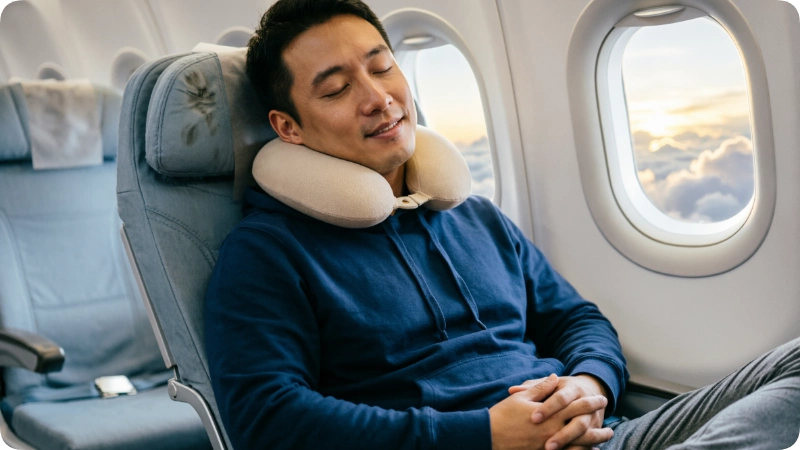
The best travel neck pillows support the cervical spine in a neutral position and prevent the “head drop” that jolts you awake mid flight. Memory foam models that wrap around the front of the neck (rather than the back) consistently outperform the classic U shaped design for actual sleep quality.
Anyone who’s attempted to sleep upright in economy class knows the struggle. A standard horseshoe pillow keeps your head from rolling sideways but does nothing for chin drop. The Trtl Pillow and Cabeau Evolution S3 address this with a wraparound design that genuinely supports the head from below.
For long haul flights from U.S. hubs like LAX, JFK, or O’Hare to Europe or Asia, a quality neck pillow is not optional; it’s injury prevention. Neck strain from awkward sleeping positions can ruin the first day of any trip.
Neck Pillow Comparison
| Type | Best For | Drawback |
| Memory foam U shape | Budget travelers | Doesn’t prevent chin drop |
| Wraparound (Trtl style) | Economy class sleepers | Takes getting used to |
| Inflatable | Ultralight packers | Less comfortable than foam |
| Full size travel pillow | Business/first class | Too bulky for carry on |
Universal Travel Adapters and Power Banks
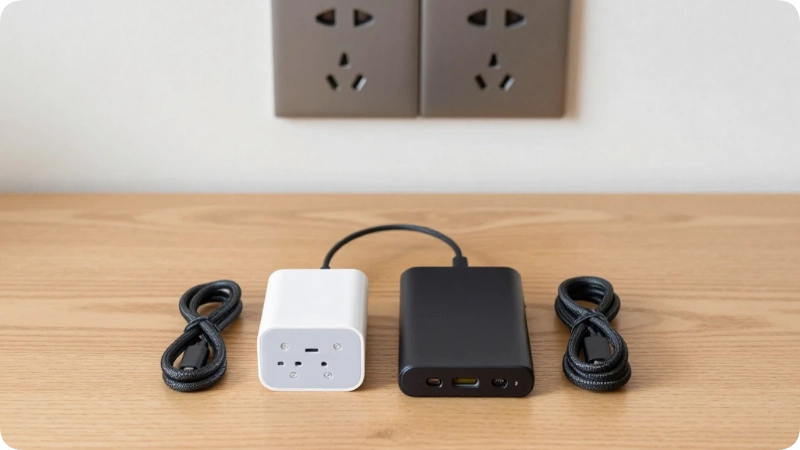
A universal travel adapter allows your U.S. devices (which use Type A plugs) to plug into outlets in Europe (Type C/E/F), the UK (Type G), Australia (Type I), and over 150 other countries. Look for a model with multiple USB A ports, at least one USB C port, and a built in surge protector.
Losing power on the road is more than an inconvenience; it cuts you off from maps, boarding passes, and emergency contacts. A dual voltage adapter paired with a high capacity power bank (20,000 mAh or more) covers most situations.
The TSA allows power banks in carry on luggage but not in checked bags. Specifically, the TSA and FAA restrict lithium batteries over 100 Wh (roughly 27,000 mAh) from aircraft. Always verify current rules at TSA.gov before flying.
Top Power Essentials to Pack
- Universal adapter with surge protection and 3+ USB ports
- 20,000 mAh power bank (enough to charge a phone 4–5 times)
- USB C to USB C cable (works for most modern phones and laptops)
- Retractable extension cord for hotel rooms with limited outlets
- Laptop charger with international voltage compatibility (check your brick most say 100–240V)
Insider Tip: Many airports now have USB charging stations at gates, but they can be slow and sometimes compromised by “juice jacking.” Carry your own power bank and use your own cable, not public USB ports.
RFID Blocking Wallets and Travel Security Items
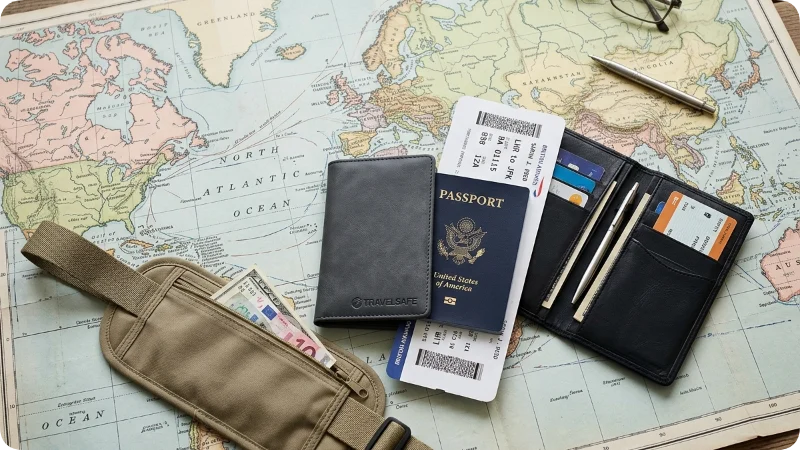
RFID (Radio Frequency Identification) blocking wallets contain a metallic lining that prevents electronic pickpockets from wirelessly scanning your credit cards, passport, and hotel key cards. While the threat level in the U.S. is debated, international travel especially in crowded tourist areas makes RFID protection a low cost, high value precaution.
Beyond the wallet, smart travelers think about security in layers. A money belt worn under clothing holds your passport and emergency cash. A small padlock secures hostel lockers or zipper bags. A portable door lock adds a layer of privacy in hotels with unreliable locks useful in countries where room security standards vary.
Essential Travel Security Items
- RFID blocking passport holder keeps your U.S. passport organized and protected
- Under clothing money belt Venture 4th and Eagle Creek make reliable models
- TSA approved luggage locks required for international flights where bags may be inspected
- Portable door alarm a wedge alarm or door handle alarm adds peace of mind
- Photo ID copies stored in cloud email yourself scans of your passport and driver’s license
The Best Travel Water Bottles and Hydration Gear
The best travel water bottles for air travel are collapsible (to pack flat when empty), BPA free, and pass through TSA security empty before being refilled at airport water stations. Some models include a built in filter for international travel where tap water safety is uncertain.
The TSA’s 3 1 1 rule for liquids means you can’t bring a full water bottle through security. But you can bring an empty one and refill it post security a habit that saves $3–$5 per bottle at airport shops and dramatically reduces single use plastic waste.
For destinations where tap water quality is questionable in parts of Mexico, Central America, Southeast Asia, or even some rural U.S. areas, a bottle with a built in carbon filter or UV purification (like the Grayl Geopress) is genuinely life changing. Always check CDC.gov for destination specific water safety advisories.
Hydration Must Haves by Trip Type
- Domestic air travel: Collapsible silicone bottle (Hydaway or Nomader) refill post security
- Road trips: 32–64 oz insulated stainless steel bottle (Hydro Flask, Stanley)
- International travel: Filtered bottle like Grayl Geopress or Sawyer filter straw
- Hiking/outdoor travel: 2L hydration reservoir (Osprey Hydraulics or CamelBak)
Best Travel Clothing and Packing Essentials
The best travel clothing is wrinkle resistant, moisture wicking, quick drying, and neutral enough to mix and match across multiple outfits. Merino wool and synthetic performance fabrics are the gold standards they resist odor, dry overnight, and pack to a fraction of the size of cotton.
Clothing is where most travelers overpack. Three tops, two bottoms, one smart outfit, and enough socks and underwear for the trip (or access to laundry) is genuinely sufficient for most journeys. When every piece works with every other piece, the math changes completely.
Brands like Uniqlo, REI Co op, and Bluffworks make travel specific clothing that looks sharp in cities while functioning well outdoors. Their merino shirts and travel pants are worth every dollar for anyone taking multiple trips per year.
Packing Checklist: Smart Travel Wardrobe
- 3 neutral tops (merino wool or synthetic blend)
- 2 bottoms (one casual, one smart convertible zip off pants work well)
- 1 packable down jacket or fleece (compresses to the size of a softball)
- 1 waterproof layer (a packable rain jacket like Marmot Precip weighs under 12 oz)
- Comfortable walking shoes (worn on the plane to save suitcase space)
- Flip flops or sandals for hostel showers, beaches, and hotel rooms
- Compression socks (especially important on flights over 4 hours DVT prevention)
Insider Tip: Wear your heaviest items on the plane, boots, jeans, your bulkiest jacket to save critical luggage weight and space.
Travel Health and First Aid Essentials
A compact travel first aid kit should include adhesive bandages in multiple sizes, antiseptic wipes, blister treatment, pain reliever, antihistamine, antidiarrheal medication, and any personal prescriptions. The CDC recommends packing for the specific health risks of your destination, not just general use.
Most travelers dramatically underestimate how often minor health issues arise on the road. Blisters from walking 15,000 steps through New Orleans, a headache from altitude in Denver, or an upset stomach after a food truck adventure are trip interrupting if you’re unprepared and totally manageable if you’re not.
Check the CDC Travelers’ Health website (cdc.gov/travel) before any international trip. Many destinations require or strongly recommend vaccinations, and some medications readily available in U.S. pharmacies are restricted or unavailable abroad.
Travel Health Kit Checklist
- Pain reliever (ibuprofen or acetaminophen)
- Antihistamine (Benadryl or Claritin) for allergies and mild reactions
- Antidiarrheal medication (Imodium)
- Blister gel pads (Compeed brand is excellent)
- Motion sickness patches or tablets (Dramamine or Bonine)
- Altitude sickness medication if traveling above 8,000 feet (consult your doctor)
- 30 day supply of all prescription medications, plus a written prescription copy
Best Travel Tech and Gadgets
The most useful travel tech items solve specific friction points: dead batteries, getting lost, language barriers, and poor sleep. A quality pair of noise canceling headphones, an offline capable GPS app, a compact sleep mask, and a portable Bluetooth speaker are the most universally valued gadgets among frequent travelers.
Tech choices depend on your trip type. Solo international travelers prioritize translation apps and eSIM cards for data connectivity without roaming fees. Road trippers value offline maps and Bluetooth integration for their vehicle. Business travelers want noise canceling headphones and a portable laptop stand above all else.
Top Travel Tech by Use Case
Flights:
- Noise canceling headphones (Sony WH 1000XM5 or Bose QuietComfort 45)
- Sleep mask with molded cups (Manta Sleep is a top rated option)
- Earplugs as a backup to headphones
International destinations:
- eSIM card or international SIM (activate before departure)
- Offline maps downloaded via Google Maps or Maps.me
- Translation app with camera feature (Google Translate with downloaded language packs)
For all trips:
- Compact Bluetooth tracker (Apple AirTag or Tile) attached to luggage
- Multi USB wall charger (Anker 65W GaN charger charges 3 devices simultaneously)
- Collapsible travel tripod for photography
Insider Tip: Download your boarding passes, hotel confirmations, and destination maps to your phone before leaving home. Cell service is often unreliable in airports during busy travel periods, and roaming rates in some countries are expensive.
Best Toiletry Bags and TSA Approved Liquid Containers
A TSA compliant toiletry setup requires all liquids, gels, and aerosols to be in containers of 3.4 ounces (100 mL) or less, all fitting in one quart sized clear plastic bag per person. A hanging toiletry bag with multiple pockets keeps everything organized and accessible If you’re in a compact hotel bathroom or a hostel with communal sinks.
The TSA’s 3 1 1 rule catches a surprising number of experienced travelers off guard especially with larger bottles purchased from Costco or Sam’s Club. Decanting your products into reusable silicone containers (GoToob or Humangear CapCAP brands are reliable) ahead of time avoids confiscation at security.
For trips longer than one week, shipping products ahead via Amazon or picking up toiletries at your destination is often more practical than squeezing two weeks of products into 3.4 oz containers.
Toiletry Bag Must Haves
- Quart sized clear zip bag (TSA required for carry on)
- Silicone refillable bottles in 1 oz, 2 oz, and 3.4 oz sizes
- Solid shampoo and conditioner bars (avoid the liquid limit entirely)
- Travel size sunscreen verify current rules for spray aerosols
- Pill organizer for daily medications
- Hanging toiletry bag with hook (makes any bathroom workable)
Travel Organization and Document Holders
A travel document organizer, also called a travel wallet or passport organizer holds your passport, boarding passes, travel insurance cards, foreign currency, and hotel confirmation numbers in one accessible place. This single item prevents the frantic bag searching that slows down airport check in, customs, and hotel arrivals.
Frequent international travelers often swear by the envelope style organizer that holds everything flat, while road trippers prefer a bifold version that fits in a glove compartment. Either way, the organizing principle matters more than the brand.
What Your Travel Document Organizer Should Hold
- U.S. passport (and copies in a separate location)
- Airline boarding passes (digital and printed backup)
- Hotel reservations and check in confirmation numbers
- Travel insurance policy number and emergency contact
- Local currency and backup credit card
- Driver’s license or state ID for domestic travel
- Global Entry or TSA PreCheck card number (if enrolled)
Insider Tip: Enroll in TSA PreCheck ($85, 5 year membership) or Global Entry ($100, 5 year membership with PreCheck included) if you fly more than twice a year. The expedited security lanes at over 200 U.S. airports are genuinely worth it. Apply at the TSA website or CBP.gov.
Best Travel Bags for Day Trips and Excursions
A packable daypack that folds into its own pocket and weighs under a pound is one of the highest value travel items for any trip type. It handles beach days, city walking tours, hiking in national parks, and grocery runs in a way that no purse or belt bag can match.
The Osprey Ultralight Stuff Pack (1.3 lbs, 18L), REI’s Stuff Sack Pack, and Matador’s Freerain 24 are perennial favorites among U.S. travelers. They pack down to the size of a softball, hold 15–24 liters of gear, and clip easily to a carry on.
For travelers heading to national parks like Grand Canyon, Zion, or Acadia, a slightly more structured daypack with a hydration sleeve and hip belt is worth the extra weight. The NPS recommends carrying at least one liter of water per hour of strenuous hiking.
Common Travel Packing Mistakes (and How to Fix Them)
Even experienced travelers fall into predictable traps. Avoiding these three mistakes alone will improve almost every trip.
Mistake 1: Packing for “what ifs” instead of “what is” The solution is simple: lay out everything you plan to pack, then remove a third of it. You will not wear that fourth pair of shoes. The “just in case” sweater will stay in the bag. Pack for your actual itinerary, not your imaginary worst case scenario.
Mistake 2: Buying cheap gear that fails mid trip A $12 neck pillow that falls apart at 30,000 feet is worse than no neck pillow. Invest in three to five quality items that solve real problems rather than filling your bag with cheap gadgets. Quality luggage, a great neck pillow, and reliable headphones return their value many times over.
Mistake 3: Ignoring weight distribution Most travelers toss items in randomly. Place heavy items (shoes, liquids, books) close to the wheels, medium items (clothing cubes) in the middle, and light items (electronics, documents) on top. This makes your bag easier to roll and prevents it from tipping.
Hidden Gems: Underrated Travel Items Most People Skip
These three items are consistently praised by experienced travelers but rarely appear on mainstream packing lists.
1. Microfiber travel towel. Most hostels, Airbnbs, and even some budget hotels charge extra for towels or provide thin, sandpaper textured versions. A Dock & Bay or PackTowl microfiber towel dries in 20 minutes, packs to the size of a water bottle, and pays for itself on the first stay.
2. Silicone earplugs. Foam earplugs work, but silicone earplugs (Mack’s brand) conform to the ear canal and block noise far more effectively. They’re game changing for sleeping in noisy hostels, near snoring travel partners, or in hotel rooms facing busy streets.
3. Portable luggage scale. A $10 digital scale clips to your bag handle and gives you an accurate weight reading in seconds. Avoiding a $100 overweight baggage fee at the airport especially on international return flights when you’ve shopped is one of the highest ROI travel purchases available.
5 Insider Tips from Frequent U.S. Travelers
- Ship ahead for long trips. If you’re staying somewhere for two or more weeks, ship a box of toiletries, supplements, and non essential items directly to your accommodation via USPS or UPS. It’s often cheaper than checked bag fees.
- Use hotel shampoo for laundry. On road trips or multi city trips, the small bottles of hotel shampoo work perfectly for hand washing clothing in the sink. Lay items flat on the hotel towel and roll it up to press out water before air drying.
- Photograph your packing setup before every trip. A quick photo of everything laid out before you pack means you’ll know exactly what you brought useful for customs forms and for remembering what to repack when leaving your accommodation.
- Book seats at the front of economy class. Exit rows and seats near the front of the cabin deplane faster. On connecting flights with tight layovers, this can mean the difference between making your connection and missing it.
- Pack a doorstop alarm for solo travel. A simple rubber doorstop with a built in 120dB alarm (under $15) prevents the door from opening and alerts you instantly. It works in any hotel room worldwide and provides peace of mind that no insurance policy can replicate.
FAQs
What are the most essential travel items for a carry on only trip?
For carry on travel, the non negotiables are packing cubes, a TSA approved toiletry bag with 3.4 oz or smaller containers, noise canceling headphones or earplugs, a portable charger, and a packable daypack for excursions. A universal adapter and RFID blocking wallet round out the setup for international trips. These seven items handle the most common friction points for travelers who skip checked bags entirely.
What travel items does the TSA restrict?
The TSA prohibits liquids over 3.4 ounces in carry ons, lithium batteries over 100 Wh, firearms without proper declaration, and sharp objects including scissors with blades over 4 inches. Power banks must go in carry on, not checked bags. Always verify current rules at TSA.gov before flying, as policies update regularly and vary slightly by airport and airline.
Are packing cubes actually worth it?
Yes, for most travelers, packing cubes are among the highest value travel purchases available. They reduce packing time, make it easy to find items without unpacking everything, and help you fit more into your bag by compressing clothing. A quality set costs $20–$60 and lasts for years of travel.
What’s the best travel item for long international flights?
Noise canceling headphones and a quality neck pillow are the two items that most dramatically improve long haul flight comfort. On flights of 8 hours or more from major U.S. hubs like LAX, JFK, or ORD to Europe or Asia, the ability to sleep and block cabin noise is directly tied to how well you feel upon arrival.
Do I need a universal adapter for travel in North America?
Not all U.S., Canadian, and Mexican outlets use the same Type A plug (two flat parallel prongs). A universal adapter becomes necessary when traveling to Europe (Type C/F), the UK (Type G), Australia (Type I), or other regions. Check your specific destination’s outlet type before purchasing an adapter.
How do I choose between hard shell and soft shell luggage?
Hard shell luggage better protects fragile items, resists water, and holds its shape when stacked. Soft shell luggage is lighter, more flexible for tight overhead bins, and often has external pockets for easy access. For checked bags, hard shell is generally preferable. For carry on travel, soft shell offers more versatility on regional aircraft with smaller overhead bins.
What travel health items should I never leave home without?
At minimum, carry pain reliever, antihistamine, blister treatment, and antidiarrheal medication for any trip. For international travel, also pack any personal prescriptions (with written documentation from your doctor), altitude medication if applicable, and check CDC.gov for destination specific vaccine recommendations. Travel insurance that covers medical evacuation is highly recommended for any international trip.
Conclusion: Pack Smarter, Travel Better
The best travel items are not the most expensive ones, they’re the ones that solve your specific problems. A great carry on spinner, a set of packing cubes, noise canceling headphones, and a reliable power adapter will do more for your travel experience than a bag full of gadgets you’ll never use.
Start with the items that address your biggest pain points. If you lose sleep on planes, prioritize a real neck pillow and earplugs. If you’re always hunting for outlets, a multi port charger and power bank are essential. Build your kit gradually, buy quality over quantity, and let every item earn its place in your bag.
Smart packing isn’t about having the right stuff for every possible scenario. It’s about having the right stuff for your trip and trusting that anything else can be figured out on the road.

Gordon Ramsay is a travel writer and destination researcher who helps U.S. travelers plan smarter trips, covering destinations, seasonal trends, budgets, and logistics to help readers decide where—and when—to go.
Rather than simply listing popular places, Gordon Ramsay focuses on what travelers actually need: comparing weather against crowds, weighing costs and accessibility, and researching current conditions alongside official tourism guidance—delivering honest, practical advice without the hype.










3 thoughts on “Best Travel Items Every American Traveler Needs in 2026”