Planning an Iceland travel itinerary means choosing between glaciers or geysers, the Northern Lights or midnight sun and the answer is always both. Iceland packs more natural drama per square mile than almost anywhere on Earth, and for American travelers, it sits just a 5–7 hour flight from the East Coast. This guide covers every day, decision, and dollar you need to plan a trip that actually delivers.
Quick Facts About Traveling to Iceland
| Detail | Info |
| Capital | Reykjavík |
| Currency | Icelandic Króna (ISK) credit cards accepted nearly everywhere |
| Language | Icelandic (English is widely spoken) |
| Time Zone | GMT/UTC (no daylight saving time) |
| Flight Time from NYC | ~5.5 hours |
| Flight Time from LAX | ~9–10 hours |
| Visa Required? | No US citizens can stay up to 90 days (Schengen rules) |
| Driving Side | Right side |
| Plug Type | Type C/F (220V bring a travel adapter) |
| Best Gateway Airport | Keflavík International Airport (KEF) |
Best Time to Visit Iceland
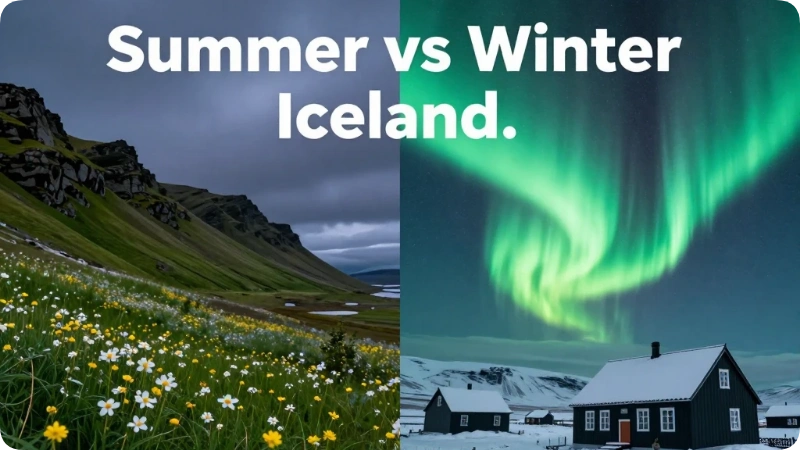
The best time to visit Iceland depends entirely on what you want to see. Summer (June–August) offers the midnight sun, green landscapes, and road access to the entire country. Winter (November–February) is your window for the Northern Lights and ice cave tours. Shoulder seasons May and September hit the sweet spot of manageable crowds, decent weather, and longer daylight hours.
Seasonal Breakdown
| Season | Months | Highlights | Drawbacks |
| Summer | June–Aug | 24 hr daylight, all roads open, puffins | Crowds, higher prices, no Northern Lights |
| Shoulder | May, Sept | Fewer tourists, Northern Lights possible | Unpredictable weather |
| Winter | Nov–Feb | Northern Lights, ice caves, snow scenery | Short days (4–5 hrs light), some roads closed |
| Early Spring | Mar–Apr | Northern Lights, waterfalls at peak flow | Cold, icy roads |
Insider tip: September is arguably the best month overall. Waterfalls run strong from snowmelt, the Northern Lights return, highland roads are still open, and prices drop after the summer peak. Many experienced Iceland travelers consider it the country’s best kept seasonal secret.
How to Get to Iceland from the USA
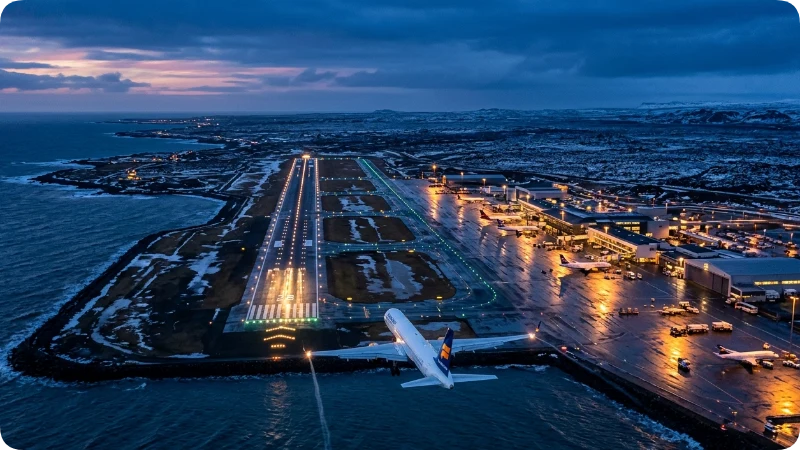
Most US travelers fly into Keflavík International Airport (KEF), located about 50 kilometers southwest of Reykjavík. Icelandair and Play Airlines offer direct flights from multiple US cities including New York (JFK), Boston (BOS), Chicago (ORD), Seattle (SEA), and Denver (DEN). Icelandair’s Stopover program even lets travelers add a free Iceland layover to European trips a smart way to stretch your travel budget.
US Cities with Direct Flights to Iceland (KEF)
- New York (JFK & EWR)
- Boston (BOS)
- Chicago (ORD)
- Seattle (SEA)
- Denver (DEN)
- Minneapolis (MSP)
- Orlando (MCO seasonal)
- Los Angeles (LAX via Icelandair)
Money saving tip: Book flights for Tuesday or Wednesday departures. Fares from the US East Coast frequently dip below $500 round trip during the shoulder season when booked 8–12 weeks in advance.
Getting Around Iceland: Renting a Car vs. Tours
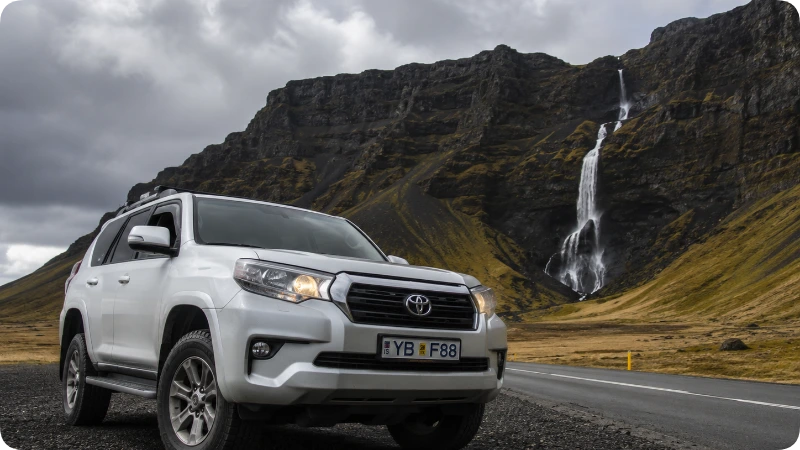
Renting a car is the single best decision most Iceland travelers make. The famous Ring Road (Route 1) circles the entire country and connects almost every major attraction. A standard 2WD vehicle works fine for summer travel along Route 1. For winter driving or Highland access (F roads), a 4WD or 4×4 is legally required and practically essential.
Transport Options Compared
| Option | Best For | Cost Level | Freedom |
| Rental Car | Most travelers, full flexibility | Medium–High | Maximum |
| Guided Tours | Non drivers, solo travelers | Medium–High | Low |
| Campervan | Budget travelers, long trips | Medium | High |
| Public Bus (Strætó) | Budget travelers, Reykjavík area | Low | Very Low |
| Domestic Flights | Westfjords, East Iceland | High | Medium |
Important: Icelandic law requires headlights at all times, even in summer. Speeding fines are steep up to $600+ USD for minor violations. Check road conditions daily at road.is before driving.
7 Day Iceland Travel Itinerary (Classic Ring Road Highlights)
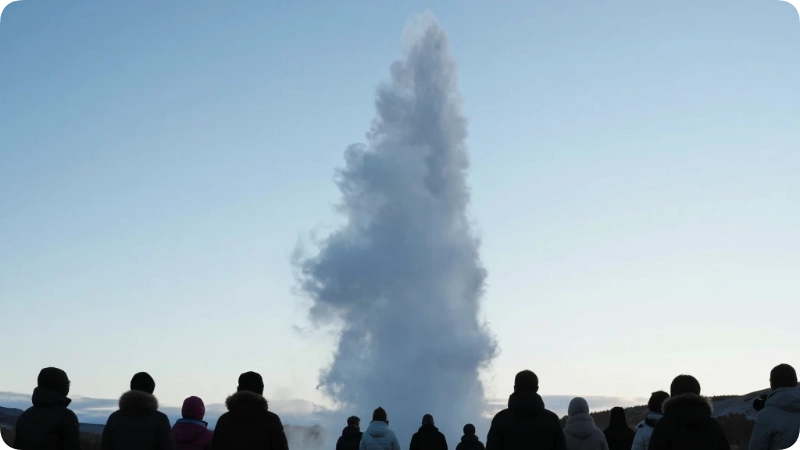
A 7 day Iceland itinerary works best for first time visitors who want to cover the Golden Circle, South Coast, and Snæfellsnes Peninsula without feeling rushed. This route is manageable year round with a 2WD car in summer and a 4×4 in winter. Every destination below is reachable from Reykjavík.
Day 1: Arrive in Reykjavík Settle and Explore
Most transatlantic flights land at KEF early in the morning. After clearing customs and picking up your rental car, drive the 50km to Reykjavík. Check into your hotel and spend the afternoon walking Laugavegur Street, the city’s colorful main drag.
Must do on Day 1:
- Visit Hallgrímskirkja church for panoramic city views (elevator fee applies verify current price officially)
- Stroll the Reykjavík Old Harbour
- Try a bowl of langoustine soup at one of the harbor restaurants
- Visit the Harpa Concert Hall (free to enter the lobby)
Where to stay: The 101 Reykjavík district puts you within walking distance of most sights. Guesthouses and mid range hotels cluster here. If budget matters, Airbnb options in the Breiðholt neighborhood offer good value with a short bus ride into the center.
Day 2: The Golden Circle
The Golden Circle is Iceland’s most iconic day trip, covering three world class natural and historical sites in a 230km loop from Reykjavík. Almost every Iceland traveler does it and it’s popular for good reason.
Þingvellir National Park (Thingvellir)
Start here. This UNESCO World Heritage Site is where the North American and Eurasian tectonic plates visibly pull apart. It’s also where Iceland’s ancient parliament, the Alþingi, first met in 930 AD. Walk the Almannagjá gorge and look down into the crystal clear Silfra fissure, one of the world’s top snorkeling and diving spots (book tours in advance through a certified operator).
Geysir Geothermal Area
The original geyser from which all geysers get their name sits here, though Strokkur next door erupts reliably every 5–10 minutes shooting water 15–20 meters high. Arrive early or late in the day to avoid the crowds that peak between 11am and 2pm.
Gullfoss Waterfall
End the Golden Circle at Gullfoss (“Golden Falls”), a two tiered waterfall that drops 32 meters into a rugged canyon. The mist can soak you. A waterproof jacket is useful here. The free viewing platform gives multiple angles.
Hidden gem: Most visitors skip Kerið volcanic crater, about 15 minutes south of Geysir. This vivid red crater with a teal lake at its center charges a small entry fee and rewards with Instagram worthy views without the crowds.
Day 3: South Coast Waterfalls and Black Sand
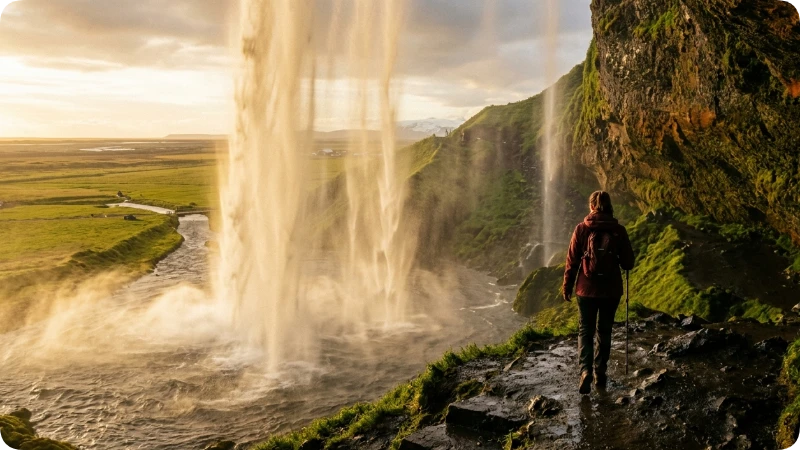
Iceland’s South Coast delivers two of the country’s most photographed waterfalls plus the otherworldly black sand beach at Reynisfjara all within a 3 hour drive east of Reykjavík.
Seljalandsfoss Waterfall
This waterfall is unique: a path behind the curtain lets you walk completely around it. The trail gets slippery waterproof shoes or hiking boots are necessary. Visit in the morning when the sun hits the falls from the front for the best photos.
Skógafoss Waterfall
About 30 minutes east, Skógafoss drops 60 meters in a single thundering plunge. Climb the 527 steps to the viewing platform on the right for views of the South Coast all the way to the ocean. The hike continues into the Fimmvörðuháls trail from here.
Reynisfjara Black Sand Beach
This is one of Iceland’s most dangerous tourist spots and one of its most beautiful. The black volcanic sand beach south of Vík features dramatic basalt columns and sea stacks called Reynisdrangar. Sneaker waves here have injured and killed visitors. Stay behind the yellow safety lines. Never turn your back on the ocean.
Practical note: The village of Vík makes an excellent overnight stop. Staying here positions you for an early start into Skaftafell the next morning.
Day 4: Skaftafell and the Glacier Lagoon
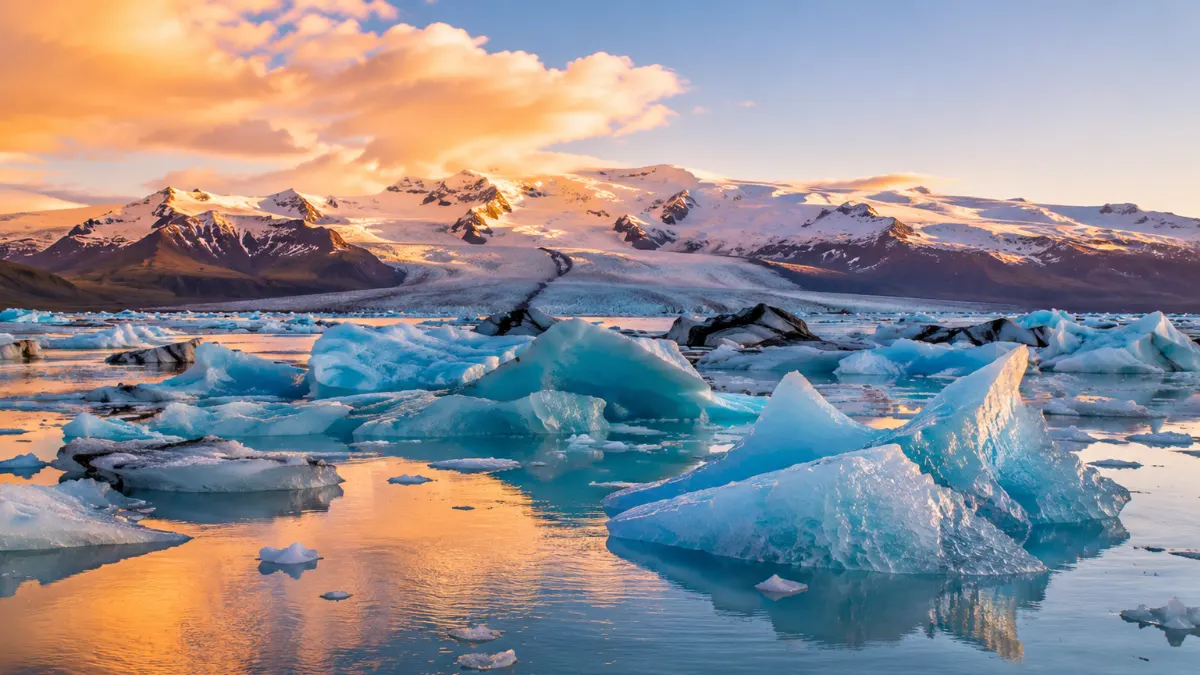
Jökulsárlón Glacier Lagoon is Iceland’s most iconic single image a vast lake filled with glowing blue icebergs calved from the Vatnajökull glacier. No filter required.
Skaftafell (Vatnajökull National Park)
Stop at Skaftafell to hike to Svartifoss, the “Black Falls” waterfall framed by geometric basalt columns that inspired the design of Hallgrímskirkja church. The hike takes about 90 minutes round trip on a well marked trail.
Jökulsárlón Glacier Lagoon
Spend at least 90 minutes here watching icebergs drift silently toward the sea. Amphibian boat tours run through the lagoon (book ahead). Seals regularly sunbathe on the ice and swim alongside boats, a wildlife encounter that costs nothing extra.
Diamond Beach
Walk 300 meters to the river mouth where icebergs wash onto the black sand shore. Clear ice chunks glow like diamonds against the dark volcanic sand. This spot is best photographed at golden hour roughly 10pm in summer, or whenever sun breaks through in winter.
Day 5: East Fjords (Optional) or Return West
On a 7 day itinerary, you’ll need to decide between pushing into the East Fjords or heading back west toward Snæfellsnes Peninsula. The East Fjords offer dramatic scenery and near zero crowds, an excellent choice for travelers who’ve already done a previous Iceland trip.
For first timers, turn back west and spend the night in Selfoss or Hveragerði. The geothermal hot river hike in Reykjadalur (near Hveragerði) rewards a 3km hike with a free natural hot spring. No crowds. No tour buses. Pure Iceland.
Day 6: Snæfellsnes Peninsula
The Snæfellsnes Peninsula is called “Iceland in Miniature” because it packs glaciers, lava fields, fishing villages, and sea cliffs into a single 90km strip of land. It makes for one of Iceland’s best full day drives.
Key stops:
- Kirkjufell Mountain Iceland’s most photographed peak, best seen at Kirkjufellsfoss waterfall directly in front of it
- Djúpalónssandur Beach a hidden black pebble cove with rusted shipwreck remains and four lifting stones historically used to test fishermen’s strength
- Arnarstapi a tiny fishing village with dramatic coastal basalt arches carved by the sea
- Snæfellsjökull National Park the glacier topped volcano immortalized by Jules Verne in Journey to the Center of the Earth
Insider tip: Drive the south coast of Snæfellsnes on the way out and the north coast on the way back. The landscapes are completely different and you’ll catch different light.
Day 7: Reykjavík Hot Springs and Departure Prep
Use your final full day to relax, shop, and visit one of Reykjavík’s geothermal pools. The Blue Lagoon near KEF airport gets all the attention, but the Sky Lagoon in Reykjavík offers a comparable experience at a lower price point and without the 45 minute drive.
Laugardalslaug Reykjavík’s largest public geothermal pool is where locals actually swim. Entry costs a fraction of the tourist geothermal spas. This is authentic Iceland.
Pick up duty free at KEF for alcohol (significantly cheaper than city prices) and pack Icelandic woolens, lopapeysa sweaters, and skyr yogurt as gifts.
14 Day Iceland Itinerary Extension
A 14 day Iceland itinerary opens up the full Ring Road, the Westfjords, and the Highlands, the parts of Iceland that most tourists never reach.
Days 8–10: Continuing the Ring Road North Iceland
Mývatn Lake Region
Lake Mývatn sits in North Iceland’s volcanic heartland and offers more geothermal strangeness per square kilometer than almost anywhere else on Earth. Walk among the Dimmuborgir lava formations, soak in the Mývatn Nature Baths (quieter and cheaper than the Blue Lagoon), and visit the Námaskarð geothermal field where sulfurous mud pots bubble under vivid orange hills.
Goðafoss Waterfall
The “Waterfall of the Gods” earned its name in 1000 AD when Iceland’s lawspeaker threw his Norse pagan idols into it after the country converted to Christianity. It’s wide, powerful, and surprisingly uncrowded compared to South Coast waterfalls.
Akureyri
Iceland’s second city sits at the head of a long fjord and punches above its 19,000 person weight. The Botanical Garden here is one of the northernmost in the world. The local ski area (Hlíðarfjall) operates in winter. Restaurants here are legitimately excellent and noticeably cheaper than Reykjavík.
Days 11–12: Westfjords (The Road Less Traveled)
The Westfjords are the most remote and least visited region of Iceland and arguably the most spectacular. Dramatic fjords, Europe’s largest bird cliff at Látrabjarg, and roads that require patience make this a destination for travelers who want Iceland without the tour groups.
Dynjandi Waterfall, a seven tiered cascade that fans out like a bridal veil is the region’s crown jewel. Getting here requires either a domestic flight to Ísafjörður or a long but rewarding drive on partially gravel roads.
Hidden gem: The Rauðisandur (Red Sand Beach) near Látrabjarg is one of Iceland’s only reddish pink sand beaches. Almost no one visits. Puffins nest in the cliffs nearby from May through August.
Days 13–14: Back to Reykjavík Final Exploration
Use your final two days to fill gaps, revisit favorites, or explore Reykjavík properly. The National Museum of Iceland tells the full sweep of Icelandic history from Viking settlement to the present day. The Settlement Exhibition downtown preserves an actual 10th century Viking longhouse in situ under glass, a genuinely remarkable urban archaeological site.
The Reykjavík Art Museum spans three locations. The Kjarvalsstaðir building in Hlemmur is the most accessible and often the most interesting.
Where to Stay in Iceland
Iceland’s accommodation ranges from world class design hotels in Reykjavík to remote mountain huts only reachable on foot or by 4×4. For Ring Road travelers, a mix of guesthouses and farm stays gives the most authentic experience at a reasonable price.
Accommodation by Budget
| Budget Level | Options | Average Nightly Cost |
| Budget | Hostels, guesthouses, camping | $50–$120 |
| Mid range | Guesthouses, farm stays, 3 star hotels | $120–$250 |
| Upscale | Design hotels, boutique hotels | $250–$500+ |
| Luxury | ION Adventure Hotel, The Retreat at Blue Lagoon | $500–$1,500+ |
Insider tip: Book accommodation at least 3–4 months ahead for summer travel. Iceland’s accommodation inventory is smaller than demand during peak season, especially in popular spots like Vík, Skaftafell, and the Golden Circle area. This applies even more to the Westfjords, where options are genuinely limited.
Iceland Budget Breakdown for US Travelers
Iceland is expensive but not unmanageable with planning. Most American travelers find it costs 20–40% more than a comparable Western European destination.
| Expense | Budget Traveler | Mid Range | Splurge |
| Accommodation/night | $60–$100 | $150–$250 | $300+ |
| Food/day | $40–$60 (self catering) | $80–$120 | $150+ |
| Car Rental/day | $60–$90 (2WD) | $100–$150 (4×4) | $200+ |
| Fuel/day | $20–$40 | $40–$60 | varies |
| Activities/day | $0–$30 (nature = free) | $50–$100 | $150+ |
| Total/day estimate | $180–$230 | $420–$580 | $800+ |
Money saving tips:
- Buy groceries at Bónus supermarkets (yellow pig logo) cheapest chain in Iceland
- Fill your water bottle at every tap Icelandic tap water is among the world’s purest
- Many of Iceland’s best sights cost nothing: Þingvellir, Golden Circle drive, all waterfalls, most beaches
- Fuel is cheaper outside Reykjavík fill up in smaller towns
Iceland’s Top Attractions by Region
Reykjavík
- Hallgrímskirkja church and tower views
- Harpa Concert Hall and waterfront
- The Settlement Exhibition (Viking longhouse)
- Laugardalslaug geothermal pool
- Laugavegur Street for shopping and dining
South Iceland
- Golden Circle (Þingvellir, Geysir, Gullfoss)
- Seljalandsfoss and Skógafoss waterfalls
- Reynisfjara Black Sand Beach
- Jökulsárlón Glacier Lagoon
- Diamond Beach
West Iceland
- Snæfellsnes Peninsula and Snæfellsjökull National Park
- Kirkjufell Mountain
- Hraunfossar (lava waterfalls)
- Deildartunguhver hot spring (Europe’s highest flow rate)
North Iceland
- Lake Mývatn geothermal area
- Goðafoss Waterfall
- Akureyri city
- Húsavík (whale watching capital of Iceland)
- Dettifoss (Europe’s most powerful waterfall)
East Iceland
- East Fjords scenic drive
- Seyðisfjörður (rainbow street village)
- Hallormsstaðaskógur forest
Westfjords
- Dynjandi Waterfall
- Látrabjarg Bird Cliffs
- Rauðisandur Red Sand Beach
- Ísafjörður town
Food and Dining in Iceland
Icelandic cuisine has evolved dramatically over the past decade, moving from a subsistence based tradition of preserved fish and lamb into a celebrated Nordic food scene. Reykjavík now holds multiple internationally recognized restaurants and a thriving street food culture.
What to Eat
- Skyr A thick, high protein dairy product similar to Greek yogurt. Available everywhere. A staple breakfast.
- Lamb Icelandic lamb grazes free range on wild herbs and grasses. It’s noticeably more flavorful than American lamb.
- Arctic char A freshwater fish closely related to salmon, served smoked, cured, or grilled.
- Langoustine Sweet, tender Icelandic langoustine (similar to a small lobster) is world class. The village of Höfn on the Ring Road is famous for langoustine festivals.
- Plokkfiskur A comforting traditional fish stew made with cod or haddock, potatoes, and béchamel. Order it at least once.
- Hot dogs (pylsur) Bæjarins Beztu Pylsur in Reykjavík is Iceland’s most famous hot dog stand. Former US President Bill Clinton famously stopped here. Order with “the works” (everything on it).
Dining Cost Reality Check
Restaurant meals in Iceland cost significantly more than in the US. A mid range sit down dinner runs $30–$60 per person without alcohol. Alcohol is heavily taxed a beer at a bar often costs $10–$14. The state run Vínbúðin liquor stores offer better prices than restaurants. Self catering for at least one meal per day makes a real difference to your budget.
Northern Lights in Iceland: What US Travelers Need to Know
Seeing the Northern Lights (Aurora Borealis) in Iceland requires three things: darkness, clear skies, and solar activity and none of them are guaranteed. The aurora season runs from September through March, with peak probability in December and January when nights run 18–20 hours long.
How to maximize your chances:
- Check the aurora forecast at en.vedur.is (Icelandic Meteorological Office) nightly
- Get away from Reykjavík’s light pollution even 20km outside the city dramatically improves visibility
- Stay in rural accommodation with dark surroundings during your northern lights window
- Be patient even active aurora forecasts can be blocked by cloud cover
- Use a camera, not just your phone modern mirrorless or DSLR cameras catch aurora that’s too faint for the naked eye
Honest note: Many travelers visit Iceland in winter specifically for the Northern Lights and don’t see them due to cloud cover. Iceland’s weather is famously unpredictable. Going with realistic expectations and treating the aurora as a potential bonus rather than a guaranteed headline leads to a much more enjoyable trip.
Common Tourist Mistakes in Iceland (And How to Avoid Them)
Mistake 1: Underestimating Driving Distances
Looking at a map, Iceland seems compact. In practice, distances between attractions often involve 2–3 hour drives on winding coastal roads. Many first timers plan to reach Jökulsárlón Glacier Lagoon and Skaftafell in a single day from Reykjavík and end up driving 5+ hours each way. Fix: Break the South Coast into two separate days and stay in Vík overnight.
Mistake 2: Not Checking Road Conditions
Iceland’s weather changes fast. Roads that are passable in the morning can become dangerous by afternoon especially in highland regions. Fix: Check road.is every morning before driving. Never drive on F roads (Highland tracks) without a 4×4, regardless of confidence level. This is an Icelandic law, not a suggestion.
Mistake 3: Skipping Travel Insurance
Iceland’s remote terrain means medical evacuation can be extraordinarily expensive. A twisted ankle on a glacier hike or a rental car stuck in a river crossing can cost tens of thousands of dollars without coverage. Fix: Purchase travel insurance with medical evacuation coverage before departure. Check that your policy specifically covers adventure activities if you plan to glacier hike or snorkel.
Iceland Packing List for US Travelers
Iceland’s weather is famously variable. Locals joke that if you don’t like the weather, wait five minutes. Layering is the operative strategy.
Essential clothing:
- Waterproof jacket (hardshell preferred)
- Waterproof pants or rain pants
- Thermal base layers (merino wool preferred)
- Fleece mid layer
- Waterproof hiking boots
- Gloves and wool hat (even in summer)
- Swimsuit (for hot springs and geothermal pools)
Practical gear:
- Travel adapter (Type C/F plug)
- Portable power bank
- Reusable water bottle
- Sunscreen (intense UV reflection in summer, especially on glaciers)
- Sunglasses
- Microfiber towel (many guesthouses charge extra for towels)
Tech:
- Offline maps downloaded via Maps.me or Google Maps
- Road.is app for Icelandic road conditions
- Vedur.is bookmarked for weather and aurora forecasts
Is Iceland Worth It for US Travelers?
Yes Iceland consistently ranks among the most rewarding destinations for American travelers, despite the cost. The combination of extreme natural landscapes, easy English communication, excellent infrastructure, and genuine safety (Iceland regularly ranks among the world’s safest countries) makes it a high value destination even at premium prices.
Who Iceland is best for:
- Outdoor and adventure travelers
- Photography enthusiasts
- Nature lovers and wildlife watchers
- Couples seeking dramatic, romantic scenery
- Families with older children (8+)
Who might want to consider alternatives:
- Travelers on very tight budgets (Norway and Scotland offer similar drama at slightly lower cost)
- Beach vacation seekers (Iceland’s beaches are dramatic but cold)
- Urban culture travelers (Reykjavík is excellent but small)
How long do you need? A 7 day trip covers the highlights. A 10 day trip feels comfortable. A 14 day trip lets you explore beyond the tourist trail into the Westfjords and East Fjords.
Iceland Safety Tips for US Travelers
Iceland is one of the world’s safest countries for tourists but “safe” from crime doesn’t mean free from natural hazards. The landscape itself is the risk.
- Sneaker waves at coastal locations like Reynisfjara beach cause deaths every few years. Always stay behind safety barriers and never turn your back on the ocean.
- Boiling geothermal features at places like Námaskarð and Geysir area can cause severe burns. Stay on marked paths.
- Sudden weather changes can bring fog, ice, or wind with little warning. Dress in layers and carry rain gear in your daypack even on clear mornings.
- Glacier hiking requires a certified guide. Never walk on a glacier without proper equipment and an experienced guide.
- Emergency number in Iceland: 112 (same as EU not 911)
- ICE SAR (Icelandic Association for Search and Rescue) recommends registering your travel plans at safetravel.is before hiking or driving in remote areas.
Responsible Travel in Iceland
Iceland’s tourism has grown faster than its infrastructure, and both the land and local communities feel the pressure. American travelers can make a genuine difference with a few deliberate choices.
- Stay on marked trails Iceland’s moss and lichen take decades to recover from a single footprint. The damage from off trail walking is irreversible on human timescales.
- Use of designated camping areas wild camping outside designated areas is regulated and often prohibited.
- Support local businesses choose locally owned guesthouses, restaurants, and tour operators over international chains.
- Drive slowly near wildlife Arctic terns, puffins, and reindeer frequently cross roads. Give way.
- Pack out what you pack in remote areas have no waste collection. Leave nothing behind.
FAQs
How many days do you need in Iceland for a first visit?
Seven days is the minimum for covering Iceland’s main highlights on a first visit. You can see the Golden Circle, South Coast, Jökulsárlón Glacier Lagoon, and Snæfellsnes Peninsula comfortably in seven days with a rental car. Ten to fourteen days allows a more relaxed pace and opens up the North, Westfjords, and East Fjords.
Do US citizens need a visa to visit Iceland?
No. US citizens can travel to Iceland visa free for up to 90 days within any 180 day period under Schengen Zone rules. Your US passport must be valid for at least three months beyond your intended departure date. Iceland is a Schengen member even though it’s not in the EU. Always verify current entry requirements at travel.state.gov before booking.
What currency does Iceland use and is cash necessary?
Iceland uses the Icelandic Króna (ISK). Cash is rarely needed Iceland is one of the world’s most cashless societies and credit cards are accepted almost universally, including at gas stations, small guesthouses, and farmers’ markets. A Visa or Mastercard with no foreign transaction fees is your best tool. Inform your bank before departure.
When is the best time to see the Northern Lights in Iceland?
The Northern Lights are visible in Iceland from mid September through late March. Peak aurora months are December and January, which offer the longest dark periods. September and March offer a balance of reasonable weather and darkness. The aurora requires clear skies and solar activity. Check the Icelandic Meteorological Office forecast at en.vedur.is nightly during your trip.
Is Iceland safe for solo female travelers?
Iceland consistently ranks as one of the world’s safest countries for solo female travelers. The World Economic Forum has ranked Iceland first in its Global Gender Gap Index for over a decade. Crime rates are exceptionally low. Solo travelers including women routinely hike, camp, and road trip across Iceland independently. Standard travel common sense applies, but Iceland presents minimal safety concerns specific to gender.
How much does a trip to Iceland cost for an American?
A mid range Iceland trip costs roughly $250–$400 per person per day, including accommodation, car rental, meals, and activities. A week long trip from the US typically runs $3,500–$6,000 per person including flights, depending on accommodation level and season. Budget travelers using guesthouses, self catering, and free natural attractions can reduce costs significantly. Summer and peak holiday periods cost more than shoulder season.
Do I need a 4×4 to drive in Iceland?
A standard 2WD vehicle handles Route 1 (the Ring Road) in summer conditions. A 4×4 or AWD vehicle is legally required and practically necessary for F roads (Highland mountain tracks) and for winter driving anywhere in Iceland. Rental companies prohibit 2WD vehicles on F roads, and crossing river fords without a high clearance 4×4 is dangerous. Check road.is and your rental agreement before driving any unpaved road.
Final Thoughts on Planning Your Iceland Itinerary
Iceland rewards travelers who plan carefully and stay flexible. Book your rental car and accommodations months ahead for summer. Check road conditions daily. Build buffer time into your itinerary because Iceland’s weather makes rigid schedules impractical.
Three takeaways to carry into your planning:
- Rent a car it’s the key that unlocks Iceland’s best experiences, from hidden waterfalls to empty black sand beaches
- Pack for all four seasons in a single day, Iceland can deliver sunshine, sleet, wind, and fog regardless of the calendar month
- Go beyond the Golden Circle the places most tourists skip, like the Westfjords, Akureyri, and the East Fjords, are often where the real Iceland reveals itself
Iceland isn’t a destination you visit once and check off a list. It’s a place that reorders your understanding of what landscapes can look like and leaves most travelers already planning their return before the plane lands home.
Note: Prices, entry fees, visa requirements, and road conditions in Iceland change regularly. Always verify current information through official sources including the Icelandic Tourist Board (visiticeland.com), road.is, and the US Department of State (travel.state.gov) before travel.




1 thought on “Iceland Travel Itinerary for USA Travelers: 7 to 14 Day Guide”