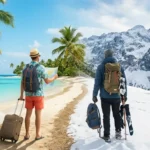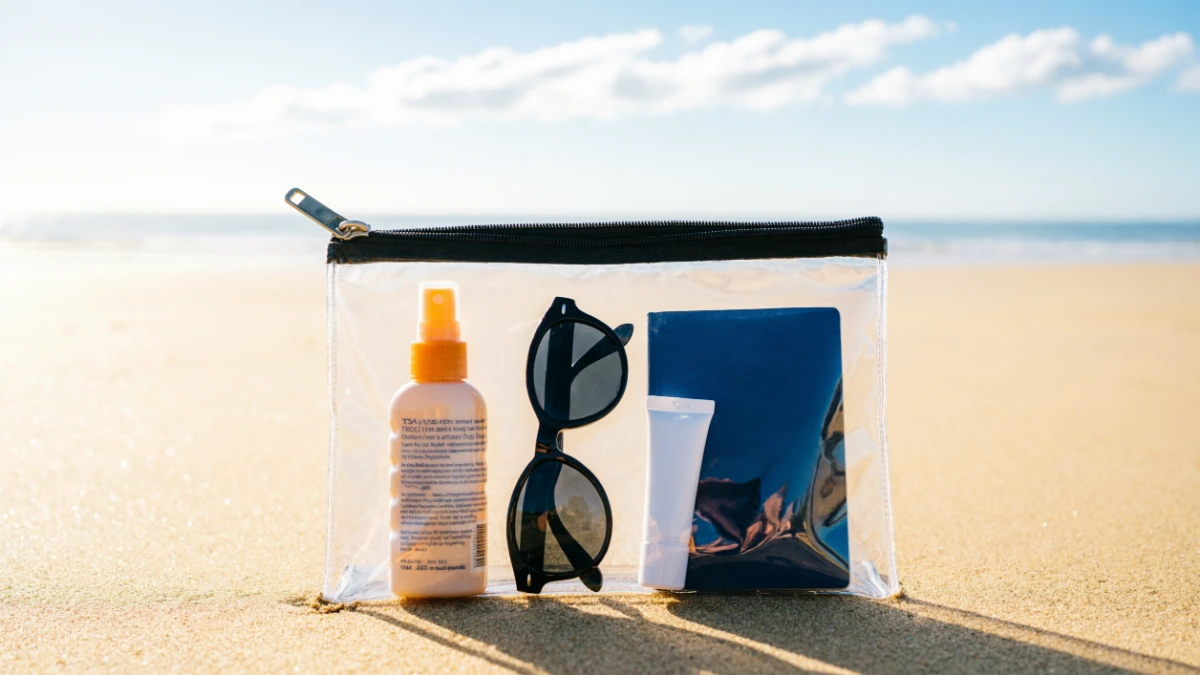
Travel size sunscreen spray is a compact, TSA approved sun protection product in containers of 3.4 ounces (100ml) or less, designed to fit inside your carry on quart size bag. It delivers fast, even SPF coverage without the mess of lotion making it the go to sun protection choice for beach vacations, hiking trips, and city adventures alike.
Why Every Traveler Needs Travel Size Sunscreen Spray
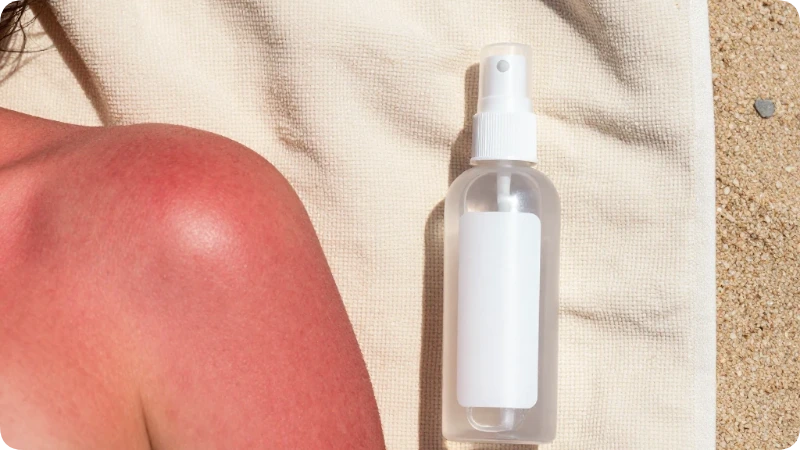
Most travelers spend months planning their perfect trip only to end up sunburned by day two. Sunscreen is one of the most overlooked essentials in any packing list, and travel size sunscreen spray fixes that problem with minimal bulk and maximum convenience. Ifr you’re snorkeling in the Florida Keys, hiking the red rock trails of Sedona, or exploring the Las Vegas Strip mid summer, portable sun protection isn’t optional.
The American Academy of Dermatology (AAD) recommends applying sunscreen every two hours during outdoor activities, which means a single application at your hotel doesn’t cut it. Travel size spray bottles make reapplication fast, painless, and packable enough that there’s no excuse to skip it. This guide covers everything TSA rules, top product picks, application tips, packing strategies, and real world advice from seasoned travelers who’ve learned the hard way.
Quick Facts: Travel Size Sunscreen Spray at a Glance
| Factor | Details |
| TSA Liquid Rule | 3.4 oz (100ml) or less per container |
| Bag Requirement | Must fit in 1 quart size, clear, resealable bag |
| Checked Luggage | No size limit (aerosols capped at 18 oz per FAA) |
| Recommended SPF | SPF 30 minimum (AAD guideline) |
| Reapplication Frequency | Every 2 hours; every 80 minutes in water |
| Common Spray Formats | Aerosol (pressurized), pump spray, continuous spray |
| Best For | Beach, hiking, outdoor sports, city sightseeing |
| Price Range | $5–$20 for travel size containers |
TSA Rules for Travel Size Sunscreen Spray: What You Must Know
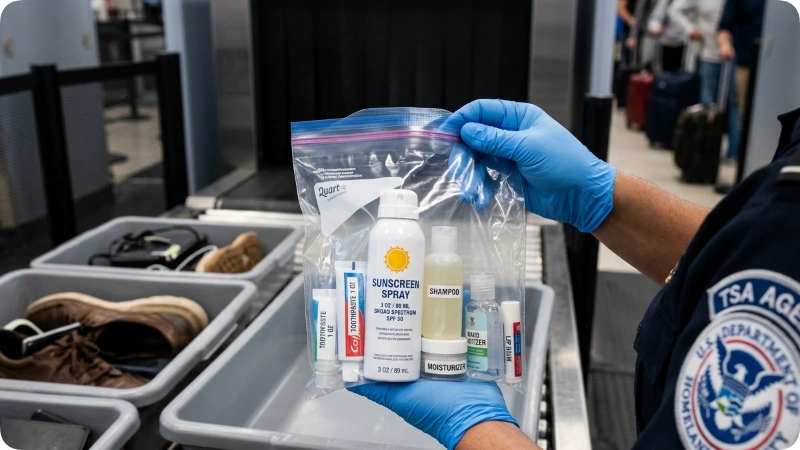
TSA allows sunscreen spray in carry on bags as long as each container holds 3.4 ounces (100ml) or less and all liquids fit in a single quart size clear zip top bag. Aerosol sunscreens follow the same 3 1 1 liquids rule. Larger bottles must go in checked luggage.
The Transportation Security Administration’s 3 1 1 rule applies to all liquids, gels, aerosols, creams, and pastes sunscreen spray included. Here’s what that means practically:
- 3.4 oz or less per individual bottle
- 1 quart size zip top clear bag total
- 1 bag per passenger
Aerosol vs. Pump Spray: Which Is Better for Flying?
Both aerosol and pump spray sunscreens are allowed in carry ons at 3.4 oz or under. However, aerosol cans in checked luggage fall under FAA flammable goods rules; the FAA caps aerosol toiletries at 18 oz per container and 70 oz total per passenger in checked bags.
Pump sprays carry no special aerosol restrictions in checked baggage, making them slightly easier to pack for longer trips. That said, aerosol sunscreens are often easier to spray evenly with one hand, a real advantage when reapplying on a windy beach.
Insider Tip: Always pack your travel size sunscreen spray in an easy access outer pocket of your personal item, not buried in your main carry on. Security lines move faster when you can pull your liquids bag in seconds.
How to Choose the Best Travel Size Sunscreen Spray
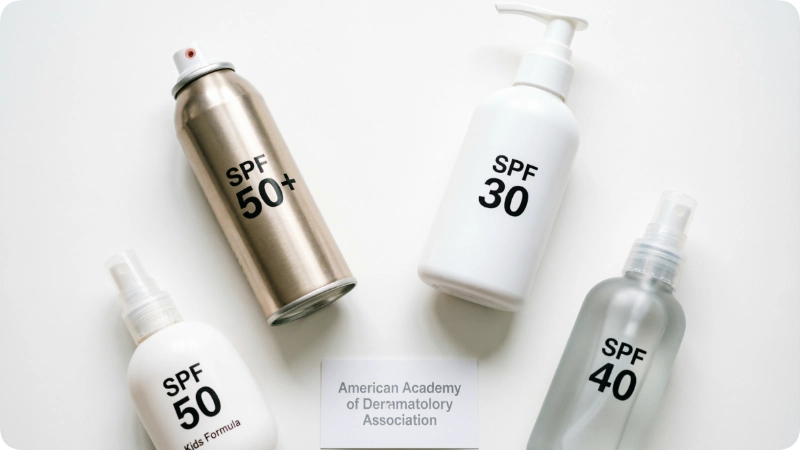
The best travel size sunscreen spray offers SPF 30 or higher, broad spectrum UVA/UVB protection, water resistance, and a formula that works for your skin type all in a TSA compliant container. There is no single “best” product for everyone; the right choice depends on your destination, activity level, and skin.
SPF Level: What the Numbers Actually Mean
The AAD recommends SPF 30 as the minimum for everyday outdoor use. SPF 30 blocks about 97% of UVB rays; SPF 50 blocks about 98%. The difference sounds small, but matters in high UV environments like high altitude hikes or tropical beaches.
- SPF 30 Everyday city sightseeing, short outdoor periods
- SPF 50 Beach days, water sports, hiking, skiing
- SPF 70+ Extended time at high altitude or near reflective surfaces (snow, water)
Broad Spectrum: The Term That Actually Matters
“Broad spectrum” means the sunscreen protects against both UVA rays (aging, skin cancer) and UVB rays (burning). The FDA requires this label to be earned and sunscreen must pass specific testing to print “broad spectrum” on its packaging. Always look for both broad spectrum and your preferred SPF on the label.
Water Resistance: Know the Limits
No sunscreen is truly waterproof. The FDA only allows manufacturers to claim 40 minute or 80 minute water resistance not “waterproof.” If you’re swimming, surfing, or sweating hard, reapply every 40–80 minutes regardless of what the label says.
Skin Type Considerations
| Skin Type | Best Formula |
| Oily / Acne Prone | Oil free, non comedogenic spray |
| Dry Skin | Moisturizing spray with hyaluronic acid or glycerin |
| Sensitive Skin | Mineral (zinc oxide / titanium dioxide) spray |
| Kids / Babies | Mineral formula, fragrance free (AAP recommends SPF 30+) |
| Dark Skin Tones | Sheer or tinted formulas to avoid white cast |
Top Travel Size Sunscreen Spray Formats Compared
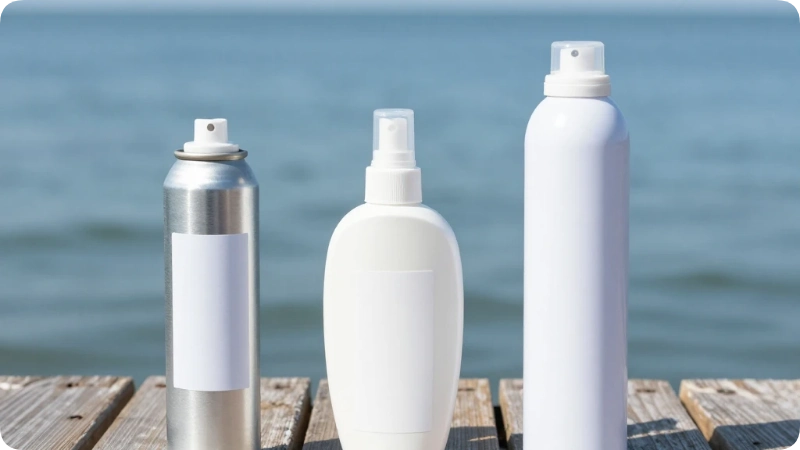
Aerosol, pump spray, and continuous spray sunscreens all work but each has trade offs for travelers. Understanding the differences helps you pick the right format before you pack.
Aerosol Spray Sunscreen
Aerosol cans use pressurized gas to dispense product in a fine mist. They’re fast, cover large areas quickly, and don’t require rubbing in (though the AAD recommends it for better protection). The downside: wind can blow the product away, and they’re subject to FAA aerosol rules in checked bags.
Best for: Beach days, full body coverage, quick reapplication
Pump Spray Sunscreen
Pump sprays use manual pressure and no propellant gas. They’re not affected by altitude pressure changes and don’t have the same checked luggage restrictions as aerosols. The spray pattern is narrower, so full body application takes more effort.
Best for: Hiking, high altitude travel, travelers who prefer no aerosol
Continuous Spray Sunscreen
Continuous spray bottles deliver a steady stream without releasing the button. Many brands market these as easier for one handed application and self application on hard to reach areas.
Best for: Solo travelers, active adventures, applying while moving
Packing Travel Size Sunscreen Spray: The Smart Approach
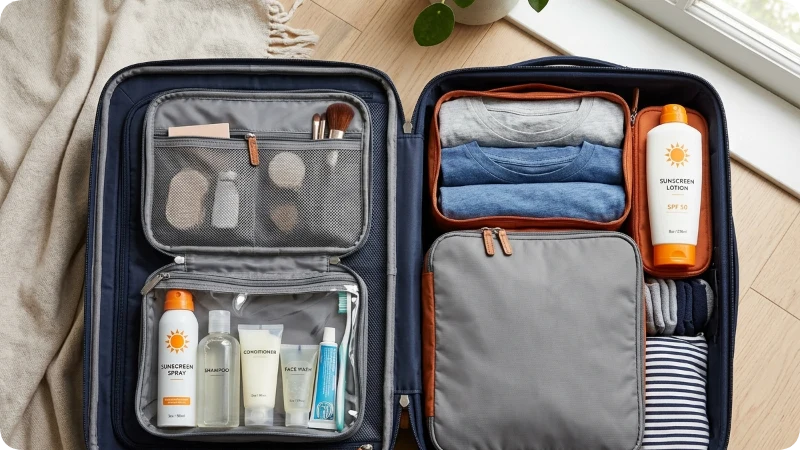
Pack at least two travel size sunscreen sprays for any trip longer than three days, one in your carry on liquids bag for immediate access, and one in your checked luggage or day bag for reapplication on the go. Running out mid trip and paying resort or airport prices is a common, avoidable mistake.
The 3 1 1 Bag Strategy
Your quart size bag fills up fast. Here’s how to make room for sunscreen without sacrificing other essentials:
- Choose solid toiletries (shampoo bar, solid deodorant) to free up liquid space for sunscreen
- Use stick sunscreen for the face it doesn’t count against your liquid allowance
- Bring one full size bottle in checked luggage for base coverage; keep the travel size for daily reapplication
- Look for multi use products some tinted SPF moisturizers replace both sunscreen and foundation
Buying Sunscreen at Your Destination
Many experienced travelers skip the 3 1 1 hassle entirely and buy full size sunscreen at their destination. This works well at major US tourist destinations Walgreens, CVS, Target, and grocery stores near most beach towns, national parks, and city centers carry a wide range of sunscreen brands.
The catch: Resort and hotel gift shops charge 2–3x retail price. Buy at a local drugstore or grocery store within the first hour of arrival if you plan to stock up locally.
Money Saving Tip: Walmart Supercenter and Target near popular tourist areas often carry travel size sunscreen multipacks at better prices than hotel shops or airport convenience stores. Plan a quick stop before heading to your resort.
How to Apply Sunscreen Spray Correctly
Apply sunscreen spray at least 15 minutes before sun exposure, hold the bottle 4–6 inches from skin, and rub it in after spraying to ensure even coverage. Most people apply far too little; the AAD recommends about one ounce (a shot glass worth) to cover the full body.
Step by Step Application Guide
- Shake the bottle before each use ingredients can separate
- Hold 4–6 inches from skin closer risks uneven application; farther wastes product
- Spray in a slow, sweeping motion until the skin looks visibly covered (shiny or wet)
- Rub it in immediately especially for aerosols, which can miss spots due to wind
- Don’t forget ears, back of neck, tops of feet, back of hands, and hairline
- Never spray directly on face spray into hands first, then apply to face
- Wait 15 minutes before sun exposure for chemical sunscreens (mineral formulas work immediately)
- Reapply every 2 hours, or every 40–80 minutes after swimming or heavy sweating
The Face Rule: Never Spray Directly
The FDA and AAD both caution against spraying sunscreen directly on the face. Inhaling aerosol sunscreen ingredients is a real concern, especially around children. Always spray into your palms first, then apply to the face like a lotion.
Travel Size Sunscreen Spray for Specific US Destinations
Your destination determines which SPF level and formula makes the most sense. UV index varies dramatically across the United States; a summer day in Phoenix, Arizona, regularly hits UV index 11+ (extreme), while the same day in Seattle might be UV index 4 (moderate).
Beach Destinations (Florida, California, Hawaii)
Florida’s Gulf Coast, Miami Beach, the Outer Banks, and California’s Pacific Coast beaches demand at minimum SPF 50, water resistant spray reapplied every 80 minutes. Sand reflects up to 17% of UV radiation, magnifying your exposure. Hawaii sits closer to the equator UV index regularly exceeds 10.
Hawaii note: The state banned sunscreens containing oxybenzone and octinoxate in 2021 to protect coral reefs. Look for reef safe travel size sunscreens (mineral formulas with zinc oxide or titanium dioxide) before traveling to Hawaii, the US Virgin Islands, and Key West, Florida, which has its own reef protection guidelines.
Desert & Southwest (Arizona, Utah, Nevada)
Sedona, the Grand Canyon, Zion National Park, and Las Vegas sit at elevations between 2,000–8,000 feet. UV radiation increases approximately 4–5% for every 1,000 feet of elevation gain, according to the EPA. Hikers on the Bright Angel Trail or Angels Landing need SPF 70 spray and aggressive reapplication schedules.
Desert air is also extremely dry spray formulas with added moisturizers (glycerin, aloe) help prevent the double threat of sunburn and skin dehydration.
Mountain & Alpine Travel (Colorado, Wyoming, Montana)
Skiing and snowboarding in Colorado’s Rocky Mountains (Aspen, Vail, Breckenridge) or Wyoming’s Jackson Hole create some of the highest UV exposure scenarios in the US. Snow reflects up to 80% of UV rays, and high altitude amplifies intensity. SPF 50–70 spray is the baseline here, not a luxury.
Cold temps can make spray application awkward with gloves on. Look for pump sprays that work in cold temperatures and won’t freeze. Some aerosol formulas perform poorly at freezing temps.
National Park Adventures
Over 330 million people visit National Park Service sites annually. Parks like Yellowstone, the Great Smoky Mountains, and Acadia in Maine span wildly different UV zones. Check the EPA’s UV Index forecast (available at epa.gov/sunwise) for your specific park before packing.
Many national park visitor centers sell sunscreen, but selection is limited and prices are high. Pack your own.
Common Mistakes Travelers Make With Sunscreen Spray
The three most common sunscreen spray mistakes are applying too little, skipping reapplication, and trusting “waterproof” claims. Each is easy to fix with the right knowledge.
Mistake 1: Not Applying Enough
Studies consistently show that most people apply only 25–50% of the recommended sunscreen amount. For spray formulas specifically, the temptation to do a quick pass and move on is strong. The fix: spray until the skin looks genuinely wet, then rub it in. If you think you’ve applied enough, apply again.
Mistake 2: Skipping Reapplication
One application at 9 AM won’t protect you at noon. Sunscreen breaks down with UV exposure, sweat, and toweling off. Set a phone alarm for every two hours on active outdoor days. Many travel size spray bottles are small enough to keep in a shorts pocket or day bag strap no excuse to skip it.
Mistake 3: Ignoring the Expiration Date
Sunscreen expires usually 2–3 years from manufacture. Expired sunscreen loses effectiveness even if it looks and smells fine. Check the expiration date printed on the bottle before packing. Many travelers reach for a bottle from last summer without checking.
Hidden Gems: Underrated Sunscreen Spray Tips Most Travelers Miss
Most sunscreen advice covers the basics. These three tips go further.
1. Spray your scalp. Hair provides minimal UV protection on the crown and part line. Aerosol sprays work well here a quick blast covers the scalp without making hair greasy, especially dry formula sunscreen sprays.
2. Use sunscreen spray on the backs of your hands while driving. UVA rays penetrate car windows. Road trippers on long drives think Route 66, the Pacific Coast Highway, or Blue Ridge Parkway build up significant UV exposure on their left arm and left hand without realizing it. A pump spray you can reach one handed makes this easy.
3. Keep one bottle in your rental car’s glove box. Midday reapplication often gets skipped because sunscreen is back at the hotel room or buried in a beach bag. A dedicated car bottle removes that barrier entirely.
Travel Size Sunscreen Spray for Families and Kids
For children, the American Academy of Pediatrics (AAP) recommends broad spectrum SPF 30+ sunscreen for babies older than 6 months, mineral formulas whenever possible, and application 15–30 minutes before outdoor time. Babies under 6 months should be kept out of direct sun; sunscreen is a last resort for this age group.
Spray sunscreen is popular with parents because it applies fast criticality with a squirmy toddler. But the spray to face rule matters especially for kids: always spray into your palm first, then apply to their face. Keep them from inhaling the mist by turning away during application.
Pack dedicated kid formula sunscreen spray even if adults use a different brand children’s formulas are tested for sensitive skin and typically free of fragrances and harsh chemicals.
Family Packing Checklist
- ✓ 1 travel size spray (carry on) per person
- ✓ 1 full size bottle in checked luggage or beach bag
- ✓ Separate facial sunscreen (stick or lotion)
- ✓ UV protective rash guards for kids (reduces spray needed)
- ✓ Lip balm with SPF 30+
Reef Safe and Eco Friendly Travel Size Sunscreen Spray
Reef safe sunscreen typically means mineral formulas using zinc oxide or titanium dioxide instead of chemical UV filters like oxybenzone and octinoxate, which research links to coral bleaching. Several US destinations either ban or strongly discourage chemical sunscreens.
Beyond reef safety, aerosol propellants raise environmental questions for eco conscious travelers. Pump spray formats avoid this issue. Many brands now offer biodegradable formulas and recyclable packaging worth considering if sustainable travel is part of your trip ethos.
Destinations with sunscreen restrictions or guidelines:
- Hawaii (statewide ban on oxybenzone and octinoxate)
- Key West, Florida (ban on non reef safe sunscreens)
- US Virgin Islands (ban on oxybenzone and octinoxate)
- Certain marine protected areas and snorkel sites (check local rules)
Budget Breakdown: What Travel Size Sunscreen Spray Really Costs
| Purchase Location | Typical Price Range | Notes |
| Drugstore / Grocery (travel size) | $5–$10 | Best value; buy before departure |
| Airport convenience store | $10–$18 | Convenient but expensive |
| Hotel / Resort gift shop | $12–$22 | Highest markup |
| National Park visitor center | $10–$16 | Limited selection |
| Online (bulk packs) | $4–$7 per bottle | Buy ahead for best price |
| Destination drugstore | $5–$12 | Best option if buying on arrival |
Bottom line: Buy your travel size sunscreen before you leave home. Airport and resort prices can be double what you’d pay at a neighborhood pharmacy.
Sample Packing Plan: Sunscreen for a 7 Day Beach Trip
Here’s a practical, TSA compliant sunscreen strategy for a week at the beach:
Carry on liquids bag:
- 1 × 3 oz travel size spray sunscreen (SPF 50, broad spectrum, water resistant 80 min)
- 1 × SPF 30 lip balm stick (doesn’t count toward liquid limit)
Checked luggage:
- 1 × full size 8 oz spray sunscreen (SPF 50+)
- 1 × separate facial sunscreen (tinted SPF 40 lotion or mineral powder)
Beach bag each day:
- Travel size spray for reapplication
- Small after sun lotion (aloe vera) for evening recovery
This setup covers daily protection, easy reapplication, and backup supply without overpacking.
FAQs
Is travel size sunscreen spray allowed on airplanes?
Yes. Travel size sunscreen spray in both aerosol and pump formats is allowed in carry on bags as long as each container is 3.4 ounces (100ml) or less and fits inside your quart size clear liquids bag. Larger bottles must go in checked luggage. The TSA enforces this as part of its standard 3 1 1 liquids rule.
What is the best SPF for travel size sunscreen spray?
The AAD recommends SPF 30 as the minimum for any outdoor activity. For beach vacations, hiking, water sports, or high altitude trips, SPF 50 or higher offers better protection. The difference between SPF 30 and SPF 50 is small in percentage terms but meaningful in intense sun environments like tropical beaches or mountain terrain.
Can you buy travel size sunscreen at the airport?
Yes, most US airport terminals sell travel size sunscreen at convenience and pharmacy stores (Hudson News, InMotion, Paradies Shops). However, airport prices typically run 50–100% higher than drugstore prices. Unless you forget entirely, buying before your trip saves money and gives you more brand options.
How much sunscreen spray do I need for a week long trip?
For a seven day trip with daily outdoor activity, plan on approximately one 8 ounce bottle per person for full body coverage, or two to three 3 ounce travel size sprays for more limited outdoor exposure. Reapplication every two hours adds up quickly on active beach or hiking days bring more than you think you need.
Is aerosol or pump spray sunscreen better for travel?
Both work well. Aerosol sprays cover more area faster and work well for beach and outdoor use. Pump sprays avoid pressurized can restrictions, perform better in cold temperatures, and are slightly more eco friendly. The best choice depends on your destination and activity. Many travelers carry one of each.
Is travel size sunscreen spray reef safe?
Not automatically. Reef safe designation depends on the ingredients, not the bottle size. Look for mineral formulas using zinc oxide or titanium dioxide, and avoid oxybenzone and octinoxate. If you’re visiting Hawaii, the US Virgin Islands, or Key West, reef safe sunscreen is legally required or strongly enforced. Always check local guidelines before your trip.
Can kids use travel size sunscreen spray?
Yes, but choose formulas designed for children mineral (zinc oxide), fragrance free, and broad spectrum SPF 30 or higher. Never spray directly on a child’s face; spray into your palms first. The American Academy of Pediatrics recommends sunscreen for children 6 months and older. Babies under 6 months should be kept out of direct sun whenever possible.
Final Takeaways
Smart sun protection doesn’t have to be complicated. Travel size sunscreen spray solves the most common problem travelers face forgetting to reapply or not having sunscreen handy when it matters. Three things to remember before your next trip:
First, buy your travel size sunscreen before you leave home airport and resort prices are not your friend. Second, check your destination’s sunscreen restrictions (Hawaii and Key West have real rules) and pack reef safe mineral formulas accordingly. Third, reapplication is non negotiable set a phone reminder, keep a bottle in your day bag, and treat sunscreen as seriously as you treat staying hydrated.
Sunburn on day one ruins the rest of a trip in ways that are entirely preventable. Pack smart, apply often, and spend your trip enjoying the destination not recovering from it.
Prices, TSA rules, and destination specific sunscreen regulations can change. Always verify current TSA guidelines at tsa.gov, FAA aerosol rules at faa.gov, and local sunscreen ordinances with your destination’s official tourism board before travel.