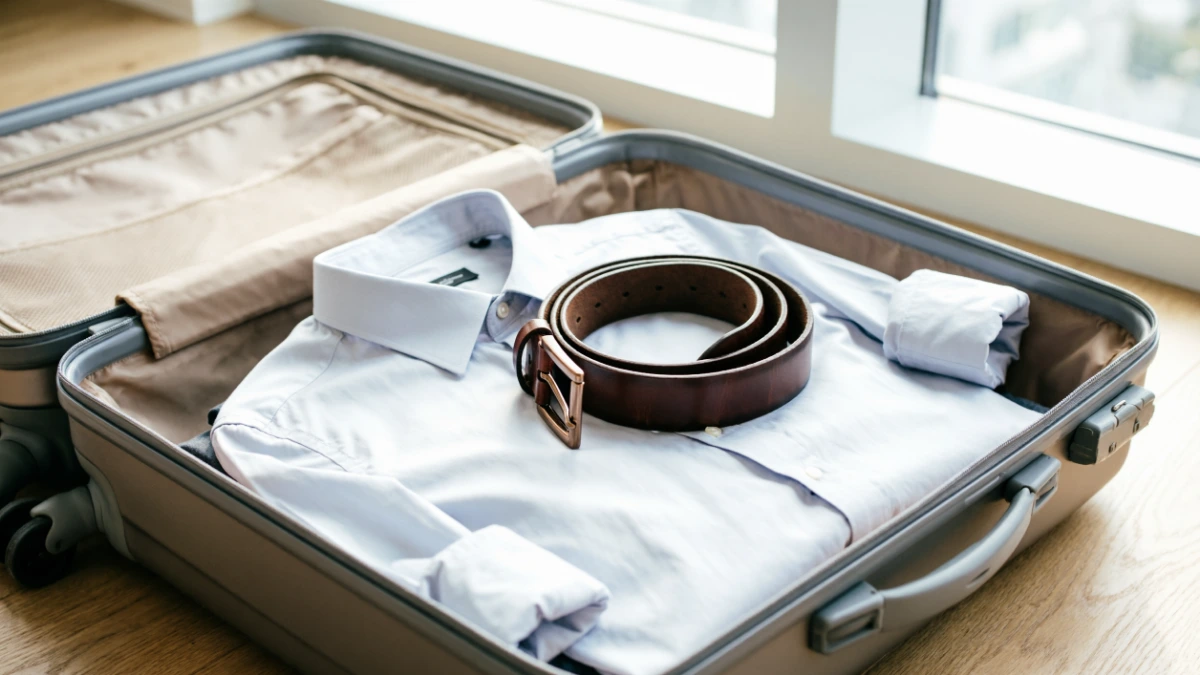
Folding a dress shirt for travel means rolling or flat folding the shirt using a structured technique that minimizes creases along the collar, placket, and sleeves. The best method depends on your bag type. For carry ons, use the military roll or ranger roll. For checked bags, use the flat fold with tissue paper. Either way, shirts arrive ready to wear in under 60 seconds of reshaping.
Why Most Travelers Wreck Their Dress Shirts Before They Even Check In

Picture this: you’ve just landed in Chicago for a big client meeting. You unzip your suitcase, pull out what should be a crisp Oxford shirt and it looks like it spent the flight balled up in someone’s fist. The collar is bent. The placket has a diagonal crease. You’ve got 40 minutes until your meeting.
That scenario plays out in hotel rooms across America every single day. And the frustrating part? It’s completely avoidable. Packing dress shirts is one of those skills that experienced travelers have quietly mastered and most people never learn it because nobody thinks to teach it.
This guide covers every proven method for folding dress shirts for travel, from the military ranger roll to the dry cleaning bag trick, plus the exact steps frequent flyers use to arrive looking polished. If you’re heading to a business conference in New York, a wedding in Napa, or a resort weekend in Florida, the way you fold your shirt determines how you show up.
Quick Facts: Dress Shirt Packing at a Glance
| Factor | Detail |
| Best method for carry on | Ranger roll or bundle wrapping |
| Best method for checked bag | Flat fold with tissue paper |
| Time to fold (once learned) | 60–90 seconds per shirt |
| Shirts per carry on bag | 3–5 depending on bag size |
| Best fabric for travel | Wrinkle resistant cotton poly blend |
| Worst fabric for travel | 100% linen, 100% cotton poplin |
| Rescue tool at destination | Steamer > iron for travel |
The 3 Core Methods: Which One Is Right for Your Trip?
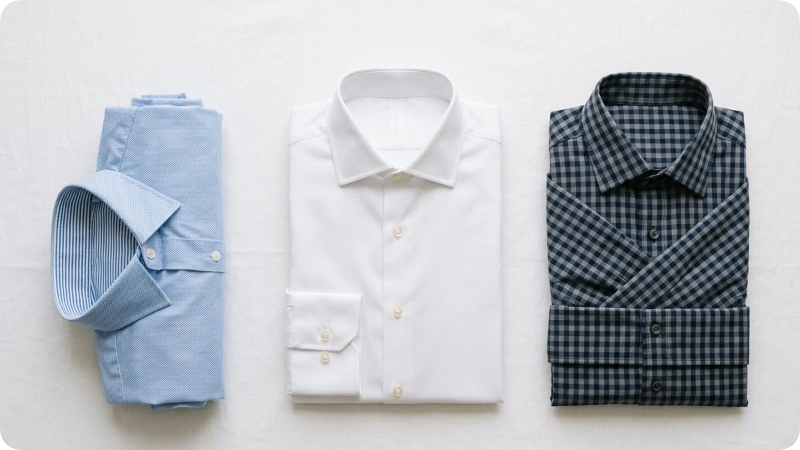
The three most effective ways to fold a dress shirt for travel are the ranger roll, the flat fold, and bundle wrapping. Each works best in a different situation. The ranger roll is the most space efficient and works best for carrying on backpacks and rolling bags. The flat fold is the gentlest on fabric and suits garment bags or structured luggage. Bundle wrapping is the nuclear option; it eliminates wrinkles almost entirely by using other clothes as a buffer.
- Ranger Roll: Best for tight packing, backpacks, overhead bins
- Flat Fold: Best for structured suitcases, short trips, gentler fabrics
- Bundle Wrapping: Best for longer trips, multiple dress shirts, travelers who refuse to steam anything
How to Do the Ranger Roll: Step by Step
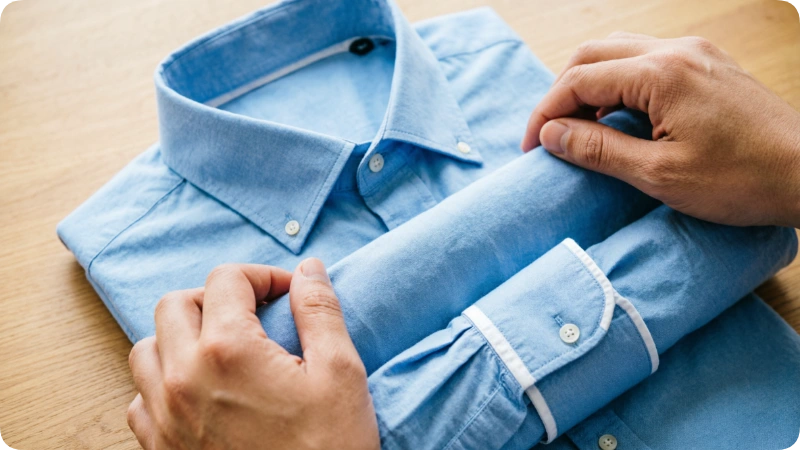
The ranger roll originally developed by U.S. military personnel to compress clothes into tight field packs is now one of the most popular packing techniques among frequent flyers and travel bloggers. Done correctly, it reduces wrinkles significantly compared to casual folding and cuts shirt volume by roughly 30–40%.
Step by Step Ranger Roll for a Dress Shirt
- Button the shirt fully, including the collar button. This keeps the shape locked.
- Lay the shirt face down on a flat surface like a bed or table.
- Fold the bottom hem up about 3–4 inches to create a cuff. This cuff will wrap around the finished roll to hold it together.
- Fold one sleeve across the back of the shirt diagonally, so the cuff points toward the opposite shoulder.
- Repeat with the other sleeve, layering it over the first.
- Start rolling tightly from the collar down toward the cuffed hem. Keep firm, even pressure as you roll.
- When you reach the cuff band, fold it up and over the entire roll to lock it in place.
The result is a compact, self contained cylinder that holds its shape inside a bag. Pro tip: place the roll collar side up inside your bag so the collar doesn’t get crushed under other items.
How to Flat Fold a Dress Shirt the Right Way
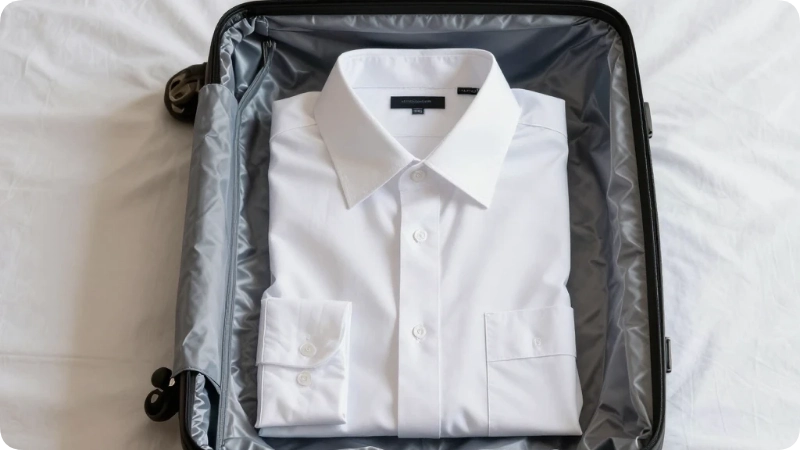
Flat folding is the classic method the one dress shirts arrive in from the store. But most people do it sloppily, which causes pressure creases along the fold lines. The professional version of this fold, used by hotel staff and garment packers, takes two extra steps that make a real difference.
The Professional Flat Fold Method
- Button every button on the shirt, including collar and cuffs.
- Lay the shirt face down on a flat surface.
- Fold one side in about one third of the way, bringing the sleeve back along the body of the shirt.
- Fold the sleeve down so it runs parallel to the shirt’s body, forming an “L” shape.
- Repeat on the other side, mirroring the fold.
- Fold the shirt in thirds from the bottom up first the bottom third up, then the top third (with collar) down over it.
- Flip the shirt over so the collar faces up.
The Tissue Paper Trick
Slip a sheet of acid free tissue paper between each fold before you complete it. The tissue paper acts as a friction barrier, preventing the fabric from creasing sharply at fold lines. This is the same technique that department stores and luxury clothiers use when packaging shirts for shipping. It adds almost no weight and takes ten seconds.
The Bundle Wrapping Method: The Secret Weapon
Bundle wrapping is the least known but arguably most effective method for keeping dress shirts wrinkle free over long trips. Instead of folding shirts individually, you wrap them around a central core object, usually a small packing cube or a rolled pair of pants creating a single bundle where each layer cushions the others.
How Bundle Wrapping Works
- Lay your largest, most wrinkle prone item flat first, usually the dress shirt or blazer.
- Layer additional items on top, from largest to smallest (pants, then lighter shirts, then softer items).
- Place a small, firm core item (a packing cube, rolled jeans, or a toiletry bag) in the center.
- Wrap each layer around the core in reverse order: innermost item wraps first, outermost item wraps last.
- Secure the bundle with the outer layer’s edges tucked in.
The key advantage: no single item has a sharp fold. Every garment curves gently around the core, distributing pressure evenly. Many experienced road warriors report arriving with shirts that need no steaming at all after bundle wrapping.
Collar Care: The Most Overlooked Part of Packing a Dress Shirt
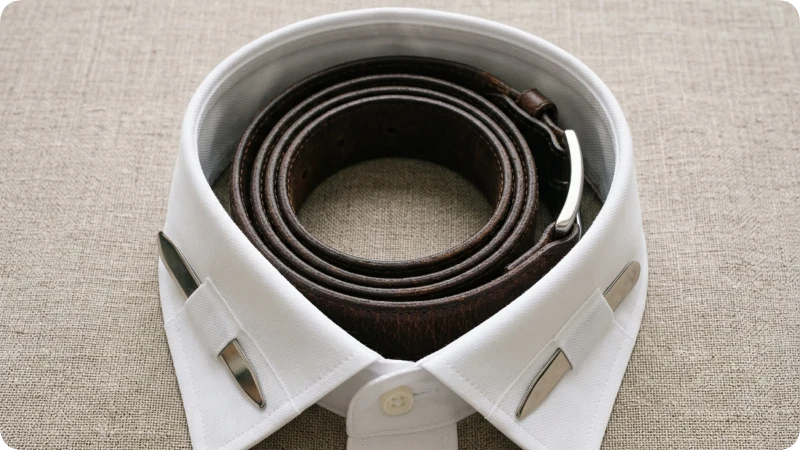
The collar is the first thing people see, and it’s the hardest to fix without an iron. Most travelers either ignore the collar entirely or crush it under other items. Both are mistakes. A few targeted techniques keep the collar crisp from departure to destination.
3 Ways to Protect Your Shirt Collar
1. Roll a belt through the collar band. Coil a leather belt and tuck it inside the collar. The firm ring holds the collar’s shape under the pressure of surrounding items. This is one of the most widely used insider tricks among road warriors.
2. Use collar stays. Metal or plastic collar stays inserted into the collar’s stay pockets keep the collar points flat and prevent curling. Many dress shirts already come with them; most people throw them away without realizing what they’re for.
3. Pack the collar face up. Whichever method you use, position the shirt so the collar sits at the top of your bag, not the bottom. Weight from other items compresses whatever is underneath.
The Dry Cleaning Bag Trick: Does It Actually Work?
Yes and it’s one of the most underrated packing hacks in circulation. The plastic dry cleaning bag reduces friction between the fabric and itself, which is what causes most travel creases. Without friction, the shirt can shift slightly without developing a sharp fold.
How to Use a Dry Cleaning Bag When Packing
- Fold or roll your shirt using any of the methods above.
- Slide the folded shirt into a dry cleaning bag (or a large zip lock bag works similarly).
- Squeeze out excess air loosely, don’t vacuum seal it.
- Place it in your suitcase.
Studies on textile folding and friction cited by fabric care researchers at institutions like the American Cleaning Institute support the idea that reducing inter fabric friction significantly reduces crease formation during compression. The bag acts as a low friction sleeve, letting layers slide rather than grip and fold.
What to Pack Dress Shirts In: Bag Type Matters
The container you choose affects results as much as your folding technique. Different bag types exert different kinds of pressure on clothing, and dress shirts respond differently to each.
| Bag Type | Shirt Verdict | Best Method to Use |
| Hard shell rolling suitcase | Excellent | Flat fold with tissue paper |
| Soft sided rolling suitcase | Good | Flat fold or bundle wrap |
| Carry on backpack | Challenging | Ranger roll |
| Garment bag | Best option | Hang on built in hanger |
| Packing cubes | Good | Ranger roll inside cube |
| Compression bags | Avoid | Not recommended |
Compression bags are the enemy of dress shirts. Despite their popularity for casual clothes, compression bags crush structured fabric like Oxford cotton and pinpoint shirts in ways that are nearly impossible to fix without a full wash and iron.
Packing Cubes and Dress Shirts: A Practical Pairing
Packing cubes have become a staple of organized travel, and they pair well with ranger rolled dress shirts. A medium packing cube (typically around 13″ x 10″) holds 3–4 rolled dress shirts standing upright. This “file folder” method where shirts stand vertically rather than stacking lets you see every shirt without disturbing the others.
How to Use Packing Cubes for Dress Shirts
- Rangers roll each shirt and stand them vertically inside the cube.
- Place the cube collar side up in your bag to protect the collar structure.
- Using a slim cube for shirts only mixing dress shirts with heavy items (shoes, books) defeats the purpose.
- Choose a semi rigid cube for structured shirts the rigid panels prevent side compression.
Brands like Eagle Creek, Osprey, and Away make semi rigid cubes specifically sized for business travel. Prices typically range from $15–$40 per cube set, though always verify current pricing before purchasing.
Garment Bags: When to Skip Folding Entirely
If you regularly travel with multiple dress shirts or suit jackets, a garment bag may be the right call and it means you skip folding altogether. Garment bags allow shirts to hang naturally, which is the closest thing to keeping them in your closet.
Most major airlines allow garment bags as carry on luggage provided they fit within standard carry on dimensions when folded (typically 22″ x 14″ x 9″ per TSA guidelines always verify current rules at tsa.gov before flying). Many garment bags fold in half or thirds for overhead bin storage.
Best Situations for a Garment Bag
- Trips involving 3+ dress shirts or a suit
- Weddings, conferences, or formal events
- Travelers who never want to deal with wrinkles
- Flights where overhead bin space isn’t a concern
The trade off: garment bags reduce overall packing space and can be awkward to carry through airports. They work best for trips where you check luggage or drive to your destination.
How to Fix a Wrinkled Dress Shirt at Your Destination
Even the best packing job can produce wrinkles on a long flight. Knowing how to fix them quickly is just as important as packing correctly in the first place. The fastest options, ranked by effectiveness:
1. Hang It in the Bathroom During a Hot Shower
Hang the shirt on a hanger inside the bathroom and run the hottest shower possible with the door closed for 10–15 minutes. Steam relaxes the fibers and gravity pulls wrinkles out. This works best on cotton and cotton blend fabrics.
2. Use a Travel Steamer
A compact travel steamer is lighter and faster than an iron. Models from brands like Conair and Rowenta typically weigh under a pound and heat up in 30–45 seconds. For frequent travelers, this is the single best investment for dress shirt care.
3. Use the Hotel Iron Carefully
Hotel irons work, but they can scorch fabric if left in place. Always use the iron’s lowest cotton setting and keep it moving. Check that the iron plate is clean before touching it to the shirt.
4. The Damp Towel Method
Lay the shirt flat, place a slightly damp hotel towel over the wrinkled area, and press firmly with your hands. For light creases, this often works in under two minutes.
5 Insider Tips Frequent Travelers Won’t Tell You for Free
These aren’t widely published; they come from the kind of experience that builds up over hundreds of flights and dozens of packing iterations.
1. Pack dress shirts last. The last items you pack get the least compression time. If you load dress shirts first and then pile everything else on top, they sit under pressure for hours. Pack them last, on top, and they’ll arrive in better shape.
2. Button through the collar stay pocket. Button a small button (or leave the top button fastened through the collar stay pocket if your shirt has one) to keep the collar tips anchored during travel.
3. Fold along existing seams, not across them. Dress shirts have built in fold lines at the side seams, shoulder seams, and sleeve folds. Folding along these existing seam lines not inventing new fold lines reduces crease formation dramatically.
4. Unpack within 30 minutes of arrival. Don’t leave shirts sitting folded in your suitcase for hours. The longer fabric sits under compression, the more permanent the creases become. Hang shirts immediately when you reach your room.
5. Travel with wrinkle release spray. A small bottle of fabric wrinkle release spray (like Downy Wrinkle Releaser) weighs almost nothing and fixes light travel creases in seconds. It’s TSA compliant in 3.4 oz bottles and available at most airports. Verify current TSA liquid rules at tsa.gov before packing.
3 Common Dress Shirt Packing Mistakes (and How to Fix Them)
Mistake #1: Leaving the Shirt Unbuttoned While Folding
An unbuttoned shirt has no structural anchor. The collar flops, the placket twists, and the whole shirt folds unevenly. Fix: Always button the shirt fully collar button included before folding.
Mistake #2: Overpacking the Suitcase
Compression is your enemy. When a suitcase is stuffed beyond capacity, everything inside gets crushed regardless of how carefully it was folded. Fix: Leave 10–15% of your bag empty, or downsize to a smaller shirt count and plan to use hotel laundry service for longer trips.
Mistake #3: Mixing Dress Shirts With Heavy Items in the Same Layer
Packing shoes, books, or toiletry bags directly against dress shirts creates localized pressure points that leave permanent indentations. Fix: Use packing cubes to keep dress shirts in their own contained section, away from hard or heavy items.
The Best Fabrics for Travel: What to Buy Before Your Trip
Not all dress shirts are created equal for travel. Fabric choice affects how badly shirts wrinkle and how easily they recover.
| Fabric | Wrinkle Resistance | Travel Rating | Notes |
| Cotton polyester blend | High | ⭐⭐⭐⭐⭐ | Best for travel |
| Performance stretch fabric | High | ⭐⭐⭐⭐⭐ | Excellent recovery |
| Non iron cotton | High | ⭐⭐⭐⭐ | Chemically treated |
| 100% cotton poplin | Low | ⭐⭐ | Wrinkles easily |
| 100% linen | Very low | ⭐ | Beautiful but demanding |
| Merino wool blend | Medium high | ⭐⭐⭐⭐ | Great for cooler travel |
If you’re buying dress shirts specifically for travel, look for brands that offer “non iron” or “wrinkle free” lines. Many major menswear brands and direct to consumer labels now make travel optimized dress shirts using performance weaves that hold up to folding, humidity, and repeated wear.
Sample Packing Routine: 3 Dress Shirts in a Carry On
Here’s a real world routine for packing three dress shirts into a standard carry on rolling bag (22″ x 14″ x 9″):
What you’ll need:
- 3 dress shirts (buttoned fully)
- 3 sheets of tissue paper or a few dry cleaning bags
- 1 medium packing cube
- 1 belt per shirt (optional)
The routine:
- Button each shirt and insert a rolled belt into the collar.
- Ranger rolls each shirt using the method described above.
- Slide each roll into a dry cleaning bag or wrap in tissue paper.
- Stand the rolls vertically inside a packing cube, collar side up.
- Place the packing cube flat in the bottom of the carry on.
- Layer softer items (socks, underwear) over the cube, never hard items.
- Pack shoes in shoe bags on the opposite side of the bag from the shirts.
- Leave the top of the bag (near the handle) for jackets or a light layer.
Total time: approximately 8–10 minutes for all three shirts once you’ve practiced the ranger roll a few times.
FAQs
How do you fold a dress shirt for travel without wrinkles?
The most wrinkle free method is the ranger roll combined with a dry cleaning bag. Button the shirt fully, fold the bottom hem up to create a locking cuff, lay both sleeves diagonally across the back, and roll tightly from collar to hem. Slide the roll into a dry cleaning bag before placing it in your bag. This reduces friction and keeps the roll compact and crease free.
Is it better to roll or fold a dress shirt for travel?
Rolling is generally better for carry on bags and backpacks because it saves space and reduces sharp fold lines. Flat folding with tissue paper is better in structured hard shell suitcases where the shirt has room to lie flat without compression. The worst option is loose, casual folding without any system that’s what causes the diagonal crease across the front.
How many dress shirts can you fit in a carry on?
Most standard carry on rolling bags (22″ x 14″ x 9″) can hold 4–5 ranger rolled dress shirts in a medium packing cube alongside other clothing. Flat folded shirts take more space, plan for 2–3 per bag if using that method. A garment bag typically holds 2–3 shirts hanging flat.
What’s the best way to store dress shirts in a hotel room?
Unpack and hang dress shirts immediately upon arrival. Most hotel closets have hangers. If the shirt has travel creases, hang it in the bathroom during a hot shower for 10–15 minutes. For stubborn wrinkles, request a clothing steamer or iron from the front desk, as most hotels provide them at no charge.
Should you use packing cubes for dress shirts?
Yes, semi rigid packing cubes are one of the best tools for traveling with dress shirts. They contain the shirts in their own space, prevent hard items from pressing against them, and allow the “file folder” standing method so you can see every shirt without disturbing the others. Choose a medium cube sized for shirts only.
Can you travel with dress shirts in a backpack?
Yes, but it requires the ranger roll method. Flat folded shirts don’t hold their shape well in a backpack because the bag changes shape as it’s carried. Ranger rolled shirts hold their cylinder form regardless of bag position. Place rolled shirts near the center or back panel of the backpack, away from items that press from outside.
How do you fix a wrinkled dress shirt with no iron available?
The fastest no iron fix is the hot shower method: hang the shirt in the bathroom, run the hottest shower with the door closed for 10–15 minutes, then gently smooth and reshape the shirt by hand and let it hang for another 10 minutes. Alternatively, a damp hotel towel pressed firmly over wrinkled areas and smoothed by hand fixes light creases in 2–3 minutes.
Conclusion: The Right Fold Changes the Entire Trip
Three things make the biggest difference in traveling with dress shirts: the ranger roll or flat fold done correctly, collar protection from the start, and unpacking within 30 minutes of arrival. Master those three habits and the wrinkled shirt panic disappears from your travel routine permanently.
Dress shirts don’t have to be the high maintenance passengers of your luggage. With the right technique and a few inexpensive tools: tissue paper, a packing cube, a travel steamer you can carry five business ready shirts in a single carry on and arrive looking like you stopped by a tailor on the way to the airport.
The next time you pack for a work trip to Dallas or a weekend wedding in Savannah, try the ranger roll. Give it two practice runs at home before your flight. You won’t go back to the old way.
Pack smarter, arrive sharper, and spend your travel energy on the destination not the dress code.

Gordon Ramsay is a travel writer and destination researcher who helps U.S. travelers plan smarter trips, covering destinations, seasonal trends, budgets, and logistics to help readers decide where—and when—to go.
Rather than simply listing popular places, Gordon Ramsay focuses on what travelers actually need: comparing weather against crowds, weighing costs and accessibility, and researching current conditions alongside official tourism guidance—delivering honest, practical advice without the hype.











1 thought on “The Best Way to Fold a Dress Shirt for Wrinkle-Free Travel”